2025-03-13 04:31
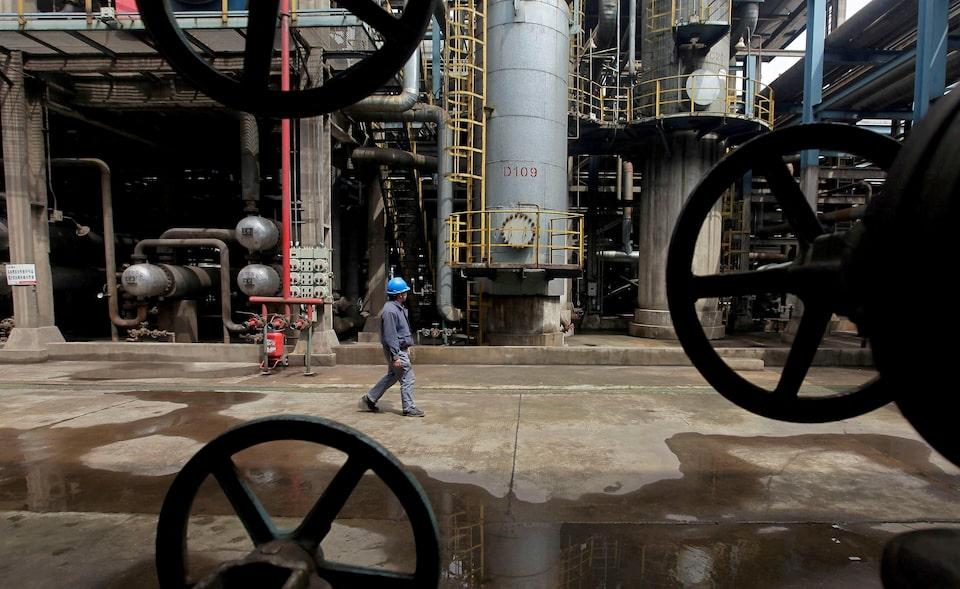
Macroeconomic concerns stemming from tariffs remain prevalent Global demand firmer year on year and exceeded expectations, JP Morgan analysts say Gasoline inventories fall more than expected, EIA data shows LONDON, March 13 (Reuters) - Oil prices slipped on Thursday after surging in the previous session on a larger-than-expected draw in U.S. gasoline stocks, as markets weighed macroeconomic concerns and demand versus supply expectations. Brent futures were down 30 cents to $70.65 a barrel at 1140 GMT, while U.S. West Texas Intermediate crude futures fell 31 cents to $67.37 a barrel. Sign up here. Both benchmarks rallied about 2% on Wednesday after U.S. government data showed tighter-than-expected oil and fuel inventories. U.S. gasoline inventories fell by 5.7 million barrels, more than the 1.9 million-barrel draw expected by analysts, while distillate stocks also dropped more than anticipated, despite gains in crude stocks. "Declining U.S. gasoline inventories raised expectations for a seasonal demand increase in spring, but concerns about the global economic impact of tariff wars weighed on the market," said Hiroyuki Kikukawa, chief strategist at Nissan Securities Investment. "With strong and weak factors progressing simultaneously, it has become difficult for the market to lean decisively in one direction or the other," he added. U.S. President Donald Trump threatened on Wednesday to escalate a global trade war with further tariffs on European Union goods, as major U.S. trading partners said they would retaliate for trade barriers already erected by the U.S. president. Trump's focus on tariffs has rattled investors, consumers and business confidence, and raised U.S. recession fears. With the U.S. president's stated commitment to cheaper oil, Citi analysts said their outlook for Brent by the second half of 2025 is $60 a barrel. Global oil supply could exceed demand by around 600,000 barrels per day this year, the International Energy Agency said on Thursday, revising down its 2025 demand growth forecast. Meanwhile, the Organization of the Petroleum Exporting Countries said on Wednesday that Kazakhstan led a sizeable jump in February crude output by the wider OPEC+, highlighting a challenge for the producer group in enforcing adherence to agreed output targets, even as it intends to unwind production cuts. Worries about flagging jet fuel demand weighed further on markets, with JP Morgan analysts saying that U.S. Transportation Security Administration data showed "passenger volumes for March have decreased by 5% year-over-year, following stagnant traffic in February". However, recent firm global demand numbers limited overall market weakness. "As of March 11, global oil demand averaged 102.2 million barrels per day, expanding 1.7 million barrels per day year-over-year and exceeding our projected increase for the month by 60,000 barrels per day," the JP Morgan analysts added. https://www.reuters.com/business/energy/oil-eases-concerns-about-escalating-tariff-wars-impact-global-economy-2025-03-13/
2025-03-13 03:43
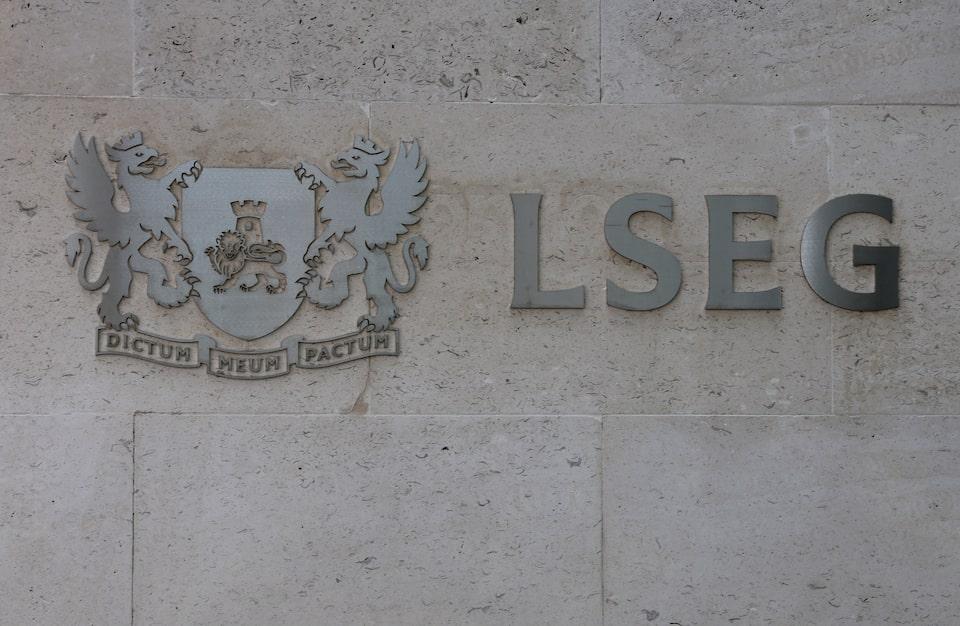
MUMBAI, March 13 (Reuters) - Financial technology and data provider London Stock Exchange Group's foreign exchange trading platform was facing technical issues in India on Thursday, seven traders told Reuters. Some traders were unable to log into their terminals, restricting their ability to transact on the spot dollar/rupee trading platform. Sign up here. LSEG is among the few entities other than banks that are authorised by the Reserve Bank of India to operate an electronic trading platform for transactions in the spot foreign exchange market. LSEG did not immediately respond to a Reuters email seeking comment. https://www.reuters.com/business/finance/lseg-fx-system-facing-technical-issues-india-traders-say-2025-03-13/
2025-03-13 03:03
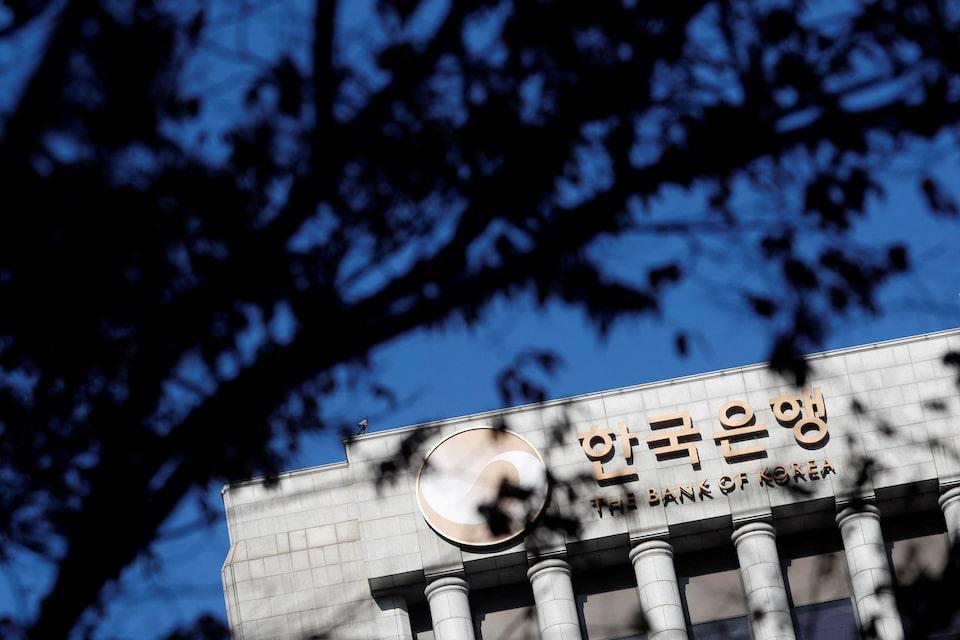
SEOUL, March 13 (Reuters) - South Korea's central bank said on Thursday that U.S. President Donald Trump's escalating trade war could drag on longer than expected and increase the risk of capital outflows while also raising volatility in the dollar-won market. "Considering that the value of the won is greatly affected by fluctuations in the value of the yuan as well as the dollar, there is a possibility that the volatility of the dollar-won exchange rate will increase significantly," the Bank of Korea (BOK) said in a monetary policy report, which predicted that a trade war between the world's two largest economies could intensify. Sign up here. The report said the BOK will continue to "closely monitor foreign investment and the currency movement" as it remains wary of foreign investors pulling money out of Asia's fourth-largest economy. The won has gained 1.6% against the dollar so far this year, but dropped 14% last year, making it one of the worst-performing currencies in Asia. The BOK on Feb. 25 cut interest rates by 25 basis points and significantly lowered its GDP forecasts, the third monetary easing since it started cutting rates from a 15-year high in October. South Korea is grappling with the economic impact of U.S. President Donald Trump's ongoing tariff war, which is likely to undermine corporate profits. Domestic political unrest, following the brief declaration of martial law by impeached President Yoon Suk Yeol in December, also continues to dampen consumer sentiment. https://www.reuters.com/markets/asia/bank-korea-says-wary-fx-volatility-trade-war-risks-2025-03-13/
2025-03-13 02:48
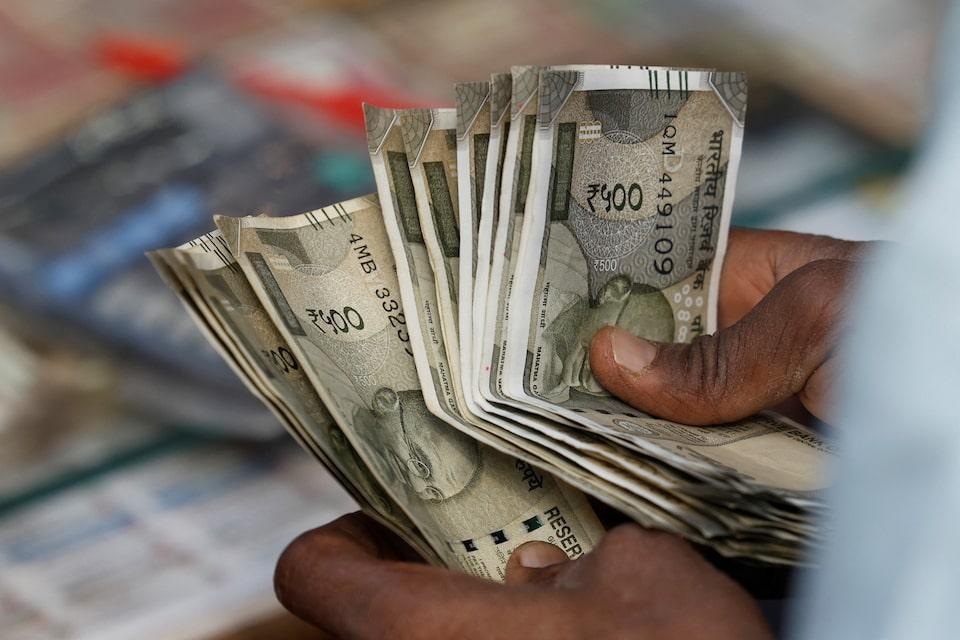
MUMBAI, March 13 (Reuters) - The Indian rupee is expected to open nearly flat on Thursday as comforting U.S. inflation data offset worries about an escalating global trade war that has hit risk appetite. The 1-month non-deliverable forward indicated that the rupee will open at around 87.20-87.22, little changed from its close at 87.2075 in the previous session. Sign up here. U.S. consumer prices increased less than expected in February but analysts reckon that the relief may prove to be transient against the backdrop of aggressive tariffs on U.S. imports. Despite a softer than expected inflation print, traders reduced bets on rate cuts by the Federal Reserve this year and are now pricing in about 70 basis points of cuts in 2025, down from 76 bps on Wednesday. "The Fed could remain patient with rate cuts while it seeks more clarity from (U.S. President Donald) Trump's trade and fiscal policies," MUFG Bank said in a note. Meanwhile, India's retail inflation (INCPIY=ECI) , opens new tab fell below 4% in February for the first time in six months, giving the central bank room to cut rates further in coming meetings. While lower rates would conventionally be a drag on the rupee, if equity flows pick up as a consequence, it could actually bring some relief to the currency, a trader at a Singapore-based bank said. Persistent outflows from Indian stocks have been a sore point for the local currency. Foreign investors have offloaded more than $16 billion of local equities so far in 2025. Asian currencies were mostly rangebound on Thursday while the dollar index was a tad lower at 103.5. Uncertainty about U.S. trade policies has blunted the dollar's safe-haven appeal and the greenback has declined more than 3.5% against major peers in March. KEY INDICATORS: ** One-month non-deliverable rupee forward at 87.42; onshore one-month forward premium at 20.75 paise ** Dollar index at 103.51 ** Brent crude futures flat at $71 per barrel ** Ten-year U.S. note yield at 4.3% ** As per NSDL data, foreign investors sold a net $15.9 million worth of Indian shares on March 11 ** NSDL data shows foreign investors bought a net $279.3 million worth of Indian bonds on March 11 https://www.reuters.com/markets/currencies/rupee-seen-steady-tariff-worries-blunt-us-inflation-comfort-2025-03-13/
2025-03-13 01:40
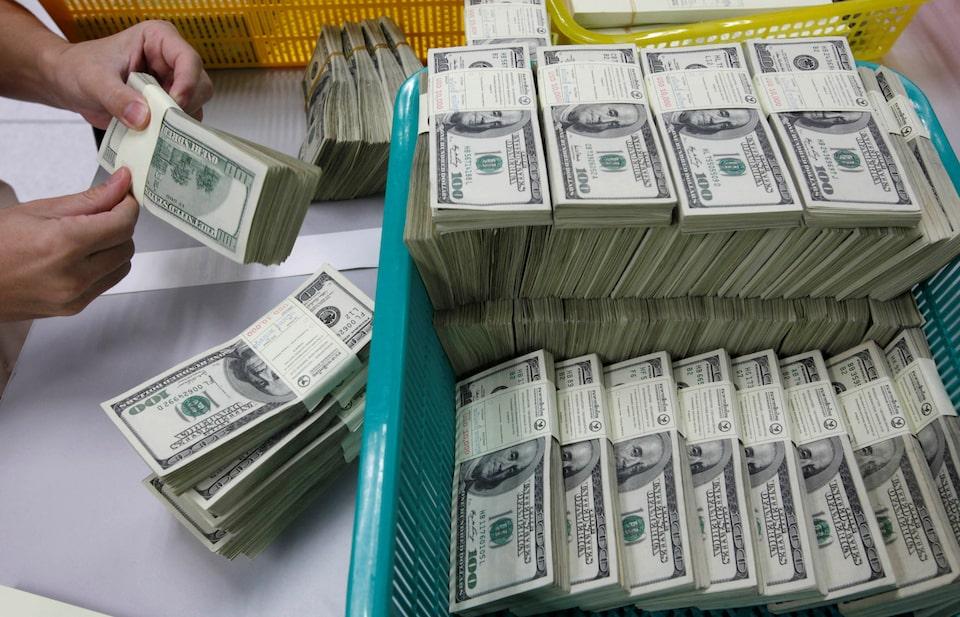
Euro near multi-month highs Investors assess implications of escalating trade war German fiscal spending debate in focus Dollar index on track for second straight session of gains NEW YORK/LONDON, March 13 (Reuters) - The U.S. dollar rose against most major currencies including the Swiss franc and the euro on Thursday, as investors consolidated positions after selling the greenback for most of this week, but the outlook remained weak amid concerns about slowing growth arising from the Trump administration's trade policies. U.S. President Donald Trump threatened to impose a 200% tariff on wine, cognac and other alcohol imports from Europe, opening a new front in a global trade war that has roiled financial markets and raised recession fears. Sign up here. Trump on Wednesday also threatened to retaliate against the EU's announcement that it would place counter-tariffs on $28 billion worth of U.S. imports from next month. Labor Department data on Thursday showed that U.S. producer prices were unexpectedly unchanged on a monthly basis in February, but the prospects of tariffs are unlikely to keep prices down in the coming months. "We've had a very large dollar weakening move in the previous days and weeks and it feels like we're entering a bit of a consolidation period," said Vassili Serebriakov, FX strategist at UBS in New York, who raised his year-end forecast for the euro against the dollar to $1.120 from $0.990. "We do see the possibility that the dollar recovers because we're still being hit with tariffs news and we have this early April reciprocal tariff deadline coming up." The dollar strengthened 0.11% to 0.883 against the Swiss franc . The euro was down 0.28% to $1.0856 against the dollar but near the five-month top of $1.09470 hit earlier in the week. Germany's fiscal reset plan has provided additional support to the euro. Germany's outgoing lower house of parliament will hold a special session on Thursday to debate the 500 billion euro fund for infrastructure and changes to borrowing rules in Europe's largest economy to bolster defence. "We are due for a dollar consolidation and a rebound, but it will depend on how much the trade policy and tariffs take precedence over the drivers of dollar weakness, which are European recovery and fiscal spending and weaker U.S. data," Serebriakov added. STRONGER YEN The Japanese yen strengthened 0.39% against the greenback to 147.84 per dollar, boosted by expectations of higher Japanese interest rates later this year. While the Bank of Japan is expected to leave its key interest rate unchanged at next week's policy meeting, more than two-thirds of economists polled by Reuters expect a rise of 25 basis points to 0.75% in the third quarter, most likely in July. Currency markets also were processing data from Wednesday showing U.S. consumer prices rose slightly less than expected in February, but the relief it offered could be temporary as the data did not fully capture the cascade of Trump's tariffs. The dollar index , which measures the greenback against a basket of currencies including the yen and the euro, rose 0.2% to 103.80. It is on track for two straight days of gains. The Canadian dollar weakened 0.39% versus the greenback to C$1.4424 per dollar, a day after the Bank of Canada trimmed its key policy rate by 25 basis points, with trade disputes leaving traders on edge. "The choppiness and volatility (in the dollar) are probably the bigger story, and it's certainly being driven by uncertainty about tariffs, uncertainty about a potential trade war and whether it's uncertainty about the emerging geopolitical environment," said Marvin Loh, senior global market strategist at State Street in Boston. https://www.reuters.com/markets/currencies/dollar-bounces-rise-yields-trade-war-roils-markets-2025-03-13/
2025-03-13 00:08
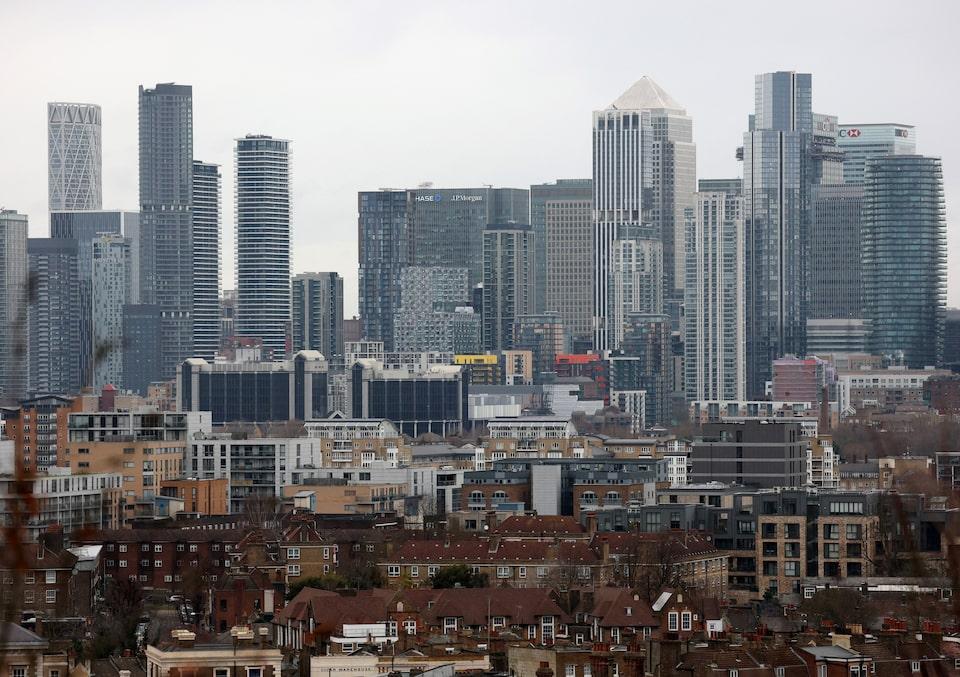
LONDON, June 12 (Reuters) - Britain's housing market lost more steam last month as demand faded from buyers after an increase in property transaction taxes in April and concerns mounted about global trade tensions, a survey showed on Thursday. The Royal Institution of Chartered Surveyors' monthly house price balance - which measures the difference between the percentages of surveyors seeing rises and falls in prices over the past three months - dropped to -8 in May from -3 in April, its weakest since July 2024. Sign up here. Economists polled by Reuters had forecast a smaller fall to -4. "Sentiment across the UK residential property market remains somewhat subdued, with ongoing uncertainty around global trade policies and the dampening effect of transactions being brought forward ahead of the Stamp Duty changes at the end of March continuing to weigh on buyer activity," Tarrant Parsons, senior economist at RICS, said. Thursday's survey chimed with other measures of Britain’s property sector that have pointed to a slowdown, and Bank of England data which showed mortgage approvals dropped to their lowest in more than a year in April. While property surveyors expect to see a gradual recovery in sales activity over the coming year, Tarrant said the "pace and extend of any improvement" in part depended on whether the Bank of England continues to cut interest rates. The BoE is expected to hold interest rates unchanged next week. Financial markets were on Wednesday almost fully pricing two quarter-point interest rate cuts by the end of 2025. A Reuters poll of economists published this week also pointed to two such rate cuts. RICS' gauge of agreed home sales dropped further into negative territory. Its measure of new buyer enquiries fell to a net balance of -26 in May, slightly less downbeat than the -32 in April and March. https://www.reuters.com/world/uk/uk-housing-market-has-weakest-month-since-late-2023-rics-survey-shows-2025-03-13/