2026-01-12 07:07
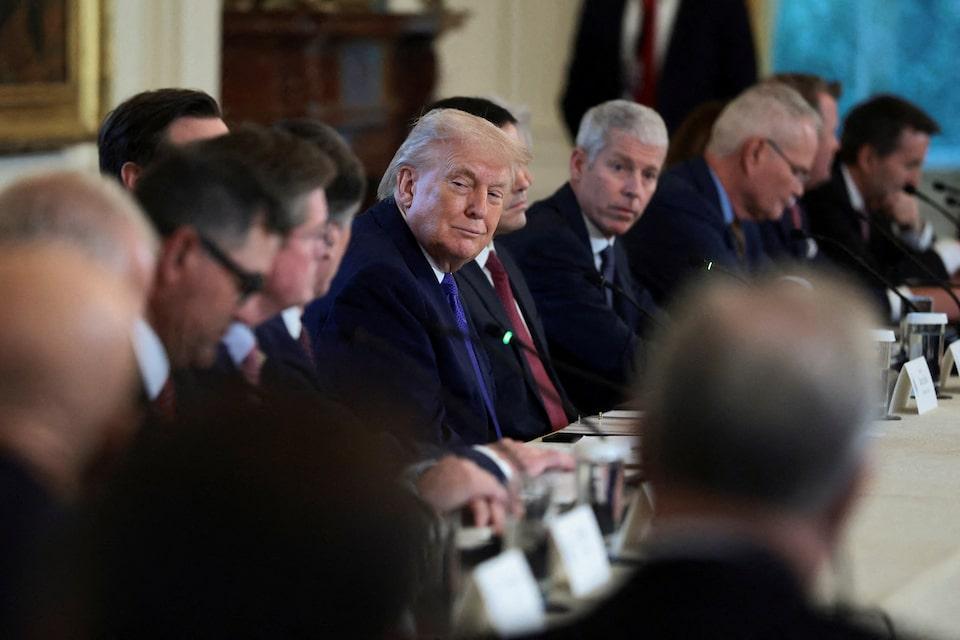
LONDON, Jan 12 (Reuters) - Big Oil companies have injected a heavy dose of realism into U.S. President Donald Trump's plan to rapidly invest billions in Venezuela, pointing to complex security, commercial and legal requirements to revitalize the country’s crumbling oil industry. On the face of it, Friday's televised White House meeting with the leadership of major U.S. and European oil producers was a win for the U.S. president. It projected a sense of urgency, coming less than a week after the ouster of Venezuela’s President Nicolas Maduro, and Trump received lavish praise from many executives around the table. Sign up here. But the meeting was far from a ringing endorsement of Trump’s ambitions to see energy giants pour $100 billion into Venezuela's oil industry, dramatically increasing its current production of around 900,000 barrels per day. Indeed, Exxon Mobil (XOM.N) , opens new tab CEO Darren Woods asserted that the Latin American country was currently "un-investible" from a commercial and legal standpoint. That may seem like stating the obvious. Venezuela has been subject to tough U.S. sanctions for nearly a decade, and its economy has suffered from decades of corruption and mismanagement. Changing this reality would require several significant steps, beginning with the establishment of a government that can guarantee security on the ground and provide economic stability and fiscal confidence. All that could take months, if not years. NEED FOR SPEED Nevertheless, the Trump administration is moving fast. Washington is working on lifting some sanctions on Caracas, Treasury Secretary Scott Bessent told Reuters on Saturday, which would help stabilize the economy and facilitate the sale of Venezuela's oil, providing the country with badly needed cash. However, more sanctions would have to be removed to allow oil companies to engage with national oil company PDVSA and for major oil services providers such as SLB (SLB.N) , opens new tab and Halliburton (HAL.N) , opens new tab to bring in essential drilling equipment, said Carlos Bellorin, analyst at consultancy firm Welligence. Removing these restrictions could help unlock investment in so-called “low-hanging” barrels, including capital to revive wellheads that were abandoned in recent years and revitalise basic infrastructure from pipelines to port facilities. Chevron (CVX.N) , opens new tab, the only U.S. company currently operating in Venezuela under a special licence, could lift its production by 50% within two years, from current levels of around 240,000 bpd, by upgrading equipment already in place, its Vice Chairman Mark Nelson told Trump on Friday. On top of this, Spanish oil firm Repsol (REP.MC) , opens new tab could triple its production of 45,000 bpd within two to three years, its CEO Josu Jon Imaz said at the meeting. GETTING MONEY BACK But we are talking about relatively small numbers here, probably a production increase of up to 200,000 bpd over the next year or so, and other hurdles remain. Most of the large international oil majors present in the White House meeting have a long history in Venezuela, meaning they have all had their fingers burned. Two waves of oil industry nationalisation in the 1970s and 2000s forced many of them to hastily withdraw from the country, leaving behind huge losses they have yet to recoup. "Oilfield service providers could be reluctant to commit resources in Venezuela because they’re still owed massive amount of money. So Venezuela should commit to pay oilfield service providers that debt as a way to have them in back," Welligence’s Bellorin said. But Trump appears to be suggesting the opposite. When ConocoPhillips (COP.N) , opens new tab CEO Ryan Lance said his company was still owed around $12 billion from the 2007 nationalization of its assets, Trump proposed Conoco could write the debt off despite years of fighting Caracas in international courts. Lance proposed involving the U.S. Export-Import Bank (EXIM) to restructure Venezuela’s debt to companies, which Trump appeared to reject. GETTING OIL OUT In the long run, unlocking Venezuela's production, which at its recent peak in the 1990s exceeded 3.5 million bpd, will require fundamental changes to laws governing the country's hydrocarbon sector. For starters, Venezuela could revisit requirements for mandatory state participation in upstream joint ventures, which stands at more than 50%. Caracas could also reduce the oil industry’s royalty and income tax rates of 30% and 50%, respectively, and modify PDVSA's monopoly on marketing oil, according to Bellorin. Below ground, questions remain over the quality of Venezuela’s oil. Though the country boasts the world’s largest proven reserves, most of this is classified as heavy oil, which is typically more expensive to extract than other grades. What’s more, many of Venezuela’s reserves are held by joint ventures with Chinese and Russian firms. To attract substantial investments from international companies that have a fiduciary duty to shareholders, substantive financial and legal changes would be needed. Verbal commitments from Trump will very likely not be enough to get companies to divert billions of dollars to Venezuela. The industry would need long-term certainty. "We take a very long-term perspective,” Exxon’s Woods said. “The investments that we make span decades and decades. So, we do not go into any opportunity with a short-term mindset." CHECKMATE? The U.S. oil companies may be throwing a wet blanket on Trump's ambitions, but the energy execs are in a tricky spot. Any signs of reluctance to invest in Venezuela risk raising Trump’s ire. And the White House has shown its willingness to play hardball when it feels U.S. businesses’ actions are not aligned with its interests. Just look at the attacks on law firms and the recent threats to limit defence companies’ ability to return cash to shareholders. In this environment, energy boards could determine that sinking a modest amount of money into Venezuela may be worth it, even if it’s not the best choice on paper, given the potential blowback from the administration otherwise. But even if Venezuela sees a flurry of activity in the next few years, leading to moderate increases in the country’s oil production and sales on the open market, this likely will not be enough to make Venezuela’s oil industry great again. For that, concrete action, not promises, will be needed. Want to receive my column in your inbox every Monday and Thursday, along with additional energy insights and links to trending stories? Sign up for my Power Up newsletter here. Enjoying this column? Check out Reuters Open Interest (ROI), , opens new tab your essential new source for global financial commentary. ROI delivers thought-provoking, data-driven analysis. Markets are moving faster than ever. ROI , opens new tab can help you keep up. Follow ROI on LinkedIn , opens new tab and X. , opens new tab The views expressed here are those of the author, a columnist for Reuters. https://www.reuters.com/markets/commodities/big-oil-offers-reality-check-trumps-venezuela-dream-2026-01-12/
2026-01-12 06:46
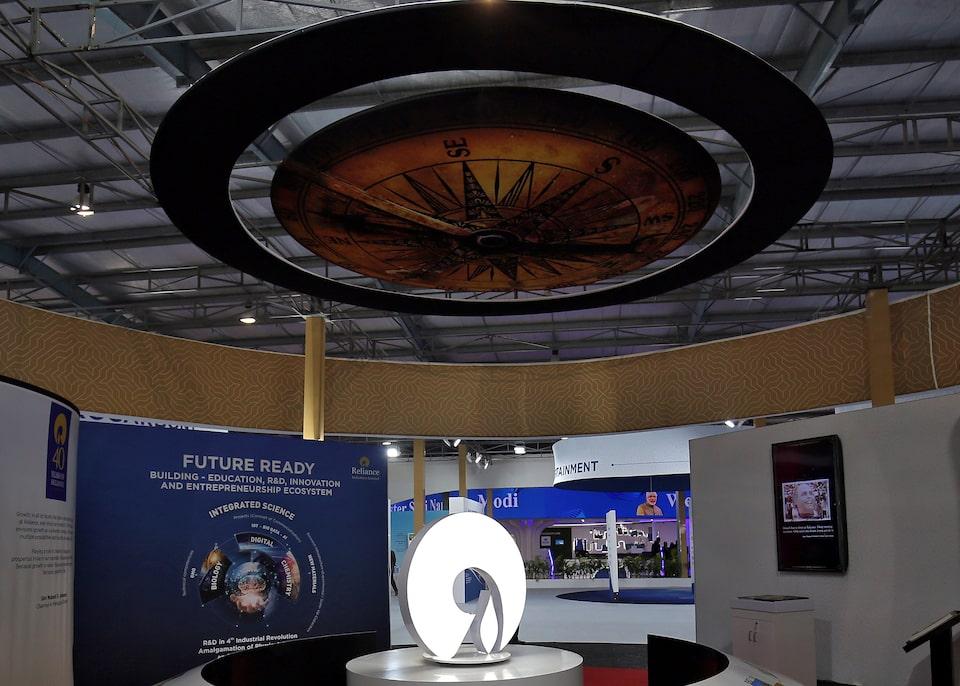
Jan 12 (Reuters) - India's Reliance Industries (RELI.NS) , opens new tab said on Monday that its plans for battery storage manufacturing remain unchanged, following a Bloomberg News report that said the conglomerate had paused plans to make lithium-ion battery cells in India after failing to secure Chinese technology. "Reliance Industries strongly and categorically affirms that there has been no change in our plans for creating a world leading battery storage manufacturing ecosystem from Cell to containerised ESS (energy storage system) and that they are progressing well in line with our target timelines," a company spokesperson said in an email to Reuters. Sign up here. The Mukesh Ambani-led conglomerate, which aimed to start manufacturing cells this year, had been in discussions with Chinese firm Xiamen Hithium Energy Storage Technology to license cell technology, Bloomberg News reported on Sunday, citing people who did not want to be identified. The talks stalled after Xiamen withdrew from the proposed partnership following China's curbs on overseas technology transfers in key sectors, prompting Reliance to refocus on assembling battery energy storage systems, the report said. Reuters could not immediately verify the report. Last October, Beijing announced controls on exports of lithium battery components, requiring exporters to obtain permits, tightening China's grip on technology critical for energy storage and electric vehicles. https://www.reuters.com/world/china/indias-reliance-pauses-cell-making-plans-bloomberg-news-reports-2026-01-12/
2026-01-12 06:44
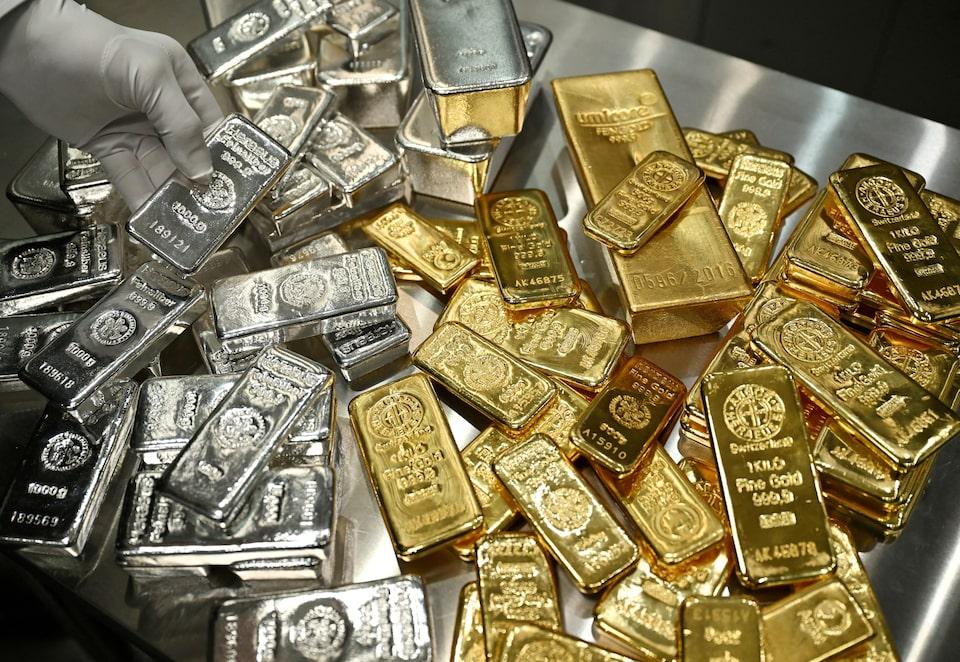
Trump team threatens Fed's Powell with criminal indictment Gold rally's underlying backdrop likely to persist, says analyst Silver hits record high at $86.22/oz Jan 12 (Reuters) - Gold hit a record above $4,600 per ounce on Monday and silver reached a fresh peak as investors piled into safe-haven assets after uncertainty deepened over a Trump administration criminal probe into Federal Reserve Chair Jerome Powell. Spot gold was up 2.2% at $4,609.58 per ounce as of 1:38 p.m. ET (1838 GMT), after earlier hitting a record high of $4,629.94. U.S. gold futures for February delivery settled 2.5% higher at $4,614.70. Sign up here. "Elevated uncertainty plays directly into the gold market, (and) every week we seem to have another area of uncertainty added," said Michael Haigh, global head of commodities research at Societe Generale. The backdrop underpinning the rally looked unlikely to reverse anytime soon, he added. Gold surged more than 64% last year, its best performance since 1979, while silver logged its strongest year on record with a 146.8% gain. U.S. President Donald Trump's administration has intensified pressure on the Fed, threatening to indict Chair Jerome Powell over his comments on a building renovation project, an act Powell called a "pretext" to gain control over rate cuts Trump seeks. Powell's term ends in May. The Trump administration is expected to interview BlackRock's Rick Rieder as a potential candidate to succeed him, Fox News reported. The Fed is expected to hold rates steady at its January 27–28 meeting, after cutting them by 75 basis points last year. However, markets are still pricing in two further rate cuts later this year, boosting appetite for non-yielding assets like gold. Geopolitical tensions also remained elevated as Trump weighed potential responses to a deadly crackdown on protests in Iran, following his removal of Venezuelan President Nicolas Maduro and floating the idea of acquiring Greenland. Spot silver hit an all-time high of $86.22, and was later up 6.8% at $85.39 per ounce. Gold and silver "go together", said Ned Naylor-Leyland, gold and silver fund manager at Jupiter Asset Management, but "when silver captures flow, (it) really runs because it's a smaller channel and it's more sensitive to the flows in and out". Spot platinum climbed 3% to $2,342.10 per ounce, while palladium gained 2.5% to $1,861.44. https://www.reuters.com/world/india/gold-silver-notch-record-highs-safe-haven-demand-fed-rate-cut-bets-2026-01-12/
2026-01-12 06:00
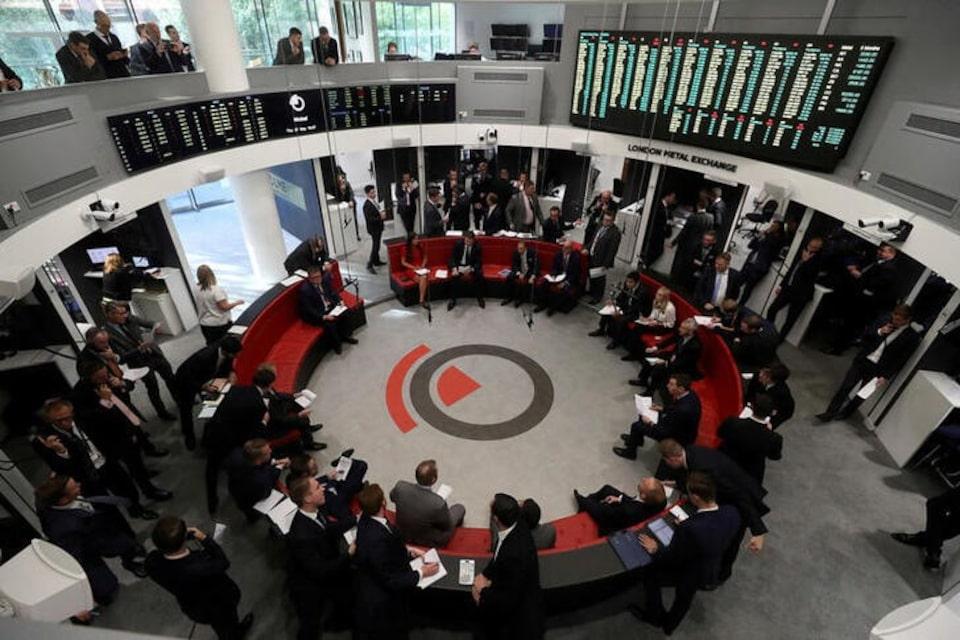
LONDON, Jan 9 (Reuters) - Nickel's turbo-charged rally was snuffed out on Wednesday by a super-sized delivery of the battery metal on the London Metal Exchange (LME). The warranting of 20,760 metric tons was the largest single-day inflow of nickel since December 2019. Sign up here. By the end of the day the LME three-month nickel price had fallen from a 19-month high of $18,800 per metric ton to $17,895. Yet the sudden "arrival" of so much nickel shouldn't have come as a surprise. While LME registered nickel stocks had been flat-lining since September, off-warrant inventory had been steadily accumulating in LME warehouses in Singapore and the Taiwanese port of Kaohsiung, which accounted for most of Wednesday's stocks action. LME registered stocks have long been a notoriously unreliable price signal, often reflecting warehousing rather than metal dynamics. Shifts in LME off-warrant inventory, metal that is sitting in an LME warehouse but not yet delivered to the market, are a useful tool for cutting through the noise. Right now these shadow stocks are shining a light on very divergent supply dynamics within the LME metals pack, ranging from glut to shortfall. NICKEL GLUT AND LEAD CHURN LME stocks of nickel, both registered and off-warrant, rose by 57.6% to 367,310 tons over the course of 2025. It was the largest increase among the core LME base metals, both in terms of sheer volume and relative to the size of the global market. A sharp 34,000-ton jump in off-warrant inventory in December foreshadowed Wednesday's surge in headline registered stocks. The other LME metal in chronic oversupply is lead, which has become the metal of choice for stocks financiers looking to arbitrage warehousing deals. The tussle for units, most of which are located in Singapore, has generated massive churn in registered stocks. Over a million tons of lead moved in and out of the system last year. Masked by all that noise was a steady build in off-warrant stocks, which grew from 42,000 to 200,000 tons over the course of 2025. That was much more significant than the marginal 2,875-ton decline in headline registered stocks and propelled total inventory to 438,853 tons, the highest in over a decade. ALUMINIUM DEFICIT Aluminium stocks have in the past been the battleground for titanic tugs-of-war between traders and warehouses, much of the action playing out at Malaysia's Port Klang. The metal churn hasn't stopped. There was a huge single-day inflow of 102,275 tons to registered stocks as recently as October. But the velocity of the Malaysian roundabout is muted relative to previous years. Falling off-warrant stocks help explain why. Shadow inventory in the LME system fell by 56% to 159,890 tons during 2025, leaving less available for warehouse trading. Total aluminium inventory ended the year at 669,140 tons, the lowest level since mid-2022, reinforcing a change in aluminium narrative , opens new tab that has seen the LME three-month price rally above the $3,100-per-ton level for the first time since March 2022. SHIFTING DYNAMICS IN COPPER AND ZINC LME combined registered and off-warrant copper inventory fell by a third to 214,900 tons last year. However, any bullish signal should be tempered by the fact that so much metal has been shifted to the U.S. to profit from the tariff arbitrage between CME and LME prices. LME stocks may have fallen in 2025 but CME inventory rose by 367,000 tons to a multi-year high of 451,838 tons. The gravitational pull of units towards the U.S. is even evident in LME off-warrant stocks. Shadow inventory in Baltimore and New Orleans rose from just 1,900 tons in April to 18,100 tons at the end of December. Zinc is a market shifting in a different way. The near depletion of LME off-warrant stocks in the first half of 2025 foreshadowed the ferocious squeeze that gripped the market in October. The reaction has been a surge in metal deliveries to the LME. Total stocks jumped by over 84,000 tons in November and December, which will likely reinforce the consensus view that 2026 is the year zinc shifts decisively from supply deficit to surplus. TIN STOCKS AT TWO-YEAR HIGH LME tin has been on a tear recently, the price rising above the $45,000-per-ton level for the first time since 2022 as the market prices in multiple supply threats. However, fans of the soldering metal should note that total LME inventory closed last year at a two-year high of 8,039 tons thanks to a rapid build of over 2,300 tons in December. While bulls are pricing in future scarcity, the LME stocks picture is one of current good availability. HIDDEN COBALT The LME's cobalt contract sparked back to life in 2025 after several years of inactivity. The reason lies in the LME storage shadows. The only cobalt showing up in the LME's daily registered stocks release is 123 tons of metal that has been cancelled in preparation for physical load-out. However, it's dwarfed by the 2,456 tons sitting in off-warrant storage in Singapore and Rotterdam. ENHANCED STOCKS SIGNAL The LME introduced off-warrant stocks reporting in 2020 and tweaked it again in 2025, publishing the information daily rather than weekly and simplifying the reporting rules for warehouses. It has been an overlooked part of the broader overhaul of the exchange's regulatory structure after the nickel crisis of 2022. The aim was to improve transparency and in the case of cobalt it's certainly done so. Without the LME's off-warrant reports, the presence of so much cobalt in the LME storage system would have been unknown other than to those directly involved. But more generally, the layering of shadow stocks over headline registered stocks helps restore some of LME stocks' lost signalling power. Andy Home is a Reuters columnist. The opinions expressed are his own. Enjoying this column? Check out Reuters Open Interest (ROI) for thought-provoking, data-driven commentary on markets and finance. Follow ROI on LinkedIn , opens new tab and X , opens new tab. https://www.reuters.com/markets/commodities/metals/nickel-gluts-zinc-deficits-lme-shadow-stocks-tell-story-2026-01-09/
2026-01-12 05:56
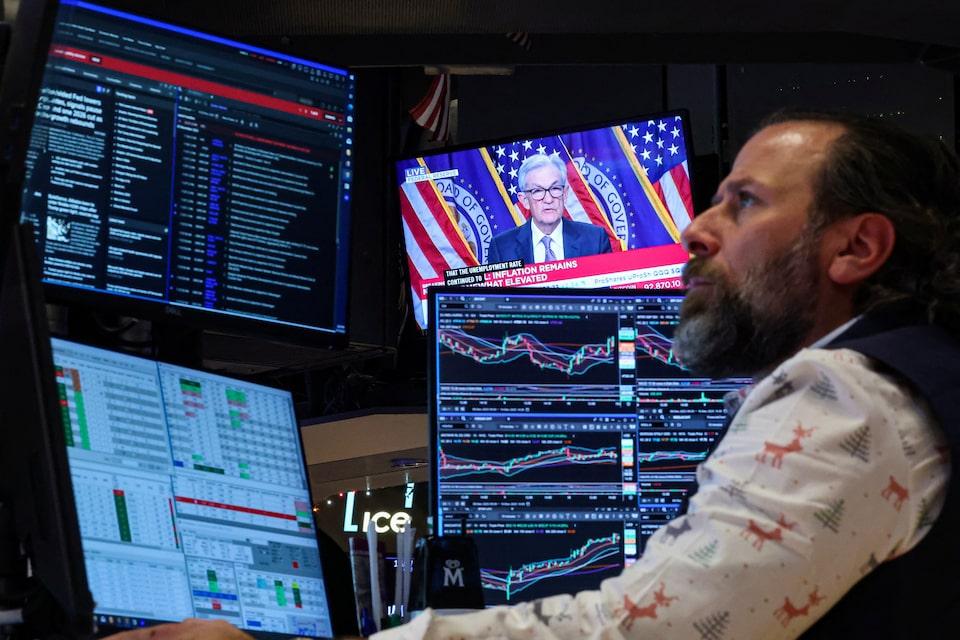
Major Wall Street indexes close at record highs from lower start Powell accuses government of using legal system against Fed Dollar loses its 'New Year bounce' Gold hits record $4,600 an ounce, oil hits 7-week high Jan 12 (Reuters) - Wall Street stock indexes and U.S. government bonds steadied on Monday as traders digested the Trump administration's threat to indict the Federal Reserve, although renewed questions about the independence of the world's most influential central bank weighed on the dollar and boosted gold. Fed chair Jerome Powell delivered an unusually full-throated rejection of the Department of Justice's service of grand jury subpoenas, adding to what Morgan Stanley analysts called a "cacophony of market-moving events" to start what is only the second full week of 2026. Sign up here. Trump's statement that he was considering military action after a crackdown on protests in Iran added further potential tension following the capture of Venezuela's Nicolas Maduro and suggestion the U.S. could try to acquire Greenland. The benchmark S&P 500 (.SPX) , opens new tab and blue-chip Dow Jones Industrial average inched up 0.16% and 0.17% respectively to record closing highs of 6,977.27 and 49,590.20. The Nasdaq Composite (.IXIC) , opens new tab rose 0.26% on the day, buoyed by retail giant Walmart, which moved its listing there last month. The yield on benchmark U.S. 10-year notes rose 1.8 basis points to 4.189%, having touched 4.207% during the session. "Any time you have a new angle on something, the market reads it, trades on it a little bit, it has to digest it, and then it realizes this is just new news that's consistent with prior events that have come out," said Jim Barnes, director of fixed income at Bryn Mawr Trust in Berwyn, Pennsylvania. "It feels as if the Fed is a tough institution to break, and so this is going to keep going on, though it's not going to go away, the persistencies will probably be there and the market is just going to have to take it in stride." The dollar felt some pain, with the index that measures the greenback against a basket of major currencies, falling 0.34% to 98.90, with the euro up 0.25% at $1.1666. "This just ended the dollar's New Year bounce," said Marc Chandler, chief market strategist at Bannockburn Global Forex in New York. "The subpoenas have probably overwhelmed the geopolitics." Gold hit a record high above $4,600 an ounce during the session but retreated to last be seen 1.84% higher at $4,592.55. Oil prices settled at seven-week highs on concerns about disruption in Iran, which outweighed prospects for more supply from Venezuela, whose oil exports have long been bound by sanctions. Brent futures rose 53 cents, or 0.8%, to settle at $63.87 a barrel. U.S. crude rose 38 cents, or 0.6%, to settle at $59.50. It was Brent's highest settlement since Nov. 18 and WTI's highest since Dec. 5. CREDIT CARD RATE CAP RATTLES INVESTORS Stock in lenders and credit card firms fell harder than other sectors, after Trump's call on Friday for a one-year cap on credit card interest rates at 10% starting on Jan. 20. Citigroup (C.N) , opens new tab tumbled. Credit-card firm American Express (AXP.N) , opens new tab also fell, as did consumer finance firms, including Capital One (COF.N) , opens new tab. "Based on very preliminary calculations, Citi would have the highest hit and next US Bancorp," JPMorgan analysts said in a note, explaining that US Bancorp "has credit card loans with higher rates, implying that it has more subprime customers." Closely watched developments to come this week include U.S. inflation data, trade figures from China and a slew of U.S. earnings beginning with JPMorgan (JPM.N) , opens new tab and BNY (BK.N) , opens new tab on Tuesday. Markets will continue to weigh the dramatic escalation in the fight between Powell and Trump, which dates back to the banker's first years as chair in 2018. "Trump is pulling at the loose threads of central bank independence," said Andrew Lilley, chief rates strategist at Barrenjoey, an investment bank based in Sydney. "Investors won't be happy about it, but it shows actually Trump has no other levers to pull. The cash rate will stay what the majority of the FOMC wants them to be." Deutsche Bank analysts totted up the various factors markets will have to weigh. "Remarkable stuff and, all in all, plenty of opportunities for big headlines over the coming days," they said in a note. https://www.reuters.com/business/finance/global-markets-global-markets-2026-01-12/
2026-01-12 05:56
A look at the day ahead in European and global markets from Ankur Banerjee Investors are still wrapping their heads around the latest escalation in the tussle between U.S. President Donald Trump and the Federal Reserve, with Chair Jerome Powell fighting back against the effort to control the Fed and interest rates. Sign up here. Growing unrest in Iran, where more than 500 people have been killed, according to a rights group, also underscored the geopolitical challenges markets are navigating at the start of 2026, keeping safe-haven assets well supported. Markets began trade on Monday with the bombshell that the Trump administration had threatened to indict Powell over Congressional testimony he gave last summer about a Fed building renovation project. Powell says it's a "pretext" to gain more influence over the central bank and monetary policy. "This is about whether the Fed will be able to continue to set interest rates based on evidence and economic conditions - or whether instead monetary policy will be directed by political pressure or intimidation," Powell said , opens new tab. The market's immediate reaction was to sell the dollar and take stock futures lower, although what it means for interest rates isn't so clear. Gold prices cracked $4,600 per ounce for the first time as investors sought safety. The news was unsettling but market reaction was measured. There were no signs of panic selling as investors await clarity on the implications to the Fed's autonomy and where rates head in the near term. Perhaps markets now broadly expect the Fed to kowtow to Trump and cut rates freely once the new Fed chief settles in after May when Powell's term ends. Futures pricing still shows two rate cuts priced in for the year. With Japanese markets closed on Monday, there was no cash trading in Treasuries in Asian hours. The focus will be on the Treasury market once London opens. Key developments that could influence markets on Monday: Economic event - Germany account balance for November, euro zone sentix index for January https://www.reuters.com/world/china/global-markets-view-europe-2026-01-12/