2025-03-12 03:45
Yield moves reflect market views on BOJ rate outlook, Ueda says Natural for yields to move reflecting market forecasts Remarks come in wake of volatile moves in JGB yields Ueda says 'very worried' of overseas uncertainty BOJ seen keeping rates steady in March, focus on overseas risks TOKYO, March 12 (Reuters) - Bank of Japan Governor Kazuo Ueda on Wednesday took in stride recent rises in bond yields, saying they were a natural reflection of market expectations of future interest rate hikes by the central bank. The remarks underscore the BOJ's resolve to keep raising short-term interest rates, and to allow markets to freely price in the chance of further hikes in borrowing costs. While long-term interest rates have risen since last year, their moves should primarily be determined by market forces, Ueda told parliament. "Long-term interest rates move on various factors. But the biggest determinant is the market's forecast on the outlook for our short-term policy rate," Ueda told parliament on Wednesday. "It's natural for long-term rates to move in a way that reflects such market forecasts," he said. There was no big divergence between the BOJ's view and that of markets, he added, when asked about the recent steady rise in bond yields. Markets have been focusing on whether the BOJ would issue a fresh warning after Japanese government bond (JGB) yields rose to their highest levels in more than a decade this week. Ueda's remarks highlight the central bank's intention to phase out its presence from the bond market and convince investors that having ended its bond yield control policy last year, it will no longer step in to keep yields ultra-low. In a speech last week, BOJ Deputy Governor Shinichi Uchida said a healthy, functioning market requires traders to form their own view on the central bank's rate path based on their projections on the economic outlook - signaling the bank's preference to allow market forces to determine yield moves. The benchmark 10-year yield hit a 16-year high of 1.575% on Monday, before sliding to 1.525% on Tuesday as investors sought safe-haven debt in the wake of sharp falls in U.S. and Japanese stock prices. It stood at 1.530% on Wednesday. GLOBAL UNCERTAINTY LOOMS Among factors driving up JGB yields were growing expectations the BOJ could raise rates sooner than initially thought on prospects of sustained wage and price gains. Japan's wholesale inflation, which is a leading indicator of consumer price moves, hit 4% year-on-year in February. Many big companies on Wednesday met union demands for substantial wage hikes for a third consecutive year. But the outlook for Japan's export-reliant economy has been clouded by fears higher U.S. tariffs could hurt global growth, which may prod the BOJ to go slow in raising rates. Speaking at a separate parliament session later on Wednesday, Ueda said he was "very worried" about uncertainty surrounding overseas economic developments. "At present, underlying inflation remains below 2%," he added. The BOJ is widely expected to keep interest rates steady at 0.5% at its policy review later this month, though the board may discuss a hike as soon as in May with an eye on domestic inflation and market volatility, sources have told Reuters. A majority of economists polled by Reuters expect the BOJ to hike rates again sometime during the third quarter. The BOJ ended its huge monetary stimulus last year, including a policy capping long-term rates around zero, on the view Japan was on the cusp of durably hitting its 2% inflation target. The central bank raised its short-term policy rate to 0.5% from 0.25% in January, and signaled readiness to keep hiking if wages continue to increase and support consumption. Sign up here. https://www.reuters.com/markets/asia/boj-refrains-issuing-fresh-warnings-about-rising-bond-yields-2025-03-12/
2025-03-12 02:39
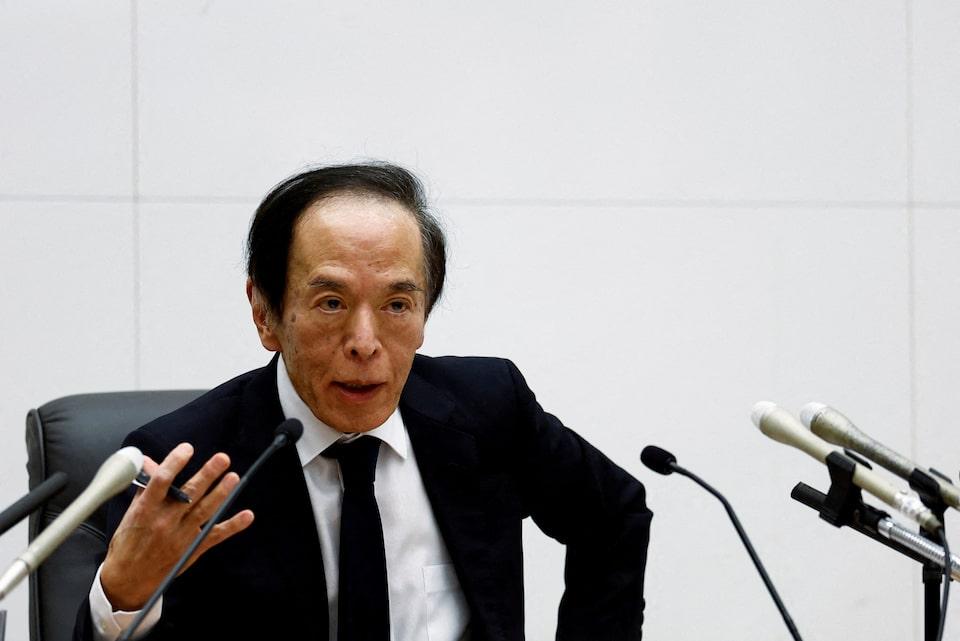
MUMBAI, March 12 (Reuters) - The Indian rupee is expected to open flat-to-slightly lower on Wednesday as worries about a slowdown in the U.S. economy continue to dampen risk appetite, while persistent portfolio outflows also weigh on the currency. The one-month non-deliverable forward indicates that the rupee will open at 87.22-87.24 to the U.S. dollar compared with its previous close of 87.2125. Unpredictable tariff policies under U.S. President Donald Trump have raised concerns about the U.S economy, prompting traders to add to bets on rate cuts by the Federal Reserve and hurting the dollar. Traders are pricing in about 80 basis points of Federal Reserve rate cuts this year, up from around 72 bps last week. The dollar index was hovering near a five-month low at 103.5 in Asia trading. Trump had pledged to double tariffs on Canadian steel and aluminium imports to 50% on Tuesday, only to reverse course just hours later. Other Asian currencies were mostly weaker, with the Malaysian ringgit and Indonesian rupiah leading losses. In addition to uncertainty stemming from fluctuating U.S. trade policies, a persistent exodus of foreign portfolio investors from Indian stocks has been a sore point for the rupee. Overseas investors have net pulled out over $16 billion from local stocks in 2025. Focus will be on India and U.S. consumer inflation data due later in the day. India's CPI is expected to have eased to 3.98%, while month-on-month U.S. core CPI likely dipped to 0.3% in February, according to Reuters polls. The data is expected to influence expectations of rate cuts by the countries' central banks. "We think that RBI (Reserve Bank of India) is continuing to pivot towards growth and we think that the bias for INR is for it to still climb weaker through 2025," MUFG Bank said in a note. KEY INDICATORS: ** One-month non-deliverable rupee forward at 87.45; onshore one-month forward premium at 22.25 paisa ** Dollar index at 103.48 ** Brent crude futures up 0.7% at $70 per barrel ** Ten-year U.S. note yield at 4.27% ** As per NSDL data, foreign investors sold a net $57.1 million worth of Indian shares on March 10 ** NSDL data shows foreign investors bought a net $80.9 million worth of Indian bonds on March 10 Sign up here. https://www.reuters.com/markets/currencies/us-economic-worries-portfolio-outflows-may-keep-rupee-defensive-2025-03-12/
2025-03-11 23:58
Department offices ordered shut down until Thursday Agencies cut workers using lump-sum payments, early retirement Thursday is deadline to submit plans for large-scale layoffs Workers would receive buyout payment of up to $25,000 WASHINGTON, March 11 (Reuters) - The U.S. Department of Education said on Tuesday it would lay off nearly half its staff, a possible precursor to closing altogether, as government agencies scrambled to meet President Donald Trump's deadline to submit plans for a second round of mass layoffs. The terminations are part of the department's "final mission," it said in a press release, alluding to Trump's vow to eliminate the department, which oversees $1.6 trillion in college loans, enforces civil rights laws in schools and provides federal funding for needy districts. Asked on Fox News whether the firings would lead to the department's dismantling, Secretary of Education Linda McMahon said "yes," adding that doing so "was the president's mandate." The layoffs would leave the department with 2,183 workers, down from 4,133 when Trump took office in January. Before announcing the layoffs, the agency ordered offices in the Washington area closed to staff from Tuesday evening through Wednesday, according to an internal notice seen by Reuters. An Education Department spokesperson did not immediately respond to questions about the nature of the security issues prompting the closures. Similar closures served as a precursor to shuttering the headquarters of the U.S. Agency for International Development, the humanitarian aid agency, and the Consumer Financial Protection Bureau, which protects Americans against unscrupulous lenders. The layoffs are the latest step in Trump's sweeping effort to downsize the government, led by the world's richest person Elon Musk and his Department of Government Efficiency. DOGE has cut more than 100,000 jobs across the 2.3 million-member federal civilian bureaucracy, frozen most foreign aid and canceled thousands of programs and contracts, despite dozens of lawsuits challenging the legality of those moves. DOGE's blunt-force approach has frustrated several White House officials and Republican lawmakers, some of whom have confronted angry constituents at town halls. Trump told department heads last week that they, not Musk, have the final say on staffing, his first notable public move to restrain the Tesla CEO. All U.S. government agencies have been ordered to come up with large-scale layoff plans by Thursday, setting up the next phase of Trump's cost-cutting campaign. Several agencies have offered employees payments to retire early to fulfill Trump's demand. Affected Education Department employees will be placed on administrative leave starting on March 21, the department said. The union representing more than 2,800 department workers said it would fight the "draconian cuts." "What is clear from the past weeks of mass firings, chaos, and unchecked unprofessionalism is that this regime has no respect for the thousands of workers who have dedicated their careers to serve their fellow Americans," said Sheria Smith, president of the American Federation of Government Employees Local 252. Trump and Musk have argued that the government is wasteful and bloated. DOGE claims it has saved $105 billion in cuts, but it has only publicly documented a fraction of those savings, and its accounting has been plagued by errors. The federal government reported an estimated $162 billion in improper payments in fiscal year 2024, according to a U.S. Government Accountability Office annual report released on Tuesday. The vast majority were overpayments, the report said. Total federal outlays topped $6.75 trillion in that fiscal year, according to the Congressional Budget Office. The total improper payments figure was down sharply from 2023's $236 billion, the GAO said. EARLY RETIREMENT OFFERS Other agencies have offered lump-sum payments of up to $25,000 before tax to workers who agree to leave their jobs. Among these are the Office of Personnel Management, the Social Security Administration and the Department of Health and Human Services, including its Food and Drug Administration. The buyout offers, combined with another program that eases eligibility requirements for early retirement, are being embraced as a lower-friction way to help meet the Thursday deadline, human resources specialists at several federal agencies told Reuters. The Trump administration has been grappling with myriad lawsuits after it fired thousands of probationary workers in a first wave of mass layoffs and essentially dismantled entire departments like USAID and CFPB. The General Services Administration, which manages the government's property portfolio, is also seeking approval to offer the buyout payments to workers, according to an email sent by its acting head to staff on Monday and seen by Reuters. The GSA could not be reached for comment outside of U.S. business hours. The Securities and Exchange Commission has already offered bonuses of up to $50,000, Reuters reported. Human resources and public governance experts said the appeal of the buyout program is that it is voluntary and less vulnerable to legal challenges. It also requires workers who have accepted the offer to repay the money if they take another government job within five years. "If your strategy is to get as many people out the door voluntarily, that reduces the risk of court orders and opposition to you in the long run," said Don Moynihan, a public policy professor at the University of Michigan. Only a couple of agencies have telegraphed how many employees they plan to cut in the second phase of layoffs. These include the Department of Veterans Affairs, which is aiming to cut more than 80,000 workers, and the National Oceanic and Atmospheric Administration, which is planning to cut 1,029 staff. Despite the looming deadline, no agency has yet submitted its job-cutting plan to OPM, the government's human resources department that is collating the data, a person familiar with the matter told Reuters. OPM declined to comment. OPM itself has offered lump-sum payments to some 650 of its employees, according to another person with knowledge of the matter. Employees were given until March 12 to respond. On Monday, the HR department of the Food and Drug Administration sent an email to all 19,000 employees announcing a Friday, March 14, deadline for a buyout program. Those who accept would have to retire by April 19. Late on Monday, HHS sweetened its prior offer by adding two months of full pay in addition to the bonus, according to a copy of the email seen by Reuters. HHS could not be reached for comment outside of normal U.S. business hours. Sign up here. https://www.reuters.com/business/healthcare-pharmaceuticals/us-agencies-offer-staff-new-buyouts-ahead-trumps-layoff-deadline-2025-03-11/
2025-03-11 23:54
Army helicopter that collided with American Airlines jet did not have location transmitting on Senate Commerce Committee to hold hearing on March 27 NTSB chair agrees to testify at hearing, FAA and Army Aviation heads yet to respond WASHINGTON, March 11 (Reuters) - Two senators asked the U.S. Army to explain why it routinely failed to use a key safety system during helicopter training flights after a deadly collision in January between an Army Black Hawk helicopter and an American Airlines regional jet killed 67 people. Senate Commerce Committee Chair Ted Cruz and Senator Jerry Moran, who heads an aviation subcommittee, on Tuesday also urged the head of Army Aviation to answer questions about the collision and to testify at a March 27 hearing on the crash. The Black Hawk did not have a key safety system known as ADS-B operating at the time of the collision, investigators say. ADS-B, or automatic dependent surveillance-broadcast, is an advanced surveillance technology that transmits an aircraft's location. U.S. airline group Airlines for America last week called for military aircraft to be required to use ADS-B near large airports to broadcast their position to avoid collisions. The Republican senators also wanted to know how often the Army transports flag officers by helicopter and how often it turns off ADS-B, an action permitted for military aircraft. National Transportation Safety Board Chair Jennifer Homendy has agreed to testify at the hearing before the panel's aviation subcommittee that will examine preliminary findings of the January 29 crash. The committee has also invited the acting head of the Federal Aviation Administration, Chris Rocheleau, and Brigadier General Matthew Braman, who is director of Army Aviation. The FAA declined to say if Rocheleau would appear. The Army did not immediately respond to a request for comment. Civilian airplanes must use ADS-B to broadcast their location, but the FAA in 2019 gave the military an exemption in rare circumstances. It appears the military is routinely failing to use the safety system in training flights, lawmakers say. On Friday, Senator Maria Cantwell, the top Democrat on the Commerce Committee, pressed the Pentagon on its failure to use the system. Transportation Secretary Sean Duffy said on Tuesday the department was continuing discussions with the Pentagon about what they should deploy. Last month, he said it was time to shrink unneeded military flights. "If we have generals who are flying in helicopters for convenience through this airspace, that's not acceptable. Get a damn Suburban and drive - you don't need to take a helicopter," Duffy said. Sign up here. https://www.reuters.com/world/us/ntsb-chair-testify-march-27-hearing-fatal-air-collision-2025-03-11/
2025-03-11 23:43
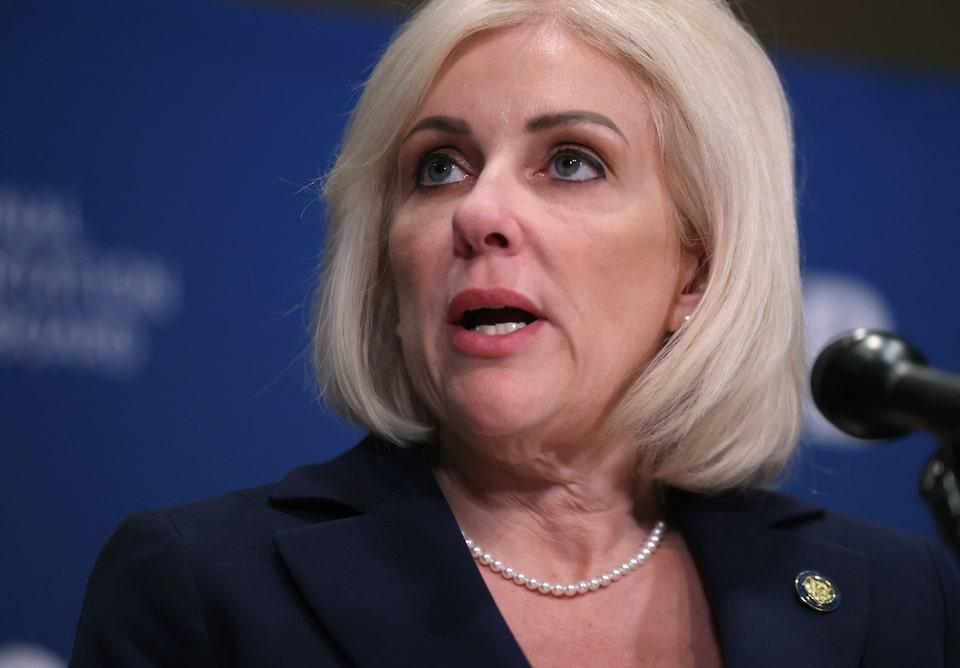
NAPERVILLE, Illinois, March 11 (Reuters) - Every oilseed trader is familiar with the present narrative: the world is awash with soybeans. It's true, global soybean stocks are set to hit record highs later this year. The situation is not exactly tight. But supplies are now expected to fall well short of previously predicted levels. Further, when compared against demand, the supply picture is nearly identical with a year ago, though prices are much lower today. The U.S. Department of Agriculture on Tuesday cut 2024-25 world soybean ending stocks to 121.4 million metric tons from 124.3 million last month. Analysts had expected a slight increase from February, though the actual figure landed below all trade estimates. Stronger consumption in China and Argentina drove this month’s supply cuts, though the resulting stocks would still be up nearly 8% on the year. However, the outlook was far more burdensome a few months ago. USDA in October had pegged a 20% year-on-year surge in world soybean stocks for 2024-25, which ends in September. The 13-million-ton-plus decline since then owes to smaller crops and larger demand, the latter likely encouraged by lower prices. Chicago soybean futures are currently similar to those from October, but the October 2024 prices were 22% lower than in October 2023. In December 2024, soybean prices sank to the lowest levels in more than four years. SAME BOAT AS LAST YEAR Most-active CBOT soybeans on Tuesday settled at $10.11-1/4 per bushel. That is almost 15% lower than on the comparable day a year ago, when USDA pegged 2023-24 global soybean stocks-to-use at 20.57%. But Tuesday’s projections put 2024-25 stocks-to-use ever so slightly lower at 20.54%, down significantly from February’s 21.14% and October’s season-high estimate of 23.05%. The October figure would have had 2024-25 stocks-to-use essentially tying 2018-19’s all-time high. Instead, the ratio is projected just above 2023-24’s final of 20.03%, which was the highest since 2018-19. For context, the five-year average is 18.7% with a low of 17.8% in 2021-22, meaning the 2024-25 projections are on the heavier side of history. But they are certainly less roomy than earlier predictions given 2024-25 global soybean consumption is set to rise 6.4% on the year, the largest annual gain in a decade. CHANCE FOR BULLS? Large speculators briefly adopted a bullish soybean stance earlier this year, though they flipped back to the bearish side at the start of this month. But could declining world soybean supply estimates eventually re-ignite bullish sentiment? Early 2025-26 estimates suggest the U.S. farmer could play to this narrative. USDA last month suggested a contraction in U.S. soybean supplies into 2026 based on smaller plantings in 2025, though some analysts think corn could rob even more soybean acres than the agency proposed. Brazil is currently harvesting a record soybean crop, but weather troubles in the south may have capped further output gains. It is yet to be seen if recent rains can significantly enhance Argentine harvest estimates. Brazilian farmers have the capability in 2025-26 to make up for any perceived soybean shortfalls in 2024-25. Soybean plantings there have risen for 18 consecutive years. China remains the wildcard, as slowing economic growth has soured the demand outlook, especially in the longer term. However, a trade war with Canada, the top supplier of rapeseed and rapeseed meal, could eventually impact China’s soybean needs. Hopeful soybean bulls may be able to take solace in the fact that futures rarely set yearly highs in the beginning months of the year. But with heightened geopolitical and economic uncertainties, it’s entirely possible that 2025 is marching to the beat of its own drum. Karen Braun is a market analyst for Reuters. Views expressed above are her own. Sign up here. https://www.reuters.com/markets/commodities/world-soybean-stockpiles-might-be-smaller-than-they-seem-2025-03-11/
2025-03-11 23:43
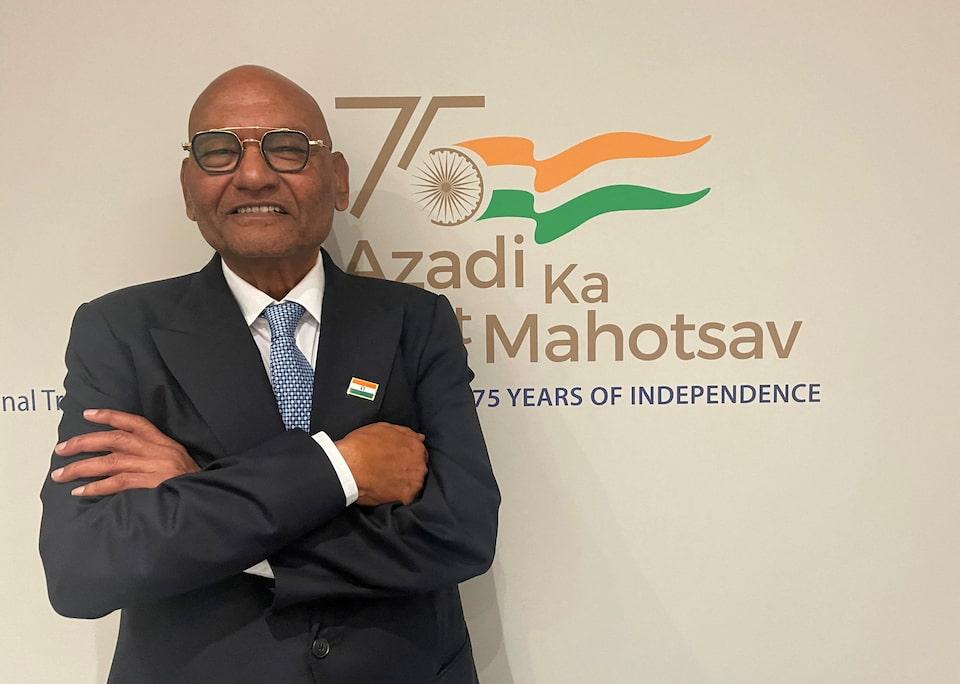
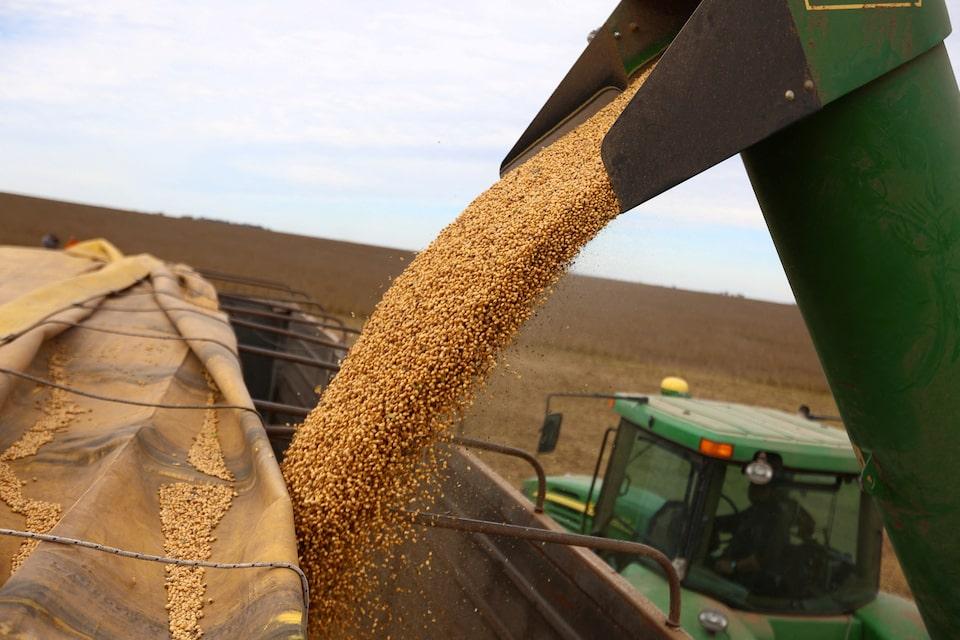
HOUSTON, March 11 (Reuters) - India's largest privately owned oil and gas company Cairn India said it may invest in U.S. service and engineering companies as part of a $5 billion plan to grow output five-fold in the coming years, its chairman said on Tuesday. "I want to spend $5 billion on developing my project to get to 500,000 barrels per day production," billionaire Anil Agarwal told Reuters in an interview. Cairn, part of Vedanta Limited, produces 100,000 bpd today. It plans to drill several deepwater exploration wells next year. Agarwal, speaking during a visit to Houston where he attended the CERAWeek conference, said Cairn seeks to work with 7 or 8 technical partners and buy 5 or 6 drilling rigs for the exploration and development of the offshore project. "We are looking to develop 500 to 600 new wells, we would like at least 20 rigs to work in our field," Agarwal said. "I can invest in the engineering company, the rig company, because that will help me to explore in India better," he said. "I'd love American companies to come join hands and take up this project." Sign up here. https://www.reuters.com/business/energy/ceraweek-billionaire-agarwal-may-invest-us-oil-service-firms-expand-cairn-output-2025-03-11/