2025-03-11 23:37
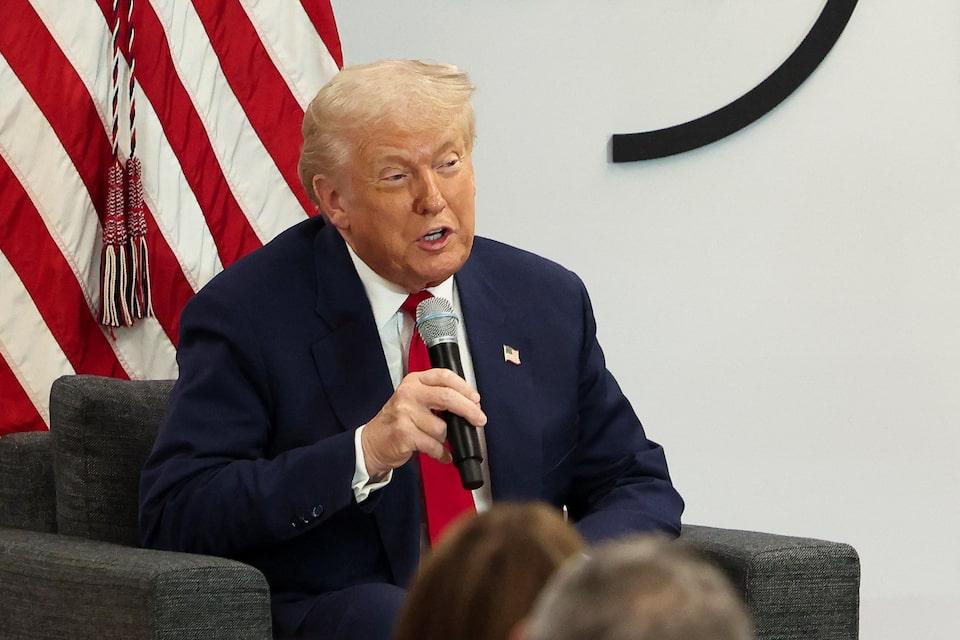
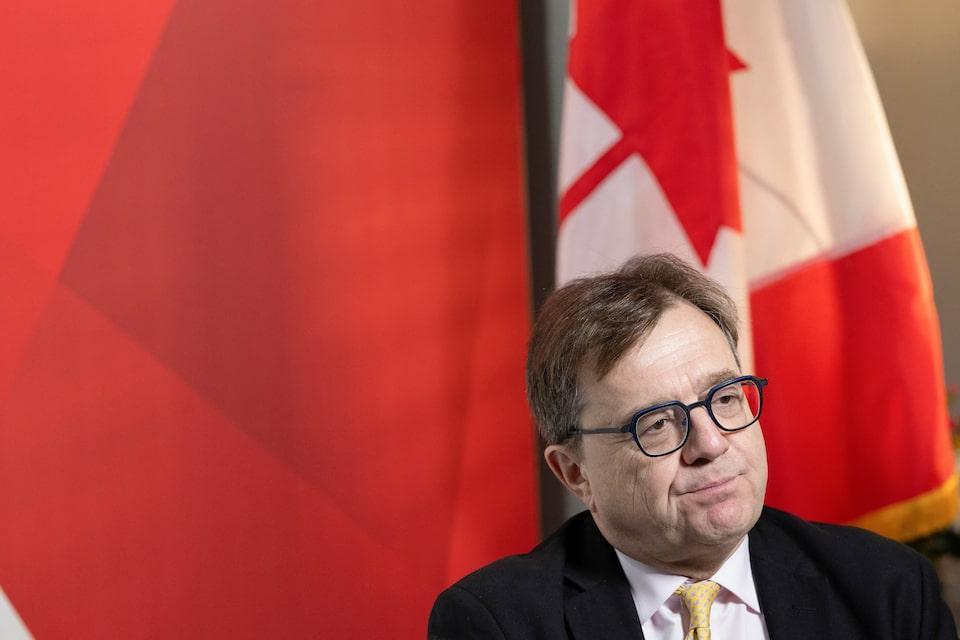
Canada may impose non-tariff measures on oil exports to U.S. Canada considers tariffs on US ethanol amid trade tensions Canadian Energy Minister says everything is on the table HOUSTON, March 11 (Reuters) - Canada could impose non-tariff measures such as restricting its oil exports to the United States or levying export duties on products if a trade dispute with the U.S. escalates further, Canada's energy minister Jonathan Wilkinson said on Tuesday. "When we are talking about non-tariff retaliation, it could be about restricting supply, it could be putting our own export duties on products. It could be energy and minerals, it could be broader than that," Wilkinson said in an interview with Reuters. He also raised the possibility of using non-tariff measures on critical minerals, which could force the U.S. to rely even more heavily on China. "Everything is on the table," he said. Canada is the top supplier of imported oil to the United States, providing around 4 million barrels per day mainly to refineries in the Midwest that are largely engineered to run its grades. U.S. President Donald Trump on Tuesday ramped up the burgeoning trade war with Canada, vowing to double tariffs set to take effect within hours on all imported steel and aluminum products from America's northern neighbor to 50% - although he later said he would likely lower them after Canadian officials agreed to talks. Trump's latest salvo followed Ontario Premier Doug Ford's announcement that he would place a 25% surcharge on the electricity Canada's most populous province supplies to more than one million U.S. homes unless Trump drops all tariff threats against Canada's exports into the U.S. Ford later agreed to suspend the surcharge and meet with U.S. Commerce Secretary Howard Lutnick on Thursday, calling for cooler heads to prevail. Alberta's energy minister, Brian Jean, whose province is home to the bulk of Canada's oil industry, said earlier on Tuesday he wants to de-escalate the dispute, and had provided several options to Washington to do so. Any restrictions on Canada's oil exports to the United States would hurt Canadian producers as Canada is limited in its options to send oil to other markets. "By and large, you couldn't displace the 4 million barrels that we send to the United States in pipelines, but I would say it works on the other side of the bucket too," Wilkinson said, citing some additional capacity on the Trans Mountain pipeline and rail as alternatives to move some of the Canadian oil. "I actually think the oil coming down here (to the United States) in pretty sticky and I don't think it's displaceable and in that regard I don't think the threat to Canada's producers in the oil sector is as significant as perhaps in other sectors," he added. Wilkinson told Reuters Canada is considering imposing tariffs on U.S. ethanol as part of a second tranche of trade penalties if Trump continues to escalate the trade war. U.S. ethanol, a crucial trade product for U.S. farmers, is "absolutely on the list of things" that could be included if Trump, for example, moves forward with plans to impose 25% tariffs on Canadian goods in April, Wilkinson said. Canada has threatened retaliatory tariffs on $155 billion of U.S. imports. Officials identified an initial tranche of $30 billion of goods that would face tariffs but said the remainder of the list is under consideration. U.S. ethanol exports to Canada hit record highs in recent months to help Canada meet its clean fuel program. It is cheaper than Canadian ethanol, Wilkinson said, due to subsidies in the U.S. Renewable Fuel Standard. U.S. farmers sent a record 1.54 million gallons of ethanol to Canada in September of last year, roughly double the figure three years prior, according to the U.S. Energy Information Administration. "We started the day in one place. Things kind of went sideways in a number of directions, and we ended up back at the same place that we were yesterday," Wilkinson said of the rapid-fire moves that scrambled financial markets. "I think it's important that we get to an outcome that involves removing the tariffs very soon." Sign up here. https://www.reuters.com/business/energy/ceraweek-canada-could-restrict-its-oil-exports-us-if-trump-trade-war-escalates-2025-03-11/
2025-03-11 23:00
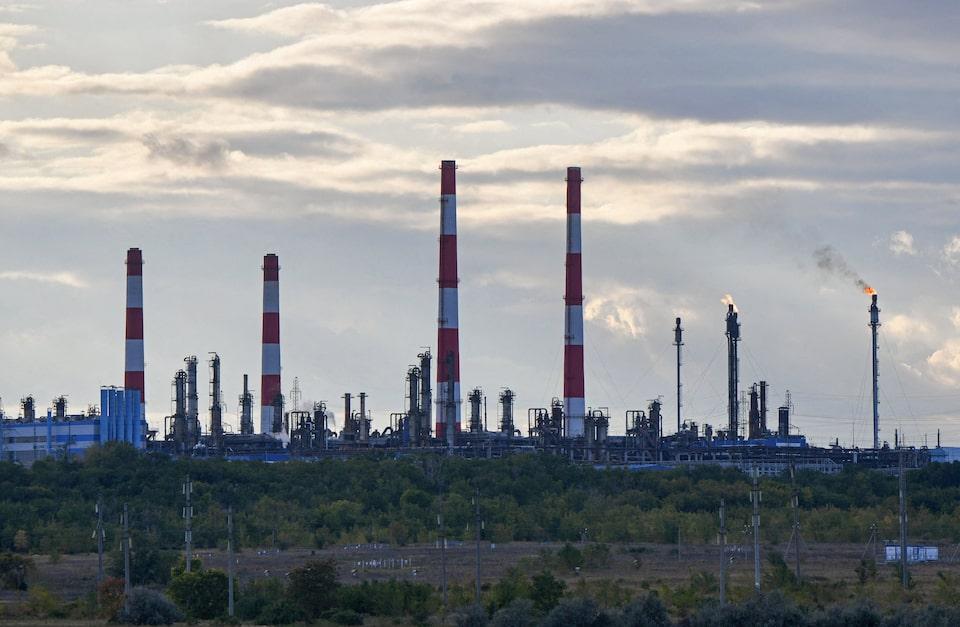
HOUSTON, March 11 (Reuters) - European buyers are unlikely to return to Russia's energy sector if sanctions are lifted, as the bloc has diversified its power mix with renewable energy and alternative gas suppliers, ministers and executives said at a conference in Houston. Ukraine has agreed to accept a U.S. proposal for an immediate 30-day ceasefire and to take steps toward restoring durable peace after Russia's invasion, according to a joint U.S.-Ukraine statement on Tuesday. The U.S. government is studying ways it could ease sanctions on Russia's energy sector as part of a broad plan to enable Washington to deliver swift relief if Moscow agrees to end the Ukraine war, Reuters reported last week. "Do we really want to be dependent on energy from an aggressor like Russia? Obviously not," European Union (EU) Energy Commissioner Dan Jorgensen said during a panel discussion at the conference on Monday. The bloc currently receives 13% of its natural gas from Russia, down from 45% in February 2022, owing to the fast deployment of renewable energy, Jorgensen added. The European Commission put forward an Action Plan last month which will speed up permits for renewable energy projects, change how energy tariffs are set, and increase state aid for clean industries and more flexible power generation. "We want to be independent of fossil fuels, especially from countries like Russia, for our security," Jorgensen said of the plan. Solar generation provided 11% of the EU’s electricity mix in 2024, up from 9.3% in 2023, overtaking coal, according to energy think tank Ember. Coal-fired generation fell to less than 10% for the first time since Ember began collating those figures in 2011, according to data in January. Gas-fired power production fell to a 15.7% share from 16.9% in 2023, according to Ember. "My magic word in energy security is diversification," said Fatih Birol, executive director of the Paris-based International Energy Agency, on the CERAWeek panel alongside Jorgensen. NEW MARKETS While renewable sources are helping Europe shift away from fossil fuel power generation, new markets which emerged following Russia's invasion of Ukraine are likely here to stay. "We have managed to change from Russian gas to other gas suppliers," Holger Lösch, deputy director general of the Federation of German Industries said in an interview. "I think the truth is that Europe probably will try to diversify its gas supply further on," Lösch added. In January, Venture Global Inc's (VG.N) , opens new tab Plaquemines LNG export plant in Louisiana exported more than half a million tonnes of LNG, all to Europe, LSEG, ship tracking data showed. Europe has other options as well as U.S. LNG, including gas from the Middle East, North Africa and Azerbaijan Lösch said. "I don't anticipate Europe going back to a place where they're buying significant amounts of energy from Russia. I think that was a lesson learned," Toby Rice, CEO of EQT (EQT.N) , opens new tab said in an interview at the conference. Market participants may be less keen to commit to staying weaned off Russian supplies if it would lead to cheaper energy, other executives warned. "Why would we shoot ourselves in the foot by having the highest energy costs?" said Torbjorn Tornqvist in an interview, CEO of one of the world's largest oil traders, Gunvor. Sign up here. https://www.reuters.com/business/energy/ceraweek-europe-seeks-avoid-russian-energy-if-sanctions-eased-ministers-execs-2025-03-11/
2025-03-11 22:52
Trump walks back planned tariffs on steel, aluminum products from Canada rising to 50% Ontario Premier Ford vows to impose electricity levy, then suspends it Financial markets whipsawed by uncertainty WASHINGTON/OTTAWA, March 11 (Reuters) - President Donald Trump reversed course on Tuesday afternoon on a pledge to double tariffs on steel and aluminum from Canada to 50%, just hours after announcing the higher tariffs, in rapid-fire moves that scrambled financial markets. The switch came after a Canadian official also backed off his own plans for a 25% surcharge on electricity. Trump's latest salvo, which whipsawed financial markets and rekindled fears of inflation, followed Ontario Premier Doug Ford's announcement that he would place on the electricity Canada's most populous province supplies to more than 1 million U.S. homes unless Trump dropped all of his tariff threats against Canada's exports into the U.S. Faced with Trump's 50% tariff threat, Ford agreed to suspend the surcharge and meet with U.S. Commerce Secretary Howard Lutnick in Washington on Thursday. The White House then announced that only the previously planned 25% tariffs on steel and aluminum products from the United States' northern neighbor and all other countries would take effect on Wednesday - with no exceptions or exemptions. "President Trump has once again used the leverage of the American economy, which is the best and biggest in the world, to deliver a win for the American people," White House spokesperson Kush Desai said in a statement. "Pursuant to his previous executive orders, a 25% tariff on steel and aluminum with no exceptions or exemptions will go into effect for Canada and all of our other trading partners at midnight, March 12th.” The back-and-forth between the U.S. and Canada further unsettled financial markets already battered by Trump's focus on tariffs. After tumbling hard after Trump's initial post on Truth Social, stocks rebounded after Ford said he would suspend the surcharge and Ukraine agreed to a 30-day ceasefire. The S&P 500 index (.SPX) , opens new tab dropped as low as 5,528.41 points, briefly marking a 10% fall from its record closing high of 6,144.15 on February 19, which is commonly known as a market correction. U.S. stocks have fallen hard since reaching a record high about a month after Trump took office on January 20, with nearly $5 trillion of market value erased from U.S. indexes. Trump triggered the selloff with a morning post on his Truth Social media platform, saying he had instructed Lutnick to put an additional 25% tariff on the metals products from Canada that take effect on Wednesday, on top of the 25% on all imported steel and aluminum products from other countries. He also criticized Canada for trade protections on dairy and other agricultural products and threatened to "substantially increase" duties on cars coming into the U.S. that are set to take effect on April 2 "if other egregious, long time Tariffs are not likewise dropped by Canada." The U.S. president shook off the market gyrations, telling reporters that markets would go up and down, but that he had to rebuild the economy. Trump, heartened by Ontario's move, said the tariff rates could rise further, building pressure on countries to move manufacturing into the United States. "The higher it goes, the more likely it is they're going to build ... The biggest win is not the tariffs. That's a big win. It's a lot of money. But the biggest win is they move into our country and produce jobs," he said, insisting the tariffs would "be throwing off a lot of money to this country." The escalation of the trade war occurred as Prime Minister Justin Trudeau prepared to hand over power this week to his successor Mark Carney, who won the leadership race of the ruling Liberals last weekend. On Monday, Carney said he could not speak with Trump until he was sworn in as prime minister. White House press secretary Karoline Leavitt told reporters that Ford's initial comments were "egregious and insulting" and said Canada would be "very wise not to shut off electricity for the American people." Trump was determined to ensure the U.S. relied on its own domestic electricity, she said. Another Canadian province, Alberta, gave U.S. officials options to de-escalate the trade dispute, its energy minister told reporters at the CERAWeek energy conference in Houston. Trump later met with about 100 chief executives of U.S. firms amid evidence that his trade policies could hurt the U.S. economy, threatening to dash a "soft landing" that until recently appeared as the base case and reignite inflation. Before the gathering, airlines, department stores and other businesses warned that his fast-shifting trade policies are starting to have a chilling effect, with consumers pulling back on purchases of everything from basic goods to travel. CONFIDENCE TAKES A HIT Leavitt sparred with an AP reporter over the tariffs during a regular briefing after he questioned why Trump was now backing tax hikes in the form of tariffs after pushing for tax cuts. "Ultimately, when we have fair and balanced trade, which the American people have not seen in decades ... revenues will stay here, wages will go up and our country will be made wealthy again," she said. "And I think it's insulting that you are trying to test my knowledge of economics, and the decisions that this president has made. I now regret giving a question to the Associated Press." Investors are bracing for a further round of tariffs on autos as well as tit-for-tat reciprocal tariffs in early April. Canada and China have retaliated with their own tariffs on U.S. exports, while Mexico stopped short of retaliation after Trump delayed his planned levies on the southern U.S. neighbor. "This is what a trade war looks like," said Josh Lipsky, senior director of the Atlantic Council's GeoEconomics Center. "Tit-for-tat escalation which can quickly spiral to both sides' economic detriment." The metals tariffs will apply to millions of tons of steel and aluminum imports from Canada, Brazil, Mexico, South Korea and other countries that had been entering the U.S. on a duty-free basis under carve-outs. Trump has vowed that the tariffs will be applied "without exceptions or exemptions" in a move he hopes will aid the struggling U.S. industries. Trump's promise to double the metals levies on Canada sent some aluminum prices soaring. Price premiums for aluminum on the U.S. physical market climbed to a record high above $990 a metric ton on Tuesday. Trump's hyper-focus on tariffs since taking office in January has rattled investor, consumer and business confidence in ways that economists increasingly worry could cause a recession. A small business survey on Tuesday showed sentiment weakening for a third straight month, fully eroding a confidence boost following Trump's November 5 election victory, and a survey of households by the New York Federal Reserve on Monday showed consumers growing more pessimistic about their finances, inflation and the job market. Sign up here. https://www.reuters.com/world/americas/trump-says-he-will-raise-tariffs-canada-metals-50-2025-03-11/
2025-03-11 22:49
March 12 (Reuters) - The world's biggest iron ore producer Rio Tinto (RIO.AX) , opens new tab will raise $9 billion in U.S. investment-grade bonds as it seeks to fund its recently-closed buyout of Arcadium Lithium , the miner said on Wednesday. Rio is offering the fixed and floating rate debt in eight tranches with terms varying from two years to 40 years. The Anglo-Australian mining giant last week completed its $6.7 billion acquisition of the U.S.-based Arcadium Lithium, as it looks to diversify away from iron ore towards critical minerals and battery metals such as lithium. The miner intends to use proceeds from the bond offer for general corporate purposes, including repaying a bridge loan that it had incurred to fund its buyout of Arcadium. The bond offer was reported by Bloomberg News , opens new tab late on Tuesday. Bloomberg News reported , opens new tab last week that Rio had dropped plans to raise as much as $5 billion in a share sale following pushback from investors. Sign up here. https://www.reuters.com/markets/commodities/rio-tinto-raise-up-9-billion-arcadium-lithium-buyout-bloomberg-news-reports-2025-03-11/
2025-03-11 21:53
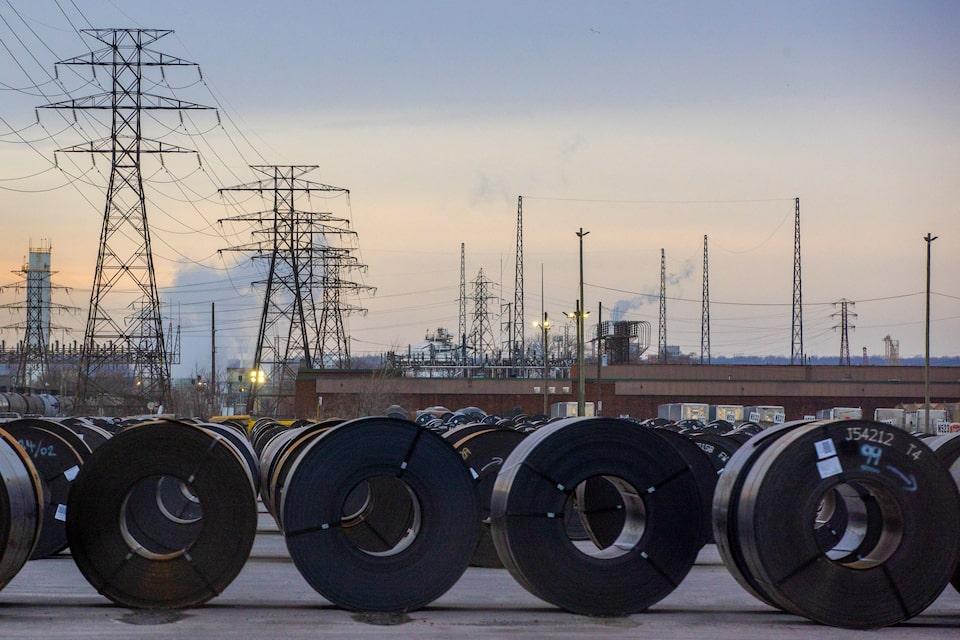
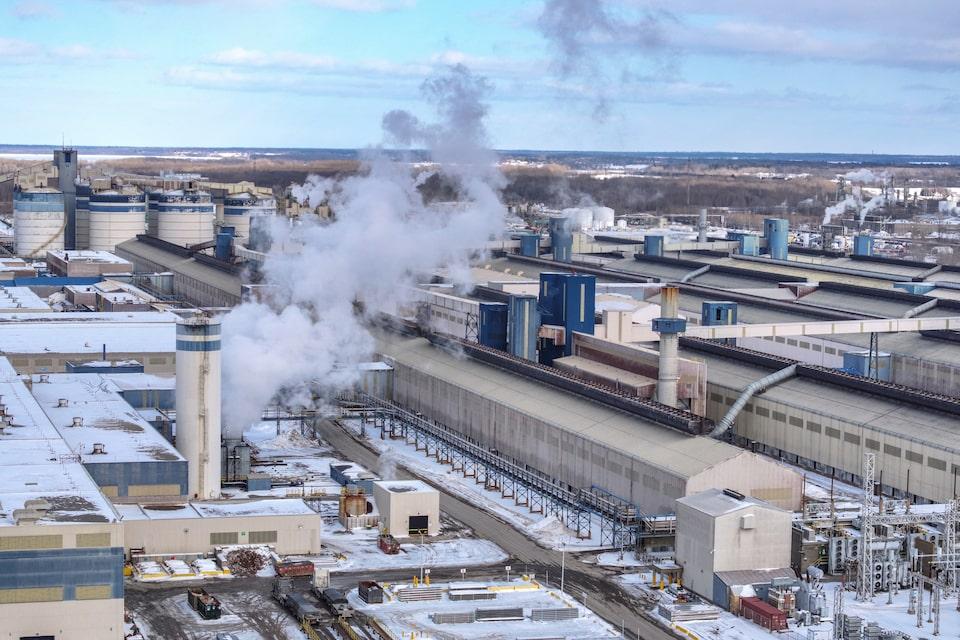
Trump's no-exclusions steel, aluminum tariffs take effect in hours Metals duties set for 25% rate as Trump backs off Canada threat Tariffs extended to 289 steel and aluminum downstream product groups $147.3 billion of consumer goods, industrial components to be hit WASHINGTON, March 11 (Reuters) - U.S. President Donald Trump's bulked-up tariffs on steel and aluminum due to launch within hours will hit nearly $150 billion worth of derivative products made from the metals, ranging from nuts and bolts to bulldozer blades and threatening cost increases for industry and consumers alike. The metals tariffs were set for an effective increase to 25% as prior exemptions, exclusions and quotas expire at 12:01 a.m. EDT (0401 GMT) on Wednesday, with hundreds of downstream products subjected to the duties for the first time. Trump on Tuesday lashed out at Canada amid rising trade tensions with the U.S. ally, threatening 50% tariffs on Canadian steel and aluminum, but later backed off after Ontario Premier Doug Ford withdrew a 25% surcharge on the province's electricity exports to the U.S. A Reuters analysis of the products listed for new tariffs under Trump's plan would subject a wide range of imported automotive and tractor parts, metal furniture, construction materials and machinery parts to the tariffs. Trump's action, first ordered last month to strengthen the Section 232 national security tariffs on steel and aluminum imposed during his first term, extends the duties to products as diverse as stainless steel sinks, gas ranges, air conditioner evaporator coils, horseshoes, aluminum fry pans and steel door hinges. Total 2024 import value for the 289 product categories came to $147.3 billion with nearly two-thirds aluminum and one-third steel, according to Census Bureau data retrieved through the U.S. International Trade Commission's Data Web system. By contrast, Trump's first two rounds of punitive tariffs on Chinese industrial goods in 2018 during his first term totaled only $50 billion in annual import value. The tariffs will hit over $25 billion worth of imported aluminum components for cars, trucks, buses, tractors and specialty vehicles, and $15 billion worth of metal furniture and parts imports, the analysis showed. Canada and Mexico, the two largest sources of the metals imports, would be the hardest hit. The two biggest U.S. trading partners also are battling separate, 25% duties on all products imposed in Trump's drive to eradicate fentanyl trafficking. Those are largely paused for goods compliant with the U.S.-Mexico-Canada Agreement on trade's rules of origin. Steelmakers and aluminum producers have long argued that the proliferation of exemptions and quotas eroded the effectiveness of his first-term Section 232 tariffs imposed in 2018, which gave a temporary lift to U.S. steel and aluminum capacity use. "These are not the steel and aluminum tariffs of the last time," said Dan Ujczo, a trade lawyer specializing in U.S.-Canada trade matters. "These are the very products that consumers will feel on the shelves, in the construction industry in particular, and automotive." Ujczo, senior counsel at Thompson Hine in Columbus, Ohio, said some of the firm's real estate clients are putting development projects on hold because they cannot accurately estimate materials costs over the next six to 12 months due to tariff uncertainty. Trump's goals in imposing the metals tariffs are to strengthen steel and aluminum production and bring more manufacturing and jobs to U.S. shores. They are part of an onslaught of tariff actions in his first weeks in office that will culminate in reciprocal tariffs on April 2 that aim to match other countries' tariff rates and counteract their non-tariff trade barriers. WEIGHING PRICE HIKES But equipment manufacturers in Wisconsin say the new metals tariffs may simply raise costs because much of the supply base for small metal components has moved offshore. Several say they are weighing price hikes. Husco, a Waukesha, Wisconsin-based maker of hydraulic components for automotive and construction equipment, buys steel domestically but will see cost increases across its supply chain, especially for smaller imported components like machined steel parts, said CEO Austin Ramirez. The firm began moving some work out of China after Trump slapped tariffs on Chinese industrial goods in 2018, but this would be difficult for components with high labor content due to U.S. wage costs, he said. "The more dominant impact will be higher cost on our inputs," Ramirez said, adding that for many parts, even paying 25% tariffs would still be cheaper than trying to set up domestic production or trying to find U.S. suppliers, he said. Farm equipment manufacturers would likely announce price hikes within a week or two, as the tariffs would likely boost domestic steel prices, said Kip Eideberg, head of government relations for the Association of Equipment Manufacturers. Midwest hot-rolled steel futures prices have risen more than 21%, or $166 a ton, to $925 since Trump announced the tariff revisions. "If it's 8% more expensive to build tractors and combines in the U.S., some of that inevitably, unfortunately will be passed down to the customers," Eideberg said. METALS RESHORING Whether Trump's tariffs will bring metals work back or make some U.S. manufacturers less competitive with global peers is an open question. But Alan Price, a lawyer who leads Wiley Rein's trade practice in Washington, said they could help counteract policies such as Mexico's IMMEX program, which allows foreign companies, including U.S. manufacturers, to import components duty-free into Mexico for assembly into finished products for export to the United States. "Certainly, extending (tariffs) to these downstream products closes additional loopholes and reduces the attractiveness of shifting production outside the U.S.," Price said, adding that the tariffs would also incentivize manufacturers to use more U.S.-produced steel and aluminum. Unlike with the fentanyl-related tariffs, Trump has shown no sign of easing up ahead of the midnight deadline. He was expected to hear tariff concerns from top U.S. corporate CEOs on Tuesday afternoon. The White House declined comment on potential cost increases from the tariffs, which it said were an extension of Trump's first-term America First economic agenda to rebuild the U.S. industrial base, cut taxes and increase American energy production. "In his second term, President Trump will again use tariffs to level the playing field for American workers and reignite America’s industrial might," White House spokesperson Kush Desai said in a statement. Sign up here. https://www.reuters.com/markets/commodities/trumps-expanded-metals-tariffs-hit-goods-horseshoes-bulldozer-blades-2025-03-11/
2025-03-11 21:44
SYDNEY, March 12 (Reuters) - Australia on Wednesday said it was "really disappointing" U.S. President Donald Trump did not give it exemptions on steel and aluminium tariffs, but vowed to continue lobbying the U.S. administration for a reprieve. Trump said in February he would "give great consideration" to exempting Australia from the tariffs in view of the U.S. annual trade surplus with the country, following a phone call with Australian Prime Minister Anthony Albanese. However, on Tuesday the White House announced that the previously planned 25% tariffs on all imported steel and aluminium products into the U.S. from all countries would take effect on Wednesday - with no exceptions or exemptions. Australian Deputy Prime Minister Richard Marles said his government would continue to press the Trump administration for an exemption. "Well, obviously it's really disappointing news," Marles told radio station 2GB. "Tariffs don't make any sense, it's an act of kind of economic self-harm. We'll be able to find other markets for our steel and our aluminium and we have been diversifying those markets." During his first presidential term, Trump exempted Australia from U.S. tariffs on steel and aluminium. "Last time around it was nine months before we got an exemption in relation to steel and aluminium out of the Trump administration in its first term. So, we'll keep pressing the case," Marles said. Trump on Tuesday threatened to make the tariffs for Canada 50%, but reversed course just hours after announcing the higher tariffs, in rapid-fire moves that scrambled financial markets. A key U.S. security ally in the Indo-Pacific, Australia is a small global exporter of steel although it is the world's largest exporter of the main steelmaking raw material iron ore. Australia accounts for only around 1% of steel imports into the U.S. and 2% of its aluminium imports. Sign up here. https://www.reuters.com/markets/commodities/trump-rules-out-exempting-australia-steel-aluminium-tariffs-2025-03-11/