2025-03-11 07:28
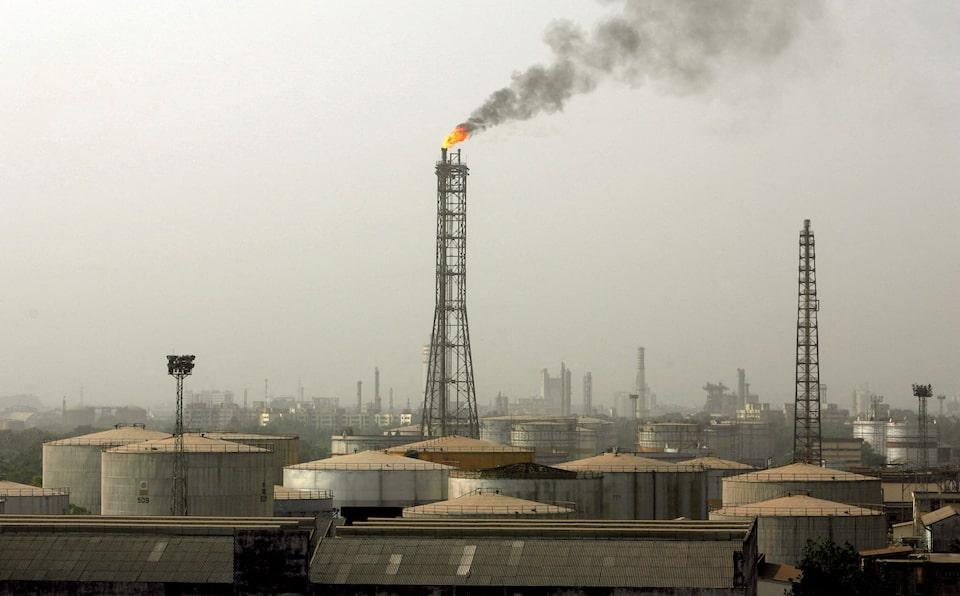
BEIJING, March 11 (Reuters) - Singapore iron ore futures rose on Tuesday, driven by expectations of increased demand as steelmakers in the northern region of top consumer China are set to resume production following the conclusion of the annual parliament meeting. However, gains were capped by concerns over escalating global trade friction stirred by the latest tariffs by U.S. President Donald Trump. The benchmark April iron ore on the Singapore Exchange climbed 0.86% to $100.75 a metric ton, as of 0700 GMT, after touching the lowest level since January 14 at $98.85 a ton earlier in the session. The most-traded May iron ore contract on China's Dalian Commodity Exchange (DCE) closed daytime trade little changed at 774.5 yuan ($106.95) a ton. "Hot metal output still has upside room in March as some steelmakers in North China will likely ramp up production after the 'Two Sessions'," analysts at Chaos Ternary Futures said in a note. Hot metal output is typically used to gauge iron ore demand. Two Sessions, China's annual legislative meetings, kicked off on March 4 and will conclude later in the day. Prices of the key steelmaking ingredients fell on Monday, dragged by weak macro sentiment as hopes for additional stimulus from China faded and concerns over the potential impact of new tariffs from Trump clouded demand prospects. Other steelmaking ingredients on the DCE retreated, with coking coal and coke down 1.67% and 1.28%, respectively. Steel benchmarks on the Shanghai Futures Exchange were broadly weaker. Rebar fell 0.83%, hot-rolled coil lost 0.42% and wire rod shed 0.96%, while stainless steel added 0.48%. ($1 = 7.2415 Chinese yuan) Sign up here. https://www.reuters.com/markets/commodities/singapore-iron-ore-rises-optimism-increased-china-demand-2025-03-11/
2025-03-11 06:41
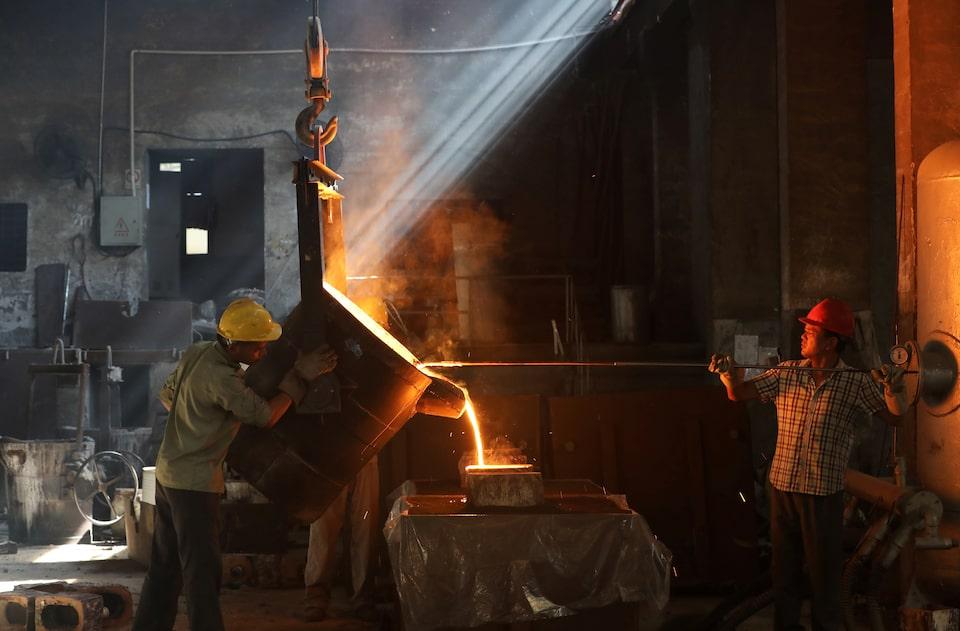
S&P 500, Nasdaq and Dow all close lower US and Canada to talk about tariffs later this week Treasury yields turn around as does gold Oil prices settle slightly higher NEW YORK/LONDON, March 11 (Reuters) - Ukraine's acceptance of a U.S. proposal for a ceasefire with Russia briefly pushed the euro to a five-month high while equities fell in Tuesday's choppy session as investors worried about a lack of clarity on tariffs. The euro added to earlier gains and European stock futures pared some losses after Ukraine agreed to an immediate 30-day ceasefire during talks with U.S. officials in Saudi Arabia. However, Russia has not yet responded to the proposal. While the Ukraine news helped U.S. stock indexes end Tuesday well above their session lows, traders were having to make decisions amid dizzying changes on trade. Earlier on Tuesday, President Donald Trump added to economic jitters by saying he told his commerce secretary to add an additional 25% tariff on all steel and aluminum imports from Canada, bringing the total tariff on those products to 50%. But the U.S. appeared to have reversed that decision by late afternoon after the premier of Canada's Ontario province said he was suspending plans to impose a 25% surcharge on electricity exports to the United States and would fly to Washington this week for talks with the Trump administration. "Uncertainty and volatility continue in this market," said Mona Mahajan, head of investment strategy at Edward Jones, pointing to tariff announcements and resulting economic concerns. "Economic growth had started to slow even before the tariff uncertainty in the U.S. That is not uncommon in the first quarter of the year, but what is uncommon is adding to that with uncertainty around policy." On Monday, the S&P 500 (.SPX) , opens new tab had suffered its biggest one-day drop this year after Trump, in a weekend Fox News interview, declined to rule out a recession resulting from his trade policies. Adding to concerns, Tuesday's data showed U.S. small-business confidence dropped for a third straight month in February, wiping away much of the gains notched after Trump's November election victory. Investors were also anxiously awaiting the latest information on inflation conditions from the U.S. consumer price index reading for February, due on Wednesday. A high reading would add to last month's hotter-than-expected data, which included the biggest monthly price gain since August 2023. After a choppy session, in which it briefly went 10% below its latest record-high close, the S&P 500 (.SPX) , opens new tab closed down 42.49 points, or 0.76%, at 5,572.07 while the Nasdaq Composite (.IXIC) , opens new tab finished off 32.23 points, or 0.18%, at 17,436.10. The Dow Jones Industrial Average (.DJI) , opens new tab lost 478.23 points, or 1.14%, to close at 41,433.48. MSCI's gauge of stocks across the globe (.MIWD00000PUS) , opens new tab fell 6.09 points, or 0.73%, to 826.64, which was roughly 7% below its most recent record high close on February 19. European stock futures briefly pared losses after the Ukraine ceasefire proposal. Earlier, the pan-European STOXX 600 (.STOXX) , opens new tab index had closed down 1.7%. After falling sharply on Monday, U.S. Treasury yields also steadied, pulling away from five-month lows hit earlier in the session. The yield on benchmark U.S. 10-year notes rose 6.7 basis points to 4.28%, from 4.213% late on Monday. The 2-year note yield, which typically moves in step with interest rate expectations for the Federal Reserve, rose 5.5 basis points to 3.951%, from 3.896% late on Monday. In currencies, the euro briefly hit a five-month high after the Ukraine agreement, while the dollar rose to a one-week high before weakening against the Canadian dollar on the tariff news. The euro was up 0.71% at $1.0909, while against the Japanese yen the dollar strengthened 0.38% to 147.82. The Canadian dollar was up 0.06% versus the greenback to C$1.44 per dollar. Oil prices rose, after falling sharply on Monday. Concerns about a U.S. recession and the impact of tariffs on global economic growth capped gains. U.S. crude settled up 0.33% at $66.25 a barrel and Brent settled at $69.56 per barrel, up 0.4%. Gold prices gained after selling off in the prior day's session. Spot gold rose 0.92% to $2,915.86 an ounce. U.S. gold futures rose 0.88% to $2,916.50 an ounce. Sign up here. https://www.reuters.com/markets/global-markets-wrapup-1-pix-tv-2025-03-11/
2025-03-11 06:39
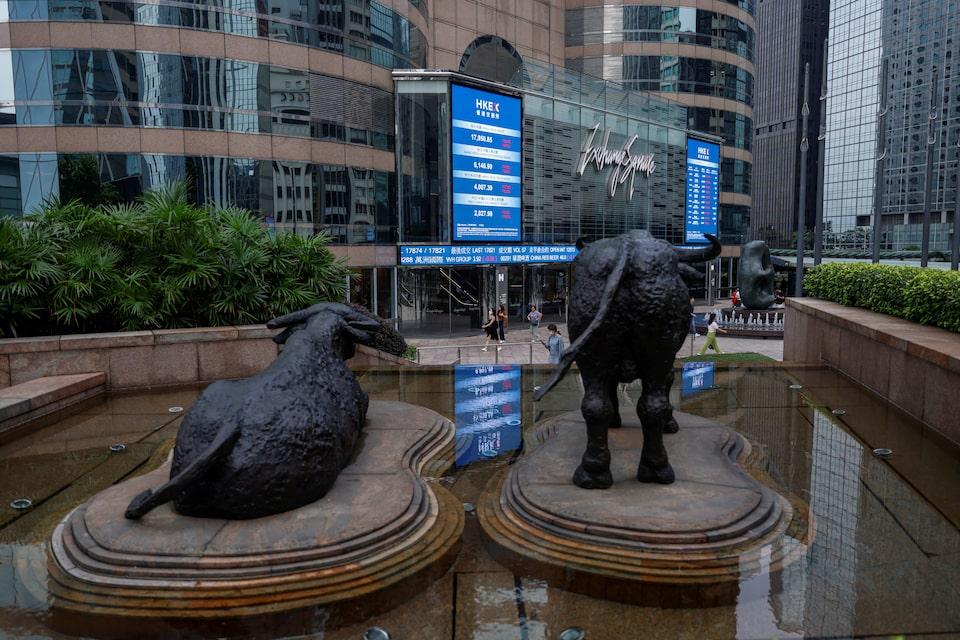
MADRID, March 11 (Reuters) - Spanish energy company Iberdrola (IBE.MC) , opens new tab is seeking a partner willing to buy a minority stake in a roughly 1 gigawatt renewables portfolio, according to two people familiar with the matter. The sources described the project as "Romeo 2.0," referring to a 1.3 GW portfolio of wind and solar assets in which Norway's sovereign wealth fund took a 49% stake in 2023 in a deal valuing the assets at some 1.2 billion euros ($1.30 billion). That project was named Romeo. The deal would be in line with the company's strategy of selling minority stakes in more advanced projects to help fund new investments. Last month, Iberdrola Finance Chief Jose Sainz Armada said the company was working on two or three asset rotation projects - whereby the firm invests in new projects by selling stakes in more advanced ones - that it hoped to complete this year. Evercore is advising the Spanish firm, one of the people said. The process is at an early stage, the sources said. The valuation would depend on the exact mix of wind and solar assets involved. The sources declined to be identified because they were not authorised to speak publicly about the matter. Iberdrola declined to comment and Evercore did not respond to a request for comment. In recent years, Iberdrola has also partnered with companies like Masdar and Japan's Kansai Electric Power. ($1 = 0.9233 euros) Sign up here. https://www.reuters.com/business/energy/iberdrola-seeks-partner-1-gw-renewables-portfolio-sources-say-2025-03-11/
2025-03-11 06:29
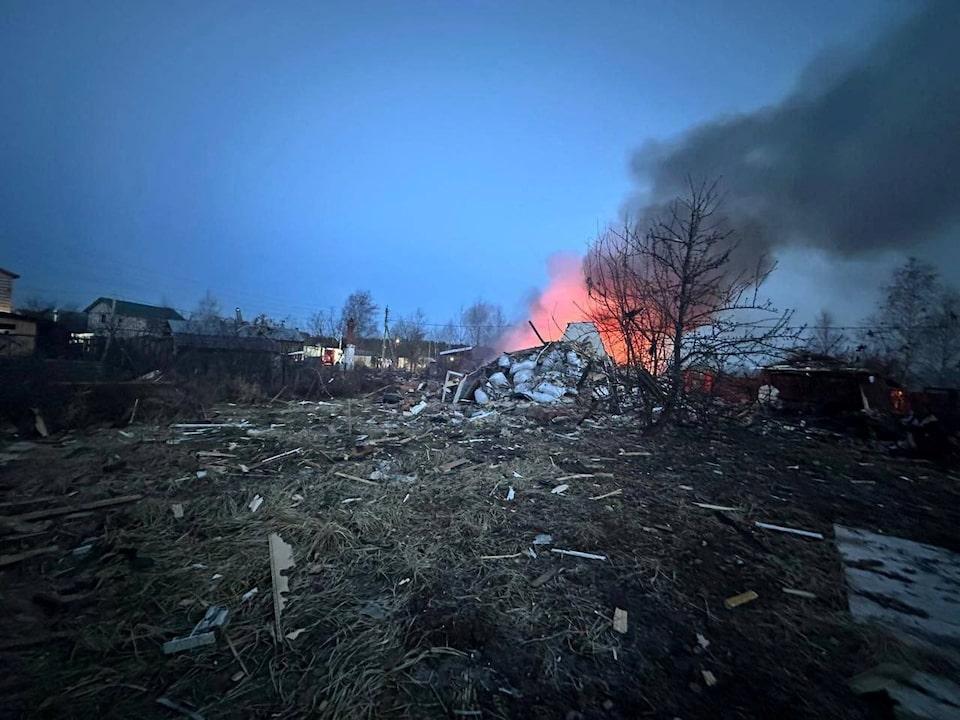
At least 91 drones downed around Moscow, 337 overall in Russia Two killed by debris at meat warehouse, 18 others injured Flights briefly suspended at Moscow's four airports Largest Ukrainian drone attack on Russian capital MOSCOW, March 11 (Reuters) - Ukraine on Tuesday launched its biggest ever drone attack on Moscow, killing at least two workers at a meat warehouse, injuring 18 others and causing a short shutdown at the Russian capital's four airports, Russian officials said. A total of 337 drones were downed over Russia, including 91 over Moscow region and 126 over Kursk region where Ukrainian forces have been pulling back, the defence ministry said. The dawn attack unfurled as U.S. officials were to meet a Ukrainian delegation in Saudi Arabia to seek an end of the three-year-war and as Russian forces try to encircle thousands of Ukrainian soldiers in the western Russian region of Kursk. Kyiv has suffered repeated mass strikes from Russia throughout the war and said it was targeted by a ballistic missile and 126 drones on Tuesday. It has tried to hit back against its vastly bigger neighbour with repeated drone raids on oil refineries, airfields and even early-warning radar stations. Moscow Mayor Sergei Sobyanin said Tuesday's was the biggest Ukrainian drone attack on the city, which along with the surrounding region has a population of at least 21 million and is one of the biggest metropolitan areas in Europe. A senior Russian lawmaker suggested Russia should retaliate for Tuesday's raid by striking Ukraine with the "Oreshnik" hypersonic missile which Moscow fired on Ukraine last November after the U.S. and UK allowed Kyiv to strike deeper into Russia with Western missiles. Colonel General Andrei Kartapolov, head of parliament's defence committee and a former deputy defence minister, said such a decision was up to President Vladimir Putin. "But I think it would be useful - and not just one," he said. Miratorg, one of Russia's biggest meat producers, said two employees were killed by falling debris. Another 18 people were injured, including three children, as residences were also struck, Russian officials said. COMMUTERS CARRY ON Moscow Region Governor Andrei Vorobyov posted a picture of a wrecked apartment with windows blown out. But there was no sign of panic: commuters went to work as normal. Russia's aviation watchdog said flights were suspended at all four of Moscow's airports after the attacks, though they were later reopened. Flights were diverted to other cities. Though U.S. President Donald Trump says he wants to deliver peace in Ukraine, the war is heating up on the battlefield with a major Russian spring offensive in Kursk and a series of Ukrainian drone attacks deep into Russia. Russia has developed myriad electronic "umbrellas" over Moscow and key installations, with additional advanced internal layers over strategic buildings, and a complex web of air defences to shoot down drones before they reach the Kremlin in the heart of the capital. The war, the biggest in Europe since World War Two, has combined grinding trench and artillery warfare with the major innovation of drones. Moscow and Kyiv have both sought to buy and develop new drones, deploy them in innovative ways, and seek new ways to destroy them - from farmers' shotguns to electronic jamming. Both sides have turned cheap commercial drones into deadly weapons while ramping up their own production. Soldiers have reported a visceral fear of drones and both sides have used macabre footage of fatal strikes in their propaganda, with soldiers shown being blown apart in toilets or running from burning vehicles. Putin, who has sought to insulate Moscow from the war, has called Ukrainian attacks on civilian infrastructure such as nuclear power plants "terrorism" and has vowed a response. Moscow, by far Russia's richest city, has boomed during the war, buoyed by the biggest defence spending splurge since the Cold War. Sign up here. https://www.reuters.com/world/europe/ukraine-launches-drone-attacks-targeting-moscow-russia-says-2025-03-11/
2025-03-11 06:19
MUMBAI, March 11 (Reuters) - The Reserve Bank of India was likely selling dollars on Tuesday to support the rupee, which was hit by weak global risk appetite and dollar bids due to maturity of positions in the non-deliverable forwards (NDF) market, five traders told Reuters. The rupee was at 87.2850 against the U.S. dollar as of 11:30 a.m. IST, up slightly on the day. It fell to 87.3850 earlier in the session. State-run banks were spotted offering dollars near 87.30 levels, most likely on behalf of the RBI, traders said. It "seems like they will be active till the mid-day fixing window, post which it (USD/INR) could move higher", a trader at a bank said. Maturity of NDF positions typically heightens demand to buy dollars at the daily reference rate, which exerts pressure on the rupee. The dollar index was little changed at 103.9 while Asian currencies were mostly lower on Tuesday. Sign up here. https://www.reuters.com/world/india/indias-central-bank-likely-selling-dollars-support-rupee-traders-say-2025-03-11/
2025-03-11 05:42
LAUNCESTON, Australia, March 11 (Reuters) - A new scramble for crude oil market share in Asia may be kicking off as top exporters Saudi Arabia and Russia move to boost cargoes to the world's top importing region. China, the world's biggest oil importer, is emerging as ground zero for the two exporters, who are ostensibly allies in the wider OPEC+ group of producers. Russia had overtaken Saudi Arabia as the top supplier to China, largely as a result of it being forced to discount its crude after Western sanctions because of its war in Ukraine cut the pool of buyers to mainly China and India, with a small volume heading to minor players such as Myanmar. But Russia's seaborne shipments to China have stalled in the first two months of this year, partly as the result of new sanctions on shipping introduced by former U.S. President Joe Biden just prior to leaving office in January. China's seaborne imports from Russia dropped to 969,000 barrels per day (bpd) in February, down from 1.01 million bpd in January and the lowest on a per day basis since December 2022, according to data compiled by commodity analysts Kpler. For the first two months of the year, China's seaborne imports from Russia were 990,000 bpd, down 270,000 bpd from the preceding two months. India, which saw Russia jump to become its top supplier since the sanctions, also saw lower imports from Russia in the first two months of the year. India's imports from Russia dropped to 1.43 million bpd in February, the lowest on a per day basis since January 2023 and down from 1.63 million bpd in January, according to Kpler data. For the first two months of 2025, India imported 1.56 million bpd from Russia, down from 1.63 million bpd in the previous two months. But both China and India are poised for a rebound in imports from Russia in March, as traders and refiners work around the sanctions, continuing a pattern in which the market finds ways around sanctions measures shortly after they are imposed. India's imports from Russia are expected to rise to 1.92 million bpd in March, which would be the highest since 2.1 million bpd in July last year, according to Kpler data. China is on track to see arrivals of 973,000 bpd in March, above the levels seen in February. It's also likely that this figure will be revised higher by the end of the month, given that more cargoes are likely to be assessed as they leave Russia's Pacific ports for China, which is typically only a week-long voyage. SAUDI MOVES The Saudis appear not to be sitting idly by while Russia's exports to China and India recover, with Kpler tracking 1.64 million bpd of arrivals in China for March. This is the strongest month since August 2023 and up from the 1.21 million bpd in February and the 1.33 million bpd in January. India's imports from Saudi Arabia are assessed at 532,000 bpd so far for March, but this figure is likely to rise as more cargoes are assessed prior to end of the month. India imported 679,000 bpd from Saudi Arabia in February, which was the weakest since August last year. However, it's likely that imports from Saudi Arabia will only show a meaningful increase from April as this is the first month from which OPEC+ agreed to increase output, and also because Saudi Aramco (2222.SE) , opens new tab, the kingdom's state-controlled producer, cut the official selling prices (OSPs) for its oil. Aramco lowered the OSP for its Arab Light grade for Asian refiners to a premium of $3.50 a barrel above the average of Middle East benchmarks Oman and Dubai for April-loading cargoes, the first decline in three months and down from a premium of $3.90 for March. The lower OSPs had been expected given OPEC+'s decision to start unwinding its output cuts, starting with an increase of 138,000 bpd from April. That small boost to production isn't really enough to make much difference to global oil prices. But what is enough is the signal that the Saudis want to boos their market share by lowering the OSPs, while at the same time Russia seems to have largely worked around the latest sanctions. Russia's oil exporters are also likely to be buoyed by the rapid shift in U.S. policy under new President Donald Trump, who has swung firmly behind Moscow and has virtually abandoned Ukraine in its fight against the Russian invasion. The March oil flows data to Asia may be early signs of a fight for market share that may add to the current downward pressure on oil prices. Global benchmark Brent crude futures ended at $69.28 a barrel on Monday, slightly above the four-year low of $68.33 hit on March 5. The views expressed here are those of the author, a columnist for Reuters. Sign up here. https://www.reuters.com/markets/commodities/crude-oil-market-share-battle-may-be-kicking-off-asia-russell-2025-03-11/