2025-03-11 00:40
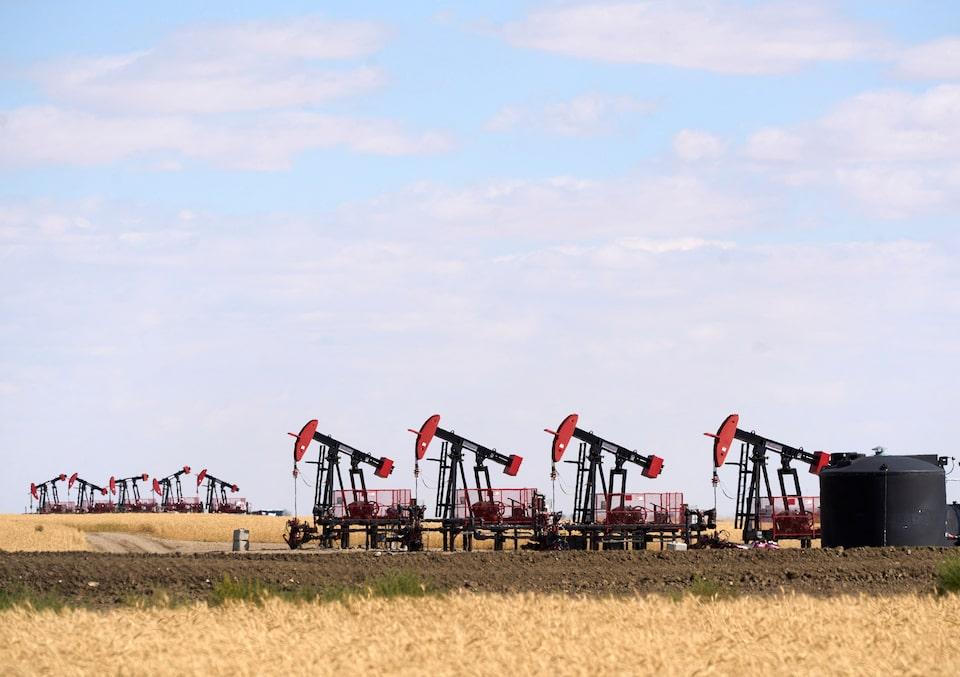
Benchmarks rise 0.3-0.4% after falling 1.5% in previous session Dollar index hits four-month low Concerns over U.S. recession and tariffs limit crude gains API data shows US crude stockpiles rise, sources say NEW YORK, March 11 (Reuters) - Oil prices settled slightly higher on Tuesday, helped by weakness in the dollar, but gains were capped by mounting fears of a U.S. economic slowdown and the impact of tariffs on global economic growth. Brent crude futures settled 28 cents, or 0.4%, higher at $69.56 a barrel after falling as low as $68.63 in early trade. U.S. West Texas Intermediate crude futures gained 22 cents, or 0.3%, to $66.25 a barrel after previous declines as well. The dollar index (.DXY) , opens new tab hit a four-month low, making oil less expensive for overseas buyers. But U.S. stock prices, which also influence the oil market, fell again, adding to the biggest selloff in months. Both crude benchmarks fell 1.5% on Monday, when the S&P 500 (.SPX) , opens new tab posted its biggest daily drop since December 18 and the Nasdaq slid 4.0%, its biggest single-day percentage drop since September 2022. Oil prices pared gains after U.S. President Donald Trump said on Tuesday he had instructed his commerce secretary to add an additional 25% tariff on all steel and aluminum imports from Canada, bringing the total tariff on those products to 50%. "That kind of drama is adding to the volatility here," said Phil Flynn, senior analyst with the Price Futures Group. Trump's protectionist policies have shaken global markets. He has imposed, then delayed tariffs on major oil suppliers Canada and Mexico, while also raising duties on China, prompting retaliatory measures. Over the weekend, Trump said a "period of transition" was likely and declined to rule out a U.S. recession. In supply, U.S. crude oil production is poised to set a larger record this year than prior estimates, at an average 13.61 million bpd, the U.S. Energy Information Administration said on Tuesday. Investors are waiting for U.S. inflation data due on Wednesday for clues on the path of interest rates. They also are closely monitoring OPEC+ plans. The producer group has announced plans to increase output in April. A scaling back of U.S. tariffs would ease fears of inflation and economic contraction, said PVM analyst Tamas Varga, but the recent oil price plunge meant it was "hard to see OPEC+ going ahead with its plan and releasing oil back to the market from April." On Friday, Russia's Deputy Prime Minister Alexander Novak told reporters that OPEC+ would go ahead with its April increase but may then consider other steps, including reducing production. Brent is finding strong technical support at around $70 a barrel and may look to stage a bounce, said Suvro Sarkar, energy sector team lead at DBS Bank, adding the OPEC+ supply response would be flexible, depending on market conditions. "If oil prices fall below the $70 per barrel mark for an extended period, output hikes may be paused in our opinion. OPEC+ will also keep a careful eye on Trump's Iran and Venezuela policies," he said. In the U.S., crude oil stockpiles rose by 4.2 million barrels in the week ended March 7, market sources said, citing American Petroleum Institute figures on Tuesday. The report comes ahead of U.S. government data on crude stockpiles due on Wednesday. Sign up here. https://www.reuters.com/business/energy/oil-prices-edge-lower-concerns-over-tariff-impact-grow-2025-03-11/
2025-03-11 00:14
MEXICO CITY, March 10 (Reuters) - Eleven people died and at least 12 were injured in southern Mexico on Monday morning after the bus transporting them flipped over, authorities in the state of Oaxaca said. Authorities were still investigating the cause of the accident, which occurred just outside the small town of Santo Domingo Narro, the state government said in a statement. "I extend my heartfelt condolences to the victims' families, to whom we will provide the necessary support and assistance during this difficult time," Oaxaca Governor Salomon Jara said on social media. In a interview on local radio on Monday afternoon, the state's interior minister, Jesus Romero, said the bus was carrying more than 40 people and was en route to the Isthmus of Tehuantepec in Mexico's south. Romero said it seemed that the passengers were heading home after attending a rally held on Sunday by President Claudia Sheinbaum in the capital Mexico City. Sign up here. https://www.reuters.com/world/americas/bus-accident-kills-11-people-southern-mexico-2025-03-10/

2025-03-11 00:01
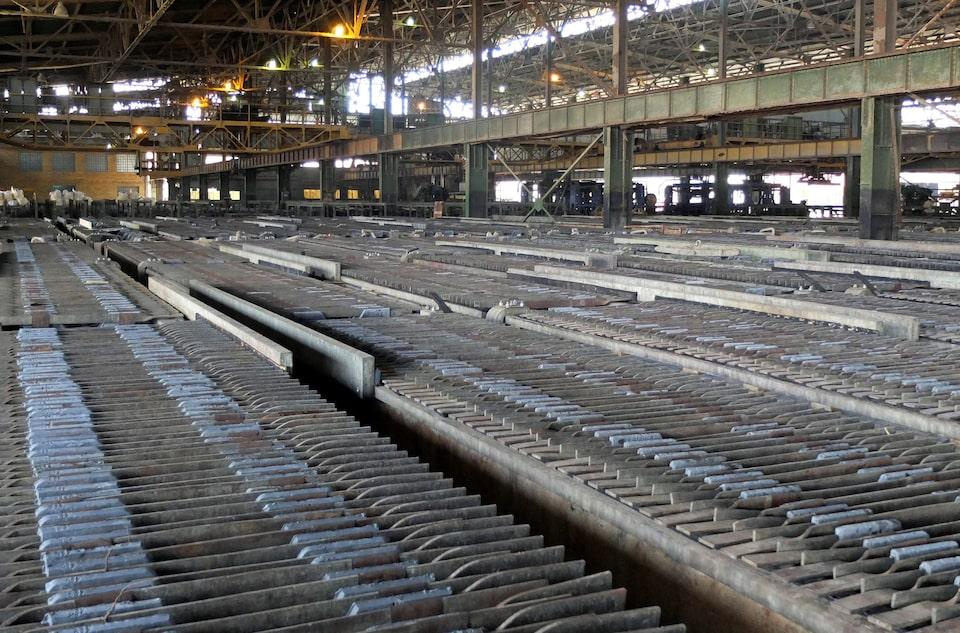
LONDON, March 7 (Reuters) - The Democratic Republic of Congo's four-month suspension of cobalt exports is a sign that even the world's largest producer is now feeling the pain of historically low prices. The news has given the cobalt market a fillip and the impact is already rippling through the supply chain with one Congolese operator, Eurasian Resources Group (ERG), declaring force majeure on deliveries of the electric vehicle battery metal. But will it be enough to address the underlying problems of a structurally over-supplied market? History suggests not. The Congolese government appears to understand that an export ban offers only temporary relief and that something more drastic may be needed. FEELING THE PAIN The cobalt price was languishing at multi-year lows of $10 per lb prior to the Congo's surprise decision to suspend all exports. In most commodity markets such rock-bottom pricing would have already caused a major supply response. But the impact in cobalt has been limited. Sure, artisanal production in the Congo has dwindled and new projects such as MMG's (1208.HK) , opens new tab Kinsevere cobalt plant , opens new tab, also in the Congo, have been deferred. Yet global supply still increased from 238,000 metric tons in 2023 to 290,000 tons in 2024, according to the U.S. Geological Survey The problem is that 98% of the world's cobalt comes as a by-product to either nickel or copper, meaning the metal has no independent floor price or self-correcting supply mechanism. Production has continued booming because of surging nickel output in Indonesia, the world's second largest cobalt producer, and rising copper output in the Congo itself. China's CMOC Group (603993.SS) , opens new tab reported a 55% year-on-year increase in copper output from its Congo operations last year. Along with the copper came an extra 60,000 tons of cobalt, flooding an already over-supplied market. Global stocks of cobalt have mushroomed to the equivalent of 233 days worth of consumption, according to consultancy Benchmark Minerals. STEMMING THE FLOOD The cobalt price has reacted positively to news of the export suspension, the most-active CME contract jumping to $15 per lb in the space of a week. But a ban on exports is only a short-term panacea, likely leading to a build-up in stocks of intermediate product cobalt hydroxide in the Congo. This is what happened in 2022-2023, when the Congo government suspended exports of both copper and cobalt from CMOC in a protracted tax dispute with the Chinese company. CMOC didn't stop producing during the near year-long export halt and simply accumulated ever more inventory at its production sites. The impact showed up in China's copper imports from the Congo. After slowing significantly in the first part of 2023 imports accelerated sharply in the second half as the stockpiled metal was exported. A four-month suspension of cobalt exports is likely to generate the same outcome - a short-term booster followed by renewed price weakness as exports rebound. The Congo government needs another solution. Options include extending the export ban beyond four months or introducing an export quota system. But as long as the likes of CMOC and Glencore (GLEN.L) , opens new tab keep producing copper, which they will given that metal's high price, they will continue generating by-product cobalt units. Maybe the Congo could even introduce production quotas, but that would represent a double-hit to the country's tax revenues. ELECTRIC DREAMS FADE The Congo's other problem is that the global cobalt glut is not just about over-supply. It's also down to weaker-than-expected demand from the key electric vehicle (EV) battery sector. The EV market continues to grow but cobalt usage is not growing in tandem because car-makers are shifting their battery chemistry to low- or no-cobalt formulas. They are doing so because of the metal's notorious price volatility and for fear of reputational damage arising from Congo's artisanal production, which is associated with atrocious working conditions and child labour. The current sharp rise in the cobalt price may be good news for the Congo government but in the longer term it will simply reinforce the view that cobalt is not the metal around which to bet the future of the energy transition. WANNA BUY SOME COBALT? The EV sector may be losing its appetite for cobalt but that doesn't mean there aren't other potential buyers of the Congo's production. Cobalt is also a critical metal for the defense sector, where it is used in the form of super-alloys for the aviation and aerospace industries. Both the United States and the European Union have made no secret of their desire to reduce China's dominance of the cobalt supply chain, a vice-like grip that results from the country's investment in Congo's production sector. The West is struggling to build out its own cobalt supply chain precisely because Chinese companies like CMOC are producing so much. The Congo government has already mooted a Ukraine-style minerals deal with Western countries as it struggles to fend off the M23 rebel group, which is expanding its control of the country's eastern province of Kivu. Negotiating a long-term supply deal with the West might be the country's best hope of finding a home for its excess production. A four-month export ban is not going to do the trick. Sign up here. https://www.reuters.com/markets/commodities/congos-export-ban-not-enough-clear-cobalt-glut-andy-home-2025-03-07/
2025-03-11 00:01
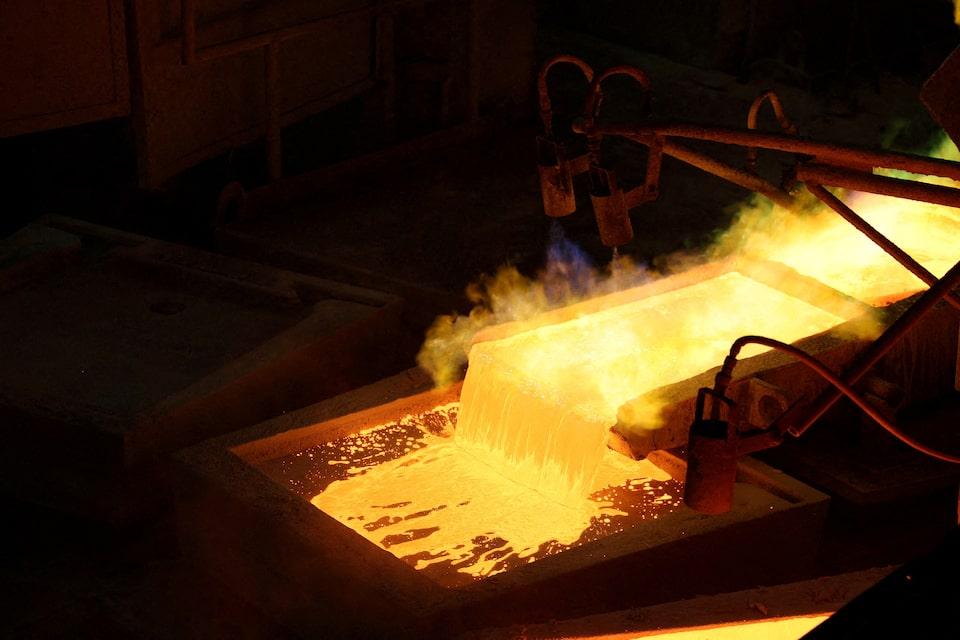
LONDON, March 10 (Reuters) - While financial markets gyrate to the uncertain beat of U.S. President Donald Trump's unpredictable tariffs, physical copper traders are reaping the rewards of the turmoil. The threat of U.S. tariffs on copper imports has opened up a once-in-a-lifetime opportunity for those in the business of shifting physical metal around the globe. The CME (CME.O) , opens new tab copper contract is now trading at a significant premium to the London Metal Exchange (LME) contract , opening up a massive import arbitrage opportunity. There is an ongoing scramble to ship physical copper to the United States to beat the tariff deadline with knock-on impacts on global trading patterns. While physical metal merchants make hay, investors are uncommitted, fearing the chilling effect of a tariff war on the future copper price. TARIFF TURMOIL Copper traders have been trying to price in the likelihood of U.S. tariffs since Trump ordered an investigation into copper imports on national security grounds. The tariff trade comes in the form of the premium commanded by the CME price, which is a U.S. customs-cleared price, over the international LME price. And it's proving to be a highly volatile trade, reflecting the White House's contradictory rhetoric. In his Address to Congress , opens new tab last week, Trump said he had imposed "a 25 percent tariff on foreign aluminum, copper, lumber, and steel". That came as something of a shock to the copper market, given the Section 232 investigation into imports was only announced last month , opens new tab. The CME premium to London briefly flared out to over $1,000 per metric ton on the comment before retreating on the collective assessment that Trump's mention of copper was probably only a slip of the tariff tongue. COPPER RUSH Those who make their money by profiting from regional differentials in pricing don't need to worry too much about the volatile arbitrage between CME and LME copper prices. The CME premium over London, basis May, closed last week around $800 per ton, meaning the shipment of physical metal to the U.S. is already a very profitable business. It will become even more profitable if tariffs are implemented. The challenge is simply to get possession of as much physical metal as possible and clear it through U.S. customs before any change in import duty. The copper rush has spread to the LME, where 115,800 tons of registered metal have been cancelled in preparation for physical load-out in the last two weeks. The volume of on-warrant copper stocks in the LME warehouse system has fallen to a nine-month low of 147,875 tons. It's unlikely that this metal is going directly to the United States, given the low ratio of LME stocks that constitutes good delivery against the CME contract. Rather, what is being grabbed in LME warehouses is more likely going to be swapped with producers and users against CME-deliverable brands from Chile, Mexico and Peru. DISLOCATIONS But it's a sign that availability is tightening as physical copper is either directly shipped or re-routed to the United States. Unsurprisingly, LME time-spreads have contracted as available stocks have fallen. The cash-to-three-months period was last week flirting with backwardation for the first time since June last year. That in turn has shifted the arbitrage between London and Shanghai markets, offering Chinese smelters an opportunity to export profitably. Such is the ripple effect of potential U.S. tariffs through the global physical copper market. The regional dislocations spell a bonanza for those trade houses with the physical market heft to capitalise on the supply-chain shifts. FUND MANAGERS FEAR TO TREAD While physical traders are busy scouring the globe for the right sort of copper to ship to the United States, the investment community is largely side-lined. Fund positioning on the CME copper contract is almost evenly split between bulls and bears, resulting in a marginal collective net long of just 8,721 contracts. There is not just a transatlantic gap in copper pricing but also a commitment gap between physical and futures markets. The investor community tends to play "Doctor Copper" as a macro trade, using the metal as a proxy to bet on global industrial growth. However, the bigger economic picture is darkening as the U.S. administration ups tariffs on Chinese goods and threatens just about every trading partner with reciprocal tariffs. The risk of recession is rising, according to a Reuters poll of North American economists. That's what keeping fund managers cautious on the prospect of higher copper prices over the rest of this year, even while they're reluctant to go short a market that is also showing signs of tightness, albeit highly regionalised tightness. But while Trump's tariff turbulence confuses the futures market, the physical copper trade is wasting no time to make money in the here and now. The opinions expressed here are those of the author, a columnist for Reuters Sign up here. https://www.reuters.com/markets/commodities/us-tariff-threat-brings-boom-time-physical-copper-traders-2025-03-10/
2025-03-10 23:55
NEW YORK, March 10 (Reuters) - Hedge funds unwound positions in single stocks on Friday at the largest amount in over two years, with some activity comparable to March 2020, when portfolio managers cut market exposure during the pandemic, Goldman Sachs said in a note on Monday. U.S. major stock indexes plummeted on Monday, with the Nasdaq (.IXIC) , opens new tab down 4%, amid fears that President Donald Trump's tariff policy will drive the world's largest economy into a recession. “It was a classic de-leveraging crunch,” said James Koutoulas, CEO at hedge fund Typhon Capital Management. Goldman Sachs detailed that hedge funds' sale of single name stocks was the biggest in over two years. It added some hedge funds' large de-risking moves in concentrated trades could be compared to what was seen in March 2020. It also cited January 2021, when hedge funds covered short positions in so-called meme stocks, popular among retail investors. Hedge funds' unwinding comes at a time when leverage in the industry is at a record level. A separate Goldman Sachs note showed overall hedge funds' leverage in equity positions was at 2.9 times their books, a record level over the last five years. Some investors told Reuters they were concerned that some high-leverage hedge fund could keep de-risking in the coming days, impeding a potential market recovery. Hedge funds unwound long and short positions that Goldman Sachs said were crowded, or common among many investors. Goldman Sachs saw a risk-off trend in 10 of the 11 global sectors, mainly in industrials. The risk-off trend was seen across all regions, but mainly in the U.S. On Monday morning, before the major indexes dipped even further, equities long/short hedge funds were down 1.5%, while systematic managers were down 0.3%, according to the bank. Sign up here. https://www.reuters.com/markets/wealth/hedge-funds-cut-risk-stocks-largest-amount-two-years-goldman-sachs-says-2025-03-10/
2025-03-10 23:46
HOUSTON, March 10 (Reuters) - Australia's Woodside LNG (WDS.AX) , opens new tab may push a final investment decision on its Louisiana liquefied natural gas (LNG) plant into the second quarter of 2025 as talks to sell half of the project drag on, CEO Meg O'Neill told Reuters on Monday. Woodside wants to sell as much as 50% of the project. Reuters has previously reported that the company is in talks with several potential buyers including Tokyo Gas (9531.T) , opens new tab, Japan's JERA and Saudi Aramco-backed MidOcean Energy. "We want to make sure we have confidence in the partners and that we have an adequate sell down," O'Neill said in an interview on the sidelines of an energy conference in Houston. "So look, it may slip into the second quarter, but our goal is to be ready from the first quarter." O'Neill declined to name the parties holding talks with Woodside. Woodside had previously said it would make an investment decision by the end of the first quarter on building the first phase of the 27.6 million metric ton per annum facility at Lake Charles, Louisiana. The cost of building the first phase is estimated at around $16 billion. O'Neill said there is strong interest in the project because it is fully permitted and has an engineering procurement and construction(EPC) contract with Bechtel. In phase 1 of the project, Woodside would keep 8 million tons a year to develop its Atlantic basin trading portfolio as the company seeks to move away from just selling to direct customers, said O'Neill. "So trading has become an increasingly important part of our business, but as the portfolio gets bigger, we see more opportunity to create value from that part of the business," said O'Neill. Woodside has offered LNG buyers shorter contracts at higher rates than the 20-year offtake agreements that have long been an industry standard. O'Neill said this provides opportunities for her company. "Some customers may prefer a shorter duration, and that's fine for Woodside. In fact, in some ways, that opens opportunity for us to find new customers as we progress down the track," she said. "So we offer more flexibility. And again, I think that's something that differentiates us." Woodside would keep its agreements to buy LNG cargoes from Commonwealth LNG and Mexico Pacific LNG, she said. The two companies are developing LNG projects in Louisiana and Mexico to export U.S. natural gas. Woodside is aware both projects have slowed and is focused on its own project, said O'Neill. Woodside does not plan to invest in the gas production to feed the LNG plant because it can buy from multiple gas producers and from different gas regions to supply the Louisiana LNG project, she said. Woodside is also working through the engineering issues to take a final investment decision on the pipeline that will deliver gas to the Louisiana LNG plant, said O'Neill. TRINIDAD CHALLENGES Woodside's CEO also said it is "very clear" that the fiscal terms are quite challenging to develop a gas resource of the size and complexity of its deep water Calypso discovery in Trinidad and Tobago. The Trinidad government has been pressing Woodside and other operators to develop gas discoveries to meet the shortfall for its Atlantic LNG flagship plant and petrochemicals industries. The Trinidad government has been very receptive to having a conversation about trying to find a pathway forward, said O'Neill. Sign up here. https://www.reuters.com/business/energy/ceraweek-woodside-investment-decision-louisiana-lng-may-slip-into-q2-says-ceo-2025-03-10/