2025-03-10 23:43
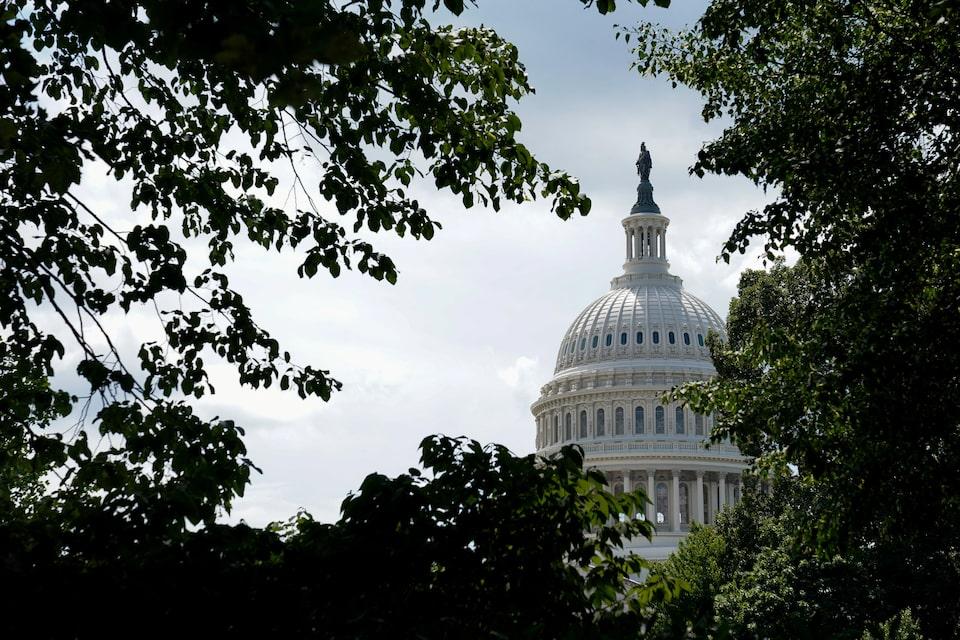
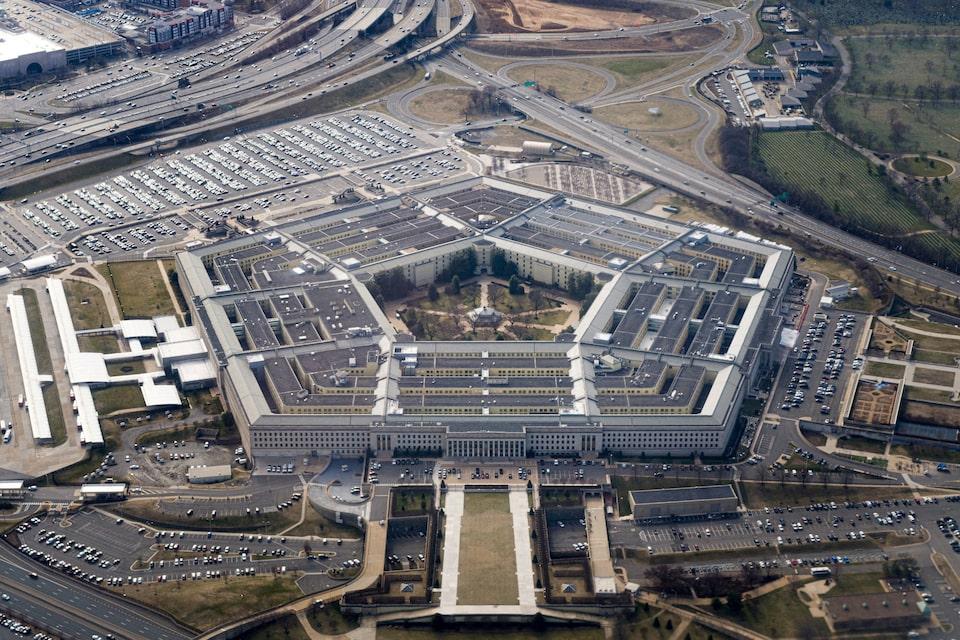
Plan aims to counter China's control over critical minerals Fighter jets, submarines, bullets built with minerals processed by China Trump doesn't plan to establish critical minerals stockpile, sources say March 10 (Reuters) - U.S. President Donald Trump aims to build metals refining facilities on Pentagon military bases as part of his plan to boost domestic production of critical minerals and offset China's control of the sector, two senior administration officials told Reuters. The move is one of several planned for an executive order Trump could sign as soon as Wednesday after he told the U.S. Congress last week he would "take historic action to dramatically expand production of critical minerals and rare earths here in the USA." As part of the order, the Pentagon would work with other federal agencies to install processing facilities on its bases, according to the sources, who were not authorized to publicly discuss the administration's deliberations. Using military bases for processing would underscore the importance Trump is placing on critical minerals for national security. Fighter jets, submarines, bullets and other weaponry used by the U.S. military are built with minerals processed by Beijing. Trump also plans to name a critical minerals czar, similar to steps previous presidents have taken to coordinate Washington's focus on other areas, according to one of the sources. The plans are under discussion and could change before Trump signs the order, the sources added. Some Trump administration officials were spooked by initial signs that China might restrict critical minerals exports as part of its retaliation for Trump's tariffs or for other reasons, according to a person familiar with their thinking. The U.S. National Security Council did not respond to requests for comment. With the Pentagon controlling about 30 million acres of land, the plan would ensure there is available land for the refining facilities, avoiding the controversy that sometimes occurs in host local communities. It would also avoid the need to buy land and avoid using land controlled by other federal departments. A plan that prioritizes metals processing - rather than an overhaul of U.S. mine permitting - could irk U.S. miners but address a longstanding concern from manufacturers that China controls too much of the global metals processing sector. China is a top global producer of 30 of the 50 minerals considered critical by the U.S. Geological Survey, for example. It's not clear how Trump's plan for processing facilities on Pentagon bases could work from a regulatory perspective, as the U.S. Clean Air Act and Clean Water Act would still apply to Pentagon bases and those regulations have hindered private development of processing projects in the past. Trump previously signaled a willingness for alternative uses of lands controlled by Washington. As a presidential candidate, he pledged to open up portions of federal land for large-scale housing construction, with zones that would be "ultra-low tax and ultra-low regulation." Trump does not plan in the order to establish a U.S. critical minerals stockpile that would mimic the Strategic Petroleum Reserve, the sources said, a step that some in the administration and mining industry had sought. China stockpiles some critical minerals, including cobalt, and the U.S. government last year considered stockpiling the metal, which is used in missiles, aerospace parts, magnets for communication, and radar and guidance systems. Trump also does not plan to order the Pentagon or other U.S. agencies to require vendors to use only U.S. minerals, what is known as a "Buy American" mandate, and one that junior miners especially have said is needed to offset China's market manipulations. Nor would the order try to alter the federal mine permitting process, which was set by the 1970 National Environmental Policy Act, largely because such a move would require an act of Congress. However, it would aim to expand the FAST-41 permitting process for mines, building on a step Trump took in his first term, according to the sources. South32's (S32.AX) , opens new tab Hermosa zinc-manganese project in Arizona was fast-tracked by former President Joe Biden, the first mine to receive that treatment. The order would also seek to reclassify mine waste on federal land, mimicking a step that Rio Tinto (RIO.AX) , opens new tab, Freeport-McMoRan (FCX.N) , opens new tab and others have taken to tap piles of old waste rock at U.S. mines previously thought to be worthless. Such a reclassification could help produce copper and other minerals cheaper and faster than building new mines. It was not immediately clear if Trump plans to declare copper as a strategic mineral, which would allow U.S. miners of the widely used metal tap into a 10% production tax credit. Phoenix-based Freeport, the largest U.S. copper miner, told Reuters on Monday it hopes Trump takes that step, which would save it $500 million annually. Sign up here. https://www.reuters.com/world/us/trump-seeks-minerals-refining-pentagon-bases-boost-us-output-sources-say-2025-03-10/
2025-03-10 23:17
BRUSSELS, March 10 (Reuters) - Euro zone finance ministers are worried that the change of policy under the new U.S. administration to embrace cryptocurrencies could affect euro zone monetary sovereignty and financial stability, top officials said on Monday. Last week, U.S. President Donald Trump, who vowed to be a "crypto president" in his campaign, signed an executive order to establish a strategic reserve of cryptocurrencies by using tokens already owned by the government, in a policy pivot from the previous administration. "Policy developments in other jurisdictions can have important consequences for us here in Europe," the chairman of the ministers Paschal Donohoe told a news conference after the ministers discussed U.S. cryptocurrency developments. "These discussions are fundamentally linked to our own autonomy and to the resilience of our currency," he said, adding the creation of a digital euro by the European Central Bank was now critical to staying ahead of the curve. The ECB has been working on creating a digital euro since 2020, after Facebook announced a year earlier it wanted to launch its own digital currency called Libra. The Facebook plan raised concerns among regulators in the U.S. and in Europe. The Libra project was later renamed Diem and fizzled out at the start of 2022, but Pierre Gramegna, the head of the euro zone bailout fund, the European Stability Mechanism, told reporters the U.S. embrace of cryptocurrencies could spur big technology companies to again launch their own payment systems. "(The) discussion ... highlighted that what is at stake here is also European sovereignty," Gramegna said. "The U.S. administration's stance on this compared to the past has changed: the U.S. administration is favourable towards cryptocurrencies and especially dollar-denominated stablecoins, which may raise certain concerns in Europe that it could reignite foreign and U.S. tech giants' plans to launch mass payment solutions based on dollar-denominated stablecoins," he said, referring to digital assets pegged to the greenback. "If this were to be successful, it could affect the euro area's monetary sovereignty and financial stability," he said. Sign up here. https://www.reuters.com/markets/europe/eu-worries-us-embrace-crypto-assets-could-impact-europe-financial-stability-2025-03-10/

2025-03-10 23:08
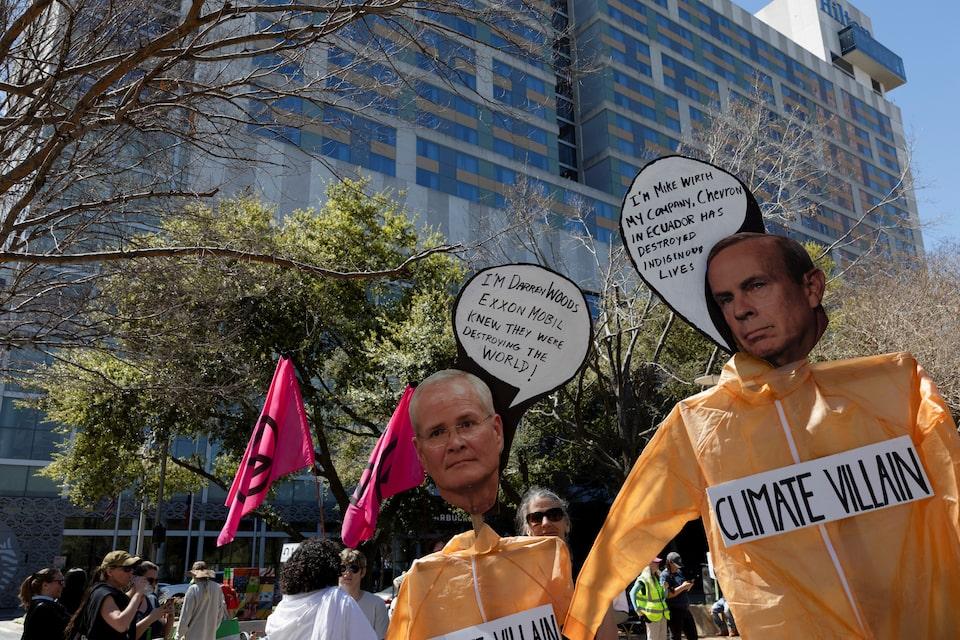
HOUSTON, March 10 (Reuters) - Protesters gathered on Monday outside the world's largest annual meeting of energy executives, where the U.S. Energy Secretary Chris Wright said that climate change was a side effect of building the modern world. The CERAWeek energy conference is taking place as the new U.S. administration of President Donald Trump reverses the policies of his predecessor aimed at accelerating the transition to a lower carbon economy and addressing climate change. Trump has exhorted oil producers to drill more and to maximize output, and told his administration to slash red tape that slows energy project development. Several dozen protesters gathered outside the venue for the conference in downtown Houston, holding signs that said "stop funding the climate crisis," and "no faith in fossil fuels." Protesters were demanding an end to the expansion of oil, gas, petrochemicals and plastics production, said Dominic Chacon, an organizer of the protest with Texas Campaign for the Environment. "We need cleaner water, cleaner air and less toxic conditions for humans and all creatures on earth," said Jessica Grim, who came from Ohio to be a part of the protests. "I want the energy industry to open their eyes," Grim said. The gathering was larger than the small protests at the venue in recent years. "As Indigenous people, the land is really important to us... we need people to hear us," said Syd Gonzalez, who wore a traditional outfit that represented her Indigenous heritage. Tickets for the conference can cost as much as $10,500 and that has kept protesters outside rather than participating, Chacon said. Protest organizers last year raised the amount to buy tickets, but were refunded, Chacon added. "We should have a seat at the table at the very least. That's why we are assembling." Sign up here. https://www.reuters.com/sustainability/climate-energy/ceraweek-climate-activists-protest-top-global-energy-gathering-2025-03-10/
2025-03-10 23:04
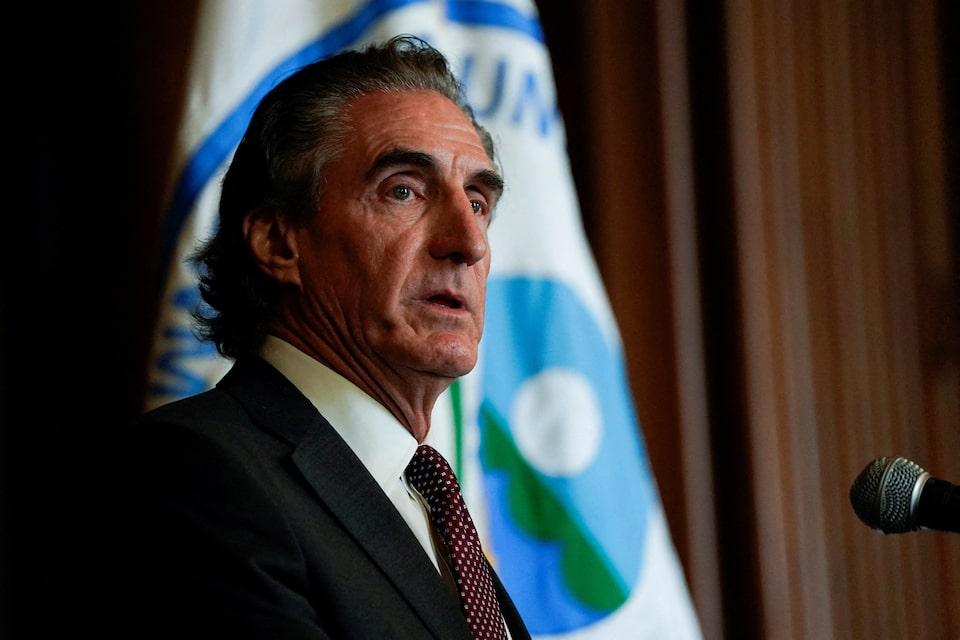
March 10 (Reuters) - The United States should restart shuttered coal-fired power plants under President Donald Trump’s national energy emergency declaration, Interior Secretary Doug Burgum said in a video interview with Bloomberg News on Monday. Doing so would help the U.S. to meet rising electricity demand that is being fueled by a boom in artificial intelligence, said Burgum, who chairs Trump’s National Energy Dominance Council, in the interview on the sidelines of the CERAWeek energy conference in Houston. "I think as part of the national energy emergency which President Trump has declared we’ve got to keep every plant open. And if there have been units at a coal plant that have been shut down, we need to bring those back on," he said. At the beginning of the century coal generated more than half of U.S. power. It has now sunk to less than 20%, according to the Energy Information Administration. Burgum said the U.S. could also keep existing plants open by streamlining environmental regulations imposed by past administrations. "We can stop death by regulation," he said. "Part of that we can do by taking a close look at some of the actual legality of some of the rule-making that was perpetrated against these industries." The Interior Department said in an email to Reuters it was committed to "revitalizing the coal industry through the reduction of regulatory barriers and the promotion of energy independence." Sign up here. https://www.reuters.com/business/energy/us-should-restart-shuttered-coal-units-interior-secretary-tells-bloomberg-2025-03-10/
2025-03-10 22:18
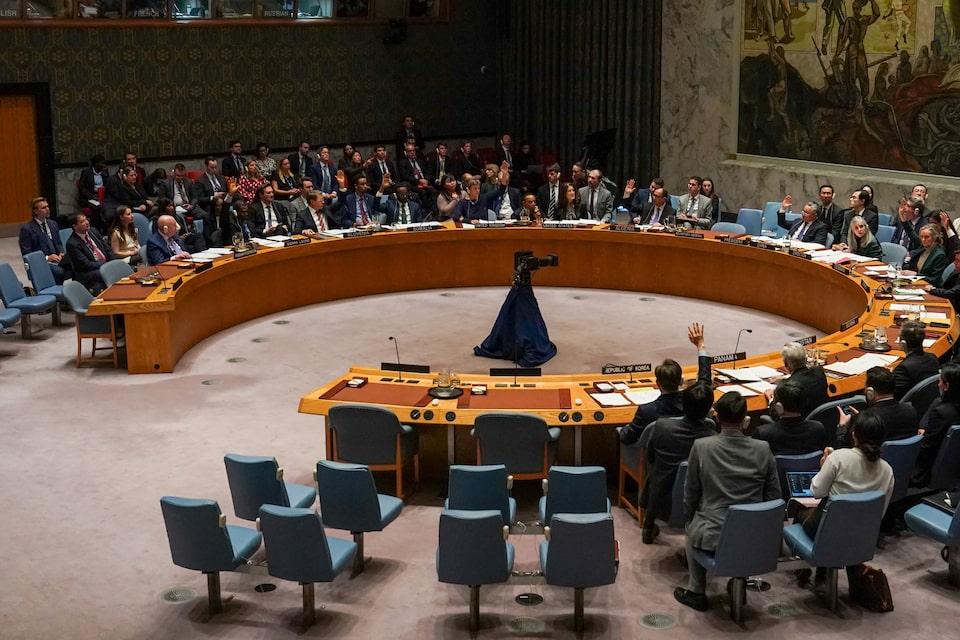
UNITED NATIONS, March 10 (Reuters) - The United Nations Security Council will meet behind closed doors on Wednesday over Iran's expansion of its stock of uranium close to weapons grade, diplomats said on Monday. The meeting was requested by six of the council's 15 members - France, Greece, Panama, South Korea, Britain and the U.S. They also want the council to discuss Iran's obligation to provide the U.N. nuclear watchdog - the International Atomic Energy Agency - with "the information necessary to clarify outstanding issues related to undeclared nuclear material detected at multiple locations in Iran," diplomats said. Iran's mission to the U.N. in New York did not immediately respond to a request for comment on the planned meeting. Iran has denied wanting to develop a nuclear weapon. However, it is "dramatically" accelerating enrichment of uranium to up to 60% purity, close to the roughly 90% weapons-grade level, the IAEA has warned. Western states say there is no need to enrich uranium to such a high level under any civilian program and that no other country has done so without producing nuclear bombs. Iran says its nuclear program is peaceful. Iran reached a deal in 2015 with Britain, Germany, France, the U.S., Russia and China - known as the Joint Comprehensive Plan of Action - that lifted sanctions on Tehran in return for restrictions on its nuclear program. Washington quit the agreement in 2018 during Donald Trump's first term as U.S. president, and Iran began moving away from its nuclear-related commitments. Britain, France and Germany have told the U.N. Security Council that they are ready - if needed - to trigger a so-called snap back of all international sanctions on Iran to prevent the country from acquiring a nuclear weapon. They will lose the ability to take such action on October 18 next year when the 2015 U.N. resolution on the deal expires. Trump has directed his U.N. envoy to work with allies to snap back international sanctions and restrictions on Iran. Sign up here. https://www.reuters.com/world/middle-east/un-security-council-meet-over-irans-growing-stockpile-near-bomb-grade-uranium-2025-03-10/
2025-03-10 22:11
WASHINGTON, March 10 (Reuters) - A group of Republican lawmakers urged the House committee drafting President Donald Trump's proposed tax cuts in the upcoming budget reconciliation bill to preserve key clean energy tax credits enacted under the Biden administration to protect private sector investments in their districts, according to a letter circulated on Monday. Led by New York Republican Congressman Andrew Garbarino, the letter called on Ways and Means chair Jason Smith to avoid "disruptive changes to our nation’s energy tax structure" that could upend clean energy projects underway and raise consumer prices, and take a "targeted" approach to repealing Inflation Reduction Act tax credits. WHY IT'S IMPORTANT The letter has the signature of 21 House Republicans who have called on Congressional leaders and the White House to protect certain clean energy tax credits despite the Republicans' plans to repeal the IRA's electric vehicle tax credits and other climate-related measures, arguing they support the president's "energy dominance" agenda. The House, which Republicans control by a razor-thin margin, plans to pass Trump's tax-cut agenda and fund border and military priorities in one big bill. This gives the lawmakers leverage as they negotiate the details of the bill. CONTEXT Around 85% of private-sector investments in clean energy and manufacturing projects incentivized by the IRA have gone to Republican Congressional districts, according to a report released last year by energy research group E2. This letter includes three more signatures to a similar letter sent to House Speaker Mike Johnson sent last year. KEY QUOTE "Both our constituencies and the energy industry alike remain concerned about disruptive changes to our nation’s energy tax structure. Many credits were enacted over the course of a 10-year period, which allowed energy developers to plan with these tax incentives in mind," the letter said. Sign up here. https://www.reuters.com/world/us/republicans-seek-protect-green-tax-credits-budget-bill-2025-03-10/