2025-03-10 22:11
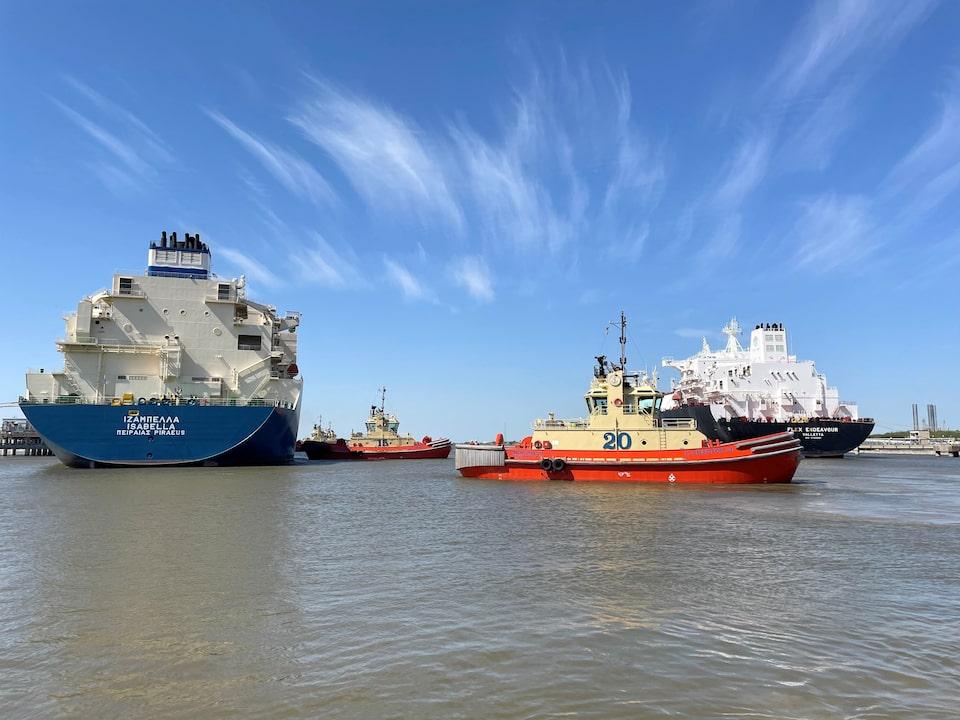
At least three LNG companies seeking higher liquefaction fees Inflation and labor drive up costs Projects risk becoming less competitive if gas prices rise HOUSTON/SINGAPORE, March 10 (Reuters) - Several U.S. LNG producers are trying to renegotiate higher prices with buyers as a result of rising construction, labor and borrowing costs, according to sources and company statements reviewed by Reuters. Higher prices would eat into the competitive advantage of U.S. liquefied natural gas on the global market, at a time U.S. President Donald Trump is seeking to expand the industry – already the world's largest. "The competitiveness of U.S. LNG could face a double whammy," said Alex Munton, director of global gas and LNG research at consulting firm Rapidan Energy Group. Rising liquefaction costs, a tighter domestic gas market, and falling prices for rival supplies indexed to oil could all impact U.S. LNG competitiveness, said Munton. Four sources said Mexico Pacific and Venture Global (VG.N) , opens new tab are seeking to renegotiate their supply purchase agreements with buyers, while Energy Transfer's (ET.N) , opens new tab co-CEO told an earnings call that negotiations were underway. Mexico Pacific, which is developing a 15 million metric tonnes per annum (MTPA) facility in Western Mexico to market U.S. natural gas, has been trying to renegotiate higher liquefaction fees with Chinese buyers Zhejiang Energy and Guangzhou Gas, according to two Chinese industry officials with knowledge of the matter. Mexico Pacific wants to renegotiate the prices because U.S. engineering firm Bechtel, the company building the plant, wants a construction price that has made the project too expensive, the sources said. Mexico Pacific and Bechtel declined comment. Zhejiang and Guangzhou have so far rejected Mexico Pacific’s proposal, the sources said. They did not provide details of Mexico Pacific's liquefaction costs or how much the company wanted to lift them. Guangzhou, meanwhile, has asked to cut its take from the project from 1 MTPA to 700,000 tons per annum, one of the two sources, who has direct knowledge of the matter, told Reuters. Zhejiang Energy didn't respond to emailed requests for comment. Guangzhou Development Group, parent of Guangzhou Gas, did not immediately comment. Venture Global, the second-largest U.S. LNG exporter, has also been trying to renegotiate higher prices for supply and purchase agreements for its CP2 project in Louisiana, even though the plant is yet to start construction and has not gotten the financial go-ahead, according to two separate sources. Venture Global did not reply to a request for comment. In January the firm told investors that liquefaction fees could rise above $4 per million British thermal unit (mmBtu) from around $2.25 today. Energy Transfer (ET.N) , opens new tab, which is developing a 16.5 MTPA LNG export facility in Louisiana, said on an earnings call in February that it has also been renegotiating liquefaction fees with customers as it tries to align higher construction costs with offtake agreements. "Everybody understands how costs have risen. And we are in continued negotiations with those to renegotiate their fees," said Marshall McCrea, Energy Transfer's Co-Chief Executive Officer. McCrea said customers had stuck with the project despite the demand for higher fees. The largest U.S. LNG exporter, Cheniere Energy (LNG.N) , opens new tab, meanwhile, said in February it was not increasing fees, in part because its prices are already linked to inflation and its projects are built on brownfield sites that have cost advantages. Baker Hughes (BKR.O) , opens new tab, one of the largest equipment providers to the U.S. LNG sector, has been able to contain its cost inflation but there have been increases for LNG developers, said Lorenzo Simonelli, the company's CEO. "It's the EPCs that we see that more, it's the labor content that we see that more," Simonelli said, referring to engineers, procurement, and construction firms. "If we look at the external environment we would say there is some inflation taking place." Overall, liquefaction fees for U.S. LNG projects are on a path to rise above $2.50/mmBtu due to a tight labor market, rising construction costs and stubbornly elevated interest rates, brokerage Poten and Partners said in a recent report to clients. Higher liquefaction fees could hurt the cost-competitiveness of U.S. LNG projects, especially if coupled with an increase in U.S. natural gas prices and or a drop in Brent crude oil prices, Poten warned. "On top of a labor shortage, inflation is driving up the price of equipment and materials," Poten said. Sign up here. https://www.reuters.com/business/energy/ceraweek-us-lng-exporters-seek-renegotiate-deals-cover-rising-costs-2025-03-10/
2025-03-10 21:46
Tariff uncertainty to be resolved in April, tax cuts to boost economy, Hassett says US stock markets plunge to 6-month lows US households grew more pessimistic about their prospects, New York Fed survey shows WASHINGTON/NEW YORK, March 10 (Reuters) - A key economic adviser to President Donald Trump on Monday pushed back on talk of recession stemming from uncertainty around his administration's tariff policies, even as a survey of American households showed consumers growing more pessimistic about their prospects, and U.S. stocks plunged. In an interview with CNBC, Kevin Hassett, who heads the National Economic Council, said there were many reasons to be optimistic about the U.S. economy, despite some predictions of a contraction in gross domestic product in the first quarter and concerns about inflation. Trump's tariffs on Canada, China and Mexico were already having the intended effect of bringing manufacturing and jobs back to the United States, he said. "There are a lot of reasons to be extremely bullish about the economy going forward. But for sure, this quarter, there are some blips in the data," Hassett said, saying those stemmed from both timing effects of Trump's rapid-fire tariffs push and some of what he called the "Biden inheritance." Trump and his team have repeatedly bashed the economy that they inherited from Democrat Joe Biden. But when Trump took office in January, GDP growth had largely exceeded trend for two years, consumer spending was strong and unemployment was still near historic lows. Several recent indicators, though, have pointed to a softening trend, and the New York Fed's monthly Survey of Consumer Expectations out on Monday concluded: "Households expressed more pessimism about their year-ahead financial situations in February, while unemployment, delinquency, and credit access expectations deteriorated notably." The percentage of households expecting the jobless rate to be higher a year from now rose to its highest since September 2023. Meanwhile, the Atlanta Federal Reserve's closely followed GDPNow tracker suggests the economy could contract in the first three months of the year, largely due to an outsized drag from net trade. Hassett said that would be a "very temporary phenomenon," driven largely by a historical tendency to hold off on investment after a big election. This tendency should be resolved this month, and tariff uncertainty should be resolved in April, he said. Trump himself in a Fox News interview aired over the weekend declined to predict whether his economic policies - centered so far on a blitz of tariff announcements, some of which have taken effect and others delayed or set to kick in later - would cause a recession. U.S. stock markets, already in retreat amid concern about his erratic decision-making on tariffs that most economists see as slowing activity and stoking inflation, on Monday were suffering their largest drop since Trump took office. The S&P 500, which hit a record high in mid-February, was down 2.7% and Nasdaq was off by 4%. Both were at their lowest since September. "Trump was seen as the market’s savior, promising lower taxes and less stringent regulation. Now, his actions represent the harbinger of doom," said Dan Coatsworth, investment analyst at AJ Bell in London. "The 'R' word is back on everyone’s lips as people ponder if trade tariffs will backfire and lead to recession rather than U.S. economic prosperity." The S&P 1500 Supercomposite Index, one of the widest measures of the U.S. stock market, has lost nearly $4.9 trillion in value since its record high in mid-February. 'ADVERSE TARIFF ASSUMPTIONS' Reuters polls of economists last week showed risks to the Mexican, Canadian and American economies are piling up amid a chaotic implementation of U.S. tariffs that has created deep uncertainties for businesses and decision-makers. The surveys showed 70 of 74 economists polled across Canada, the U.S. and Mexico judged that the risk of a recession had increased, and upside risks to inflation in the U.S. rose in particular. Economists at Goldman Sachs have cut their 2025 U.S. growth forecast and raised their inflation forecast, "both on the back of more adverse tariff assumptions." They said their growth estimate was now below the consensus figure for the first time in two-and-a-half years. Trump has imposed an additional 20% tariff on Chinese goods entering the United States, as well as 25% tariffs on imports from Canada and Mexico, although he suspended most of the duties on U.S. neighbors until April 2, when he plans to unveil a global regime of reciprocal tariffs on all trading partners. Hassett struck an upbeat note, arguing U.S. tax cuts would boost the economy, increase investment and boost real wages by the second quarter, offsetting any negative fallout from the tariffs. "Just be very wary ... of conversations about recession," he said. "What I think that what's going to happen is the first quarter is going to squeak into the positive category, and then the second quarter is going to take off as everybody sees the reality of the tax cuts," he said. Austin Ramirez, president and CEO of hydraulic equipment maker Husco, based in Waukesha, Wisconsin, was among those who welcomed Trump’s campaign pledges to push through tax and regulatory reforms. Those things are good for his business, Ramirez said, while tariffs and the threat of tariffs are negative for his business. “Now,” he said, “the worry is that it’s all the bad stuff happening, and none of the good stuff.” Sign up here. https://www.reuters.com/world/us/white-house-official-expects-q1-gdp-squeak-into-positive-category-2025-03-10/
2025-03-10 21:27
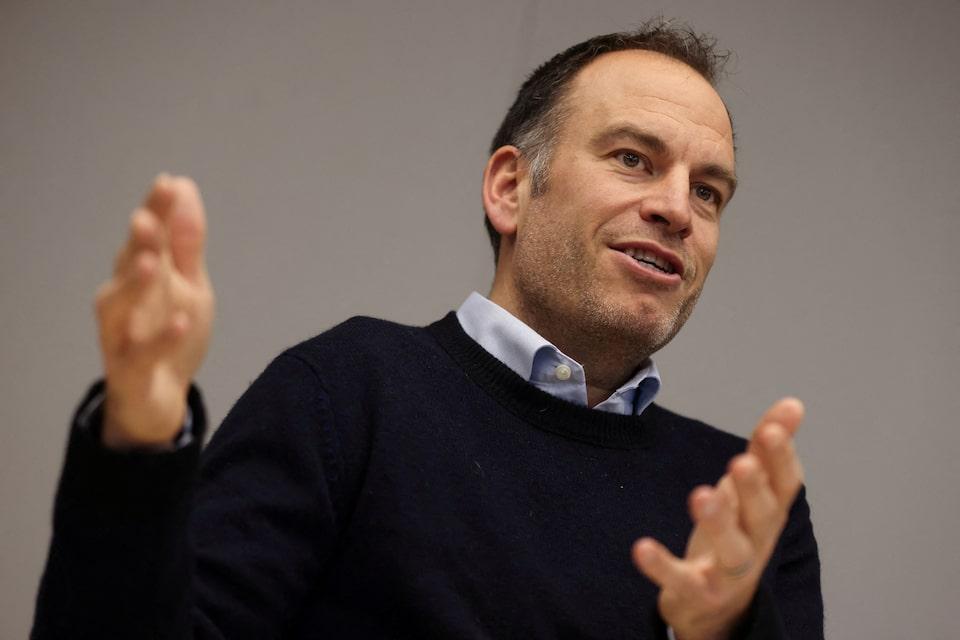
HOUSTON, March 10 (Reuters) - Commonwealth LNG has seen an increase in interest from prospective buyers since it secured an export license from the administration of U.S. President Donald Trump last month, the project's owner said on Monday. The U.S. Department of Energy granted an LNG export license to the Commonwealth LNG project in Louisiana in February, the first approval of LNG exports after former President Joe Biden paused them early last year for environmental review. "The...approval took a lot of risks off the table for the buyers and that's something we have been waiting for for over two years," Ben Dell, Managing Partner of energy management company Kimmeridge, told Reuters on the sidelines of the CERAWeek energy conference in Houston. "And yes, it has brought additional buyers into the market." Dell did not identify any of the new prospective buyers. Kimmeridge acquired Commonwealth LNG in June last year. Commonwealth is developing a 9.5 million metric tons per annum (MTPA) LNG plant in Cameron, Louisiana. The project currently has almost 8 million MTPA of its supply either under contract or under consideration, including 2.5 MTPA with Woodside Energy (WDS.AX) , opens new tab and 2 MTPA that Kimmeridge will keep for itself to trade. Dell said the Trump administration's pursuit of tariffs on imports from some trading partners has created uncertainty because Commonwealth plans to source some of its construction materials from abroad. "Within our budget we have always had a line item for tariffs so really it is about understanding where we want to source our product from versus changing anything material in the project," Dell told Reuters. Sign up here. https://www.reuters.com/business/energy/ceraweek-commonwealth-lng-sees-new-interest-after-securing-export-license-2025-03-10/
2025-03-10 21:20
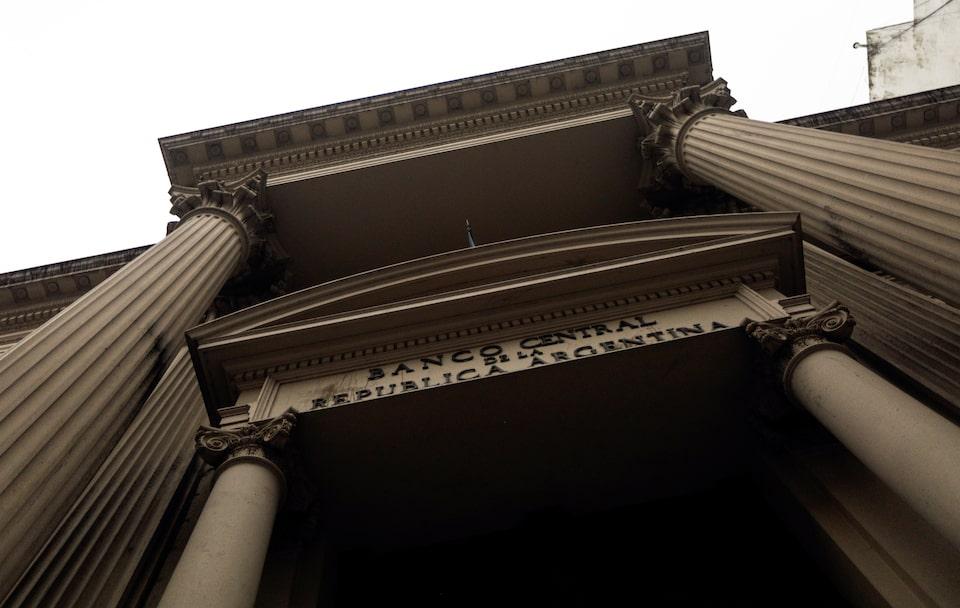
March 10 (Reuters) - Argentine analysts held their forecasts for this year's inflation nearly steady, according to the central bank's market expectations survey published on Monday, predicting year-end inflation at 23.3%. This was 0.1 percentage points higher than the previous average forecast in last month's central bank survey. Analysts also nudged up their annual economic growth forecast by 0.2 percentage points to 4.8% for 2025. The survey was taken from February 26 to 28 and polled 39 participants, including consultancies, research centers and financial entities. Argentina's INDEC statistics agency is set to publish its February inflation data on Friday and its economic growth data for the last quarter of 2024 on March 19. The central bank had in late January trimmed its benchmark interest rate to 29% from 32%, citing inflation's downward trajectory. Argentina's monthly inflation slowed to 2.2% in January, its lowest level since mid-2020. Annual inflation in South America's No. 2 economy had neared 300% early last year but has since come down into double digits, landing near 85% in January, when hospitality services as well as housing and utility bills saw the steepest increases. Argentine analysts had predicted in February that last month's inflation would likely remain in line or slightly above the January figures, though a downward trend should continue for the rest of the year. Bringing down inflation is a key priority for the government of libertarian President Javier Milei, which ushered in strict austerity measures and is looking to maintain the positive momentum as it seeks a new loan from the International Monetary Fund. Sign up here. https://www.reuters.com/world/americas/argentina-analysts-see-2025-inflation-233-2025-03-10/
2025-03-10 21:12
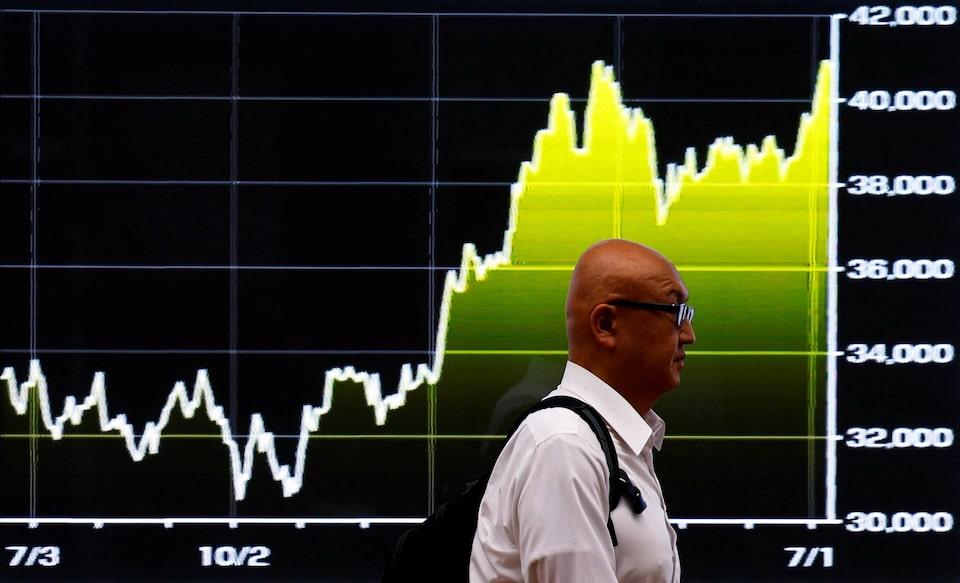
ORLANDO, Florida, March 10 (Reuters) - TRADING DAY Making sense of the forces driving global markets If this is what U.S. Treasury Secretary Scott Bessent's "detox" period for the economy looks like, investors are in for a serious amount of pain. The Wall Street selloff that has been snowballing recently on growth and trade war fears resulting from President Donald Trump's tariffs is turning into an avalanche, with the three main U.S. indices on Monday sliding between 2% and 4%. Big tech and big banks were among the biggest decliners, and the Nasdaq's 4% fall was its steepest in two and a half years. Bond yields fell sharply and markets are now pricing in a roughly 50-50 probability of the Fed cutting rates in May. The Fed meets next week and is widely expected to keep rates on hold, but more days like this on Wall Street and everything is on the table. Markets around the world will feel the whiplash on Tuesday, with Asian and global indices already reeling from shock figures from Beijing over the weekend that showed deflationary pressures in China are intensifying. U.S. recession fears are rising fast. Even if the Atlanta Fed's GDPNow model showing deep GDP contraction in the first quarter proves to be wrong - many analysts have questioned its inputs - the fog of economic uncertainty is thickening. Not everything is falling, of course. The price of U.S. Treasuries jumped again on Monday, and indices of implied volatility across asset classes are also spiking higher. Indeed, a perfect storm is brewing that could trigger an even greater surge in volatility - more on that below. Today's Key Market Moves. U.S. recession risk the tinder for smoldering market volatility Financial market volatility has bubbled up to its highest level this year thanks to the chaotic implementation of U.S. President Donald Trump's protectionist trade agenda. While volatility hasn't boiled over yet, investors would do well to guard against complacency, because tariff fatigue may push it over the edge. Implied volatility in the S&P 500 as measured by the VIX index - Wall Street's so-called fear index - is now the highest since the Fed cut interest rates in December, a decision markets interpreted as a mistake at the time. The VIX has almost doubled in the last month, and on Monday the three-month VIX spiked to its highest since August. The 'MOVE' index of implied volatility in the U.S. Treasury market is also the highest in four months, which is especially notable as it is accompanying a rally in Treasuries prices rather than a bond market selloff and rise in yields. Volatility is still well below levels associated with past market crises, or even recent episodes like the 2023 U.S. regional banking panic or Japan's yen carry trade shock last August. Its recent rise certainly hasn't matched the ongoing surge in policy uncertainty which, by some measures, has never been higher. Analysts at JP Morgan put this suppression of volatility down to retail investors' willingness to 'buy the dip', which has provided a "persistent backstop" to equities, the rise of 'passive' equity investing over 'active' management, and the strength of investor and corporate balance sheets. They note that since the S&P 500's peak on February 19, U.S. equity ETFs have only recorded one day of net outflows. Cumulative inflows over the period have exceeded $30 billion, which has helped limit the broader market decline. But based on White House statements over the past few days and intensifying market ructions, it's possible we're soon going to see a true spike in volatility as investors start to question whether 'buying the dip' is such a good idea. 'DETOX' PERIOD Warnings about further market turbulence are now coming from on high. U.S. Treasury Secretary Scott Bessent said on Friday that the economy is entering a "detox" period, and Trump declined to rule out a recession in an interview with Fox News broadcast on Sunday. Trump, who tweeted more than 150 times about the rising stock market during his first term, also said on Friday that he's "not even looking at the market" and that there will likely be some "disruption" as his tariffs are implemented. He's not wrong there. The so-called "Trump bump" is long gone. The S&P 500 is lower than it was before his November 5 election win, and is now down nearly 10% from last month's high and close to official correction territory. The Nasdaq is already in a correction, and has lost 14% in just three weeks after slumping another 4% on Monday. And even if recession risks flagged by some GDP models prove to be unfounded, the economic outlook is still darkening rapidly. Economists at Morgan Stanley just cut their 2025 GDP growth forecast to 1.5% from 1.9%, and economists at Goldman Sachs trimmed theirs to 1.4% from 2.4%. Economic growth at these below-trend rates is unlikely to sustain current equity valuations, hence the repricing currently underway, and the growing tariff fatigue should only exacerbate this downturn. Every tariff announcement from Trump moving forward – whether it's an unveiling, pause or exemption – is likely to be met with a selloff on Wall Street. If he doesn't pull back, stocks fall on the feared economic impact; if he does pull back, stocks fall on the resulting chaos, confusion and uncertainty. "Trump's leverage credibility with tariffs is quickly eroding," says Alfonso Peccatiello, chief investment officer at Palinuro Capital. The volatility dam has, by and large, held. But pressures are building. Investors may need to seek cover. What could move markets tomorrow? If you have more time to read today, here are a few articles I recommend to help you make sense of what happened in markets today. I'd love to hear from you, so please reach out to me with comments at [email protected] , opens new tab. You can also follow me at [@ReutersJamie and @reutersjamie.bsky.social.] Opinions expressed are those of the author. They do not reflect the views of Reuters News, which, under the Trust Principles , opens new tab, is committed to integrity, independence, and freedom from bias. Trading Day is also sent by email every weekday morning. Think your friend or colleague should know about us? Forward this newsletter to them. They can also sign up here. Sign up here. https://www.reuters.com/markets/asia/global-markets-trading-day-graphic-2025-03-10/
2025-03-10 21:06
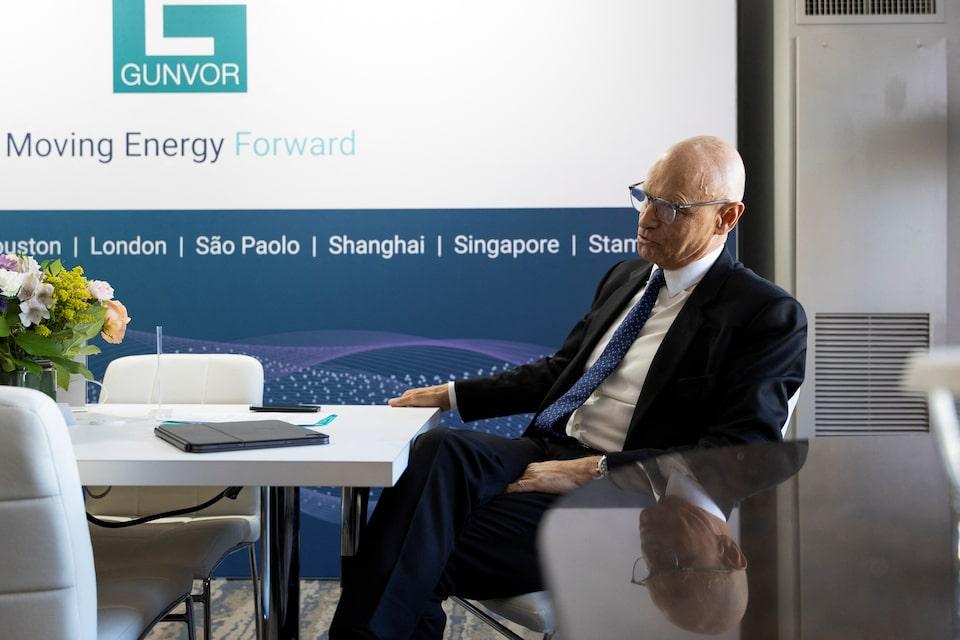
China's demand for gasoline, diesel plateaus due to EVs, natgas trucks CEO sees OPEC's small output increase as 'rounding error' HOUSTON, March 10 (Reuters) - Global oil supply growth is outstripping demand, the CEO of one of the world's largest oil traders,Gunvor, said on Monday. Oil prices hit a three-year low last week due to slow demand growth in China and concerns about the impact on global economic growth of U.S. President Donald Trump's protectionist trade policies. "We still see demand growth in the world, but it's not that big," Gunvor CEO Torbjorn Tornqvist said in an interview with Reuters on the sidelines of an energy industry conference in Houston. "That's the problem." Demand for gasoline and diesel has reached a plateau in China, the world's second largest consumer, Tornqvist said. The rapid rollout of electric vehicles in China has eaten into gasoline demand, while a growing number of trucks running on natural gas has hit diesel demand. The balance of supply and demand was loosening, he said. The Organization of the Petroleum Exporting Countries decided to make small monthly increases in output from April onwards as it seeks to roll back millions of barrels per day of oil production cuts. That increment was so small it was a "rounding error," Tornqvist said. However, the spare capacity that the group has offline continues to weigh on the market, he added. "I think the fact that you do have that capacity will always be a damper on prices," Tornqvist said. Global benchmark Brent crude was trading under $70 a barrel on Monday, after hitting its lowest level since December 2021 last week at $68.33. If crude prices fall another $5 to $6, it is unlikely that U.S. shale oil producers would further grow output, Gunvor's CEO added. Uncertainty over tariffs and sanctions and their impact on the economy and the energy industry were contributing to volatility, he said. "You create artificial arbitrage. And I don't think that's good in the long run," he said, when asked about tariff policy during a conference panel. With regards to tariffs on Canadian oil, which have been paused for a month, Tornqvist suggested about two-thirds of the added costs would be paid by U.S. refiners and consumers, and the rest by producers. However, he does not anticipate tariffs to change oil flows given Canada has few other export alternatives. Tornqvist said he was unsure how quickly sanctions on Russian oil could be lifted if Russia and Ukraine come to a peace deal over the war. Europe would likely go back to buying Russian oil and gas if sanctions were lifted, he said, but it was unlikely that all damaged or shutdown gas pipelines would come back online. Fuel demand in Southeast Asia is a bright spot, and continues to grow, he said. Sign up here. https://www.reuters.com/business/energy/ceraweek-global-oil-supply-growth-is-outstripping-demand-gunvor-ceo-says-2025-03-10/