2025-03-10 11:13
CHENGALPATTU, India March 10 (Reuters) - India's Godrej Consumer Products (GOCP.NS) , opens new tab will keep raising prices of its soaps gradually to protect margins amid rising palm oil prices, the consumer goods maker's top boss said on Monday. Palm oil prices have surged in recent months due to floods in top producers Indonesia and Malaysia, forcing consumer goods makers, including Dove soapmaker Hindustan Unilever (HLL.NS) , opens new tab and Cinthol owner Godrej Consumer, to raise prices. "We have not recovered the full extent of the costs yet," Godrej Consumer CEO Sudhir Sitapati told Reuters in the southern Indian state of Tamil Nadu. It would take 2-to-3 quarters to widen margins, but the company will not push up prices suddenly, the CEO said. Sitapati does not expect the price hikes to have an impact on sales as palm oil-based products, including soap, tend "not to be discretionary" goods that consumers can forgo. Soaps make up about a fifth of Godrej Consumer's revenue. Middle-class Indians, particularly city dwellers, have been cutting spending on everything from cookies to fast food due to elevated inflation and slowing economic growth. The impact of palm oil prices on margins of larger rival Hindustan Unilever, which has been reformulating its soaps to cut the use of palm oil, is lower, analysts have said. Godrej Consumer's CEO ruled out reformulating soaps to reduce the use of palm oil. The company's gross margin narrowed 175 basis points during the October-to-December period from a year earlier, the first shrinkage in two years, as prices of palm oil surged. Sign up here. https://www.reuters.com/business/retail-consumer/indias-godrej-consumer-mulls-more-gradual-price-hikes-soaps-2025-03-10/

2025-03-10 11:13
FRANKFURT, March 10 (Reuters) - European lawmakers are voicing fresh doubt about the European Central Bank’s digital euro project after an outage in the ECB’s existing payment system caused delays for thousands of households and traders. The breakdown in the Target 2 (T2) payment system late last month meant banks could not settle transactions with each other for the better part of a day, partly due to an initial, wrong diagnosis of the issue by central bank technicians. Representatives from four of the eight groups that make up the European Parliament said the incident raised some questions about the ECB’s ability to deliver on its digital euro project, a new payment system open to all euro zone residents. "This instance is a blow to the ECB’s credibility," said Markus Ferber of the European People's Party, the largest group in the current parliament. "People will ask legitimate questions how the ECB will be able to run a digital euro when they cannot even keep their day-to-day operations running smoothly." An ECB official said a digital euro would be more similar to its instant payment system TIPS, which is also 24/7 and handles millions of small payments every day, than to T2, which settles fewer but bigger transactions, and the former has been extremely reliable. Indeed TIPS only suffered minor delays on the day of the outage. But resistance from lawmakers may still prove a hurdle for the ECB, which needs them to pass legislation laying the ground for the digital euro. The European Commission proposed digital euro legislation in June 2023 but not much has happened since amid scepticism from some lawmakers and bankers. Rasmus Andresen, a Green politician who like Ferber sits on the parliamentary committee that oversees the ECB, said the central bank had to restore citizens' trust or the digital euro may be "at risk of failure". Jussi Saramo, of The Left, still backs the launch of a digital euro but stressed "the need for the ECB to improve its own systems". Their colleague Johan Van Overtveldt, from the eurosceptic European Conservatives and Reformists Group, said "the ECB should prove that it can maintain uninterrupted and secure financial infrastructure" before moving on with the digital euro. This would essentially be an electronic wallet guaranteed by the central bank, which would also provide the infrastructure. It would be distributed by companies such as banks or wallet providers. The ECB has pitched it in part as a response to U.S. President Donald Trump's push to promote stablecoins, a type of cryptocurrency typically pegged to the U.S. dollar and increasingly used as a form of digital payment. But bankers have mostly been sceptical, fearing that it would empty their coffers as customers transfer some of their cash to the safety of an ECB-guaranteed wallet. The ECB hopes legislation will be in place by the autumn so it can vote to officially launch the project. Sign up here. https://www.reuters.com/markets/europe/eu-lawmakers-voice-doubts-about-digital-euro-after-ecb-outage-2025-03-10/

2025-03-10 11:01
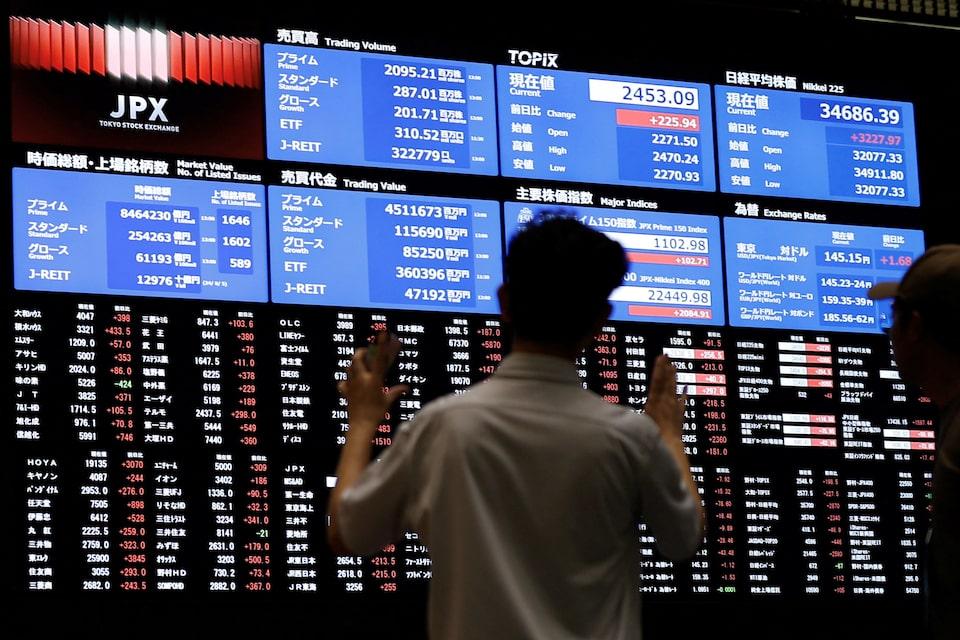
March 10 (Reuters) - Japanese investors increased bond purchases in February due to a fall in yields overseas, but retreated from foreign equities on concerns over U.S. President Donald Trump's tariffs plans and the potential impact on global growth from trade distortions. Investors bought a net 3.45 trillion yen ($23.44 billion) in overseas bonds last month, marking the highest monthly purchase since August 2024. They sold 346.4 billion yen in foreign equities, Ministry of Finance data showed on Monday. Trust accounts purchased 1.51 trillion yen worth of long-term foreign bonds, the largest amount in six months, while banks bought 913.6 billion yen in long-term debt, the data showed. Barclays attributed February's selloff in foreign equities to a slowdown in purchases by investment trusts. These had spiked the previous month, driven by increased flows into the new Nippon Individual Savings Accounts (NISA) programme, a tax-free investment scheme. Separately, Bank of Japan data on foreign bond holdings, also released on Monday, showed that domestic investors significantly increased their U.S. bond exposure in January, compared to the previous month. Investors purchased U.S. bonds worth 955 billion yen in January, compared to December's net sale of 83 billion yen. Purchases of German bonds were at 544 billion yen in January versus 545 billion yen worth of net sales in December. German bond yields have surged this month after politicians proposed a massive ramp-up in spending with plans for a 500 billion euro infrastructure fund and measures to boost the economy. ($1 = 147.2100 yen) Sign up here. https://www.reuters.com/markets/wealth/japanese-investors-boost-bond-holdings-sell-foreign-stocks-february-2025-03-10/
2025-03-10 11:01
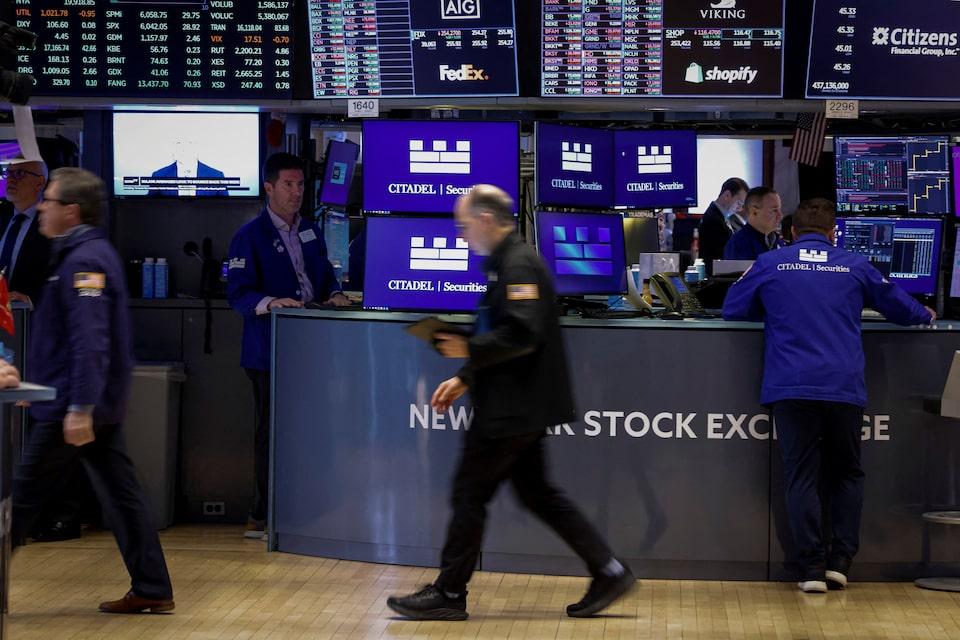
March 10 - Morning Bid U.S. What matters in U.S. and global markets today By Mike Dolan , opens new tab, Editor-At-Large, Financial Industry and Financial Markets If markets believed Donald Trump would pause his disruptive economic plans at the first sight of a growth downturn or a stock market tantrum, they may have to think again. Although Commerce Secretary Howard Lutnick flatly ruled out a recession in an interview on Sunday, the President declined to make a prediction either way and insisted some turbulence was inevitable. "There is a period of transition, because what we're doing is very big," Trump told Fox News. "It takes a little time, but I think it should be great for us." The stock market has been unnerved recently, with uncertainty about sweeping trade tariffs and concerns about government spending and job cuts undermining business and consumer confidence. The S&P 500 (.SPX) , opens new tab lost another 3.1% last week, with the tech heavy Nasdaq (.IXIC) , opens new tab down 3.45% and the Dow Jones blue chips (.DJI) , opens new tab off 2.4%. The Russell 2000 Small Cap index (.RUT) , opens new tab fell 3.9%. "He's not going to step off the gas," Lutnick said on NBC's "Meet the Press", referring to Trump's determination to push ahead. U.S. stocks stabilized somewhat after the February employment report on Friday showed a pick up in jobs and Federal Reserve Chair Jerome Powell said the economy was holding up so far. But jobs numbers did little to dispel fears of a softening labor market, and Powell merely reaffirmed that the Fed will be on hold for the foreseeable future. Stock futures were in the red again first thing on Monday, Treasury yields slipped again and the dollar clawed back some of last week's steep losses. Overseas, Chinese markets (.CSI300) , opens new tab were jarred by weekend data showing a surprise return of consumer price deflation. European stocks are off too. In other news, Canada's dollar was a touch firmer after former Bank of Canada and Bank of England governor Mark Carney won the race to be the country's new Prime Minister. Today I'll take a look at how hyperactive government policy is sidelining central banks. After years in thrall of monetary policy, investors may now have to look elsewhere for direction. Today's Market Minute Central banks slip into the shadows Central banks have long been the lead policy actors in world markets and economies, but they are stepping back into supporting roles as governments grab the limelight. In less than two months, the avowedly disruptive new U.S. administration has prompted a dramatic re-casting of the global economic script, upending economic forecasts and cross-border investment flows around the world. The sweeping trade wars Donald Trump's government has unleashed and the fracturing of decades-old U.S. political and military alliances have forced a generational shift in German and European fiscal policy, while encouraging China to step up stimulus measures to meet its restated and now ambitious 5% growth goal. But the scale of trade uncertainty has unnerved U.S. businesses and shaken household confidence, with U.S. downturn fears amplified by the slashing of government jobs and ructions on Wall Street. Caught in the fog, the Federal Reserve can barely make an accurate forecast for what's going to happen next week - never mind feel confident about predicting where the economy and inflation might be when any interest rate change hits home some 12 months hence. It's a good bet the Fed will sit on its hands for a while longer while it fathoms it all out. Fed Chair Jerome Powell said as much in his speech on Friday. But even reading incoming data has gotten a lot harder. For example, this week's inflation update will of course be watched closely, but last month's consumer prices won't shed any light on the potential impact of the proposed tariffs coming down the pike. Even before the end of the first quarter, investors are being forced to rip up the year's plans already and a Fed likely on hold for a lot longer is not what to watch for what happens next. "The more benign macroeconomic backdrop that investors had in mind going into 2025 has arguably been shattered," reckons AXA Investment Managers' Chris Iggo. "The U.S. administration's challenges to the global trading and security order have the potential to disrupt trade, capital flows, consumption, investment spending and government policy." "Investors now face ambiguity over economic growth, inflation, interest rates, and long-term borrowing costs – not to mention political risk." WHATEVER IT TAKES: FISCAL VERSION The growing dominance of fiscal policy is even more apparent in Europe. The European Central Bank cut interest rates again last week, while offering marginally hawkish statements about its plans as it too re-maps the shifting macroeconomic landscape. But for financial markets, Thursday's ECB move was almost a sideshow to the dramatic fiscal changes in Germany, which announced plans for nearly a trillion euros in defense and infrastructure spending, reinforced by plans for wider European joint borrowing. Opinions differ widely about how much further the ECB's policy rate will fall during this cycle, but it's another decent bet the central bank will hold the policy line until June at least, or until it sees how some of these fiscal plans play out. But even if the ECB wants to stall here given the potentially huge impact of new government spending promises on domestic growth and debt, it also has to consider the implications of Trump's increasingly erratic trade threats as April's "reciprocal" U.S. tariff plans hit Europe directly. Will the ECB see this as a reason to ease again? It almost certainly doesn't know the answer to that yet. And, in truth, a cut here or there likely won't matter much. The combination of continental rearmament, the lifting of Berlin's self-imposed "debt brake", and the re-engineering of euro budget rules will pack a far bigger punch than any marginal tinkering in borrowing rates. The euro certainly seems to think so. It batted away last week's rate cut, clocking its biggest weekly gain on the dollar in 16 years. Global equity markets also paid little heed to the ECB, as the Transatlantic capital shift from pricey U.S. tech stocks to far cheaper European industrial and defence sectors continued to unfold. DRIVING SEAT It's not that central banks no longer have power to move markets by changing the cost of money. It's just that calculations about what such actions would mean for economies and markets are now much more heavily influenced by fiscal policy forces. All this may keep monetary policymakers in the wings for much of the year, relegating their prognostications to slightly "beside the point" in the process. "Fiscal policies will be the primary driver of almost everything that matters to investors," currency fund manager Stephen Jen said last week. "Central banks will only react to these policies and can no longer dictate where the markets go. Bond yields will drive equities and currencies." The "be all and end all" for market thinking for decades, central banks suddenly - and perhaps deliberately - figure well down the credit roll. Chart of the day Even though U.S. February payroll tallies came in close to expectations, the employment report included signs that the labor market is softening. The number of people working part-time for economic reasons rose 460,000. That's the biggest monthly rise since June 2023. It brings the total to 4.9 million, the highest since May 2021. As a result, a broader measure of unemployment, which includes people who want to work but have given up searching and those working part-time because they cannot find full-time employment, jumped to 8.0%. That was the highest since October 2021. What's more, multiple job-holders shot up to 8.860 million from 8.764 million in January. They represented 5.4% of the employed, the highest share since April 2009. Today's events to watch * US February employment trends, New York Federal Reserve February consumer expectations survey * Euro zone finance ministers meet in Brussels to discuss regional fiscal stance, defence spending, budget challenges; European Central Bank President Christine Lagarde and ECB board member Piero Cipollone attend * Ukrainian President Volodymyr Zelenskyy travels to Saudi Arabia to meet Saudi Crown Prince Mohammed Bin Salman * US corporate earnings: Oracle Opinions expressed are those of the author. They do not reflect the views of Reuters News, which, under the Trust Principles , opens new tab, is committed to integrity, independence, and freedom from bias. Sign up here. https://www.reuters.com/markets/us/global-markets-view-usa-2025-03-10/
2025-03-10 10:38
Investors excited by German spending boost, more bond sales 10-year Bund yield rose the most in a week since 1990 Yields seen reaching levels not sustained since before 2009 Higher German yields have knock on effects on yields globally LONDON/SINGAPORE, March 10 (Reuters) - A sea change in German fiscal policy is rapidly transforming global bond markets as it is expected to increase the pool of top-rated, safe-haven debt and propel Germany into a new era of structurally higher government bond yields. The parties hoping to form Germany's next government agreed last week to create a 500 billion euro ($543 billion) infrastructure fund and overhaul borrowing rules. In response, Germany's bond market suffered its biggest weekly selloff since the 1990s, pushing 10-year bond yields up more than 40 basis points to around 2.9% , as investors anticipated a jump in bond sales to fund increased spending. Even considering road bumps such as securing parliamentary support to pass reforms, many suspect the end result will be a lasting shift for German government bonds, the euro area benchmark. Several banks reckon 10-year Bund yields could now reach 3%, more than 20 bps above Monday's trading. The German 10-year yield has not sustained a level above 3% since the global financial crisis and the government's 2009 introduction of a "debt brake" to balance the books. It fell below 0% between 2019 and 2022 and ended last year just above 2%. But investors are suddenly facing the prospect of a more dynamic German economy with higher growth and higher borrowing. "To suddenly have this fiscal impulse from Germany, a paradigm shift, it makes our clients question the region completely differently," said Kal El-Wahab, head of EMEA linear rates trading at BofA, who noted that for much of his twenty-year-long career the outlook for Europe's economy had been sluggish. El-Wahab said it was too early for large structural portfolio shifts to take place, but trading activity so far showed there was conviction around the European growth story. Germany's plans and increased European defence spending increase potential GDP growth by 1.5% in Germany and 0.8% in the euro zone by 2030, BNP Paribas estimates. Meanwhile, Commerzbank says the measures could easily add up to more than 1 trillion euros of additional debt over the next 10 years, significantly boosting the supply of top-rated bonds sought after by investors globally. Overall, Germany's AAA rating benefits from its high fiscal flexibility, S&P Global Ratings said. "This fiscal awakening is a push further into collateral abundance with far-reaching consequences for Bunds and their place in the European government bond market," said Barclays head of rates strategy Rohan Khanna. Khanna said Germany's market had been "plagued by scarcity" with negative net bond issuance for seven of the past 10 years, when taking central bank purchases into account. SPILLOVERS Germany's shifting price dynamics have rippled across Europe and beyond, because if global bond investors can earn nearly 3% on German debt, they will expect higher yields elsewhere. French and Italian borrowing costs also jumped by roughly 40 bps each last week, worse news for their more highly-indebted governments. U.S. Treasuries largely went their own way as they grappled with slowing U.S. growth, but British 10-year gilt yields were up almost 20 bps to seven-week highs and Japan's already-rising 10-year yield touched 16-year highs of 1.53%. "Japanese government bonds will effectively need to compete with Bunds in yield," said Ales Koutny, Vanguard's head of international rates. "We now see 2% in 10-year JGBs as a realistic target, as capital flow out of Europe will be meaningfully jolted by this change in German policy." Life insurers, among the most significant Japanese investors, arrange their assets to match liabilities and are not opportunistic traders, while they and others tend to hedge currency exposure, meaning a 10-year Bund with a 2.9% yield may only earn about 1.2%, less than a 10-year JGB but more than around 0.7% on a hedged 10-year Treasury . But, with nearly 430 trillion yen ($2.92 trillion) in assets and about a quarter of that abroad, small changes in allocations can have a meaningful impact on foreign markets, particularly European ones that have faced Japanese outflows. Goldman Sachs estimates that German yields could rise even further with the spending plans implying a potential range of 3.0-3.75% for Bund yields. "There may be some risks of capital outflows from the U.S. ... because higher yielding Bunds would make them a peer of Treasuries," said Amundi Investment Institute head Monica Defend. Nuveen global investment strategist Laura Cooper cautioned that U.S. tariff uncertainty could temper the rise in German yields although momentum remained behind a move higher. "Historically when you come from below fair value you don't just hit that, you can go as much as 50 bps higher," said Aviva Investors senior economist Vasileios Gkionakis, estimating fair value for German yields at 3.1-3.2%. "We can put conditions on how quickly change will come from Germany but right now I cannot believe the headlines I'm reading." Sign up here. https://www.reuters.com/markets/rates-bonds/german-spending-boost-leave-lasting-impact-world-bond-markets-2025-03-10/

2025-03-10 07:41
BEIJING, March 10 (Reuters) - A plan by the United States to levy fees on China-linked ships will hurt global supply and industrial chains and undermine the interests of U.S. companies, China's foreign ministry said on Monday. The move will not revitalise the U.S. shipbuilding industry, a ministry spokesperson told a regular press briefing, adding that China would take steps to uphold its rights and interests. Sign up here. https://www.reuters.com/business/china-says-fees-ships-linked-it-will-not-revitalise-us-industry-2025-03-10/