2025-03-10 07:36
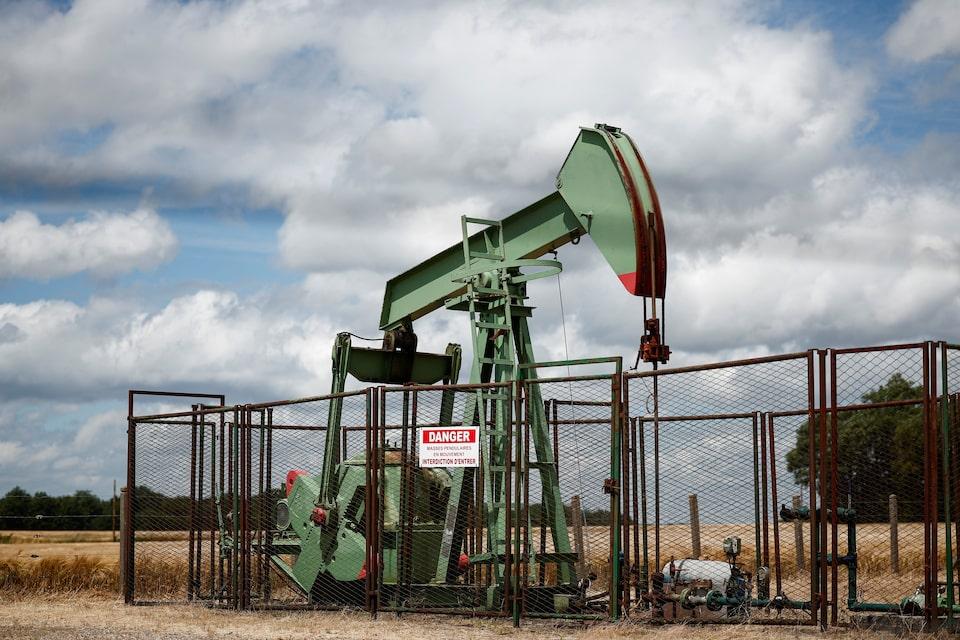
WTI and Brent benchmarks register multiple weekly declines IEA and OPEC monthly reports expected this week Saudi Aramco cuts crude prices to Asia LONDON, March 10 (Reuters) - Oil prices held steady on Monday as concern over the impact of U.S. tariff uncertainty and rising output from OPEC+ producers pressured prices while potential sanctions on Iranian oil exports provided some support. Brent crude rose by 10 cents to $70.46 a barrel by 1057 GMT. U.S. West Texas Intermediate crude was at $67.14, also up 10 cents. Last week marked WTI's seventh consecutive weekly loss, the longest losing streak since November 2023, while Brent fell for a third consecutive week. U.S. President Donald Trump's protectionist policies have roiled markets across the world, imposing and then delaying tariffs on its biggest oil suppliers Canada and Mexico while also raising duties on Chinese goods. China and Canada have responded with tariffs of their own. Investors view uncertainty over U.S. tariffs as negative, but possible sanctions against Iran and Russia could provide support in the short term, said PVM analyst Tamas Varga. "Looking at the bigger picture, lingering uncertainties will likely make any oil rally brief." Oil rebounded from six-month lows on Friday after Trump said the U.S. would increase sanctions on Russia if it fails to reach a ceasefire deal with Ukraine. The U.S. is also studying ways to ease sanctions on Russia's energy sector if Russia agrees to end its war with Ukraine, two people familiar with the matter told Reuters. Russia's Deputy Prime Minister Alexander Novak on Friday said that OPEC+ could reverse the decision in the event of market imbalance. Also on the supply front, Trump is seeking to choke off Iranian oil exports as part of efforts to pressure the country to rein in its nuclear programme. Iran's Supreme Leader Ayatollah Ali Khamenei said on Saturday that his country will not be bullied into negotiations. Later this week investors will assess monthly reports from the International Energy Agency and OPEC for demand and supply forecasts. Sign up here. https://www.reuters.com/business/energy/oil-prices-decline-investors-continue-fret-over-tariff-impact-2025-03-10/
2025-03-10 07:32
Trump tariffs create turmoil in financial markets Chevron CEO prefers Trump's orders become legislation for stability Drop in oil prices threatens U.S. oil production growth HOUSTON, March 10 - Energy executives travelling to the U.S. oil capital of Houston for an annual gathering this week may have cheered President Donald Trump's return to the White House, but they are learning that you should be careful what you wish for. This year's CERAWeek conference promised to be a show of force for the fossil fuel sector following the re-election of Trump, whose "drill, baby, drill" slogan resonated with oil and gas companies that felt frustrated by his predecessor Joe Biden's perceived animosity toward the industry. Instead, the conference is set to be dominated by talk of Trump's tariffs, sanctions and aggressive drive to end the war in Ukraine, which have together created turmoil in financial markets and clouded the outlook for the global economy and energy prices. Benchmark Brent crude prices have fallen to around $70 a barrel, compared with $87 a barrel at the start of last year's conference. Lower energy prices were at the heart of Trump's election campaign, but if this price level is sustained over a long period of time, many companies will be forced to rethink investment plans and dividends, in particular U.S. shale drillers that are highly sensitive to oil prices, putting in question Trump's U.S. oil production aspirations. The United States is already the world's top crude producer, pumping around 13.5 million barrels of oil per day following a surge in shale oil drilling since the start of the last decade. Growth is set to slow down in the coming years, with output forecast to reach 13.7 million bpd next year, according to the U.S. Energy Information Administration. So if oil prices are any gauge of the likely mood, CERAWeek may be a gloomy event. DISRUPTION Trump's staunch support of the oil and gas industry has been widely welcomed by executives, in particular the removal of Biden's freeze on permitting for new LNG terminals and Trump’s promise to accelerate the federal permitting process to allow easier and quicker construction of pipelines, power generators and grids. "We're seeing a more balanced conversation" with the new U.S. administration, Chevron (CVX.N) , opens new tab CEO Mike Wirth recently said , opens new tab. He nevertheless added he would prefer to see many of Trump's executive orders turn into legislation to foster longer-term stability. But while Trump giveth, Trump also taketh away. The U.S. administration recently ended Chevron's production licence in Venezuela, which has been a key means for the company to recover billions of dollars in pending debt owed to it by Caracas. And the Republican president continues to make disruption a signature of his administration, despite advice from energy execs. Even before Trump took office, the CEO of Exxon Mobil (XOM.N) , opens new tab Darren Woods urged Trump not to pull out , opens new tab of the 2015 Paris climate accords, wary that slamming the brakes on decarbonization policies could undermine the top U.S. oil producer's multi-billion dollar investment in carbon capture and storage technologies. It didn't matter. Trump quit the 2015 climate agreement on his first day in office. Some of Trump's disruption has been greeted positively by many in the energy industry. In a string of executive orders signed during his first days in power, Trump declared a "national energy emergency , opens new tab," lifting a ban on oil and gas production in Alaska, halting support for electric vehicles, easing pollution regulation and restricting wind power development. But there has been far less support for Trump's strong-handed economic policies. The announcement of a series of new U.S. tariffs on Canada, China and Mexico last week sparked a trade war with the United States' three largest trading partners. While many of these tariffs have been delayed once again, the uncertainty created by this guessing game will weigh on investment activity. And fears of a sustained trade war could trigger changes in supply chains that will increase expense and reduce efficiency. Finally, even for a sector that is used to dealing with geopolitical upheavals, the last few months have been breathtaking. And the startling series of events – from the Middle East to Ukraine – may possibly be a step too far for companies that yearn for regulatory and policy stability as they seek to make multi-billion-dollar investments in oil and gas projects that stretch over decades. At last year's conference, CEOs railed against Biden's decision to pause approvals of new LNG projects, including Hess CEO John Hess who said U.S. policies should not "flip flop." But such 'flip flops' now seem almost quaint. With Trump, energy companies will have to get used to operating in a roller coaster environment and, what may be even more uncomfortable, get used to having their advice go unheeded. ** The opinions expressed here are those of the author, a columnist for Reuters. ** Want to receive my column in your inbox every Thursday, along with additional energy insights and trending stories? Sign up for my Power Up newsletter here. Sign up here. https://www.reuters.com/markets/commodities/oil-execs-head-ceraweek-with-case-trump-buyers-remorse-bousso-2025-03-10/

2025-03-10 07:20
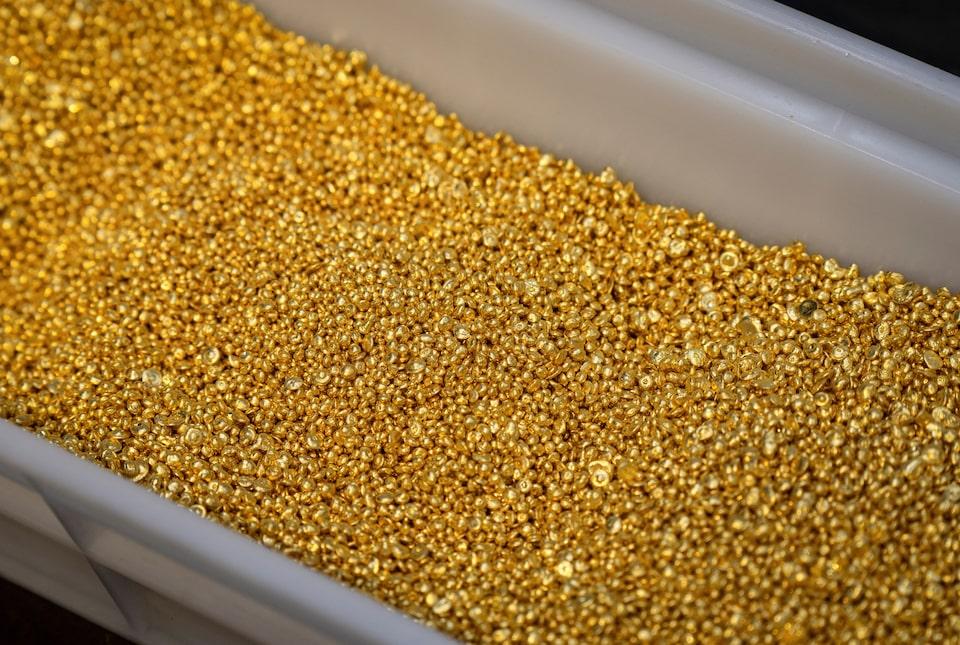
Gold could breach $3,000 level soon, analyst says Trump declined to predict if U.S. could face a recession U.S. CPI data due on Wednesday, PPI data on Thursday March 10 (Reuters) - Gold inched higher on Monday, supported by a weaker dollar and safe-haven flows amid fears of an escalating global trade war, while investors awaited further signals to gauge the Federal Reserve's interest rate stance. Spot gold gained 0.1% to $2,914.00 an ounce as of 0701 GMT, while U.S. gold futures firmed 0.2% to$2,920.10. The dollar index (.DXY) , opens new tab hovered near the four-month low hit last week, making greenback-priced gold less expensive for overseas buyers. "There are mounting downside risks to growth, while U.S. foreign policy is also a source of uncertainty, boosting the appeal for gold," Capital.com's financial market analyst Kyle Rodda said. "I think $3,000 is a level we'll breach soon, probably in the next couple of months at the latest." U.S. President Donald Trump on Sunday declined to predict whether the U.S. could face a recession amid stock market concerns about his tariff actions on Mexico, Canada and China over fentanyl. Seesaw tariff announcements have unnerved Wall Street as investors said the Trump administration's flip-flopping moves to roll back levies on trading partners are causing confusion rather than bringing relief. Trump imposed new 25% tariffs on imports from Mexico and Canada last Tuesday, along with fresh duties on Chinese goods. He later exempted many imports from Mexico and some from Canada from the tariffs for a month, creating uncertainty in the markets and fanning worries of U.S. inflation and growth slowdown. Tariffs have been a key concern for investors, with many believing that they can hurt economic growth and be inflationary. Investors now await the U.S. Consumer Price Index (CPI) data due on Wednesday and Producer Price Index (PPI) data expected on Thursday. Gold is considered a hedge against political risks and inflation, but higher interest rates dull the non-yielding asset's allure. Spot silver eased 0.2% to $32.45 an ounce, while platinum held steady at $963.37. Palladium was also unchanged at $948.64. Sign up here. https://www.reuters.com/markets/commodities/gold-edges-higher-dollar-weakness-safe-haven-flows-2025-03-10/
2025-03-10 06:52
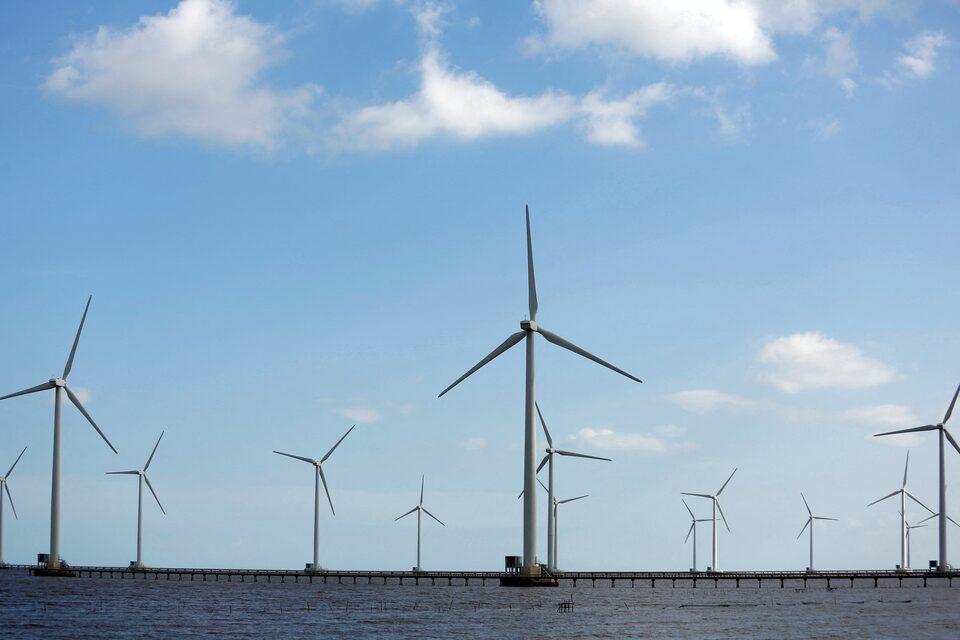
Investors urge Vietnam to not retroactively change power prices Projects struggle to pay debt, letter warns of wider bank risks Vietnam wants to greatly expand renewable energy capacity HANOI, March 10 (Reuters) - More than two dozen foreign and Vietnamese investors, including Adani Green Energy (ADNA.NS) , opens new tab, have warned Vietnam's plans to retroactively change rules on subsidised prices for wind and solar energy could affect more than $13 billion of investments. In a letter to Vietnamese leaders dated March 5 and reviewed by Reuters, the investors expressed "deep alarm" about the possible end of favourable energy tariffs, noting the policy change could undermine broader financial stability and erode confidence in Vietnam at a time when the country plans to significantly expand its renewables capacity. Among the 28 signatories are private equity fund Dragon Capital, the Vietnamese subsidiary of Philippines' ACEN (ACEN.PS) , opens new tab energy group, and investors from Thailand, the Netherlands, Singapore and China. In recent years, the Southeast Asian country experienced a boom in renewable energy investments driven by generous feed-in tariffs, under which the state committed to buying electricity for 20 years at above-market prices. However, the high tariffs increased losses for Vietnam's state-owned power utility EVN, the only buyer of the generated electricity, and led to an increase in power prices for households and factories. Authorities have repeatedly tried to reduce the high tariffs. Now they are considering a retroactive review of the criteria set for accessing the feed-in tariffs, according to the investors' letter, even after the projects are producing power. "Such a move could result in equity write-offs of nearly 100% for the affected projects, jeopardizing approximately over US$13 billion in investment," the letter said. The letter did not clarify if all of the funds had been spent yet, and it was not clear how and when Vietnam intended to review existing rules. Vietnam's industry ministry and EVN did not immediately respond to requests for comment. RISKS FOR CREDITORS Investors said in the letter that EVN was already delaying payments or only partially paying for the electricity generated by renewable projects "without clear justification". As a result, "multiple projects (are) facing loan default to both local and international lenders," the letter said, warning that a permanent revision or end of agreed tariffs "risks undermining national banking stability and eroding confidence in Vietnam's regulatory framework." This comes as Vietnam is planning to greatly expand its capacity for solar and wind energy generation under a revised draft power plan for this decade seen by Reuters. Under the plan's base scenario, installed capacity from wind and solar farms would exceed 56 gigawatts by 2030, nearly one-third of the total planned installed capacity from all sources, including fossil fuels. Of the projects that could be hit by the retroactive reform, those funded by foreign investors have a combined capacity of nearly 4 GW, almost exclusively in solar energy, with an aggregate value of $4 billion, according to the letter. Sign up here. https://www.reuters.com/business/energy/over-13-billion-solar-wind-investment-risk-vietnam-industry-letter-says-2025-03-10/
2025-03-10 06:43
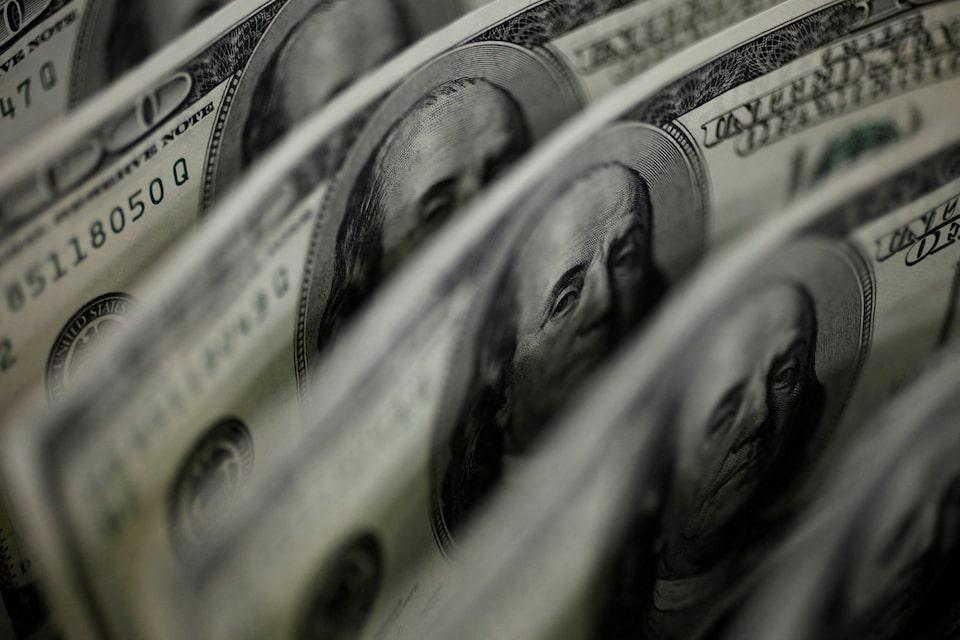
Euro hits five-month high after Ukraine agrees to ceasefire Canadian dollar rebounds from losses after Trump slaps new tariffs Dollar index on track for 7-day losing streak NEW YORK, March 11 (Reuters) - The euro hit a five-month high on Tuesday after Ukraine agreed to a 30-day ceasefire proposal, while the dollar rose to a one-week high before weakening against the Canadian dollar following U.S. President Donald Trump's additional tariffs on Canada. Trump doubled his planned tariff on all steel and aluminum imports from Canada to 50% after Ontario province imposed a 25% tariff on electricity sent to the U.S. Ukraine agreed to accept an immediate 30-day ceasefire in the conflict with Russia during talks with U.S. officials in Saudi Arabia. U.S. Secretary of State Marco Rubio said he would now take the offer to the Russians, and that the ball is in Moscow's court. The European single currency had been trading at a months-long high since last week on expectations of increased defense spending in Germany, the continent's largest economy. The U.S. dollar rose to C$1.4521 against the Canadian dollar, its highest since March 4. It later lost ground and traded down 0.28% to C$1.4396. The euro rose as high as $1.0947, a level last seen in October. It was last up 0.86% and has gained more than 5% this month. The euro jumped to its highest since January, of 161.78 yen, following Ukraine's agreement to a ceasefire. It was last up 1.29% at 161.57 yen. Increased European defense spending and the prospect of a ceasefire in Ukraine are positive for the euro, said Juan Perez, director of trading at Monex USA. "Adding the ceasefire, even if it's just for a month, and the idea that something concrete can actually happen between Russia and Ukraine is an excellent sign for the euro." The U.S. dollar remains weaker against its major peers as trade and growth concerns weigh on the greenback. Wall Street's main indexes, the benchmark S&P 500 (.SPX) , opens new tab, Nasdaq (.IXIC) , opens new tab and the Dow (.DJI) , opens new tab finished down on Tuesday. Against the Swiss franc , the dollar strengthened 0.1% to 0.882 but is down 2.42% for the month. Against the Japanese yen , the dollar strengthened 0.31% to 147.72. The greenback has lost 1.93% against the yen so far in March. The dollar index, which measures the greenback against a basket of currencies including the yen and euro, was on track for its seventh straight loss. It fell 0.57% to 103.27. "Everything that was vulnerable continues to look vulnerable: German yields keep going up and U.S. equities continue to look soft," said Steve Englander, global head of G10 FX Research and North American Macro Strategy at Standard Chartered Bank's NY Branch. Sign up here. https://www.reuters.com/markets/currencies/dollar-starts-week-softer-tariffs-weigh-yen-rises-2025-03-10/
2025-03-10 06:40
JAKARTA, March 10 (Reuters) - Indonesia is considering raising royalties paid by mining companies such as coal, nickel, copper, gold and tin, its mining ministry said in a public consultation event over the weekend. Officials proposed to raise royalty rates paid by miners and producers of metal products based on price levels, including introducing progressive rates for metals such as nickel ore, nickel matte and ferronickel. Sign up here. https://www.reuters.com/markets/commodities/indonesia-considers-raising-royalties-paid-by-mining-companies-2025-03-10/