2025-03-10 06:33
Next 'digital wallet' handouts expected in Q2 Next phase targets 2.7 million people, aged 16 to 20 years old Government targets over 4% export growth BANGKOK, March 10 (Reuters) - Thailand's government wants to lift economic growth above its 3% target this year and is confident a strong first half will be followed by momentum from the next phase of its signature stimulus programme and measures worth 150 billion baht ($4.4 billion), officials said on Monday. Those stimulus measures, including the next stage of its "digital wallet" scheme, will be implemented by the end of the third quarter, said Paopoom Rojanasakul, a deputy finance minister. "We have enough ammunition prepared," he said, adding that the spending would be used wisely and at the appropriate times. The government is pinning its hopes on the flagship 450 billion baht ($13.3 billion) "digital wallet" scheme, which transfers 10,000 baht ($300) to an estimated 45 million people, to jumpstart an economy that has struggled since the pandemic. While about a third of payments are already made in cash, the central bank governor has said consumption remains a problem, noting not all of the handouts were spent in earlier phases, with some used to pay off loans. Fourth quarter growth last year missed expectations, coming in at 3.2%. Southeast Asia's second-largest economy expanded 2.5% over the whole year, slower than expectations and lagging peers. The next phase of the handout scheme, a key plank of the ruling party's election platform, will deliver payments via a smartphone application to 2.7 million people aged 16-20 and will begin in the second quarter, Finance Minister Pichai Chunhavajira said on Monday. By using a digital platform, the next phase is expected to be more effective, said Deputy Finance Minister Julapun Amornvivat. "Because we are using the mechanism of the digital wallet, it can control and direct money to the places we want more," he said. On February 26, the Bank of Thailand cut the key interest rate by 25 basis points to 2.00%, responding to a weaker growth outlook and increased risks from global trade uncertainty, amid repeated government calls for further easing to help a flagging economy. The government is also targeting export growth of more than 4%, and a weaker baht would help meet that goal, Pichai told reporters. The central bank said the bar is high for a further cut as the level is consistent with the current economic outlook and robust to risks going forward. The central bank also projects growth to be slightly higher than 2.5% this year, down from 2.9% seen in December. Sign up here. https://www.reuters.com/markets/asia/thailand-eyes-growth-above-3-this-year-confident-strong-first-half-2025-03-10/

2025-03-10 06:08
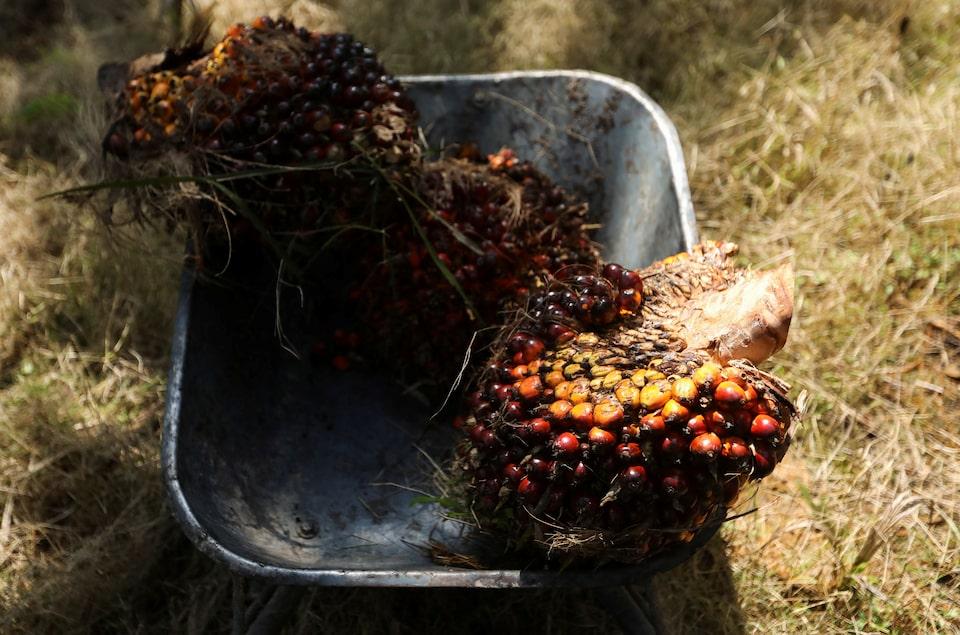
KUALA LUMPUR, March 10 (Reuters) - Malaysia's palm oil stocks fell for a fifth month in February to their lowest in 22 months as production declined, outweighing a reduction in exports, data from the industry regulator showed on Monday. The drop in stocks in the world's second-largest palm oil producer after Indonesia could support benchmark futures , traders said, even as the tropical oil's premium over soyoil reduces demand from price-sensitive importing countries. Malaysia's palm oil stocks at the end of February fell 4.31% from the previous month to 1.51 million metric tons, the lowest level since April 2023, according to the Malaysian Palm Oil Board, or MPOB. Crude palm oil production in February fell 4.16% to 1.19 million tons, the lowest level in three years, after floods disrupted production. Palm oil exports fell 16.27% to hit 4-year low of 1 million tons, it said. A Reuters survey had forecast inventories at 1.48 million tons, with output seen at 1.16 million tons and exports at 1.05 million tons. PALM/POLL While stocks were slightly higher than market expectations, the ongoing supply tightness caused by lower output is likely to support prices, said Anilkumar Bagani, research head of Mumbai-based vegetable oil broker Sunvin Group. In March, Malaysian production is likely to improve, but exports are unlikely to improve significantly as palm oil still holds a premium over soyoil, said a Mumbai-based dealer with a global trade house. "Indian demand will be crucial in the coming weeks to support prices. Early indications suggest India is buying more to replenish stock," the trader said. Stagnating production and a biodiesel push in top producer Indonesia could buoy prices of cooking oil for years, factors that make traditionally cheap palm oil costlier and eliminate an advantage that also curbed prices of rival oils. Following is a breakdown of the Malaysian Palm Oil Board figures and Reuters estimates for February (volumes in tons)PALM/POLL: *indicates revised figures by the Malaysian Palm Oil Board Sign up here. https://www.reuters.com/markets/commodities/malaysia-end-february-palm-oil-stocks-hit-nearly-two-year-low-2025-03-10/
2025-03-10 06:03
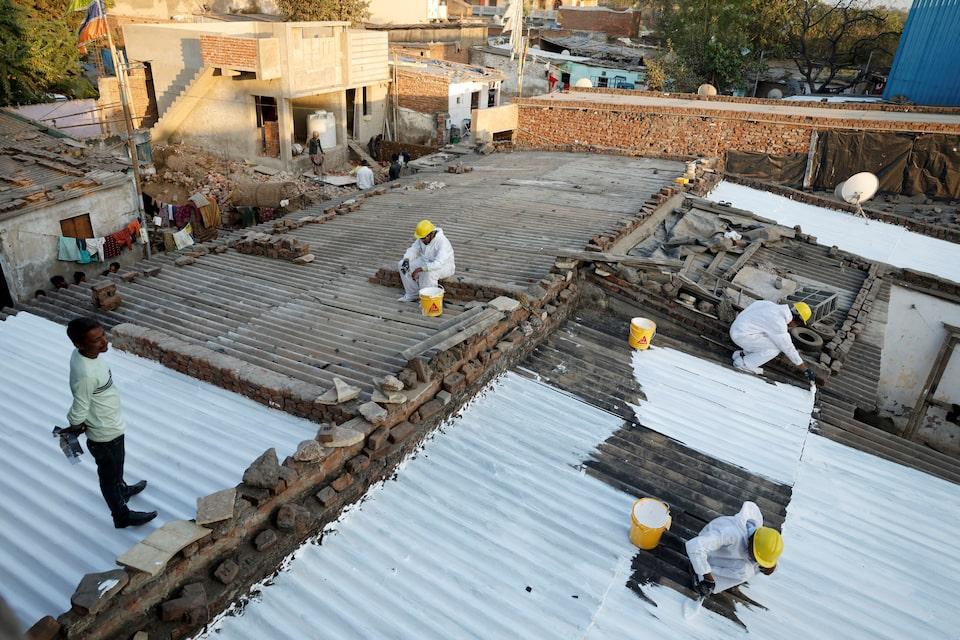
White roofs are part of global scientific trial Other projects are in Burkina Faso, Mexico and South Pacific Early results show reflective, white roofs have led to lower heart rates AHMEDABAD, March 10 (Reuters) - Hundreds of roofs in the informal settlements of India's western Gujarat state have been painted in a reflective, white coating over the last two months to try to keep their occupants cooler as the hottest time of year approaches. The effort, which involves 400 households in Ahmedabad, is part of a global scientific trial to study how indoor heat impacts people's health and economic outcomes in developing countries - and how "cool roofs" might help. "Traditionally, home is where people have come to find shelter and respite against external elements," said Aditi Bunker, an epidemiologist at the University of Heidelberg in Switzerland who is leading the project, supported by the UK-based Wellcome Trust. "Now, we're in this position where people are living in precarious housing conditions, where the thing that was supposed to be protecting them is actually increasing their exposure to heat." As climate change has made India's summers more extreme, Ahmedabad has suffered temperatures in excess of 46 C (115 F) in recent years. In the Vanzara Vas slum in the Narol area of the city, which has more than 2,000 dwellings, most of them airless, one-room homes, residents that are part of the project, such as Nehal Vijaybhai Bhil, say they have already noticed a difference. "My refrigerator doesn't heat up any more and the house feels cooler. I sleep so much better and my electricity bill is down," said Bhil, whose roof was painted in January. Across the world, heatwaves that, prior to the industrial revolution, had a one-in-10 chance of occurring in any given year are nearly three times as likely, according to a 2022 study in the journal Environmental Research Letters. By painting roofs with a white coating that contains highly reflective pigments such as titanium dioxide, Bunker and her team are sending more of the sun's radiation back to the atmosphere and preventing it from being absorbed. "In a lot of these low socioeconomic homes, there's nothing to stop the heat transfer coming down - there's no insulation barrier from the roof," Bunker said. Before joining Bunker's experiment, Arti Chunara said she would cover her roof with plastic sheets and spread grass over them. Some days, she and her family sat outside for most of the day, going into the house only for two to three hours when the heat was bearable. The trial in Ahmedabad will run for one year, and scientists will collect health and indoor environment data from residents living under a cool roof - and from those who do not. Other study sites are in Burkina Faso, Mexico and the island of Niue in the South Pacific, spanning a variety of building materials and climates. Early results from the Burkina Faso trial, Bunker said, show that cool roofs reduced indoor temperature by between 1.2 C in tin- and mud-roofed homes, and 1.7 C in tin-roofed homes over two years, which subsequently lowered residents' heart rates. Sign up here. https://www.reuters.com/world/india/indian-slums-get-cool-roofs-combat-extreme-heat-2025-03-10/
2025-03-10 06:00
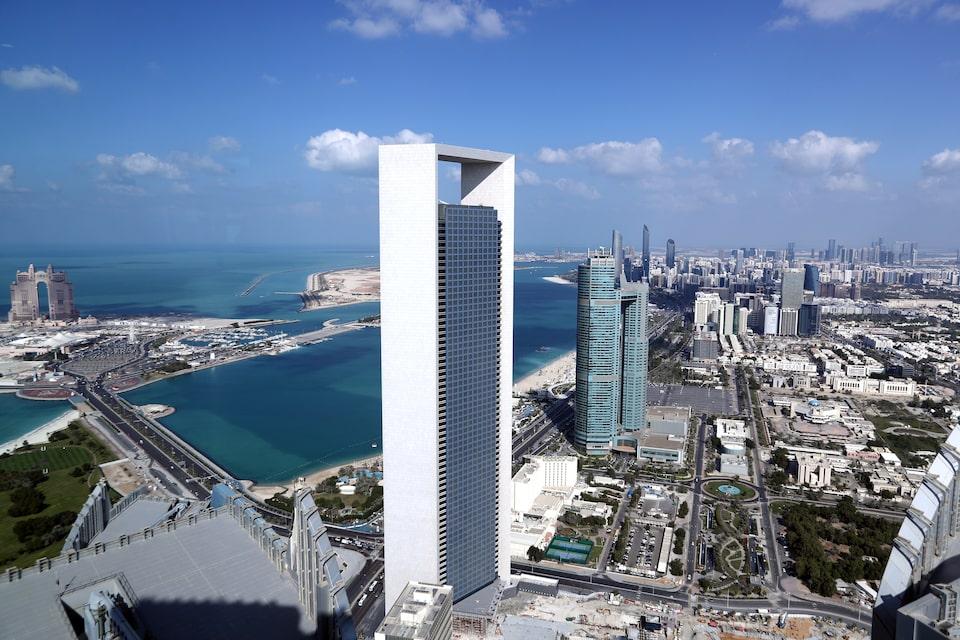
ADNOC considers listing minority stake in XRG Bank of America advises on XRG strategy Possible listing venues include London, New York Has potential to be among largest energy IPOs ever LONDON, March 7 (Reuters) - Abu Dhabi National Oil Company is considering listing its international investment arm XRG on an exchange outside of the United Arab Emirates, three people with knowledge of the matter said, potentially creating one of the largest listed energy companies globally. The discussions to list a minority stake of XRG, which was established late last year, are at a very early stage and Bank of America is advising the company on strategy, including the possibility of listing on an international exchange, the people said. Any flotation would be in about five years, one of them added. Before pursuing an IPO, ADNOC would need to appoint a CEO for XRG and transfer assets into the company, two of the people said. An eventual listing is the goal for XRG and is in line with the state oil giant's strategy, said two other people familiar with ADNOC's thinking who are not involved in the deliberations. ADNOC and Bank of America declined to comment. XRG, which ADNOC has said has $80 billion in assets, has a mandate to pursue global deals in chemicals, natural gas and renewables, as the emirate seeks to build a globe-spanning portfolio in those areas and rely less on revenue from oil exports. London or New York exchanges are among the options for the flotation of XRG shares, the three people familiar with the discussions said. London could be an attractive venue because it has been home to global oil and gas companies such as Shell and BP, even if it has faced fund outflows in recent times, one of the people said. A U.S. listing, however, could potentially offer a higher valuation, the person said. Shell has considered moving there. Even if valued in line with ADNOC's stated asset valuations, listing a small percentage of XRG could make it the largest ever energy IPO in either jurisdiction. The domestic IPO of neighbouring Saudi Arabia's oil giant Aramco in 2019 was the world's largest ever public debut of a company. It raised $29.4 billion. United Arab Emirates President Sheikh Mohamed bin Zayed Al Nahyan is the chair of ADNOC's board, which approved an accelerated international growth strategy backed by $150 billion between 2023-2027. A new department was set up at ADNOC Group - low carbon solutions and international growth - to help implement the strategy before XRG's creation. So grand are ADNOC's ambitions that it explored buying BP, Reuters reported last year. Preliminary deliberations did not progress. GLOBAL DEALS XRG's board features ex BP boss Bernard Looney, Blackstone President Jon Gray and Egyptian billionaire Nassef Sawiris. ADNOC has struck several international deals for assets to sit under XRG, including a deal this week with Austria's OMV to merge their petrochemical businesses Borouge and Borealis which will acquire Canada's Nova Chemicals, owned by Abu Dhabi wealth fund Mubadala. The merged entity, Borouge Group International, will have a $60 billion enterprise value and be the fourth largest polyolefins firm by production capacity, behind China's Sinopec and CNPC and U.S.-based ExxonMobil. In October, ADNOC bought German chemicals maker Covestro for 14.7 billion euros ($15.31 billion), including debt. The business also sits under XRG. ADNOC has also invested in assets beyond chemicals for XRG including a stake in NextDecade's (NEXT.O) , opens new tab Rio Grande liquefied natural gas (LNG) export facility in Texas and an investment in an ExxonMobil Texas hydrogen project. ADNOC also owns 24% of Masdar, the Abu Dhabi state-backed renewables firm that has been on its own acquisition blitz as it races to roughly double its generation capacity to 100 gigawatts by 2030. ADNOC began a string of listings for its subsidiaries with its fuel retailer in late 2017. From 2021, it went onto list units for drilling, fertilisers, gas and logistics, as well as Borouge. The state oil firm also sold stakes in subsidiaries with long-term lease rights to its crude and gas pipeline networks. Those deals and sales of stakes in its units have raised more for ADNOC than Aramco's blockbuster 2019 IPO, Reuters calculations show, though Aramco raised another more than $12 billion last year by floating a tiny stake. ($1 = 3.6726 UAE dirham) ($1 = 0.9600 euros) Sign up here. https://www.reuters.com/business/energy/adnoc-eyes-international-listing-xrg-sources-say-2025-03-07/
2025-03-10 05:43
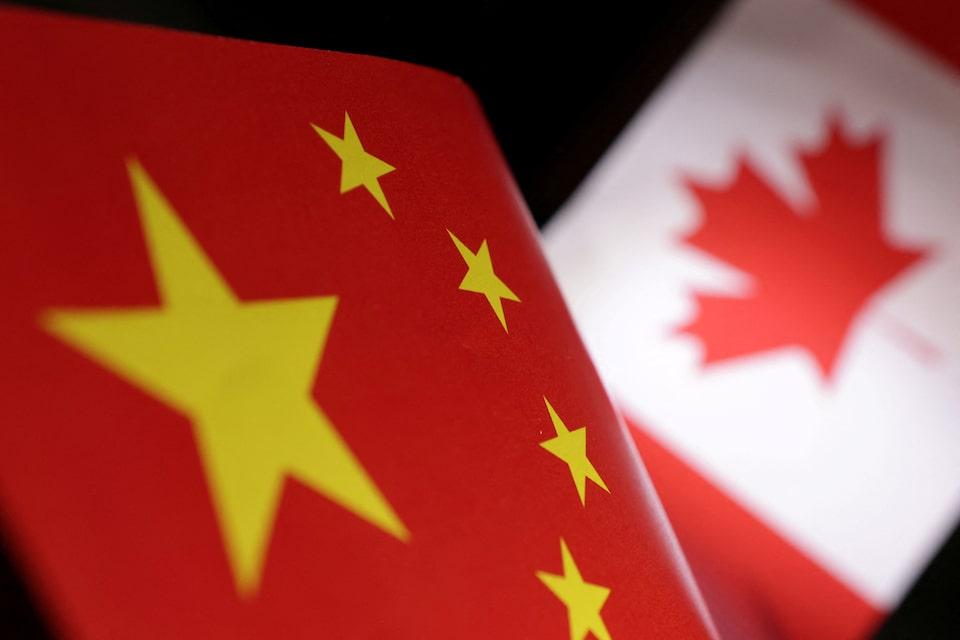
BEIJING, March 10 (Reuters) - Zhengzhou rapeseed meal and oil contracts jumped on Monday, the first day of trade since China decided to impose 100% tariffs on imports of those products from Canada. The most-active rapeseed meal futures on the Zhengzhou exchange climbed 6% to 2,611 yuan ($360) per metric ton - the biggest daily rise since September 2022. Rapeseed oil futures gained 5.2% to 9,213 yuan ($1,270) per ton. Canada's exports of rapeseed oil, oil cakes and peas were worth roughly $1 billion last year. The tariffs, effective March 20, come in tandem with a 25% duty on Canadian aquatic products and pork, worth $1.6 billion in 2024. The levies follow 100% and 25% tariffs Canada imposed on Chinese-made electric vehicles and steel last year. Analysts said the spike in prices may not last long. "China has alternative origins for rapeseed oil such as Russia and the EU and also the Chinese import duty hike could pressure Canadian canola prices, resulting in a sharp decline in product prices," said Anilkumar Bagani, research head of Mumbai-based vegetable oil broker Sunvin Group. "It also needs to be noted that China has huge rapeseed oil stocks at the moment and the crush capacity utilisation is also considerably high," Bagani said. China last year began an anti-dumping investigation into Canadian rapeseed but rapeseed was not included among the tariffs announced on Saturday, just rapeseed meal and oil. This likely leaves room for negotiation during trade talks, traders and analysts said. ($1 = 7.2570 Chinese yuan) Sign up here. https://www.reuters.com/markets/commodities/chinese-rapeseed-meal-futures-rise-after-tariffs-some-canadian-imports-2025-03-10/
2025-03-10 05:42
A look at the day ahead in European and global markets from Kevin Buckland It was a nervy start to the week for markets, led by an uncharacteristically steep decline for Wall Street futures early in the Asian day. U.S. President Donald Trump seems to be at the centre of investor worries, sidestepping a question in a Fox News interview on Sunday about whether his trade tariffs could trigger a U.S. recession. As City Index analyst Matt Simpson put it, that's as good as a yes as far as markets are concerned. The R-word has been making the rounds among traders and analysts. A Reuters poll found 91% of economists view the odds of a downturn to have increased under Trump's rapidly shifting trade policies. By around midday in Asia though, the pessimism was less pronounced. Down more than 1% at one point, S&P 500 futures had pared that decline by half. Japan's Nikkei (.N225) , opens new tab had flipped from a small loss to be up 0.6%, escaping the drag from a strengthening of the safe-haven yen. Taiwan's benchmark was off just 0.2% compared with 0.8% earlier. The exception was China where weekend data showed deflationary force continues to build, giving policymakers more to think about at the week-long National People's Congress that runs through Tuesday. Hong Kong's Hang Seng (.HSI) , opens new tab tumbled more than 2% and mainland Chinese blue chips (.CSI300) , opens new tab sagged 0.8%. A big reason for the turnaround in many markets was that they had already sunk so low, with the S&P 500 touching a nearly six-month trough on Friday before bouncing back a bit. The Nikkei also closed out last week at a six-month nadir. It's telling that Japan's best performers on Monday were beaten-down chip-sector shares. Macro-economic misfires for the U.S. and China have been to the benefit of Europe though, where investors are positioning for a seismic shift from Germany's suddenly looser purse strings. Pan-European STOXX 50 futures are up 0.8% in very early trading and the euro is clinging close to Friday's four-month peak. Europe's data calendar is overall light today, headlined by German trade and industrial output figures for January. The Eurogroup meets in Brussels, with the participation of European Central Bank President Christine Lagarde among others. Key developments that could influence markets on Monday: Sign up here. https://www.reuters.com/markets/europe/global-markets-view-europe-2025-03-10/