2025-03-09 20:22
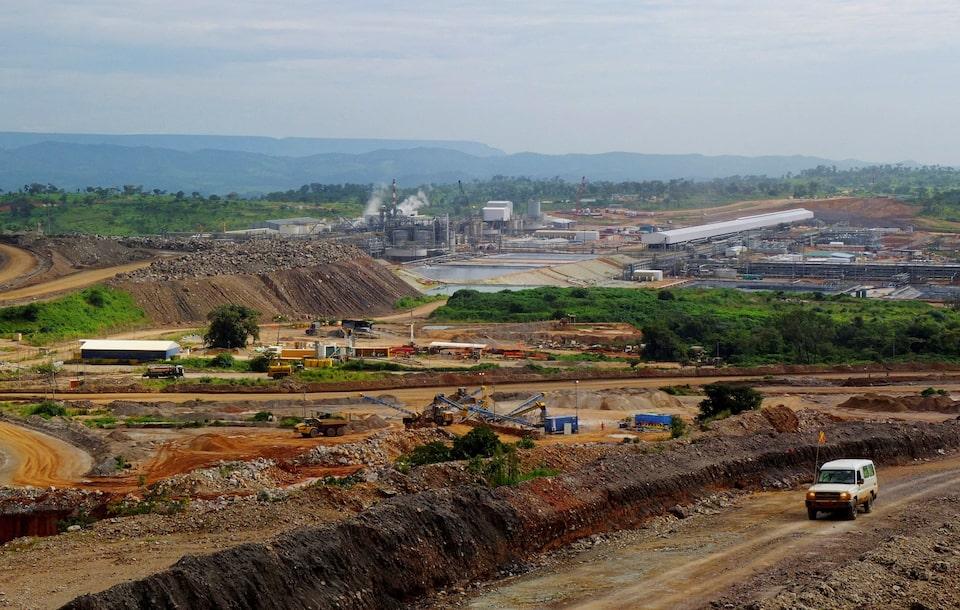
March 9 (Reuters) - The United States is open to exploring critical minerals partnerships with Congo, the State Department said in a statement to Reuters on Sunday, after a Congolese senator contacted U.S. officials to pitch a minerals-for-security deal. Democratic Republic of Congo, which is rich in cobalt, lithium and uranium among other minerals, has been fighting Rwanda-backed M23 rebels who have seized swathes of its territory this year. Talk of a deal with the U.S. - which is also in discussions with Ukraine over a minerals pact - has circulated in Kinshasa for weeks. "The United States is open to discussing partnerships in this sector that are aligned with the Trump Administration's America First Agenda," a State Department spokesperson said, noting that Congo held "a significant share of the world's critical minerals required for advanced technologies." The U.S. has worked "to boost U.S. private sector investment in the DRC to develop mining resources in a responsible and transparent manner," the spokesperson said. Kinshasa has not publicly detailed a proposal, instead saying it is seeking diversified partnerships. "There is a desire for us to diversify our partners," Congolese government spokesman Patrick Muyaya said last week, adding there were "daily exchanges" between Congo and the U.S. "If today American investors are interested in coming to the DRC, obviously they will find space ... DRC has reserves that are available and it would also be good if American capital could invest here," he said. REGIONAL STABILITY Andre Wameso, deputy chief of staff to Congolese President Felix Tshisekedi, travelled to Washington earlier this month for talks on a partnership, two sources told Reuters. On February 21, a lobbyist representing the Congolese Senator Pierre Kanda Kalambayi sent letters to U.S. Secretary of State Marco Rubio and other American officials inviting U.S. investment in Congo's vast mineral resources in exchange for helping to reinforce "regional stability". That initiative was not sanctioned by the broader Congolese government or presidency, according to two Congolese officials. There are, however, several initiatives underway, albeit in nascent stages, sources from Congo's presidency, its ministry of mines, and from Washington told Reuters. A Congolese delegation had been scheduled to meet with the House Foreign Affairs Committee on March 6, but cancelled the meeting at short notice, according to two sources. "I think it's certainly something that will pique people's interest in Washington, and I think it has attracted interest," said Jason Stearns, a Congo expert at Canada's Simon Fraser University, noting that Congo's mineral supply chains are currently dominated by China. But, he said, the U.S. does not have state-owned companies like China does, and no private American mining companies currently operate in Congo. "So if the Congolese want to make this work, it will probably not be by offering a U.S. company a mining concession. They'll have to look at more complicated ways of engaging the U.S.", he added. Sign up here. https://www.reuters.com/world/africa/us-open-minerals-partnerships-with-democratic-republic-congo-2025-03-09/
2025-03-09 19:57
M23 rebels seize Nyabiondo amid ongoing clashes Pro-government militia switches sides to join M23 alliance US says it is open to minerals partnership with Congo March 9 (Reuters) - Fighting between M23 rebels and pro-Congo militias was underway on Sunday in Nyabiondo, about 100 km (62 miles) north of Goma in eastern Congo, residents said, days after a nearby attack left a heavy civilian death toll, according to the United Nations and an NGO. The Rwanda-backed rebel group M23 has seized swathes of mineral-rich eastern Congo since the start of the year. "M23 has taken Nyabiondo since 11 a.m. (0900 GMT), following clashes," Kipanda Biiri, an official from the local administrative authority who was fleeing the area, told Reuters. "The enemy opened a large-scale assault on Nyabiondo this morning," said Telesphore Mitondeke, a civil society rapporteur in Masisi, the area where Nyabiondo is located, referring to M23 rebels. "For the moment there is shooting from every direction in the centre of Nyabiondo, where the clashes are taking place." The fighting follows clashes last week between M23 and a pro-Congolese government militia in the village of Tambi, about 18 km northeast of the town of Masisi, which culminated in an attack overnight on March 5 leaving many civilian casualties, according to the head of a local NGO. An internal United Nations memo seen by Reuters on Sunday said between 40 and 70 civilians were believed to have been killed in that attack. Separately on Sunday, a spokesperson for the rebel alliance that includes M23 said on X that one of the pro-government militias that operates in eastern Congo had switched sides and joined its alliance. The spokesperson for the group that militia had been a part of said in a statement that the rest of the group remained loyal to the Congolese government and its army. M23 rebels say that they intend to seize power in Congo's capital Kinshasa. They also accuse Congo's government of not living up to previous peace deals and fully integrating Congolese Tutsis into the army and administration. The group's spread into new mineral-rich territories this year also gives it scope to acquire more mining revenue, analysts say. In Washington, the State Department said in a statement to Reuters on Sunday that the United States was open to exploring critical minerals partnerships with Congo, after a Congolese senator contacted U.S. officials to pitch a minerals-for-security deal. Congo is rich in cobalt, lithium and uranium among other minerals. Sign up here. https://www.reuters.com/world/africa/clashes-continue-eastern-congo-days-after-attack-civilians-left-many-dead-2025-03-09/

2025-03-09 19:01
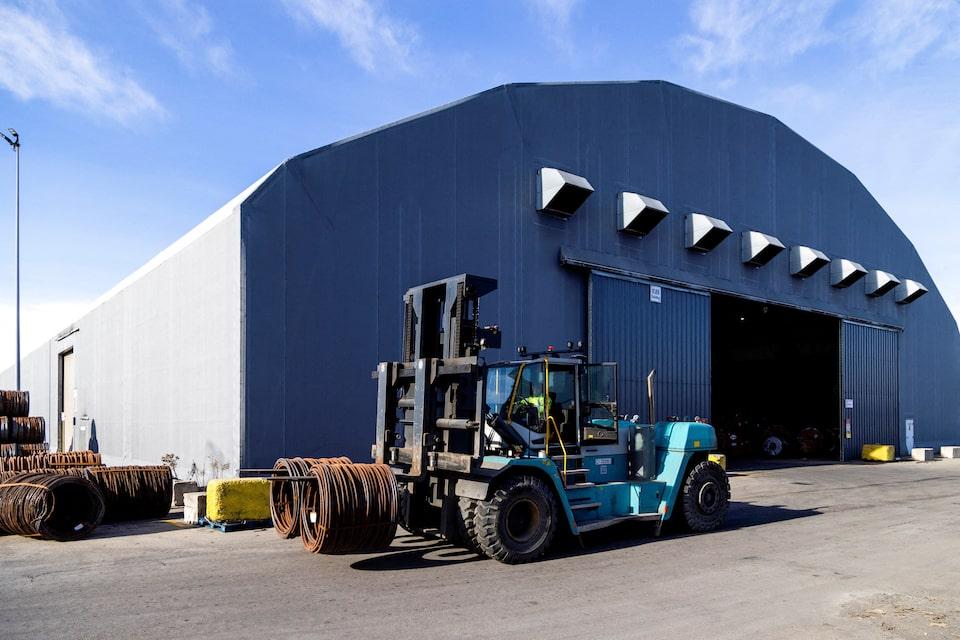
Trump refuses to rule out recession from tariff pain "He's not going to step off the gas," commerce secretary says Trump says tariffs on Mexico, Canada could go up Democrats denounce on-again, off-again tariffs as chaotic policy Steel and aluminum tariffs to take effect Wednesday WASHINGTON, March 9 (Reuters) - President Donald Trump declined to predict whether the U.S. could face a recession amid stock market concerns about his tariff actions on Mexico, Canada and China over fentanyl. The Republican president, whose trade policies have rekindled fears of worsening U.S. inflation, was asked if he expected a recession this year in a Fox News interview broadcast on Sunday. "There is a period of transition, because what we're doing is very big. We're bringing wealth back to America," Trump told the "Sunday Morning Futures" program. "It takes a little time, but I think it should be great for us." Tariffs have been one key concern for investors, as many believe they can harm economic growth and be inflationary. While Trump acknowledged as early as February 2 that his sweeping tariffs could cause some "short-term" pain for Americans, his own advisers have repeatedly downplayed any negative impact. "Absolutely not," Commerce Secretary Howard Lutnick said on Sunday. "There's going to be no recession in America." Lutnick did acknowledge that the Trump tariffs would lead to higher prices for U.S. consumers on some foreign-made goods, but said American products will get cheaper. "He's not going to step off the gas," Lutnick said on NBC's "Meet the Press." Trump imposed new 25% tariffs on imports from Mexico and Canada last Tuesday, along with fresh duties on Chinese goods, after he declared the top three U.S. trading partners had failed to do enough to stem the flow of deadly fentanyl and its precursor chemicals into the United States. Two days later, he exempted many imports from Mexico and some from Canada from those tariffs for a month, the latest twist in a fluctuating trade policy that has whipsawed markets and fanned worries about U.S. inflation and growth. It was the second time in two months that Trump has walked back fentanyl-related tariffs on the U.S. neighbors. "If fentanyl ends, I think these will come off. But if fentanyl does not end, or he's uncertain about it, he will stay this way until he is comfortable," Lutnick said. White House officials say Canada and Mexico are conduits for shipments of fentanyl - which is 50 times more potent than heroin - and its precursor chemicals into the U.S. in small packages that are often not inspected. Public data shows 0.2% of all fentanyl seized in the U.S. comes from the Canadian border, while the vast majority arrives via Mexico. In a concession to Trump, Canada appointed a new fentanyl czar last month. The exemptions for the two largest U.S. trading partners expire on April 2, when Trump has threatened to impose a global regime of reciprocal tariffs on all U.S. trading partners. Kevin Hassett, director of the White House's National Economic Council, said on ABC's "This Week" that he hoped the drug-related tariffs can be resolved by the end of the month so the focus can be on imposing the reciprocal measures. TRADE CONFUSION Seesaw tariff announcements have unnerved Wall Street as investors say flip-flopping moves by the Trump administration to roll back levies on trading partners are causing confusion rather than bringing relief. The Trump trade policies have raised fears of trade wars that could slam economic growth and raise prices for Americans still smarting from years of high inflation. China said it would "resolutely counter" pressure from the United States on the fentanyl issue after Trump imposed tariffs of 20% on all imports from China. Democratic senators from two border states criticized Trump's tariff policy as inconsistent and irresponsible. "These broad, indiscriminate and on-again, off-again tariffs don't help anyone. They don't help farmers. They don't help auto workers. They're a mistake," U.S. Senator Adam Schiff of California said on ABC. "Pounding Canada as if they're the exact same thing as China - it just creates this chaotic feeling," U.S. Senator Elissa Slotkin, of Michigan, said on NBC. Trump said he put a hold on tariffs on some goods last week because, "I wanted to help Mexico and Canada," according to the "Sunday Morning Futures" interview, which was taped on Thursday. The three countries are partners in a North American trade pact that was renegotiated by Trump during his first White House term. Yet Trump also told the Fox News program that those 25% tariffs "may go up" and he said on Friday that his administration could soon impose reciprocal tariffs on Canadian lumber and other products. Separately, U.S. tariffs of 25% on imports of steel and aluminum will take effect as scheduled on Wednesday, Lutnick said during the interview. Canada and Mexico are both top exporters of the metals to U.S. markets, with Canada in particular accounting for most aluminum imports. Sign up here. https://www.reuters.com/world/trump-will-not-ease-up-fentanyl-related-tariffs-us-commerce-secretary-lutnick-2025-03-09/
2025-03-09 16:42
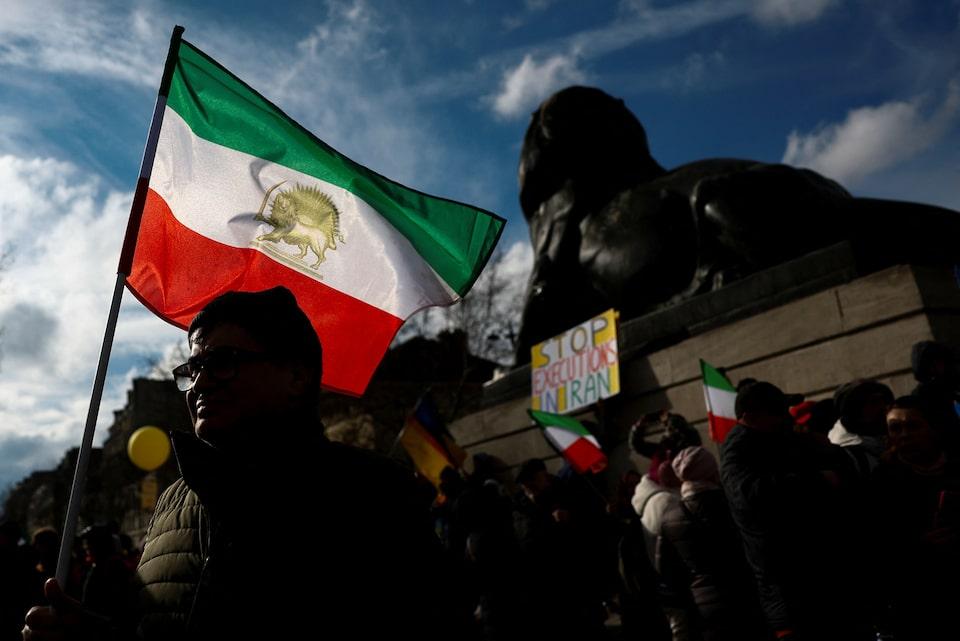
DUBAI, March 9 (Reuters) - Iran would consider negotiations with the U.S. if the aim of the talks was to address concerns regarding any potential militarization of its nuclear program, Iran's U.N. mission said on Sunday in a post on X. The comment came a day after the country's Supreme Leader Ayatollah Ali Khamenei said Iran will not negotiate under U.S. "bullying". In the post on X the mission said: "If the objective of negotiations is to address concerns vis-à-vis any potential militarization of Iran’s nuclear program, such discussions may be subject to consideration." "However, should the aim be the dismantlement of Iran’s peaceful nuclear program ... such negotiations will never take place," the post added. Khamenei was quoted by state media as saying on Saturday: "They are bringing up new demands that certainly will not be accepted by Iran, like our defence capabilities, missile range and international influence." U.S. President Donald Trump said in an interview with Fox Business Network, broadcast on Friday, that he wants to negotiate a nuclear deal with Iran and had sent a letter to its leadership suggesting talks with the Islamic Republic, which the West fears is rapidly nearing the capability to make atomic weapons. Iran denies seeking nuclear weapons. While expressing openness to a deal with Tehran, Trump has reinstated a "maximum pressure" campaign that was applied during his first term as president to isolate Iran from the global economy and drive its oil exports to zero. During his 2017-2021 term, Trump withdrew the United States from a landmark deal between Iran and major powers that had placed strict limits on Tehran's nuclear activities in exchange for sanctions relief. After Trump pulled out in 2018 and re-imposed sanctions, Iran breached and far surpassed those limits. U.N. nuclear watchdog chief Rafael Grossi has said that time is running out for diplomacy to impose new restrictions on Iran's activities, as Tehran continues to accelerate its enrichment of uranium to near weapons-grade. Tehran says its nuclear work is solely for peaceful purposes. Sign up here. https://www.reuters.com/world/middle-east/iran-would-consider-talks-with-us-about-concerns-over-militarization-nuclear-2025-03-09/
2025-03-09 14:55
CAIRO, March 9 (Reuters) - Iraq has no immediate alternatives to compensate for the energy imported from Iran, which will cause a significant problem in providing enough electricity to meet domestic consumption, especially in the summer, three energy officials said on Sunday. "Government has started to implement urgent measures to reduce the impact of the U.S. decision on Iraq power supply," one senior electricity ministry official told Reuters. The Trump administration rescinded a waiver on Saturday that had allowed Iraq to pay Iran for electricity, as part of President Donald Trump's "maximum pressure" campaign against Tehran, a State Department spokesperson said. Sign up here. https://www.reuters.com/business/energy/iraq-has-no-immediate-alternative-iranian-energy-imports-2025-03-09/
2025-03-09 11:21
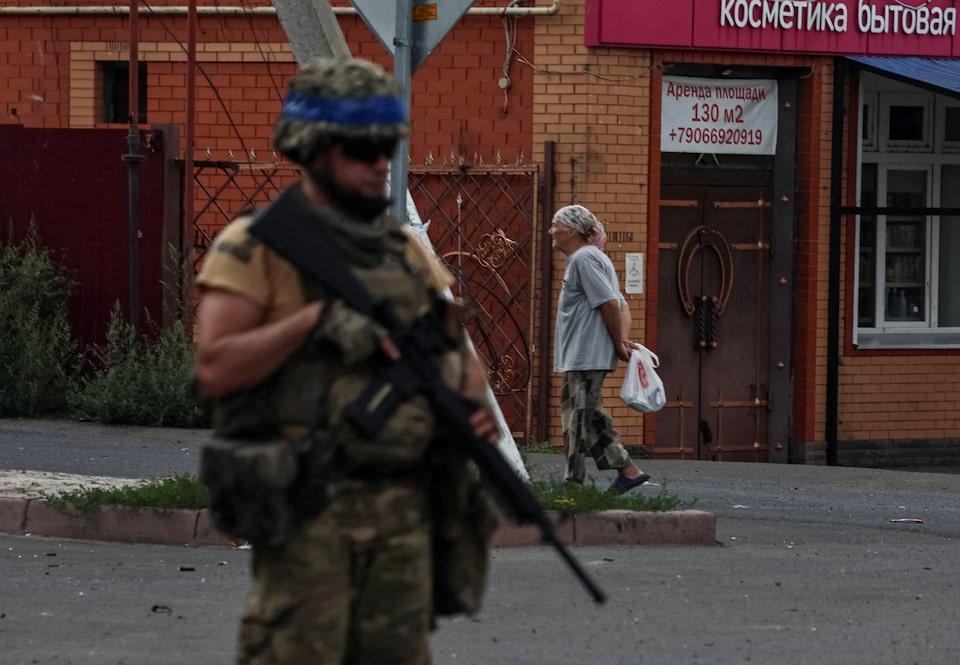
Medvedev: Encirclement almost complete Ukraine took a sliver of Russia in August 2024 Ukraine confirms Russia used pipeline to launch attack MOSCOW, March 9 (Reuters) - Russian forces on Sunday recaptured three more settlements in Russia's western Kursk region, the Defence Ministry said, part of an operation to evict Ukrainian troops holding chunks of territory seven months after a cross-border incursion. The ministry statement, posted on the Telegram messaging app, followed reports by Russian bloggers that Russian special forces had crept for miles through a gas pipeline near the town of Sudzha in an attempt to surprise Ukrainian forces. The three settlements now under Russian control according to the ministry -- Malaya Lokhnya, Cherkasskoye Porechnoye and Kositsa -- all lie north of Sudzha. "The Russian Federation's armed forces are continuing to rout groups of the Ukrainian army on the territory of Kursk region," the statement said. The earlier report by Russian bloggers on the pipeline operation appeared to be a ruse aimed at cutting off thousands of Ukrainian soldiers in the region ahead of Ukrainian talks with the United States on a possible peace deal to end the war. Ukrainian troops seized about 1,300 square km (500 sq. miles) of Russia's Kursk region in August in what Kyiv said was an attempt to gain a bargaining chip in future negotiations and to force Russia to shift forces from eastern Ukraine. Russia has been pressing its drive to regain control of the region with some success in recent days. Open source maps on Friday showed Kyiv's contingent in Kursk nearly surrounded after rapid Russian advances. "The lid of the smoking cauldron is almost closed," former Russian President Dmitry Medvedev said on Telegram. "The offensive continues." Yuri Podolyaka, a Ukrainian-born, pro-Russian military blogger, said Russian special forces crept nearly 16 km (10 miles) along the inside of the 1.5 metre wide gas pipeline and spent several days in the pipe before surprising Ukrainian forces from the rear near Sudzha. Pro-Russian war blogger Two Majors said a major battle was under way for Sudzha and that Russian forces had surprised Ukrainian soldiers by entering the area via a gas pipeline. EUROPEAN FEARS A statement from Ukraine's airborne assault forces said that Russian soldiers had used the pipeline in an attempt to gain a foothold, but the Russians were promptly detected and attacked with rockets, artillery and drones. The Ukrainian military's General Staff in a late afternoon report said its forces repelled 15 Russian attacks in Kursk region, with six armed clashes still ongoing. It also reported 12 Russian air strikes on their positions. Russian advances in 2024 and U.S. President Donald Trump'supending of U.S. policy on Ukraine and Russia have raised fears among European leaders that Ukraine will lose the war and that Trump is turning his back on Europe. The United States paused military aid and the sharing of intelligence with Ukraine this month after a meeting between Trump and Ukrainian President Volodymyr Zelenskiy on February 28 descended into acrimony in front of the world's media. In an earlier update on the situation in Kursk, Russia's Defence Ministry said its forces had retaken the village of Lebedevka, as well as seizing Novenke, a hamlet across the border in Ukraine's neighbouring Sumy region. Moscow made no official mention of the pipeline operation, but Major General Apti Alaudinov, commander of Chechnya's Akhmat special forces, reposted pictures on Telegram of special forces inside a gas pipeline. "I am surprised by people who really think that Russia could lose," Alaudinov said. "It is a good day." Russian Telegram channels showed pictures of special forces in gas masks and lights, some using colourful colloquial Russian curses, as they made their way along the inside of what looked like a large pipe. Owing to battlefield reporting restrictions on both sides, Reuters was unable to verify the reports. KURSK INCURSION The Soviet-era Urengoy-Pomary-Uzhgorod pipeline used to bring gas from western Siberia via Sudzha to Ukraine but Ukraine terminated all Russian gas transit through its territory from January 1. Ukraine's incursion into Kursk in August was the most serious attack on Russian territory since the Nazi invasion of the Soviet Union in 1941. Another war blogger, Yuri Kotenok, said Ukrainian forces had been moving equipment from Sudzha, closer to the border. The Russian offensive raises a serious tactical conundrum for Ukraine just as the spring thaw turns roads to mud tracks: Should it withdraw from Kursk, and if so, can it do so without a disorderly rush to the border under intense Russian fire? Russia's invasion of Ukraine has led to the biggest confrontation between the West and Russia since the 1962 Cuban Missile Crisis. In the eastern Donetsk region, where Russian forces have made slow but steady progress during gruelling fighting in what was once Ukraine's industrial heartland, Moscow said on Sunday that its forces had taken the village of Kostyantynopil. In a part of Ukraine's southern Kherson region held by Russian forces, Russia-installed officials said Ukrainian forces launched a missile attack on a busy market in the town of Velyki Kopani. Russian news agencies quoted local health officials as saying the strike killed two people and injured seven. Reuters could not independently verify the report. Sign up here. https://www.reuters.com/world/europe/russia-uses-gas-pipeline-surprise-ukrainian-forces-kursk-bloggers-say-2025-03-09/