2025-03-07 11:12
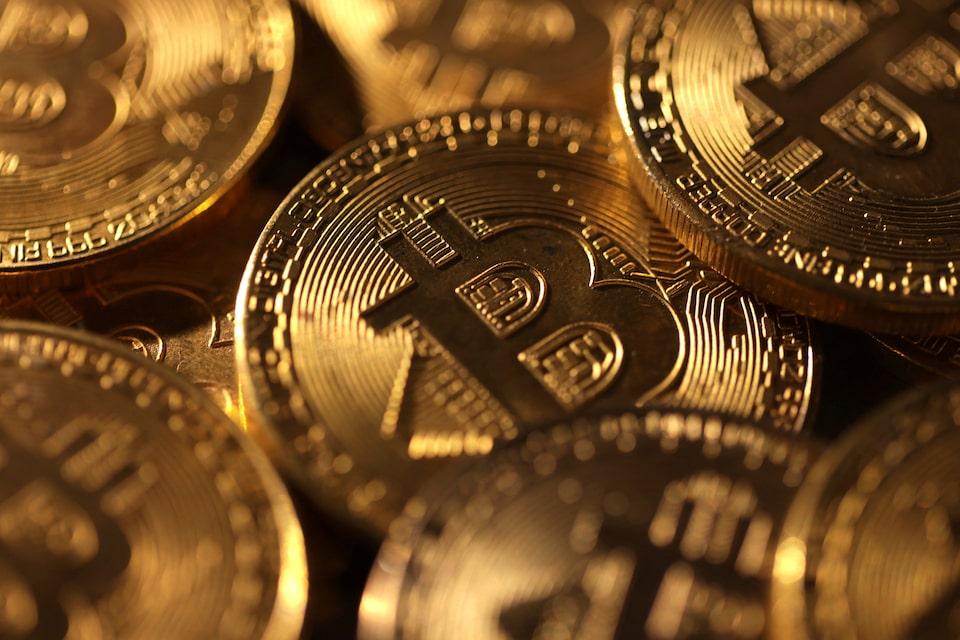
Trump wants government to hold on to seized crypto assets Trump: "We don't want any cost to the taxpayers" Industry leaders seek clarity on crypto regulation and scrutiny Concerns over Trump's crypto interests and conflict of interest March 7 (Reuters) - U.S. President Donald Trump wooed the cryptocurrency industry's elite at the White House on Friday, hosting a first-of-its-kind summit focused on his plans for a government-owned stockpile of digital assets. Trump welcomed a wide range of industry players including Zach Witkoff, one of the founders of the president's own crypto business, World Liberty Financial, his social media posts showed. In addition to top administration officials and lawmakers, guests in the White House's State Dining Room included MicroStrategy (MSTR.O) , opens new tab CEO Michael Saylor, Coinbase co-founder and CEO Brian Armstrong, investors Cameron and Tyler Winklevoss, and entrepreneur David Bailey. A major focus of the event was Trump's goal to build a strategic reserve containing bitcoin, which he formalized in an executive order on Thursday that also said there would be a stockpile of other digital assets. That order directed the secretaries of Treasury and Commerce to develop "budget-neutral strategies" for acquiring additional bitcoin that have no "incremental costs" on taxpayers. "We don't want any cost to the taxpayers," Trump said at the summit. The reserve will be capitalized with bitcoin owned by the federal government that was forfeited as part of criminal or civil asset forfeiture proceedings, White House crypto czar David Sacks said in a post on social media platform X. Sacks told reporters at the White House that establishing a bitcoin reserve should have been done a long time ago. He said taxpayer funds would not be used to acquire digital assets and that there were existing protections in place to safeguard consumers from crypto investments. The plans disappointed some in the market who had hoped for a firm plan to buy new tokens. The announcement weighed on the price of bitcoin, last down 3.4% at $86,394. "This (strategic reserve) is going to be the biggest point of contention for many of us," said JP Richardson, co-founder and CEO of Exodus (EXOD.A) , opens new tab, a bitcoin wallet developer. Although he owns the four coins other than bitcoin that Trump has suggested including in the reserve, he does not think they have a place in a strategic reserve. "Crypto has made big strides, but it's still a relatively nascent industry," Richardson said. Other coins are smaller and function in a very different way, one he said may create more risk. Officials invited to the summit praised Trump and executives for clearing the way for the industry's growth. Other industry executives said it was good to see the administration being collaborative with the industry after years in which some felt they were under attack over security and consumer protection issues. "For the first time, industry leaders feel they're walking into a collaborative discussion," said Les Borsai, co-founder of Wave Digital Assets, a crypto investment adviser, who said he did not receive an invitation. Trump was upbeat about the crypto industry's prospects, telling the summit, "We feel like pioneers in a way." He added: "From this day on, America will follow the rule that every bitcoin knows very well, never sell your bitcoin. That's a little phrase that they have. I don't know if that's right or not. Who the hell knows, right? Who knows? Who knows, but so far, it's been right, and well, let's keep it that way." Trump's executive order spells out that the government's own bitcoin holdings should never be sold. Treasury Secretary Scott Bessent told the event the U.S. was going to keep the dollar as the world's reserve currency and use stablecoins to do that. In a post on X, Brad Garlinghouse, CEO of technology company Ripple, who attended the summit, said he welcomed Trump's recognition that the world of cryptocurrencies stretched beyond bitcoin. XRP, the coin tied to Ripple, is one of the four other cryptocurrencies Trump has suggested may be added to a crypto reserve. Attendees said they were optimistic about working with an administration that views crypto as a mainstream asset class and expressed hope for a straightforward regulatory process. "What everyone really needs to have at this point is clarity on what the level of scrutiny and intensity of regulation will be, who the key regulators will be," said Yesha Yadav, associate dean and professor of law at Vanderbilt University. That could speed up the process of approval by the Securities and Exchange Commission of a flurry of new listings of exchange-traded funds. Trump's family has launched cryptocurrency meme coins and he also holds a stake in World Liberty Financial, a crypto platform, which has sparked some conflict-of-interest concerns. His aides have said Trump has handed over control of his business ventures, which are being reviewed by outside ethics lawyers. The White House did not respond to a request for comment. Sign up here. https://www.reuters.com/technology/crypto-leaders-meet-trumps-summit-strategic-reserve-focus-2025-03-07/
2025-03-07 11:04
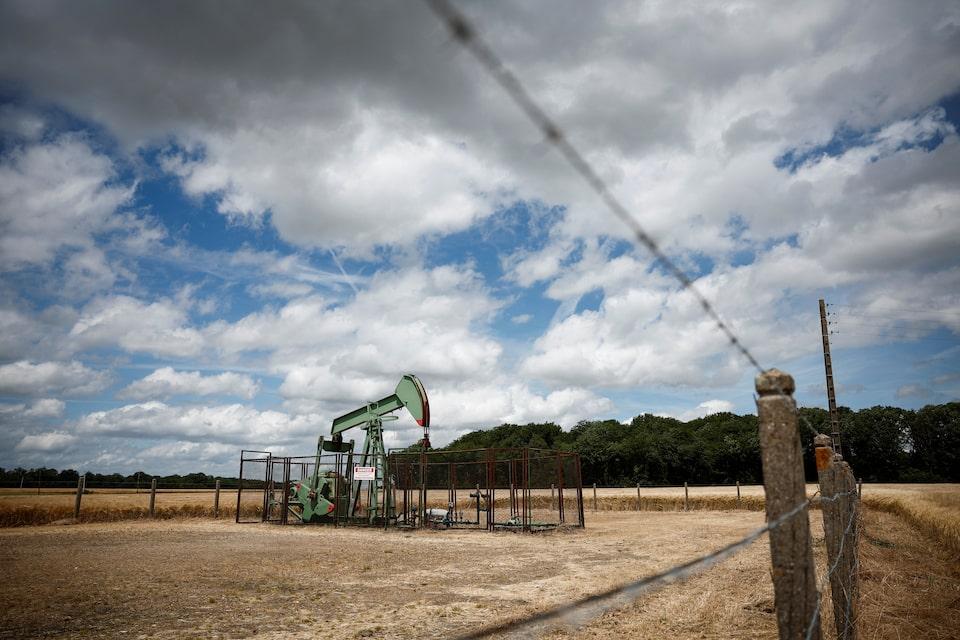
Brent and WTI fall more than 3% over the week Trade war risks and OPEC+ supply increase weigh on market HOUSTON, March 7 (Reuters) - Oil prices gained on Friday but retreated from session highs after U.S. President Donald Trump threatened sanctions on Russia if it fails to reach a cease-fire with Ukraine. Brent crude futures settled at $70.36 a barrel, up 90 cents, or 1.3%. West Texas Intermediate futures finished at $67.04, up 68 cents, or 1.02%. Trump said in a post on Truth Social that he was "strongly considering" sanctions on Russian banks and tariffs on Russian products because its armed forces continue attacks in Ukraine. In early trade, Brent jumped as high as $71.40, while WTI hit $68.22 after Russia's Deputy Prime Minister Alexander Novak told reporters that the OPEC+ producer group will go ahead with its April increase but may then consider other steps, including reducing production. "If you don't like the price of oil, wait a minute," said Phil Flynn, senior analyst with the Price Futures Group. Flynn said oil's moves on OPEC+ and possible Russia sanctions swept aside other news, including delays in Israel and Hamas seeking a permanent cease-fire in Gaza. "I think it's been overwhelmed by Russia news," Flynn said. "It's all Russia, Russia, Russia." For the week, Brent was down 3.8%, its biggest weekly decline since the week of November 11. WTI finished down 3.9%, its biggest weekly drop since the week of January 21. Late in Friday's session, prices stabilized following comments by U.S. Federal Reserve Chairman Jerome Powell, said John Kilduff, partner with Again Capital LLC. Powell said the Federal Reserve Board was watching how new policies from the Trump administration, especially on trade, were affecting the economy. Kilduff said rapid changes in implementing policy, plus developments that could increase geopolitical risk, were being felt by traders. "We're coming to terms with a lot of issues," Kilduff said. "There is a realization you shouldn't get too aggressive on either side of the issue." Brent prices fell to their lowest since December 2021 on Wednesday after U.S. crude inventories rose and OPEC+ announced its decision to increase output quotas. OPEC+ had said it intended to proceed with a planned April output increase, adding 138,000 barrels per day to the market. In other supply news, comments from U.S. Treasury Secretary Scott Bessent indicated that the U.S. aims to reduce Iranian crude exports to a trickle. Trump's administration is considering a plan to inspect Iranian oil tankers at sea, Reuters reported on Thursday, citing sources familiar with the matter, continuing efforts to drive down Iranian oil exports to zero. Global markets have been whipsawed by fluctuating trade policy in the U.S., the world's biggest oil consumer. On Thursday Trump suspended the 25% tariffs he had imposed on most goods from Canada and Mexico until April 2, though steel and aluminum tariffs would still take effect on March 12. In the U.S., job growth picked up in February and the unemployment rate edged up to 4.1%, but growing uncertainty over trade policy and deep federal government spending cuts could erode the labor market's resilience in the months ahead. Sign up here. https://www.reuters.com/business/energy/oil-set-biggest-weekly-drop-since-october-tariff-uncertainty-supply-gains-2025-03-07/
2025-03-07 11:03
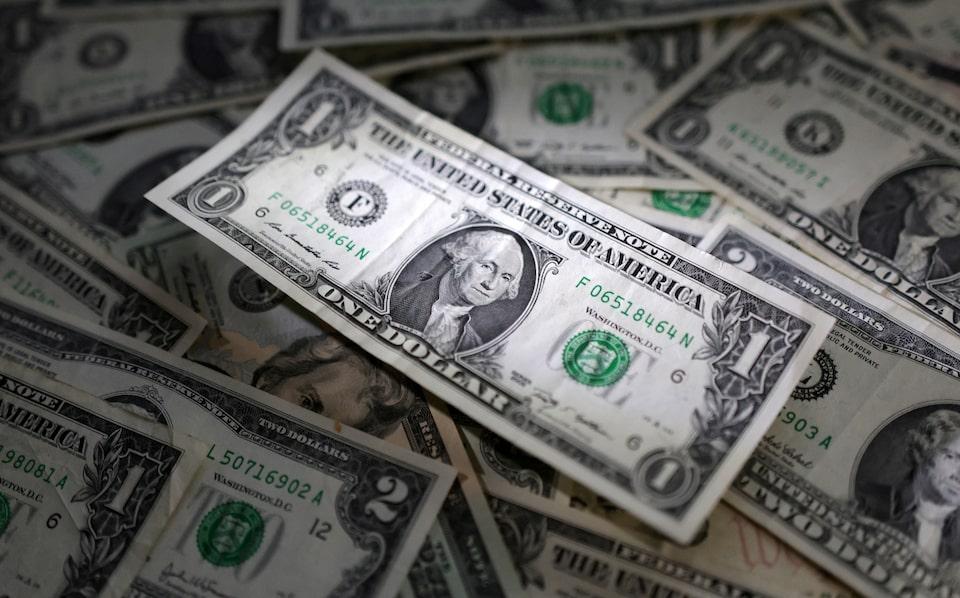
Dollar down about 5% since Trump's inauguration US tariffs pressure dollar while euro rises on German stimulus Safe-haven status, other factors could limit dollar's downside NEW YORK, March 7 (Reuters) - Dollar bulls appear to be in hibernation after a sharp selloff in the greenback on U.S. growth concerns, but some investors think tariffs still have the power to support the U.S. currency. The dollar is down about 5% from the January inauguration of U.S. President Donald Trump and at a four-month low, as U.S. trade tariff headlines have fed worries about U.S. growth. A German fiscal spending boost has also brightened the outlook for Europe, further straining the dollar as investors shift capital to economies viewed as having stronger growth potential. In addition, on currency futures markets, investors have slashed net long dollar positions to $15.3 billion from a nine-year high of $35.2 billion in late January. Investors selling the dollar are concerned about tariffs slowing the U.S. economy by raising costs for businesses and consumers, disrupting supply chains and reducing trade volume. Still, some investors do not see it as a time to sell the buck. "I do not think that the planets have aligned for a dollar bear market," Paresh Upadhyaya, director of fixed-income and currency strategy at Amundi US, said. The dollar could still reap gains while tariffs are fully implemented, analysts said, noting that tariffs can reduce demand for foreign currencies by raising the cost of importing foreign goods, prompting the dollar to strengthen. Additionally, many factors that powered the U.S. dollar higher last year remain in place, Amundi's Upadhyaya said. While U.S. growth may show signs of slowing, it remains strong compared with other major economies, he said. The dollar also still boasts a relatively high yield. Despite its poor recent performance, investors still view the greenback as a safe haven during times of global turmoil. "I still think the dollar is king," Upadhyaya said. Dollar bears have in the recent past been punished for betting against the buck prematurely. Over the last two years, the dollar index slumped about 5% from a near-term peak two times - October-December 2023 and April-September 2024. In both instances, the dollar recovered within months. The dollar's near 5% post-election rally notwithstanding, strategists remain skeptical that markets have fully priced in the potential upside that could accrue to the dollar from full-blown multi-country tariffs for an extended period of time. "We're in the camp of those expecting a relatively prolonged period of tariffs, especially with Europe being the target," said Francesco Pesole, forex strategist at ING in London. Pesole expects the euro to eventually retreat against the dollar, finishing the year at around $1.02, down from $1.08 now. President Trump has often railed against an excessively strong dollar, arguing it puts U.S. firms at a disadvantage. On Tuesday, Trump said he told the leaders of Japan and China they could not continue to reduce the value of their currencies, as doing so would be unfair to the U.S. With Trump just getting started on implementing tariffs on major trading partners, some investors say the dollar could still rebound. New 25% tariffs on imports from Mexico and Canada took effect on Tuesday, along with fresh duties on Chinese goods. This sparked worries that U.S. economic growth could slow, with prices rising further for Americans smarting from years of high inflation. In an address to Congress, Trump said tariffs on European goods would follow on April 2, including "reciprocal tariffs" and non-tariff actions aimed at balancing out years of trade imbalances. Ugo Lancioni, senior portfolio manager at Neuberger Berman has a slightly short tactical position on the dollar, reasoning that the currency has already priced in a good deal of the potential upside. Still, Lancioni said the dollar could pare losses if a trade war worsens. "If you have a massive escalation that probably is not priced," Lancioni said. The threat of tariffs makes shorting the dollar fraught with risks. "Given the persistent tariff risk it is hard to become a dollar bear," UBS strategist Vassili Serebriakov said. While expectations of European growth have pushed the euro to a four-month high, some investors remain skeptical the single currency can build on these gains. "The market loves to see a European fiscal story," Steven Englander, head of G10 FX strategy at Standard Chartered in New York, said. He noted that the euro rallied briefly in 2020 upon passage of a landmark European stimulus package to revive regional economies ravaged by the coronavirus. "We saw what happened afterwards, we were sort of pushing parity not too long later. So you don't want to overreact to the headlines," Englander said. The euro is expected to fall to $1.03 in three months and trade at $1.04 in six, according to a March 3-5 Reuters survey conducted mostly before the euro's latest rise. Sign up here. https://www.reuters.com/markets/currencies/dollar-dives-bull-case-weakens-some-investors-expect-bounce-2025-03-07/
2025-03-07 11:00
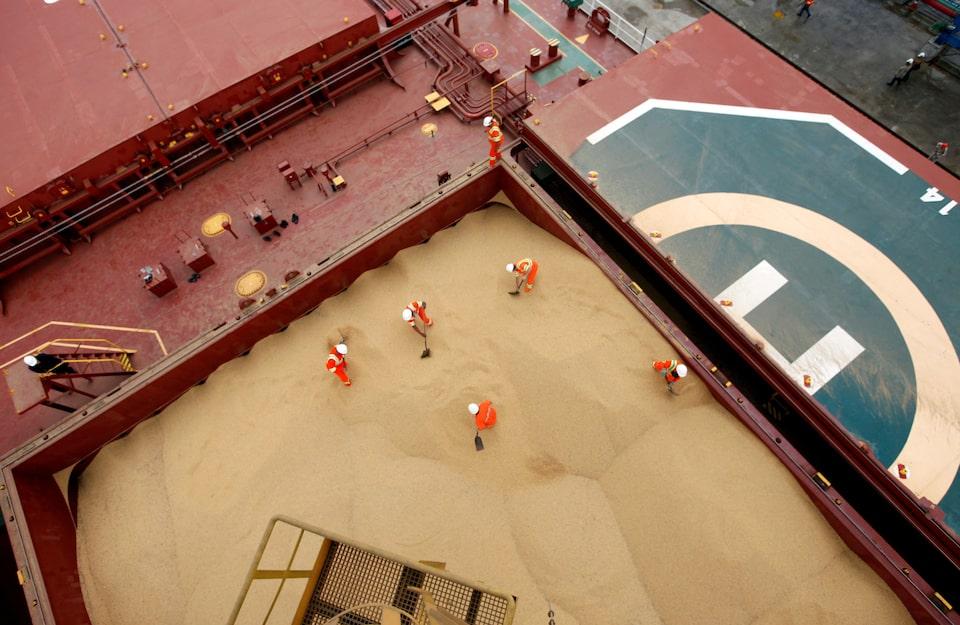
Brazil likely to take more of China's import market from US Higher export demand to drive up domestic food prices Food inflation already risen for five months in a row Govt under severe pressure, to meet industry leaders Thursday SAO PAULO, March 6 (Reuters) - U.S. President Donald Trump's trade war with China will give Brazilian agricultural exporters an opportunity to take an even bigger share of the Chinese market at the expense of American farmers, but it could also fuel already high food inflation in Brazil. China this week retaliated swiftly to fresh U.S. duties announced by Trump, imposing hikes of 10% and 15% in levies covering $21 billion worth of American agricultural goods, including meat and soybeans. Brazil, the world's largest exporter of soy, cotton, beef and chicken meat, is expected to ship more to China as importers there seek tariff-free imports. During Trump's first term, the trade war he triggered with China led to U.S. farmers losing a chunk of market share to Brazil, including for China's valuable soybean imports. The U.S. never regained that market share for soybeans. China continues to buy more of its agricultural imports from Brazil than it did before the first trade war, and that will likely accelerate again with the latest round of tariffs. "Rising U.S.-China tensions are likely to prompt China to source more grains and proteins from Brazil, potentially lowering commodity demand and in turn prices in the U.S., while increasing demand and prices in Brazil," Santander analysts said. Prices for Brazilian soybeans are already on the rise. The premium at local ports hit a season high this week, said Eduardo Vanin, analyst with Agrinvest. "Any additional demand from China could result in stronger exports from Brazil at healthier prices," Itau BBA analysts said in a note to clients. That would support Brazilian farm companies such as SLC Agricola (SLCE3.SA) , opens new tab and BrasilAgro (AGRO3.SA) , opens new tab. More exports would mean less domestic supply, however, and that would increase costs for grains to feed to animals for local meatpackers such as JBS (JBSS3.SA) , opens new tab and BRF (BRFS3.SA) , opens new tab. SEVERE PRESSURE A surge in food prices, however, would be bad news for Brazil's President Luiz Inacio Lula da Silva, whose popularity has plunged in recent months, mainly due to elevated food costs. Food and beverage prices rose around 8% in 2024 as a whole, according to statistics agency IBGE, and in January were up by nearly 1%, marking a fifth consecutive month of increase. February data will be released next week. Brazil's central bank, which has been hiking interest rates, has said that higher meat prices were key to a significant rise in food costs and described an adverse short-term scenario. Vice President Geraldo Alckmin and other officials have a meeting with leaders of the food industry on Thursday, as the government seeks ways to lower food prices. Inflation also rose in 2018-2019, when Brazil exported more agricultural goods to China. Brazil's consumer prices ended 2018 at 3.75% and accelerated to 4.31% at the end of the following year. BACK TO THE FUTURE Santander noted that although less severe than the 2018 levies, the latest tariffs announced by Beijing would accelerate long-term diversification away from U.S. supplies. China's turbo-charged demand would brighten an already positive outlook for Brazil's agribusiness, which sees production of key goods reaching all-time highs this year. Brazil is expected to reap a record soybean crop of about 170 million metric tons in 2024/25, with exports exceeding 100 million tons, and the beef, poultry and pork industries also forecast record output and shipments this year. "China will seek to obtain as much as possible from Brazil," Carlos Cogo of agribusiness consultancy Cogo said, adding that the fresh tariffs would make U.S. products even less competitive against Brazilian ones. PRIME MEAT Representatives of Brazil's meat producers said the shift in global trade should be positive for the South American country. "Brazil will end up benefiting, especially in terms of prices and profitability," Ricardo Santin, the head of meat lobby group ABPA, told Reuters. Shares of Brazilian meatpackers and grain producers were roughly flat on Thursday after rising sharply in the previous session. Santin said that gains from more exports to China, already a major buyer of Brazilian meat, would probably offset higher feed costs. Sign up here. https://www.reuters.com/world/americas/brazil-braces-more-chinese-demand-higher-food-prices-amid-us-trade-war-2025-03-06/
2025-03-07 10:52
European fiscal changes in focus Sterling overshadowed by economic forecasts due on March 26 Investor sentiment shaped by transformed outlook for European defence LONDON, March 7 (Reuters) - The pound headed for its worst weekly performance against the euro in over two years on Friday, as a boost to European spending drove a broad rally in the single currency, while against the dollar, sterling rose ahead of U.S. jobs data. The euro has surged across the board this week, logging its best weekly performance against the dollar since March 2009. Against the pound, it was set for a weekly gain of 1.5% , the most since January 2023. It was last up 0.4% at 84.03 pence. The pound was up 0.4% against the dollar at $1.292. European leaders have rallied round Ukraine, with a view to reaching a peace deal, and pledged to spend more on their own defence in view of the shift in the U.S. stance under President Donald Trump. Spending of around $1 trillion, spurred by Germany's overhaul of its fiscal rules to release funds for infrastructure and defence, as well as European Union efforts to increase its joint borrowing, have transformed investor sentiment. Equity investors have poured money in at the fastest rate in almost a decade and the euro has soared in response, bringing gains versus the pound to 1.2% so far this year and to 1.1% against the dollar. Sterling by contrast is up just 0.4% against the U.S. currency. The pound has drawn support from the expectation among traders that the Bank of England will have to cut rates more slowly than other central banks, including the Federal Reserve. Yet the focus for investors has shifted away from the interest-rate debate and towards the outlook for global capital flows. In particular, they are seeking alternatives to the United States, given a darkening economic outlook and high uncertainty over trade and fiscal policy. The mood around the pound is nervous. On March 26, the Office for Budget Responsibility, the UK public finances watchdog, issues its own forecasts on the economy and borrowing. Sluggish economic growth and higher government borrowing costs have put finance minister Rachel Reeves under pressure to clarify how she intends to balance the books without breaking her own fiscal rules. "A light data calendar has seen the pound continue to trade in the shadow of the euro," analysts at Monex Europe said. "It is also not a constructive environment for sterling in our view, with growing noises around the difficult decisions facing UK Chancellor Rachel Reeves. We suspect this will become a major focus in the coming weeks, ahead of the March 26 economic update," they said. Sign up here. https://www.reuters.com/markets/currencies/pound-heads-worst-weekly-run-versus-euro-since-2023-2025-03-07/
2025-03-07 10:30
NAIROBI, March 7 (Reuters) - South Sudanese forces loyal to President Salva Kiir have released the peacebuilding minister, a key ally of First Vice President Riek Machar, a spokesman for Machar said on Friday, after the arrests of senior officials escalated tensions. Between Tuesday and Thursday, security forces arrested or put under house arrest several allies of Machar, including the petroleum minister, the peacebuilding minister and a deputy head of the military, jeopardising a peace deal that ended a civil war between fighters loyal to Kiir and Machar. "(Peacebuilding minister) Stephen Par Kuol ... who was unlawfully detained yesterday along with three staff members from his office by the National Security, was released this morning at 05:00 a.m.," Machar's spokesman Puok Both Baluang said on X. The petroleum minister and the deputy head of military were still in custody on Friday, Baluang told Reuters. Security forces were also deployed around Machar's residence, though he was able to travel to his office, Baluang said earlier this week. The arrests followed heavy clashes in recent weeks in the strategic northern town of Nasir between national forces and the White Army militia, a loosely-organised group mostly from the Nuer, Machar's ethnic group. The White Army fought alongside Machar's forces in the 2013-2018 civil war that pitted them against predominantly ethnic Dinka troops loyal to Kiir. The government has not commented on the detentions. Information Minister Michael Makuei accused forces loyal to Machar of collaborating with the White Army and attacking a military garrison near Nasir on Tuesday. Machar's party has denied involvement in the fighting. South Sudan has formally been at peace since the 2018 agreement ended the five-year conflict that killed hundreds of thousands of people, but violence between rival communities flares up frequently. On Thursday, officials from regional bloc IGAD, the United Nations, the African Union and RJMEC - the body overseeing the peace deal - met Machar and urged all parties to restore calm in Upper Nile State, where Nasir is located. Sign up here. https://www.reuters.com/world/africa/south-sudan-security-forces-release-peacebuilding-minister-vice-presidency-says-2025-03-07/