2025-03-07 08:30
March 10 (Reuters) - Fast-moving developments on Ukraine and Europe will no doubt continue to dominate financial markets this week, while U.S. data includes key inflation numbers and China looks determined to hold its ground as trade tensions ratchet up. Here's all you need to know about the week ahead in world markets from Lewis Krauskopf in New York, Kevin Buckland in Tokyo and Karin Strohecker, Dhara Ranasinghe and Alun John in London. 1/ EUROPE'S MOMENT Vladimir Lenin's saying that there are decades where nothing happens, and weeks where decades happen resonates with markets. Speedy developments across Europe reinforce this. Faced with Russia's war in Ukraine and fears of U.S. isolationism, Germany plans to unleash a defence and infrastructure spending bonanza in one of its biggest political shifts since the Berlin Wall fell in 1989. EU ministers will on Monday discuss joint borrowing for defence. The significance is not lost on markets. The euro and shares are surging; so are German bond yields as investors bet more spending means more borrowing. Suddenly, the U.S. lead in long-term trend growth is no longer a given. Investors are re-rating European assets, U.S. shares are falling. Yes, the road ahead is long and bumpy but the feeling of a sea change across Europe is hard to ignore. 2/ ROCKY ROAD The state of relations between Trump and his Ukrainian counterpart Volodymyr Zelenskiy have whipsawed the country's international bonds - but the impact has been felt beyond its borders, shaping and shaking markets across the region. U.S. officials will meet on Tuesday with a Ukrainian delegation in Saudi Arabia, in part to determine whether Ukraine is willing to make material concessions to Russia to end the war. Also hanging over the talks is the fate of a minerals deal between Washington and Kyiv. It is unclear what a peace deal could mean for Ukraine, but an end to the war is seen as positive for economies in the region. But Germany's borrowing "bazooka" and the bond selloff are pushing up borrowing costs, raising price pressures for a region that has seen a number of negative inflation surprises. Poland's central bank will set interest rates on Wednesday, though cuts are only on the horizon for the second half of 2025. While the White House is reportedly seeking a plan for sanctions relief on Russia and preparing for a Trump-Putin summit, European finance ministers meet Tuesday to discuss economic impact of Russia's aggression. 3/ THE R WORD Global growth concerns are back on markets' radar as weakening U.S. data and growing trade tensions hurt consumer confidence and business activity. Even second tier U.S. data will be closely watched, while Canada could cut rates on Wednesday. Trump on Thursday suspended tariffs of 25% imposed just days earlier on most goods from Canada and Mexico, but his fluctuating trade policy continues to fan worries about inflation and growth. On Sunday, he declined to predict whether the U.S. could face a recession. Morgan Stanley estimates U.S. tariffs on China, Mexico and Canada as proposed could shave 0.7-1.1 percentage points off U.S. growth in coming quarters, deliver a 2.2-2.8 percentage point hit to Canadian growth, and push Mexico into recession. Brent crude has hit its lowest since December 2021, the safe-haven yen is around its strongest in five months, , and the Nasdaq is around five-month lows. (.IXIC) , opens new tab 4/ FEELING HOT? Wednesday's U.S. consumer price report could fan investor fears about still-warm inflation just as Trump's tariffs on key trading partners could provide a jolt to domestic prices. The February consumer price index is expected to have climbed 0.3% on a monthly basis, according to a Reuters poll. The January CPI jumped 0.5%, the biggest gain since August 2023, as Americans faced higher costs on goods and services. Another hot reading could confound recent bets on more Federal Reserve rate cuts this year. Traders recently priced as many as three cuts as economic slowdown worries grew. Investors are also uneasy about trade policy and the inflationary impact of tariffs if they stay in place. 5/ TARIFFS? BRING IT ON On Trump's list of tariff targets, China stands out - not least for how well its markets have weathered the tumult. China's central bank has deftly guided the yuan in a stable range against the dollar; Hong Kong's Hang Seng index is up 21% this year, making it the best performing major global market. And that's without the kind of reprieves that Washington has afforded Ottawa and Mexico City. In fact, Beijing is girding for even higher levies, kicking off its week-long session of the National People's Congress on Wednesday by promising more stimulus to boost private consumption and tech innovation. Inflation figures over the weekend and loan data in the coming days offer the latest reading of the consumer pulse. Meanwhile, Chinese startups continue to draw attention, with the release of fully fledged AI agent Manus, less than two months after DeepSeek stunned the world. Sign up here. https://www.reuters.com/business/take-five/global-markets-themes-graphic-2025-03-07/

2025-03-07 07:59
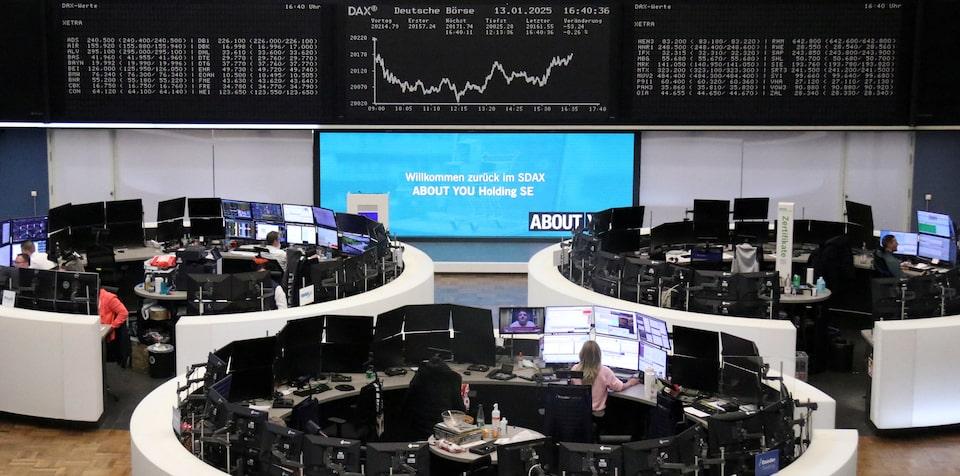
LONDON, March 7 (Reuters) - Investors continued to plough money into European equities in the week to Wednesday, Bank of America said on Friday, citing data from EPFR, as the region maintained its year-to-date outperformance compared to U.S. equities. European equities drew $4.1 billion of inflows, BofA said, the largest inflow since February 2022, when Russia invaded Ukraine. In the last four weeks, inflows reached $12 billion, the most since August 2015. "Year of International," said BofA strategist Michael Hartnett. "Long China & EU." Equity funds more broadly drew inflows of $22.9 billion, with U.S. equities drawing $8.5 billion of inflows and emerging markets drawing $2.4 billion. Technology funds drew inflows of $2.6 billion, the first inflow in five weeks. Technology shares have lagged this year, with the Nasdaq ending Thursday's session over 10% below its December high, confirming a correction. The "Magnificent 7" is now the "Lagnificent 7", BofA's Hartnett said, referring to the U.S. megacap shares of Apple, Microsoft, Amazon, Alphabet, Meta, Nvidia, and Tesla. Bond funds saw inflows of $12 billion, but Treasuries saw outflows $1.2 billion, the biggest outflow in 11 weeks. Sign up here. https://www.reuters.com/markets/europe/global-markets-flows-bofa-urgent-2025-03-07/
2025-03-07 07:56
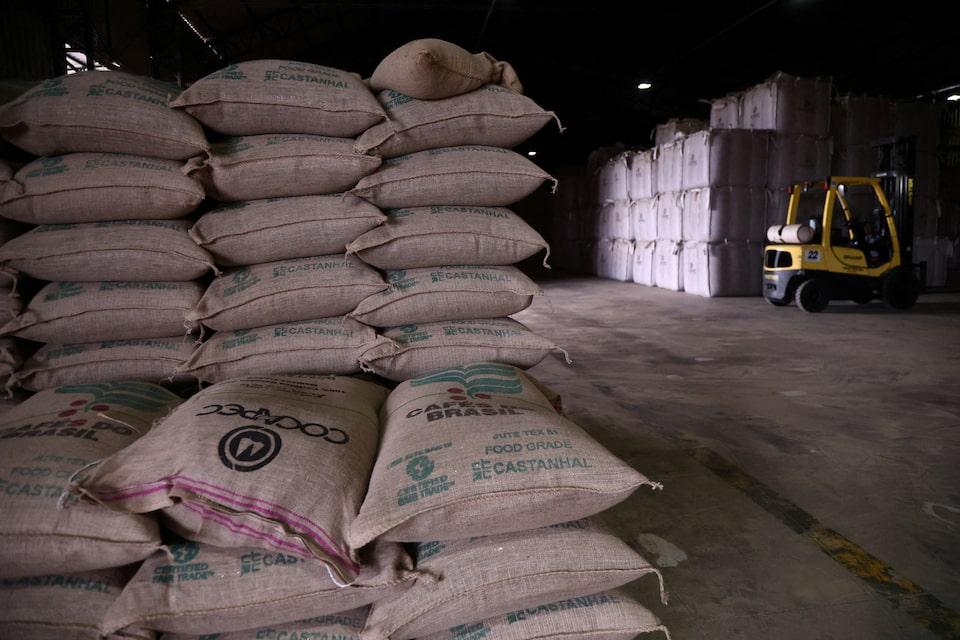
Arabica coffee futures have surged 70% since November Traders and roasters making minimal purchases Retailers pushing back against accepting higher prices Market participants predict industry consolidation HOUSTON, March 7 (Reuters) - Global coffee traders and roasters say they have slashed their purchases to minimal levels, as the industry reels from a steep surge in prices that suppliers have yet to convince retail stores to accept. At the U.S. National Coffee Association annual convention in Houston this week, attendees said they have been in shock at a 70% increase since November for Arabica coffee futures on the ICE exchange , the benchmark for coffee deals around the world. Renan Chueiri, director general at ELCAFE C.A. in Ecuador, said this year is the first time the instant coffee maker hasn't sold all of its expected annual production by March. "We would usually be sold out by now, but so far we sold less than 30% of production," he said. "The big price increase eats clients' cash flow, they don't have all the money to buy what they need." The coffee price hikes have stemmed from lower production in important coffee growing regions, particularly in top grower Brazil, reducing the availability of beans. "Nobody wants to be exposed, nobody is buying for future delivery, it is all hand to mouth," said one coffee broker, asking not to be identified due to the sensitivity of the issue. By "hand to mouth", he was referring to the practice of buying only what is necessary for the moment and eschewing stockpiling. Many recent deals in Brazil, he said, have been conducted in a very conservative manner. "You close a deal, and then you have seven days to go to the farm or warehouse and get your coffee. You check the quality, and if it is ok, you make the payment on the site and drive away with the coffee." A recent Reuters poll predicted that Arabica coffee prices could fall 30% by the end of the year, as high prices curb demand and early signs point to a bumper Brazilian crop next year. But until prices drop significantly, much of the coffee industry could be in for a world of pain. A chief executive of a major roaster in the United States - the world's largest market for coffee consumption, said some of his clients are not sure they can continue to be in business. "They don't know if they will be able to sell their product at the new prices," he said, also asking not to be identified. "Some people are going down". The CEO said supermarkets and grocery stores had been pushing back against the higher prices asked by roasters. Negotiations were taking a long time and some retail outlets were starting to be short of coffee on the shelves. "It has been a nightmare," he added. Coffee warehouses close to ports in the U.S., which receive beans coming from Central and South America, currently have half their normal volumes, said an executive for one of the largest companies in the storage sector. "Some storing companies are returning silos to the owners, canceling leasing contracts early," he said. Michael Von Luehrte, owner of broker MVLcoffee, said the coffee market, particularly on the trading side, could see consolidation. Companies with more capital will be able to increase trading volumes, while others will suffer with reduced financing, he added. Commodities trader Louis Dreyfus said in a presentation during the conference that the coffee planted area has been expanding in reaction to the higher prices. Expansion has happened in countries such as India, Uganda, Ethiopia and Brazil. The company believes that if Brazil manages to have one big crop, then that in combination with the new planted areas could lead to a collapse in prices. Sign up here. https://www.reuters.com/markets/commodities/global-coffee-trade-grinding-halt-hit-hard-by-brutal-prices-hikes-2025-03-07/
2025-03-07 07:42
MUMBAI, March 7 (Reuters) - India's markets regulator will improve transparency in its functioning, including revealing any conflicts of interest of its board members, as a way to build trust, Chairperson Tuhin Kanta Pandey said on Friday. Last week, veteran finance ministry bureaucrat Pandey replaced Madhabi Puri Buch as the chief of the Securities and Exchange Board of India (SEBI). Buch, who helmed SEBI for three years, came under attack towards the end of her term after the now-shuttered Hindenburg Research alleged conflict of interest in the regulator's investigations into the Adani group because of her previous investments. Both Buch and the Adani group denied the allegations. "We will be coming forward with our own plan to further transparently reveal these conflicts of interest, etc. for the public," Pandey said in his first public speech since taking over as SEBI chief. He did not specifically refer to any individual's conflict of interest. SEBI is "conscious of the need to create an inclusive environment" for foreign capital and will engage with portfolio investors and alternative investment funds to address their difficulties and further rationalise regulations, he said. Speaking at an event organised by Moneycontrol, an Indian financial news website, in Mumbai, Pandey said that the presence of long-term foreign capital would further support infrastructure growth, innovation, and development. Foreign investors have sold Indian shares worth more than $27 billion since September 2024, pushing the benchmark Nifty 50 (.NSEI) , opens new tab down 15% from its record high. "As we intend to grow in the speed that we are aspiring, we need to have both domestic and foreign capital to support the growth momentum," Pandey said. Sign up here. https://www.reuters.com/world/india/india-markets-regulator-boost-transparency-including-board-conflicts-chair-says-2025-03-07/
2025-03-07 07:19
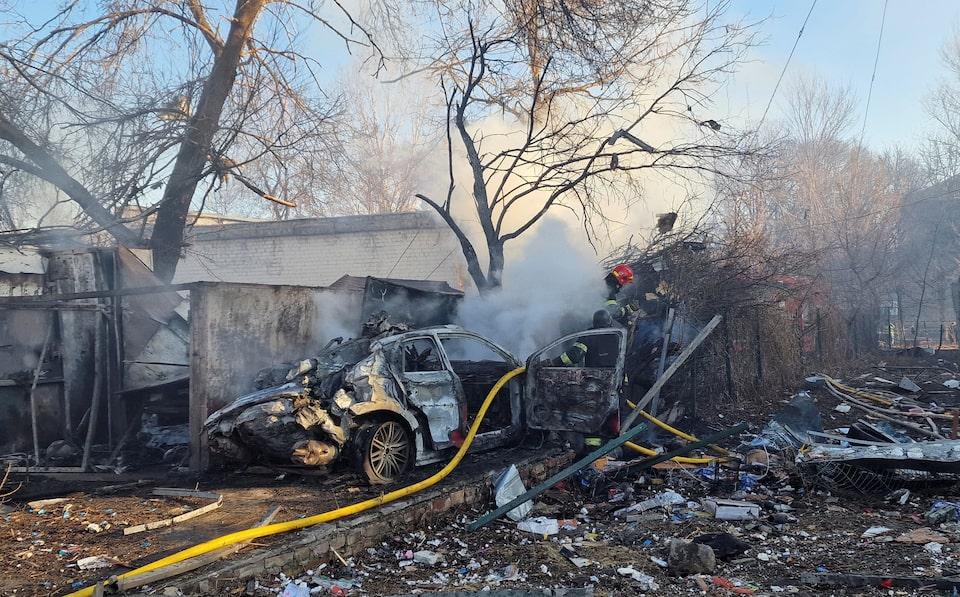
Russia launches 67 missiles, almost 200 drones at Ukraine Air assault comes as US cuts aid, intelligence sharing Zelenskiy to visit Saudi Arabia before US-Ukraine talks KYIV, March 7 (Reuters) - Russian forces damaged Ukrainian energy and gas infrastructure overnight in their first major missile attack since the U.S. paused intelligence sharing with Ukraine, piling pressure on Kyiv as President Donald Trump seeks a swift end to the war. Ukrainian President Volodymyr Zelenskiy, seeking to shore up Western support for his country after Trump's diplomatic pivot towards Moscow, called for a truce covering air and sea, though not ground troops - an idea first mooted by France. "The first steps to establishing real peace should be forcing the sole source of this war, Russia, to stop such attacks," Zelenskiy said on the Telegram messaging app, responding to the overnight missile attack. Ukraine's air force said Russia had fired a salvo of 67 missiles and 194 drones in the overnight attack, adding that it had shot down 34 of the missiles and 100 of the drones. Regional officials from the northeastern city of Kharkiv to the western city of Ternopil reported damage to energy and other infrastructure. Eight people were injured in Kharkiv and two more, including a child, were hurt in Poltava, officials said. "Russia continues its energy terror," Energy Minister German Galuschenko said. "Again energy and gas infrastructure in various regions of Ukraine has come under massive missile and drone fire." Russia targets Ukrainian cities and towns far from the front lines every night with drones, but Friday's attack was the first large-scale assault since the suspension of the U.S. military aid and intelligence this week. CRISIS IN RELATIONS Ukraine's relations with the U.S., previously its most important ally, have plunged into crisis since Zelenskiy's acrimonious exchange with Trump in the Oval Office last Friday before the world's TV cameras. Trump said afterwards that Zelenskiy - whom he had already branded a "dictator" - that the Ukrainian leader was an obstacle to his vision for bringing peace to Ukraine. In a bid to patch things up, Zelenskiy said on Tuesday that Kyiv was ready to come to the negotiating table as soon as possible and to work under Trump's leadership, calling the way things had gone in Washington "regrettable". In a further sign of re-engagement with the U.S., Zelenskiy said late on Thursday he would travel to Saudi Arabia next Monday for a meeting with Saudi Crown Prince Mohammed Bin Salman ahead of talks there later in the week between U.S. and Ukrainian officials. Trump's special envoy, Steve Witkoff, who has already held extensive talks with Russian officials, said he was in discussions with Ukraine for a peace agreement framework to end the three-year war and confirmed that a meeting was planned next week with the Ukrainians in Saudi Arabia. "Ukraine is ready to pursue the path to peace, and it is Ukraine that strives for peace from the very first second of this war. The task is to force Russia to stop the war," Zelenskiy said in his Telegram message on Friday. It remains unclear whether Washington and Kyiv can bridge their different visions for ending the war. Kyiv has been pressing for robust security guarantees, but the United States has declined to commit, pointing to a potential critical minerals agreement that Trump believes would be enough. On the battlefield, Ukraine is outnumbered and Russian forces are steadily advancing in the eastern Donetsk region and mounting major pressure on Ukrainian troops trying to hold territory in Russia's Kursk region. ENERGY SECTOR TARGETED Russia has pounded the Ukrainian power sector with missiles and drones throughout the war, knocking out about half the national electricity generating capacity and forcing rolling blackouts at various junctures in the war. This year Russia has focused more on infrastructure for natural gas, which is used for heating and cooking and also by industrial enterprises. "Production facilities that ensure gas production were damaged. Fortunately, there were no casualties," the Naftogaz energy company said. Ukraine's largest private energy company DTEK halted gas production at its facilities in the central Poltava region after sustaining significant damage in Friday's attack, it said. The pause in U.S. military aid and intelligence may undermine Ukraine's air defences as it runs low on advanced missiles and struggles to track attacks as effectively, military analysts say. Sign up here. https://www.reuters.com/business/energy/russian-attack-damaged-gas-production-facilities-ukraines-naftogaz-says-2025-03-07/
2025-03-07 07:12
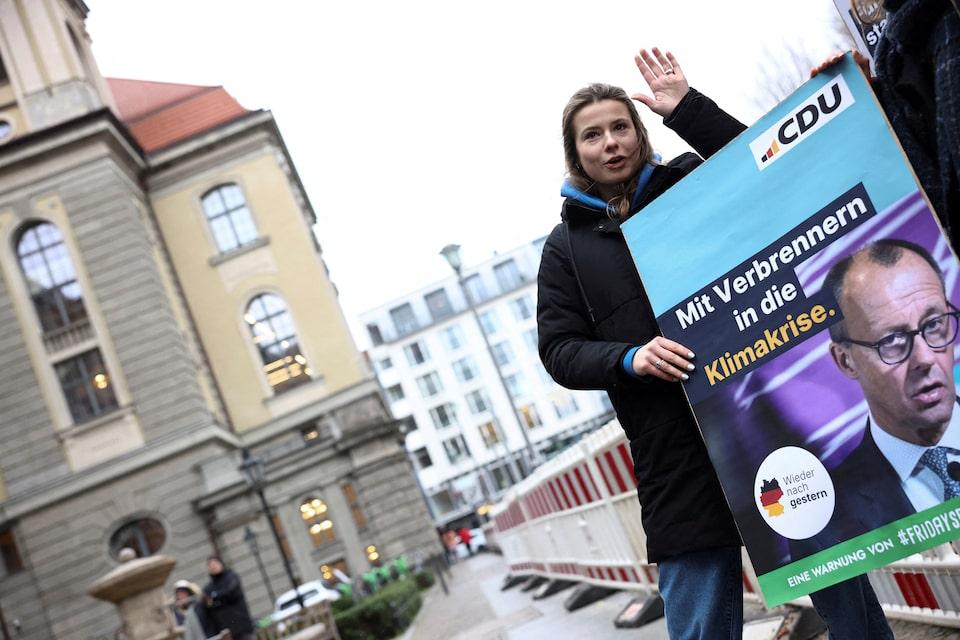
Conservatives on track to lead country after election win They back some fossil-fuel friendly policies How to pay for carbon neutrality amid planned tax cuts unclear Possible climate policy rollback comes as U.S. retreats Likely coalition partner could push green agenda if affordable BERLIN, March 7 (Reuters) - Climate activists fear the worst when Germany's conservatives and Social Democrats begin to thrash out a joint climate policy for their future coalition government. A country once seen as a beacon of progressive climate policy is poised for a significant reset, with the conservatives - having in part blamed Germany's ambitious green goals for chronic economic weakness - keen to roll back targets and policies amid rising voter apathy on climate. As Europe's largest emitter of CO2 but also Europe's biggest generator of renewable energy, Germany's future stance on climate issues will be even more critical after the United States' withdrawal from the Paris Agreement and with the European Union under pressure from some members to ease regulations and goals. "If there was ever a time to panic about climate and politics, now would be it," Luisa Neubauer, a prominent German climate activist with Fridays for Future, told Reuters. Since winning February's election, the CDU has affirmed its commitment to Germany's overarching 2045 target of being climate neutral but emphasizes a "pragmatic approach that supports the economy, industry, and public acceptance", according to Andreas Jung, the conservatives' climate policy spokesperson. The party wants to abolish a future ban on the sale of new petrol and diesel cars, end restrictions on the use of cars, reverse a law phasing out fossil fuel heating, and reintroduce diesel subsidies in agriculture. How strongly the SPD will defend its green election pledges - to stick to national and EU targets, invest in green infrastructure and renewables, and focus on affordable climate protection - in coalition talks is key, climate activists say. Nina Scheer, an SPD climate spokeswoman, told Reuters it would be important to develop a common understanding with the conservatives on an accelerated and systematic transition to renewable energies. But that could be tricky. The SPD has been significantly weakened and came in third place in the election, with just 16.4% of the vote, its worst ever result. "The SPD is not a traditional climate policy party like the Greens, so we shouldn’t expect them to push this issue as strongly," said Stefan Marschall, political scientist at the University of Duesseldorf. Greenhouse gas emissions in Germany fell by 12.5% under the three-party "traffic light" coalition of the SPD, Greens, and Free Democrats, thanks to a renewable energy push and a drop in industrial production. But emissions cuts in sectors such as transport and building - 38% of Germany's 2024 total emissions- have stalled. Expanding net-zero policies to these sectors has faced growing resistance in Germany and Europe, amid a cost-of-living crisis that has shifted climate protection lower on German voters' priorities in the February election. Only 12.8% of Germans saw climate protection as the most important issue in this election, down from 24.4% in 2021, a study by IW Koeln economic institute showed. Environmental and expert groups say Germany is not expected to meet the 2045 target as things stand. The Green Party, heading for opposition, still wields some influence, after threatening to tie its support for a new conservative-SPD financial package to the inclusion of some climate investment commitments within that plan. EU CONSTRAINTS Germany cannot unilaterally reverse EU laws, but its influence is strong. The center-right European People's Party (EPP), the largest group at the European parliament and which includes Germany's conservatives, launched a campaign in December to weaken the bloc's climate rules. At a recent EPP retreat in Berlin, conservative leader and Germany's likely next chancellor Friedrich Merz signed a declaration calling on the EU to abandon its renewable energy goals, a step backed by industry. "If Germany is not standing by the Green Deal, the Green Deal is gone," said German Green MEP Michael Bloss, referring to the EU's target. The conservatives' climate policy relies heavily on CO2 pricing as a mechanism to cut emissions and fund investment. "We are focusing on three pillars: gradual CO2 pricing with social compensation, reliable subsidies, and a strategy of enabling rather than excessive regulation," CDU's Jung said. The European emissions trading system (ETS), extending to the transport and buildings sectors from 2027, is expected to increase prices and make heating or powering vehicles with fossil fuels less appealing. But if prices rise too much that creates a crisis of affordability. Germany must annually invest about 3% of its GDP in climate protection measures like power grid upgrades, industry electrification and public transport expansion, to meet its 2045 climate neutrality goal, says Berlin-based think tank Agora. The conservatives and SPD this week agreed to create a 500 billion euro infrastructure fund and overhaul borrowing rules but dedicated climate investments are not included in the fund. The conservatives have also promised sweeping tax cuts that would deprive state coffers of almost 100 billion euros of annual revenue, according to the Ifo economic institute. "The biggest gap in the conservatives’ current program is the lack of a clear strategy to make climate transition fair or affordable for the poorer half of the population," said Christoph Bals, political director at research group Germanwatch. The chance of sluggish climate action under a future conservative-led government is likely to spark more legal battles and direct action activism, which surged in Germany, despite the greener SPD-led government. Roadblocks, airport protests, and demonstrations at oil installations captured national attention and triggered a government crackdown and there are already three climate-related constitutional complaints pending before Germany's top court. "It's our job to keep this issue alive. The next few years will be challenging, not just for us but also for the CDU (conservatives)," Lena Donat, Greenpeace mobility expert, said. Sign up here. https://www.reuters.com/world/europe/germanys-climate-activists-edge-parties-shape-coalition-agenda-2025-03-07/