2025-03-07 06:36
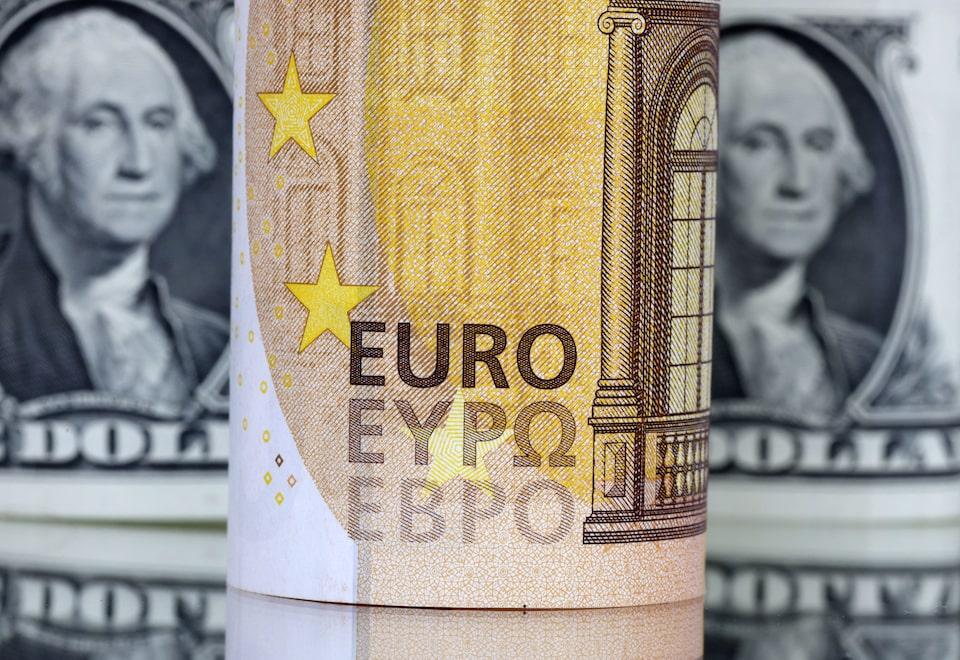
US payrolls rise to 151,000 in February, lower than expected US wage earnings growth slows US rate futures price in three rate cuts in 2025 Euro on pace for best weekly gain in 16 years Fed's Powell says cenbank in no rush to cut rates NEW YORK, March 7 (Reuters) - The U.S. dollar dropped to multi-month lows against the euro and yen and fell versus most currencies on Friday after data showed the labor market in the world's largest economy slowed last month, creating fewer jobs than expected. The report suggested that the Federal Reserve remained on track to cut interest rates multiple times this year. U.S. rate futures on Friday priced in 78 basis points (bps) of easing this year following the nonfarm payrolls report, or about three rate cuts of 25 bps each, according to LSEG calculations. The first rate reduction is likely to resume in June. Fed Chair Jerome Powell, in prepared remarks to the University of Chicago School of Business, did not really say anything new, repeating comments during his testimony before Congress and his press conference after the Fed rate decision in January. He said on Friday the U.S. central bank will be in no rush to cut rates while it waits for more clarity on how policies of the new Trump administration affect the economy. The euro, on the other hand, continued its winning ways, poised for its best week in 16 years with a gain of 4.5% against the dollar, boosted by Germany's game-changing fiscal reforms. It hit another four-month peak of $1.0888 after the jobs data. It last traded at $1.0845, up 0.6% . Against the Japanese currency, the greenback was flat on the day at 147.99 yen , after earlier falling to a five-month low of 146.94 yen. The dollar extended its losses after data showed nonfarm payrolls increased by 151,000 jobs last month after rising by a downwardly revised 125,000 in January. Economists polled by Reuters had forecast payrolls gaining 160,000 jobs after a previously reported 143,000 rise in January. The dollar index , which measures the greenback's value versus six major currencies, has fallen 3.5% this week, on track for its worst weekly performance since November 2022. It fell 0.4% on Friday to 103.81, after earlier sliding to its lowest since early November. Natalia Lojevsky, managing director, at CIFC Asset Management, with $44 billion in assets under management thinks "the softer average hourly earnings is probably a relief for the Fed, who continue to evaluate inflationary pressures both in the labor market and broader economy as a result of the yet uncertain trade and tariff policy." Last month's average hourly earnings, a measure of wage inflation, moderated to a 0.3% rise, from an 0.5% increase in January. Overall, it has been a volatile week for the currency market, driven mainly by U.S. trade and economic growth uncertainties and a pivotal development in Europe as its largest economy abandoned its fiscal constraints to boost spending and revive growth. Treasury Secretary Scott Bessent said on Friday the U.S. economy may slow as it transitions away from public spending towards more private spending, calling it a "detox period" needed to reach a more sustainable equilibrium. Another reprieve of levies aimed at Mexico and Canada announced by President Donald Trump on Thursday offered little relief to whiplashed markets. The exemption expires on April 2 when Trump said he will impose reciprocal tariffs on all U.S. trading partners. On Friday, Fed Chair Powell said a one-time jump in prices due to tariffs does not need a monetary policy response. "The Fed is going to be very conservative on what they say until we know whether or not the tariffs are tactical or strategic, and if they do turn out to be strategic, they're still going to wait until the hard data demonstrates both that inflation is low, and the economy is in recession before they really do very much," said Tony Roth, chief investment officer at Wilmington Trust Investment Advisors. The greenback rose 0.4% against the Canadian dollar to C$1.4362, but slipped versus the Mexican peso to 20.259 pesos. In cryptocurrencies, both bitcoin and ether fell in the midst of a summit of industry leaders at the White House on Friday, which is likely to focus on Trump's plans to build a strategic reserve containing bitcoin and four other coins. Trump on Thursday signed an executive order to establish the strategic bitcoin reserve, directing the secretaries of Treasury and Commerce to develop "budget-neutral strategies" for acquiring additional bitcoin that have no "incremental costs" on taxpayers. Bitcoin was last down 2.8% at $87,030.54 , while ether last changed hands at $2,150 , down 2.6%. Sign up here. https://www.reuters.com/markets/currencies/us-dollar-struggles-near-4-month-low-amid-growth-concern-jobs-data-spotlight-2025-03-07/
2025-03-07 06:23
China's imports unexpectedly shrank over Jan-Feb Export growth misses forecast U.S. trade war steps up China's trade surplus at $170.52 billion BEIJING, March 7 (Reuters) - China's imports unexpectedly shrank over the January-February period, while exports lost momentum, as escalating tariff pressures from the United States cast a shadow over the recovery in the world's second-largest economy. The first two months of the year saw the opening salvo of a renewed U.S.-China trade war, with U.S. President Donald Trump imposing an extra 10% levy on Chinese goods, arguing Beijing had not done enough to stem the flow of the deadly opioid fentanyl. That called time on exporters' efforts to front-load shipments ahead of the curbs while production also slowed as Chinese workers downed tools for the Lunar New Year festival. Analysts say the slump in imports signals Beijing has begun scaling back purchases of key commodities, as it prepares for four more years of gruelling trade tensions with the second Trump administration. "The drop in imports is seen across grains, iron ore and crude oil, and could be related to China's own consideration of building strategic reserves," said Xu Tianchen, senior economist at the Economist Intelligence Unit. "China may have imported too many of them in 2024, and needs to scale back the purchase volume," he added. "This is certainly true for iron ore, as steel production clearly exceeds what is needed by the economy." Export momentum had up until now been a bright spot for an economy otherwise struggling with weak household and business confidence caused by a prolonged property market debt crisis. Imports fell 8.4% year-on-year, customs data showed on Friday, missing the 1% growth forecast in a Reuters poll of economists and a 1% uptick in December. Exports from the largest manufacturing nation rose just 2.3% over the same period, missing expectations for a 5% increase and slowing from December's 10.7% gain. China's customs agency publishes combined January and February trade data to smooth out distortions caused by the shifting timing of the Lunar New Year, which fell between January 28 and February 4 this year. "(Slowing exports) may be partly due to the slowdown of export front loading, which was strong late last year to avoid the trade war," said Zhang Zhiwei, chief economist at Pinpoint Asset Management. "The sharp decline of imports may reflect both weak domestic demand as well as a decline in imports for processing trade," he added. "The damage of higher U.S. tariffs on China's goods will likely show up next month." Imports by state-owned enterprises shrank 20.6% compared with a 2.7% rise among private firms, the customs data showed, suggesting the world's largest commodities importer is relying more on stockpiles, given the dominant role of state-backed buyers. China's crude oil imports fell an annual 5% in the first two months of the year, as tougher U.S. sanctions on ships carrying Russian and Iranian oil took effect. Meanwhile, China saw rare earths imports plunge 24.1% and its copper imports fall 7.2% over the same period. Iron ore imports fell 8.4% over the same period, curbed by weather-related disruptions in major producer Australia. BIGGER PROBLEMS The January-February period ended with Chinese producers anticipating a second wave of U.S. tariffs and Chinese countermeasures, which materialised on March 4, when Trump doubled tariffs on China to 20%. That prompted Beijing to slap 10%-15% retaliatory levies on U.S. agriculture exports and restrictions on 25 U.S. firms just minutes after Trump's tariffs went into effect. Chinese policymakers have vowed to prioritise boosting consumption and domestic demand over 2025, which Chinese Premier Li Qiang on Wednesday described as "insufficient" and "weak" as he announced an economic growth target of "around 5%" for 2025. "It's likely that imports will remain soft this year unless we see a stronger than anticipated rebound of consumption and private investment this year," said Lynn Song, chief economist for Greater China at ING. "It's likely that after driving growth in 2024, the external environment will be less supportive this year, which puts more pressure on policymakers to improve domestic demand to achieve this year's 5% growth target," he added. Chinese officials on Thursday left the door open to further interest rate cuts and another injection of liquidity into the financial system through further reductions in the amount banks are required to hold in reserve. With sluggish household demand and property sector woes weighing on growth, Chinese officials must find alternative export markets for its sprawling industrial sector to ward off deflation. China's implied GDP deflator is expected at -0.1% in 2025, negative for a third year in a row, which would be the country's longest deflationary streak since Mao Zedong's Great Leap Forward in the early 1960s. Sign up here. https://www.reuters.com/markets/asia/chinas-imports-tumble-demand-skids-trade-war-heats-up-2025-03-07/

2025-03-07 06:16
LONDON, March 7 (Reuters) - A global standard setter for voluntary carbon projects has approved three new methods for projects that reduce emissions by switching to cleaner fuels used in domestic cookstoves, hoping to boost buyer confidence in the credits they generate. Carbon trading, through which companies can buy credits from projects that avoid emissions such as cleaner cooking fuels or deforestation prevention schemes, is seen as one way for richer countries to meet their emissions reduction targets at the same time as helping poorer countries move to greener energy and to improve their resilience against climate change. The global voluntary carbon market was worth around $723 million in 2023, according to Ecosystems Marketplace data. Proponents of cookstove projects say that as well as curbing emissions from burning kerosene or coal to cook food, they bring health benefits to households by reducing exposure to air pollution. But critics have warned that the programmes have overstated their , opens new tab emission reduction benefits and overestimated their use. The Integrity Council for the Voluntary Carbon Market (ICVCM), an independent governance body, has sought to address concerns by launching Core Carbon Principle (CCP) standards and is assessing the validity of carbon offset projects. It said the clean cookstove methods approved require a more rigorous approach to determine the baseline fuel being replaced and for monitoring usage. This, it said, will cut the risk of over-crediting. "This will provide the confidence needed to ensure that carbon finance can flow into these projects, enabling them to deliver their social, environmental and health benefits to communities around the world," said Amy Merrill, CEO of the ICVCM. ICVCM said there is a large project pipeline it expects will update their methods to meet the new criteria, with the potential for hundreds of thousands of credits to be issued in the coming year. The ICVCM also approved one household bio-digester - a sealed container designed to break down household waste such as food scraps into a usable cooking fuel. Sign up here. https://www.reuters.com/sustainability/global-carbon-offset-standard-approves-three-clean-cookstove-methods-2025-03-07/
2025-03-07 06:15
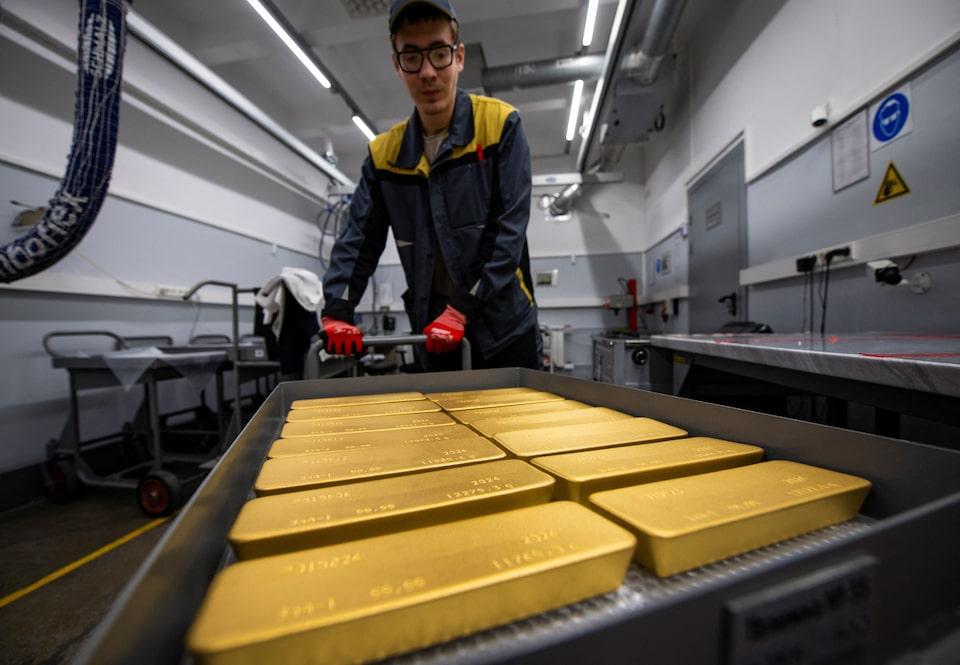
Bullion has gained over 2% so far this week Fed's Powell due to speak later in the day Dollar heads for worst week since November 4 March 7 (Reuters) - Gold prices climbed on Friday and were headed for their best week in six, buoyed by trade war concerns and a weaker dollar, while the market's focus shifted to the U.S. non-farm payrolls report due later in the day. Spot gold added 0.3% to $2,918.65 an ounce as of 1031 GMT. Safe-haven bullion has gained over 2% so far this week, its best since the week of January 20, as U.S. President Donald Trump's ever-shifting tariff policies fanned uncertainty. U.S. gold futures steadied at $2,926.10. The U.S. dollar index is on course for its worst weekly performance since November 4, making greenback-priced bullion less expensive for foreign buyers. Weakening in the dollar index, tariff concern, and poor numbers from the U.S. economy, all these three factors have supported gold this week, said Ajay Kedia, director at Mumbai-based Kedia Commodities. "I'm expecting some kind of consolidation or weakness in gold prices to the tune of around $2,872, acting as a near-term support unless we don't have any strong news," Kedia said. Data earlier this week showed a slowdown in U.S. private payrolls growth in February, while U.S. jobless claims fell more than expected last week. The U.S. non-farm payrolls report is due at 1330 GMT for clues on the Federal Reserve's monetary policy. This will be followed with Fed Chair Jerome Powell's speech on the economic outlook. The Fed has held interest rates steady so far this year after executing three rate cuts last year, but market predictions indicate easing will resume in June. The Fed's Christopher Waller said he leans strongly against a rate cut at the central bank's upcoming policy meeting this month. Despite being an inflation hedge, higher interest rates may dampen the non-yielding asset's appeal. Spot silver fell 0.3% to $32.54 an ounce and platinum shed 0.2% to $964.30, while palladium edged 0.3% up to $945.11. Sign up here. https://www.reuters.com/markets/commodities/gold-eases-eyes-weekly-gain-us-payrolls-data-tap-2025-03-07/
2025-03-07 06:11
JOHANNESBURG, March 7 (Reuters) - South Africa's net foreign reserves rose to $61.733 billion at the end of February from $61.328 billion in January, central bank data showed on Friday. Gross reserves increased to $66.264 billion in February from $65.876 billion the prior month. The forward position, which represents the central bank's unsettled or swap transactions, rose to $0.531 billion from $0.529 billion. Sign up here. https://www.reuters.com/world/africa/south-africas-net-foreign-reserves-rise-61733-billion-february-2025-03-07/

2025-03-07 06:10
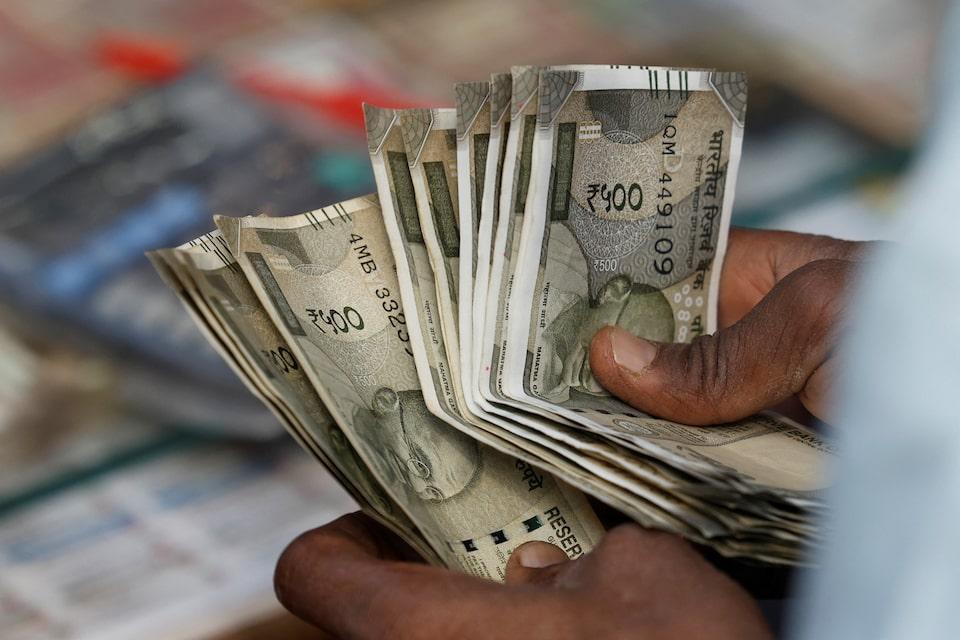
MUMBAI, March 7 (Reuters) - The Indian rupee weakened slightly on Friday even as the dollar lingered near a four-month low against its major peers with traders saying that importers' hedging requirements and foreign banks' dollar purchases weighed on the local unit. The rupee was at 87.1475 against the U.S. dollar, down slightly from its close at 87.1150 in the previous session. Asian currencies were mostly rangebound while the dollar index dipped below 104, hovering close to its weakest level since November. Concerns about a slowdown in the U.S. economy alongside uncertainty about the growth-inflation impact of trade tariffs have weighed on the U.S. dollar over recent sessions, driving the dollar index down by about 3% this month. While the rupee has gained slightly on the back of a weaker dollar, it remains a laggard amongst Asian peers due to persistent portfolio outflows from Indian equities and heightened domestic hedging. Foreign investors have net sold more than $15 billion of local stocks so far in 2025. An uptick in rupee volatility has also spurred local companies to ramp their short and long tenor hedges, bankers said. The focus on Friday will be on the U.S. non-farm payrolls report due later in the day which will influence market expectations of rate cuts by the Federal Reserve, and the dollar's trajectory by extension. Economists polled by Reuters have forecast that the world's largest economy added 160,000 jobs in February while the unemployment rate was unchanged month-on-month at 4%. Interbank traders on the dollar-rupee pair are positioned for a slight rebound in the U.S. dollar post the data, a trader at a state-run bank said. Remarks from Federal Reserve Chair Jerome Powell and other U.S. policymakers will also be in focus later in the day. Sign up here. https://www.reuters.com/markets/currencies/rupee-slips-weaker-dollar-little-help-amid-importer-hedging-demand-2025-03-07/