2025-03-07 05:44
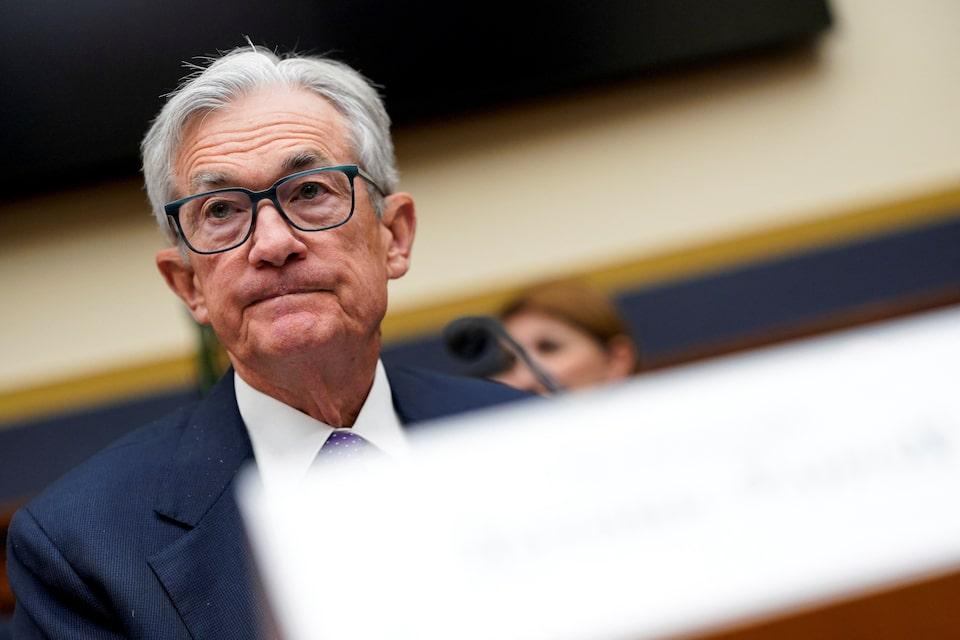
A look at the day ahead in European and global markets from Rae Wee U.S. jobs data and a speech from Federal Reserve Chair Jerome Powell will likely be markets' focal point on Friday, as investors grapple with the confusion over U.S. President Donald Trump's rapidly evolving trade policy. Investor sentiment towards the U.S. economy and markets going into the two events on Friday is downbeat, and the longer the gloom persists, the higher the bar is for lifting it. The nonfarm payrolls report is likely to show the addition of 160,000 jobs in February, following a 143,000 gain in January, while the unemployment rate is set to hold steady at 4.0%, Reuters economist polls showed. But risk is to the downside, especially given a slew of data in recent times that missed market estimates. Global growth concern has shot back onto the radar of financial markets - as if it ever went away - with trade tension weighing on consumer confidence and business activity. As it is, Fed funds futures point to three more policy interest rate cuts by year-end , and a huge miss in either the payrolls or unemployment figures could prompt traders to ratchet up those bets. Given Powell is set to speak just a few hours after the data is released, he could provide real-time reaction on what the figures might mean for the central bank's interest rate outlook. Fed officials have already sounded the alarm on a weakening U.S. economy, though Governor Christopher Waller said he is strongly against a cut at this month's policy meeting. Elsewhere in markets, a global bond selloff triggered by Germany's plans for huge spending showed signs of abating as bund futures and French OAT futures jumped. Bond prices move inversely to yields. European stock futures pointed to a negative open, though Wall Street futures ticked higher, looking set to reverse their decline from Thursday after the Nasdaq confirmed it has been in a correction since December. Investors are recalibrating how to play Trump's whipsawing policy, weighing that a so-called "Trump put" supporting stock market prices may be fading and that his administration is more keenly focused on the debt markets. In the latest policy twist, the U.S. President on Thursday suspended tariffs of 25% he had imposed this week on most goods from Canada and Mexico. Key developments that could influence markets on Friday: Sign up here. https://www.reuters.com/markets/europe/global-markets-view-europe-2025-03-07/
2025-03-07 05:14
MUMBAI, March 7 (Reuters) - A rise in the Indian rupee's volatility, coupled with a decline in the cost of protecting against currency weakness has prompted firms to increase longer-tenor hedges to shield their balance sheets. The Reserve Bank of India's (RBI) apparent tolerance for bigger currency swings and uncertainty brought on by U.S. trade polices have led companies to hedge more, bankers said. Corporate purchases of forward dollars for a tenor of more than a year jumped over two-fold in the November-January period compared to the prior three months, per data from clearing house CCIL. The increase was of a similar magnitude on a year-on-year basis. An FX salesperson at a Mumbai-based private sector bank said that the number of enquires for hedging longer-tenor dollar liabilities had more than doubled, with most clients securing exposures of up to two years. The rise in hedging longer-tenor exposures follows a pickup in shorter duration hedges. "We have started to see the trend in companies looking to hedge their longer-tenor euro and GBP (British pound) liabilities as well," the salesperson said, declining to be identified since he is not authorized to speak to the media. The rupee depreciated to 88 from 84 against the U.S. dollar in just four months, a significant departure from the narrow trading range that companies were accustomed to. The dollar-rupee pair's one-month realized volatility is at its highest in two years and is nearly at par with the offshore Chinese yuan. The realized volatility reflects the extent to how things have changed. Companies with dollar receivables have accelerated their hedging activity too, albeit at a more measured pace. Forward dollar sales for tenors exceeding one year rose 25% from November to January from the prior three-month period. For exporters, the "motivation" is to lock in the higher rate (on dollar/rupee) while for companies that have longer-term dollar liabilities, it is about "risk management" and "adjusting to the new reality" on the rupee, an FX salesperson at a different bank said. RBI's FX SWAPS AND HEDGING COSTS The RBI recently conducted dollar-rupee buy/sell FX swaps to bolster rupee liquidity in the banking system. After the $10 billion three-year swap last week, the central bank announced another similar swap on Wednesday. These measures have reduced the cost of hedging long-term liabilities, making future dollar purchases more affordable for companies. The three-year hedging cost dropped by 25 basis points following the RBI's swap on Wednesday. "Clients who had postponed their hedging activities owing to the higher cost, are now coming back with enquiries," said Akshay Kumar, head of global markets at BNP Paribas India. The bank has seen a pickup in hedging demand both from clients with unhedged exposures and those looking to raise fresh dollar liabilities, he said. Sign up here. https://www.reuters.com/world/india/indian-firms-ramp-up-long-term-fx-hedges-rupee-swings-cheaper-costs-2025-03-07/
2025-03-07 05:05
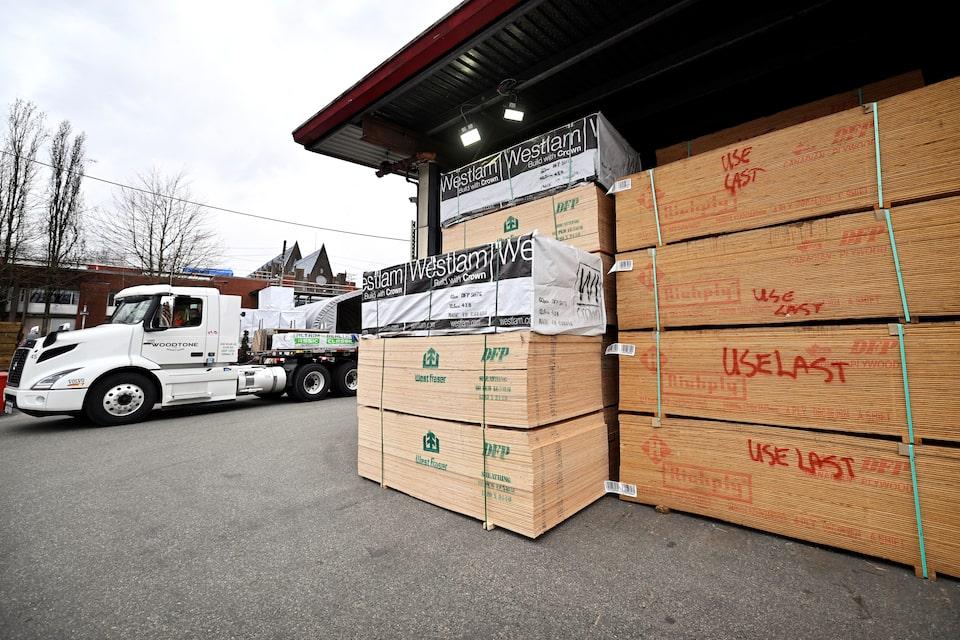
Mexican, Canadian goods to be exempted for a month Trump makes a carve-out for potash All three countries are members of North American trade pact China to 'resolutely counter' U.S. pressure over fentanyl WASHINGTON, March 6 (Reuters) - U.S. President Donald Trump suspended on Thursday tariffs of 25% he had imposed this week on most goods from Canada and Mexico, the latest twist in a fluctuating trade policy that has whipsawed markets and fanned worries about inflation and growth. The exemptions for the two largest U.S. trading partners, expire on April 2, when Trump has threatened to impose a global regime of reciprocal tariffs on all U.S. trading partners. Trump, who imposed the levies on Tuesday, had mentioned an exemption only for Mexico earlier on Thursday, but the amendment he signed later that day covered Canada as well. The three countries are partners in a North American trade pact. In response, Canada will delay a planned second wave of retaliatory tariffs on C$125 billion ($87.4 billion) of U.S. products until April 2, Finance Minister Dominic LeBlanc said in a post on X. For Canada, the amended White House order also excludes duties on potash, a critical fertilizer for U.S. farmers, but does not fully cover energy products, on which Trump has imposed a separate levy of 10%. A White House official said that was because not all energy products imported from Canada are covered by the U.S.-Mexico-Canada Agreement on trade that Trump negotiated in his first term as president. Trump imposed the tariffs after declaring a national emergency on January 20, his first day in office, due to deaths from fentanyl overdoses, saying the deadly opioid and its precursor chemicals make their way from China to the United States via Canada and Mexico. Trump has also imposed tariffs of 20% on all imports from China as a result. China said it would "resolutely counter" pressure from the United States on the fentanyl issue, urging the United States to resolve the abuse of the drug itself. "No country can imagine that it can suppress China on one hand while developing good relations with China on the other hand," Foreign Minister Wang Yi told a briefing in Beijing on Friday. Trump first announced the levies at the beginning of February, but delayed them until Tuesday for Canada and Mexico. This week he declined further delay, and doubled a 10% levy enforced on Chinese imports since February 4. "On April 2, we're going to move with the reciprocal tariffs, and hopefully Mexico and Canada will have done a good enough job on fentanyl that this part of the conversation will be off the table, and we'll move just to the reciprocal tariff conversation," Commerce Secretary Howard Lutnick told CNBC. "But if they haven't, this will stay on." Trump also said tariffs of 25% on imports of steel and aluminum would take effect as scheduled on March 12. Canada and Mexico are both top exporters of the metals to U.S. markets, with Canada in particular accounting for most aluminum imports. On Wednesday Trump exempted automotive goods from the 25% tariffs he imposed on imports from Canada and Mexico as of Tuesday, levies that economists saw as threatening to stoke inflation and stall growth across all three economies. Trump issued the exemptions after meeting executives from the top U.S. auto makers, Ford, General Motors and Stellantis. NO BUY-IN FROM MARKETS U.S. stock markets resumed their recent sell-off on Thursday, with investors citing the back-and-forth developments on tariffs as a concern. Economists have warned the levies may rekindle inflation and slow demand and growth in their wake. The S&P 500 closed down 1.8% and is now down nearly 7% since mid-February. "A continuation of this on-again, off-again with tariffs, particularly with Mexico and Canada," is creating uncertainty in markets, said Bill Sterling, global strategist at GW&K Investment Management in Boston. "How can you make decisions about where you locate an auto plant between the United States and Canada right now?" Lutnick said that the White House was not looking to market reaction for guidance. Prime Minister Justin Trudeau, who is stepping down as Canada's leader on Sunday, said he did not expect the trade war to abate soon. "I can confirm that we will continue to be in a trade war that was launched by the United States for the foreseeable future," he told reporters in Ottawa. U.S. Treasury Secretary Scott Bessent called Trudeau a "numbskull." Mexican officials offered no immediate response to the tariff delay, though President Claudia Sheinbaum held a telephone call with Trump earlier on Thursday, during which he had agreed to a delay. "We had an excellent and respectful call in which we agreed that our work and collaboration have yielded unprecedented results, within the framework of respect for our sovereignties," Sheinbaum said in a post on X. Mexican and Canadian officials have been frustrated by tariff negotiations with the Trump administration, with a lack of clarity over U.S. desires, sources from both countries told Reuters. ($1=1.4307 Canadian dollars) Sign up here. https://www.reuters.com/business/tariff-reprieve-likely-be-extended-all-usmca-compliant-goods-lutnick-says-2025-03-06/
2025-03-07 04:33
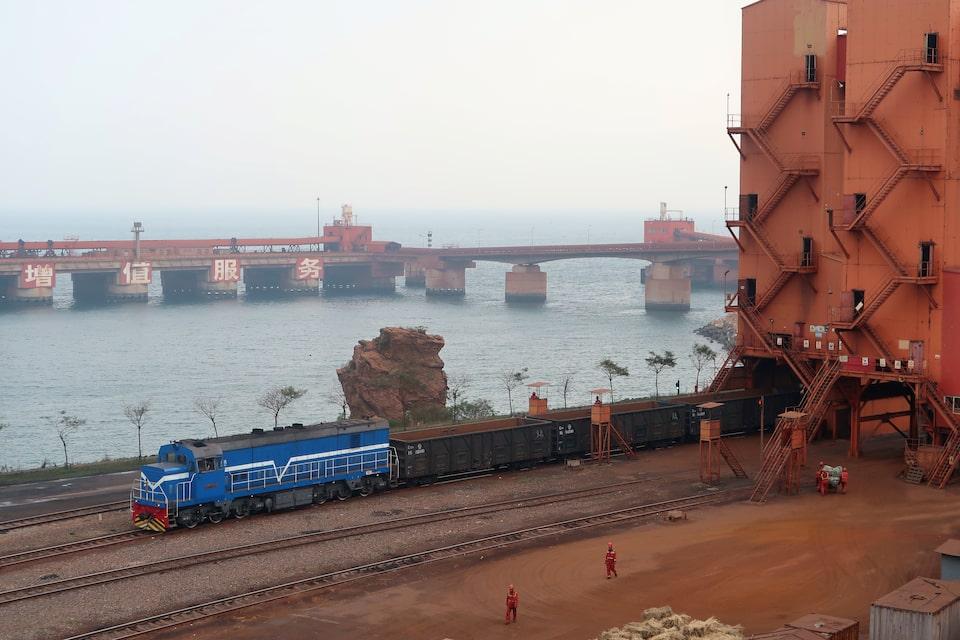
SINGAPORE, March 7 (Reuters) - Dalian iron ore futures logged a weekly fall on Friday, despite snapping a nine-session losing streak on the day, weighed down by reports of steel production cuts in China and an intensifying trade war between Washington and Beijing. The most-traded May iron ore contract on China's Dalian Commodity Exchange (DCE) added 0.19% to 774 yuan ($106.81) a metric ton. The contract fell 3.49% this week. The benchmark April iron ore on the Singapore Exchange was 0.04% higher at $100.4 a ton, losing 1.99% so far this week as of 0712 GMT. Beijing's efforts to support economic growth buoyed sentiment in commodity markets, said ANZ analysts. China unlocked more fiscal stimulus on Wednesday, vowing greater efforts to support consumption and boost domestic demand. Chinese officials on Thursday left the door open to more stimulus measures on top of those announced at this week's annual parliament meeting if economic growth veered off track. These moves follow fresh trade measures, as Washington on Tuesday imposed an extra 10% duties on Chinese goods, taking the cumulative tariff to 20% and drawing Beijing's retaliation. Meanwhile, steel production cuts in China may increase iron ore supply, intensifying pressure on ore prices, said Hexun Futures. China will restructure its giant steel industry through output cuts, although it did not announce any target in its most recent intervention to address over-capacity in the sector. Still, China's iron ore imports in the first two months of 2025 fell by 8.4% year-on-year, curbed by weather-related supply disruption in major producer Australia. Other steelmaking ingredients on the DCE rose, with coking coal and coke advancing 1.79% and 1.1%, respectively. Most steel benchmarks on the Shanghai Futures Exchange fell. Rebar eased 0.67%, hot-rolled coil lost 0.85% and wire rod shed 0.14%. Stainless steel added 0.34%. ($1 = 7.2467 Chinese yuan) Sign up here. https://www.reuters.com/markets/commodities/iron-ore-ticks-up-set-weekly-loss-tariff-woes-2025-03-07/
2025-03-07 01:32
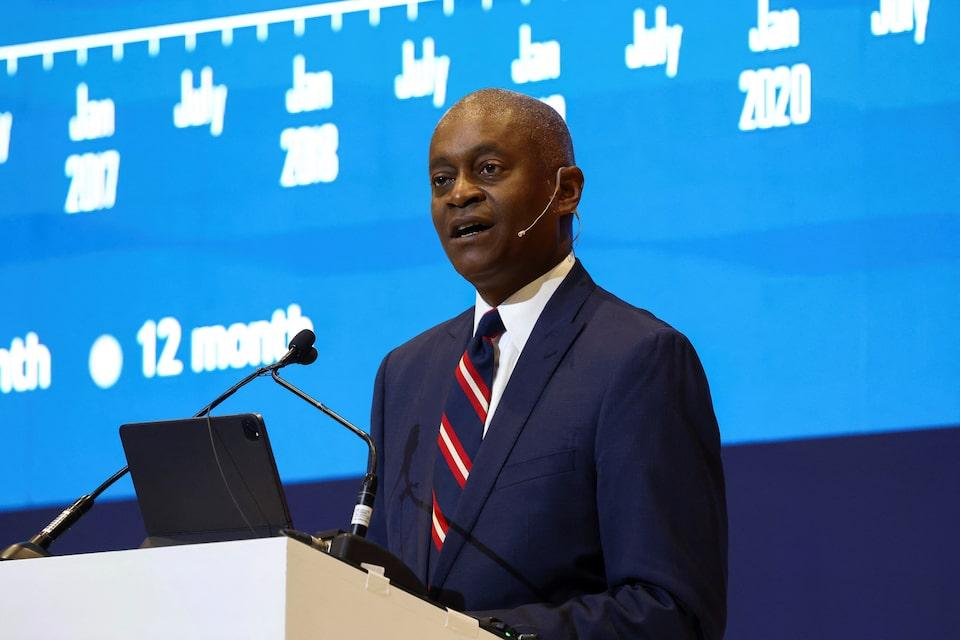
Bostic sees 'incredible flux" in economy Unlikely to get clarity before late spring or summer, Bostic says Tariffs may drive prices higher, Bostic says March 6 (Reuters) - New policies under the Trump administration are placing the U.S. economy in "incredible flux," Atlanta Federal Reserve Bank President Raphael Bostic said on Thursday, and he suggested it is unlikely that the Fed will have enough clarity to move on interest rates before late spring or summer. "There's a lot of transition that's happening, and in the midst of this transition it's hard to know exactly where things are going to land," Bostic said at an event hosted by the Birmingham Business Journal. He ticked off a list that included tariffs, trade policy, unpredictable bounces in inflation, consumer sentiment that is turning negative, immigration policy and its impact on the labor force, energy policy, tax policy, federal spending and geopolitics. "I'd be surprised if we got a lot of clarity before the late spring or into the summer," he said. "We'll have to just sort of really be patient." The Federal Reserve will hold its next policy-setting meeting on March 18-19. Policymakers are expected to keep short-term borrowing costs in their current 4.25%-4.50% range. President Donald Trump, since his January inauguration, has introduced a series of tariff actions followed by partial rollbacks or reprieves that have whipsawed industry and financial markets and contributed to financial market bets on earlier and additional Fed rate cuts. Interest-rate futures contracts are now pricing in a better-than-even chance that the Fed will resume cutting U.S. short-term borrowing costs in May, with two more reductions to follow over the course of the year. Fed officials at the end of last year had projected just two rate cuts this year. Bostic said tariffs will mean higher prices at some point for American households, which are already struggling with elevated costs, though whether that translates to higher inflation "is an open question." Other policies under the new administration, like deregulation and energy production, are fueling business optimism, he said. After the Fed cut rates by a full percentage point last year, Bostic said he began this year thinking that he would need some time to assess the state of the economy before supporting any further action. "If I was waiting before to see and get a clear signal about where the economy is going to go, I'm definitely waiting now, because the directionality is very much up in the air," Bostic said. "The question is, How is this all sorted out? And sort of what's the sequence of things that get rolled out? What are the responses? And then how does it all add up?" Sign up here. https://www.reuters.com/markets/us/feds-bostic-may-need-stay-patient-policy-until-summer-2025-03-07/
2025-03-07 00:56
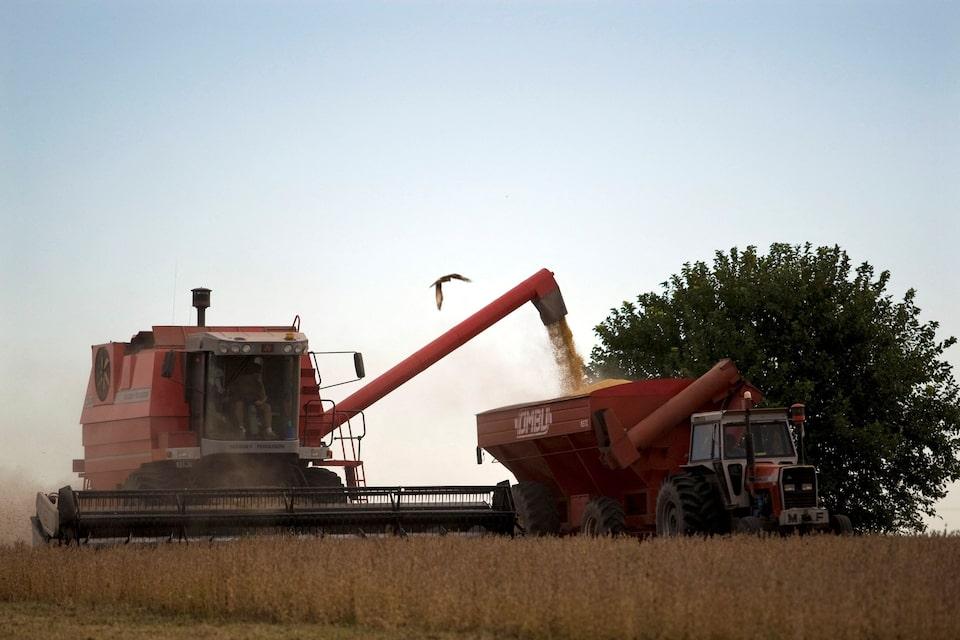
NAPERVILLE, Illinois, March 6 (Reuters) - Despite being the world's second-biggest producer of soybean oil after China, the United States all but ceased to export the vegetable oil nearly three years ago amid sky-high prices. However, the picture is completely different in 2025, which began with near-record U.S. soybean oil shipments. This reflects an easing in prices as well as soyoil's competitive advantage versus rival vegetable oils, keeping U.S. exporters in the game. Census Bureau data published on Thursday revealed U.S. soybean oil exports , opens new tab in January reached 212,714 metric tons, the most for any month since January 2010 and the fourth-largest volume on record for any month. By comparison, U.S. soyoil exports in the 2022-23 marketing year ended September 30, 2023 totaled just 171,417 tons, an all-time low. Export demand for U.S. soybean oil became scarce after global prices soared to all-time highs in early 2022. That was partly driven by aggressive U.S. renewable fuel goals that if implemented, would drastically increase domestic bean oil use. But those plans did not exactly come to fruition. U.S. soybean oil export sales picked up again in 2024 as prices sank to multi-year lows, particularly toward the end of the year when soybean oil carved out a rare discount to palm oil. Palm oil is the most abundant vegoil, though production issues and biofuel policies have tightened global supplies. Palm oil futures , opens new tab briefly dipped below those of soybean oil earlier this year, but bean oil is once again cheaper, making its case for global demand. India, the world's leading edible oil importer, accounted for 20% of U.S. soybean oil exports in the first four months of 2024-25. South Korea, Colombia and Mexico combined for another 41% of shipments. Mexico is frequently a top destination for U.S. soybean oil, which could present risks to exporters should full trade tariffs resume in April. Canada is a mild importer of U.S. soybean oil, but most of its canola oil exports are U.S.-bound. Without a trade resolution between Ottawa and Washington, less Canadian canola oil crossing the U.S. border could increase domestic U.S. soyoil demand, leaving less room for exports. STRONG SALES As of February 27, U.S. soyoil export sales for 2024-25 totaled 764,000 tons, a 12-year high for the date. The U.S. Department of Agriculture pegs full-year exports at 726,000 tons. Demand remains hot as at least 40,000 tons of U.S. soyoil sales were tallied this week between two separate flash sales, potentially pressuring the USDA to raise its outlook next week. Total soyoil export sales so far represent an unusual 105% of USDA's outlook. The fullest coverage by this date in recent years was between 85% and 89% in 2020 and 2022. Final exports in both years were significantly larger than what USDA had projected in each February. Although they will not match January's feat, U.S. soyoil exporters likely handled above-average volumes in February. As of last week, some 69% of all 2024-25 U.S. soyoil bookings had been shipped out, a relatively normal portion. U.S. soyoil exporters' most successful marketing year of the last decade was 2019-20 at 1.29 million tons. BIGGER PICTURE The United States will likely be the third- or fourth-largest supplier of soybean oil in 2024-25, though top exporter Argentina's shipments are projected to be eight times larger than U.S. ones. Argentina should continue dominating the space as record soybean processing volumes as well as export tax cuts are highly supportive of strong shipments. On the demand side, India may need to step up vegoil purchases in the coming months as below-average imports have depleted its stocks. Setting aside USDA's possible underestimation of 2024-25 U.S. soyoil exports, the agency last week tentatively estimated 2025-26 U.S. exports up about 5% on the year coupled with a 2% production increase. Of course, a sudden, unexpected shift in U.S. biofuel policy could throw all these numbers out the window. But barring that scenario, the United States could be on pace to beat export estimates and remain an important source for soybean oil, especially without an easing in palm oil prices. Karen Braun is a market analyst for Reuters. Views expressed above are her own. Sign up here. https://www.reuters.com/markets/commodities/us-soyoil-exports-hit-15-year-high-pricy-palm-shifts-vegoil-trade-braun-2025-03-07/