2025-03-06 19:51
March 6 (Reuters) - South Dakota Governor Larry Rhoden signed a bill on Thursday banning the use of eminent domain, which allows private land to be taken for public use, for the construction of carbon dioxide pipelines, potentially endangering a $9 billion project proposed by Summit Carbon Solutions. Summit's pipeline would carry captured carbon dioxide from ethanol plants in five Midwest states to an underground storage location in North Dakota. It would span 495 miles (796 km) across South Dakota. Some landowners in the states have challenged the project, arguing that it is unsafe and that using the right of eminent domain to build it violates their property rights. Summit has sought approval from states to use eminent domain to build the project, in cases where landowners refuse to voluntarily sign agreements. "It's very unfortunate that, despite our approvals in Iowa, North Dakota, and Minnesota, South Dakota changed the rules in the middle of the game," Summit spokesperson Sabrina Zenor said in a statement. "As for legal action, all options are on the table," Zenor said. Summit's construction permits were approved in Iowa in June, in North Dakota in November and in Minnesota in December. The company was denied a permit in South Dakota in September 2023, and reapplied last fall. Groups that have opposed the Summit pipeline cheered the new law. "We are proud of all the hard work that we’ve done over the last four years. It shows that when people unite around a common cause, we are unstoppable," Jess Mazour, a leader of the Iowa chapter of the Sierra Club, which opposes the pipeline, said in a statement. Rhoden said in a letter to the state's House of Representatives that he has had hundreds of conversations about the Summit project and that landowners see the threat of eminent domain as an infringement on their freedoms. "I have said many times that Summit needs to earn back trust from South Dakota landowners. Unfortunately, once trust is lost, it is a difficult thing to regain," the letter said. In September 2023, Summit secured voluntary easements for 73% of its right-of-way in South Dakota. The company did not provide an updated figure. Sign up here. https://www.reuters.com/world/us/south-dakota-bans-use-eminent-domain-carbon-dioxide-pipelines-2025-03-06/

2025-03-06 19:26
March 6 (Reuters) - A U.S. government agency said on Thursday the Biden administration's approval of California's landmark plan to end the sale of gasoline-only vehicles by 2035 is not subject to review and potential repeal by Congress. Last month, the U.S. Environmental Protection Agency under President Donald Trump sent the approval to Congress saying it was properly considered a rule under the Congressional Review Act. The Government Accountability Office said the decision should be considered an order and is not reviewable. Sign up here. https://www.reuters.com/business/autos-transportation/us-agency-blocks-vote-repeal-california-ev-rules-2025-03-06/

2025-03-06 17:39
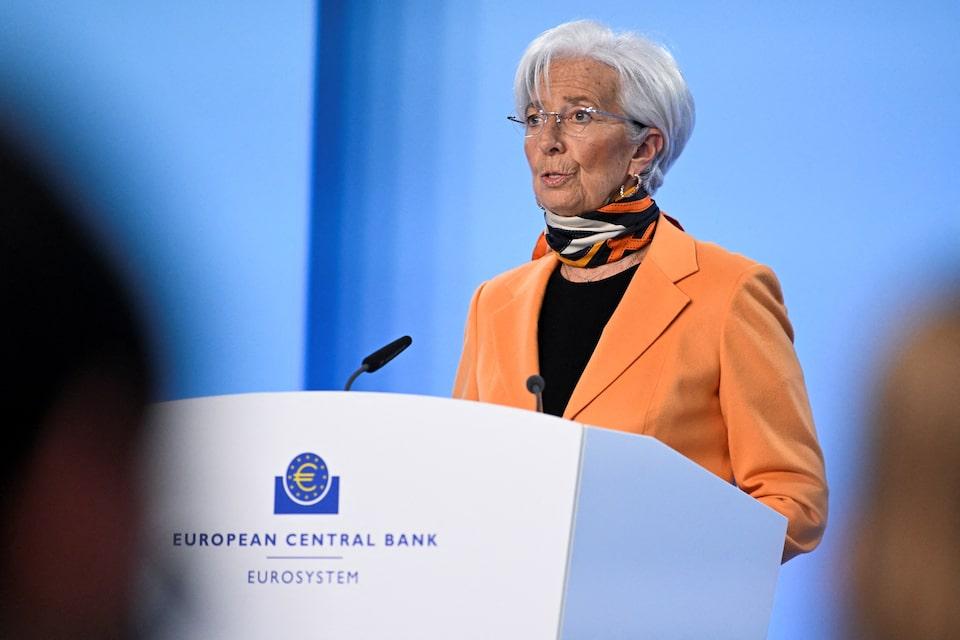
Deposit rate cut to 2.5% as expected Says rates meaningfully less restrictive Cuts economic growth outlook, raises 2025 inflation ECB Rate Decision Live FRANKFURT, March 6 (Reuters) - The European Central Bank cut interest rates again on Thursday but warned of "phenomenal uncertainty" including the risk that trade wars and more defence spending could fuel inflation, raising the prospect of a pause in its policy easing next month. Making its sixth cut since June, the ECB lowered the deposit rate to 2.5% in a nod to slowing inflation and faltering activity, and said monetary policy was becoming less restrictive of economic growth as inflation falls towards its 2% target. While this wording could suggest further rate cuts to come, ECB President Christine Lagarde declined to repeat her past guidance that the downward direction of rates was clear and emphasized that a cut or a pause were both possibilities. "Monetary policy is becoming meaningfully less restrictive," Lagarde said. "It's not just an innocuous little change, it's a change that has a certain meaning." Sources speaking to Reuters after the meeting said that policymakers see a growing chance of a pause in April as they need time to gain greater clarity about trade and fiscal policy. But rates are still likely to come down over the course of this year as a 2.5% deposit rate is still restricting a euro zone economy that is skirting recession, they said. The ECB has long said restriction will no longer be necessary once inflation - at 2.4% last month - is safely on course to meet its target this year. Lagarde said the ECB would be even more dependent on incoming data than in the past, and that it would pause easing if the numbers suggested that was needed to get inflation to 2%. Updated projections now show the ECB hitting the target only in the first quarter of 2026, a further slippage that will concern some policymakers. Economists' differing assessments of the path ahead reflected the uncertainty. "We expect the ECB to pause at the next meeting and to cut only one more time before the summer," ING economist Carsten Brzeski said. "With the increased uncertainty and the prospects of large fiscal stimulus, the ECB's direction of travel after today's rate cut is no longer as clear as it was a few weeks ago." Nordea said a cut in April remained its baseline, but that its analysts expected the move to be the last in the current easing cycle. "If the data surprise positively, the cut could be postponed until the June meeting. If the data disappoint, then the ECB could easily cut more than once more," Nordea said. Investors were also reassessing. Financial markets now foresee another 36 basis points of rate cuts this year, or between one and two moves, suggesting that one full rate cut has been priced out this week. "By twice refusing to confirm that the next move will likely be a cut, Lagarde unnerved a market in need of reassurance after the sharp moves of the last few days and triggered yet another leg lower in bond prices," said Marco Brancolini, head of euro rates strategy at Nomura. The euro rose to $1.0854 after the ECB's decision, the highest since November 6, the day after U.S. President Donald Trump's election victory. TRANSFORMATIONAL CHANGES Lagarde said the central bank for the 20-country euro zone was watching how the transformational changes to fiscal rules announced this week by Germany and the European Commission to boost defence and infrastructure spending would play out. These would support growth, she said, although their implementation was still uncertain. A potential trade war with the United States and the currency bloc's possible retaliation could work the other way around and hurt growth while boosting prices. "We have huge uncertainty," Lagarde said. "Some people have used the adjective 'phenomenal' uncertainty." The ECB lowered its 2025 economic growth forecast, released quarterly, for the fourth consecutive time, putting expansion this year at just 0.9%, only slightly above the 0.7% pace recorded in 2024. Inflation was meanwhile seen at 2.3% in 2025, above the 2.1% seen three months ago. Lagarde nevertheless said disinflation in the euro zone remained on track and that higher energy costs were behind the small slippage. While more spending on defence and infrastructure is better for growth, it could also add to price pressures. That risk has pushed measures of longer-term inflation to 2.23% from around 2.05% early this week, an unusually large shift. "With so many moving parts in terms of geopolitics, trade frictions and fiscal policy potentially offsetting each other, it's difficult to form a forecast with any reasonable degree of conviction," Pictet's Frederik Ducrozet said. "That said, we expect services inflation to ease further in the coming months, and we assume that the U.S. will go ahead with tariffs on Europe, making it more likely than not that the ECB will cut rates again in April." Sign up here. https://www.reuters.com/markets/rates-bonds/ecb-cut-rates-again-trade-wars-defence-cloud-outlook-2025-03-05/
2025-03-06 17:29
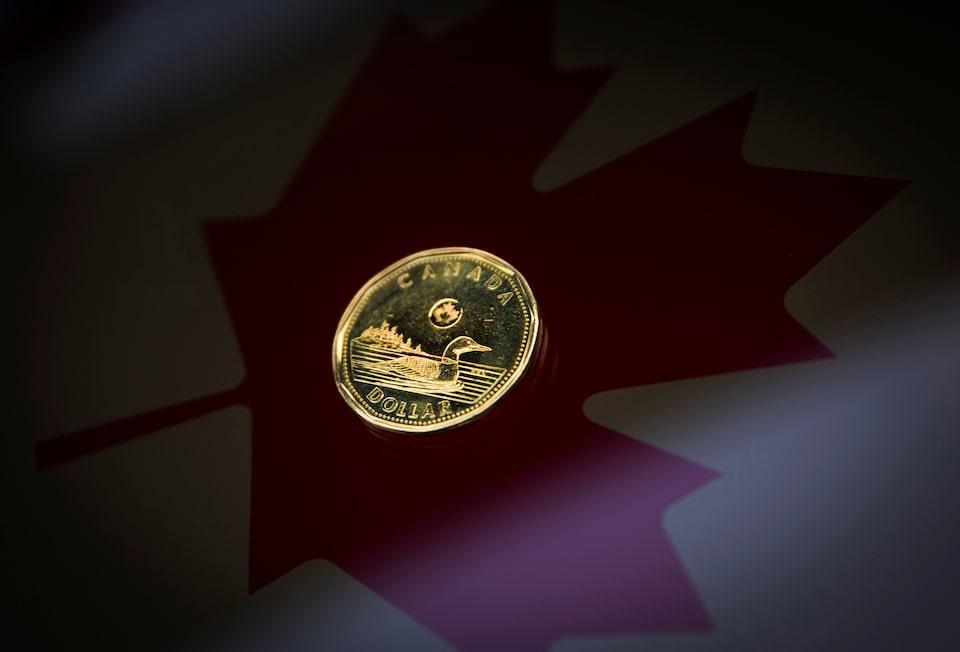
Canadian dollar gains 0.3% against the greenback Touches its strongest since February 25 at 1.4243 Canada's trade surplus widens to C$4 billion Bond yields rise across the curve TORONTO, March 6 (Reuters) - The Canadian dollar strengthened to a nine-day high against its U.S. counterpart on Thursday as Canada's trade surplus widened more than expected and investors weighed prospects of additional reprieves from U.S. tariffs on Canadian goods. The loonie was trading 0.3% higher at 1.4290 to the U.S. dollar, or 69.98 U.S. cents, after touching its strongest intraday level since February 25 at 1.4243. U.S. Commerce Secretary Howard Lutnick said the one-month reprieve on hefty tariffs on goods imported from Mexico and Canada that has been granted to automotive products is likely to be extended to all products that comply with the U.S.-Mexico-Canada Agreement on trade. U.S. President Donald Trump said Mexico will not be required to pay tariffs on any goods that fall under the USMCA until April 2, but made no mention of a reprieve for Canada. "As soon as that Lutnick quote came out we dropped almost a penny," said Michael Goshko, senior market analyst at Convera Canada ULC. "I think the Whitehouse panicked because it was going to hurt their constituency." Canada sends about 75% of its exports to the United States, including cars and oil. The nation's trade surplus rose to C$4 billion in January as fears of tariffs from the U.S. pushed exports of cars and energy products higher. The price of oil fell nearly 1% to $65.66 a barrel, weighed by the prospect of disruptions to global trade and OPEC+ plans to raise output. Canadian bond yields moved higher across the curve. The 10-year was up 8.7 basis points at 3.056%, extending its rebound from a near two-year low on Tuesday at 2.796%. Sign up here. https://www.reuters.com/markets/currencies/canadian-dollar-notches-9-day-high-tariff-reprieve-hopes-2025-03-06/
2025-03-06 17:25
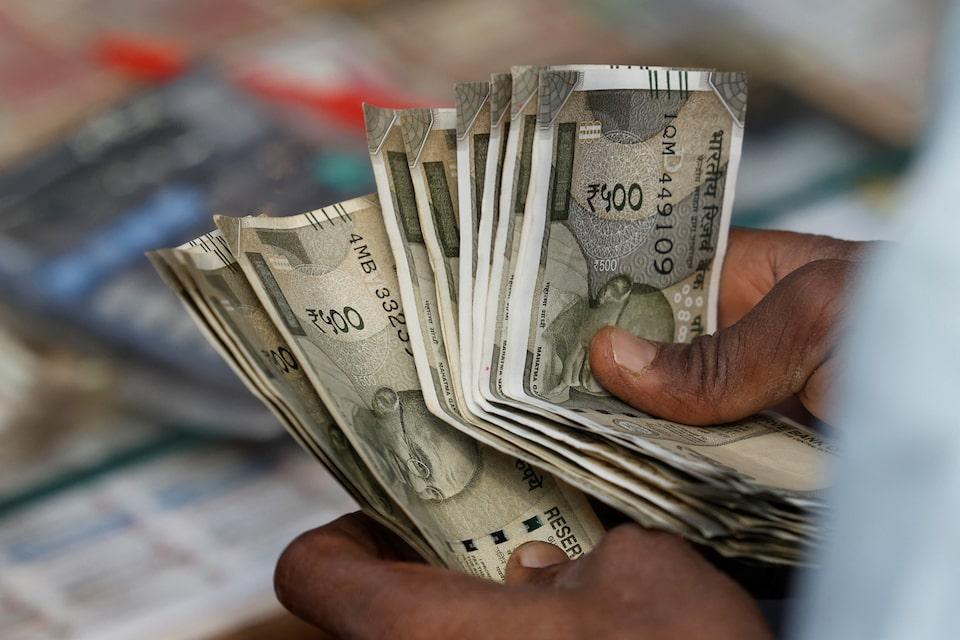
MUMBAI, March 6 (Reuters) - The Indian rupee weakened on Thursday, pressured by dollar demand by importers, even as the greenback lingered near a four-month low against its major peers amid concerns about a slowdown in the U.S. economy. The rupee closed at 87.1150 against the U.S. dollar, down about 0.2% on the day. Asian currencies were trading mixed, while the dollar index softened 0.1% to 104.1, hovering close to its lowest level since November. "While initially the expectation was that it (USD/INR) will follow the dollar lower, bids picked up sharply below 87," a trader at a private bank said. The dollar-rupee pair touched a low of 86.89 in early trade before recovering swiftly. The trader reckons that even a modest recovery in the dollar will push the rupee back towards 87.50, while sustained dollar weakness could move it towards 86.50 in the near-term. A string of economic data, including private payrolls on Wednesday, pointed towards a cooling of the U.S. economy, weighing on the dollar and bond yields. Prospects of a global trade war, a fiscal bazooka in Europe and China's emergence as tech race leader have all hurt sentiment surrounding the U.S. economy as well, marking a potential turning point for drawing investor capital away from the country. "Our view is that the dollar move is overblown. The reality of prolonged US tariffs and their impact on Europe argues for a USD rebound in the coming weeks," ING Bank said in a note. Meanwhile, dollar-rupee forward premiums dropped sharply after the Reserve Bank of India (RBI) announced it would conduct a $10 billion 3-year dollar-rupee buy-sell swap later this month. The 1-year implied yield dropped as much as 15 basis points to 2.02% in early trade before paring its decline. Investors now await the U.S. non-farm payrolls data, due on Friday, for cues on the future path of U.S. policy rates. Sign up here. https://www.reuters.com/markets/currencies/rupee-ends-lower-importer-hedging-demand-outweighs-softer-dollar-2025-03-06/
2025-03-06 17:13
Traders curb ECB rate cut bets after German fiscal proposal, ECB ECB cuts rates but statement seen as mildly hawkish Bond yields post historical surge, euro at four-month high LONDON, March 7 (Reuters) - A tectonic shift in German fiscal policy has compounded uncertainty for traders trying to bet on how fast the European Central Bank will cut rates for the rest of the year, with a change to the bank's guidance on Thursday reinforcing that. The ECB cut rates by 25 basis points to 2.50% in its sixth move since last June. But it said that monetary policy was becoming "meaningfully less restrictive," rather than the "restrictive" used before. That supported traders, who had already reduced bets on ECB rate cuts after a deal from Germany's next coalition partners on Tuesday to create a 500 billion euro ($541.40 billion) infrastructure fund and overhaul borrowing restrictions, partly to boost defence spending. "We could have potentially one more cut, a maximum of two," said Aviva Investors senior economist Vasileios Gkionakis, noting the ECB's change in language was a win for the policy hawks and meant to signal that an end to rate cuts is coming. Following the ECB's meeting, traders further curbed their bets on an April rate cut, now seeing less than a 50% chance of a quarter point move, down from over 60% last week. Indeed, policymakers also see a growing chance of an April pause before they lower rates again, once there is greater clarity about trade and fiscal policy, sources told Reuters. By year-end, traders price in around a 60% chance of two rate cuts to follow Thursday's, having priced in a chance of a third move last week. FISCAL VS MONETARY BOOST Markets are hoping Germany's bold move to rip up its fiscal playbook may be a game-changer for Europe's economy. The euro surged to $1.0854 on Thursday, the highest since November 6, the day after U.S. President Donald Trump's election, and well above the near $1.01 levels seen in February, as tariff worries weighed. Germany's bond yields, the benchmark for the euro zone, were set for their biggest weekly jump since the early 1990s as markets braced for a surge in borrowing . Remarkably, traders have even moved to price in the chance that the ECB will start to raise rates again next year, given that the fiscal boost could lift inflation, seeing a roughly 40% chance of a hike by September 2026. With little detail available and the German proposal yet to be approved, it wasn't a factor for the ECB's decision on Thursday, but it further blurs the monetary policy outlook, which analysts had already seen as less certain. "If you throw that much money into an economy, you are going to get quite a difference. It also means inflation will be higher," said RBC BlueBay Asset Management chief investment officer Mark Dowding. A key market gauge of inflation expectations surged following Germany's announcement. It is trading at around 2.22%, only slightly above the ECB's 2% target, and posted its biggest daily jump on record on Wednesday, according to LSEG data going back to 2013. Dowding reckoned the ECB's next rate cut could be its last. "We've been selling short-dated German bonds, thinking the rates market has been pricing in too many rate cuts," he said ahead of the ECB decision. Banks, including Goldman Sachs and Nomura, have also reduced their rate cut forecasts. For markets, uncertainty around the ECB's next moves is a marked departure from the near-certain expectation of a rate cut at every ECB meeting since October. ELEPHANT IN THE ROOM For all the market optimism around a sea change to the bloc's growth outlook, the big question mark is still U.S. tariffs. It remains unclear if such measures will be implemented against Europe. The ECB mentioned trade uncertainty as a factor for ongoing weakness in investment as it revised down its growth forecasts. Aluminium and steel tariffs goes into effect on March 12, but Europe could get hit by substantial reciprocal tariffs as well as separate measures against its automotive sector and other industries. "Markets are underestimating tariffs," said Fidelity International's global head of macro and strategic asset allocation Salman Ahmed. He expects the ECB to reduce rates to 1.75% rather than the 1.5% anticipated earlier, but added that the central bank would likely respond to tariffs by further cutting rates. Danske Bank chief analyst Piet Christiansen said he had not yet revised his call for the ECB to cut rates to 1.50% this year, citing the scale of uncertainty around Germany's fiscal proposals. "You have the number, but that's all you have. You don't have when it's going to be deployed, at what scale." ($1 = 0.9235 euros) Sign up here. https://www.reuters.com/markets/europe/markets-german-fiscal-splurge-blurs-ecb-outlook-2025-03-06/