2025-03-06 12:18
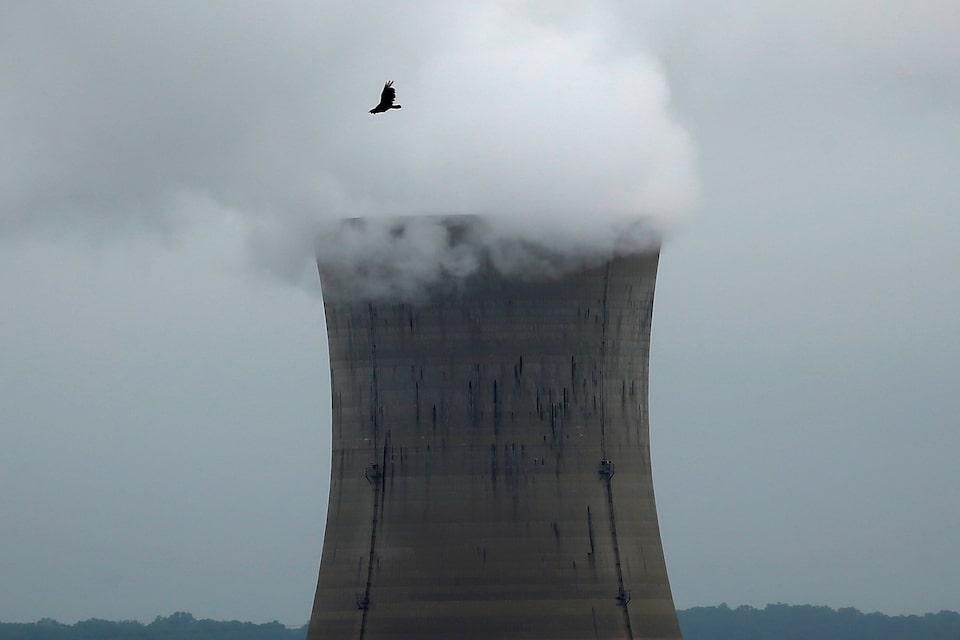
PRETORIA, March 6 (Reuters) - The world must carry on pursuing the greenhouse gas emissions reductions outlined in the Paris Agreement, despite the United States' withdrawal, Britain's climate envoy said on Thursday, adding that the UK was moving ahead with its targets. Last month U.S. President Donald Trump , opens new tab withdrew the world's second biggest emitter from the agreement that aims to limit global warming to well below 2 degrees Celsius (3.6 Fahrenheit). "Around the world people are noting that the U.S. has pulled out of Paris, but we've got to carry on," Rachel Kyte told Reuters in an interview on a visit to South Africa's capital Pretoria. "The science hasn't changed, no other country has changed its position ... the direction of travel is the same." U.S. Energy Secretary Chris Wright on Monday called pledges to achieve net zero carbon emissions a "sinister goal," singling out Britain for its clean energy targets. "(Britain's) energy security ... food security, and the well being of the British people is entirely linked to the (world's) ability ... to manage this climate crisis," Kyte said. "So it's regrettable that the United States is out ... but we're moving ahead," she said. Britain's decision this month to use its National Wealth Fund for defence spending has raised fears of reduced funds for green energy. Kyte said no decisions had been made on how funds will be earmarked. "It's not a zero-sum game," she said, because the energy transition was being driven by "using public money effectively to crowd in private investments. The United States is also withdrawing from the Just Energy Transition Partnership to help developing countries including Indonesia, Vietnam and South Africa transition from coal, Reuters reported exclusively on Wednesday. "It's too early to tell what impact that has, but all the other partners are remaining, and ... deploying capital," which will in turn attract commercial investment, Kyte said. Sign up here. https://www.reuters.com/sustainability/climate-energy/world-must-stick-climate-goals-despite-us-uk-envoy-says-2025-03-06/
2025-03-06 12:16
SINGAPORE, March 6 (Reuters) - PetroChina International's London unit signed a preliminary agreement with German energy company Mabanaft to expand sales of Chinese refined fuel products to Europe, the Chinese state oil and gas trader said on Thursday. The companies aimed to expand cooperation in the northwest European markets leveraging on PetroChina's fuel supplies and Mabanaft's end-user outlets, PetroChina International, or PCI, said on its official WeChat platform. The cooperation covers diesel, jet fuel, bio-aviation fuel and logistics. The companies already worked successfully on marketing aviation fuel in the United Kingdom, PetroChina said. PCI is the trading arm of China's largest oil and gas giant PetroChina (601857.SS) , opens new tab. Sign up here. https://www.reuters.com/business/energy/petrochina-preliminary-agreement-with-germanys-mabanaft-expanding-fuel-sales-2025-03-06/
2025-03-06 12:13
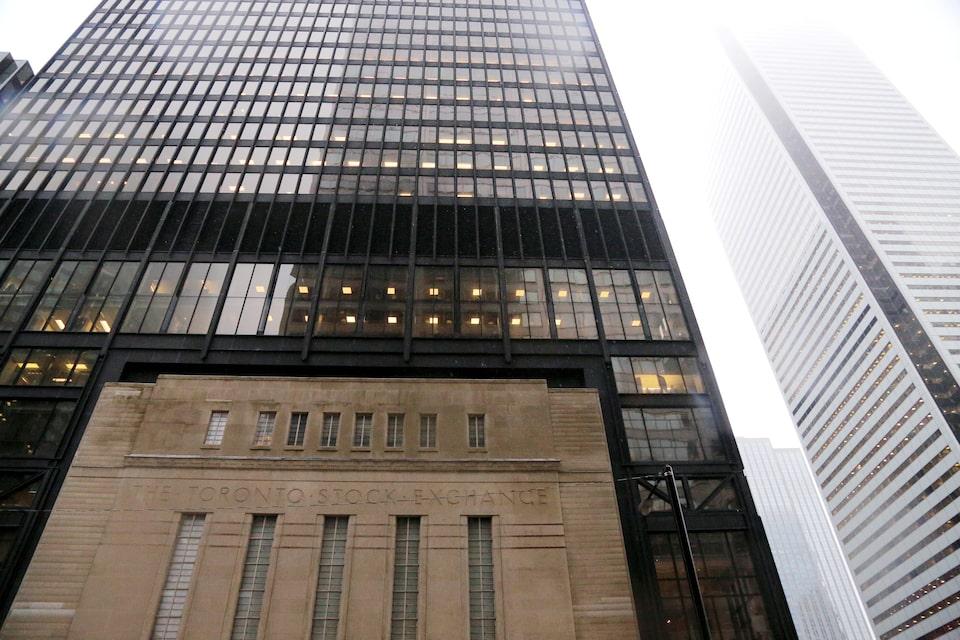
TSX ends down 1.2% at 24,584.04 Tech falls 3.3% with Celestica down 10.4% Financials end 1.7% lower Aecon Group tumbles 16.1% on revenue miss March 6 (Reuters) - Canada's main stock index fell on Thursday, weighed by declines for technology and financial shares, as the rapid pace of U.S. policy shifts on trade hurt investor sentiment globally. The S&P/TSX composite index (.GSPTSE) , opens new tab ended down 286.78, or 1.2%, at 24,584.04, giving back nearly all of the previous day's rally. U.S. benchmark, the S&P 500, posted even steeper declines, while the tech-heavy Nasdaq confirmed it was in a correction since December. U.S. President Donald Trump exempted goods from both Canada and Mexico under a North American trade pact for a month from the 25% tariffs that he had imposed earlier this week, the latest twist in fast-shifting trade policy that has whipsawed financial markets and business leaders. "The challenge is that no one can really anticipate or predict what Trump is going to do at any given point in time," said Shiraz Ahmed, senior portfolio manager and founder of Sartorial Wealth at Raymond James. "The anxiousness is likely spilling over into the markets at the moment ... The market and everybody are just walking on egg shells and anticipating more bad than good." Canada's trade surplus widened much more than expected to C$4 billion ($2.80 billion) in January as fears of U.S. tariffs pushed exports of cars and energy products higher. The Toronto market's technology sector fell 3.3%, with shares of electronic equipment company Celestica Inc down 10.4%. The sector was trading roughly 14% below the all-time closing high it posted three weeks ago. Heavily weighted financials fell 1.7%, while utilities ended 2% lower as bond yields climbed. The materials group, which includes fertilizer companies and metal mining shares, was down 1.1% as the price of gold edged lower. Shares of Aecon Group Inc (ARE.TO) , opens new tab tumbled 16.1% after the construction company fourth-quarter revenue expectations. ($1 = 1.4305 Canadian dollars) Sign up here. https://www.reuters.com/markets/tsx-futures-slip-tariff-woes-linger-2025-03-06/
2025-03-06 11:58
Morning Bid U.S. What matters in U.S. and global markets today By Mike Dolan , opens new tab, Editor-At-Large, Financial Industry and Financial Markets We've revamped Morning Bid U.S. to offer you more in-depth markets analysis and commentary. Mike Dolan will help you make sense of the key trends shaping markets each day. For more expert analysis, look out for Reuters' new markets and finance commentary platform, coming this spring. The European Central Bank will almost certainly deliver an interest rate cut today despite the recent surge in euro area government yields, but the central bank may be forced to pause after today as it assesses Germany's extraordinary fiscal reboot. As the euro and European shares (.STOXXE) , opens new tab soar on the trillion euro spending plan, the dollar (.DXY) , opens new tab continues to sink, falling to its lowest point since November's U.S. election. Meanwhile, Japan's yen hit its best level against the greenback since October. Japan's government debt yields have risen to their highest levels since 2008, with the Bank of Japan set to lift its policy rate again this month. Back on Wall Street, ailing stock indexes stabilized on Wednesday as U.S. service sector business surveys came in fairly positive and President Donald Trump announced that the U.S. was giving autos a one-month reprieve from the tariff increases on Canadian and Mexican imports. But traders are nervously awaiting the U.S. payrolls report tomorrow, following news that private sector job creation has softened. , opens new tab U.S. stock futures are back in the red even as global equity benchmarks (.MIWD00000PUS) , opens new tab push higher. Today I'm taking a look at just how anxious Wall Street is getting and whether credit pricing, deal-making and earnings season deep-dives reveal as much angst as equity indexes. Today's Market Minute * Trump has delayed his threatened 25% tariffs on auto imports from Mexico and Canada by a month. Pickup trucks might explain why. * The maker of Jack Daniel's whiskey says Canada pulling U.S. alcohol off the shelves is 'worse than a tariff', as Canadians avoid American goods and even sporting events. * A historic global trade war, a proposed $1.2 trillion European fiscal bazooka and China emerging as an AI leader are upending global flows of money, possibly marking a turning point for "U.S. exceptionalism". * EU leaders are expected to agree to ramp up defence spending and reaffirm their support for Ukraine, after Trump's suspension of military aid to Kyiv fuels concerns the EU can no longer rely on U.S. protection. * And finally, shares in a small European rival to Elon Musk's Starlink satellite operator have soared 600% in four days, following suggestions Ukraine might lose access to the billionaire's system. Kicking Wall Street's tires Trouble on Main Street usually means trouble on Wall Street - and not just top-line stock prices. If a rare U.S. economic downturn is indeed back in the mix, with business bamboozled by trade wars and government disruption, then the full gamut of financial market activity and pricing faces a shake-up. U.S. equities with 35% valuation premiums to Europe, for example, have already felt some of the heat as tensions have risen and economic models flash red. But the world of corporate credit - particularly the riskier 'junk bond' universe of sub-investment grade debt - is usually where you'd seek a reality check on recession fears. While economic worries typically cut Treasury yields and base borrowing costs, speculative high-yield debt is prone to any uptick in recession risk that almost always tallies with higher bankruptcy and default risks for weaker credit. And there's been some wobble there over recent weeks to mirror the equity fright of the past month. The options-adjusted risk spread on ICE Bank of America's high-yield U.S. credit index (.MERH0A0) , opens new tab over Treasuries has risen almost 40 basis points in just two weeks - from near historic lows to its widest since October at just under 300bp. To be fair, this remains extraordinarily benign pricing, with default rates for the grouping expected to remain historically low this year at about 2.5%. And at 300bps, the junk spread is still a sliver below the average of the past year and over a percentage point tighter than the five-year average. But like the equity market itself, it's been largely priced for a serene scenario of no economic downturn whatsoever over the horizon - and may need a rethink if those probabilities at least are now rising again as many suspect. Morgan Stanley's strategists think the broad investment grade and low grade credit market has held up reasonably well so far over recent weeks but said they were "cautious" about what happens next. "We are worried this won't persist if our U.S. growth estimates fall further," Andrew Sheets and team told clients. "We look for opportunities to hedge and improve quality." DEALS STALL Somewhat counter-intuitively, credit prices have been helped by a stalling of U.S. deals activity this year. Credit risk tends to correlate with ebbs and flows in mergers and acquisitions as the related debt financing goes hand in hand. But the main reason for the drop in M&A this year is hardly cause for comfort for the underlying credits. According to Reuters reports, Wall Street executives and investors are running into roadblocks to get deals over the finish line or even to begin exploratory talks - mainly because of the fog over government policy and its impact on the economy. M&A in the first two months of 2025 was the weakest since the financial crisis with just 1,603 deals signed through February, making it the slowest open by volume since 2009, Dealogic data showed. Total deals fell more than 19%, while the total value dropped 29% to $249 billion from the first two months of 2024. Even if you need to brace for 'a little disturbance', as President Donald Trump described it on Tuesday, you could possibly cheer yourself with a readout from the most recent U.S. earnings season. After all, that showed 17% annual profit growth for S&P500 firms through the end of last year. But this too may be misleading as a measure of overall corporate health and other wider cuts of company updates beyond the blue chips show a far more fragile picture - one not best prepared for a significant bout of trade and macro turbulence. And it's in here the recently 'perfect' equity and credit pricing looks way off if a sharp slowdown is underway. FRAGILE UNDER THE SURFACE Societe Generale's Andrew Lapthorne points out that if you take the wide S&P1500 (.SPSUP) , opens new tab index and exclude financial stocks but include the biggest 10% of companies that dominate market cap weightings, the picture looks healthy on the surface. Profit growth of 10% shows little reason to fret. But if you exclude the top 10% of big caps from this ex-financials cut of the index, the remaining 1,000 or so firms in the index on aggregate saw no earnings growth over the past 12 months at all. What's more, their net income and sales growth was actually negative. Hand-wringing about 'over-concentration' of the U.S. stock market is not new of course. But it becomes more salient if the tide on Big Tech themes like artificial intelligence have hit a high watermark. And if what's coming down the pike amounts to a macro shock, corporate America and Wall Street has good reason to worry. Today's key chart The ECB is likely to cut its main policy rate for the sixth time in eight months on Thursday, just as German government bond yields soar above the existing ECB rate for the first time in two years, electrified by this week's announcement of an extraordinary fiscal stimulus plan. The fiscal splurge may cause the ECB to pause its easing campaign after today as it assesses the implications of the dramatic shift. Today's events to watch: Opinions expressed are those of the author. Sign up here. https://www.reuters.com/markets/us/global-markets-view-usa-2025-03-06/
2025-03-06 11:28
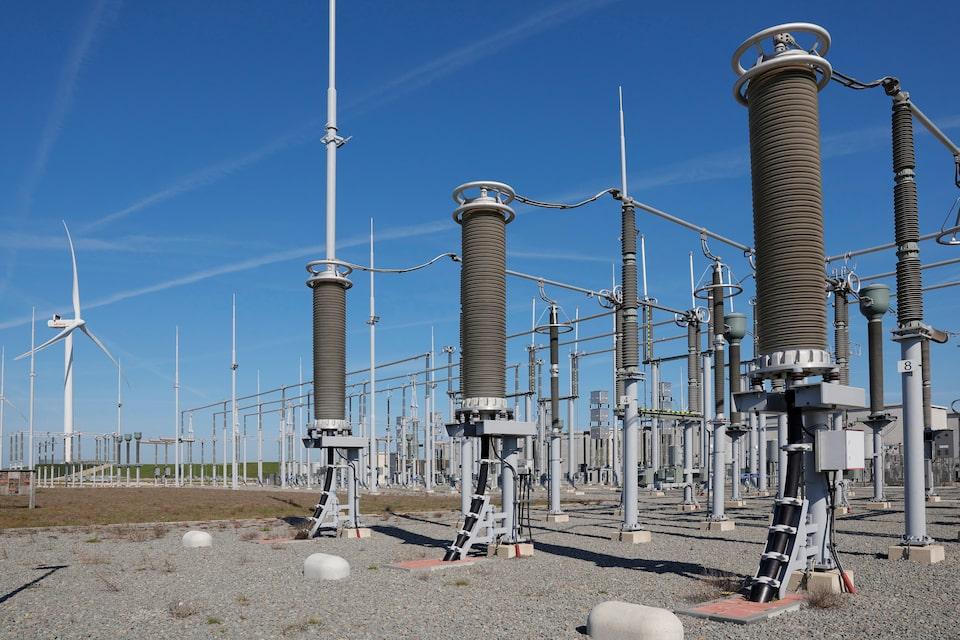
German state may invest in TenneT amid $216 billion spending plan TenneT seeks private investors or IPO for German operations Concerns over waning support for grid infrastructure due to high energy costs AMSTERDAM, March 6 (Reuters) - The door remains open for the German state to take a stake in Netherlands-owned grid firm TenneT, company executives said on Thursday, as it seeks fresh equity to support an estimated 200 billion euro ($216 billion) investment program through 2034. Talks for the German state to buy TenneT's German operations from the Netherlands fell apart last year due to budget constraints, but this week Berlin began weighing spending 500 billion euros on infrastructure projects. Germany, which already holds minority participations in high-voltage power grids TransnetBW (EBKG.DE) , opens new tab and 50Hertz (ELI.BR) , opens new tab, has in the past expressed interest in buying a 25% stake in TenneT Germany if there is an official sales process. However, given the country is currently in the process of forming a new government, its position could change. "We would welcome the German state being involved in a future financing solution," CFO Anna Freitag told reporters. She said the company is meanwhile continuing to pursue plans to sell a stake in TenneT Germany to private investors or in an IPO. "We would rather cater to a group of investors given the sheer size" of the company, she added. TenneT's 2024 investments exceeded 10 billion euros as it worked to expand grids to accommodate the massive amounts of solar and offshore wind power needed to shift away from fossil fuels. The company's owner, the Dutch state, wants to sell its German operations - 60% of the company - to reduce its debt load and relieve Dutch taxpayers from financing German infrastructure. CEO Manon van Beek said she was concerned that popular support for building grid infrastructure is waning due to high energy costs, of which grid costs make up 25% and rising. Some energy firms have bowed out of auctions for additional North Sea wind farms, citing rising costs and declining profitability. However Van Beek said she does not believe TenneT's funding plans are in doubt through 2034. Last year the company and the Netherlands agreed on two loan facilities totalling 44 billion euros to meet capital needs through 2026. ($1 = 0.9255 euros) Sign up here. https://www.reuters.com/business/energy/dutch-grid-group-tennet-plans-invest-216-billion-by-end-2034-2025-03-06/
2025-03-06 11:25
LONDON, March 6 (Reuters) - The pound extended a slide against the euro on Thursday, dropping to its weakest level since January as the single currency benefited from an improving growth outlook after Germany announced plans to massively boost fiscal spending. Sterling was last at 83.85 pence per euro , down about 0.2% on the day. It's dropped about 1.5% this week, and is on course for its biggest one-week fall since January 2023. "It's all to do with the broad-based euro optimism that we've seen with this shift in fiscal policy in Germany," said Kirstine Kundby-Nielsen, FX analyst at Danske Bank. On Tuesday, the parties looking to form the next government of Germany, Europe's largest and the world's third largest economy, agreed to loosen fiscal rules and create a 500 billion euro special fund to boost infrastructure. That sent the euro surging against major peers and pushed bond yields higher on expectations for more borrowing. Major investment banks have been quick to lift their growth forecasts for Germany and the euro zone bloc, while some now expect fewer interest rate cuts from the European Central Bank. The ECB announces policy later on Thursday and is widely expected to lower its deposit rate by 25 basis points, the sixth reduction in the easing cycle. Bank of England rate setters, meanwhile, are generally sticking to their "careful" approach to interest rate cuts, having lowered borrowing costs for the third time since August last month. Against the dollar, the pound was down 0.1% , having earlier risen to its highest in four months at $1.2924. Britain's construction sector contracted sharply last month, a survey showed on Thursday. The preliminary reading of the S&P Global/CIPS UK Construction Purchasing Managers' Index fell to 44.6 last month from January's 48.1, its weakest level since May 2020. "Rocketing uncertainty around global trade policy, rising materials prices, and the looming payrolls tax hike in April all conspired to further sap confidence," said Elliott Jordan-Doak, senior UK economist at Pantheon Macroeconomics. The all-sector PMI, which combines services, manufacturing and construction, fell to a 16-month low of 50, down from 50.3 in January. Sign up here. https://www.reuters.com/markets/currencies/sterling-extends-drop-versus-euro-after-german-fiscal-boost-2025-03-06/