2025-03-06 09:41
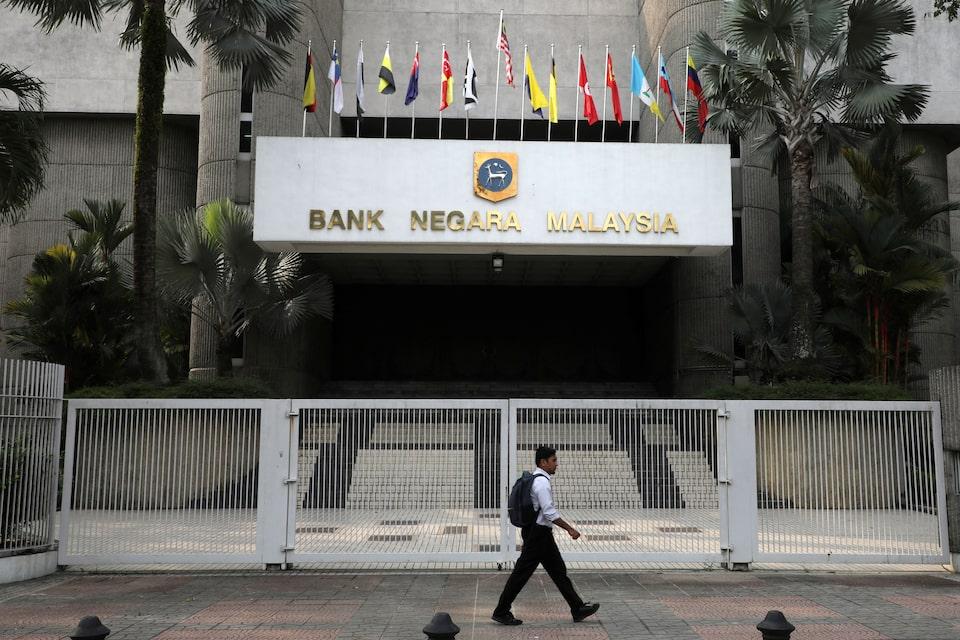
Central bank holds overnight policy rate at 3% Analysts expect no change to rate in 2025 Tariff uncertainties cloud global outlook, central bank says Inflation likely to pick up, analyst says KUALA LUMPUR, March 6 (Reuters) - Malaysia's central bank kept its benchmark interest rate (MYINTR=ECI) , opens new tab unchanged on Thursday, expecting economic activity to remain strong this year and inflation manageable, but it warned of increasing risks to the global economy. Bank Negara Malaysia (BNM) maintained its overnight policy rate at 3.00%, the same level since May 2023, and in line with market expectations that the central bank will hold rates steady through this year. "Despite external uncertainties, the strength in economic activity is expected to be sustained in 2025, anchored by domestic demand," the central bank said in a statement. Regional peers, such as Bank Indonesia, the Bank of Thailand, and the Philippine central bank, have cut rates to support sluggish growth. Malaysia's government and central bank have forecast the economy to expand between 4.5% and 5.5% in 2025, following 5.1% growth in 2024. "However, the outlook for global growth, inflation and trade is subject to considerable uncertainties surrounding tariffs and other policies from major economies and geopolitical developments," the central bank said. BNM expects Malaysia's inflation rate to remain manageable in 2025 amid easing global prices and the absence of excessive domestic demand pressures. Headline and core inflation stood at 1.7% and 1.8% respectively in January, it said. The inflationary impact from recently introduced wage policies is expected to be limited, but further domestic policy changes, global commodity prices, financial markets, and trade policies could be potential risks, BNM said. Analysts at Capital Economics do not expect any changes to Malaysia's monetary policy this year, but cautioned that inflation was likely to increase following planned cuts in some fuel subsidies, expected in the middle of the year. "The changes will likely push the headline rate above 3% next year," Gareth Leather said in a note. "Although BNM does not have an explicit target, inflation over 3% year-on-year would be outside what we consider to be the central bank’s comfort zone." While financial markets could face increased volatility, the central bank said a favourable domestic outlook and structural reforms would help support Malaysia's ringgit currency . Sign up here. https://www.reuters.com/world/asia-pacific/malaysia-central-bank-holds-key-rate-steady-flags-cloudy-global-outlook-2025-03-06/
2025-03-06 09:01
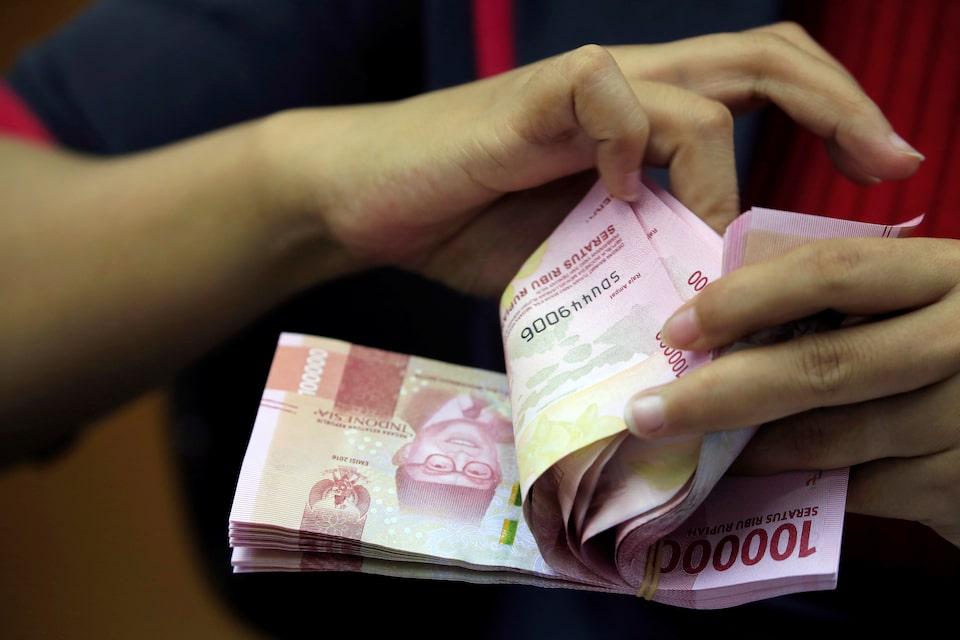
Bearish bets raised on Thai baht, trimmed on Chinese yuan Indian rupee most shorted, followed by Indonesian rupiah Short bets on Philippine peso lowest since January 2024 March 6 (Reuters) - Investors maintained their short bets on most Asian currencies as they assessed the prospects of an escalating global trade war after U.S. President Donald Trump's tariffs on major trading partners, a Reuters poll showed on Thursday. Bearish positions on the Malaysian ringgit , the South Korean won , Taiwan dollar and the Indonesian rupiah firmed slightly from a fortnight ago, according to a poll of 11 respondents, while those on the Thai baht also ramped up. Last month, the Bank of Thailand cut its interest rate by a quarter point amid government calls for easing to support the economy and weaken the local currency to boost exports. While the bank's statement highlighted "structural problems" in the economy more than trade tariffs, Barclays analysts believe global trade tensions were a bigger concern for the central bank. With growing concerns over Trump's tariffs, market players will gradually increase short conviction on Asian currencies, especially given their recent strength, as risk reward for shorting could improve, said Poon Panichpibool, a markets strategist at Krung Thai Bank. Trump's new 25% levies on imports from Mexico and Canada, as well as the doubling of duties on Chinese imports, which took effect on Tuesday, were met with retaliation from China and Canada. Despite the trade tensions, Asian currencies have remained relatively resilient in light of broad dollar decline and worries that U.S. growth is slowing. "Due to the uncertain nature of Trump's policies and rising expectations of more Fed's rate cuts... market players will refrain from significantly increasing their short positions" until the U.S. economy recovers, Panichpibool said. The Indian rupee , weighed down by foreign portfolio outflows and increased hedging in the onshore and the non-deliverable forward market, logged its fifth straight monthly fall in February and was the most shorted among Asian currencies. Analysts at DBS said India's tariff rates are higher than the U.S. and Asian peers, which makes the economy susceptible to retaliatory as well as reciprocal tariff action. The rupee and the rupiah, which dropped to its lowest level since March 2020 last week, are the worst performing Asian currencies so far this year. Meanwhile, short bets on the Chinese yuan eased from a fortnight ago. China's central bank has been setting its daily official yuan midpoint guidance stronger than market expectations since mid-November. That, along with Beijing's ambitious economic growth target and increased support for domestic consumption, has helped stem yuan's losses despite more U.S. tariffs. Bearish bets on the Philippine peso were also lowest since January 2024, with Barclays analysts attributing the currency's outperformance, compared to its peers, to sidelined model flows and relatively absent local dollar demand. Short bets on Singapore dollar , the best regional performer this year, were largely unchanged. The Asian currency positioning poll is focused on what analysts and fund managers believe are the current market positions in nine Asian emerging market currencies: the Chinese yuan, South Korean won, Singapore dollar, Indonesian rupiah, Taiwan dollar, Indian rupee, Philippine peso, Malaysian ringgit and the Thai baht. The poll uses estimates of net long or short positions on a scale of minus 3 to plus 3. A score of plus 3 indicates the market is significantly long U.S. dollars. The figures include positions held through non-deliverable forwards (NDFs). The survey findings are provided below (positions in U.S. dollar versus each currency): Sign up here. https://www.reuters.com/markets/currencies/investors-stay-bearish-asian-currencies-trade-war-intensifies-2025-03-06/
2025-03-06 08:36
Techicians took hours to spot hardware fault after misdiagnosis Central bank staff work through night to fix in time for payday If crash had lasted longer, millions of people may have been hit FRANKFURT/ATHENS, March 6 (Reuters) - The European Central Bank's payments crash last week meant salaries and welfare funds were delayed for thousands of people. It could have been much worse. If the same disruption had struck, or persisted into, the following day - the end of the month, and payday for many public-sector workers, pensioners and welfare recipients - the mayhem could have hit millions of people and businesses, and strained the banking system. "If it had lasted until Friday, there would have been big risk-management questions for banks," said Alistair Milne, a professor of financial economics at Britain's Loughborough Business School. "Bank risk managers would have to decide: Are we willing to credit the customer account on the trust that the money will eventually turn up?" Reuters can construct the most detailed account to date of the breakdown of the euro zone's main payment system, based on interviews with a dozen people familiar with the day's events including central bank officials, bankers and brokers, and a review of the ECB's messages to market participants. When the system went down on Thursday, the chaos that descended in the 10 hours it took to identify and fix the problem blocked the welfare payments of more than 15,000 mostly elderly and poor Greeks, a large number of salaries and pensions in Austria, plus several financial trades. At the heart of the escalating turmoil was a piece of malfunctioning hardware, but it took hours for the ECB's technicians to spot the problem after an initial, erroneous diagnosis of database issues, according to the ECB messages and officials at the ECB and three other euro zone central banks. This forced central bank staff across many euro zone countries to work throughout the night to fix the defective equipment and clear a backlog of transactions in time for payday, according to officials who like the other sources requested anonymity to discuss this sensitive matter. "A hardware failure is excusable, but not having a backup that can kick-in instantaneously in case of problems is not," said Markus Ferber, a member of the European Parliament who sits on the committee that oversees the ECB. "Critical infrastructure needs a backup - the ECB should know that." An ECB official told Reuters the affected hardware, which he declined to identify, did have multiple backups and the bank was analysing why they didn't kick in. The ECB had recently completed an overhaul of its payment system and crisis management before this incident, the official added, as recommended in a report by consultancy Deloitte following a string of outages in 2020. The Target payment system, which handles trillion of euros of daily transactions, is so vital to financial and economic stability in the 20-nation euro zone that the locations of its four servers are a closely guarded secret, with the ECB revealing only that they're sited in two different parts of Europe. ECB ACTIVATES EMERGENCY CHANNEL The situation started going south shortly after 8 a.m. Frankfurt time on Thursday when the ECB's system for settling financial trades, Target 2 Securities (T2S), crashed. The Target 2 (T2) network, which handles large payments between central banks and commercial lenders, followed suit two hours later, according to ECB updates to market participants. Both T2 and T2S are run by the ECB with the central banks of Germany, Italy, France and Spain. In phone calls that morning between crisis managers at the ECB and the other central banks, the blame was put on errors in the systems' shared database, which would make a transfer to a back-up version - or "failover" - impossible without copying over the same issue. This required staff at the central banks to laboriously parse through transactions to identify the mistake while the system was offline. At 11.30, the crisis managers activated the Target systems' emergency channel for critical payments, such as those involving foreign currencies or margin calls. This is to prevent any disruption from spilling over to other currencies or jamming the functioning of financial markets. This process, which requires participants to submit every transaction manually, is ill-suited for the hundreds of thousands of payments that go through T2 and T2S every day. A few dozen payments went through in that way but all others had to be placed in a queue, waiting for the problem to eventually be fixed. It was not until the afternoon that the ECB established there was actually what it later described as a "defective hardware component" at one of the system's four locations. Staff then began moving all transactions to the backup, or failover, shortly before 1600. The move was completed at 1715 and settlement resumed at 1800, lasting through the evening until a delayed midnight deadline, the ECB messages showed. The officials at the ECB and three other central banks said work continued until the early morning to clear most of the transactions that had been queued up over the previous day. PAYMENT SYSTEM THAT NEVER FAILS? The fallout didn't stop there. Some transactions had been cleared too late for the banks to process in time on Friday, leading to the delays of thousands of people in Greece and Austria receiving salaries, pensions and welfare payments. Brokers were also left fuming over delayed trades, according to three market sources who declined to give details about the affected transactions. One Dutch broker told Reuters some of his clients were charged interest for money they agreed to borrow but never actually received as a result of the outage. They were planning to seek compensation from the ECB, as is envisaged under Target rules. Paul Harris, partner at London-based law firm Osborne Clarke, said market participants would likely find it more difficult to get compensation from a central bank than when a private firm was at fault. "When (commercial) banks have problems with their architecture, the recriminations last for a significant period," he said. "But so far there doesn’t look to be anything like the same level of accountability here, even though the damage to market stability could have been far greater." In a message after the event, the ECB described the breakdown as a "major incident" that had "adverse consequences for market participants as well as for their clients" and said it had started a "thorough analysis" of the episode. The ECB's latest annual report shows T2 was available at all times in 2021, 2022 and 2023. In 2020 it was up and running 99.46% of the time - below the targeted 99.7%. "A payment system that never fails may not be buildable," said Aaron Klein, a senior fellow at U.S. think-tank the Brooking Institution who specialises in financial technology. "And, if it is, it may be more costly than tolerating a few hours of delay." Sign up here. https://www.reuters.com/markets/europe/how-ecb-dodged-payment-disaster-10-hours-tech-meltdown-2025-03-06/

2025-03-06 07:46
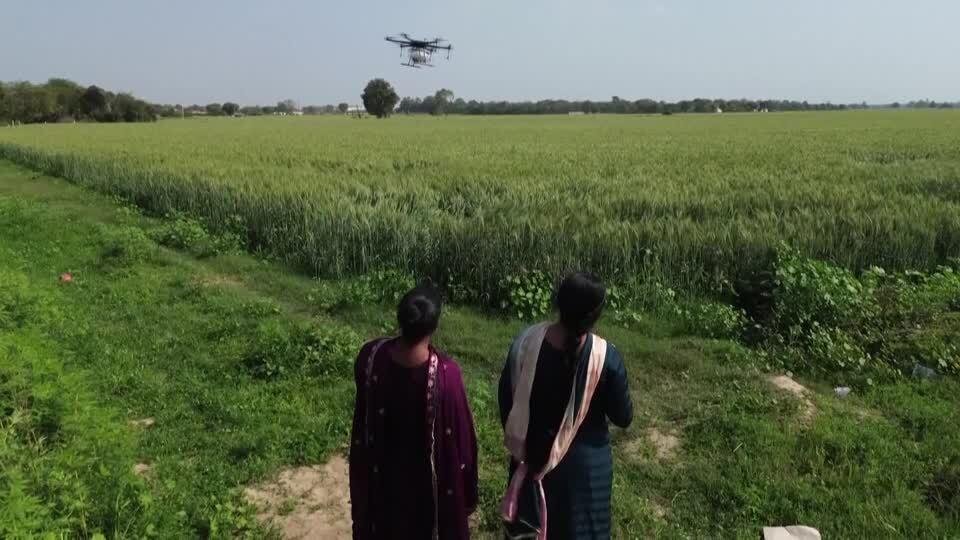
FARIDABAD, India, March 6 (Reuters) - A group of women in rural India has found an unexpected path to earn an income and some independence: operating drones for agricultural uses such as crop spraying. Prime Minister Narendra Modi's government launched the so-called "Drone Didi" or "Drone Sisters" initiative in 2023 and so far 500 drones have been distributed, the Agriculture Ministry said in parliament in December. The programme equips women-led self-help groups with drones to provide agricultural services, aiming to empower them and enhance agricultural efficiency. It has a target of distributing 15,000 such devices. Rupinder Kaur, a resident of the northern, breadbasket state of Punjab, enrolled in the programme in 2024 and uses industrial-sized drones weighing between 25 kg and 35 kg (55-77 lb) to spray pesticides and fertilizers on farmland. The task involves filling up canisters on the drones with the chemicals, and then manoeuvring the devices remotely over the fields to spray the crops. "This is not an easy task...especially for women who were (earlier) staying at home ... this work has increased respect for us in society and in the home and family," she told Reuters. The drones can cover up to 10 acres (4 hectares) of land per day, the women said, from which they can earn up to 4,500 rupees ($52). Farmers say the devices also help save time, eliminate the need to find labourers to do such work on the ground, and remove the dangers posed by scorpions and other reptiles that may be lurking in the fields. "Our house runs well from the earnings," said Rajbir Kaur, another drone pilot. "I can give myself and my children a good education and a good career." ($1 = 87.0240 Indian rupees) Sign up here. https://www.reuters.com/world/india/indian-women-pilot-farm-drones-earning-living-some-independence-2025-03-06/
2025-03-06 07:25
Mexico wins one-month tariff exemption; nothing yet for Canada US to exert maximum pressure on Iran via sanctions Putin says any Ukraine peace deal must ensure Russia's security HOUSTON, March 6 (Reuters) - Oil settled largely unchanged in choppy trade on Thursday, with global benchmark Brent closing below $70 a barrel under pressure from tariffs between the U.S., Canada, and China, and plans by OPEC+ to raise output. Brent futures settled up 16 cents, or 0.2%, at $69.46 a barrel. U.S. West Texas Intermediate crude futures gained 5 cents, or 0.1%, to settle at $66.36. On Wednesday, Brent hit $68.33, its weakest since December 2021, after a larger-than-expected build in U.S. crude inventories further pressured oil after OPEC+'s hike in output quotas for the first time since 2022 and new U.S. tariffs enacted on Tuesday. "The OPEC news of adding barrels next month, along with a Russian/Ukraine peace deal now looking more promising and a flip/flop of tariffs is keeping crude in a volatile trade," said Dennis Kissler, senior vice president of trading at BOK Financial. Russia said it will seek a peace deal , opens new tab in Ukraine that safeguards its own long-term security and will not retreat from the gains it has made in the conflict. On Thursday, U.S. President Donald Trump exempted goods from Canada and Mexico under a North American trade pact for a month from the 25% tariffs that he imposed this week, the latest twist in fast-shifting trade policy that has whipsawed financial markets and business leaders. A source familiar with the discussions said that Trump could eliminate the 10% tariff on Canadian energy imports, such as crude oil and gasoline, that comply with existing trade agreements. Chinese officials have flagged that more stimulus is possible if economic growth slows, seeking to support consumption and cushion the impact of an escalating trade war with the U.S. Helping boost prices, meanwhile, the U.S. will exert a campaign of maximum pressure of sanctions on Iran to collapse its oil exports and put pressure on its currency, Treasury Secretary Scott Bessent said. The U.S. is reviewing all existing sanctions waivers that provide Iran any degree of economic relief and urging the Iraqi government to eliminate its dependence on Iranian sources of energy as soon as possible, State Department spokesperson Tammy Bruce said. Downside risks on demand will likely be greater than supply-side risks at this point with the additional oil coming from OPEC, said Scott Shelton, energy analyst at TP ICAP. "Spare capacity can offset supply losses, but there is no way to fix demand, which should flounder under the weight of sanctions and underperform," Shelton added. The OPEC+ producer group, comprising the Organization of the Petroleum Exporting Countries and allies including Russia, decided on Monday to increase output for the first time since 2022. One OPEC+ delegate, commenting on the market's reaction to Monday's decision, said the price drop looked overdone and hoped that the market was now on a "gradual recovery." Sign up here. https://www.reuters.com/business/energy/oil-steadies-after-multi-day-plunge-traders-wary-tariff-supply-impacts-2025-03-06/
2025-03-06 07:24
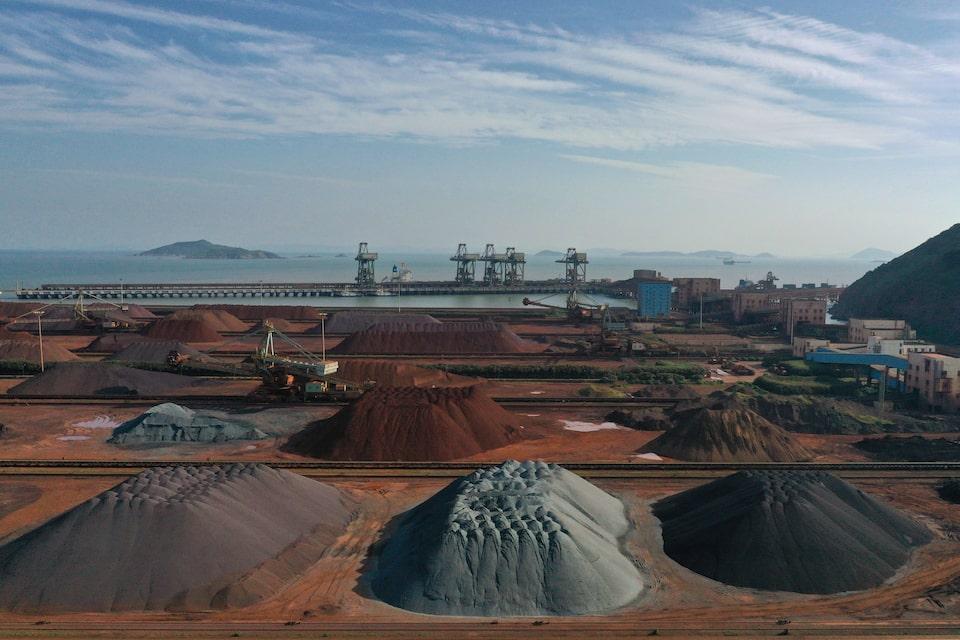
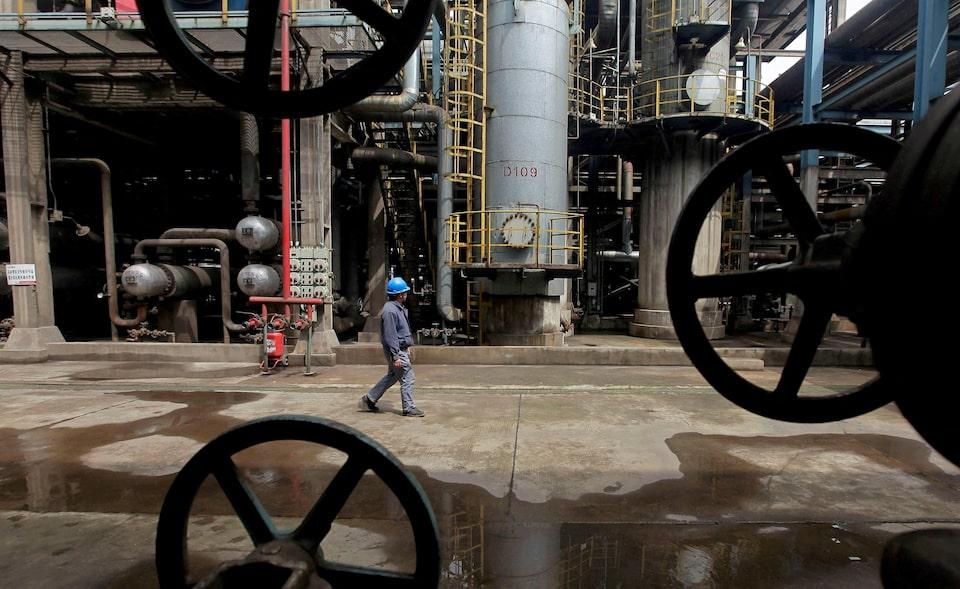
SINGAPORE, March 6 (Reuters) - Iron ore futures prices declined on Thursday as trade concerns and reports of steel production cuts outweighed additional stimulus measures to boost consumption in China. The most-traded May iron ore contract on China's Dalian Commodity Exchange (DCE) closed down 0.45% at 773 yuan ($106.78) a metric ton. The benchmark April iron ore on the Singapore Exchange edged 0.49% higher to $100.25 a ton as of 0708 GMT. "A trade war would be a challenge for the market, as a loss of export-driven demand in China could hurt iron ore demand," said ANZ analysts. China unlocked more fiscal stimulus on Wednesday, promising greater efforts to support consumption and cushion the impact of an escalating trade war with the United States. Washington has so far added an extra 20% on existing tariffs for Chinese goods, with the latest 10% increment enforced on Tuesday, drawing Beijing's retaliation. Still, Beijing's renewed emphasis on consumption is not being matched by policy firepower, with the immediate steps to boost household demand underwhelming some economists. Meanwhile, in March, the average daily molten iron output is expected to increase to about 2.329 million tons, broker Hexun Futures said, adding that demand for the steelmaking material has recovered in China. Still, news of steel production cuts intensified the downward pressure on prices, Hexun said. China will restructure its giant steel industry through output cuts, although it did not announce any target in its most recent intervention to address overcapacity in the sector. Other steelmaking ingredients on the DCE lost ground, with coking coal and coke down 0.42% and 0.58%, respectively. Other steel benchmarks on the Shanghai Futures Exchange climbed. Rebar gained about 0.4%, hot-rolled coil edged 0.35% higher, stainless steel was up 1.28%, while wire rod ticked up 0.09%. ($1 = 7.2390 Chinese yuan) Sign up here. https://www.reuters.com/markets/commodities/iron-ore-range-bound-traders-weigh-beijing-stimulus-tariff-woes-2025-03-06/