2025-03-06 07:17
March 6 (Reuters) - Harbour Energy (HBR.L) , opens new tab swung to an annual loss in 2024 as the UK's windfall tax for energy companies wiped out most of its pre-tax earnings, the company said on Thursday. North Sea producers have warned that the UK's windfall tax on the industry, first imposed in the wake of a surge in energy prices in 2022, can dent their financial performance. In October, Britain's Labour government upped its windfall tax on oil and gas producers to 38% from 35% and extended the levy to March 2030, taking the headline tax rate on the sector to 78% - among the highest in the world. Harbour said its tax spend increased to $1.31 billion in 2024 from year-ago $571 million. The largest British North Sea oil and gas producer's loss after tax came in at $93 million for the year ended December 31, 2024, compared with a profit of $45 million in 2023. Sign up here. https://www.reuters.com/business/energy/uks-harbour-energy-posts-annual-loss-hurt-by-taxes-2025-03-06/

2025-03-06 06:52
MUMBAI, March 6 (Reuters) - Indian central bank's latest bond purchase and FX swaps underscore its intention to keep banking system liquidity in a surplus, which should help banks to pass on policy rate cuts to consumers, analysts said. Comfortable liquidity positions would also lead to a steepening in the yield curve, which will be beneficial for the money market as well as corporate debt instruments, analysts added. WHY IT'S IMPORTANT India's banking system liquidity has remained in deficit since mid-December, and the heavy fund infusion indicates the RBI is not comfortable with the deficit as it has embarked on a rate-cutting cycle. Market participants say comfortable liquidity conditions are a prerequisite for effective monetary policy transmission and would aid growth. CONTEXT The RBI will conduct open market bond purchases worth 1 trillion rupees ($11.49 billion) over the next two weeks, followed by $10 billion of a three-year FX swap. These measures are the latest tool in the central bank's effort to boost rupee liquidity, which had drained over last few months due to heavy FX intervention. MARKET REACTION Indian benchmark 2034 bond yield eased two basis points to 6.68% on Thursday, while other bond yields also eased after the announcement. The one-year dollar-rupee forward premium declined about 14 basis points. KEY QUOTES "The recent measures show the RBI's bias towards ensuring adequate liquidity in order to align with the rate-cutting cycle," Kanika Pasricha, chief economic advisor at Union Bank of India. "The RBI has been forthcoming in announcing measures, which suggests the RBI could want the system to move into a surplus rather than remaining in deficit," Nomura Asia rates strategist Nathan Sribalasundaram said. The market should start pricing the weighted average call rate to trade with a small premium of about 5 bps over the repo rate before converging and/or falling below it, after the RBI dividend in May, Sribalasundaram added. GRAPHIC BY THE NUMBERS ($1 = 87.0120 Indian rupees) Sign up here. https://www.reuters.com/world/india/india-central-bank-signals-intent-ensure-banking-liquidity-surplus-analysts-say-2025-03-06/
2025-03-06 06:52
China sets 2025 grain, oils stockpile budget of $18.12 billion Allocates $7.44 billion in agricultural insurance subsidies Raises 2025 grain output target to around 700 million tons BEIJING, March 5 (Reuters) - China raised its annual grain production target on Wednesday to around 700 million metric tons and expanded its agriculture stockpile budget, as it pushed for stronger measures to safeguard food supplies as tensions with trade partners intensify. The world's largest importer of farm goods brought in more than 157 million metric tons of grains and soybeans last year but is seeking to cut its heavy dependence on supplies that mostly come from the United States and Brazil. Beijing raised its 2025 budget for stockpiling grain, edible oils and other materials by 6.1% from a year ago to 131.66 billion yuan ($18.12 billion), according to an official report. It also allocated 54.05 billion yuan of subsidies for agricultural insurance premiums. The 2025 target for domestic grain output set the bar higher compared to its 2024 target of 650 million tons, after a harvest of a record 706.5 million tons last year. "With the implementation of the food crop production strategy of improving farmland management and increasing the application of technology as well as the improvement of our ability to guarantee food security, we have the foundation and support necessary to attain this goal," according to a National Development and Reform Commission report. The output goal is a "bottomline goal" and not ambitious given the record harvest last year, said Even Pay, an agriculture analyst at Trivium China. China has a much more ambitious goal of raising production by 50 million tons over 2023 levels by 2030, which equates to some 745 million tons in harvest, she said. Beijing also signalled that it will provide more support for cattle and dairy industries which have faced oversupply issues. The report also said China will advance the construction and improve the connectivity of storage facilities for grain, cotton, sugar, meat and fertilizer. "China's increase in its stockpile budget is part of efforts to establish a minimum baseline or to prevent food reserves from falling to a certain level," said Genevieve Donnellon-May, a researcher at the Oxford Global Society. The increased measures to safeguard food security underscore Beijing's efforts to prepare for a long trade war with the U.S. and increasingly complex geopolitical challenges, she said. In addition to U.S. tariff issues, China has also launched trade investigations over pork and dairy imports from the European Union and canola imports from Canada due to disputes over tariffs on Chinese-made electric vehicles. The total value of China's agriculture imports fell 8% in 2024 to $215 billion, according to customs data. ENCOURAGING FARMERS China, which imports about 80% of the soybeans it consumes, said it will expand the coverage of full-cost and production income insurance for soybeans, a move that will encourage farmers to plant the oilseed. At the same time, it said it will continue efforts to lower the use of soybean meal in livestock feed. China has for years explored the use of low-protein animal feed or alternative meals like rapeseed or cotton to reduce demand for imported beans. The report said China will expand the cultivation of oilseed crops and stabilise the production of sugar crops, cotton and natural rubber. Moreover, it said China will refine the grain pricing mechanism, and implement a minimum purchase price policy for rice and wheat. ($1 = 7.2656 Chinese yuan renminbi) Sign up here. https://www.reuters.com/world/china/china-raises-2025-budget-grain-stockpiling-targets-higher-domestic-output-2025-03-06/

2025-03-06 06:43
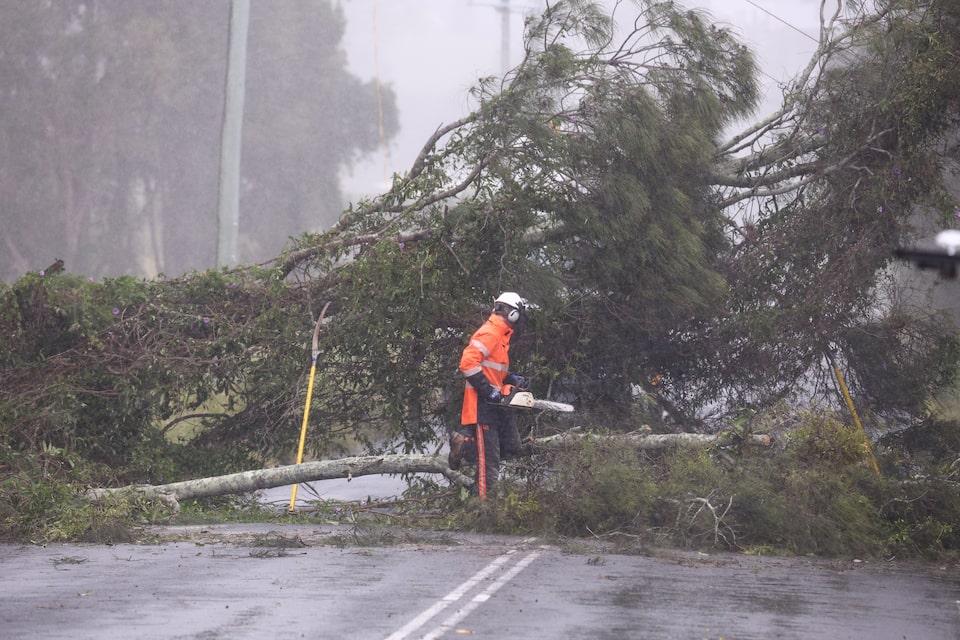
Weather bureau revises landfall forecast to Saturday from Friday Airports, schools, public transport shut down Residents sandbag homes ahead of expected flooding Giant waves erode beaches Cyclone's stalling may cause prolonged heavy rain SYDNEY, March 6 (Reuters) - Cyclone Alfred stalled off Australia's east coast on Thursday as officials shut airports, schools and public transport while residents stockpiled supplies and sandbagged homes against flooding expected when the category-two storm hits. The storm is now likely to make landfall by Saturday morning near Brisbane, Australia's third-most populous city, the Bureau of Meteorology said in its latest update, compared with a prior projection of landfall by early Friday. The storm's destructive reach will stretch across the border regions of the states of Queensland and New South Wales, the bureau said, bringing heavy rain, flooding and damaging wind. "Alfred is behaving at the moment like a completely unwanted houseguest. It's told us it's going to be late but linger even longer," New South Wales Premier Chris Minns told reporters. "Unfortunately that means the window for destruction in our community - heavy rains, winds, powerful surf - is longer than we would have otherwise liked." Storm warnings on Thursday stretched for more than 500 kms (311 miles) across the northeast coast, as huge waves whipped up by the cyclone eroded beaches, and officials urged residents in flood-prone areas to evacuate soon. Prime Minister Anthony Albanese said the defence force would be ready to support emergency services. Heavy rain from the weather system has already drenched some regions, said Dean Narramore, forecaster at Australia's weather bureau. Narramore said the cyclone's stalling could result in "a longer and prolonged period of heavy rainfall, particularly in northern New South Wales" leading to life-threatening flash flooding. New South Wales resident Sara Robertson and her family has moved all their valuables from their home in the rural town of Murwillumbah to a motel ahead of the storm. "I'm glad we've got a little bit more of a breather, feeling very tired today and we still have a lot to do," Robertson told ABC News after moving computers and electronics into the motel. More than 5,000 properties in southeast Queensland and thousands in northern New South Wales are without power as officials warned there would be more outages when the wind speed increases. Brisbane airport said it will suspend operations around 4 p.m. (0600 GMT) on Thursday but keep its terminals open for defence operations. Qantas Airways (QAN.AX) , opens new tab said its international operations from Brisbane would remain suspended until Saturday noon and domestic flights until Sunday morning. More than 1,000 schools in southeast Queensland and 250 in northern New South Wales were closed on Thursday, while public transport in Brisbane has been suspended. Alfred has been called by officials a "very rare event" for Brisbane, Queensland's state capital, with the city last hit by a cyclone more than half a century ago in 1974. The city of around 2.7 million had near misses from cyclones in 1990 in 2019. Sign up here. https://www.reuters.com/business/environment/cyclone-alfred-stalls-off-australias-east-residents-sandbag-homes-transport-2025-03-06/
2025-03-06 06:43
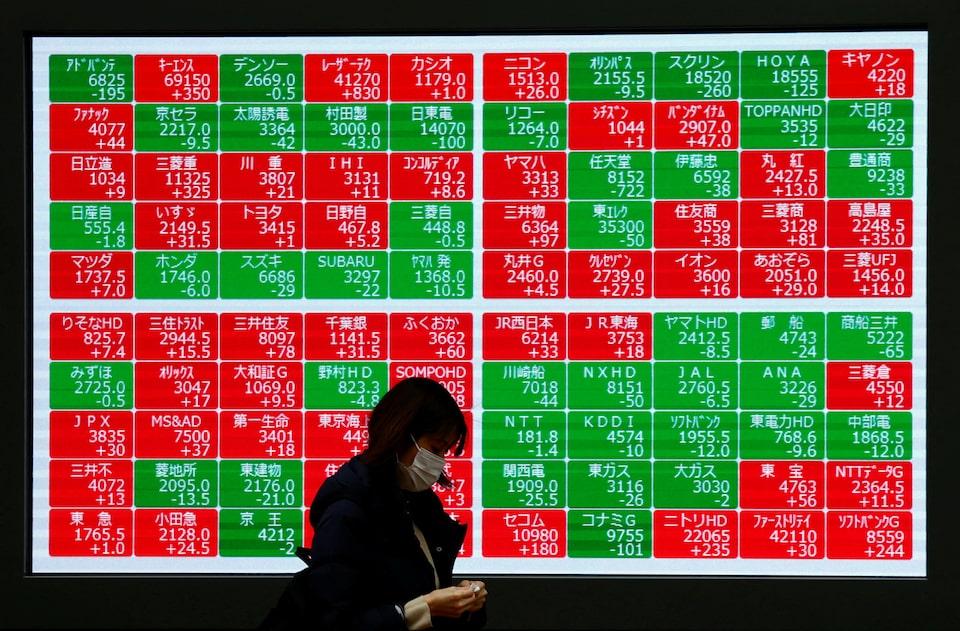
Bund yields edge higher again after biggest jump since 1990s Euro hits new 4-month high after ECB news U.S. stocks end sharply lower NEW YORK, March 6 (Reuters) - Stock indexes fell sharply and the dollar eased on Thursday, with the Nasdaq confirming it has been in a correction since peaking last December, as more announcements from U.S. President Donald Trump on tariffs fueled investor uncertainty. The global bond market selloff continued, a day after the 10-year German Bund yield saw its biggest rise since the 1990s. Trading was volatile as investors tried to stay on top of tariff headlines. In the latest twist in his fast-changing trade policy, Trump on Thursday exempted goods from both Canada and Mexico under a North American trade pact for a month from the 25% tariffs that he had imposed earlier this week. The 25% U.S. tariffs on imports from Mexico and Canada were imposed on Tuesday along with fresh duties on Chinese goods. "Trump has been very confusing about these tariffs. One day they're on and the next day they're off for a month," said Tim Ghriskey, senior portfolio strategist at Ingalls & Snyder in New York. "He did warn us that there was going to be some pain initially here, and the market doesn't like pain," he said. With Thursday's 2.6% decline, the Nasdaq was down a total of 10.4% from its record high close on December 16, meeting a widely used definition of a correction. The Cboe Volatility index (.VIX) , opens new tab rose to 24.87, its highest closing level since December 18. Adding to the negative tone, an index of chipmakers (.SOX) , opens new tab dropped 4.5% after a sales forecast from Marvell Technology (MRVL.O) , opens new tab failed to excite investors. Marvell shares fell 19.8% on the day. The Dow Jones Industrial Average (.DJI) , opens new tab fell 427.51 points, or 0.99%, to 42,579.08, the S&P 500 (.SPX) , opens new tab fell 104.11 points, or 1.78%, to 5,738.52 and the Nasdaq Composite (.IXIC) , opens new tab fell 483.48 points, or 2.61%, to 18,069.26. MSCI's gauge of stocks across the globe (.MIWD00000PUS) , opens new tab fell 8.33 points, or 0.97%, to 850.38. The pan-European STOXX 600 (.STOXX) , opens new tab index slipped 0.03%. The U.S. dollar weakened while the safe-haven yen and Swiss franc advanced as jittery investors turned risk-averse and worries mounted over the potential impact of Trump's tariffs on the U.S. economy. In afternoon trading, the dollar was down 0.9% against the yen to 147.65 yen , hitting a five-month low earlier of 147.31. Against the Swiss franc, the dollar dropped to a three-month low of 0.8828 franc , and last traded down 0.9% at 0.8827. The single European currency was last down 0.05% at $1.0785, after earlier hitting a four-month high of $1.0854. The euro was on track for its biggest weekly jump since May 2009. The European Central Bank cut interest rates as expected and also said monetary policy was becoming less restrictive, which traders took to mean another cut in April might not be a given. Ten-year German Bund yields were last up 10 basis points at 2.884%, having jumped as high as 2.929% on Wednesday. German lawmakers are expected to debate a 500-billion-euro infrastructure fund and sweeping changes to state borrowing rules to fund defence from March 13. The yield on benchmark U.S. 10-year notes rose 1.5 basis points to 4.282%, from 4.267% late on Wednesday. Investors also assessed the latest batch of economic data for signs of cracks in the economy ahead of Friday's key monthly U.S. payrolls report. Weekly initial U.S. jobless claims fell by 21,000 to a seasonally adjusted 221,000, according to the Labor Department, a bigger decline than expected by economists polled by Reuters, who had forecast 235,000 claims. By contrast, global outplacement firm Challenger, Gray & Christmas earlier in the day said that planned job cuts vaulted 245% to 172,017 last month, the highest level since July 2020 when the economy was in the midst of the COVID-19 pandemic. Also in focus were comments by European leaders, who said they would stand by Ukraine and spend more on defense in a world upended by Trump's reversal of U.S. policies. Trump's suspension of military aid to Kyiv this week fanned fears the region can no longer rely on U.S. protection in place since World War Two. Oil prices were largely unchanged, with Brent futures rising 16 cents, or 0.2%, to settle at $69.46 a barrel. U.S. West Texas Intermediate crude futures gained 5 cents, or 0.1%, to settle at $66.36. Spot gold fell 0.1% to $2,915.83 an ounce. Sign up here. https://www.reuters.com/markets/global-markets-wrapup-1-2025-03-06/
2025-03-06 06:41
ECB cuts rates, but raises near-term inflation forecast Euro posts largest weekly gain since March 2020 U.S. dollar index hovers at 4-month lows NEW YORK, March 6 (Reuters) - The safe-haven yen and Swiss franc climbed in volatile trading on Thursday, while the dollar slumped against most currencies, as jittery investors turned increasingly risk-averse amid an extended sell-off on Wall Street triggered by an escalating trade war initiated by the United States. Investors are worrying about the potential impact of the Trump administration's big tariffs on the U.S. economy. The dollar trimmed losses after U.S President Donald Trump on Thursday exempted imports from Canada and Mexico from his 25% tariffs for a month, two days after imposing them, the latest unexpected twist in his trade policies that have unsettled investors. "The narrative has shifted on tariffs, which are now viewed as a hindrance to economic growth," said Eugene Epstein, head of trading and structured products, North America, at Moneycorp in New Jersey. "The market is starting to see that there are a lot of U.S. companies dependent on exports and imports. If our trade numbers decrease overall, that's probably not good for the economy, which could slow down as a result." The yen and Swiss franc typically benefit in times of risk aversion. In afternoon trading, the dollar fell 0.6% to 147.96 yen , hitting a five-month low earlier of 147.31. Against the Swiss franc, the dollar dropped to a three-month low of 0.8825 franc , and last traded down 0.8% at 0.8838. The dollar also weakened against the Canadian and New Zealand dollars , as well as the biggest emerging market currencies, such as the Mexican peso , South African rand , and the Turkish lira . The sell-off in U.S. equities and safe-haven buying of the yen and Swiss franc has mostly overshadowed the euro's performance on Thursday. The euro touched a four-month peak against the dollar after the European Central Bank cut interest rates for the sixth time in nine months, as expected, but revised higher its near-term inflation forecast. The single European currency rose to its highest since November, of $1.0854, before easing to $1.0784, little changed on the day. The euro has gained about 4% so far this week, its biggest weekly jump since March 2020. The shared currency has also benefited from Germany ramping up spending, with a massive 500 billion euro ($540.90 billion) special fund sought for infrastructure and plans to increase defense investment shackled by rigid borrowing rules. Hefty government spending, which can be supportive for growth overall, can also exacerbate price pressures. The ECB on Thursday raised its inflation forecast to 2.3% this year for the euro zone, above the 2.1% seen three months ago. Measures of longer-term inflation in the euro zone have already surged from around 2.05% early this week to 2.24% by Thursday, an unusually large shift. Jan Felix Gloeckner, senior investment specialist, at Insight Investment wrote in emailed comments about a shift in the ECB's tone suggesting a possible slowing down of policy easing. "Short-term inflation forecasts pushed upwards, while the Bank (ECB) warned that policy was becoming 'meaningfully less restrictive'," Gloeckner said. "This was taken by markets as meaning that the easing cycle will slow, with less than two more cuts now priced in by year end." GERMANY'S SPENDING PLAN IMPACT A big focus for investors is the impact of Germany's huge spending plan on ECB monetary policy. ECB President Christine Lagarde, in a press conference after the rate decision, said the spending proposals would boost European growth. But the ECB needed to be "attentive, vigilant" and understand how it was going to work, she added. "What the timing will be, what the financing will be so that we can then draw the conclusions ... and what impact it would have eventually on inflation." Across the Atlantic, the dollar index, which measures the greenback against six peers, was on a four-day losing streak, falling to a four-month low. It was last down 0.1% at 104.20 . U.S. data on Thursday was mixed overall, providing more evidence of a looming slowdown. For instance global outplacement firm Challenger, Gray & Christmas said it tracked 62,242 announced job cuts by the federal government from 17 different agencies in February. Planned layoffs soared to 172,017 in February, partly reflecting federal government layoffs. These are numbers not seen since the last two recessions, Challenger said. Another report on Thursday showed a surge in imports in January as businesses rushed to bring in merchandise ahead of import duties, driving the trade deficit to a record high and putting trade on course to subtract from gross domestic product in the first quarter. The U.S. dollar dipped 0.2% against the Canadian currency to C$1.4312 . Canadian Prime Minister Justin Trudeau said on Thursday the trade war with the United States would continue for the foreseeable future. He said he would keep engaging with senior Trump administration officials about the tariffs on all Canadian imports. Sign up here. https://www.reuters.com/markets/currencies/euro-hits-4-month-peak-dollar-soggy-german-spending-tariff-reprieve-2025-03-06/