2025-03-06 05:01
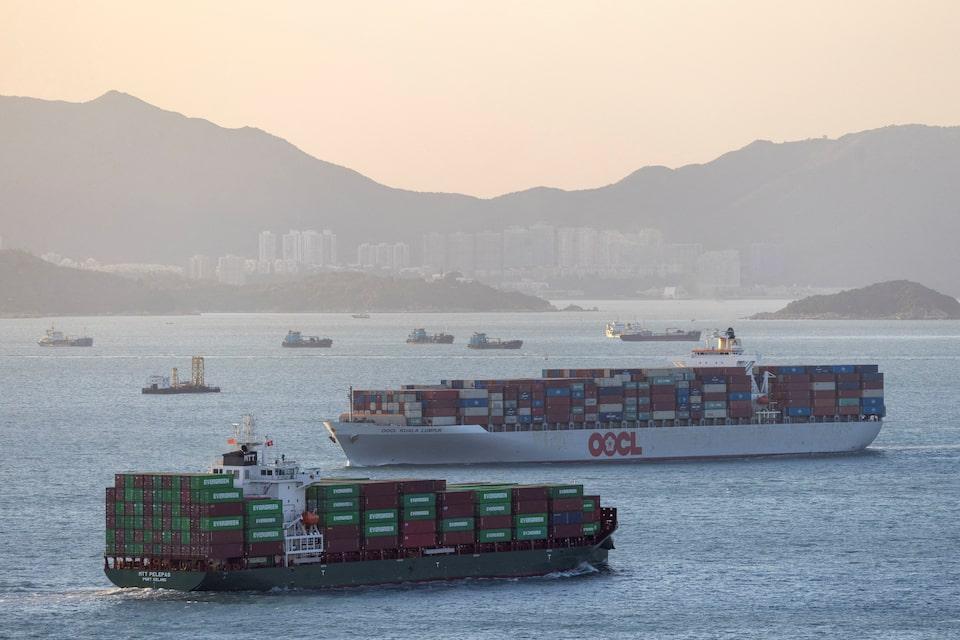
Shipowners cite fears of potential sanctions, commandeering of vessels in military crisis Moves come amid US scrutiny of role of China's merchant fleet in conflict HK govt says normal for shipping firms to review operations based on geopolitics, trade HONG KONG/LONDON, March 6 (Reuters) - Some shipping companies are discreetly moving operations out of Hong Kong and taking vessels off its flag registry. Others are making contingency plans to do so. Behind these low-profile moves, six shipping executives said, lie concerns that their ships could be commandeered by Chinese authorities or hit with U.S. sanctions in a conflict between Beijing and Washington. Beijing's emphasis on the role of Hong Kong in serving Chinese security interests and growing U.S. scrutiny of the importance of China's commercial fleet in a possible military clash, such as over Taiwan, are causing unease across the industry, the people told Reuters. The U.S. Trade Representative's office last month proposed levying steep U.S. port fees on Chinese shipping companies and others that operate Chinese-built vessels, to counter China's "targeted dominance" of shipbuilding and maritime logistics. Washington in September warned American businesses about growing risks of operating in Hong Kong, where the U.S. already applies sanctions against officials involved in a security crackdown. Hong Kong for more than a century has been a hub for shipowners and the brokers, financiers, underwriters and lawyers supporting them. Its maritime and port industry accounted for 4.2% of GDP in 2022, official data show. The city's flag is the eighth most-flown by ships worldwide, according to VesselsValue, a subsidiary of maritime data group Veson Nautical. Reuters interviews with two dozen people, including shipping executives, insurers and lawyers familiar with Hong Kong, revealed growing concern that commercial maritime operations could be ensnared by forces beyond their control in a U.S.-China military clash. Many pointed to China's intensified focus on national security objectives; trade frictions; and the broad powers of Hong Kong's leader, who is accountable to Beijing, to seize control of shipping in an emergency. "We don't want to be in a position where China comes knocking, wanting our ships, and the U.S. is targeting us on the other side," said one executive, who like others was granted anonymity to discuss a sensitive issue. The concerns of shipowners and their actions to curb exposure to Hong Kong have not been previously reported. The perceptions of risk have grown in recent years, coinciding with a tightening security climate in the Chinese-ruled city and tensions between the world's two largest economies. TURNING TIDE Commercial ships must be registered, or flagged, with a particular country or jurisdiction to comply with safety and environmental rules. Despite an influx of Chinese-operated ships onto Hong Kong's registry, the number of oceangoing vessels flagged in the city fell more than 8% to 2,366 in January from 2,580 four years earlier, according to independent analysis by VesselsValue. Government data show a similar drop. Among the ships that left Hong Kong's registry, 74 re-flagged to Singapore and Marshall Islands in 2023 and 2024, chiefly dry-bulk carriers designed to transport commodities such as coal, iron ore and grain. Some 15 tankers and seven container ships separately left the Hong Kong registry for those flags, according to VesselsValue. The outflow of ships since 2021 marks a reversal for Hong Kong's registry, which official data show grew roughly 400% in two decades following 1997. In response to Reuters questions, Hong Kong's government said it was natural for shipping companies to review operations given changing geopolitical and trade circumstances, and normal for the number of ships on registries to fluctuate in the short term. Hong Kong would "continue to excel as a prominent international shipping centre", a spokesperson said, outlining a range of incentives for shipowners, including profits tax breaks and green subsidies. Neither the laws governing the registry nor emergency provisions empowered Hong Kong's leader to commandeer ships to serve in a Chinese merchant fleet, the spokesperson said. The spokesperson declined to elaborate when asked about industry players' concerns over how colonial-era emergency powers might be applied during a U.S.-China conflict. The provisions allow the city's leader to make "any regulations whatsoever", including taking control of vessels and property. China's defence and commerce ministries didn't respond to questions about the role of a merchant fleet in Beijing's warfighting plans, the potential involvement of Hong Kong-flagged vessels, and the worries of commercial shipowners. The U.S. Treasury and Pentagon declined to comment about potential sanctions, shipping executives' concerns, and the role of Hong Kong-registered vessels in a Chinese merchant fleet. Lawyers and executives say ships can be re-flagged for various reasons through sale, charter or redeployment to different routes. Basil Karatzas, U.S.-based consultant with Karatzas Marine Advisors & Co, said Singapore had become the preferred domicile for companies with lesser exposure to Chinese shipping and cargo trade, because it offered many efficiencies, including its legal system, but less risk than Hong Kong. Singapore's Maritime and Port Authority said decisions about domiciles and flagging were based on commercial considerations. It had not observed any "significant change" in the number of Hong Kong-based shipping companies relocating operations or re-flagging vessels to Singapore. MERCHANT FLEET Hong Kong's shipping registry is widely regarded for its safety and regulatory standards, executives and lawyers say, allowing its ships to pass easily through foreign ports. Hong Kong's flag is now flown by many of China's state-owned international vessels. In a conflict, these tankers, bulk carriers and large container vessels would form the backbone of a merchant fleet serving the People's Liberation Army to supply China's oil, food and industrial needs, according to four security analysts and PLA military studies. By contrast, the U.S. has a small commercial shipbuilding industry and far fewer ships under its flag. While China's state-owned fleet is growing in size, it would be a target for the U.S. in a military clash, and Beijing would likely require other vessels to ensure supplies given its vast needs and reliance on international sea lanes, three analysts said. Strategic maritime operations have surfaced on President Donald Trump's radar. In his inauguration speech in January, Trump threatened to "take back" the Panama Canal, which he said had fallen under Chinese control. He did not give specifics, but Trump's remarks focused attention on two Panama ports operated by a subsidiary of Hong Kong conglomerate CK Hutchison Holdings (0001.HK) , opens new tab. The group, which didn't respond to questions about Trump's comments, agreed this week to sell a majority stake in the subsidiary to a consortium of investors led by BlackRock (BLK.N) , opens new tab, giving U.S. interests control over the ports. Trump told Congress on Tuesday that his administration will create an office of shipbuilding in the White House and offer new tax incentives for the sector. A U.S. congressional study in November 2023 stated that "cargo ships typically transport 90% of the military equipment needed in overseas wars". It noted that Chinese shipyards had 1,794 large oceangoing ships on order in 2022, compared with five in the U.S. Merchant vessels were vital in Britain's long-range mission to retake the Falkland Islands from Argentina in 1982. And UK-flagged commercial ships operating out of Hong Kong - many owned by local firms dependent on or controlled by China - supplied communist Hanoi during the Vietnam War, frustrating the U.S., declassified CIA documents show. The need for a strong Chinese merchant fleet to help build China's maritime power was outlined by President Xi Jinping in a Politburo study session in 2013. Over the last decade, Chinese government and military documents and studies have highlighted the dual-use military value of China's merchant ships. Regulations enacted in 2015 required Chinese builders of five types of commercial vessels - including tankers, container ships and bulk carriers - to ensure they could serve military needs, according to state media. Since then, the state-owned COSCO line has grown significantly. Public COSCO documents show China is placing political commissars - officers who ensure Communist Party goals are ultimately served - on nominally civilian ships. In January, the U.S. blacklisted COSCO subsidiaries for what it said were links to the Chinese military. COSCO did not respond to questions about its deployment of commissars, the U.S. restrictions and what role the company's ships, including Hong Kong-flagged ones, might play in a wartime scenario. 'REALLY DE-RISKED' Hong Kong remains an important base for shipowners, despite the geopolitical challenges. But some are quietly hedging their bets. One company founded in Hong Kong in 2014, London-listed Taylor Maritime (TMI.L) , opens new tab, now has a smaller presence in Hong Kong after making several strategic moves over the past few years. Since 2021, it has kept its ships flagged in the Marshall Islands and Singapore. Its offices are in London, Guernsey, Singapore, Hong Kong and Durban. The firm "really de-risked Hong Kong", said a person familiar with the matter, citing investors' concerns about a Chinese invasion of Taiwan and the Communist Party's increasing control of Hong Kong. A Taylor Maritime spokesperson said that initially, the company moved its Asia-based commercial teams to Singapore from Hong Kong to be closer to clients. With its acquisition of shipping company Grindrod, which had its Asia office in Singapore, Taylor Maritime expanded its operation there and relocated some functions from Hong Kong, to the point where Singapore became its primary Asia hub, the spokesperson added. Hong Kong-listed Pacific Basin Shipping (2343.HK) , opens new tab has traditionally flagged its 110-strong fleet of bulk carriers in Hong Kong but is drafting contingency plans to register them elsewhere as it gauges potential risks, said two people familiar with the matter. A Pacific Basin spokesperson said the company was constantly evaluating geopolitical risks but that its fleet was still flying the Hong Kong flag, "which at least for now outweigh(s) the challenges". "Being in Hong Kong positions us close to China's 40% share of global dry bulk import/export activity and close to Asia’s strong economic and industrial growth regions," the spokesperson said. Angad Banga, chairman of the Hong Kong Shipowners Association, said shipping firms adjusted contingency plans based on risk assessments in a complex geopolitical environment but he had not encountered concerns about the commandeering of vessels. "While some may be reviewing operational strategies, we as an organisation do not to see any widespread exodus or loss of confidence in Hong Kong," Banga told Reuters, adding that the city remained attractive for maritime commerce. Yet some industry figures described a broad unease about Hong Kong that was affecting their planning. Three lawyers said that until recent years, contracts hammered out for the growing number of ships built in China and financed by Chinese banks typically stipulated that they must fly the Hong Kong flag. But over the last two years, some have included a caveat demanded by owners to provide flexibility: a few other prominent flags are listed as options alongside Hong Kong, the lawyers said. Reuters could not independently verify the changes. Beyond China's military modernisation and its refusal to renounce the use of force to seize Taiwan, Beijing officials have stressed the importance of Hong Kong in fulfilling national security priorities. Three executives and two lawyers told Reuters that sweeping security legislation, first imposed on Hong Kong in July 2020 and strengthened in March 2024, had added to the dangers. The lawyers said any move by Hong Kong's leader to commandeer vessels in an emergency might prove difficult in practice, as locally registered ships often plied routes far from Hong Kong. But such long-standing powers now had to be viewed through a national security lens, they said. Some shipowners wouldn't object to an official request to turn over their vessels, either out of patriotism or the potential to profit from a crisis, one lawyer said. But "it is better not to be in a position where you might even be asked", said another veteran lawyer. "It was not an issue just a few years ago, in what is clearly a redrawn national security map." Sign up here. https://www.reuters.com/markets/shipping-firms-pull-back-hong-kong-skirt-us-china-risks-2025-03-06/
2025-03-06 03:29
India currently taxes car imports as much as as 110% Trump warns of reciprocal action against India's high auto tax Tesla wants to enter India, but Musk critical of high tariffs Indian carmakers open to tax cut but not zero, sources say NEW DELHI, March 5 (Reuters) - The United States wants India to eliminate tariffs on car imports under a proposed trade deal between the two nations, but New Delhi is reluctant to immediately bring down such duties to zero even as it considers further cuts, sources told Reuters. India's high auto tariffs will feature in formal talks for a bilateral trade deal that are yet to begin, said one of the three sources, all of whom were briefed on the matter, paving the way for American electric vehicle maker Tesla (TSLA.O) , opens new tab, which is gearing up for an India launch. Taxes on cars imported into India are as high as 110%, which Tesla chief Elon Musk has criticised as being among the steepest in the world. The EV giant last year shelved its plans to enter the world's third-largest car market for a second time. Musk has now found support from U.S. President Donald Trump, who has repeatedly railed against India's high taxes and in an address to Congress on Tuesday slammed the country's auto tariffs of more than 100%, threatening reciprocal action. "The U.S. ask is for India to bring tariffs down to zero or negligible in most sectors, except agriculture," the first source said, adding the expectation on New Delhi eliminating auto tariffs was "clearer than any other". A second source said India was "listening to the U.S." and had not pushed back, adding it would respond with its position on the tariffs after consulting local industries. The office of United States Trade Representative, India's trade ministry, and the foreign affairs ministry did not respond to requests for comment. TRADE WORTH $500 BILLION After a meeting between Trump and Indian Prime Minister Narendra Modi last month, the two nations agreed to resolve tariff rows and work on the first segment of a deal by the fall of 2025, aiming for bilateral trade worth $500 billion by 2030. Indian trade minister Piyush Goyal is on a nearly week-long trip to the U.S. and on Tuesday met U.S. Commerce Secretary Howard Lutnick to pursue trade talks. He is also expected to meet the United States Trade Representative Jamieson Greer. While India is unlikely to relent to U.S. demands to reduce tariffs on auto imports to zero immediately, it has been priming the industry to prepare for a lower tariff regime and be open to competition, said the first source and a fourth person. Last month, the Indian government met domestic carmakers to decide on any tariff cuts and understand their reservations over taxes going down to zero immediately, the first source added. India's 4 million-vehicles-a-year car market is one of the most protected in the world and its domestic players have previously argued against lowering tariffs, saying such a move would dry up investment in local manufacturing by making imports cheaper. The likes of Tata Motors (TAMO.NS) , opens new tab and Mahindra & Mahindra (MAHM.NS) , opens new tab have especially lobbied against lowering import tariffs on EVs, saying it would hurt the nascent sector in which they have invested heavily. Vowing to avoid protectionist signals on trade, India last month cut import tariffs on nearly 30 items including high-end motorcycles and said it will review surcharges on luxury cars. Sign up here. https://www.reuters.com/business/us-eyes-zero-tariff-cars-india-trade-deal-tesla-entry-nears-sources-say-2025-03-05/

2025-03-06 03:03
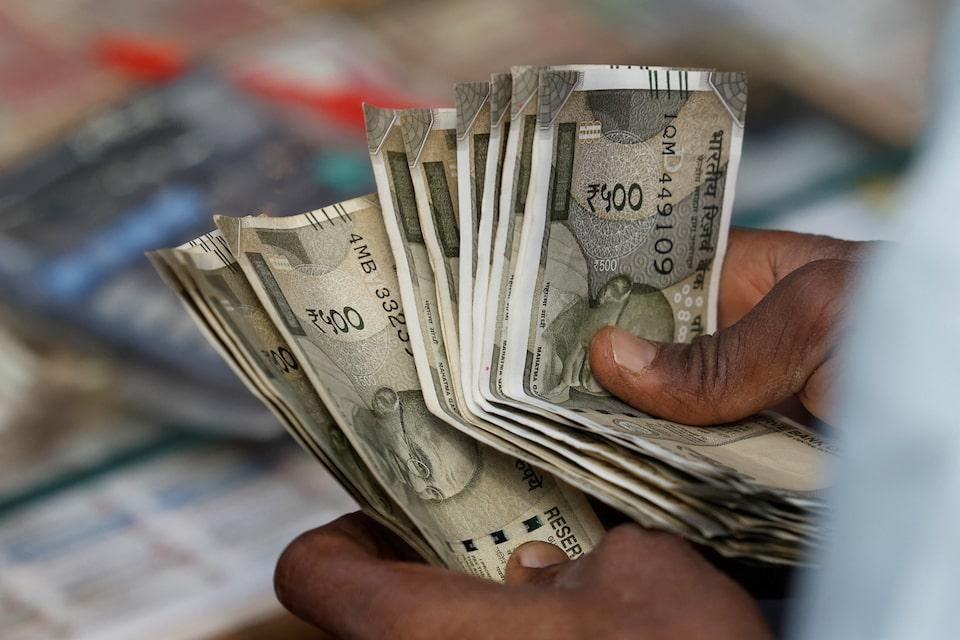
MUMBAI, March 6 (Reuters) - The Indian rupee is likely to inch up at open on Thursday, adding to the previous day's advance, spurred by the dollar's decline on worries that growth in the world's largest economy is slowing. The one-month non-deliverable forward indicated that the rupee will open at 86.88-86.90 to the U.S. dollar compared with its previous close of 86.9550. The rupee rose 0.2% on Wednesday, its biggest one-day jump in more than three weeks. The dollar index dropped 1%, taking its decline this week to 3%. "The dollar is all sorts of trouble.. U.S. growth risks are rising and the U.S. tariffs risk premium is being taken out," a currency trader at a Mumbai-based bank said. "This is obviously a welcome break for the rupee. However, I doubt that a substantial rally from here is likely." U.S. private payrolls growth slowed considerably in February, data released on Wednesday showed, indicating that the labour market is cooling off. The private payrolls data follows a string of disappointing data, including a slump in U.S. consumer confidence in January, along with a steep in retail sales. Monday's U.S. manufacturing activity data showed big falls in new orders and employment. "Markets have seemingly shifted their focus away from tariff rhetoric for now, and they appear to be concerned about a slowdown in the U.S. economy," MUFG Bank said in a note. The rally in the euro on the back of aggressive defensive and infrastructure spending plans by European leaders has further undermined the dollar. The euro has the highest weightage in the dollar index. Meanwhile, dollar-rupee forward premiums will be in focus, after the Indian central bank announced yet another buy-sell FX swap to shore up rupee liquidity. KEY INDICATORS: ** One-month non-deliverable rupee forward at 87.12; onshore one-month forward premium at 19.25 paisa ** Dollar index down at 104.22 ** Brent crude futures up 0.7% at $69.8 per barrel ** Ten-year U.S. note yield at 4.32% ** As per NSDL data, foreign investors sold a net $404.7 million worth of Indian shares on March 4 ** NSDL data shows foreign investors sold a net $44.6 million worth of Indian bonds on March 4 Sign up here. https://www.reuters.com/markets/currencies/rupee-extend-mini-rally-dollars-growth-worries-driven-slump-2025-03-06/

2025-03-06 00:40
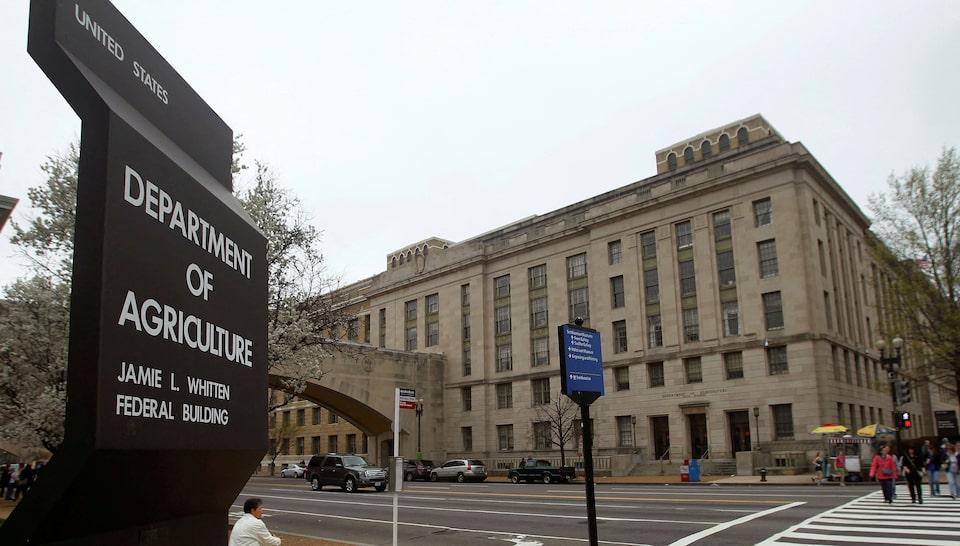
Merit System Protection Board halts firing of USDA employees Judge blocked Trump from removing board's Democratic chair Watchdog agency says it is investigating other firings March 5 (Reuters) - A U.S. board that reviews the firings of federal employees on Wednesday ordered the U.S. Department of Agriculture to temporarily reinstate thousands of workers who lost their jobs as part of President Donald Trump's layoffs of the federal workforce. Cathy Harris, a member of the Merit System Protection Board, ordered the USDA to reinstate fired probationary employees for 45 days while a challenge to the terminations plays out. The decision , opens new tab was issued a day after a federal judge blocked Trump from firing Harris, a Democrat, and from removing her from her position with the board without cause before her term expires in three years. The administration is appealing that decision. "This is great news and needs to be done with all impacted agencies with similarly situated employees as fast as possible," said J. Ward Morrow, assistant general counsel at the American Federation of Government Employees, which represents some of the reinstated workers. Tanya Torst, who was fired from the U.S. Forest Service, a USDA agency, on February 15, said she would be thrilled to return to her former job fundraising for a group of six national forests, though she worried about talk of shutting federal offices nationwide and of further staff reductions later this month. "We're thrilled to come back, but we're hoping they have a place for us." The USDA and White House did not immediately respond to a request for comment. Trump and Elon Musk, the architect of the so-called Department of Government Efficiency, are spearheading an unprecedented effort to shrink the federal bureaucracy, including through job cuts. It's estimated that more than 20,000 federal employees, almost all probationary workers, have lost their jobs and another 75,000 have taken a buyout, out of the 2.3 million federal civilian workforce. Probationary workers typically have less than a year of service in their current roles, although some are longtime federal workers. Union efforts to contest the mass firings in federal court have faced procedural hurdles with judges questioning whether unions had standing to bring the cases or finding that they should have been brought to administrative boards like the MSPB. The merit board has proved to be a potential roadblock in the Trump administration's efforts to purge the federal workforce. The board hears appeals by federal government employees when they are fired or disciplined. It has already halted the firing of six other such employees at various agencies at the request of a watchdog agency whose leader, Hampton Dellinger of the U.S. Office of Special Counsel, was fired by Trump. Dellinger, an appointee of Trump's Democratic predecessor Joe Biden, on Tuesday revealed that he had asked the board to halt the firing of thousands of USDA employees. Dellinger argued that the Trump administration's firing of the probationary employees was done unlawfully and without regard to the workers' rights while circumventing regulations governing mass reductions in the federal workforce. Harris agreed, saying she found reasonable grounds to believe that the agency fired them in violation of federal law. The board ordered all probationary USDA employees terminated since February 13 to be temporarily reinstated. Dellinger in a statement welcomed the decision. He said his agency would continue investigating the firing of other federal probationary employees, and he called on federal agencies that had recently fired such workers to immediately reinstate them. "Voluntarily rescinding these hasty and apparently unlawful personnel actions is the right thing to do and avoids the unnecessary wasting of taxpayer dollars," he said. Trump removed Dellinger on February 7, but he was reinstated by a judge until a Washington federal appeals court on Wednesday allowed Trump to fire him. Dellinger told Reuters on Wednesday he was removed from his post shortly after the ruling, which is temporary while appeals court judges review the merits of the case. Sign up here. https://www.reuters.com/world/us/us-civil-service-board-reinstates-thousands-fired-usda-employees-2025-03-05/
2025-03-06 00:30
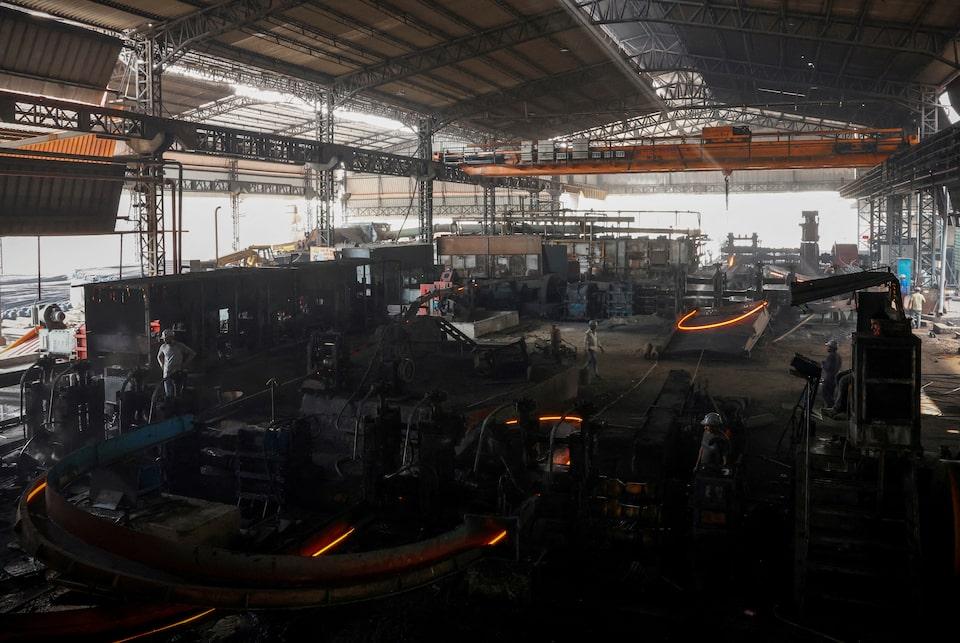
India's engineering to be hit by US tariffs, says trade body Exporters ask government to cut tariffs on certain US imports US 25% tariffs on steel, aluminium effective March 12 NEW DELHI, March 5 (Reuters) - India's small engineering goods exporters have urged the government to cut import tariffs on some U.S. goods to try and achieve more favourable trade terms as President Donald Trump prepares to implement new steel and aluminium duties, the head of an industry body said. The 25% U.S. tariffs on steel and aluminium imports, effective March 12, have raised Indian exporters' concerns about declining orders and rising costs. "Of India's $20 billion annual engineering goods exports, nearly $7.5 billion worth of shipments could be affected," said Pankaj Chadha, chairman of the Engineering Export Promotion Council, which represents more than 10,000 small exporters. The EEPC and other industry chambers have urged the government to cut tariffs on select U.S. goods with low inbound shipments, Chadha told Reuters on Wednesday. They expect that lowering such tariffs could prompt the Trump administration to offer favourable terms and move forward with a proposed bilateral trade deal. Trump has labelled India a high-tariff country and warned of "reciprocal tariffs" from early April. India's trade minister Piyush Goyal is in the U.S. for trade talks, aiming to negotiate potential tariff cuts as part of the proposed trade deal and to assess the impact of Trump's planned reciprocal tariffs. India could, for instance, cut import duty on U.S. steel scrap from 7.5% to nearly zero, and reduce tariffs on nuts, castings and forgings while offering concessions on selected agricultural and manufacturing items, Chadha said. Exporters also fear that India's planned safeguard duty of up to 14% on steel imports, aimed at protecting local steel manufacturers from cheaper Chinese imports, will drive up domestic prices and squeeze their margins. India's exports of engineering goods to the U.S. jumped 18% year-on-year in January to $1.62 billion, outpacing the sector's overall growth of 7.44% ahead of the tariffs, EEPC data showed. From April 2024 to January 2025, the first 10 months of the fiscal year, engineering exports to the U.S. rose by an annual 9% to $15.6 billion, driven by an increase in shipments of aircraft parts, electrical machinery, automobiles, industrial machinery and medical instruments. "The engineering industry faces major challenges, and the latest U.S. tariffs add pressure. Continued government support in export credit and technology is crucial for competitiveness," Chadha said. India's global engineering exports, which account for a quarter of total merchandise exports, rose to $9.42 billion in January from $8.77 billion a year earlier, though were lower than December’s $10.84 billion. Cumulative exports for April-January rose 9.82% year-on-year to $96.75 billion, EEPC data showed. Sign up here. https://www.reuters.com/world/india/indias-small-exporters-seek-import-duty-cuts-counter-us-steel-aluminium-tariffs-2025-03-05/
2025-03-06 00:18
BENGALURU, March 6 (Reuters) - The Indian rupee will weaken more against the U.S. dollar over the coming year than previously thought on escalating fears of a U.S.-led global trade war and a slowing domestic economy, a Reuters poll of FX analysts found. Analysts said expectations for a short and shallow interest rate-cutting cycle by the Reserve Bank of India are likely to exert further mild downward pressure on the rupee. While the greenback has dropped about 3% this year, the partially-convertible rupee has not made the same recovery, flipping from one of Asia's best-performing currencies in 2024 to one of the worst this year. Foreign investors have dumped over $14 billion of Indian shares from Mumbai's formerly high-flying stock market in just the first few months of this year. With no let-up in sight for U.S. President Donald Trump's appetite for threatening and levying tariffs on trading partners, and tensions with India likely, pressure on the rupee may persist. Already down over 1.6% this year, the rupee was forecast to drop over 1% to 87.88 per dollar in three months, according to a median forecast of 32 foreign exchange analysts in a March 3-5 Reuters poll. It will then trade at 87.92 in six months and down around 1.4% from now to 88.30 by end-February 2026, poll medians predicted. The currency fell about 3.0% in 2024. This marks one of the biggest downgrades for the three-month outlook in the FX poll in over a year. The currency declined for a seventh consecutive year in 2024, and if the latest forecasts hold, this downturn will mark the longest losing streak in over two decades. "Growth concerns, reciprocal tariffs and general U.S. trade policy fears are likely weighing on the rupee," said Saktiandi Supaat, head of FX research at Maybank. "We initially expected the rupee would be more resilient to potential Trump trade policies. However, the situation has changed with Trump's threats of reciprocal tariffs, which could potentially hurt India." The RBI has intervened in foreign exchange markets to prevent a steep slide in the rupee, but less so since late December 2024, following the appointment of new RBI Governor Sanjay Malhotra. Analysts said this has allowed the rupee to weaken further. "Despite a slowdown in inflows, substantial RBI intervention limited the depreciation pressures on the currency. Even when capital inflows improve, the RBI will absorb those inflows because they have to rebuild their FX reserve," said Gaura Sengupta, chief economist at IDFC First Bank. (For other stories from the March Reuters foreign exchange poll) Sign up here. https://www.reuters.com/markets/currencies/indian-rupee-poised-steeper-slide-trade-war-growth-fears-mount-2025-03-06/