2025-03-05 20:02
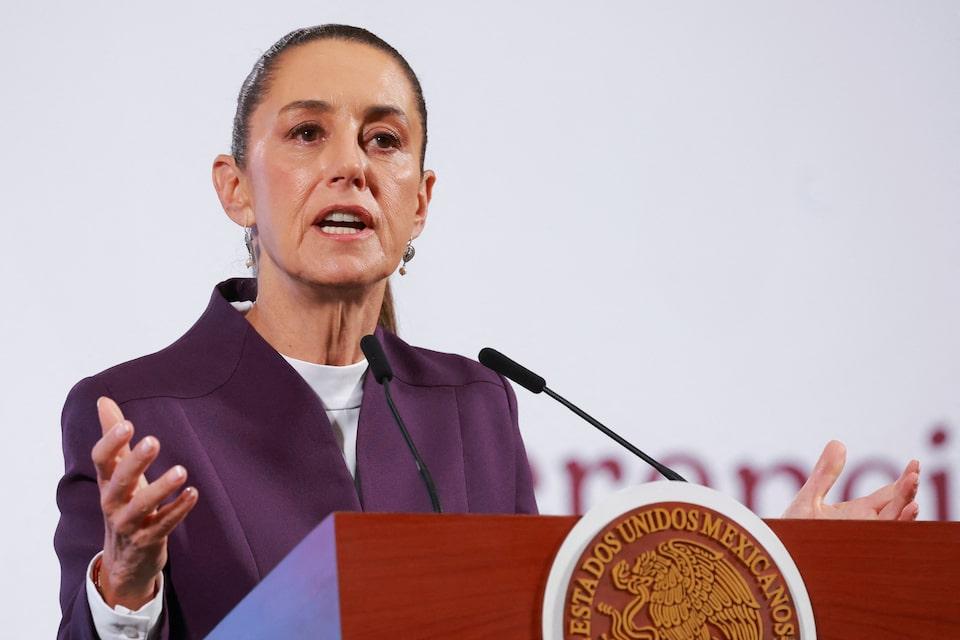
Trump's tariffs could cost Mexico $42 billion in exports, 4% GDP hit Sheinbaum's approval rises to 85% amid U.S. tariff tensions Mexican remittances act as economic buffer amid trade war MEXICO CITY, March 5 (Reuters) - President Donald Trump's across-the-board tariffs on goods from Mexico have not only left President Claudia Sheinbaum politically unscathed from likely economic damage but may strengthen her hand as Mexicans rally against perceived unfair treatment. Mexico's economy is undoubtedly vulnerable to a trade war. Trump's 25% tariffs on Mexican products could lead to export losses of as much as $42 billion and a potential 4% hit to GDP, according to a report by the Wilson Center, a Washington-based think tank. Trump's tariffs mark a turning point in U.S.-Mexico relations and more than 30 years of economic integration between the two countries. Both countries are each other's top trading partners on products ranging from avocados to the automobile sector. But Sheinbaum's popularity has risen in the face of Trump's on-again, off-again tariffs and perceived bullying, with her approval ratings reaching 85% according to one recent poll, up 15 points since October. In the U.S., meanwhile, a majority of Americans oppose new tariffs on imported goods, according to a recent Reuters/Ipsos poll. Part of her rise in popularity stems from her successful appeal to Mexican nationalism and pride in the face of U.S. aggression, fertile ground in a country with a fraught history with its northern neighbor. There is another factor at play too, according to analysts interviewed by Reuters: Simply put, Mexicans are used to more economic hardship than Americans. So while Mexicans may feel the greater brunt of a trade war, Americans are more likely to punish their politicians for inflation and other effects. "When you look at just macroeconomic indicators, Mexico's pain will statistically be greater," said John Feeley, a former career U.S. diplomat and ambassador with decades of experience in Latin America. But Mexicans are "used to a hell of a lot more pain than the average U.S. consumer," he added. "Donald Trump's curve is far less elastic than Sheinbaum's when it comes to voters getting mad at stubborn inflation." Feeley said Trump's tariff policies are "a recipe for an impoverished hermit kingdom" in an increasingly isolated United States. DRASTIC PRICE INCREASES Automakers on Tuesday warned the 25% tariffs on imports from Canada and Mexico would lead to drastic price hikes on certain models, while Target (TGT.N) , opens new tab CEO Brian Cornell told CNBC the retail giant would increase prices "over the next couple of days" on some seasonal grocery products such as avocados from Mexico. Trump has acknowledged previously that "we may have short term a little pain" as a result of the tariffs but that "people understand that," and longer term it will put the U.S. on a stronger footing. For Rafael Fernandez de Castro, director of the Center for U.S.-Mexican Studies at University of California San Diego, Mexico has "always seen the U.S. as a rival, as someone we cannot trust." "I believe the U.S. consumer is more sensitive to inflation than the Mexican," he said, explaining that increased welfare support in Mexico will help alleviate some of the impact. Similar support does not exist in the U.S., he pointed out. In keeping with her appeal to national pride, Sheinbaum said she will outline the Mexican reaction, including retaliatory tariffs, at a rally on Sunday in the capital's iconic Zocalo square, the heart of both the ancient Aztec empire and modern Mexico. But some analysts warned Sheinbaum needs to be careful. Geronimo Gutierrez, former Mexican ambassador to the U.S. during the 2017 and 2018 negotiation of the USMCA North American trade pact, said the political wave Sheinbaum is riding will only last so long, especially if the Mexican economy starts to tank. "It's not just gaining political points, but actually finding a solution. Those two don't always point in the same direction," he said. An extra safety net for Mexican families is the diaspora, particularly in the United States. Viri Rios, a Mexican political analyst based in Mexico City, described the remittances sent home by Mexicans working in the U.S. to their families back home as an "escape valve" that can alleviate economic woes, one that Americans don't have. Despite Trump's threats of mass deportations, remittances are still expected to be a significant contributor to Mexico's economy. "There is always the possibility to work in the U.S. or try to work in the U.S.," Rios said. "A large percentage of poor families are receiving remittances and that is a buffer in moments of crisis." Sign up here. https://www.reuters.com/world/americas/mexicos-sheinbaum-popularity-may-insulate-her-tariff-devastation-2025-03-05/
2025-03-05 19:34
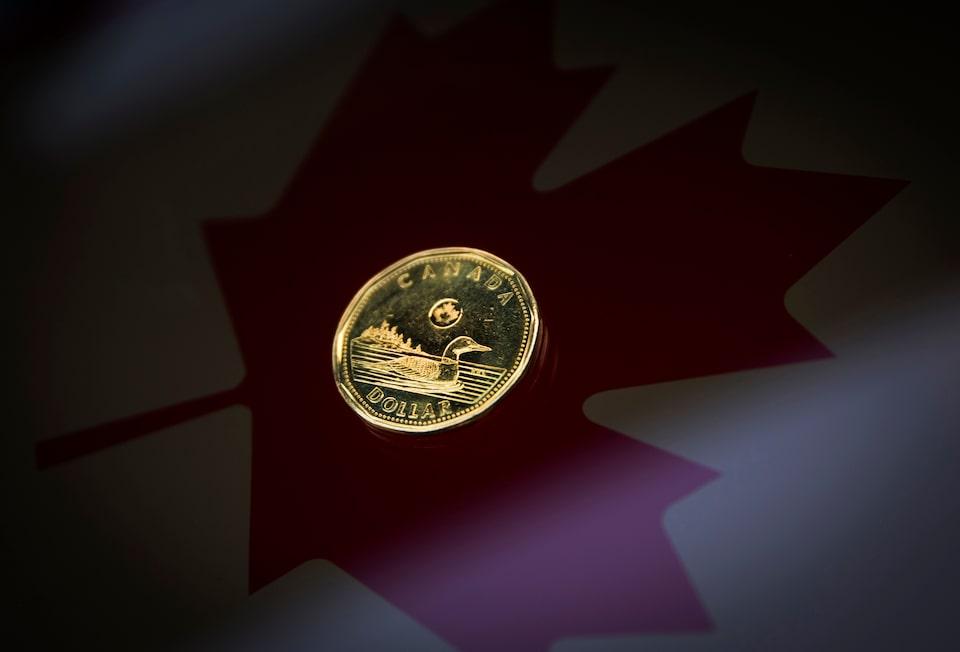
Canadian dollar gains 0.3% against the greenback Trades in a range of 1.4341 to 1.4449 Downturn deepens in Canada's services economy Bond yields trade mixed across steeper curve TORONTO, March 5 (Reuters) - The Canadian dollar strengthened against its U.S. counterpart on Wednesday, extending its rebound from a one-month low, as investors weighed prospects of Canada's receiving some relief from U.S. tariffs. The loonie was trading 0.3% higher at 1.4350 to the U.S. dollar, or 69.69 U.S. cents, after trading in a range of 1.4341 to 1.4449. On Tuesday, the currency touched its weakest intraday level since February 3, at 1.4543. U.S. President Donald Trump told Canadian Prime Minister Justin Trudeau that he had not done enough to curb fentanyl smuggling in a phone call that did not appear to convince Trump to lift the punishing 25% duties on all imports from Canada and Mexico. But later in the day, The White House said that Trump will exempt automakers from the tariffs for one month as long as they comply with terms of an existing free-trade agreement between the three North American countries. "The negotiation aspect is where we are now," said Amo Sahota, director at Klarity FX in San Francisco. "The market is trying to settle in and find out what the new normal is going to look like for the next few months." The downturn in Canada's services economy deepened in February as firms avoided committing to new business in anticipation of a trade war, S&P Global's Canada services PMI data showed. The U.S. dollar (.DXY) , opens new tab fell against a basket of major currencies after Germany proposed a 500-billion-euro ($531 billion) infrastructure fund, boosting European growth prospects and the euro . The price of oil , one of Canada's major exports, fell 2.9% to $66.28 a barrel after U.S. crude oil stockpiles posted a larger-than-expected build. Canadian bond yields were mixed across a steeper curve. The 2-year yield eased 1.5 basis points to 2.549% and the 10-year was up 2.7 basis points at 2.967%. Sign up here. https://www.reuters.com/markets/currencies/canadian-dollar-gains-investors-eye-tariff-negotiations-2025-03-05/
2025-03-05 19:34
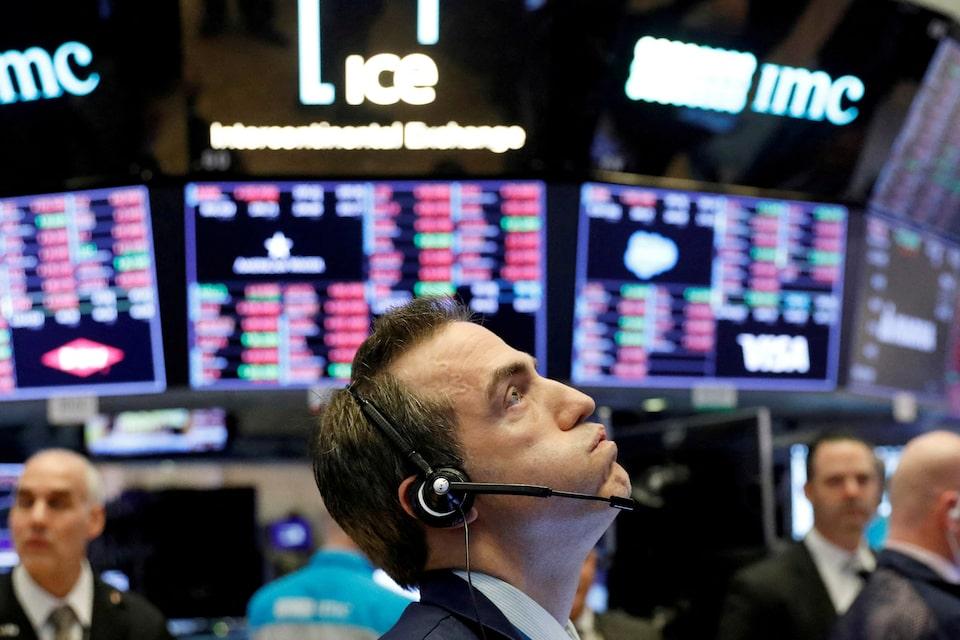
China, Europe react to US trade, foreign policy shifts US assets dented by trade war, weakening data European stocks, China tech, euro among winners LONDON, March 5 (Reuters) - A historic global trade war, a proposed $1.2 trillion European fiscal bazooka and the emergence of China as tech race leader are upending global flows of money, marking a potential turning point for investor capital away from the United States. China unlocked more stimulus on Wednesday and promised greater efforts to cushion the impact of an escalating U.S. trade war. Hours earlier, Germany's likely next government agreed on the biggest overhaul to fiscal policy since the country's reunification. In response, German bonds cratered in the most dramatic selloff in decades, as 30-year yields shot up by a quarter of a percentage point on Wednesday, with the selloff entering a second day on Thursday. Meanwhile, U.S. economic data points to a weakening, and the trade war unleashed by U.S. tariffs that kicked in this week is hurting sentiment inside and outside the world's biggest economy. For most of the last three years, investors had bet on "U.S. exceptionalism," with the country ahead of others in economic growth, stock prices, artificial intelligence and other areas. "The world now sees the U.S. model is changing, and saying - we need to adapt to that, the U.S. is no longer as reliable as a trade partner, we have to take care of our own needs on defence," said Tim Graf, head of macro strategy for EMEA at State Street Global Markets. The change in sentiment has fuelled a rare divergence in global stock markets. While the S&P 500 stock index is down 1.8% this year (.SPX) , opens new tab, European shares are up almost 9% (.STOXX) , opens new tab at a record high, and tech stocks in Hong Kong have surged almost 30% (.HSTECH) , opens new tab. The euro shot to a four-month high above $1.07 and a number of banks have raced to ditch their recent calls for a drop to parity against the dollar. Investors have chopped their bullish bets on the dollar in half to around $16 billion since U.S. President Donald Trump's inauguration in January, based on weekly data from the Commodity Futures Trading Commission . "Go back to December, this overwhelming consensus about U.S. exceptionalism, and U.S. was the only place to invest," said Dario Perkins, managing director of global macro at TS Lombard, an economic consultancy. "What's really happened here is this threat of tariffs and the aggressiveness of Trump is forcing other countries to spend more." In his first 44 days in office, Trump has ripped up the playbook on foreign relations in place since 1945, launched a global trade war by slapping tariffs on his country's largest trading partners and forced European leaders to drastically rethink how they fund their own security. Tariffs and trade uncertainty are causing the U.S. economy to lose steam, and companies more vulnerable to slower growth are starting to show the cracks. An index of U.S. banks (.SPXBK) , opens new tab has lost 8% in the last month, while its European equivalent (.SX7P) , opens new tab has jumped 15%. Investors have poured money into Europe to diversify away from the U.S. market. SPENDING BIG With Europe and China poised to spend big, the dollar is looking less appealing. "We had been long the dollar against the euro and closed that position over a week ago. It had lost impetus," said Mark Dowding, chief investment officer at RBC's BlueBay fixed income team. "The behaviour of Trump has diminished the appeal for U.S. assets in general." After investors dumped Chinese assets last year, as the economy slowed and affluent consumers were closing their wallets, the government took several steps to encourage domestic spending. But many still viewed China as uninvestable in the absence of a jumbo stimulus plan as strains lingered from a real-estate bubble that burst, hitting companies and homeowners. Almost uninterrupted outflows from China-focused funds after Trump's election win in November reversed in early February, drawing in some $3 billion since then, according to Lipper data. One of the great U.S. stock market draws has been its megacap tech shares. Nvidia (NVDA.O) , opens new tab, in particular, has become the poster-child of the AI investment revolution and one of the world's most valuable companies. There was little evidence to suggest any serious challenge to the dominance of Wall Street in the AI arms race until late January, when a previously unknown low-cost Chinese AI model burst onto the scene. The emergence of DeepSeek not only shattered assumptions about the cost and efficiency of the race to build out AI, but of how close behind Western companies China really was. Hong Kong-listed tech stocks (.HSTECH) , opens new tab have roared 24% higher since January 27, while a basket of U.S. tech megacaps has dropped 12%. Yang Tingwu, vice general manager of asset manager Tongheng Investment, said China's stock market is already immune to higher U.S. tariffs as the country's growing strength is underpinning domestic assets. "If you look at TikTok, Xiaohongshu or DeepSeek, China's technological clout is expanding," Yang said. American users have been rapidly moving to Xiaohongshu, a Chinese social media platform known as RedNote in English, in response to the impending sale of rival TikTok's U.S. operations. Still, for some, a resilient U.S. economy and relatively higher interest rates will see the dollar retain its appeal over time. "I do think there is a shift in play, we view it as a tactical versus a big secular shift," said Nate Thooft, CIO for Multi-Asset Solutions and Global Equities at Manulife Investment Management. He has recently upgraded a maximum underweight on European equities to neutral. Sign up here. https://www.reuters.com/markets/global-markets-investors-analysis-2025-03-05/
2025-03-05 17:36
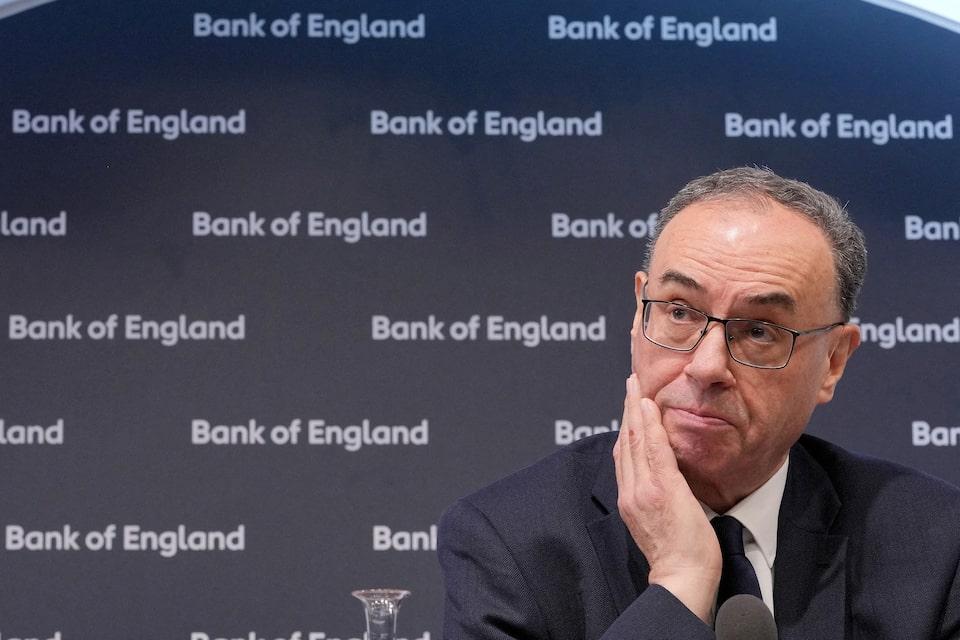
Bailey calls on US to support multilateral institutions US withdrawal from IMF would be 'very damaging', Bailey says MPC members stick to 'careful' and 'cautious' rate cut stances LONDON, March 5 (Reuters) - Bank of England Governor Andrew Bailey urged the United States on Wednesday to settle its concerns about the global economy through dialogue rather than the kind of import tariffs that U.S. President Donald Trump has imposed this week. Bailey, speaking to British lawmakers, said he had addressed the importance of open trade at a meeting of Group of 20 central bankers and finance ministers last week in South Africa that was not attended by new U.S. Treasury Secretary Scott Bessent. "If you think the world economy is somehow out of balance, the place to address those balances is in a multilateral forum, not by bilateral action," Bailey said in a question-and-answer session. Trump ordered 25% tariffs on imports from Mexico and Canada which took effect on Tuesday, along with fresh duties on Chinese goods, raising fears of a hit to global economic growth as well as a rise in inflation in the United States. Bailey, speaking to the Treasury Committee in parliament, said China was running a "very large" current account surplus and he highlighted the "quite radical" announcement by Germany - another big surplus country - of a 500-billion-euro ($538.6 billion) infrastructure and defence investment plan on Tuesday. "The US has to answer the question: yes, you've got a current account deficit. You've also got a very big fiscal deficit, and you're financing that current account by external capital," he said. U.S. withdrawal from the International Monetary Fund and the World Bank "would be very damaging for the world", Bailey added, noting Bessent had said he believed in a multilateral approach. RATE CUT 'CAUTION'? Much of Wednesday's question-and-answer session focused on the different views among members of the BoE's interest rate-setting committee about the best way to express the central bank's stance on future cuts to borrowing costs. The BoE cut interest rates last month for the third time since August last year, lowering its benchmark rate to 4.5% from a 16-year peak of 5.25%. Most rate-setters used the word "careful" to describe their stance on lowering Bank Rate again while a minority favoured the word "cautious" to show their concerns about the risk of inflation staying higher than expected. Bailey, who favoured the "careful" description, said he thought it was unlikely that a pick-up in inflation expected by the BoE this year would lead to more permanent inflationary pressures. "The question we had to address was: is this going to have second-round effects or not?" Bailey said. "Set against a weakening pattern of the economy, probably less likely." Alan Taylor, an external member of the Monetary Policy Committee, said he argued strongly for the words gradual and careful which reflected the risks that inflation could prove weaker or stronger than expected, "whereas ... cautious might be more associated with one-sided risk". By contrast, Megan Greene, another external MPC member, said in a written submission to the parliamentary committee that she "wanted to stress a need to be cautious with our removal of monetary policy restrictiveness". BoE Chief Economist Huw Pill, who told Reuters last month that he too was "cautious" about the prospect of further rate cuts, gave a similar message to lawmakers saying he did not think there was room for rapid rate cuts this year. ($1 = 0.9282 euros) Sign up here. https://www.reuters.com/world/bank-englands-bailey-urges-us-step-back-trade-wars-2025-03-05/
2025-03-05 17:10
LONDON, March 5 (Reuters) - Germany's plan for a massive ramp-up in defence and infrastructure spending will be a "positive" for its prized triple-A sovereign credit rating, S&P Global said on Wednesday. The parties hoping to form Germany's next government have just agreed a tectonic spending shift with a plan to create a 500 billion euro infrastructure fund and to overhaul the country's long-standing 'debt brake' that caps borrowing. "Our biggest concern with Germany's creditworthiness is the stagnating economy, so anything to boost the domestic economy is a credit positive," top S&P analyst Frank Gill said during a webinar. He added that Germany's low debt levels meant it had "significant" room for additional spending, saying: "We think the triple-A rating is safe." Gill's colleague Roberto Sifon-Arevalo also said Canada's fiscal space was "quite ample" to sustain its triple-A rating despite its current dispute over tariffs with the United States. Sign up here. https://www.reuters.com/markets/europe/germanys-defence-spending-boom-positive-triple-a-rating-sp-global-2025-03-05/

2025-03-05 12:44
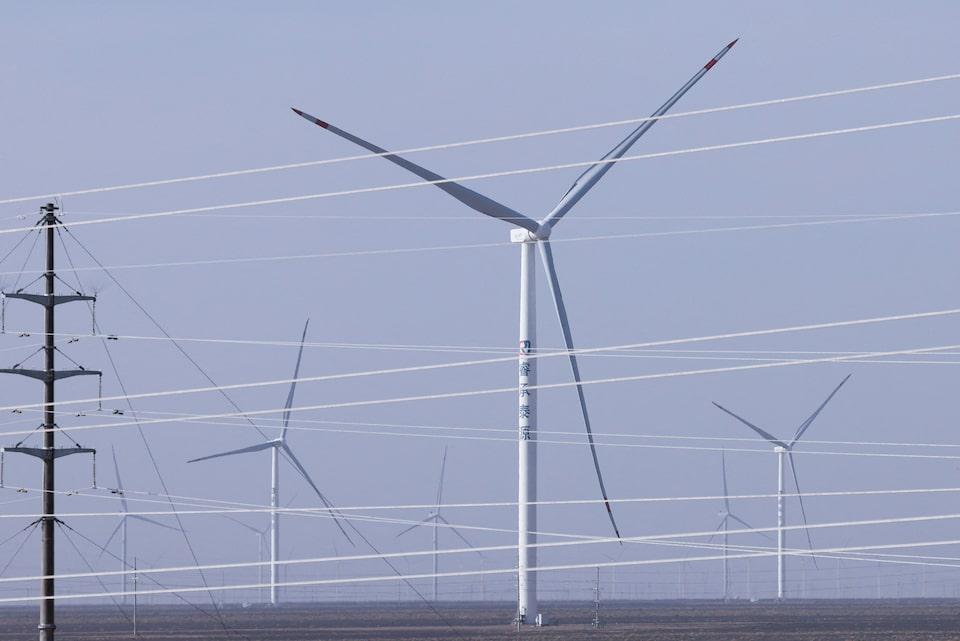
BEIJING, March 5 (Reuters) - China said on Wednesday it would develop a package of major projects to tackle climate change as it moves to bring its carbon dioxide emissions to a peak before 2030 and become carbon neutral by 2060. The world's largest producer of climate-warming greenhouse gas said it would develop new offshore wind farms and accelerate the construction of "new energy bases" across its vast desert areas, the National Development and Reform Commission, the country's economic planner, said in an official report published on Wednesday. "China will actively and prudently work towards peaking carbon emissions and achieving carbon neutrality," the report read. Among the proposed projects cited in the report by the state planning agency was a controversial hydropower facility on the Yarlung Tsangpo river in Tibet, which has raised concerns in India about its potential impact on downstream water flows. It also said it would develop a direct power transmission route connecting Tibet with Hong Kong, Macao and Guangdong in the southeast. However, coal will remain a key fuel, with the NDRC report saying the country will continue to increase coal production and supply this year even as it plans for trials of low-carbon technology at its coal-fired power plants and to promote initiatives aimed at substituting fossil fuels with renewables. China has been struggling to strike a balance between fostering economic growth and meeting its environmental goals. The NDRC said the 3.4% reduction in the amount of carbon emissions per unit of economic growth last year "fell short of expectations", blaming rapid growth in energy consumption as well as extreme weather. China is not expected to meet its five-year goal to bring carbon intensity down by 18% by the end of this year, and it has not yet announced an annual target for 2025. It will also struggle to meet a separate target to cut the amount of energy consumed per unit of growth by 13.5% by the end of this year, despite exceeding expectations with a 3.8% reduction last year, analysts said. "Despite the world record expansion of renewables, an inconvenient truth is that China's economy hasn't become much more energy efficient in recent years," said Yao Zhe, global policy advisor with Greenpeace in Beijing. Sign up here. https://www.reuters.com/sustainability/climate-energy/china-announces-plans-major-renewable-projects-tackle-climate-change-2025-03-05/