2025-03-05 11:59
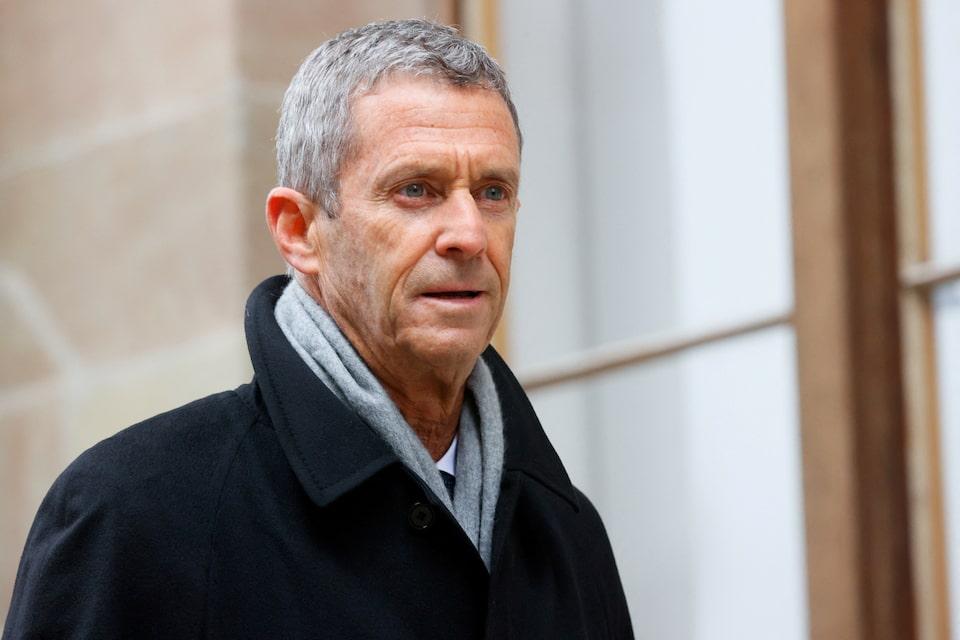
ATHENS, March 5 (Reuters) - Greece's top court has ordered the release of Israeli mining magnate Beny Steinmetz, setting aside a lower court ruling for his extradition to Romania on an arrest warrant, his lawyer and a source with knowledge of the case told Reuters on Wednesday. Steinmetz was initially detained by Greek police on October 13, hours after he arrived on a private aircraft at Athens International Airport. He had been freed from custody, under restrictions, and then detained again in January after a judicial panel ordered his extradition to Romania. Steinmetz had appealed against that decision at the country's Supreme Court. "The top court has accepted his appeal," the source said on Wednesday. An arrest warrant has been issued against him in relation to a case dating back several years and concerning his involvement in a group that allegedly tried to illegally secure land rights in Romania. Steinmetz's legal advisors had dismissed the Romanian authorities' accusations as "unfounded" and called the extradition requests by Romania "abusive", arguing that he has the right to travel freely. "This is another vindication for Beny Steinmetz. The decision is exceptionally important as it comes from the higher level of justice in Greece," his lawyer, Stavros Togias, told Reuters. Steinmetz was expected to be freed from a prison in Athens later in the day. Romanian authorities have repeatedly attempted to indict Steinmetz in various jurisdictions on the same allegations. In 2022, a Greek court that examined his case had ruled against his extradition. Last year, Cyprus' Court of Appeal also ruled against his extradition to Romania, overturning a lower court ruling. A court in Italy has also rejected the request. Sign up here. https://www.reuters.com/world/greek-top-court-orders-release-israeli-mining-magnate-steinmetz-sources-2025-03-05/
2025-03-05 11:56
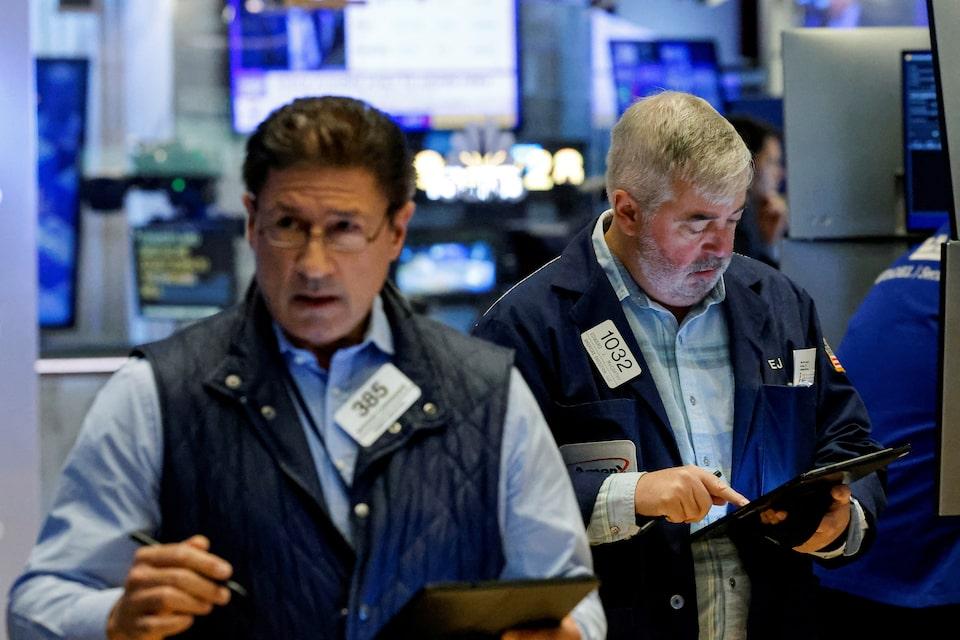
Morning Bid U.S. What matters in U.S. and global markets today By Mike Dolan , opens new tab, Editor-At-Large, Financial Industry and Financial Markets We’ve revamped Morning Bid U.S. to offer you more in-depth markets analysis and commentary. Mike Dolan will help you make sense of the key trends shaping markets each day. For more expert analysis, look out for Reuters' new markets and finance commentary vertical, coming this spring. Another day, another roller-coaster for world markets. Europe's stocks (.STOXXE) , opens new tab and the euro have surged again on the extraordinary news that Germany is ready to take its foot off its debt brake, re-arm and plan half a trillion euros of funding for infrastructure. Electrified euro markets and surging German bund yields stand in contrast to nervy Wall Street, where the S&P500 (.SPX) , opens new tab ended more than 1% in the red again on Tuesday based on concerns about a potential U.S. economic downturn. This week's salvo of U.S. import tariffs may also be spurring action in Beijing. China too has laid out plans for a further fiscal boost to help insulate its economy and enable it to meet its ambitious 5% growth target. The combination of European and Chinese stimulus with hopes for some relief on the tariff front has lifted world stocks (.MIWD00000PUS) , opens new tab and helped ailing U.S. stock futures perk up ahead of Thursday's bell. Today I'm delving into the recent slide in the dollar, which has surprised many who expected trade wars and rancorous geopolitics to send investors fleeing to this 'safe haven'. Today's Market Minute Haven no more? Dollar 'smile' looks lopsided This week's steep dollar plunge may be more remarkable than it appears on first glance because the greenback has failed to respond positively to intensifying global political and market stress, suggesting a profound shift in market behaviour may be afoot. One could argue that the dollar has simply been tracking U.S. interest rate expectations and debt yields lower over the past week. Both have been spooked by warnings of a rare contraction of the once bulletproof U.S. economy. But this was also a period in which Washington initiated its long-threatened trade war, undermining regional North American allies while also backing away from its transatlantic military alliance over the fate of Ukraine. Anxiety, tension and uncertainty are running extremely high. The dollar has typically thrived in such moments of great stress in the past, mainly as nervy global investors usually seek a liquid haven in either U.S. Treasury bonds or dollar cash deposits to ride out any storm. That behaviour has long been known in currency markets as part of the dollar "smile". The basic idea is the greenback tends to rise in times of hot inflation and rising U.S. interest rates, but also in times of great geopolitical disruption as the world seeks safety. As the shape of a "smile" would suggest, the dollar tends to sag in value in between the extremes, when all is calm and well. To be sure, a dash for safety in bonds may well be underway locally on Wall Street this week, with investors fleeing pricey U.S. stocks due to the rare and sudden rise in recession angst. But the buck's simultaneous drop on the foreign exchanges in recent days suggests global investors are much less drawn to America as a haven this time around. Even though Mexico's peso and Canada's dollar weakened on the news of new U.S. tariffs, the euro and Japan's yen surged to their best levels of the year. The DXY index, which measures the dollar against the most-traded currencies (.DXY) , opens new tab, fell to its lowest point since early December. And this is at least partly due to foreign investors having improved alternatives at home as well as growing concern over the direction of U.S. economics and politics. European savers and investors - partly responsible for pumping up Wall Street's bubble-like tech sector over the past four years - may simply be returning to the safety of home. Thanks to U.S. President Donald Trump's goading, Germany and other European nations are seriously discussing rapid rearmament. And European investors now have the economic spur to justify taking advantage of far cheaper equity valuations on the eastern side of the Atlantic. HAVEN NO MORE? Deutsche Bank's top currency strategist George Saravelos reckons it's hard to overstate the scale of the global political and trade rethink this week. "Two pillars of America's role in the world are being fundamentally challenged," he said. He noted the highest average U.S. tariff rate since the collapse of the Bretton Woods fixed exchange rate era in the early 1970s is coming just as severe damage to the transatlantic military alliance is forcing Germany and Europe to plan hundreds of billions of euros worth of defence and infrastructure spending. The fall of the greenback in tandem means "the potential loss of the dollar's safe-haven status against that backdrop has to be looked at," he said. "We do not write this lightly." Most notable for Saravelos was the breakdown in the correlation between the dollar and risk assets that he says has been at the core of portfolio construction over the past decade. To be sure, the Trump team may love the sight of a falling dollar. The president lambasted Japan and China again this week for "killing their currencies" to outflank U.S. trade rivals. And the administration may even enjoy the sight of rallying Treasury bonds reducing the country's debt servicing costs. But the prospect of damage to global role of the dollar may sit more uncomfortably - as would the sight of overseas investors fleeing Wall Street, so long the only game in town. Taken to its limit, the prospect of "America First" at home may end "America First" for world investors. Today's key chart Germany and the European Union have responded to growing doubts about Washington's commitment to the Transatlantic alliance with rare speed and enormous funding plans for defence and infrastructure. This potential fiscal boost to the EU economy is electrifying markets and the euro. European stock indexes have outperformed the S&P 500 by more than 10% so far this year, with Europe's defense stocks outstripping the Nasdaq 100 by about 35%. Today's events to watch Opinions expressed are those of the author. Sign up here. https://www.reuters.com/markets/us/global-markets-view-usa-2025-03-05/
2025-03-05 11:53
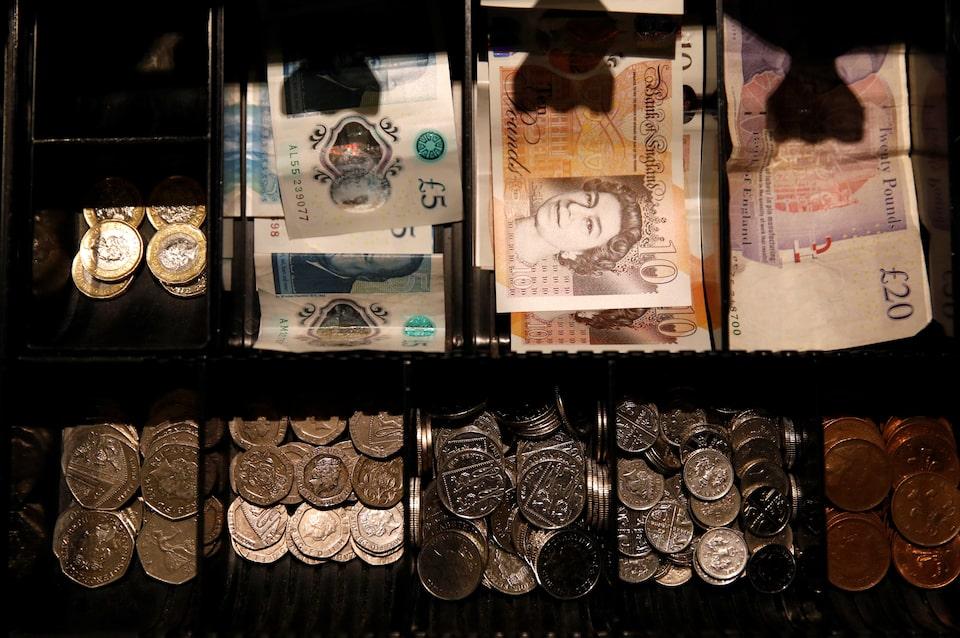
March 5 (Reuters) - The pound weakened against the euro on Wednesday as traders piled into the common currency after Germany's plan for a massive infrastructure fund and an easing of debt rules to boost spending, though the British currency did gain on the dollar. The euro was last up 0.4% on the pound at 83.35 pence, its highest in a week, and set for its third straight day of gains, after the parties seeking to form a government in Germany, Europe's biggest economy, proposed late on Tuesday a 500 billion euro ($535.50 billion) infrastructure fund for military and infrastructure spending. Those developments boosted European currencies in general against the dollar, however, with the pound rising 0.25% versus the dollar to $1.28265, its highest since November 12. Analysts at Westpac on Wednesday recommended traders buy the euro against the pound. "European leaders are aggressively ramping defence budgets and while the UK is no slouch either, UK fiscal finances are more obviously constrained, both by medium term austerity pressures and market pressures," they said. "A material reset in several EUR-crosses has already played out but EUR/GBP curiously is still holding nearer multi-year supports in the 0.8200-0.8300 area." Worries about the U.S. economy amid escalating trade tensions with Canada, China and Mexico were also driving investors away from the greenback. U.S. President Donald Trump has enacted a swathe of tariffs against his country's biggest trading partners, including new 25% tariffs against Canada and Mexico that were effective from Tuesday, alongside a doubling of duties on Chinese goods to 20%. Canada and China have responded with tariffs of their own, while Mexico said it would retaliate too but without giving details immediately. Sterling, however, is expected to be less impacted by U.S. tariffs due to the more balanced trading position between the United States and Britain. The pound's moves were in part a function of rate differentials and British government borrowing costs climbed on Wednesday, though the selloff was less than that in Germany where German bond yields soared on Germany's historic debt overhaul. Traders are waiting for Bank of England Governor Andrew Bailey and other top bank officials to answer questions from 1430 GMT on Wednesday from lawmakers about their decision to cut interest rates in February. Interest rate futures are currently pricing two more quarter-point rate cuts by the Bank of England this year. Expectations of a third such move have been reduced this week. "While we ultimately think that the BoE cuts three times this year, the recent mood music from the BoE doves has been caution and the need for gradual rate cuts," Chris Turner, Global Head of Markets at ING, said. ($1 = 0.9337 euros) Sign up here. https://www.reuters.com/markets/currencies/sterling-eases-against-euro-eyes-germanys-debt-overhaul-2025-03-05/
2025-03-05 11:43
NEW YORK, March 5 (Reuters) - Investors are weighing whether Donald Trump might turn to unconventional ideas to try to bring the ballooning U.S. debt under control, after the president insisted he won't cut popular health and retirement benefits. Some of Trump's advisers have espoused unorthodox ideas in recent months, including forcing foreign governments to swap Treasuries for cheaper bonds in order to reduce interest payments and selling residency cards to rich foreigners at $5 million a pop. With many officials and economists saying that U.S. debt is on an unsustainable path, investors in U.S. bonds, currency and equities markets are starting to pay more attention to these ideas. U.S. debt stands at $36 trillion, or more than 120% of annual economic output (GDP), and is rising fast as the government spends more than it raises in taxes. Last year, the U.S. budget deficit topped 6% of GDP - though Treasury Secretary Scott Bessent has said he wants to halve that. Trump's new administration has launched aggressive moves to cut federal spending through Elon Musk's Department of Government Efficiency (DOGE). And it has announced plans to raise additional revenue by imposing heavy tariffs on imports from trade partners including China, Mexico and Canada. More than half a dozen investors and economists told Reuters the outcome of those efforts to close the deficit remained unclear. And none of the other outside-the-box ideas would have enough impact to bring the fiscal situation under control, they added. Indeed, a forced debt swap with foreign governments could undermine U.S. credit worthiness and upset the global financial system, they said - torpedoeing Bessent's aim of sharply lowering the yield on benchmark 10-year U.S. Treasuries, which underpins borrowing costs across the economy. "The prospect for manipulating a long-term yield through some kind of financial or political engineering operation is very limited," said Larry Summers, an economist who served as Treasury Secretary under President Bill Clinton, a Democrat. An official with the White House's National Economic Council - the principal group of economic advisors to the president - said that "out-of-the-box thinking is exactly what is required," blaming the previous Democratic administration for adding to deficits and causing inflation. Trump, the official said, had moved quickly to "restore fiscal sanity." The official said a fall in long-term U.S. interest rates in recent weeks was a sign of market confidence in Trump's policies. As further evidence, the official pointed to a decline in the term premium, which measures what investors charge for holding debt for a longer period of time. RECOVERY IN U.S. BOND PRICES After Trump's election in November, investors had sold off government bonds amid concerns that his policies - including tax cuts and tariffs - would cause the U.S. deficit to worsen and put the economy on an inflationary path. But since mid-January, a few days before Trump's inauguration, the benchmark 10-year Treasury yields have fallen dramatically. The 10-year yield, which moves inversely to price, has dropped to around 4.2%. The term premium, which in part reflects investors' feelings about the future size of the debt, has also declined, but it remains firmly in positive territory after being negative for years. Some investors, however, argue that yields have fallen not because of optimism around the U.S. fiscal trajectory but because Trump's policies have increased economic uncertainty - hitting consumer and business confidence, and leading to talk of slower or negative growth. Those worries are showing in stock prices as well, some investors said. The U.S. benchmark S&P 500 (.SPX) , opens new tab has fallen over 4% since Trump's return to the White House on January 20 against a roughly 1.3% decline for an MSCI index of stocks in more than 40 other countries. Niladri Mukherjee, chief investment officer at TIAA Wealth Management, said a "spike in policy uncertainty" may be leading to a soft patch in the economy. "Campaign promises are one thing, but the devil is in the details when it comes to policy-making," he added. Whatever the reason for recent market moves, the Trump administration needs to persuade investors its measures to bring debt under control are working. Otherwise, investor disappointment could prompt a resumption of the bond selloff, raising borrowing costs and hindering the administration's ability to pursue its agenda. "The price of bonds, like the price of any financial asset, is primarily determined over time by fundamentals, and the budget deficit is by far the most important fundamental," Summers said. MAR-A-LAGO ACCORD In a November paper, economist Stephen Miran, whom Trump has picked to chair his Council of Economic Advisors, raised the possibility that Trump could use the threat of tariffs and the lure of U.S. security support to persuade foreign governments to swap their Treasury holdings for lower-cost century bonds. Miran, who served as an adviser to the Treasury during Trump's first term, wrote the paper before his nomination while working as a senior strategist at Hudson Bay Capital Management, an investment management firm. He is yet to be confirmed. The idea was part of a series of measures to increase U.S. competitiveness that Miran called the 'Mar-a-Lago Accord', after Trump's Florida residence. Miran declined to comment to Reuters, pending his confirmation. Such a debt swap could yield roughly $100 billion in interest costs per year, estimated Julian Brigden, president of Macro Intelligence 2 Partners, a research firm. While significant, this would be a fraction of the debt burden. Debt held by the public is expected to climb to $52 trillion by 2035 from $30 trillion this year, according to the latest Congressional Budget Office forecasts. But worries about further forced debt swaps could result in selling pressure on Treasuries, driving yields higher, some investors and economists said - increasing the risk associated with the world's safest asset. "Perhaps they could bring political pressure on some people to buy bonds," Summers said. "But it's likely to make other people nervous about holding an asset that is supported by political pressure, which tends not to work forever." The NEC official said Miran's paper discusses a wide variety of potential options without advocating for any of them, and only Trump could say what he'd adopt. James Bianco, the head of Chicago-based advisory firm Bianco Research, said Trump has already adopted some measures indicated by Miran, including the use of tariffs as leverage for security agreements and creating a sovereign wealth fund. "I started to realize a lot of the things that are in that paper are happening," Bianco said. EXPECT THE UNEXPECTED Another idea floated by the administration is the "gold card" program, which Trump and Commerce Secretary Howard Lutnick have said could help to shrink the deficit. Trump has said the residency plan has the potential to raise trillions of dollars and help pay off U.S. debt. The projections have been met with some skepticism. Some immigration and wealth advisers say it is unlikely to trigger a major inflow of wealthy global investors because it would open up their global income to U.S. taxes. An additional subject of market speculation is the idea that the administration could try to make use of the country’s gold stockpile. At current market prices, the gold held in Fort Knox, Kentucky and other locations would be worth about $758 billion, but it is valued at only $11 billion on the Federal Reserve's balance sheet due to a 1973 law that set its price, TD Securities, an investment bank, said in a February 20 note. Trump and Musk have said they want to confirm that the gold has not been stolen from the vaults. Bessent has talked about monetizing "the asset side of the U.S. balance sheet for the American people," but said that a gold revaluation was not what he had in mind. Ed Mills, an analyst at Raymond James, a financial services firm, said Trump might draw on his experience as a real estate developer in any attempt to overhaul the country's debt. "Trump has spent his life reorganizing and refinancing the debt of the Trump Organization," Mills said. Trump, by his own telling , opens new tab, nearly went bankrupt in 1990 and was forced to ask dozens of banks to change the terms on their loans and forgive some of his debts -- an event he's held up as proof of his negotiating skills and shrewd thinking. "With Donald Trump you have to expect the unexpected," Mills said. Sign up here. https://www.reuters.com/markets/us/markets-wrestle-with-trumps-unconventional-debt-ideas-2025-03-05/
2025-03-05 11:32
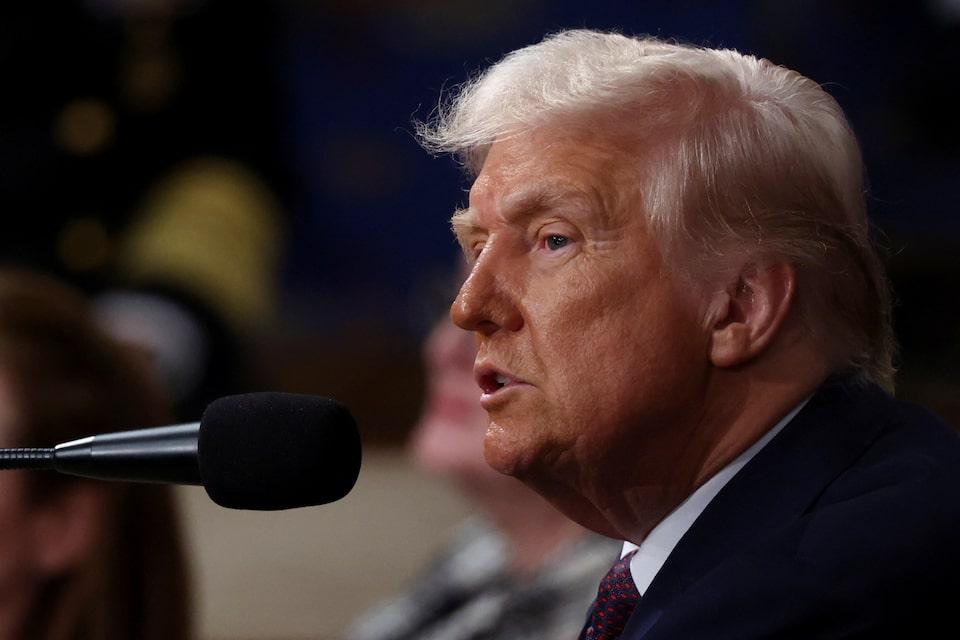
LONDON, March 5 (Reuters) - The Bank of England's Prudential Regulation Authority (PRA) is consulting on raising the retail deposits leverage ratio threshold, a move designed to allow smaller lenders to avoid the leverage rules which cover the country's major banks. The ratio is aimed at indicating what level of capital Britain's major banks, building societies and investment firms should have to fund their activities. The threshold at which it applies has been fixed in cash terms since 2016, meaning smaller firms have been dragged into the regime as inflation and the size of the economy has risen. The Bank of England said on Wednesday that the PRA will consult on raising the retail deposits leverage ratio threshold by 20 billion pounds ($25.7 billion) to 70 billion pounds, to reflect nominal GDP growth over the last nine years. "Guarding against excessive leverage in our banking system is essential for economic stability, but we should achieve that in a proportionate way," BoE Deputy Governor for Prudential Regulation Sam Woods said in a statement. "Today's proposals will support growth and innovation by giving smaller banks more space to grow before entering the leverage regime," he added. Finance minister Rachel Reeves said in a major speech in November that regulators had gone too far in trying to squeeze out financial risk at the expense of economic growth. The PRA said it was not proposing any changes to a 10 billion pound non-UK asset threshold which was implemented more recently and was operating as intended. ($1 = 0.7791 pounds) Sign up here. https://www.reuters.com/markets/wealth/bank-england-consults-exempting-more-small-lenders-leverage-rule-2025-03-05/
2025-03-05 11:32
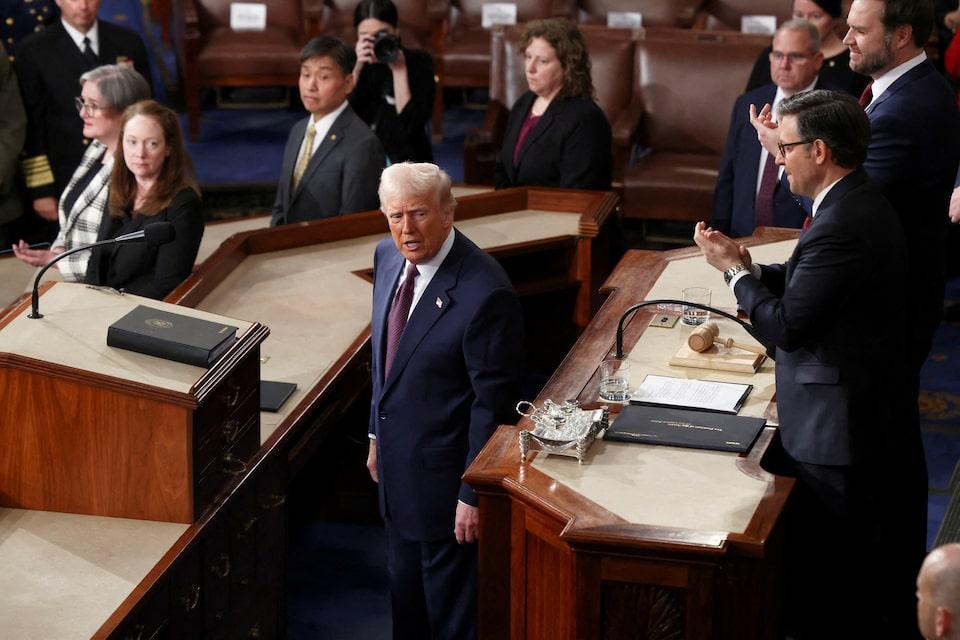
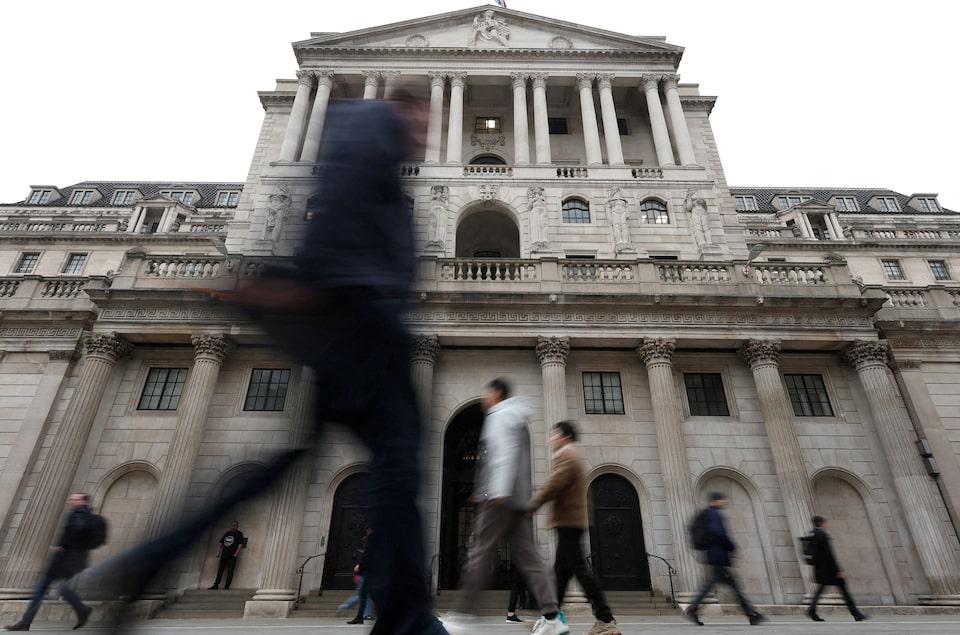
March 5 (Reuters) - U.S. President Donald Trump's address to Congress on Tuesday received high marks from a group of voters who backed the president in November's election, saying in interviews they supported his promises to cut taxes, reshape the government and crack down on immigration. From diehard supporters of Trump's "Make America Great Again" movement to voters who consider themselves more centrist, the following eight people represent a cross-section of the Americans who helped re-elect Trump. Shortly after the 99-minute address ended, they shared their reactions with Reuters. Each one graded Trump's speech and answered a few questions about it. Following are their remarks, edited and condensed for clarity: Antonio Aponte, 36, is a nurse originally from Puerto Rico who works for the Veterans Administration in Wyoming, but is currently deployed in Jordan with the state's National Guard. He voted for Trump because he wanted to see government spending cut and any wasted funds re-purposed. Question: What grade do you give the president's address? Answer: A- Q: What did you like about it? A: The whole mass deportation effort resonates with me because you have a lot of Hispanics who were born here, who were naturalized legally, and then all these illegal immigrants give the rest of us a bad name. I liked the $5 million for citizenship program because you can't just close the border completely, but you can't just flood it with anybody who wants to come in. Q: What didn't you like about it? A: I'm an isolationist, so I'm not particularly fond of the plan to get Greenland. Is it really worth putting soldiers' boots on the ground to get either another commonwealth or a new state? Let's fix ourselves first and then spread the wealth. Q: What changes did he announce or promise that will impact your everyday life? A: His changes to the military will impact me, not necessarily directly, but definitely our administrative support will be affected because of all the people who are going to take the buyout and leave their jobs. Will it be bad? Probably not, because they're trying to end a lot of waste, fraud and abuse. ** Will Brown, 20, is a student at the University of Wisconsin, Madison, who wants to pursue a career in finance. He volunteered for Trump's campaign, and said his main reason for supporting Trump was wanting to see prices go down. He also wants to see immigration reduced. Trump's recent comments on resettling Gaza were one of the few matters about which Brown disapproves, but he said they might be a bargaining tactic. Q: What grade do you give the president's address? A: B+ Q: What did you like about it? A: I like how he made some jokes today, which are always good. The fact he covered the economy as a whole and his tariffs as a whole is a plus, and that he covered both wars, the Israeli war and the Ukraine Russo war. Q: What didn't you like about it? A: It ran long. Q: What changes did he announce or promise that will impact your everyday life? A: If he ends the Ukrainian war, we'd see a lot less refugees. That would be a small if not negligible effect on my life but for a lot of people in Europe and Ukraine that would have a big effect on their lives. ** Lesa Sandberg, 57, runs an accounting business, rents several properties, and works for former Republican Congressman Jason Chaffetz's political action committee in Utah. A longtime supporter of Trump, she's excited for him to extend a small business tax credit from his first term. She does question some things Trump has done, such as whether his effort to end birthright citizenship is constitutional. Q: What grade do you give the president's address? A: A+ It was jam packed full of everything he's been doing. Q: What did you like about it? A: The whole attitude of Americanism, patriotism, the excellence of America and moving us back in that direction and being unapologetic for moving us in that direction. I liked that he gave us a clear plan of the direction we're going and what he's trying to accomplish. Q: What didn't you like about it? A: I didn't like the disrespect from the Democrats. It made me sad to think that this is how divided our country is. A lot of what President Trump talked about shouldn't be partisan issues. Q: What changes did he announce or promise that will impact your everyday life? A: Everything he spoke about the economy will affect me directly - the tax cuts will affect me directly. Also, not taxing Social Security - my parents are living on Social Security and I don't think they should pay tax on it. ** Herman Sims, 66, is a night operations manager for a trucking company in Dallas, Texas. He's happy to see the Trump administration's efforts to end what he considers wasteful spending by U.S. government agencies. He's hopeful that Trump will be able to implement tougher border restrictions. Q: What grade do you give the president's address? A: B+. There were a couple of things I don't know if the president was factually correct on or not. For instance, he blamed the high price of eggs on President (Joe) Biden. I don't know if that's true or not. Q: What did you like about it? A: I really enjoyed the beginning and how he asked the Democrats to at least clap with him for one night, to have unity for the country. He had a great line about crossings at the border being at a low last month, how the Democrats insisted that we needed new legislation to fix the problem and that it turns out we just needed a new president. Q: What didn't you like about it? A: I wish the president had talked more about the tariffs - I wish he had gone into more detail about how they will work. Also, he mentioned that we're going to put a flag on Mars. I wish he had talked in more detail about the economy, and not waste money by going to Mars. Q: What changes did he announce or promise that will impact your everyday life? A: I don't think he mentioned anything that is going to affect me at all. ** Chad Hill, 49, is a controlling supervisor at a nuclear power plant near his home in Ohio. He hopes Trump brings down grocery costs and energy prices. As a father of three, he wants to see the U.S. Education Department shut down, because he believes states should control their own education systems. Hill is also counting on Trump to end the Ukraine-Russia and Israel-Hamas wars. Q: Grade for the speech? A: B+ Q: What did you like about it? A: I specifically like when he interweaves the stories of Americans into the speech and he has them there and discusses why exactly they're there and how that pertains to what he's doing or what he wants to do. Q: What didn't you like about it? A: It may have gone on too long. That bit on Social Security went on a bit too long, and the crazy overseas programs. Three or four examples would have been good. Q: What changes did he announce or promise that will impact your everyday life? A: No taxes on tips, overtime or Social Security - that would definitely assist me. Overtime is about 20% of my pay. ** Loretta Torres, 37, is a stay-at-home mom of three boys who lives near Houston, Texas. Her main reason for voting Trump was because she wants to see a "big boost" in the economy, and because she likes his persona and felt the United States needed a leader who was going to make the country look strong. Q: Grade for the speech? A: A+ Q: What did you like about it? A: At the beginning it was really strong. Then towards the middle he was getting emotional and it made me emotional. Toward the end, he wrapped it all up. Q: What didn't you like about it? A: I don't think I can say there was anything I didn't like. Q: What changes did he announce or promise that will impact your everyday life? A: Torres cited the renaming of the Anahuac National Wildlife Refuge, not far from her Houston-area home, after Jocelyn Nungaray, a 12-year-old girl who was killed in June. Two undocumented Venezuelans have been charged with the crime. "I will definitely make a visit to that area just to witness the renaming in the honor of her in her life." ** Michael Klemm, 53, lives in Erie, Pennsylvania, where he owns a restaurant and several online retail businesses. He voted for Trump out of disgust with what he called the government's "reckless spending, fraud, and abuse over the last 40 years." Klemm, who is also a day trader, is slightly concerned by the negative effect that Trump's tariffs have had on the market. Q: Grade for the speech? A: B+ Q: What did you like about it? A: I like to see us getting back to patriotism. I like the announcement about the Golden Dome defense system, I like to hear that our tax money is going to be used for our protection. I like to hear, 'Let's get rid of people that are here illegally and causing the people in this country pain.' Q: What didn't you like about it? A: I would have liked more clarity on exactly why we're putting these tariffs on other countries. He kind of brushed over the fact that other countries tariff us. Also, as someone with investments that are correlated with the cryptocurrency industry, I would have loved to hear him talk about the strategic crypto investments that he's talked about recently, because that moves markets. Q: What changes did he announce or promise that will impact your everyday life? A: Hearing about all these investments that are going to pay off for the American people. If you grow the GDP, that makes more money for our government. So there's your tax cuts right there. ** Juan Rivera, 25, is a self-employed social media marketer near San Diego, California. A Latino man, he voted for Trump in 2020 and 2024. He hopes the president reduces inflation and gas prices, and is tough on crime and immigration. These are personal issues to Rivera because he has been assaulted in high-crime areas near his home that serve as "drop-off" zones for migrants. Q: Grade for the speech? A: A+ Q: What did you like about it? A: The messaging about bringing back jobs, cutting the cost of energy, making sure taxpayer dollars are spent well, especially with the new initiatives under DOGE. Q: What didn't you like about it? A: I didn't like the Democrats protesting everything. There were a lot of points where I think that they should have celebrated the accomplishments he was talking about. Q: What changes did he announce or promise that will impact your everyday life? A: I'm hopeful about seeing a lot of these policies come into place and bring down the cost of living, the cost of energy, the cost of gasoline. Especially the no tax on tips. That's definitely something that affects a couple of members of my family. Sign up here. https://www.reuters.com/world/us/combative-trump-declares-america-is-back-heres-what-his-voters-made-it-2025-03-05/