2025-03-05 10:59
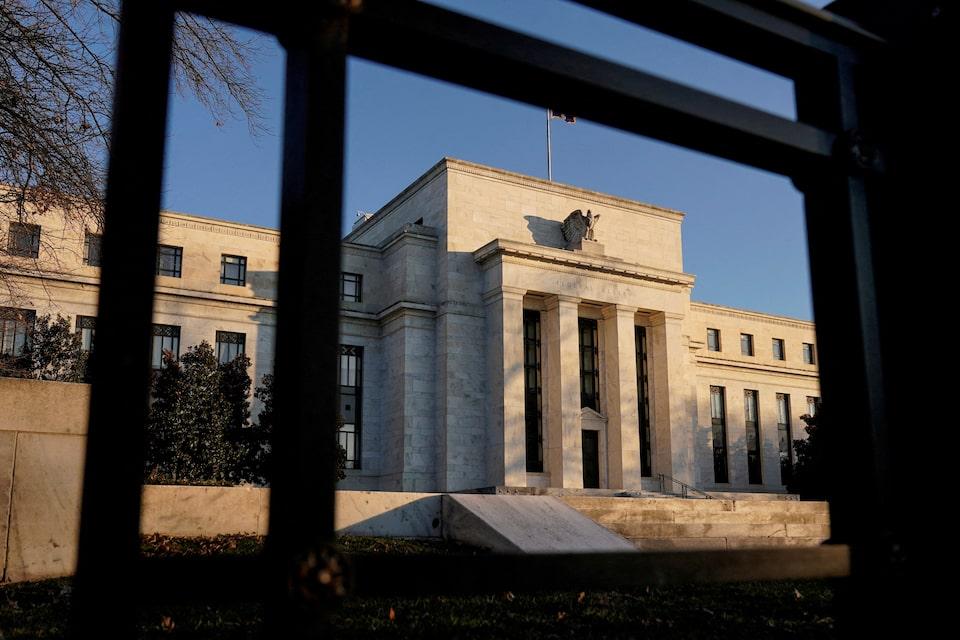
Swap spreads have widened since start of 2025 Relief on bank capital rules could unlock US Treasuries demand Big banks recommend swap spread wideners in belly, long end of curve NEW YORK, March 4 (Reuters) - A potential move by the Federal Reserve to ease regulations on capital for U.S. banks that would allow them to hold more Treasury securities has unleashed a torrent of so-called swap spread wideners in the bond market. These are bets that increase demand for U.S. Treasuries that will push their yields lower and closer to those of a competing class of risk-free assets called interest rate swaps. Analysts said this trade has already been successful this year. The trade has become popular since the November 5 U.S. election on expectations President Donald Trump's administration will push through deregulation, particularly making capital adequacy rules less restrictive for banks. "Markets have seized on the possibility that looser regulation will free up some capacity for banks to hold more bonds, especially in times of stress," said Steven Major, the global head of fixed income research at HSBC in Dubai. "Early positioning from hedge funds was on the view that regulations would be adjusted. There is more to go." Swap spreads are a major component of the more than $500-trillion interest rate derivatives market. They express the basis-point difference between the fixed rate of an interest rate swap tied to the current Secured Overnight Financing Rate (SOFR) and the Treasury yield of the same maturity. Investors and corporations use swaps to hedge interest rate risk or their exposure to U.S. Treasuries, allowing them to exchange fixed-rate cash flows for floating-rate ones, or vice versa. Swap spreads are currently negative across the curve, meaning yields on Treasuries are higher than those on swaps . But since the beginning of the year, spreads have turned less negative, or in bond market parlance, widened, which means Treasury yields have been trending lower. U.S. five-year swap spreads have widened since January by about five basis points (bps) to minus 29 basis points on Tuesday. The spread reflects the difference between five-year Treasury yields currently at 3.925% and five-year swap rates at 3.6201% . On the long end of the curve, 30-year swap spreads have increased by 8 bps to minus 78 bps. BALANCE SHEET FLEXIBILITY Last month, Fed Chair Jerome Powell told Congress that it was time for the U.S. central bank to ease the supplementary leverage ratio (SLR), which directs banks to hold capital against investments regardless of their risk and effectively discourages these institutions to hold Treasuries. The Fed was forced to temporarily waive the SLR after the Treasury market seized up in March 2020, but it let that relief expire a year later. Cutting SLR would significantly free up additional capacity for banks on their balance sheet, allowing them to add low risk-free assets such as Treasuries without having to allocate capital to cover potential losses. The net effect of Powell's recent comments on the SLR was to push yields lower, consequently widening swap spreads. Swap spreads across the curve have been negative for years, and this has something to do with the structure of lending between the two risk-free assets. "The credit risk between Treasury yields and SOFR swap rates is identical," said Srini Ramaswamy, managing director and head of derivatives strategy at J.P. Morgan in San Francisco. "Treasury yields are higher and that has something to do with terming out the principal." Ramaswamy cited a five-year SOFR swap rate, for instance, which effectively is the average of rates that one can earn by doing lending in the repurchase or repo market daily for five years. The five-year Treasury note, on the other hand, represents lending money to the U.S. Treasury five years at a time. "You give up some flexibility when you lend money for five years to the Treasury, so the compensation is higher, as opposed to lending one day at a time in SOFR swaps," Ramaswamy said. And with the recent transition to risk-free SOFR from Libor, or the London Interbank Offered Rate, there is no longer a premium for credit risk embedded in swap rates that lifted them higher over Treasury yields in the past. Major banks as a result have recommended swap spread wideners to take advantage of looming deregulation. Barclays, in a research note, recommended swap spread wideners in the belly of the curve, specifically, the seven-year spread, where banks prefer to own Treasuries. It believes a change in the SLR could unlock additional bank demand for Treasuries as these financial institutions grow their assets. TD Securities, on the other hand, sees more opportunity on the longer end of the curve, particularly in the 30-year sector, where spreads remain historically tight or more negative. "We believe the widening has more room to run as regulators make progress," said Gennadiy Goldberg, TD's head of U.S. rates strategy. Sign up here. https://www.reuters.com/markets/wealth/trump-deregulation-push-boosts-appeal-swap-spread-wideners-bond-market-2025-03-04/
2025-03-05 10:08
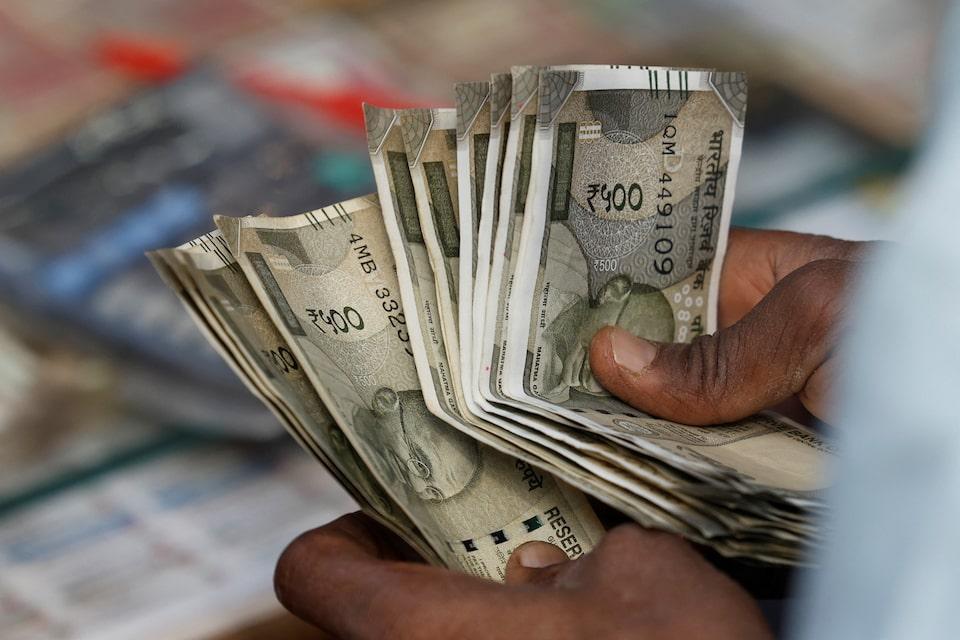
MUMBAI, March 5 (Reuters) - The Indian rupee rose on Wednesday as a broadly weaker U.S. dollar spurred gains in most Asian currencies, with investors fretting over a slowdown in the U.S. and how trade tariffs may impact the world's largest economy. The rupee closed 0.3% higher at 86.9550 against the U.S. dollar, its best single-day gain since February 11. Traders pointed to dollar sales from foreign and state-run banks during the session, which helped lift the rupee, alongside a markedly softer dollar. The dollar index fell nearly 0.6% to 104.9, its weakest level since November 2024, pressured by a sharp rise in the euro which was hovering at a near four-month peak against the greenback. Asian currencies were up between 0.1% to 0.8%. Concerns about the U.S. growth outlook alongside uncertainty about the growth-inflation impact of trade tariffs have weighed on the dollar and U.S. bond yields over recent sessions. The U.S. has imposed a 25% levy on Mexican and Canadian imports and has doubled duties on Chinese imports to 20%. In his first speech before U.S. lawmakers since taking office, Trump said on Tuesday that further tariffs would follow on April 2, including "reciprocal tariffs" and non-tariff actions aimed at balancing out years of trade imbalances. Stubborn inflation and President Donald Trump's trade policies have rekindled fears of stagflation in the world's largest economy with analysts warning against complacency towards Trumps' policies. The dollar is "still a little vulnerable to any weaker U.S. activity data through March, before the tariff story once again dominates in April," ING Bank said in a note. The immediate focus will be on U.S. labour market data this week, starting with ADP employment figures due later on Wednesday. Remarks from Federal Reserve policymakers will also be in focus to gauge the future path of policy rates. Sign up here. https://www.reuters.com/markets/currencies/broad-dollar-weakness-helps-rupee-post-best-day-over-three-weeks-2025-03-05/
2025-03-05 09:22
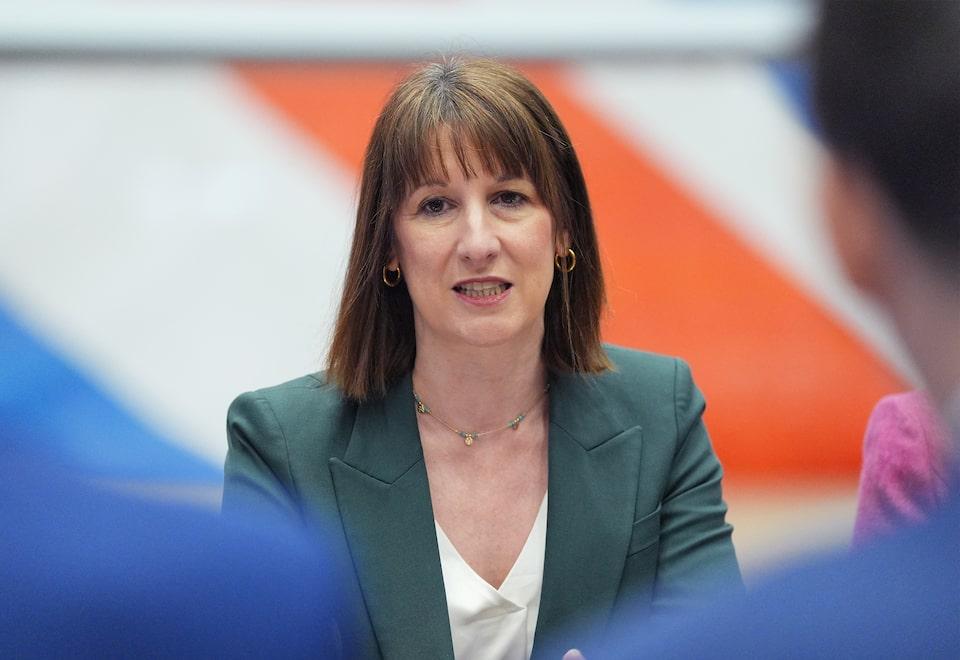
LONDON, March 5 (Reuters) - British finance minister Rachel Reeves is working out how she can get back on track to meet her budget targets, with spending cuts widely expected when she delivers an update on the public finances on March 26. The Office for Budget Responsibility, Britain's fiscal watchdog, sent its latest estimates for the economy and the public finances privately to Reeves on Tuesday. When it makes its findings public, it is expected to say that Reeves is off course to meet her key rule of balancing day-to-day public spending with tax revenues by the end of the decade. WHAT IS THE SPRING STATEMENT? Reeves announced her first budget last October which raised taxes on employers and added to borrowing. She said she intended to hold only one major fiscal event a year, turning what used to be the spring budget into a simpler forecast update. However, given the possibility that Reeves will have to adjust her plans, the Spring Statement has become a test of the new government's economic programme. WHAT HAS REEVES SAID? Reeves says she will make changes to her plans if needed, potentially easing the nerves of investors about Britain's debt burden but also weighing on already weak economic growth. That would further strain the budget with defence spending now set to grow sharply, and hurt the standing of Prime Minister Keir Starmer's Labour government. WHY IS REEVES AT RISK OF MISSING HER TARGETS? In October, Reeves left herself a small margin of 9.9 billion pounds ($12.6 billion) for meeting her budget rule by the 2029/30 financial year. That margin was further reduced after Donald Trump's election as U.S president raised global concerns about inflation and higher borrowing costs, and by Britain's weaker-than-expected economic growth. Think tanks have said there is a strong chance that the Office for Budget Responsibility will judge that Reeves has lost all her fiscal headroom on March 26. SPENDING CUT OPTIONS The previous Conservative government stayed on track to meet its fiscal rules largely by promising spending cuts in future years. Those promises eventually looked so unrealistic that the head of the OBR branded them as worse than fiction. Reeves will therefore be under pressure to make some of any spending cuts she announces apply in the short term. The BBC reported on Wednesday that Reeves had earmarked billions of pounds in cuts to spending on welfare and other government departments. Consultancy Pantheon Macroeconomics predicted she would shave 5 billion pounds off welfare spending in the 2025/26 financial year and backload another 5 billion pounds of public spending cuts. TAX INCREASES AHEAD? Analysts at Citi said Reeves might be facing a bigger, 12 billion-pound fiscal hole which she might seek to fill via cuts to welfare and departmental spending, before making tax changes in a full budget in late 2025. Pantheon and Citi said she could raise about 7 billion pounds a year by extending a freeze on the thresholds at which people start to pay different rates of income tax. That tactic, which leads to big increases in the amount of income tax paid to the government, was begun by the Conservatives who froze the thresholds until April 2028. Reeves said in October that she would raise them in line with inflation thereafter. Reversing that decision would still allow Reeves and Starmer to argue they had not broken the letter of their promise to voters that they would not raise the rates of income tax. LONGER-TERM PROBLEM While Reeves is expected to make the fiscal sums add up to get back on track for her targets on March 26, she faces the bigger risk that at some point the OBR cuts its optimistic-looking forecasts for Britain's economic growth. The watchdog's October forecast for growth of 2.0% this year contrasts with the Bank of England's recent halving of its projection to 0.75%. The OBR has previously overestimated the chances of a productivity improvement. Should it lower its assumptions, its economic growth forecasts will also fall, reducing its estimates of tax revenues, pushing up expected borrowing and forcing further tough choices on Reeves to stick to her targets. Another uncertainty is the impact of Trump's U.S. import tariffs on the world economy. Reeves said on Tuesday that Britain was likely to be hit indirectly by U.S. tariffs imposed on China, Canada and Mexico. ($1 = 0.7859 pounds) Sign up here. https://www.reuters.com/world/uk/uks-reeves-working-get-budget-goals-back-track-2025-03-05/
2025-03-05 07:46
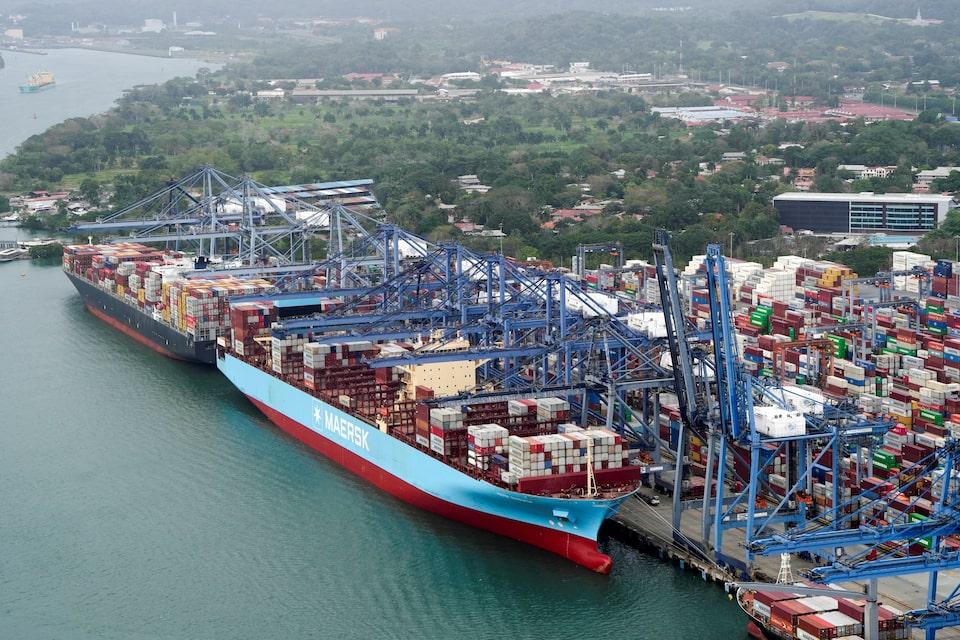
CK Hutchison to sell majority stake in $22.8 billion ports unit Sale to give BlackRock-led group 90% of Panama Ports Company CK Hutchison says sale purely commercial, unrelated to politics Trump says his government has started to reclaim Panama Canal JPMorgan calls the sale a 'surprise' and 'opportunistic' March 5 (Reuters) - U.S. President Donald Trump has hailed a deal led by U.S. firm BlackRock (BLK.N) , opens new tab to buy most of the $22.8 billion ports business of Hong Kong conglomerate CK Hutchison (0001.HK) , opens new tab, including assets it holds along the Panama Canal. The deal will give the U.S. consortium control of key Panama Canal ports amid White House calls to remove them from what it says is Chinese ownership. But it also risks heightening tensions between the U.S. and Panama, which have tussled over Trump's claims about the Canal. "My administration will be reclaiming the Panama Canal, and we've already started doing it," Trump told the U.S. Congress on Tuesday night. "Just today, a large American company announced they are buying both ports around the Panama Canal and lots of other things having to do with the Panama Canal and a couple of other canals." Panamanian President Jose Raul Mulino said Trump was "once again lying" in a post on X on Wednesday morning. "The Panama Canal is not in the process of being reclaimed ... the Canal is Panamanian and will continue to be Panamanian!" The deal with the BlackRock-led consortium includes 90% of Panama Ports Company, which has operated the Balboa and Cristobal ports at each end of the canal for over two decades, said CK Hutchison. "We are glad to see U.S. investors acquire a controlling stake in Panama Ports Company, which owns and operates the ports of Balboa and Cristobal at either end of the Panama Canal," a U.S. State Department official said in a statement to Reuters. CK Hutchison is a publicly listed Hong Kong company not financially tied to the Chinese government and other ports in Panama are operated by companies from the U.S., Taiwan and Singapore. Trump has previously complained about the presence of Chinese and Hong Kong-based companies in Panama, and American officials and politicians have said CK Hutchison's control of the ports represents a security risk for the operation. In total, the consortium, which includes Terminal Investment and Global Infrastructure Partners, will control 43 ports comprising 199 berths in 23 countries, the conglomerate said. The high purchase price sent CK Hutchison's stock up more than 20% on Wednesday, outpacing a 2.8% rise in Hong Kong's broader Hang Seng Index (.HSI) , opens new tab. Its price is now the highest since August 1, 2023. The sale involves CK Hutchison's 80% stake in Hutchison Ports with an equity value of $14.21 billion. However, the conglomerate will receive more than $19 billion following repayment of some shareholder loans. Goldman Sachs is advising CK Hutchison on the deal, two sources with knowledge of the deal said. Goldman Sachs declined to comment. John Waldron, the president of Goldman Sachs, was among the senior bankers involved in the talks due to the high-profile nature of the transaction, a third person familiar with talks told Reuters. Bankers at Goldman in Hong Kong were also involved, the source said. The size of the proceeds would be similar to CK Hutchison's entire Hong Kong market value prior to Wednesday's share rally. The remainder of Hutchison Ports is owned by Singapore's PSA International. About 12,000 ships used the Panama Canal last year that connects 1,920 ports across 170 countries. Its position is strategic for the U.S. as more than three-quarters of vessels passing through originate in or are bound for the United States. "I would like to stress that the transaction is purely commercial in nature and wholly unrelated to recent political news reports concerning the Panama Ports," CK Hutchison co-managing director Frank Sixt said in a statement. Hong Kong returned from British to Chinese rule in 1997 with the guarantee its freedoms, including freedom of speech, would be protected under a "one country, two systems" formula. Mulino on Thursday said that Trump's so-called "reclaiming" of the Canal had not been part of discussions with U.S. Secretary of State Marco Rubio in a recent visit or with any other U.S. official. The U.S. controlled the Canal and the area around it until it signed treaties in 1977 granting Panama control and sovereignty over the canal zone and guaranteeing its permanent neutrality. The treaties took effect in 1999. The U.S.' involvement in the canal is widely considered a pain point for many Panamanians, with around two dozen protesters killed in a 1964 confrontation with Canal authorities. RAPID, COMPETITIVE PROCESS CK Hutchison had been waiting for Panama Supreme Court to make a final ruling about the legal status of its government contract to operate the ports after the local attorney general determined the contract "unconstitutional". The conglomerate, controlled by billionaire tycoon Li Ka-shing, has interests ranging from infrastructure and retail to telecoms, aside from being the world's largest privately owned port operator. Li has been diversifying his business outside of Hong Kong and mainland China since the 1980s and now only about 12% of CK Hutchison's revenue is from Hong Kong and China, with the remainder from Europe, the rest of Asia Pacific and Canada. Sixt said the ports deal was the result of "a rapid, discrete but competitive process" during which CK Hutchison received numerous bids and expressions of interest. JPMorgan said in a report that while selling the Panama business is "understandable", the deal is nevertheless a "surprise" given most of CK Hutchison's other ports are not in regions directly exposed to Sino-U.S. geopolitical tension. It could be "an opportunistic deal", JPMorgan said. "Based on our understanding of the management philosophy of CKH, any deal is possible as long as 'the price is right'." The brokerage said the deal would represent a significant strategy shift because it would leave ports contributing about 1% of the conglomerate's earnings before interest, tax, depreciation and amortisation, down from 15%. The contribution of infrastructure, currently the largest segment, will rise to 33% from 28%. The $19 billion that CK Hutchison is set to receive from the sale is well above a $13 billion valuation on the ports assets estimated by analysts. "The disposal would be significantly value enhancing," Citigroup analysts said. CK Hutchison's net debt level was HK$138 billion ($17.76 billion) in June and the sales proceeds could put the conglomerate into a net cash position, UBS analysts said. ($1 = 7.7722 Hong Kong dollars) Sign up here. https://www.reuters.com/markets/asia/ck-hutchison-shares-jump-22-after-panama-canal-stake-sale-blackrock-2025-03-05/
2025-03-05 07:44
Brent crude futures fall to their lowest since December 2021 WTI crude futures fall to lowest since May 2023 US crude stockpiles rise far more than expected, EIA data show Canada, China retaliate against Trump tariffs OPEC+ to increase output from April HOUSTON, March 5 (Reuters) - Oil prices settled down for the fourth consecutive session on Wednesday after U.S. crude oil stockpiles posted a larger-than-expected build, adding a further headwind as investors worried about OPEC+ plans to increase output in April and U.S. tariffs on Canada, China and Mexico. Brent futures settled down $1.74, or 2.45% to $69.30 a barrel. U.S. West Texas Intermediate crude (WTI) settled down $1.95, or 2.86%, to $66.31 a barrel. Prices pared some losses after hitting multi-year lows earlier in the session - Brent sank to $68.33, its lowest since December 2021, and U.S. crude futures touched $65.22, its lowest since May 2023. They recovered slightly after the U.S. Commerce Department chief, Howard Lutnick, said Trump would make the final decision on whether to grant any relief on tariffs to certain industries, on Bloomberg TV. While Lutnick said the 25% tariff levied on Canada and Mexico would remain, the relief under consideration would eliminate the 10% tariff on Canadian energy imports, such as crude oil and gasoline, which comply with the rules of origin under the U.S.-Mexico-Canada Agreement, a source familiar with the discussions said. Pulling prices down, U.S. crude stockpiles rose more than expected last week amid seasonal refinery maintenance, while gasoline and distillate inventories fell due to a hike in exports, the Energy Information Administration said. Crude inventories rose by 3.6 million barrels to 433.8 million barrels in the week, the EIA said, far exceeding analysts' expectations in a Reuters poll for a 341,000-barrel rise. Brent fell more than $2 after the data was released. "The imposition of tariffs on China, Canada and Mexico by the U.S. sparked swift reprisals from each nation that increased concerns over a slowdown in economic growth and the consequent impact on energy demand," Ashley Kelty, an analyst at Panmure Liberum, said. Canada and China retaliated immediately against Trump's tariffs on Tuesday, and Mexican President Claudia Sheinbaum said the country would respond, without giving details. JP Morgan analysts said a 100-basis-point slowdown in the U.S. GDP growth rate could potentially reduce global oil demand growth by 180,000 bpd, analysts said in a note. OPEC+, the Organization of the Petroleum Exporting Countries and allies including Russia, decided on Monday to increase output for the first time since 2022, pressuring crude prices. The group will make a small increase of 138,000 barrels per day from April, the first step in planned monthly increases to unwind its nearly 6 million bpd of cuts, equal to almost 6% of global demand. "There is a bit of a concern in the market that the OPEC+ decision is the start of a series of more monthly supply additions, but the statement from OPEC+ reiterates an approach in bringing back barrels only if the market can absorb them," UBS analyst Giovanni Staunovo said. Analysts at Morgan Stanley Research said it was possible OPEC+ would deliver only a few monthly increases, rather than fully unwind the cuts. The Trump administration also said on Tuesday it was ending a license that Washington granted to U.S. oil producer Chevron (CVX.N) , opens new tab since 2022 to operate in Venezuela and export its oil. The decision puts 200,000 bpd of supply at risk, ING commodities strategists wrote in a note on Wednesday. Meanwhile, JP Morgan analysts said global oil demand last month averaged 103.6 million bpd, marking a year-over-year increase of 1.6 million bpd, but falling short of their projected 1.8 million bpd rise for the month. Sign up here. https://www.reuters.com/markets/commodities/oil-falls-opec-plans-raise-output-us-tariffs-hammer-sentiment-2025-03-05/
2025-03-05 07:32
OSLO, March 5 (Reuters) - Norway's biggest utility, state-owned Statkraft, on Wednesday said its operating profit for the fourth quarter fell by 56%, citing lower power prices and lower electricity generation. The company's underlying earnings before interest and tax (EBIT) for the October-December period fell to 5.1 billion Norwegian crowns ($459.03 million) from 11.5 billion crowns reported a year earlier. Net profit fell to 1.5 billion crowns in the fourth quarter from 6.0 billion crowns a year prior. "Increased geopolitical uncertainty combined with record-high investment levels in 2023 and 2024 makes us prioritise even more strictly in the short term among projects in our large portfolio," CEO Birgitte Ringstad Vartdal said in a statement. ($1 = 11.1103 Norwegian crowns) Sign up here. https://www.reuters.com/business/energy/norways-statkraft-posts-lower-q4-earnings-weaker-power-prices-volumes-2025-03-05/