2025-03-05 07:21
March 5 (Reuters) - British building materials supplier SIG (SHI.L) , opens new tab reported a near 53% fall in its annual underlying profit on Wednesday, hurt by a slowdown in construction and remodelling activity. Affordability concerns have resurfaced in the UK housing market due to slower-than-expected interest rate cuts and persistent inflation, prompting Britons to delay or abandon purchasing new homes or undertaking home-improvement projects. SIG, which counts the UK, France and Germany as some of its top markets, reported underlying operating profit of 25.1 million pounds ($32 million) for 2024, in line with analysts' estimate of 25.2 million pounds, according to a company-compiled consensus, Sign up here. https://www.reuters.com/markets/commodities/sigs-annual-operating-profit-tumbles-amid-downturn-construction-2025-03-05/

2025-03-05 07:03
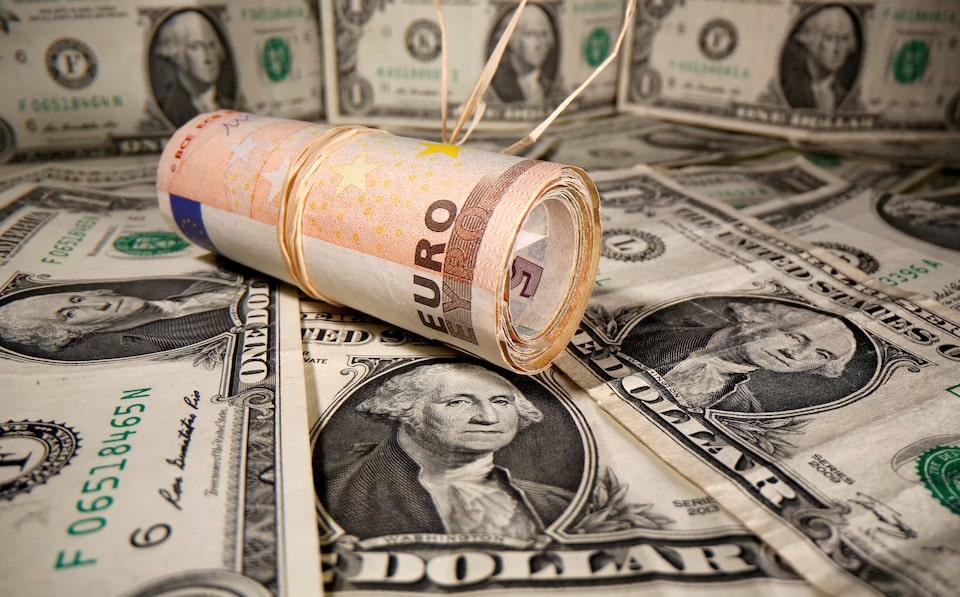
Euro rises to four-month high versus US dollar Dollar index hits four-month low China announces more fiscal stimulus to boost consumption Mixed US economic data muddies outlook Focus on ECB rate policy decision on Thursday NEW YORK, March 5 (Reuters) - The euro ascended to four-month highs on Wednesday against the U.S. dollar, as Europe's growth prospects improved after Germany's proposed 500 billion euro ($531 billion) infrastructure fund, potentially offsetting global trade tensions. The greenback, on the other hand, fell against most currencies, weighed down by an uncertain growth outlook driven by fears about the impact of tariffs on inflation and the economy. Investors are now starting to price in the potential for outright U.S. contraction, with traders on the prediction market Kalshi currently implying a 42% chance of a U.S. recession this year. "We are experiencing a change in sentiment when it comes to relying on American markets," said Juan Perez, director of trading, at Monex USA in Washington. "If things are headed towards a restrictive protectionism, the financial system will start making adjustments and right now it seems shedding dollar positions is prudent. If tariffs and trade wars are perceived as negative on the American economy, we return to speculation over the chances for looser monetary policy." The euro , meanwhile, climbed 4% this week, on track for its best week since November 2022, taking another leg higher after a late Tuesday announcement from the parties hoping to form Germany's next government of the planned new fund and an overhaul of borrowing rules. It rose to its highest since November 8 against the dollar and was last up 1.5% at $1.0791, on pace for its best daily gain since November 2023. The euro also gained against other currencies, including the British pound, the Japanese yen and the Swiss franc, , , . "The expectation that increased government expenditure could stoke inflation has reinforced the case for tighter European Central Bank policy," wrote Fawad Razaqzada, market analyst, at City Index and Forex.com in emailed comments. The dollar index, with the euro as its largest component, fell 1.2% to 104.29 and hit its lowest since November 8 as well. Germany's bond yields surged as investors digested the additional borrowing expected to back the debt overhaul, with 30-year yields jumping as much as 25 basis points at one point. Short-term yields also rose, boosting the euro against the dollar. Also in the mix, the ECB is expected to cut interest rates on Thursday, with more to follow as it tries to prop up weak economic growth. If fiscal stimulus by Europe's biggest economy supports growth, it would reduce pressure on the ECB to cut rates more aggressively and is a "positive shock" for the euro, said Lee Hardman, senior currency analyst at MUFG. Other European currencies also rallied against the dollar, with sterling rising to a four-month peak of $1.2899 and it last traded up 0.8% at $1.2897. Against the Swiss franc, the dollar was up 0.2% at 0.8903 franc . MORE TARIFFS Signs of slowing economic growth in the United States, partly as a result of uncertainty about tariffs, also weakened the greenback. The dollar fell 0.6% against the yen to 148.87 . On Tuesday, U.S. President Donald Trump vowed again to impose reciprocal tariffs from April in his first speech to Congress since taking office. His 25% tariffs on imports from Mexico and Canada took effect on Tuesday, along with a doubling of duties on Chinese goods to 20%. Canada and China quickly acted in kind, while Mexican President Claudia Sheinbaum vowed retaliation but did not provide details. However, on Wednesday, the White House walked back some of Trump's tariff announcements. The Trump administration, according to the White House, will exempt automakers from the steep 25% tariffs on Canada and Mexico for one month as long as they comply with the terms of an existing free-trade agreement. Currency traders, however, are still struggling to assess whether the tariffs will be permanent or if they are negotiable. The Canadian dollar rose 0.3% to C$1.4341 per U.S. dollar. U.S. economic numbers on Wednesday, meanwhile, were mixed, with private payrolls slowing sharply last month, while the service sector expanding as price growth accelerated. Private payrolls increased by only 77,000 jobs last month after an upwardly revised 186,000 gain in January. Economists polled by Reuters had forecast private employment rising 140,000. U.S. services sector growth, on the other hand, unexpectedly picked up in February and prices for inputs increased. The Institute for Supply Management's non-manufacturing purchasing managers index climbed to 53.5 last month from 52.8 in January. In Asia, China pledged more fiscal stimulus on Wednesday, signalling greater efforts to boost consumption to protect economic growth amid heightened trade tensions with the United States. The offshore yuan edged up 0.2% to 7.239 per dollar. The China-sensitive Aussie , traded 1.1% higher at US$0.6338, also boosted by upbeat domestic data. Sign up here. https://www.reuters.com/markets/currencies/euro-gets-lift-german-debt-brake-reform-currencies-mired-trade-war-fallout-2025-03-05/
2025-03-05 06:57
Growth risks shoot up investors' worry list Focus shifts from impact of tariffs on inflation to growth Hedge funds turn bearish on equities - Goldman LONDON, March 5 (Reuters) - Global growth concerns have shot back onto the radar of financial markets as weakening U.S. economic data and growing trade tensions hurt consumer confidence and business activity. Although recession is not the base-case scenario for economists, given underlying U.S. resilience, recent data has unnerved investors and U.S. President Donald Trump's new 25% tariffs on Mexico and Canada are exacerbating growth concerns. A shift in the mood music is apparent across markets. Oil prices are at their lowest since October , stocks from New York to Tokyo are retreating from recent multi-year highs and two-year U.S. Treasury yields are at their lowest since October as bond investors see increased chances of near-term rate cuts. "One thing is essential for an economy and that's confidence, which has taken a hit," said Francois Savary, chief investment officer at Genvil Wealth Management, referring to weakening U.S. consumer and business sentiment. "I don't think it's (recession) a done deal but it's a reason why we have decided to decrease (U.S.) equity exposure." U.S. consumer confidence in January slumped the most in 3-1/2 years, retail sales dropped by the most in nearly two years, and Monday's U.S. manufacturing activity data showed big falls in new orders and employment. "We don’t think we will see a (U.S.) recession but we do see a modest growth slowdown," said Joost van Leender, senior investment strategist, at Van Lanschot Kempen Investment Management in Amsterdam, adding consumers were feeling uncertain about "chaotic" U.S. policy. Van Leender said he had trimmed U.S. equity holdings in late January and is overweight Treasuries as yields are likely to fall as the economy decelerates. Highlighting the change in fortunes, the Atlanta Fed's GDPNow model estimate for annualised growth this quarter on Monday fell to -2.8% from +2.3% a week ago. Analysts stress that recent U.S. data is likely to have been skewed by one-off factors such as cold weather, and strong imports in the case of the Atlanta Fed's model. But they also note that a trade war means focus is quickly shifting from inflation to the growth risks from U.S. tariffs. China has responded to a doubling of duties on Chinese goods to 20% with additional tariffs of 10%-15% on certain U.S. imports from March 10. Europe is also in the firing line for higher U.S. tariffs, and trade-vulnerable auto stocks dropped 4% on Tuesday after the tariffs on Mexico and Canada, where many cars for the U.S. market are made. (.SXAP) , opens new tab Morgan Stanley estimates that the new U.S. tariffs on China, Mexico and Canada could shave 0.7-1.1 percentage points off U.S. economic growth in coming quarters, deliver a 2.2 to 2.8 percentage point hit to Canadian growth, and push Mexico into recession. Canadian Chamber of Commerce CEO Candace Laing warned that U.S. tariff policy was forcing Canada and the U.S. toward "recessions, job losses and economic disaster". "Time to add a new word to the dictionary, 'Trumpcession', SEB economist Marcus Widén said in a note. RATE CUT PRESSURE The Canadian dollar and Mexican peso briefly hit one-month lows on Tuesday. Notably, the dollar, which has generally benefited from trade tensions, has also weakened as U.S. growth worries weigh . Some reckon the U.S. economy could be at risk from a worrying mix of sluggish growth and relentless inflation. Analysts said a trade war keeps pressure on central banks globally to keep cutting rates to shore up growth. Traders are now pricing in 75 basis points of U.S. rate cuts by year-end versus just one cut in mid-January when data was strong. After ending February with their biggest monthly drop since late 2023, 10-year U.S. Treasury yields are eyeing 4% . "The bond market is moving towards pricing a soft patch and maybe a recession," said Forvis Mazars chief economist George Lagarias. The European Central Bank is tipped to cut rates again on Thursday and Morgan Stanley said it expects another cut in April as economic data and inflation weaken. Even if U.S. economic data improves, analysts said the cloudier outlook was reason enough to remain cautious on equities. Hedge funds that had snapped up global equities have fled bullish bets and put on wagers that stocks would decline, a Goldman Sachs note on Monday showed. Consumer discretionary stocks, an economic bellwether and indicator of shoppers' purchasing power for nice-to-have products, was the worst-performing U.S sector last month, the note showed. Friday's closely-watched U.S. jobs report takes on additional significance with growth risks in focus. "This economic cycle is consumption-led and can only die with the labour market," said Lombard Odier's chief economist Samy Chaar. "The Fed has to be very mindful of that." Sign up here. https://www.reuters.com/markets/us/global-markets-growth-analysis-2025-03-05/

2025-03-05 06:50
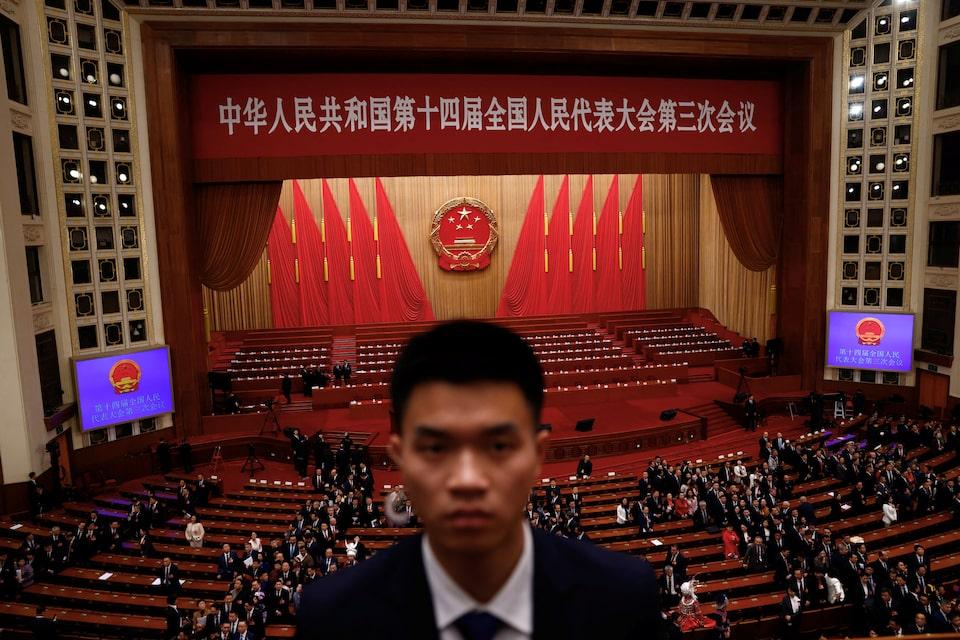
BEIJING, March 5 (Reuters) - China laid out its major policy priorities for 2025 at an annual parliamentary meeting on Wednesday, including how it plans to spur consumption and achieve technological breakthroughs. Here are some of the key industries and technologies mentioned in the reports and on the sidelines of the meeting: ARTIFICIAL INTELLIGENCE China pledged to accelerate artificial intelligence (AI)development, with Premier Li Qiang's government work report saying that AI would be integrated into the country's manufacturing base. The plan calls for broader deployment of large language models and aims to leverage China's industrial strengths to expand AI applications. It also highlighted embodied intelligence - the technology underlying humanoid robots - positioning it as a key industry of the future. AVIATION China state planner, the National Development and Reform Commission (NDRC), said it plans to boost production capacity for the homegrown C919 narrow-body passenger jet and accelerate efforts to expand the overseas market for its smaller C909 regional jet. Both jets are made by state planemaker Commercial Aircraft Corporation of China. AUTOS China plans to further boost domestic demand for cars with subsidies this year with a 300 billion yuan ($41.32 billion)boost to its consumer goods trade-in program. The subsidy program covered over 6.8 million vehicles last year. It also said it would to "vigorously develop" intelligent connected new energy vehicles as part of its AI initiatives, and also expand large-scale applications of intelligent connected vehicles at the city level. PLATFORM ECONOMY China will promote the healthy and "well-regulated" development of the platform economy, Li's report said. Authorities plan to encourage further protections for merchants as well as the standardisation of promotion rules, given the increase in low price matching policies across platforms which has caused intense price competition, Luo Wen, head of the State Administration for Market Regulation told reporters on the sidelines of the parliamentary meeting. China's so-called 'platform economy' which refers to its enormous e-commerce market dominated by platforms from tech giants Alibaba (9988.HK) , opens new tab, PDD Holdings (PDD.O) , opens new tab and JD.com (9618.HK) , opens new tab. DATA China will improve its basic data system and further develop and utilize data resources, as part of a broader plan to energize its digital economy, Li's work report said. It will also promote cross-border data flows though keeping them under regulation. Cross-border data flows is an area that has concerned many foreign companies in China. HEALTHCARE China will revise its centralized drug procurement system following recent quality concerns over generic medicines supplied to public hospitals. The plans also include expanding mental health education, enhancing disability services, and accelerating the development of long-term care insurance programs. STEEL China, for the first time in the past five years, unveiled a plan to trim crude steel output this year in an NDRC draft report. Although it does not give a specific target of output cut, market participants, who widely did not expect to see such a clear guidance for the steel industry in such reports, expect China's giant steel sector will see some benefits if implemented stringently. China's ailing steel market has taken a hit from the protracted property woes and its growing steel exports have stoked mounting trade frictions from overseas countries, who say the flood of cheap Chinese steel products have hurt local manufacturers. Another wave of trade frictions stirred by U.S. President Donald Trump's new tariffs has clouded outlook for its steel exports this year. China has started to control its crude steel output from 2021 in a bid to limit carbon emissions. ($1 = 7.2602 Chinese yuan renminbi) Sign up here. https://www.reuters.com/world/asia-pacific/what-chinas-priorities-mean-industries-companies-2025-03-05/
2025-03-05 06:44
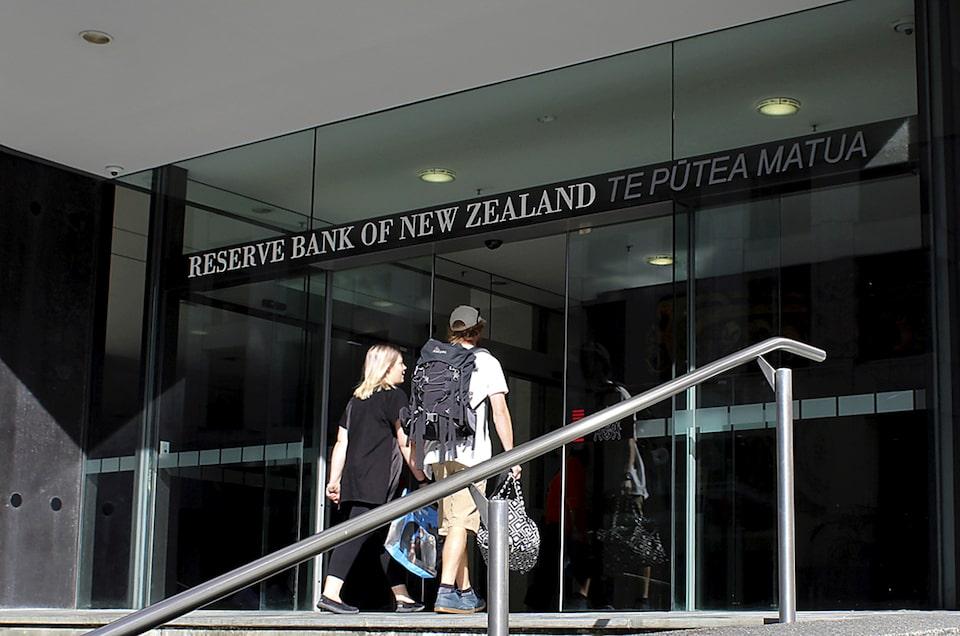
Adrian Orr's resignation as governor came without warning PM, Fin Min had previously questioned Orr's reappointment Deputy Governor Hawkesby to act as interim governor RBNZ, under Orr, raised rates sharply to contain inflation, causing recession March 5 (Reuters) - The head of New Zealand's central bank resigned suddenly on Wednesday, ending a seven-year term that had become contentious at times after painfully high interest rates tipped the country into its worst downturn since 1991. No reason was given for the surprise departure of Adrian Orr as governor of the Reserve Bank of New Zealand, whose term will now end three years early, on March 31. "I leave the role with consumer price inflation at target, and an economy in a cyclical recovery following the long period of COVID-related disruption. The financial system remains sound," Orr said in a statement. The current National Party-led government of Prime Minister Christopher Luxon was critical of Orr's stewardship while it was in opposition, blaming him for allowing inflation to soar after the pandemic and then for the high interest rates that led to recession. Finance Minister Nicola Willis told reporters she had known for a few days that talks had been going on between Orr and the RBNZ board on him leaving, but offered no reason for the move. Deputy Governor Christian Hawkesby will be the acting governor until March 31, when Willis - on the recommendation of the RBNZ board - will appoint a stand-in governor for up to six months as the central bank seeks a permanent replacement. Orr will be on leave until he finishes in the role at the end of March. "I’m stunned by the sudden resignation of the RBNZ Governor," said Brad Olsen, Principal Economist at Infometrics. "There's more questions than answers...," he said. "The fact that an Acting Governor is in place, despite the Governor remaining until 31 March, increases the current confusion and questions." UNRELENTING CRITIQUE The announcement comes just as the RBNZ is hosting an international conference of central bankers and academics to celebrate 35 years of its world-beating adoption of inflation targeting as a focus of monetary policy. Reserve Bank Board Chair Neil Quigley said in a news conference later in the day that Orr will no longer be attending the conference. "I think you have to remember that the job of the Reserve Bank governor is one where you face unrelenting critique of your actions," Quigley told reporters. Orr was reappointed as the central bank governor for another five-year term in March 2023 before the National Party won power, a decision that drew some criticism from Luxon and Willis. While Orr helped lead a massive stimulus programme to help the country deal with the economic damage caused by the pandemic, that in turn helped ignite a painful flare up in inflation. The RBNZ reacted by raising interest rates aggressively from a record low of 0.25% to ultimately reach an eye-watering 5.50% and tipping the economy into recession last year. This was New Zealand's worst economic downturn since 1991 outside of the pandemic, which analysts blame in part on low productivity and various policy missteps, in part caused by unreliable data. At the bank's last monetary policy meeting on February 19, Orr had shown no inclination of leaving as he announced a half point cut in interest rates to 3.5%. He also flagged further easings of a quarter point in April and May, which financial markets were still fully priced for. The local dollar also showed limited reaction, dipping only slightly to $0.5652 . Central bankers have faced intense scrutiny in the recent years over pandemic policies and rising living costs. The head of neighbouring Australia's central bank suffered an early end to his 43-year career amid perceived missteps during the pandemic. Sign up here. https://www.reuters.com/world/asia-pacific/new-zealand-central-bank-announces-surprise-exit-governor-2025-03-05/
2025-03-05 06:37
MOSCOW, March 5 (Reuters) - Russia's largest gold producer Polyus (PLZL.MM) , opens new tab reported record production and core earnings for 2024 on Wednesday, thanks to higher gold prices, in spite of Western sanctions on Russia and the company. Gold prices are up more than 11% this year at $2,915.80 an ounce, after rising 27% last year, the precious metal's best performance in over a decade. Russia had a 9% share of global gold production in 2023, second only to China. Adjusted earnings before interest, tax, depreciation and amortisation (EBITDA) rose 49% to $5.7 billion, supported by revenue of $7.3 billion, Polyus said. Net income rose 86% year-on-year to $3.2 billion. "(The) main drivers were higher gold sales volumes and higher gold prices during the reporting period," Polyus said. All major Russian gold miners, including Polyus, are under Western sanctions, and the United States, Britain and the European Union banned imports of Russian gold in 2022. Western sanctions have cut many Russian industrial companies' access to critical equipment and forced them to look to alternative import sources from countries like China. Polyus is continuing to reconfigure sales channels and find new suppliers, it said. In December, it blamed the sanctions, which it believes are unjustified, for the near-doubling of development costs at its giant Sukhoi Log gold deposit in Siberia to $6 billion. The company confirmed plans to pay dividends twice a year, targeting 30% of EBITDA. The board will consider fourth-quarter dividends on March 10, which could amount to about 575 roubles ($6.41) per share, T-Investments analysts calculated. Polyus beat production guidance to record a 7% increase in output to 3 million ounces in 2024, while sales rose by 11% to 3.1 million ounces. It expects gold output to fall to between 2.5 million and 2.6 million ounces this year, while capital expenditure is forecast at $2.2 billion to $2.5 billion, up from $1.26 billion in 2024, as it accelerates development of the Sukhoi Log project. ($1 = 89.7000 roubles) Sign up here. https://www.reuters.com/markets/commodities/russias-polyus-says-2024-ebitda-record-57-billion-2025-03-05/