2026-01-09 23:15
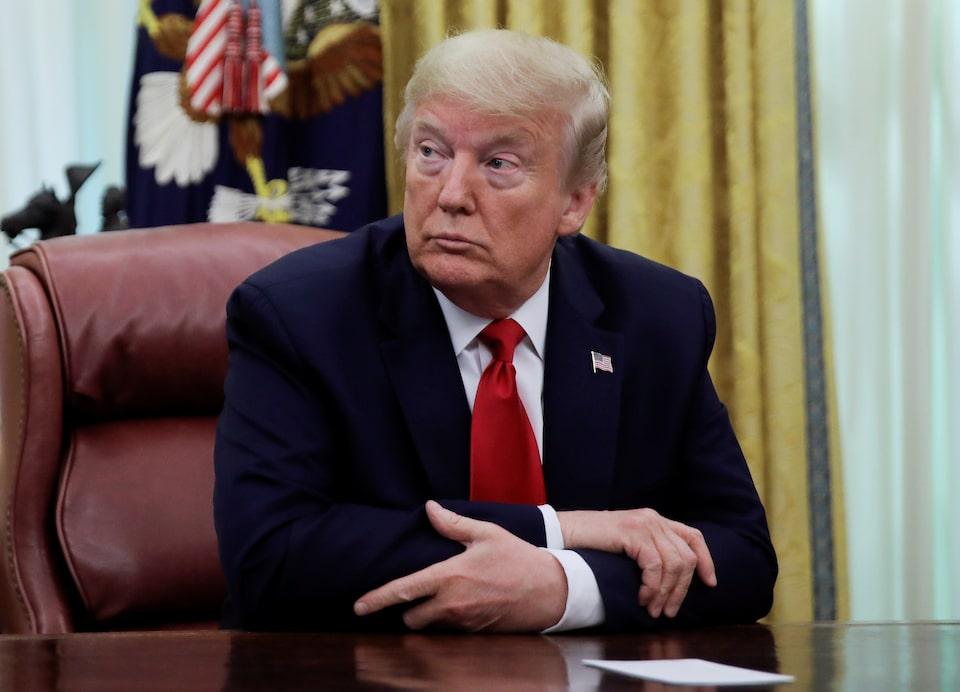
Jan 9 (Reuters) - New York's attorney general sued the Trump administration on Friday for suspending construction on two major offshore wind projects that the state says it needs to power 1 million homes and reduce its reliance on fossil fuels. In a pair of lawsuits, New York Attorney General Letitia James is asking a federal court in Washington to block U.S. President Donald Trump's December 22 freeze on federal offshore leases held by Norway's Equinor (EQNR.OL) , opens new tab and Denmark's Orsted (ORSTED.CO) , opens new tab. Sign up here. An Interior Department spokesperson said the agency would not comment on pending litigation. Interior has said it paused the projects due to complaints by the Pentagon that wind turbines cause radar interference that can make it hard to identify security threats. "New Yorkers deserve clean, reliable energy, good-paying jobs, and a government that follows the law," James said in a statement. "These projects were carefully reviewed and already under construction when the federal government pulled the plug without explanation. This reckless decision puts workers, families, and our climate goals at risk, and my office is taking action to stop it." James, an elected Democrat, is one of the Republican president's top political antagonists. Equinor and Orsted have faced repeated setbacks to their offshore wind developments under Trump, who has said wind turbines are ugly, costly and inefficient. Both offshore wind developers have filed their own lawsuits against Interior on behalf of their multibillion-dollar New York projects, Empire Wind and Sunrise Wind. Equinor's Empire Wind has warned in court papers that it faces likely termination if it cannot restart construction by January 16 and has asked a federal judge in Washington for a preliminary injunction. A hearing on that request will take place next week. Orsted has sued on behalf of Sunrise Wind and another project, Revolution Wind, which is being built off the coast of Rhode Island. The company in September succeeded in getting a federal judge to block a separate Trump administration stop-work order on Revolution Wind. The Interior Department's pause on offshore wind leases also affects Avangrid's Vineyard Wind project off the coast of Massachusetts and Dominion Energy's (D.N) , opens new tab Coastal Virginia Offshore Wind facility. https://www.reuters.com/legal/litigation/new-york-sues-trump-administration-over-pause-two-offshore-wind-projects-2026-01-09/
2026-01-09 22:49
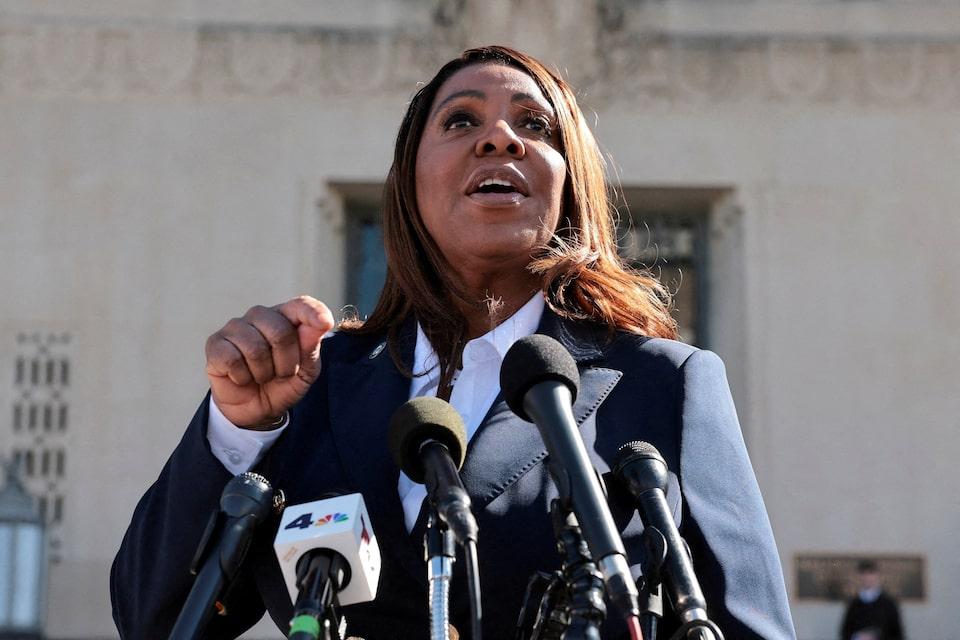
Jan 9 (Reuters) - The U.S. Environmental Protection Agency will reassess the safety of herbicide paraquat, its administrator Lee Zeldin said on Friday on X, adding that the body is requiring manufacturers to thoroughly prove that current uses are safe in real-world conditions. Syngenta, which markets paraquat under the brand name Gramoxone, is among the herbicide's major sellers. Sign up here. The Swiss-based agricultural chemical company is facing several lawsuits in the U.S., where plaintiffs allege exposure to paraquat caused them to develop Parkinson's, a degenerative brain disease that leads to loss of muscle coordination. It has previously said there was "no credible evidence" that paraquat causes Parkinson's. In agricultural settings, paraquat is mostly applied to soybean, corn and cotton crop fields to control invasive weeds and grasses, according to the Environmental Protection Agency. https://www.reuters.com/world/us-epa-will-reassess-safety-herbicide-paraquat-says-its-chief-2026-01-09/
2026-01-09 22:48
Jan 9 (Reuters) - (This Jan 9 story has been corrected to remove the inaccurate reference to a supply agreement with Woodside Energy in paragraph 5) U.S.-based Commonwealth LNG has received a 20-year authorization from the Department of Energy to export liquefied natural gas from its proposed Louisiana facility to countries without free trade agreements with the United States. Sign up here. The company has also received an approval for a period of 25 years for exports to FTA nations. The authorizations will become effective either when the facility starts exporting commercially or seven years from the date the permission was granted. Commonwealth has been attempting to build the country's first integrated LNG export facility, where its major shareholder Kimmeridge will supply gas from its Eagle Ford shale production to the plant. It has also signed supply agreements with EQT (EQT.N) , opens new tab, Glencore (GLEN.L) , opens new tab, Japan's biggest power generator JERA and Malaysia's Petronas (PGAS.KL) , opens new tab. Commonwealth has so far sold 5 million metric tons per annum of planned capacity, but is still short of selling out the total 9.5 mtpa that would come online upon completion. LNG developers typically reach a final investment decision on projects once they have secured enough supply deals to obtain the necessary financing for construction. The company had secured final non-FTA export authorization from the energy department for its export facility in September last year. Its Louisiana facility is designed to produce 9.5 million tonnes of LNG annually and had received approval from the Federal Energy Regulatory Commission in 2025. https://www.reuters.com/business/energy/commonwealth-lng-secures-20-year-us-approval-non-fta-exports-2026-01-09/

2026-01-09 21:44
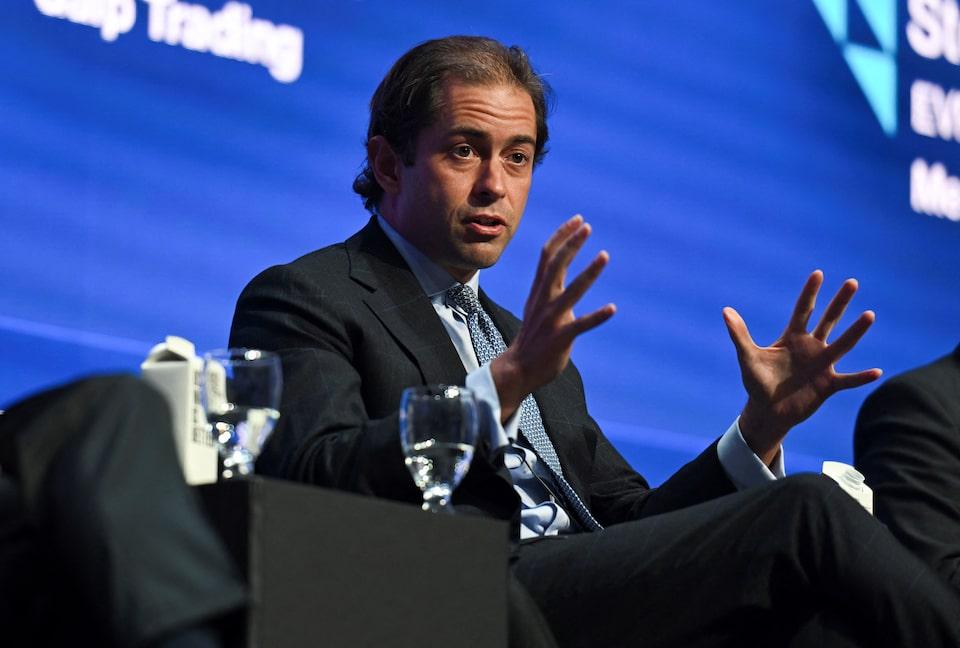
NEW YORK, Jan 9 (Reuters) - Commodities trade houses Trafigura and Vitol have agreed to provide logistical and marketing services for the sale of Venezuelan oil at the request of the U.S. government, a Trafigura spokesperson told Reuters by email. Reuters first reported on Thursday that the two companies were in talks with the U.S. government for such deals, citing sources familiar with the talks. Sign up here. The commodities traders were competing with U.S. oil producers and others for what are expected to be lucrative agreements for exports of Venezuelan oil. U.S. officials have said they are seeking to control Venezuelan oil sales indefinitely after the U.S. captured the South American country's President Nicolas Maduro on Saturday. Trafigura will load its first vessel of Venezuelan crude exports to the U.S. next week, its Chief Executive Richard Holtum told U.S. President Donald Trump at a gathering of oil executives at the White House earlier on Friday. Holtum and Trafigura did not provide further details. A Trafigura spokesperson said the company is in full compliance with applicable sanctions. Trafigura has all the necessary licenses it needs for transactions related to Venezuela, they added. Geneva-based Vitol has also secured a preliminary special license for imports and exports of Venezuelan oil, Reuters reported on Thursday. "We're here to ensure that you're going to be able to move all of this oil all around the world," John Addison, a senior Vitol executive said at Friday's White House event. Vitol's Head of Americas Ben Marshall thanked Trump for the opportunity to work with the U.S. and Venezuelan government to bring the South American country's crude oil to the market at a fair price. "Vitol has a long history of working on complex energy transactions requiring agile logistics, operations and finance. We are pleased to deploy our expertise to help flow PDVSA's crude oil and products to market," Marshall said in a statement to Reuters. https://www.reuters.com/business/energy/trafigura-load-first-ship-venezuelan-oil-exports-us-next-week-ceo-says-2026-01-09/
2026-01-09 21:07
Jan 9 (Reuters) - Electrical equipment maker Forgent Power Solutions reported an 83.9% surge in quarterly revenue in its filing for a U.S. initial public offering on Friday, as more issuers seek to gauge investor interest early this year. IPOs are likely to gain momentum in 2026 as anticipated interest rate cuts bolster investor confidence and appetite for risk. Sign up here. Filing now also makes sense because market attention later in the year is likely to shift to several larger, highly anticipated IPOs, making early visibility an advantage, said Kat Liu, a vice president at IPOX. "Industry peers such as Vertiv have performed very well, which may also provide a constructive backdrop," she added. Activity has begun to pick up, with biopharmaceutical companies Eikon Therapeutics and Veradermics, as well as furniture retailer Bob's Discount Furniture filing for U.S. IPOs on Friday. Digital bank PicPay filed earlier this week, as the market begins to stir after the holiday season. Forgent Power aims to list on the New York Stock Exchange under the ticker symbol "FPS". The Dayton, Minnesota-headquartered company reported a net income of $15.6 million on $283.3 million revenue for the quarter ended September 30, compared with a profit of $7.3 million on $154 million revenue in the same period a year earlier. "In Forgent's case, margins can be sensitive to raw material and component costs (such as steel, copper, and electrical components), supply-chain availability, and the company's ability to pass higher input costs through to customers on a timely basis," Liu said. "Other risks include exposure to cyclical end-markets such as data centers and industrial infrastructure, and competitive pressure from larger, well-capitalized peers." Forgent Power is a designer and manufacturer of electrical distribution equipment used in data centers, the power grid and energy-intensive industrial facilities, offering panelboards, switchboards and power distribution units, among other electrical products. Goldman Sachs, Jefferies and Morgan Stanley are the lead underwriters for the offering. https://www.reuters.com/business/energy/electrical-equipment-maker-forgent-power-files-us-ipo-2026-01-09/

2026-01-09 20:24
Trump aims for $50 oil, below profitable level for U.S. producers Venezuelan oil redirection to pressure U.S. shale margins U.S. refineries to benefit from Venezuelan oil influx HOUSTON, Jan 9 - U.S. oil producers already reeling from low oil prices are facing renewed pressures, as President Donald Trump pushes them to boost output in Venezuela - a move that would weaken the oil market, cut revenues and hurt industry at home. Trump has enacted policies that he says would unleash American energy and lower prices at the pump - a promise that would help U.S. consumers but squeeze oil industry revenues. It's hard to do both - because lower profits mean oil companies drill less, not more. Sign up here. Trump has asked U.S. oil companies to fix Venezuela's oil industry and boost its production. In years gone by, access to Venezuela's vast onshore reserves - estimated to be the world's largest - would have been a once-in-a-generation opportunity. But with oil markets well supplied, OPEC members sitting on spare capacity - and with abundant opportunities to pump oil more cheaply elsewhere - U.S. oil producer executives are facing the prospect of another hit to profits in the short term if more Venezuelan oil flows to the United States. Oil prices in the U.S., the world's largest producer, are already below the $65 a barrel level many need to turn a profit, prompting mass layoffs, idled oilfield equipment and spending cuts. U.S. oil futures settled at $59.12 on Friday. U.S. oil executives, ranging from majors like Chevron and Exxon to lesser-known companies from Energy Secretary Chris Wright's home state of Colorado, were set to meet at the to discuss potential investment plans in Venezuela. Treasury Secretary Scott Bessent this week said smaller, independent companies have expressed interest in developing the South American country's vast resources, and the U.S. government has floated the idea of subsidizing investments into the industry. The reality on the ground for U.S. producers is stark, particularly as Trump moves Venezuelan barrels to the already well-supplied market. Top producers Chevron(CVX.N) , opens new tab, Exxon Mobil (XOM.N) , opens new tab, ConocoPhillips (COP.N) , opens new tab, and the world's largest oil service providers SLB (SLB.N) , opens new tab and Halliburton(HAL.N) , opens new tab collectively cut thousands of jobs in 2025. "This recent move to redirect Venezuelan crude to the U.S., potentially tens of millions of barrels will put pressure on domestic shale producers," said Linhua Guan, CEO of Surge Energy America, one of the largest private U.S. crude producers, with operations in the Permian Basin. "With U.S. output near record highs, smaller U.S. shale operators face tighter margins and increased vulnerability in an already oversupplied market," said Guan. Venezuela would sell 30 to 50 million barrels of sanctioned oil to the United States, Trump said this week, following the U.S. capture and transfer of Venezuelan President Nicolas Maduro from Caracas to detention in the United States over the weekend. "The surge of Venezuelan barrels is more than a supply shift; it is a stress test for the American shale model," said Jasen Gast, CEO of Houston-based oilfield service company, Oilfield Service Professionals, which operates in the U.S. as well as internationally. U.S. production climbed to a record 13.61 million bpd in 2025 but it is set to fall to 13.53 million bpd in 2026, according to the Energy Information Administration, while average U.S. retail gasoline prices fell for the third straight year to $3.10 a gallon last year. With output growth slowing, and some expecting declines, producers are struggling in a weak price environment amid oversupply. Additional heavy Venezuelan barrels, which are well-suited to many U.S. refineries, could further flood the market and pressure prices. "As these heavy-grade barrels flood Gulf Coast refineries, they create a price ceiling that threatens to pin WTI near the $50 mark, squeezing the margins of even the most efficient Permian operators," Gast said. Wright said on Wednesday at a conference in Miami that he wants to sell Venezuelan oil to U.S. refineries. They could benefit from any influx of barrels from the South American country. But what may be a boon to refiners would hurt the companies operating in America's vast oilfields. Shale producer EOG Resources' (EOG.N) , opens new tab Chief Financial Officer Ann Janssen said at that same conference that oversupply and potentially higher production from Venezuela was pushing oil prices down, a trend that is likely to persist for several more quarters. "Prices are going down to the point that either OPEC cuts production, or U.S. shale players cut their budgets and U.S. production rolls over," said Dan Pickering, chief investment officer at Pickering Energy Partners. US SHALE PRODUCTION IN THE BALANCE Activity in the oil and gas sector was in decline last year, according to a Federal Reserve Bank of Dallas survey that polls executives across parts of Texas, New Mexico and other key production areas. Producers across the U.S. have watched the best drilling locations dry up and breakeven prices rise. "$50 oil is really where production would start to fall," said Matthew Bernstein, Vice President, North America oil and gas at Rystad Energy. Rystad sees onshore U.S. output, excluding Alaska, declining by around 150,000 bpd through 2026 in a $50 price environment. Technological improvements have allowed drillers to eke out more oil at lower prices, but some analysts and industry participants have warned those improvements may be approaching their limit. The OPEC+ producer group opted to pause production target increases for the first quarter of 2026, amid ample global supplies. OPEC could, however, start increasing output again as it seeks to take market share from U.S. shale producers. Redirecting Venezuelan barrels into the U.S. market is part of a broader effort to combat inflation by pressuring oil prices, Michael Alfaro, CIO of Gallo Partners, a regulatory - and policy-focused hedge fund said. While Trump is supportive of U.S. shale in principle, lower oil prices combined with steel tariffs, are two persistent headwinds for this group, he added. "I’m very much in a wait-and-see mode because there are still big unanswered questions," said Mike Oestmann, CEO of shale producer Tall City Exploration in the Permian Basin. https://www.reuters.com/business/energy/trump-pushes-drill-baby-drill-agenda-venezuela-hurts-producers-home-2026-01-09/