2025-03-04 10:26
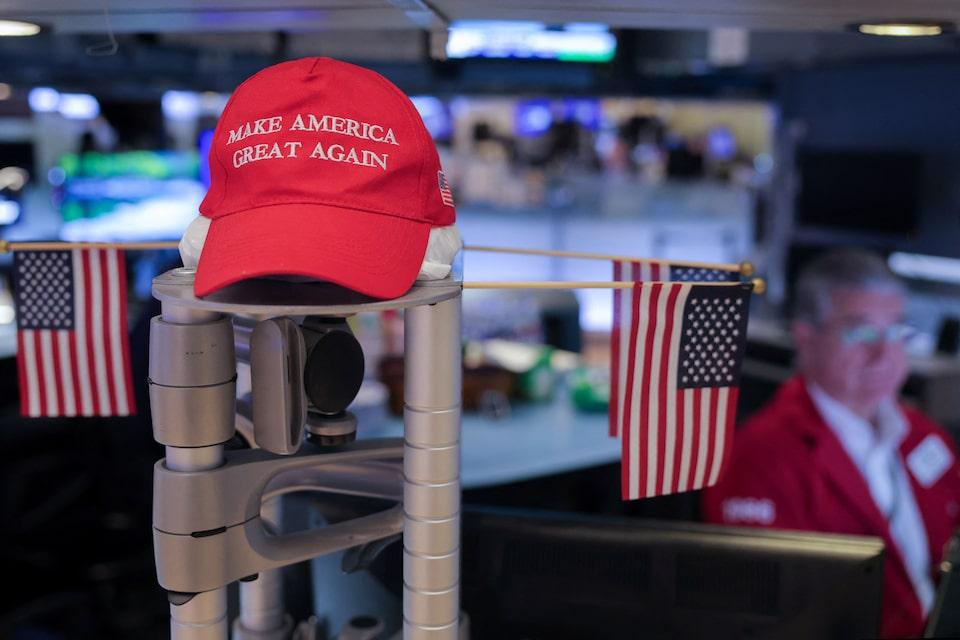
'Trump trade' in reverse Dollar down; Investors snap up 10-year Treasuries 10-yr yield hits lowest since October SINGAPORE, March 4 (Reuters) - Markets no longer think Donald Trump is full of bluster and are moving quickly to anticipate a slowdown in U.S. and global growth as he raises a wall of tariffs around the world's biggest economy and trading partners start to respond in kind. Six weeks into his second term, the U.S. president has hit imports from Mexico and Canada with 25% levies, put an additional 20% tariff on goods from China, threatened reciprocal tariffs globally and cut off military aid to Ukraine. But instead of the rising yields and higher dollar that investors had wagered on in November, the so-called "Trump trade" is in full retreat. Trade conflict has begun in earnest and the dollar is falling while bond yields dive. U.S. allies are rattled. As Goldman Sachs analysts note, the average tariff rate on imports from China is now 34% and the increase is already roughly twice as large as that in the first Trump administration. Nobody wants to bet anymore that there will be swift compromises or deals. "It is difficult for markets to get on with aggressive positioning given the risk of U.S. tariff policies turning on a dime," said Chang Wei Liang, currency and credit strategist at DBS. "In credit markets, spreads certainly look too low given the change in risk environment and a more adverse and uncertain trade backdrop." Volatility gauges for Treasuries (.MOVE) , opens new tab and for U.S. (.VIX) , opens new tab and Japanese stocks (.JNIV) , opens new tab hit their highest levels of the year this week and implied volatility in currencies ticked higher. Stocks and bond yields slid on Tuesday as investors globally ducked for cover. Defence stocks ran higher, while shares in technology companies slumped. As China announced retaliatory tariffs and Mexico and Canada prepared their responses, investors reckoned on a global growth slowdown and upped expectations for U.S. rate cuts. Futures pricing still implies about 75 basis points of U.S. cuts this year, up from about 50 bps two weeks ago, while 10-year yields hit a 4-1/2 month low of 4.115%. Investors see an uncertain outlook where shelter lies in defensive sectors such as real estate or healthcare. And, while protected companies such as U.S. steelmakers may prosper, higher prices will flow along supply chains with unpredictable effect. "I'm spending a lot of time talking to CEOs who are really trying to understand the consequence of some of this," said Goldman Sachs CEO David Solomon at conference in Australia. "Until there's more certainty, we have a little bit more runway time. I think we're going to live with a slightly higher level of volatility. But I think he (Trump) has a purposeful direction that he's pursuing, and we should take him at his word that he's going to pursue that direction." DIFFICULT TO TRADE The fall in the dollar has been one of the most eye-catching reversals as conviction turns to confusion in currency trade. What had, in January, been speculators' largest long-dollar bet in nearly a decade has rapidly unwound - so much so that, as of last week, speculators were short dollars against emerging market currencies and held a record long yen position . Against the euro , the dollar is down nearly 1% in two trading sessions as the fall in U.S. yields has coincided with rises for European yields since the continent prepares to ramp up defence spending while Trump backs away from Ukraine. At the White House, Trump took aim at China and Japan for holding their currencies too cheap. In fact, the yuan , against a basket of trading partners' currencies, is historically firm and Japan has been intervening in recent years to buy the yen . But on Tuesday, as the dollar fell, Nomura's global head of foreign exchange flow, Hoe Lon Leng, said it seemed like the "final blow" for those hoping for a higher dollar. "That argument is waning and we keep seeing the price action move the other way," he said, noting that if both China and the U.S. did not want to see the dollar go higher against the yuan "then it is going to go lower". To be sure, market gyrations have not been enormous and plenty of analysts do still see room for trade negotiations and an exit ramp from escalation. But the policy whiplash has gnawed away at hopes investors had in a breakthrough deal. And nobody can say they are sure Trump is bluffing. "The threat of tariffs has run its course for now, so the next phase is to endure them," said Jamie Cox, managing partner at Harris Financial Group in Richmond, Virigina. "Markets have to price in that reality, and those numbers are painted red." Sign up here. https://www.reuters.com/markets/investors-say-its-time-take-trump-seriously-markets-recoil-2025-03-04/
2025-03-04 10:05
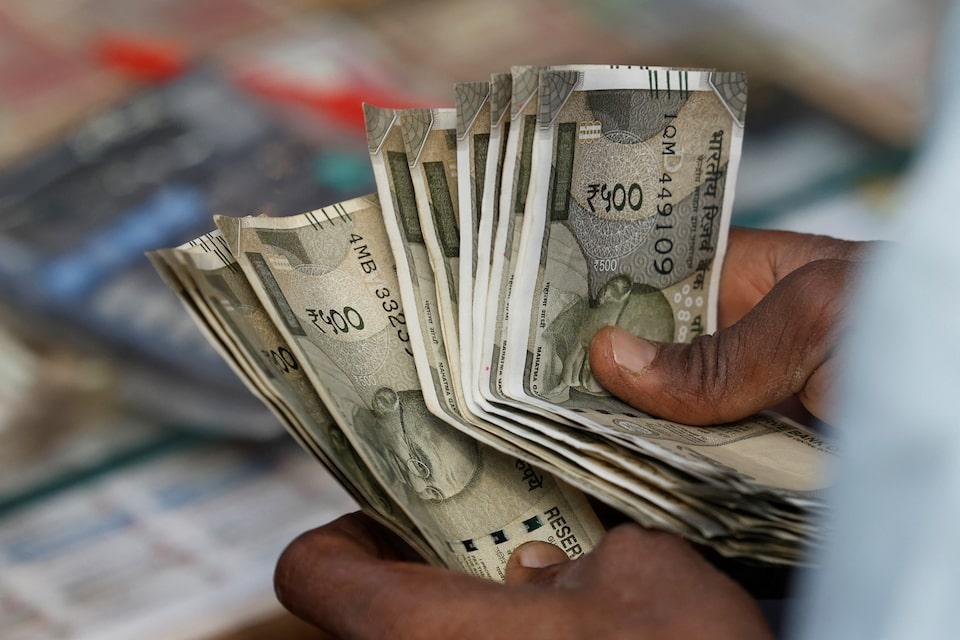
MUMBAI, March 4 (Reuters) - The Indian rupee closed slightly higher on Tuesday tracking a rise in Asian peers, while dollar demand from importers and foreign banks kept a lid on the local unit's gains. The imposition of U.S. trade tariffs on China, Canada and Mexico dampened risk appetite, triggering a decline in global stocks and bond yields. However, Asian currencies rose between 0.1% and 0.6%. The rupee closed at 87.2650 against the U.S. dollar, up 0.1% on the day. While the currency slipped a tad below 87.40 in early trading, intermittent dollar sales from state-run banks helped support the rupee, three traders said. "There was a mix of (dollar) buying from oil companies, foreign banks and routine importer covering," a trader at a state-run bank said. Persistent outflows from local equities have also weighed on the rupee in recent weeks. Overseas investors have net sold over $14 billion worth of Indian stocks so far in 2025, contributing to making the rupee Asia's worst-performing currencies. Meanwhile, U.S. President Donald Trump's new 25% tariffs on imports from Mexico and Canada took effect on Tuesday, along with a doubling of duties on Chinese goods to 20%. While the Canadian dollar and Mexican peso weakened, the offshore Chinese yuan was up 0.3% at 7.27. The dollar index was down 0.2% at 106.3 while the 10-year U.S. bond yield dipped to 4.16%, its lowest level since October last year. Concerns about weakness in the U.S. economy have weighed on the dollar and U.S. bond yields, with traders now pricing in three cuts by the Federal Reserve in 2025, a shift from less than two cuts priced earlier this year. "It's a tough call, but the tariff story could well keep (dollar index) support at 106.15/35 intact - unless US equities tank," ING Bank said in a note. Sign up here. https://www.reuters.com/markets/currencies/rise-asian-peers-helps-rupee-end-higher-even-us-tariffs-take-effect-2025-03-04/
2025-03-04 08:37
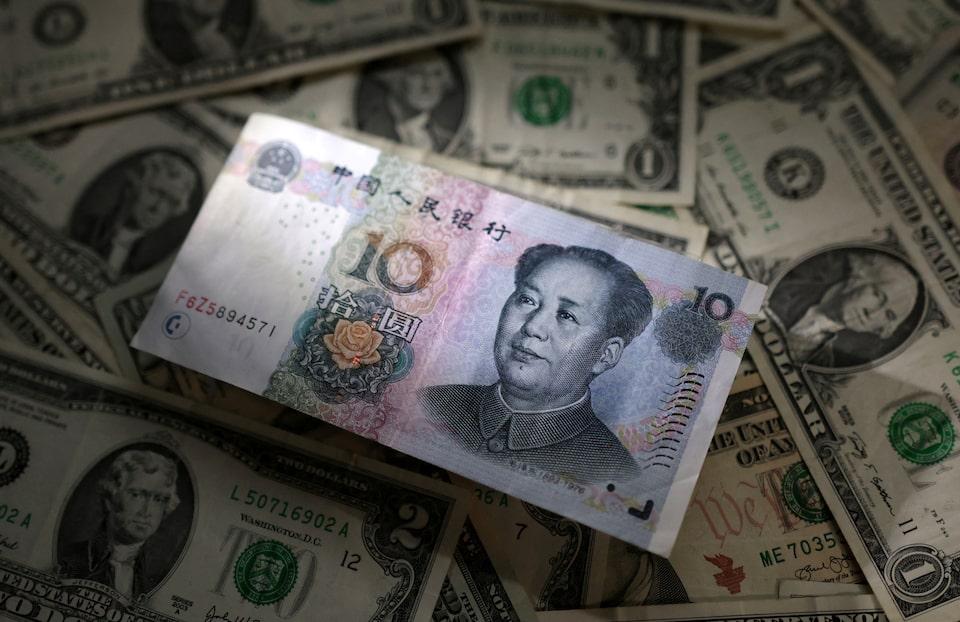
SHANGHAI, March 4 (Reuters) - U.S. President Donald Trump's criticism of China's foreign exchange policy appears to be unfounded, given the yuan's relative strength in currency markets and Beijing's efforts to keep it stable. Trump said on Monday he told the leaders of Japan and China they cannot continue to reduce the value of their currencies as doing so would be unfair to the United States. WHY IT'S IMPORTANT China's central bank has appeared to prioritise financial and currency stability in recent months by delaying monetary easing as a weaker yuan could weigh on domestic demand and trigger capital outflows. BY THE NUMBERS China's CFETS basket (.CFSCNYI) , opens new tab, which measures the yuan's value against currencies of its major trading partners, is down 1.4% this year but above the 100-mark implying the yuan has been stronger than those currencies. China's yuan has fallen 2.5% against the dollar since Trump's election win, merely reflecting a rise of the same magnitude in the dollar index . CONTEXT The yuan's low yields and China's economic slowdown have exerted pressure on the currency. Authorities have tried to stop it depreciating. The People's Bank of China (PBOC) has been guiding the yuan's daily midpoint higher and unveiled measures to attract dollar inflows. Meanwhile, China's major state-owned banks have regularly sold dollars in an attempt to prop up the yuan. KEY QUOTES Carol Kong, currency strategist at Commonwealth Bank of Australia, said Trump's remarks, while not true, might encourage China and Japan to jawbone the currencies lower to avoid higher tariffs. "There is a risk the Chinese government will use a one-time yuan appreciation as a bargaining chip in negotiations with the U.S. This may also explain why the PBOC has retained support for the yuan at the daily fix despite U.S. tariffs." Goldman Sachs said recent improvements in market sentiment around China's tech developments should support economic growth and it revised yuan forecasts higher. Sign up here. https://www.reuters.com/markets/currencies/evidence-suggests-trumps-cheap-yuan-comment-is-unfounded-2025-03-04/
2025-03-04 07:24
March 4 (Reuters) - British equipment rental firm Ashtead (AHT.L) , opens new tab missed third-quarter pretax profit and revenue expectations on Tuesday, pressured by weakness in the U.S. construction sector, which had led to a profit warning last December. The company, which plans to move its primary listing to the United States, maintained its full-year outlook on Tuesday, citing confidence in underlying demand and possible recovery from stabilising interest rates. Ashtead's revenue for the three-month period ended January 31 stood at $2.57 billion, while adjusted pretax profit reached $443 million. This was below analysts' consensus of $2.64 billion and $447 million, respectively, as compiled by the company. Sign up here. https://www.reuters.com/markets/europe/uk-equipment-rental-firm-ashtead-misses-third-quarter-profit-view-2025-03-04/
2025-03-04 07:02
March 4 (Reuters) - Monday's La Liga game between Villarreal and Espanyol at La Cerámica was postponed due to the risk of flooding, the home side said minutes after the match was scheduled to start. Both teams announced the line-up, and the players went in to warm up, before Villarreal declared that the game was postponed. "Due to the safety recommendations because of the risk of flooding as a result of the current weather conditions in Castellón, the Judge of Professional Competitions has decided to postpone today's match between Villarreal CF and RCD Espanyol de Barcelona, which was scheduled to kick off at 9pm CET (2000 GMT)," Villarreal posted on X. The Royal Spanish Football Federation said in a statement that the clubs and La Liga would have five business days to propose a new date and time for the match. La Liga had previously postponed games in Valencia following a deadly fire in the eastern coastal city in October. Villarreal are fifth in the league with 44 points. Espanyol are 15th, three points above the relegation zone. Sign up here. https://www.reuters.com/sports/soccer/villarreal-game-with-espanyol-postponed-due-flooding-risk-2025-03-04/

2025-03-04 06:59
Aramco's 2024 profit drops over 12% to $106.2 billion Signals nearly 30% lower dividends for 2025 Average realised oil prices fell to $80.2 in 2024 Aramco plans $52-58 billion in capital investments for 2025 DUBAI, March 4 (Reuters) - Saudi oil giant Aramco signalled on Tuesday it will slash its dividend payouts by nearly a third this year, meaning fewer funds for the kingdom as it races to complete several mammoth projects and possibly faces a wider budget deficit. Aramco (2222.SE) , opens new tab said it expected to declare total dividends of $85.4 billion in 2025, down sharply from last year's payout of over $124 billion, which it said was, however, based on 2023 and 2024 earnings. The Saudi government directly owns 81.5% of Aramco, while its sovereign wealth fund controls an additional 16%. It has long leaned on the group's payouts to invest in myriad sectors as it tries to wean the economy off oil. Those efforts include building or renovating 15 stadiums for the 2034 World Cup, the most high-profile of several showpiece events the kingdom will host. Last year's payouts included about $43.1 billion in performance-linked dividends, a mechanism introduced in 2023 on top of base dividends that are paid regardless of results. On Tuesday the board said it intended to pay a performance-linked dividend of just $220 billion in the first quarter and said it expected these to total $900 million for the full year, which would be a 98% decline from 2024. The record payouts in 2024 were "essential for limiting both the shortfall last year and the building up in debt," said Monica Malik, chief economist at Abu Dhabi Commercial Bank. She estimated Saudi Arabia's fiscal deficit would widen to 4% of gross domestic product in 2025 from 2.8% last year. "The budget looks to pull back spending, and there were already some signs of a fall in government spending" in the fourth quarter, Malik said. Saudi Arabia's $925 billion Public Investment Fund is driving a massive spending drive aimed at overhauling the economy. Its Aramco stake implies it received dividends of almost $20 billion last year. Aramco on Tuesday reported a fall of more than 12% in net profit to $106.2 billion in 2024, while free cash flow declined almost 16% to $85.3 billion. Average realised oil prices fell to $80.2 from $83.6 in 2023, according to a company presentation. "The decrease was primarily driven by lower revenue and other income related to sales, higher operating costs, as well as lower finance and other income," the company said in a stock exchange filing. POSSIBLE OUTPUT BOOST This year, Aramco should benefit from higher crude demand and plans by OPEC+ oil-producing nations to gradually raise output starting in April, Aramco CEO Amin Nasser said. "Definitely any additional production will benefit us, we have the additional capacity ... this is a cyclical market, you need to be resilient," he told reporters. Aramco has been pumping some 9 million barrels per day (bpd) of crude - roughly three quarters of its capacity - since mid-2023, when Saudi Arabia announced its biggest output reduction in years on top of earlier cuts agreed with allied producing countries. Nasser said 3 million bpd of spare capacity could be activated in a matter of weeks if needed. "We can manage. We have a prudent capital programme, and a flexible programme... But the upside is with Saudi Aramco," he said. Aramco's performance-linked dividends were announced following bumper profits in 2022, when oil prices soared after Russia invaded Ukraine. "Last year, the dividends - the performance-linked dividends - were covering two years, not just 2023, they were covering 2022 and 2023, so that's why you saw an increase," Chief Financial Officer Ziad Al-Murshed told reporters. JPMorgan, which last month forecast no performance-linked dividends from Aramco for 2025, said on Tuesday it expected a drop in dividend yield to 4.9% this year from more than 6% in 2024. That is lower than other oil majors but is justified by higher returns and Aramco's ability to defend its payouts amid lower oil prices, JPMorgan analysts said. ($1 = 3.7503 riyals) Sign up here. https://www.reuters.com/business/energy/aramco-expects-sharp-drop-2025-dividends-2024-profit-falls-2025-03-04/