2025-03-04 05:10
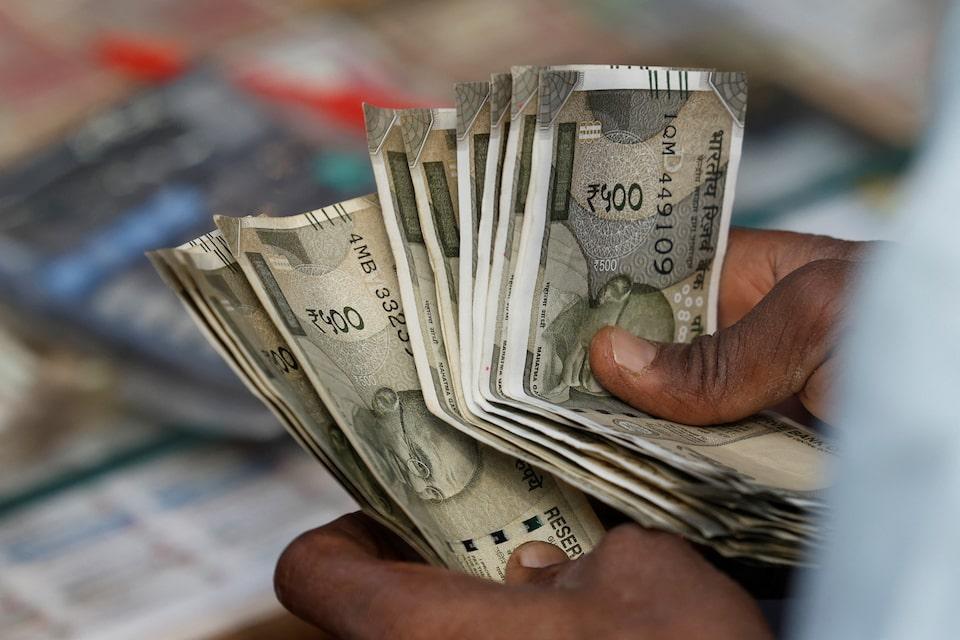
MUMBAI, March 4 (Reuters) - The Indian rupee was nearly flat on Tuesday, wedged between a broadly weaker greenback and dollar bids from foreign banks and local oil companies, while dollar-rupee forward premiums rose on the back of a decline in U.S. bond yields. The rupee was quoted at 87.3775 against the U.S. dollar as of 10:35a.m. IST, little changed from its close at 87.37 in the previous session. While concerns about a slowdown in the U.S. economy drove the dollar down by nearly 1% against its major peers on Thursday, the rupee was unable to benefit due to dollar demand from local importers and likely outflows from local stocks, traders said. Foreign investors have pulled out over $14 billion from Indian equities in 2025 so far, maintaining pressure on the rupee, which has declined 1.9% over 2025 - second only to the Indonesian rupiah's 2.4% decline. Asian currencies were steady to slightly higher, with traders keeping a close eye on U.S. trade policy measures as the 25% tariffs on Mexcian and Canadian imports are set to go into effect on Tuesday. The rupee, for its part, is expected to weaken further with "the possible application of reciprocal (U.S.) tariffs a key risk to watch moving forward," MUFG Bank said in a note. It expects the local currency to decline to 88.5 by the end of the year. Meanwhile, dollar-rupee forward premiums rose, with the 1-year implied yield up 3 basis points at 2.13% as U.S. bond yields dipped. The 1-year U.S. Treasury yield was down 2 basis points at 2.06%. A spate of softer U.S. economic data has nudged up expectations of more Federal Reserve rate cuts this year. Interest rate futures are pricing in about 3 cuts this year, compared to less than two earlier in the year. The U.S. non-farm payrolls report due on Friday will be closely watched for cues on the Fed's rate cut trajectory. Sign up here. https://www.reuters.com/markets/currencies/rupee-little-changed-forward-premiums-tick-up-us-bond-yields-dip-2025-03-04/
2025-03-04 03:33
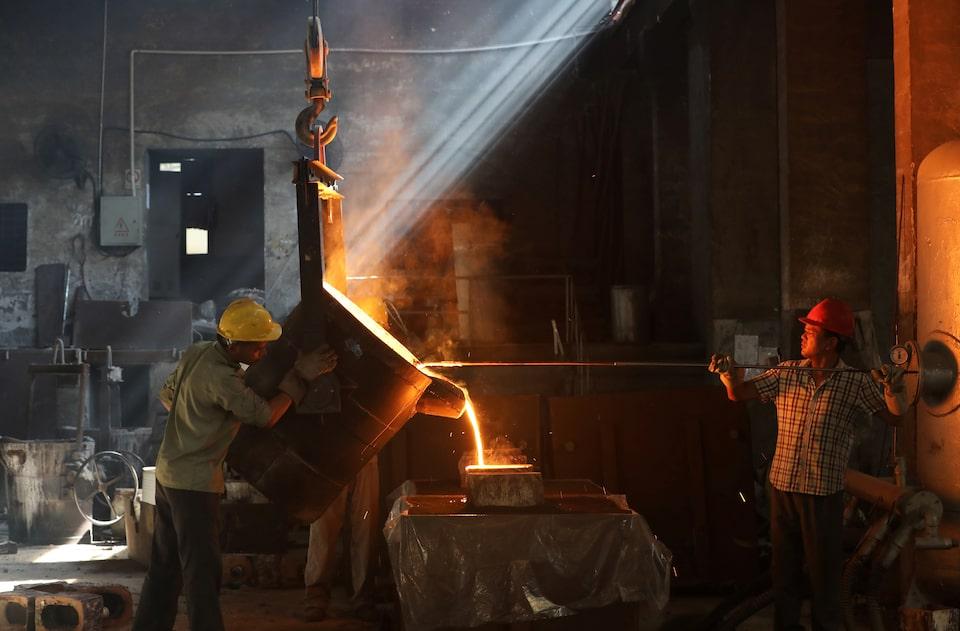
SINGAPORE, March 4 (Reuters) - Dalian iron ore futures slid for a seventh consecutive session on Tuesday as fresh U.S. tariffs on top consumer China kicked in, heightening trade tensions. The most-traded May iron ore contract on China's Dalian Commodity Exchange (DCE) closed down 1.14% at 781 yuan ($107.26) a metric ton. The benchmark April iron ore on the Singapore Exchange ticked up 0.37% to $100.25 a ton as of 0705 GMT, though prices slid to $99.35 earlier in the session, the lowest since January 15. Prices fell following reports that Chinese steel mills are reducing production to ease pollution levels ahead of the annual National People's Congress (NPC) meeting, said ING analysts. Trade tensions with the U.S. are also affecting the outlook for exports, ING added. U.S. President Donald Trump's doubling of duties on Chinese goods to 20% kicked in, launching a new trade conflict. Beijing retaliated with 10%-15% hikes to import levies covering a range of American agricultural and food products, while placing 25 U.S. firms under export and investment restrictions. As China braces for higher U.S. tariffs, policymakers face increased pressure to unveil consumer-focused policies with a longer-term impact at the NPC meeting on March 5. Tariff tensions also caused shares of Australian miners to slide, further dampening sentiment. China is one of Australia's key trading partners. Still, China's steel market is expected to gain upward momentum from consumption recovery among steel end-users this month, said Chinese consultancy Mysteel. Market sentiment may be underpinned by expectations of more policy stimulus, Mysteel added. Other steelmaking ingredients on the DCE declined, with coking coal and coke down 1.71% and 1.74%, respectively. Most steel benchmarks on the Shanghai Futures Exchange lost ground. Rebar fell 1.11%, hot-rolled coil shed nearly 0.8%, wire rod dipped 0.9% while stainless steel was up 0.04%. ($1 = 7.2816 Chinese yuan) Sign up here. https://www.reuters.com/markets/commodities/iron-ore-slips-ahead-looming-trump-tariffs-2025-03-04/
2025-03-04 03:08
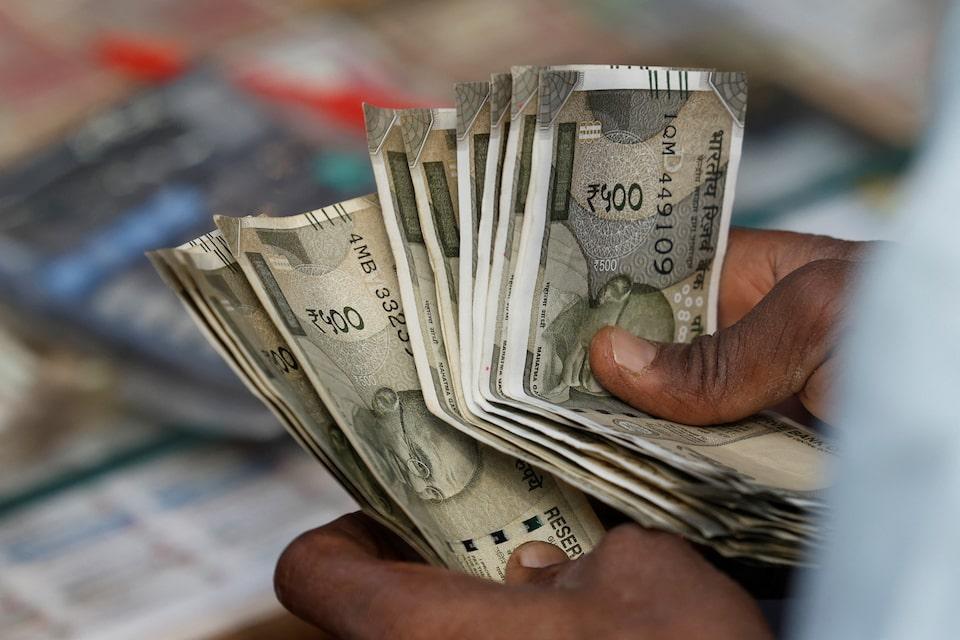
MUMBAI, March 4 (Reuters) - The Indian rupee will contend with conflicting forces on Tuesday after risk soured on U.S. President Donald Trump's comments that his proposed tariffs will proceed, and the dollar sold off on worries over U.S. growth. The 1-month non-deliverable forward indicated that the rupee will open mostly flat to the U.S. dollar from its previous close of 87.3700. At the current level of the rupee, the risks are "broadly balanced", a currency trader at a bank said. "And today, interbank will be quite unsure at open what to do. On one hand, the way U.S. yields are falling suggests the dollar is in trouble and on the other is the risk mood," he said. The S&P 500 index logged its biggest decline this year on Monday after Trump dashed hopes of a last-minute reprieve from tariffs for Canada and Mexico, with the levies expected to come into effect at 10:31 a.m. IST. The Canadian dollar and the Mexican peso dropped to an over one month low. The dollar index and U.S. Treasury yields dropped after U.S. economic data reinforced growth worries. The ISM manufacturing index indicated a slower pace of expansion, and more worryingly the new orders and employment indices fell into contraction territory. Two narratives were weighing on the dollar currently - U.S. policy uncertainty having a negative impact on data, and the potential for more fiscal spending in the European Union, Morgan Stanley said in a note. The euro rallied more than 1% against the dollar on Monday. Meanwhile, other Asian currencies were mostly range bound. The Chinese yuan was marginally higher at 7.2920 to the dollar. Chinese exports to U.S. will face an additional 10% tariff from Tuesday. KEY INDICATORS: ** One-month non-deliverable rupee forward at 87.58; onshore one-month forward premium at 20.5 paisa ** Dollar index at 106.56; dropped 1% on Monday ** Brent crude futures down 0.6% at $71.2 per barrel ** Ten-year U.S. note yield at 4.14%, lowest since Dec ** As per NSDL data, foreign investors sold a net $1,376 million worth of Indian shares on February 28 ** NSDL data shows foreign investors bought a net $68.7 million worth of Indian bonds on February 28 Sign up here. https://www.reuters.com/markets/currencies/rupee-navigate-us-tariffs-spurred-risk-off-dollar-plunge-weak-data-2025-03-04/
2025-03-04 00:40
MELBOURNE, March 4 (Reuters) - A cyclone expected to hit the east coast of Australia this week has scrapped a golf event and prompted the Australian Football League (AFL) to postpone season-opening matches. Golf officials called off the Ladies European Tour co-sanctioned WPGA Championship event on the Gold Coast amid forecasts for extreme wind and flooding. "The decision has been made to ensure the safety of players, staff, fans and all stakeholders, which remains the priority," organisers said in a statement on Tuesday. Cyclone Alfred is expected to make landfall late on Thursday or early on Friday. It could bring intense rainfall and life-threatening flash-flooding to the southeast of Queensland state and the northeast of New South Wales state, the Bureau of Meteorology said in its latest update. The AFL, the top flight of Australian Rules football, has postponed two matches in southern Queensland, including Thursday's season-opener in Brisbane between the reigning champion Brisbane Lions and Geelong Cats. "Out of an abundance of caution ... the AFL made the decision now to ensure the health and safety of clubs, players, officials and – importantly - the wider southeastern Queensland and northern NSW community remains the priority," the AFL said in a statement. The decision came after coaches urged the AFL to make an early call on the games. "It sort of reminds me of the COVID situation," Geelong coach Chris Scott told Australian media. "It's a bit unpalatable talking about when you prefer to play a game of footy when people are sandbagging their houses." The cyclone also impacted the National Rugby League, with Friday's match between the Dolphins and South Sydney Rabbitohs moved from Brisbane to Sydney, officials said. Soccer governing body Football Queensland suspended all training and games in the state's southeast on Wednesday. Other sporting events were called off, including national championships of touch football in New South Wales. Sign up here. https://www.reuters.com/sports/cyclone-scraps-australian-golf-event-threatens-afl-season-launch-2025-03-04/

2025-03-04 00:33
DUBLIN, March 4 (Reuters) - Ireland may have to pay EU compliance costs of between 8 billion euros and 26 billion euros ($8.4 billion-$27.2 billion) if it does not swiftly implement its emissions-cutting plans by 2030, the country's fiscal and climate watchdogs warned on Tuesday. The estimate, equivalent to between 3% and 9% of Irish national income, far exceeds the most recent 2023 government estimate of 3.5 billion euros to 8.1 billion for falling short of the 2030 EU climate change targets. The Irish fiscal and climate change advisory councils said the government could reduce the potential costs to between 3 billion and 12 billion euros if it follows through on plans to cut greenhouse gas emissions that have yet to be enacted. "Allowing these costs to fall on the Irish state instead of meeting its agreed commitments to reduce emissions would be a colossal missed opportunity," the two independent bodies said in a joint report. As part of the EU's legally binding target of a 55% cut in emissions by 2030, member states that fail to hit their goals are liable to effectively pay those that exceed their targets by purchasing their surplus emissions allowances. Ireland, which currently has the healthiest public finances in Europe, is the furthest from its emissions targets among member states on a per capita basis, according to European Commission data. While they fell 6.8% in 2023 versus 2022, Irish emissions are projected to be between 11% and 29% below 2018 levels by 2030 depending on how much of the government's plans are implemented, the Environmental Protection Agency says. The two watchdogs said the wide range of their estimated costs relates to the differing potential paths for Ireland's emissions and the "highly uncertain" price of missing targets. They said measures including upgrading Ireland's energy grid, speeding up the roll out of electric vehicles and supporting changes in farming practices could help avoid some of the currently inevitable costs. ($1 = 0.9552 euros) Sign up here. https://www.reuters.com/sustainability/climate-energy/laggard-ireland-may-face-26-billion-euro-eu-climate-bill-watchdogs-warn-2025-03-04/

2025-03-04 00:16
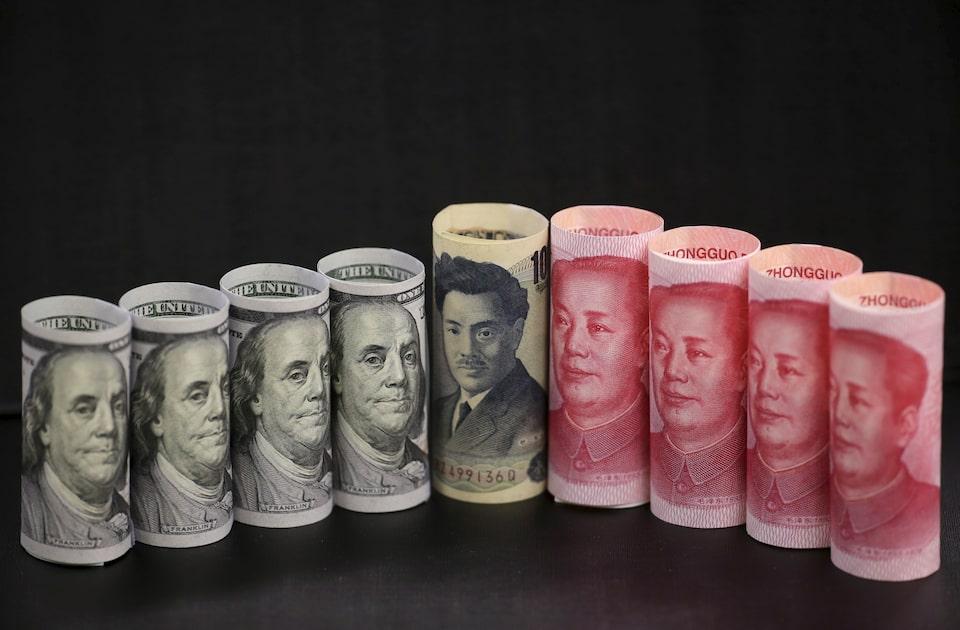
Weak Japan, Chinese currencies 'unfair' to U.S., Trump says Solution to weak-currency policies is tariffs, Trump says Japan says it is not adopting policies to directly weaken yen China keeps guiding yuan firmer March 4 (Reuters) - U.S. President Donald Trump said he told the leaders of Japan and China they could not continue to reduce the value of their currencies, as doing so would be unfair to the United States. The remarks added to market jitters as Trump's new 25% tariffs on imports from Mexico and Canada took effect on Tuesday, along with a doubling of duties on Chinese goods to 20%, in a fresh escalation of global trade tensions. Highlighting the risk that Japan's export-reliant economy faces from uncertainty over Washington's currency and tariff policies, the Nikkei benchmark (.N225) , opens new tab tumbled nearly 2% on Tuesday as Trump's comments drove up the yen. The yen briefly climbed to 148.60 per dollar on Tuesday, up from around 150 on Monday. "I've called President Xi, I've called the leaders of Japan to say you can't continue to reduce and break down your currency," Trump said at the White House on Monday. "You can't do it because it's unfair to us. It's very hard for us to make tractors, Caterpillar here, when Japan, China and other places are killing their currency, meaning driving it down," he said. Instead of complaining repeatedly over the phone over such attempts, the United States could make up for the disadvantage its manufacturers suffer by imposing tariffs, Trump added. "So all of these things add up," he said. "And the way you solve it very easily is with tariffs." Tokyo was not adopting policies directly aimed at weakening the yen, Japanese Finance Minister Katsunobu Kato said, when asked about Trump's comments. "Japan has confirmed its basic stance on currency policy" with G7 countries and the United States, including at two-way talks with U.S. Treasury Secretary Scott Bessent on Jan. 29, Kato told a news conference in Tokyo on Tuesday. Prime Minister Shigeru Ishiba also told parliament Japan was not pursuing a so-called "currency devaluation policy," adding that he had no phone calls from Trump on exchange-rate policy. FOCUS ON BOJ Japan and China were accused by Trump of intentionally weakening their currencies in his first term as president. A series of tit-for-tat U.S.-China tariff announcements drove the Chinese currency down more than 12% against the dollar between March 2018 and May 2020. Recently, China has focused on stabilising its currency's moves. The yuan, or renminbi, inched higher against the dollar on Tuesday as the central bank continued to guide the currency firmer - a move some analysts saw as aimed at easing friction with Washington. "China and Japan are not keeping their currencies cheap, and in fact they are doing the opposite," said Chang Wei Liang, currency and credit strategist at DBS. "We see China and Japan as being aligned with the U.S. in terms of not wanting to see excessive renminbi and yen weakness." Japanese policymakers, for their part, have been sensitive to the risk of Trump making explicit comments about the yen and causing market volatility that could hurt a fragile economic recovery. While a weak yen boosts Japanese exports, Tokyo's recent forays in the currency market aimed to prevent sharp yen falls that inflate import costs and hurt consumption. Last week, Japan's top currency diplomat, Atsushi Mimura, acknowledged the yen's rebound at the time as reflecting the country's solid economic fundamentals and prospects of a near-term interest rate hike by the central bank. Japan has consistently, and successfully, urged G7 and G20 members to reaffirm their pact that excessive volatility in the currency market is undesirable - language Tokyo sees as giving it justification for yen intervention when the currency's moves are too sharp and driven by speculative trade. Trump's criticism of a weak yen and uncertainty on how his tariff threats could affect global growth may complicate the Bank of Japan's decision on how soon to raise interest rates. Some analysts expect Trump's displeasure over a weak yen to work in favour of further interest rate hikes from the Bank of Japan. "Japan can't conduct yen-buying, dollar-selling intervention at current yen levels, so the pressure will pile on the BOJ to hike rates," said Hiroyuki Machida, director of Japan FX and commodities sales at ANZ. "Trump's comments give investors reason to buy yen" on bets the BOJ could raise interest rates twice this year, he said. The central bank ended a decade-long, massive stimulus last year on the view that Japan was on the cusp of sustainably pulling out of prolonged deflation and economic stagnation. With inflation exceeding its target of 2% for nearly three years, the BOJ is eyeing further interest rate hikes after raising borrowing costs to 0.5% in January. A majority of economists polled by Reuters expect the BOJ to hike rates once more this year, most probably during the third quarter, to 0.75%. Sign up here. https://www.reuters.com/markets/currencies/trump-says-japan-china-cannot-keep-reducing-value-their-currencies-2025-03-03/