2025-03-03 21:03
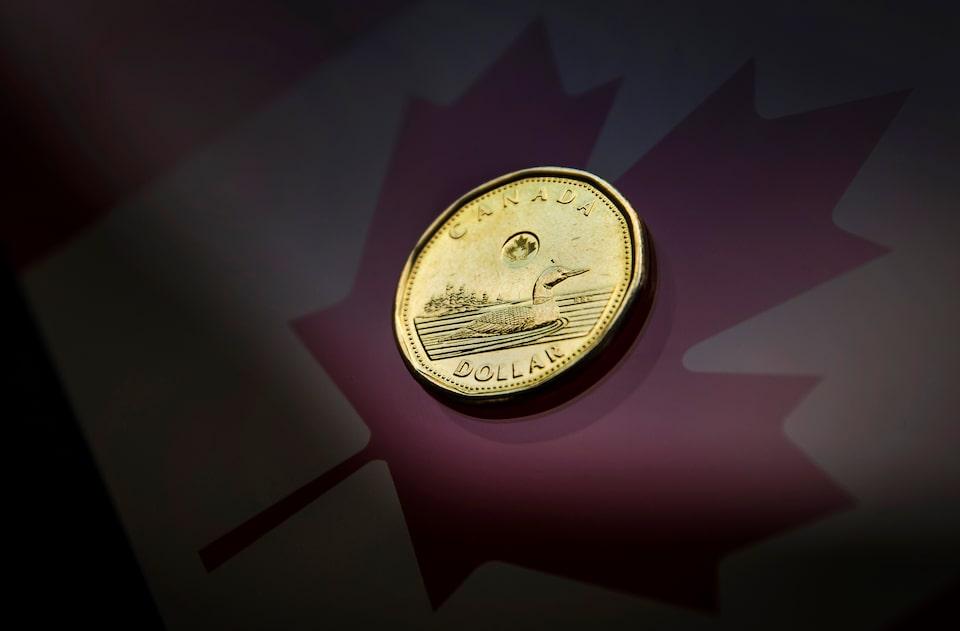
Canadian dollar weakens 0.5% against the greenback Touches a one-month low at 1.4541 Price of oil settles nearly 2% lower 2-year yield falls 8 basis points TORONTO, March 3 (Reuters) - The Canadian dollar weakened to a one-month low against its U.S. counterpart on Monday as U.S. President Donald Trump said that tariffs on Canada and Mexico will go into effect on Tuesday, denting hopes of another reprieve. The loonie was trading 0.5% lower at 1.4535 per U.S. dollar, or 68.80 U.S. cents, after touching its weakest intraday level since February 3 at 1.4541. "As recently as an hour ago, markets had assumed that tariffs would not be imposed, or that they would be dramatically watered down," Karl Schamotta, chief market strategist at Corpay, said in a note. Trump said that there was no chance for Mexico or Canada to prevent 25% tariffs from taking effect on Tuesday, sending financial markets reeling on the prospect of new economic barriers in North America. Implementation of the tariffs had previously been pushed back by a month. Canada sends about 75% of its exports to the United States, including oil. U.S. crude oil futures settled nearly 2% lower at $68.37 a barrel on reports OPEC+ will proceed with a planned oil output increase in April and on worries that a trade war could hurt the global economy. The S&P Global Canada Manufacturing Purchasing Managers' Index (PMI) fell to 47.8 from 51.6 in January, its first move below the 50.0 no-change mark since August, as an uncertain trade outlook led to firms turning the most pessimistic since the start of the COVID-19 pandemic. Canadian bond yields fell across the curve as investors raised bets on a Bank of Canada interest rate cut this month. The 2-year was down 8 basis points at 2.493%, its lowest level since February 3. Sign up here. https://www.reuters.com/markets/currencies/canadian-dollar-pares-gains-ahead-us-tariff-decision-2025-03-03/
2025-03-03 21:02
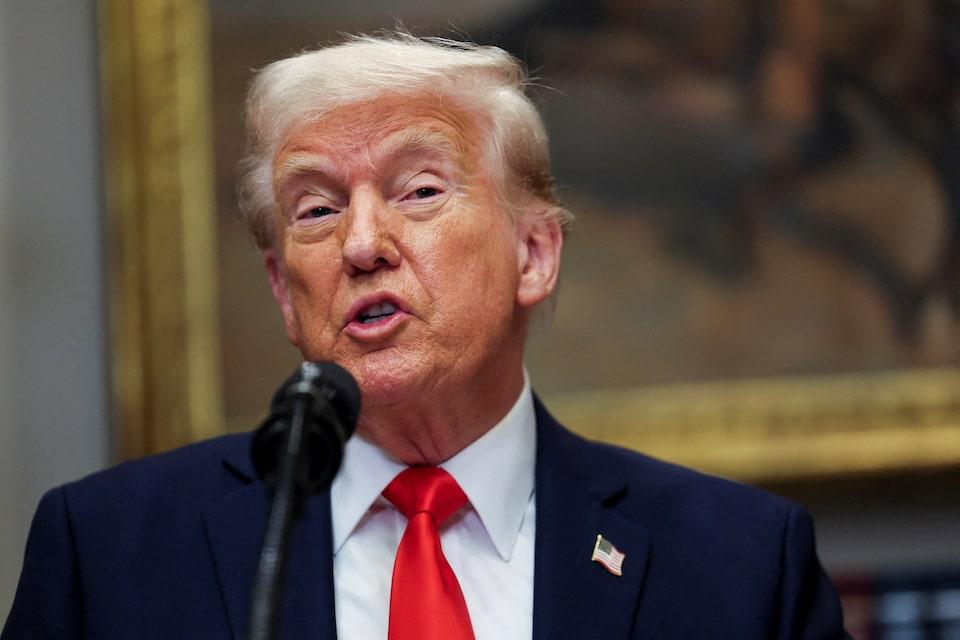
Tariffs due to take effect at 0501 GMT on Tuesday Markets tumble after Trump locks in Canada, Mexico tariffs North American imports to get 25% duty, 10% for Canadian energy Trump raises tariffs on Chinese goods to 20% over fentanyl WASHINGTON, March 3 (Reuters) - U.S. President Donald Trump said 25% tariffs on goods from Mexico and Canada will take effect from Tuesday, pushing North America closer to a regional trade war and sending financial markets reeling. Trump's comments made on Monday triggered a selloff in global stocks and pushed bond yields lower. The Mexican peso and Canadian dollar both fell following his remarks. "They're going to have to have a tariff. So what they have to do is build their car plants, frankly, and other things in the United States, in which case they have no tariffs," Trump said at the White House. He said there was "no room left" for a deal that would avert the tariffs by curbing fentanyl flows into the United States. Trump also reaffirmed that he will increase tariffs on all Chinese imports to 20% from the previous 10% levy to punish Beijing for failing to halt shipments of fentanyl to the U.S. The president said in an order that China "has not taken adequate steps to alleviate the illicit drug crisis." CEOs and economists say Trump's tariffs on Canada and Mexico, covering more than $900 billion worth of annual U.S. imports, will deal a serious setback to the highly integrated North American economy. The tariffs are scheduled to take effect at 12:01 a.m. EST , opens new tab (0501 GMT) on Tuesday, the Trump administration confirmed in Federal Register notices. At that point, the U.S. Customs and Border Protection agency will begin collecting 25% on Canadian , opens new tab and Mexican , opens new tab goods, with a 10% duty for Canadian energy. The additional Chinese tariffs will also kick in at that deadline. Canada said it would retaliate with 25% tariffs on C$155 billion ($107 billion) worth of U.S. goods if Trump's tariffs went into effect, Prime Minister Justin Trudeau said Monday evening, and urged the White House to reconsider. Trudeau said Canadian tariffs will go into effect for C$30 billion of products at the same time as U.S. tariffs on Tuesday, while duties on the remaining C$125 billion of U.S. goods will apply in 21 days. "Our tariffs will remain in place until the U.S. trade action is withdrawn, and should U.S. tariffs not cease, we are in active and ongoing discussions with provinces and territories to pursue several non-tariff measures," Trudeau said in a statement. Mexico's economy ministry said that there would be no public response until President Claudia Sheinbaum's regular morning press conference on Tuesday. She has vowed to respond, saying: "We have a plan B, C, D." Ontario Premier Doug Ford told NBC that the U.S. tariffs and Canada's retaliation would be "an absolute disaster" for both countries. "I don't want to respond but we will respond like they've never seen before," Ford said, adding that Michigan auto plants would likely shut down within a week and that he would halt nickel shipments and cross-border transmission of electricity from Ontario to the U.S. "I'm going after absolutely everything," Ford said. China's commerce ministry on Tuesday vowed countermeasures against Washington's decision and urged the U.S. to "immediately withdraw" its tariffs, which it described as "unreasonable and groundless, harmful to others." The state-backed Global Times newspaper earlier said Beijing's countermeasures would most likely target U.S. agricultural and food products. MARKET SWOONS The Dow Jones Industrial Average (.DJI) , opens new tab fell 649.67 points, or 1.48%, the S&P 500 (.SPX) , opens new tab lost 104.78 points, or 1.76%, and the Nasdaq Composite (.IXIC) , opens new tab dropped 497.09 points, or 2.64%. Automaker shares fell sharply, with General Motors, (GM.N) , opens new tab which has significant truck production in Mexico, down 4% and Ford (F.N) , opens new tab falling 1.7%. Gustavo Flores-Macias, a public policy professor at Cornell University, said consumers could see price hikes within days. "The automobile sector, in particular, is likely to see considerable negative consequences, not only because of the disruption of the supply chains that crisscross the three countries in the manufacturing process, but also because of the expected increase in the price of vehicles, which can dampen demand," Flores-Macias said. MEXICO'S RESPONSE Mexico, after avoiding the first round of Trump's tariffs by striking a last-minute deal to send thousands of troops to its northern border, has stepped up anti-drug efforts and hinted at new measures on imported Chinese goods. According to the Centers for Disease Control and Prevention, 72,776 people died from synthetic opioids in 2023 in the U.S., chiefly from fentanyl. Representative Suzan DelBene, a Democrat from the state of Washington, said the decision to proceed with tariffs on Canada and Mexico would cost American families thousands of dollars at the grocery store, gas station and pharmacy counter. "No president should be able to raise taxes without a vote in Congress," she said in a statement. White House trade adviser Peter Navarro, however, said on Monday that the inflationary impact from any tariffs would be "second-order small" and that he did not expect the president to waver on the measures. "This is the path that he's chosen," Navarro told CNBC. Trump on Saturday added another trade action to a cascade of tariff announcements over the past month, opening a national security investigation into imports of lumber and wood products that could result in steep tariffs. Canada, already facing 14.5% U.S. tariffs on softwood lumber, would be hit particularly hard. During the prior week, Trump ordered the revival of a tariff probe on countries that levy digital services taxes, proposed fees of up to $1.5 million every time a Chinese-built ship enters a U.S. port and launched a new tariff investigation into copper imports. These come on top of his plans for higher U.S. "reciprocal tariffs" to match tariff rates of other countries and offset their other trade barriers, a move that could hit the European Union hard over the value added taxes member states charge. But Trump's "tariffs on steroids" may keep inflation higher and could tip the global economy into recession, , opens new tab warned Desmond Lachman, a senior fellow at the conservative American Enterprise Institute. Sign up here. https://www.reuters.com/business/autos-transportation/trump-decide-us-tariff-levels-mexico-canada-tuesday-deadline-approaches-2025-03-03/
2025-03-03 20:45
QUITO, March 3 (Reuters) - A consortium made up of subsidiaries of Chinese state energy giant Sinopec (600028.SS) , opens new tab and Canada's New Stratus Energy (NSE.V) , opens new tab has been awarded a 20-year production sharing contract for Ecuador's most productive oil block, New Stratus Energy said in a statement on Monday. New Stratus said the deal includes an upfront cash entry bonus of $1.5 billion, $600 million of which it will pay. The government has said it does not have the funds or the technology necessary to increase production at the Sacha block, which is one of the country's oldest. The block produced about 77,000 barrels per day in 2024. "In addition to the entry bonus, the consortium has agreed to invest amounts in excess of $1.7 billion during the initial term to finance a development plan approved by (the energy ministry)," New Stratus said. The ministry had previously named the subsidiaries as Amodaimi Oil Company S.L., a subsidiary of Sinopec and Petrolia Ecuador, a subsidiary of New Stratus. The energy ministry is expected to hold a press conference on the deal later in the afternoon. Authorities have defended direct negotiations with the consortium, instead of a public bidding process, saying the law allows direct negotiations with state-owned companies. The government in January presented several energy projects it said will need $42 billion in foreign investment in the next five years. Sign up here. https://www.reuters.com/business/energy/ecuador-awards-20-year-production-sharing-contract-new-stratus-energy-sinopec-2025-03-03/

2025-03-03 20:44
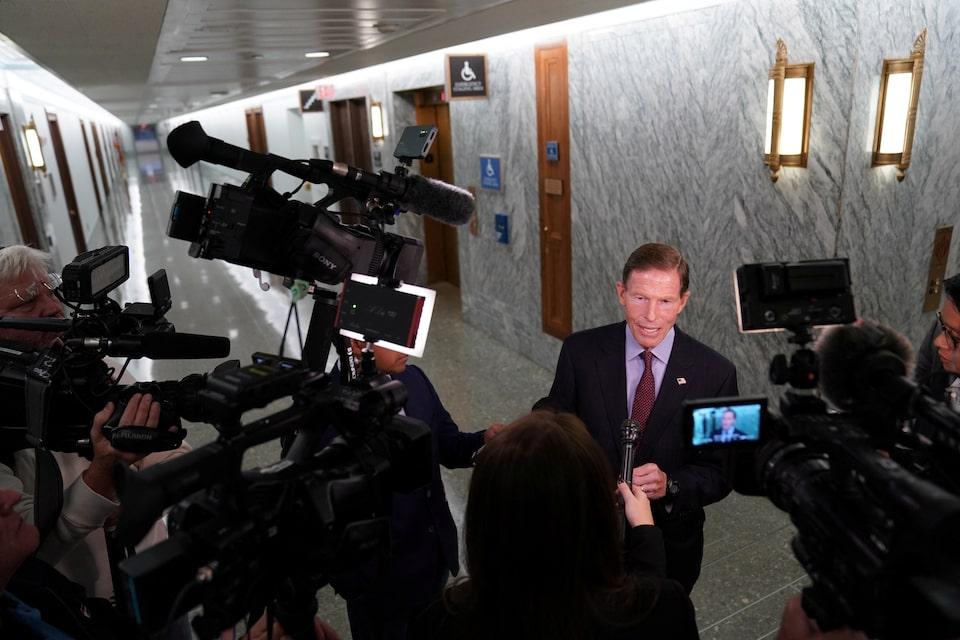
Blumenthal questions $400 million Tesla Cybertruck purchase for diplomats State Department says contract planned during Biden, canceled by Trump Concerns over Musk's conflicts of interest in government contracts WASHINGTON, March 3 (Reuters) - Democratic Senator Richard Blumenthal on Monday asked U.S. Secretary of State Marco Rubio to answer questions about a reported plan to spend $400 million to purchase armored versions of Tesla (TSLA.O) , opens new tab Cybertrucks to transport diplomats. The State Department said Monday the contract was planned during the Biden administration and the Trump administration canceled it. But the senator, who is the top Democrat on a Senate investigations subcommittee, said that account has been questioned. "The question has been raised whether, after significant public blowback, the Trump Administration created and backdated government documents to make it appear that the idea to spend $400 million in taxpayer money on Tesla Cybertrucks originated with the previous administration," Blumenthal wrote. Tesla CEO Elon Musk is a close adviser to Trump and help lead an effort to drastically shrink the federal government and cut numerous government contracts. Tesla did not immediately respond to requests for comment. The State Department told Reuters Monday under President Joe Biden it was asked "to explore interest from private companies to produce armored electric vehicles" and said in response to a request for information in May 2024 only Tesla expressed interest. "As a next step in that process, an official solicitation would be sent out to vehicle manufacturers to bid. However, the solicitation is on hold and there are no current plans to issue it," the department said, declining to answer questions raised by Blumenthal. Blumenthal said if the State Department sought to backdate a document it would raise serious questions. "If that occurred, the Trump administration not only recognizes the tremendous conflicts of interest inherent in Mr. Musk’s dual roles, but is also taking active steps to hide the fact that it is ensuring that Mr. Musk’s position is benefiting his companies," Blumenthal wrote. Other questions have been raised about other potential conflicts of interest for Musk, including at the Federal Aviation Administration over a $2.4 billion telecommunications contract with Verizon and the potential that the contract could be given to Musk's Starlink satellite telecommunications company, which is part of SpaceX. Sign up here. https://www.reuters.com/markets/commodities/us-senator-asks-rubio-answer-questions-planned-tesla-cybertruck-purchase-2025-03-03/
2025-03-03 20:10
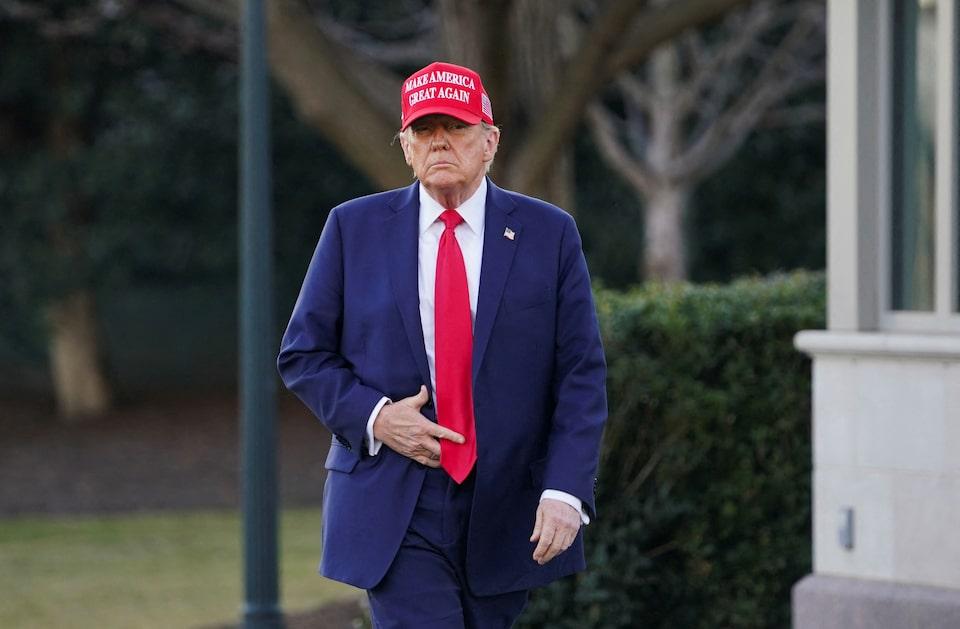
ORLANDO, Florida, March 4 (Reuters) - "Trumpcession". If you haven't heard the term before, you will now, as a closely watched real-time U.S. economic weathervane is signalling that GDP is shrinking at the fastest pace since the pandemic lockdown. The Atlanta Fed's GDPNow model estimate for annualized growth in the current quarter was a stunning -2.8% on Monday, down from +2.3% last week. A month ago the model showed that growth in the January-March period was tracking close to +4.0%. These estimates are published regularly as new economic data is released, and can be quite volatile. There were 11 in February alone. Friday's shock reading of -1.5% was led by a record-high $153 billion trade deficit in January, most likely as firms front-loaded imports ahead of tariffs, and Monday's decline was driven by soft manufacturing activity. There's every chance -2.8% turns into a positive reading in a few weeks. True, the Atlanta Fed number is an outlier for now. The New York Fed's equivalent Nowcast real-time tracking model was updated on Friday to +2.9% annualized growth in Q1 from +3.0%. And the Dallas Fed's "weekly economic index", which doesn't include the most recent data, was showing +2.4% on February 27. But the Atlanta Fed's GDPNow real-time estimates are historically the most reliable of these models, and the negative figures didn't come out of nowhere. A lot of soft economic indicators, like sentiment surveys, have been extremely weak in recent weeks, and some hard economic activity indicators are flashing red too. Consumer sentiment in January slumped the most in three and a half years, retail sales dropped by the most in nearly two years, real spending fell at the fastest rate since early 2021, and retail giant Walmart has warned of a tough year ahead. It's perhaps no surprise that Citi's U.S. economic surprises index has slid into negative territory, hitting the lowest point since September. A common thread running through all of this is the huge level of uncertainty being created by U.S. President Donald Trump's agenda: trade protectionism, particularly tariffs; his apparent growing closeness with Russia and distance from traditional allies like Europe; and the DOGE (Department of Government Efficiency) scythe being taken to federal spending and employment. NEGATIVE WEALTH EFFECT Markets are certainly signaling there could be trouble ahead. The Nasdaq has lost as much as 9% in 10 days, with Big Tech down even more. Investors are seeking the safety of U.S. Treasuries: the two-year yield on Friday fell below 4.00% for the first time since October, and the 10-year yield has tumbled 60 bps since mid-January. These moves could matter to the real economy because of the "wealth effect". As Moody's Mark Zandi noted recently, the top 10% of American households now account for around half of all consumer spending. That's a record. They also own a lot of stocks, and if Wall Street is heading south, they are more likely to tighten their belts. Economist Phil Suttle said he expected Trump's agenda to weigh on the economy this year, but didn't expect it to have such an apparently negative impact so quickly. But if the "blunt and chaotic" implementation of Trump's spending and trade policies hit growth harder than imagined, the Federal Reserve may cut rates in the second quarter, Suttle reckons. The Fed's rate-cutting cycle is on hold for now, largely because of the uncertainty surrounding Trump's trade and fiscal policies. But an impending "Trumpcession" probably wasn't on policymakers' mind when they pressed the pause button. It likely is now. (The opinions expressed here are those of the author, a columnist for Reuters.) Sign up here. https://www.reuters.com/markets/europe/atlanta-fed-shock-sounds-trumpcession-warning-mcgeever-2025-03-03/
2025-03-03 19:57
US gas output hits record high in February US LNG export feedgas hits record high in February Output and LNG export feedgas on track to hit new records in March March 3 (Reuters) - U.S. natural gas futures jumped about 8% on Monday on record flows to liquefied natural gas (LNG) export plants and forecasts for higher demand over the next two weeks than previously expected. Traders said U.S. gas prices also gained support from reports Germany was not in talks with Russia over a "possible pipeline-based supply of Russian gas" via the partly damaged Nord Stream 2 pipeline. That means Germany and the rest of Europe will likely continue to import massive amounts of U.S. LNG. Germany's economy ministry said the country's energy independence from Moscow is crucial. The comments were in response to a weekend report in the Financial Times that a long-time ally of Russian President Vladimir Putin is lobbying the U.S. to restart the $11 billion project. Front-month gas futures for April delivery on the New York Mercantile Exchange rose 28.8 cents, or 7.5%, to settle at $4.122 per million British thermal units (mmBtu). On Friday, the contract closed at its lowest level since February 14. The price increase occurred despite record output and forecasts for the weather to remain mild through the middle of March, which should allow utilities to pull less gas out of storage in coming weeks. Extreme cold weather earlier this year, however, already forced energy firms to pull massive amounts of gas out of storage, including record amounts in January, cutting stockpiles to around 12% below the five-year (2020-2024) normal. With prices down about 9% last week, speculators cut their net long futures and options positions on the New York Mercantile Exchange and Intercontinental Exchange for the second time in 12 weeks, according to the U.S. Commodity Futures Trading Commission's Commitments of Traders report. SUPPLY AND DEMAND Financial company LSEG said average gas output in the Lower 48 U.S. states rose to 105.8 billion cubic feet per day so far in March, up from a record 104.7 bcfd in February. Meteorologists projected weather in the Lower 48 states would remain mostly warmer than normal through March 18. With milder weather coming, LSEG forecast average gas demand in the Lower 48 states, including exports, will fall from 119.3 bcfd this week to 114.7 bcfd next week. Those forecasts were higher than LSEG's outlook on Friday. The amount of gas flowing to the eight big U.S. LNG export plants rose to an average of 15.8 bcfd so far in March, up from a record 15.6 bcfd in February, as new units at Venture Global's (VG.N) , opens new tab 3.2-bcfd Plaquemines LNG export plant under construction in Louisiana enter service. The U.S. became the world's biggest LNG supplier in 2023, surpassing Australia and Qatar, as surging global prices fed demand for more exports, due partly to supply disruptions and sanctions linked to Russia's 2022 invasion of Ukraine. Gas was trading around $14 per mmBtu at both the Dutch Title Transfer Facility (TTF) benchmark in Europe and the Japan Korea Marker (JKM) benchmark in Asia. Sign up here. https://www.reuters.com/business/energy/us-natural-gas-prices-climb-2-record-flows-lng-export-plants-2025-03-03/