2025-03-03 11:52
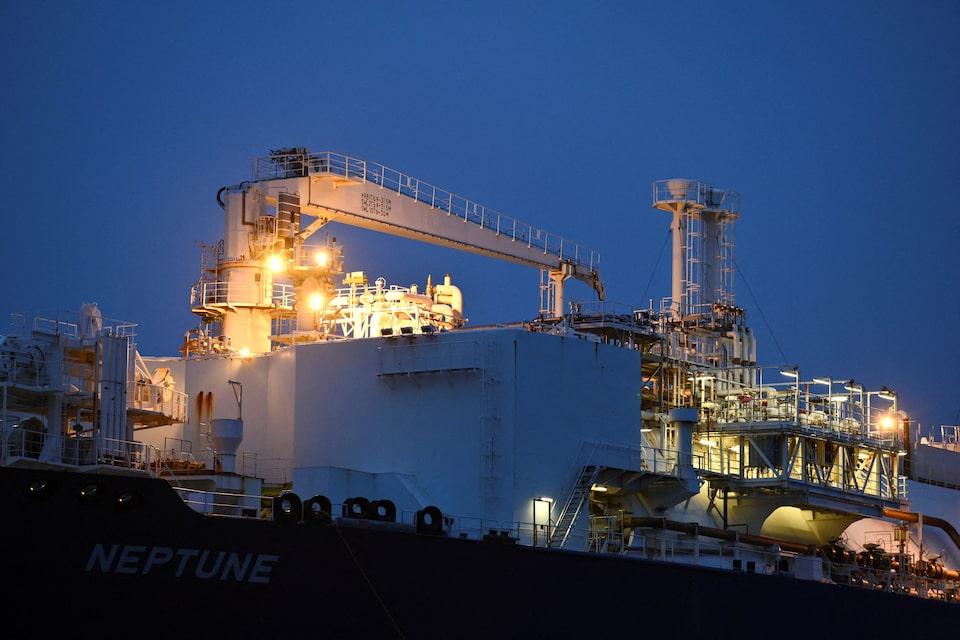
Northwest European gas demand in February at four-year high Europe LNG imports surge in response to depleting stocks Gas prices face volatility in coming months LONDON, March 3 (Reuters) - The European gas market is bracing for further volatility as it enters the crucial summer restocking season facing tighter global supplies of the liquefied natural gas on which it is now heavily dependent. Gas demand in Europe rose significantly this winter compared to the previous two years due to colder temperatures, a sharp drop in wind power generation and a recovery in industrial activity. Consumption in northwest Europe, which includes Germany, France, the Netherlands and Belgium, averaged 7,059 gigawatt hours per day between November 2024 and February 2025, the highest for the period since 2020-2021, according to LSEG data. This is also 11% above the same period in 2021-2022, when demand collapsed as gas prices rallied in the run up to Russia's invasion of Ukraine. Combined with the end of imports through the last major Russian gas pipeline, the recovery in demand has led to a rapid drawdown of gas inventories. EU storage is at around 39% of capacity, compared to 63% at the same point last year and 61.5% in 2023 after relatively mild winters. The end of Russian pipeline supplies, which accounted for 40% of European gas imports until 2022, leaves the region largely dependent on LNG imports, in direct competition with other importers, particularly in Asia. A steady rise in Europe's benchmark TTF gas price to a two-year high on February 10 from the start of the year outpaced Asian prices and created a significant arbitrage opportunity, with LNG deliveries into Europe and Britain reaching 9.4 million metric tons in February, the highest-ever for the month, according to data from analytics firm Kpler. However, forecasts for warmer weather in Europe, weak Asian demand and signals from the European Commission that it may loosen rigid gas storage regulations have since seen TTF prices drop sharply. SUMMER TIGHTNESS This winter's rapid depletion of supplies should remain a cause for concern, especially because any change in the requirement for traders to fill storage to 90% of capacity by November is unlikely in the coming months. Assuming the requirement holds and storage levels drop to a low of 35% of capacity by the end of March, Europe would need 55 billion cubic metres (bcm) of gas to restock, according to Reuters calculations, around 25 bcm more than last year. That equates to an additional 250 cargoes, or roughly 20 million metric tons, of LNG at a time when global supply appears to be tightening. Shell, in its latest LNG outlook published in February, said it expects supply to grow by 17 million to 26 million tons this year as new projects come online, mostly in the second half of the year, in the United States, Canada and elsewhere. However, it also expects global demand to grow at a similar rate. That would leave Europe in a precarious position. Slower-than-expected project ramp-ups, unplanned plant outages or stronger Asian LNG demand would all tighten the market and require Europe to pay more to secure supplies. In the short term, warmer weather could see prices fall further in the coming weeks, with any removal or lowering of storage requirements extending downward pressure. Market pricing for now reflects expectations of difficult times ahead. European gas prices for the summer months have traded at a premium to next winter's price since November, giving buyers no incentive to store gas. Ultimately, Europe's dependence on LNG imports means its gas market is now more vulnerable to the vagaries of the international market than it was in the past, meaning greater price volatility may be the new norm. Want to receive my column in your inbox every Thursday, along with additional energy insights and trending stories? Sign up for my Power Up newsletter here. ** The opinions expressed here are those of the author, a columnist for Reuters. ** Sign up here. https://www.reuters.com/markets/commodities/europes-lng-summer-buying-binge-puts-market-razor-edge-2025-03-03/
2025-03-03 11:33
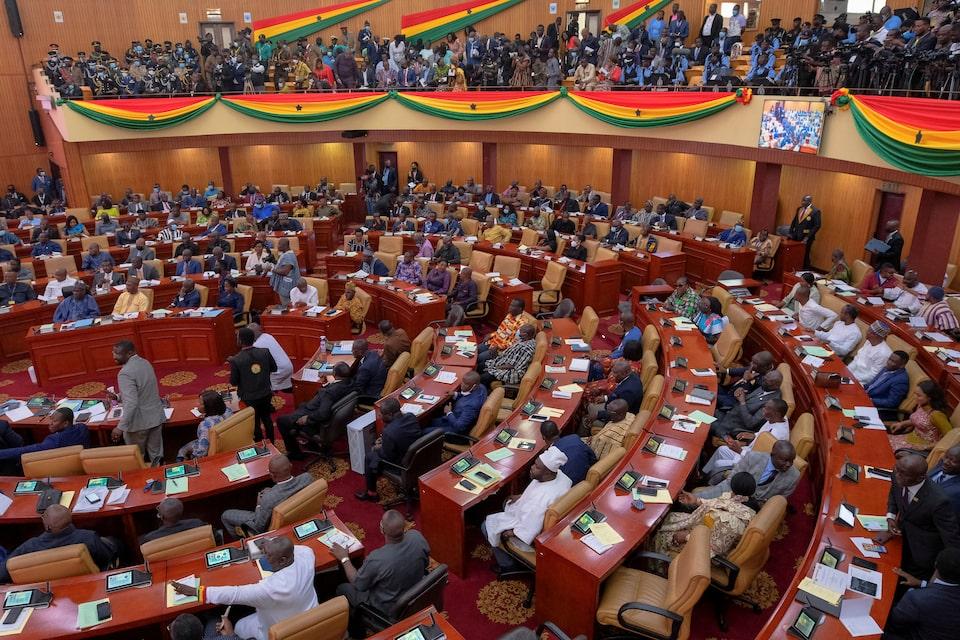
ACCRA, March 3 (Reuters) - Ghanaian lawmakers have reintroduced a bill that would become one of Africa's most restrictive pieces of anti-LGBTQ legislation, three sponsors told Reuters, after an earlier attempt to enact it fell short because of legal challenges. Same-sex sexual acts are currently punishable by up to three years in prison in Ghana. The bill would increase the maximum penalty to five years and also impose jail time for the "wilful promotion, sponsorship, or support of LGBTQ+ activities". Ghana's parliament approved the bill in February 2024 but then-President Nana Akufo-Addo did not sign it before his term ended and John Dramani Mahama took office in January. Any bill passed by parliament must go to the president to be signed into law. Ruling party lawmakers Samuel Nartey George and Emmanuel Kwasi Bedzrah and opposition lawmaker John Ntim Fordjour told Reuters the same bill had been reintroduced in parliament on February 25, sponsored by 10 lawmakers in total. The bill intensifies a crackdown on the rights of LGBTQ people and those accused of "promotion" of sexual and gender minority rights. Va-Bene Elikem Fiatsi, a Ghanaian trans woman and LGBTQ activist, told Reuters the bill's reintroduction was "disheartening and hard to process" but that pro-LGBTQ activism would continue. The fate of the legislation is unclear. Mahama has said he'd prefer a government-sponsored law rather than one sponsored by parliamentarians. Last year Ghana's finance ministry warned that the bill, if signed into law, could jeopardise $3.8 billion in World Bank financing and derail a $3 billion loan package from the International Monetary Fund. Past polling has shown a lack of tolerance for LGBTQ people in Ghana and Fordjour said the country no longer needed to fear economic sanctions. "The global political climate is favourable for conservative values as demonstrated in the bold conservative pronouncements of (U.S.) President Donald Trump," he said. Sign up here. https://www.reuters.com/world/africa/ghana-lawmakers-reintroduce-anti-lgbtq-legislation-2025-03-03/
2025-03-03 11:31
SINGAPORE, March 3 (Reuters) - Sinopec Corp said on Monday the Chinese government has certified about 180 million metric tons, or about 1.3 billion barrels, of new geological reserves at two of its shale oil plays. The new reserves were tapped at the Xinxing field in the Jiyang trough of the Bohai Bay basin and the Qintong field in the Subei basin, Sinopec said in a statement. Xinxing's shale formations are buried 2,900 metres to 4,000 metres below the surface and those of Qintong, 3,430 metres to 4,560 metres deep. Both fields tested high single-well production with long, stable output, Sinopec added. Sinopec aims to prove more than 100 million tons (730 million barrels) of new reserves every year during the 2026-2030 period, with a goal to pump 2 million tons, or 40,000 barrels per day of shale oil by 2030. Last year the state oil giant produced 705,000 tons, or 5.15 million barrels of shale oil. Following a call from the central government to boost domestic energy security, China's national oil companies are making greater efforts to tap hard-to-extract shale deposits to help compensate for older, fast-depleting conventional oilfields. Despite the huge resource size, shale oil remains among the geologically most challenging and costly types of oil to explore and produce, with output making up only 1% of China's total crude oil production. Sign up here. https://www.reuters.com/business/energy/sinopec-certifies-13-bln-barrels-reserve-east-china-shale-oil-plays-2025-03-03/
2025-03-03 11:24
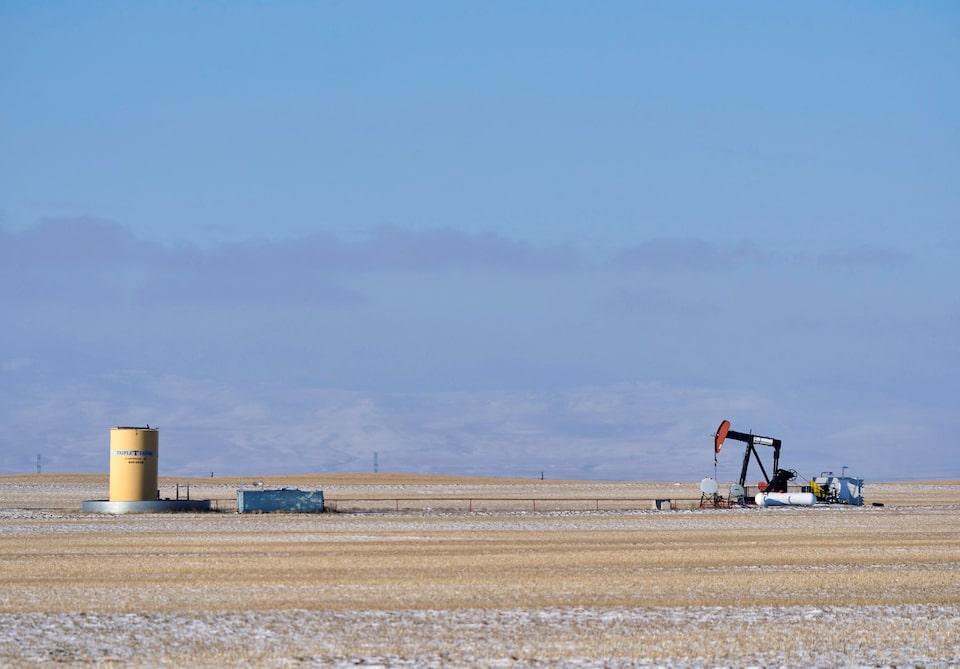
Canada sends 90% of oil exports to US refiners Canadian drilling sector still not recovered from decade of job losses Retaliatory tariffs would raise cost of drilling inputs CALGARY, March 3 (Reuters) - Canada's oilfield drilling and services sector is already showing signs of slowing due to U.S. President Donald Trump's threatened tariffs, triggering fears that an expected industry rebound could stall if such levies go forward. Employment levels in the Canadian drilling sector collapsed between 2014 and 2020 due to sustained low oil prices and reduced production during the COVID-19 pandemic. Activity has improved since 2020, but Trump's threat to impose a 10% tariff on the 4 million barrels per day (bpd) of Canadian crude imported into the U.S. could upend that, industry representatives said. When volatility affects oil markets, oilfield service companies are often the first hit as their oil producer customers look to delay or defer spending. Precision Drilling (PD.TO) , opens new tab , Canada's largest drilling rig operator, saw a steeper-than-expected slowdown in its Canadian well servicing segment in the fourth quarter of 2024. "It seems that some of the tariff uncertainty slowed down customer decision-making," said CEO Kevin Neveu during a conference call last month. A TD Cowen report from February predicted Canadian oil producers will "err on the side of conservatism" due to uncertainty over tariffs. Analysts at the bank reduced their 2025 Canadian rig count forecast by about 5% as a result, to average 175 active rigs versus a prior projection of 185. TD Cowen also downgraded its recommendation for two Canadian drilling stocks — Precision Drilling and Ensign Energy Services (ESI.TO) , opens new tab — from "buy" to "hold." "I know that certainly the anxiety level is rising," said Mark Scholz, president of the Canadian Association of Energy Contractors (CAOEC), in an interview. "Any sort of investment reduction will have an immediate and very, very quick effect on our industry." Scholz emphasized the slowdown thus far has been small, involving "just a handful" of rigs. He attributed it to uncertainty within the broader Canadian oil industry about the timing, duration and market impacts of tariffs. While a 10% tariff on Canadian oil is not likely to immediately impact most oil producers' plans, at least near-term, smaller companies could get hit, warned Dane Gregoris, managing director with Enverus Intelligence Research. "A lot of (oil company) budgets are pretty set up at this point and disclosed. They might be hitting the low-end of their (forecast) ranges, but I can't imagine massive changes to capital budgets," he said. Still, there are other concerns among producers, including the possibility of retaliatory tariffs by Canada, which would raise the prices of inputs and drilling rig equipment imported from the U.S., said Gurpreet Lail, president of industry group Enserva. Sand, for example, is among the items the Canadian government has identified on its list of proposed counter-tariffs. Sand is used heavily by the oil and gas industry in the hydraulic fracturing, or fracking, process. If tariffs do come into effect, said Lail, it will likely mean job losses in a sector that still has not recovered to where it was a decade ago. Last year, total employment in Canada's drilling sector was approximately half what it was in 2014. CAOEC's November 2024 forecast had projected 2025 would see the sector's highest level of employment in ten years, but Lail said that is now in doubt. "We thought we had finally seen a light coming at the end of the tunnel here, and people were getting back to work," she said. "But this is not good news." Sign up here. https://www.reuters.com/business/trumps-tariffs-threat-hits-canadas-oil-gas-drillers-2025-03-03/
2025-03-03 11:18
March 3 (Reuters) - Egypt and the European Commission have signed a 90 million euro ($93.9 million) soft funding agreement to enhance food security, the Egyptian ministry of international cooperation said on Monday. The funding, provided by the European Investment Bank (EIB), aims to improve Egypt's grain storage and logistics infrastructure. The initiative is part of the broader Food Resilience Project, which also receives support from the European Union and the World Bank, with additional grants and financing totalling 210 million euros ($219.3 million). According to the ministry's statement, the agreement will enable the General Authority for Supply Commodities (GASC) to improve its capacity to import and store wheat more efficiently. This is the second time this year that GASC receives financing to import wheat, despite having been replaced as the state grain buyer by the military-affiliated Mostakbal Misr at the end of last year. On February 4, GASC signed a $700 million loan agreement with the Islamic Trade Finance Corporation to bolster its food security efforts. Egypt is the world's top wheat importer, as the grain is mainly used to produce subsidised bread for tens of millions of Egyptians. (€1 = $1.04) Sign up here. https://www.reuters.com/world/africa/egypt-eu-agree-90-million-euro-deal-boost-food-security-2025-03-03/
2025-03-03 11:11
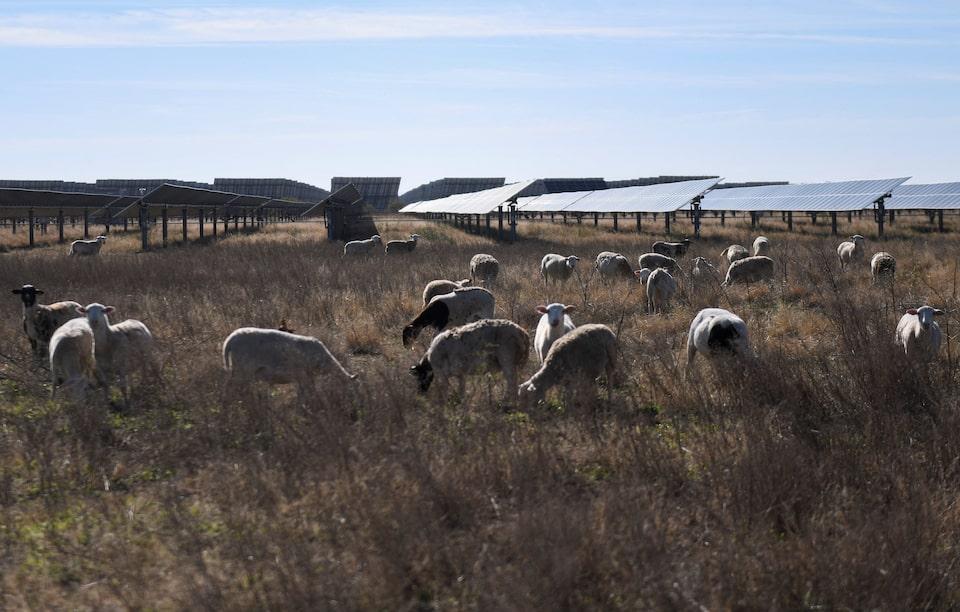
Strain in U.S. farm economy prompts crop farmers to diversify US sheep herd grew for first time since 2016 One solar firm running sheep breeding program to meet demand CHICAGO, March 3 (Reuters) - For the first time in four generations, the Raines family didn't plant a single cotton seed last year. Chad Raines parked his tractor and rented out most of his Texas farmland to a neighbor. Instead of plowing fields, Raines spent the year ferrying his flock of sheep to solar farms, to munch on the grass that grows around the gleaming panels. The deals he struck for this natural lawn-mowing service with five solar companies were more lucrative than growing cotton, he said. "Cotton prices have been terrible for so long, I had to do something different," said Raines, 52. As U.S. farmers grapple with soaring debt and slumping incomes, some crop producers are trading their tractors for flocks of sheep, and starting up solar grazing businesses to help make ends meet. Sheep-herding for solar is one of the ways farmers are scrambling to diversify their income, as a multi-year slump in the U.S. agricultural economy has hit crop producers particularly hard, economists said. If Raines had raised cotton last year, his farm would have seen a $200,000 loss, he said. Making money farming sheep only for meat would be tough too. Instead, Raines cleared a profit of about $300,000, thanks to the solar sheep grazing payments and starting to sell lamb meat to a restaurant supplier, he said. "Every expense I have, from the labor to the $2,000-a-month I spend a month on dog food for the guard dogs, is covered by solar," said Raines, whose son came back to the farm to help. But such opportunities may slow. President Donald Trump issued an executive order that, among other things, ends clean energy-related appropriated funds, which could impact a swath of clean energy , opens new tab incentives through the Inflation Reduction Act (IRA) in the future. IRA funding has been frozen, as part of the Trump administration's sweeping push to review all government grants and loans. A recent court order led to some IRA funds being unfrozen, but many groups have reported still being unable to access them. "Farmers and ranchers should not have to rely on far-left climate programs for grazing land or 'economic lifelines'," a USDA spokesperson said in an email statement to Reuters, adding the agency is focused on rural prosperity and is "putting a stop to spending that has nothing to do with agriculture." CROP FARM BLUES U.S. cotton future prices have slumped nearly 40% over the past two years, as hefty global stocks have overwhelmed global demand. U.S. exports have dropped sharply, losing out to cheaper Brazilian supplies and falling Chinese demand, U.S. Department of Agriculture data shows. "The last three years have been brutal for Texas cotton growers," said Louis Barbera, a managing partner at cotton broker VLM Commodities. While U.S. farm income overall is expected to improve this year, the upturn is being driven by high livestock prices and a massive boom in anticipated government aid from the American Relief Act of 2025, a USDA forecast in early February showed. But when adjusted for inflation, corn and soybean farm businesses will see incomes at the lowest levels since 2010 - even if producers receive that aid, said Jennifer Ifft, an agricultural economist at Kansas State University. Farmers who rely heavily on debt to operate were slower to pay back their loans in 2024, and a growing number are selling assets to stay afloat, according to data from Federal Reserve Banks of Kansas City and Minneapolis. "Income diversification in ag downturns can mean saving the farm," Tait Berg, senior examiner and agricultural risk specialist at the Minneapolis Fed, said in an interview. For farmers faced with pricey seed bills and expensive equipment parts for repairing their machinery, these solar land-management contracts can be an economic lifeline, according to Reuters interviews with more than a dozen farmers. It can mean they run their farm at a profit, rather than try to get a supplementary job in town to pay down their bills or find some other gig, they said. Sheep grazed on more than 129,000 acres of U.S. solar panel sites last October, compared to 15,000 acres in 2021, according to the non-profit American Solar Grazing Association. The number of solar-site sheep jumped from 80,000 to more than 113,000 between January and October last year, the group said. While that represents a tiny fraction of the nation's total 5.05 million sheep and lamb herd , opens new tab, the new business opportunity has helped herd numbers tick higher for the first time since 2016, said Peter Orwick, executive director of the trade group American Sheep Industry Association. NEW OPPORTUNITIES The U.S. solar industry grew under President Donald Trump's first term, and development surged after a 2022 law passed under former President Joe Biden provided subsidies for new clean-energy projects, said Abigail Ross Hopper, president and CEO of the Solar Energy Industries Association. The sector expects to continue to grow under Trump's second term, she said. White House deputy press secretary Anna Kelly in a statement to Reuters: "Ultimately, President Trump will cut programs that do not serve the interests of the American people and keep programs that put America First." In Indiana and Illinois, the solar boom has attracted twenty- and thirty-somethings eager to jump into farming, without taking on millions of dollars in debt to rent land and machinery, industry analysts said. In Virginia, Marcus and Jess Gray put their planting dreams on hold after securing lucrative contracts with Dominion Energy and Urban Grid. Now, they graze their 900-head flocks across 4,000 acres where solar is being built. "It's steady income, where we get to set and negotiate the price, rather than taking our grain from our bin to the local elevator and they tell us what it's worth," said Jess Gray, 39. FLEECE ON THE RISE Using sheep for clearing local flora can mean substantial savings once a site is up and running. The initial capital expenditures can be higher, depending on the project site, said Reagan Farr, chief executive officer of Tennessee-based solar firm Silicon Ranch. Some locations require wells to be drilled for water supplies or more complex gating systems for corrals, he said. Still, the company saves about 20% in operating expenses once a site is running by using managed grazing, Farr said. "The economics work, when you're not trucking a flock of sheep across the country or hauling in trucks of water," Farr said. "It's much easier and less costly to pay our shepherds a living wage, than it is to hire someone to sit on a lawnmower for 10 hours a day, day in and day out." Demand for solar grazing animals prompted Silicon Ranch, in which Shell owns a stake, to launch its own sheep breeding program in Georgia to bolster local farmer supplies. For Raines and his family, the decision was simple economics. "If I had kept row crop farming, our family farm would be out of business," Raines said. Sign up here. https://www.reuters.com/world/us/sheep-grazing-under-solar-panels-help-us-farmers-survive-crop-price-slump-2025-03-03/