2025-03-03 05:46
China preparing response to fresh US tariffs, Global Times American agricultural exports likely to be hit China remains biggest market for U.S. agricultural exports BEIJING, March 3 (Reuters) - China has American agricultural exports in its cross hairs as it prepares countermeasures against fresh U.S. import tariffs, China's state-backed Global Times reported, raising the stakes in an escalating trade war between the world's top two economies. U.S. President Donald Trump last week threatened China with the extra 10% duty set to take effect on Tuesday, resulting in a cumulative 20% tariff, and accused Beijing of not doing enough to halt the flow of fentanyl into America, which China said was tantamount to "blackmail." "China is studying and formulating relevant countermeasures in response to the U.S. threat of imposing an additional 10% tariff on Chinese products under the pretext of fentanyl," Global Times reported on Monday, citing an anonymous source. "The countermeasures will likely include both tariffs and a series of non-tariff measures, and U.S. agricultural and food products will most likely be listed," the report added. China's commerce ministry and the U.S. embassy in Beijing did not immediately respond to requests for comment. China is the biggest market for U.S. agricultural products, and the sector has long been vulnerable to being used as a punching bag in times of trade tensions. "Despite a decline in imports since 2018, any tariffs on key U.S. agricultural products like soybeans, meat and grains could have a significant impact on U.S.-China trade as well as U.S. exporters and farmers," said Genevieve Donnellon-May, a researcher at the Oxford Global Society. "The U.S. agricultural sector has had time to prepare for a second Trump administration and trade war 2.0, with lessons learned from the first Trump administration," she added. "So, in theory, it should be in a better place to find alternative markets. However, the reality may prove far more complex." China's most active soymeal and rapeseed meal futures, already underpinned by a supply shortage, each surged 2.5% after the Global Times report. The soymeal contract on the Dalian Commodities Exchange hit its highest since Sept 30, 2024. The world's top agricultural importer and second-largest economy brought in $29.25 billion worth of U.S agriculture products in 2024, a 14% drop from a year earlier, extending a 20% decline seen in 2023. Global Times, which is owned by the newspaper of the governing Communist Party, People's Daily, was first to report the steps China planned to take in response to the European Union slapping tariffs on Chinese electric vehicles last year. Trump's announcement left Beijing with less than a week to come up with countermeasures or strike a deal. The proposed extra levies also coincide with the start to China's annual meeting of parliament, a political set piece event at which Beijing is expected to roll out its 2025 economic priorities. TRUMP TARIFFS TO 'BACKFIRE' Analysts say Beijing still hopes to negotiate a truce with the Trump administration, but with no signs of any trade talks yet the prospect of a rapprochement between the two economic giants is fading. "A China-U.S. trade war is not inevitable, but Trump's decision to impose tariffs now is a bad decision," said Wang Dong, executive director of the Institute for Global Cooperation and Understanding at Peking University. "Trump and his advisors may think that imposing tariffs at this time is to put pressure on China, sending a signal, but this will backfire and China will inevitably respond strongly." Tit-for-tat tariffs between the two countries during Trump's first term set off a full-blown trade war, upending financial markets and hurting global growth. This time around, Trump's first salvo of fentanyl-related import duties on Feb. 4 was met by a quick retaliatory move by Beijing. China announced a series of wide ranging countermeasures targeting U.S. businesses including Google (GOOGL.O) , opens new tab and the owner of fashion brand Calvin Klein, and fresh import duties on U.S. coal, oil and some autos. China's commerce ministry said on Friday that it hoped to return to negotiations with the U.S. as soon as possible, warning that failure to do so could trigger retaliation. State media said top Chinese Communist Party officials met the same day and vowed to take steps to prevent any external shocks to China's economy. The Politburo meeting comes a week after the White House released an America First investment memorandum which placed China on a list of "foreign adversaries." Sign up here. https://www.reuters.com/world/china/china-preparing-countermeasures-us-tariff-threat-global-times-says-2025-03-03/

2025-03-03 05:37
A look at the day ahead in European and global markets from Wayne Cole. It's been a bumper day for crypto fans after President Donald Trump took to social media to announce a proposed reserve of digital assets would include bitcoin , ether , XRP , solana and cardano . Bitcoin is up around 10% while ether jumped 13% before easing back a touch as details of how the fund would work are not clear yet and, presumably, will be outlined at Friday's White House Crypto Summit. Analysts are wondering exactly how the reserve will be funded given the government has $36 trillion of debt, so borrowing to buy crypto would seem a tough sell. Some have suggested the government could use the crypto seized in criminal cases in recent years, though that would only be a paper transfer rather than actual new demand. Also uncertain is whether Trump's 25% tariffs on Mexico and Canada will go ahead on Tuesday, along with an extra 10% on China. U.S. Commerce Secretary Lutnick said on Sunday tariffs on Canada and Mexico would go into effect on Tuesday, but that Trump would determine whether to stick with the planned 25% level, suggesting it was not a done deal. There's also been suggestions Trump might soften the blow if Mexico and Canada agreed to place their own tariffs on Chinese imports and/or the levies might be delayed until April 1 when a study on trade is due to be finalised. The stakes are all the greater as recent U.S. economic data has surprised on the downside, leading the much-watched Atlanta Fed GDPNow tracker to swing to -1.5% from +2.3%. Tariffs are essentially a tax on U.S. consumers and analysts assume they would hurt consumption at a time when the States is not looking so exceptional anymore. Just the threat of tariffs saw imports surge in January lifting the U.S. trade deficit to easily its highest on record. Normally that would imply a large drag on GDP from net exports, though analysts said much of the jump in imports could have been non-monetary gold which would not be counted in GDP. Leaving aside the statistical quirks, markets are in no mood for more weak data and a miss on the ISM forecast of 50.5 later today would likely boost bonds at the expense of equities. Markets already have 73 basis points of Fed cuts priced in by January next year, when just a few weeks ago investors had thought one quarter-point cut might be a stretch. It all makes payrolls on Friday even more pivotal, especially as Fed Chair Powell is speaking a few hours after the data is released. Beijing's possible response to tariffs, should they go ahead, is also an unknown. The National People's Congress meets on Wednesday and is expected to announce 2 trillion yuan to 3 trillion yuan ($274 billion-$412 billion) in new stimulus, and possibly reprisals against any U.S. action. Key developments that could influence markets on Monday: - EU flash CPI for February; European, UK and US PMI data. U.S. ISM survey for February. - Speeches by Chair of the ECB Supervisory Board Claudia Maria Buch and Fed Reserve Bank of St. Louis President Alberto Musalem. ($1 = 7.2876 Chinese yuan) Sign up here. https://www.reuters.com/markets/europe/global-markets-view-europe-2025-03-03/

2025-03-03 05:32
Trump says bitcoin, ether will be at core of crypto reserve Bitcoin, ether up from Friday's close Further rally depends on sources for the reserve, analyst says NEW YORK, March 3 (Reuters) - Bitcoin backpedaled on Monday after an early rise following U.S. President Donald Trump's weekend proposal for a national strategic reserve of cryptocurrencies. Optimism on digital currency after Trump's Sunday post on Truth Social turned to caution as market participants awaited more details about this crypto initiative. The world's largest cryptocurrency, bitcoin, rose 2.4% from Friday's levels, to $86,292 , but was down 8% from Sunday. Trump said his January executive order on digital assets would create a stockpile of currencies, including bitcoin , ether, XRP, Solana and Cardano. The names had not previously been announced. Bitcoin and ether will be at the heart of this reserve, he said in a post on Sunday that sent bitcoin up by a fifth from the November lows. The token has been sliding since mid-January due to disappointment Trump had not followed through on pledges to loosen regulation. Ether was down 4.3% from Friday's level, at $2,127.10, but sank nearly 16% from Sunday. XRP tumbled more than 15% from Sunday's levels to $2.48, but surged 25% from Friday. Solana also weakened, down 16% from Sunday to $148.89, but was up 1.6% from Friday. Cardano sank 19% from Sunday to $0.8940, and fell 3% from Friday. Anthony Pompliano, founder and chief executive officer at Professional Capital Management, and one of the biggest crypto investors, said in a letter to his clients on Monday that he was not in favor of a strategic crypto reserve. "Even though Solana is our second largest crypto position, and various public equities I hold are heavily correlated to altcoins, I still think this decision on a wide-ranging crypto strategic reserve is an unforced error that will be regretted in the future," Pompliano said in a letter to investors. He warned that the emerging policy appeared to be "a random smattering of speculative tools that will enrich the insiders and creators of these coins at the expense of the U.S. taxpayer." Cameron and Tyler Winklevoss, who run the Gemini crypto exchange, said on X, formerly known as Twitter, also expressed concern about the reserve. They noted that only bitcoin meets the bar for a store of value as a reserve asset, but were not sure about the other cryptocurrencies. Still, Trump's promise of a strategic reserve has generated excitement for the crypto industry, which has languished in recent weeks. Bitcoin fell more than 17% in February, its biggest monthly percentage fall since June 2022. It lost more than a third of its price since topping $105,000 in early January. Its rally since Trump's November election was spurred by optimism that he would champion a strategic bitcoin fund and end former President Joe Biden's crackdown. "Ironically, a currency that was designed to be isolated from government interference and decentralized, is now reliant on the U.S. government for its fortunes," said Kathleen Brooks, research director at XTB, reiterating that the $100,000 level was an "obvious target" for bitcoin. Beyond a flurry of appointments of crypto-friendly officials when Trump took office, there has been little concrete news so far around that policy for investors. IG market analyst Tony Sycamore wrote that the Trump announcement has raised concerns. The funding for cryptocurrency purchases in the reserve could come from U.S. taxpayers. But alternatively, they could come from cryptocurrencies seized in law enforcement actions, he said, which "isn't anywhere near as bullish as it simply represents a transfer between accounts rather than new buying entering the market." Sign up here. https://www.reuters.com/technology/bitcoin-up-by-fifth-after-trump-lists-reserve-tokens-2025-03-03/

2025-03-03 05:03
LONDON, March 3 (Reuters) - The European Central Bank is set to cut rates again on Thursday, but investors haven't been this unsure in a while on what comes next. U.S. tariff risks are intensifying while the ECB may have to grapple with the impact of a new German government, a potential Ukraine ceasefire and an expected surge in defence spending. Meanwhile, policymakers look increasingly divided on how fast they'll cut rates from here after five moves since June. "It's no longer a case of automatic pilot, reducing rates at every meeting," Zurich Insurance Group's chief market strategist Guy Miller said. Here are five key questions for markets: 1/ What will the ECB do on Thursday? That's simple: cut its key rate by another 25 basis points to 2.50%. The assessment of financing conditions is also in focus as this could be a way to hint at the post-March rate outlook. "It will be important to see if the statement reiterates that ECB policy is still restrictive or if we are more at a neutral stance," ING's global head of macro, Carsten Brzeski, said. Any comments on the fallout of last week's ECB payment systems outage may also be a focus. 2/ Will rate cuts continue after March? Markets think so, but expect a bumpier path ahead. They price in around 80 bps of rate cuts by year-end - three more moves to 2% and a chance of a fourth to 1.75%. That's in line with a neutral rate that neither stimulates nor restricts growth the ECB estimates at 1.75%-2.25%. Still, traders anticipate around a 60% chance of an April cut, highlighting uncertainty. Many policymakers sound on board with markets' ultimate expectation, but the debate on the pace is heating up. Top hawk Isabel Schnabel, for example, questions whether ECB policy is still restrictive, though policymakers widely feel , opens new tab it still is. So, some governors may push for a pause in April, Swedish bank SEB reckons. But wage growth - thought to have underpinned the high services inflation which has been worrying hawks - will fall fast, an ECB tracker suggests. And data on Monday showed services inflation slowed to 3.7% after hovering near 4% for most of the past year. Portugal's Mario Centeno, a dove, warns that inflation could drop below target given a weak economy. 3/ How will the ECB assess the impact of tariffs so far? To date only a 10% U.S. tariff against China has gone into effect with an additional Chinese tariff along with measures against Canada and Mexico set to start on Tuesday, so the ECB won't factor them into policy yet. Against Europe, U.S. President Donald Trump has announced a 25% tariff on steel and aluminium imports from March 12. He is also looking at reciprocal tariffs on every country taxing U.S. imports, possibly including value added taxes. Last week, Trump floated a 25% "reciprocal" tariff on European cars and other goods. The latest threat would shrink the European economy by 0.4% within the first year, Germany's Kiel Institute estimates, a big blow given that the euro zone is seen growing just 0.9% in 2025. But it remains to be seen whether tariffs are more of a negotiating tool. The ECB will wait until April to see what is imposed, ING's Brzeski said. 4/ What would a Ukraine ceasefire mean for the ECB? Investors reckon a Ukraine ceasefire would support the economy and lower energy prices, but only modestly. Berenberg chief economist Holger Schmeiding said a ceasefire would likely have a marginal impact on the ECB's thinking. "Tariffs will have a bigger impact," he added. A heated meeting between Trump and Ukranian President Volodymyr Zelenskiy has only added to the pressure to bolster Europe's defences fast. That will likely require hundreds of billions of euros of public spending. Germany itself may need 400 billion euros. It's early days, but Barclays reckons more fiscal spending could prompt fewer rate cuts. Others, such as Citi, think higher longer-term borrowing costs may mean more cuts. 5/ What will latest ECB projections show? Growth at the end of 2024 was lower than the ECB's December forecasts, so expect a downgrade to growth projections for the third time running. On inflation, energy prices have risen since the last forecasts, so a small upward revision is expected to this year's number. Sign up here. https://www.reuters.com/markets/europe/tougher-calls-ahead-five-questions-ecb-2025-03-03/
2025-03-03 04:07
HONG KONG, March 3 (Reuters) - China has repeatedly pledged to make the consumer sector a more prominent driver of economic growth but is yet to implement any structural policy changes to achieve this. Analysts say potential costs in the trillions of dollars and risks that reform could bring instability are making officials wary of bold policy decisions. Below are policy options for Beijing and some of the trade-offs involved: WELFARE The fastest way would be to significantly raise pensions, state sector wages, unemployment benefits and other perks. In the short-term this could be funded through debt issuance, but in the long-term fiscal space would need to be created through tax, land and other reforms. TAX SYSTEM Chinese leaders flagged plans for fiscal reforms in December 2023, but details are scarce. China taxes capital gains at 20%, which is lower than the 30% in India and 37% in the United States and subject to many exemptions. But investment yields dwindling returns, as evidenced by debt significantly outgrowing China's gross domestic product (GDP) for the past 15 years. That means tax revenue is also low. The International Monetary Fund calculates China's tax-to-GDP ratio at 14%, versus a 23% average for the Group of Seven economies. This makes funding social spending difficult without raising taxes on capital or businesses. Taxing households more is a difficult proposition as China's upper personal income tax band is among the world's steepest, at 45%. The difference between how capital and labour are taxed encourages low wages and high investment. One tweak under debate could help long-term but might hurt consumers initially. Chinese media has said policymakers may shift the consumption tax burden to wholesalers and retailers from producers and importers currently. The proceeds would mostly flow to local governments, rather than the central government, thereby shifting incentives for local officials to support consumption instead of factories. URBANISATION Beijing has also pledged to further liberalise a Mao-era internal passport system that divides the population into those with rural resident permits and those with urban permits. About 300 million rural migrant workers live in cities but have limited access to urban healthcare, education and other social benefits. As a result, migrant workers save twice as much income as their urban peers, economists estimate. But equalising access also demands greater government benefits and investment in schools and hospitals. Chi Fulin, the head of the China Institute for Reform and Development, told Chinese media the estimated cost of fully urbanising a migrant worker was 50,000-to-155,900 yuan, which could add up to 46 trillion yuan ($6.33 trillion) nationally. PROPERTY MARKET Plunging property prices since 2021 have made households less wealthy and more reluctant to spend, fuelling deflationary pressures. Morgan Stanley estimates China needs about 10 trillion yuan in reforms within two years to avoid deflation. Of that, 3 trillion yuan should be spent on state purchases of empty apartments in big cities and the rest on social welfare. LAND REFORMS China's urban land is state-owned and a primary source of revenue for indebted local governments that lease it at a cost - a root cause for the overexpansion of the property sector. Rural land is collectively owned by villages. Authorities sometimes expropriate rural land, primarily for industrial use, intermediating a transfer of resources from households to manufacturing. Giving private entities full property rights and allowing market-driven transactions could ease industrial and residential overcapacity and improve household wealth, economists say. CHILD SUBSIDIES Demographers say the number of children in any economy directly correlates with domestic consumption. Yuwa Population Research Institute, a Beijing think tank, suggested China should invest 10% of GDP, including on family subsidies, to stabilise the population. STATE-OWNED ENTERPRISES Total assets of non-financial state-owned firms (SOEs) reached 371.9 trillion yuan in 2023, the latest data showed. Some economists say these assets could be monetised to fund consumer reforms. Critics say SOEs absorb ample capital from government transfers and through the state-dominated banking sector or debt issuance. Their return on assets is low and they hardly transfer profits back through dividends or other payments. But they are also central to China's industrial and infrastructure policies, key drivers of growth in recent decades. Closures or privatisations would be a U-turn in the current policy trend and could deal a shock to the economy. MONETARY POLICY Officials lean on commercial banks to meet lending quotas. This channels finance to the state sector, seen as less risky. It also diverts resources away from the more productive private sector, which employs more people. The central bank has pledged market-based reforms for lending. But the risk is that if banks make lending decisions solely on estimated returns, then credit supply to indebted SOEs could dry up, destabilising the economy. ($1 = 7.2687 Chinese yuan) Sign up here. https://www.reuters.com/markets/asia/how-china-could-boost-its-weak-consumption-2025-03-03/

2025-03-03 03:42
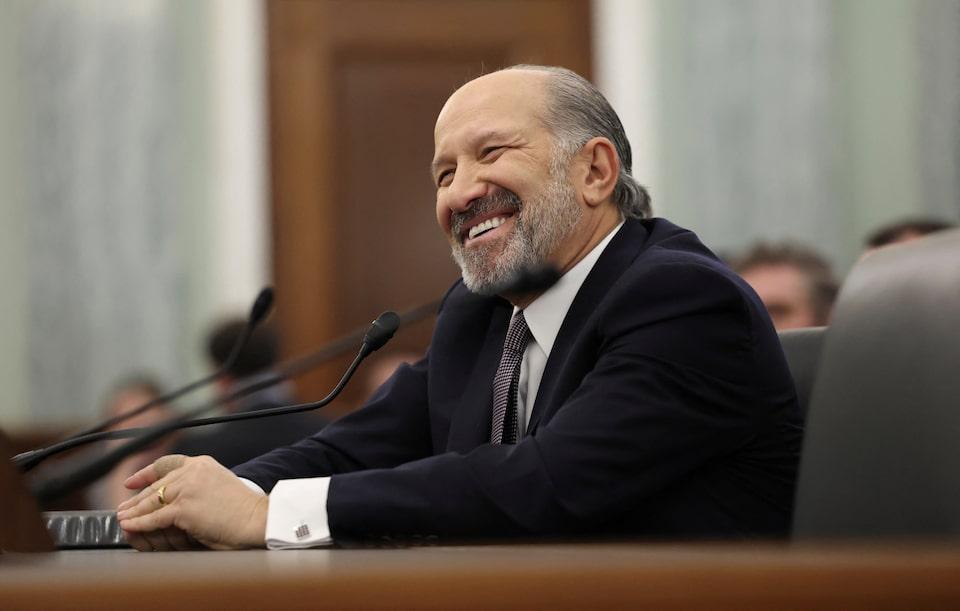
Commerce Secretary Lutnick plans to strip government spending from GDP data Economists say move will cause volatility in data WASHINGTON, March 2 (Reuters) - U.S. Commerce Secretary Howard Lutnick said on Sunday he would strip out government spending from the gross domestic product (GDP) report, but gave no indication how soon this change might happen, while dismissing fears of a possible recession. "You know that governments historically have messed with GDP," Lutnick said during an interview on Fox News Channel's "Sunday Morning Futures" program. "They count government spending as part of GDP. So I'm going to separate those two and make it transparent." Lutnick was asked whether he was concerned that the Trump administration's policies, including tariffs on imports and efforts to shrink the government through deep spending cuts and mass layoffs would push the economy into recession. "No, no, no," said Lutnick. Business and consumer sentiment have deteriorated in recent months, erasing gains notched following President Donald Trump's election victory in November. Data on consumer spending and the goods trade deficit have raised the risk of the economy contracting in the first quarter, fanning fears of a recession. Federal government spending accounts for about 6.5% of GDP. It contributed 0.25 percentage point to the economy's 2.3% annualized growth rate in the fourth quarter, mostly from defense spending. "If the government buys a tank, that's GDP, but paying 1,000 people to think about buying a tank is not GDP," said Lutnick, calling that "wasted money" as he explained the rationale for removing government spending from GDP. Tens of thousands of federal workers have been fired by tech billionaire Elon Musk's Department of Government Efficiency, or DOGE, - an entity created by Trump to shrink and cut what the White House has called government waste. ECONOMISTS ARE WARY Economists cautioned against changes to the current national accounts structure as it would make GDP very volatile and difficult to get a clear view of the economy's health, creating more uncertainty. "I don't think the stock market, the financial markets would like that," said Sung Won Sohn, Finance and Economics professor at Loyola Marymount University. It would also be impossible to compare the U.S. economy's performance against its global peers. Looking at the private sector alone would not give the full picture on growth, Sohn said. "Economic growth over time would become a lot more volatile. The reason is, when the economy slows or, when we are in a recession, for example, the government spends a lot of money," he said. Removing government spending from GDP would distort the figure as government productivity is assumed to be zero whatever the production is in the computation of GDP. "It's imperative that we keep the current system because, we need to make comparisons, and it's important to know how well we are doing compared to a year ago, five years ago, 10 years ago, and we can learn from our mistakes," Sohn said. Sign up here. https://www.reuters.com/world/us/us-commerce-secretary-wants-remove-government-spending-gdp-2025-03-03/