2025-03-03 03:00
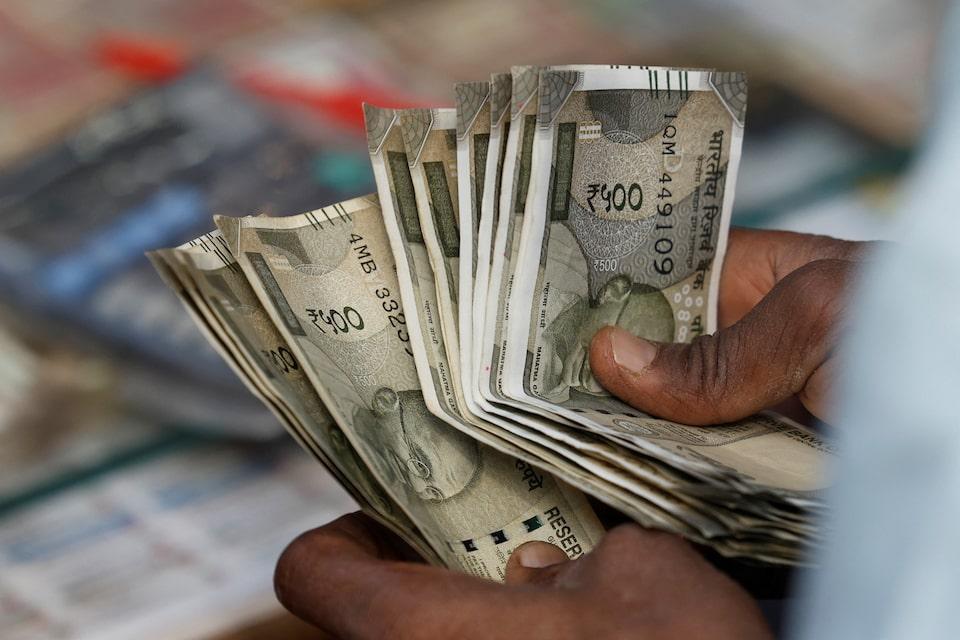
MUMBAI, March 3 (Reuters) - The Indian rupee is likely to inch up on Monday, tracking an uptick in regional peers to kick off a week where the focus will be on news flow on U.S. tariffs and economic data. The 1-month non-deliverable forward indicated that the rupee will open at 87.40-87.42 to the U.S. dollar compared with 87.4950 in the previous session. The Indian currency dropped 1% in February, logging its fifth straight monthly loss. March is considered seasonally favourable for the rupee and the Indian currency may be able to pause its losing run, a currency trader at a bank said. The rupee "will have to negotiate" the "always present" U.S. tariff headline risk and "handle the effects" of the volatility that it will bring in, he said. Last week, hedging demand, persistent equity outflows, and the usual market flows exerted downward pressure on the rupee. Intervention by the central bank mitigated a potentially larger decline, per traders. US TARIFFS, DATA The attention is squarely focussed on U.S. President Donald Trump's actions related to tariffs. Trump last week indicated that tariffs on Canada and Mexico will come into effect on Tuesday and on the same day the rate of tariffs on Chinese imports will rise. Trump had previously provided a last minute reprieve to Canada and Mexico. Meanwhile, this week will see the release of U.S. ISM manufacturing and services data and the non-farm payrolls data. The string of key data releases comes in the backdrop of worries that the world's largest economy is heading for a slowdown. "If implemented, tariff risk offers upside risk for the broad USD, where this force may collide headfirst with U.S. growth concerns. How these two forces pair off this week and impact the price action in the USD will be fascinating," Chris Weston, head research at Melbourne-based broker Pepperstone, said. KEY INDICATORS: ** One-month non-deliverable rupee forward at 87.66; onshore one-month forward premium at 19.5 paisa ** Dollar index dips to 107.20 ** Brent crude futures rises 0.4% to $73.44 ** Ten-year U.S. note yield at 4.24% ** As per NSDL data, foreign investors bought a net $128 million worth of Indian shares on Feb 27 ** NSDL data shows foreign investors bought a net $558 million worth of Indian bonds on Feb 27 Sign up here. https://www.reuters.com/world/india/rupee-rise-alongside-asian-peers-us-tariff-risks-cap-upside-2025-03-03/
2025-03-03 00:30
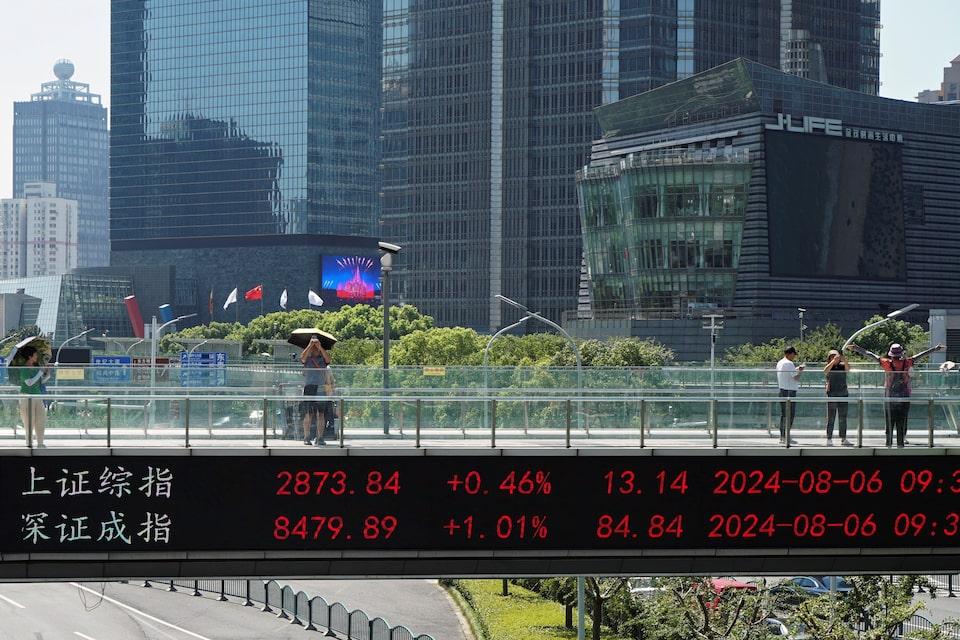
US stocks end down sharply after Trump tariff announcement Euro, European stocks surge on spending plans for Ukraine Bitcoin down after weekend rally on Trump comments NEW YORK, March 3 (Reuters) - U.S. stocks ended down sharply Monday, with the S&P 500 posting its biggest daily percentage drop since December 18 after U.S. President Donald Trump said 25% tariffs on Canada and Mexico will go into effect on Tuesday, while the euro strengthened after European leaders agreed to draw up a Ukraine peace plan. U.S. indexes hit session lows after the tariff comments. The Canadian dollar and Mexican peso both hit one-month lows after the tariff news. Trump said there was "no room left" for a deal that would avert the tariffs on Canada and Mexico. He also said reciprocal tariffs will start April 2. "It seems that tariffs are definitely going to go through and it increases the chances of a real economic fallout. The markets are not psyched to stick around for that," said Thomas Martin, senior portfolio manager at Globalt Investments in Atlanta. "To say ‘no room’ for negotiation is a hard line, a definitive statement." Shares of U.S. automakers declined, with General Motors (GM.N) , opens new tab down 3.6%. U.S. economic data on Monday also weighed on stocks. It showed manufacturing was steady in February, but a measure of prices at the factory gate jumped to a nearly three-year high and materials deliveries were taking longer, suggesting that tariffs on imports could soon hamper production. The Dow Jones Industrial Average (.DJI) , opens new tab fell 649.67 points, or 1.48%, to 43,191.24, the S&P 500 (.SPX) , opens new tab fell 104.78 points, or 1.76%, to 5,849.72 and the Nasdaq Composite (.IXIC) , opens new tab fell 497.09 points, or 2.64%, to 18,350.19. MSCI's gauge of stocks across the globe (.MIWD00000PUS) , opens new tab fell 7.14 points, or 0.83%, to 855.81. The pan-European STOXX 600 (.STOXX) , opens new tab index ended up 1.07%, with shares of European arms makers surging (.SXPARO) , opens new tab. The euro was up 1.07% at $1.0486, while the dollar index , which measures the greenback against a basket of currencies, fell 0.72% to 106.54. European leaders agreed at the weekend to draft a peace plan to present to the United States, following Ukrainian President Volodymyr Zelenskiy's clash with Trump in the Oval Office. "That's certainly a positive for Europe because it's unifying more of western Europe including Ukraine and drawing a line for the Russians, who have been very transparent that they want to recreate the old Soviet Union," said Tim Ghriskey, senior portfolio strategist at Ingalls & Snyder in New York. Reuters reported that parties in talks to form Germany's new government are considering setting up a defense fund. Bitcoin was lower after surging over the weekend, when Trump raised the possibility of a new U.S. strategic reserve that would include a range of tokens. Trump posted on Sunday on Truth Social that his January executive order on digital assets would create a stockpile of currencies, including bitcoin, ether , XRP , solana and cardano . Trump provided no detail on how the fund would work, but it was enough to revitalize the crypto bulls, who had taken a serious knock last week. "Trump just gave the pump that crypto traders have been holding out for," said Matt Simpson, senior market analyst at City Index. Bitcoin was down 8% from Sunday. Longer-dated U.S. Treasury yields fell after the latest reading on the manufacturing sector. The yield on benchmark U.S. 10-year notes fell 7 basis points to 4.159%, from 4.229% late on Friday. Also key this week will be the January U.S. payrolls report, due on Friday. A recent spate of softer economic data has nudged up expectations the Federal Reserve may be more active in lowering interest rates. Markets are pricing in 67 bps of cuts by the Fed this year, after earlier views saw the Fed reducing rates by less than 50 basis points. The European Central Bank is widely expected to cut rates when it meets on Thursday, although there is less conviction over what it might signal about the monetary policy outlook, given geopolitical factors. Oil prices fell about 2% to a 12-week low on reports OPEC+ will move forward with a planned oil output increase in April and amid concern that U.S. tariffs could hurt global growth. Brent futures fell $1.19, or 1.6%, to settle at $71.62 a barrel, while U.S. West Texas Intermediate (WTI) crude fell $1.39, or 2.0%, to settle at $68.37. Spot gold gained 1.1% to $2,890.57 an ounce. Sign up here. https://www.reuters.com/markets/global-markets-wrapup-1-2025-03-03/
2025-03-03 00:16
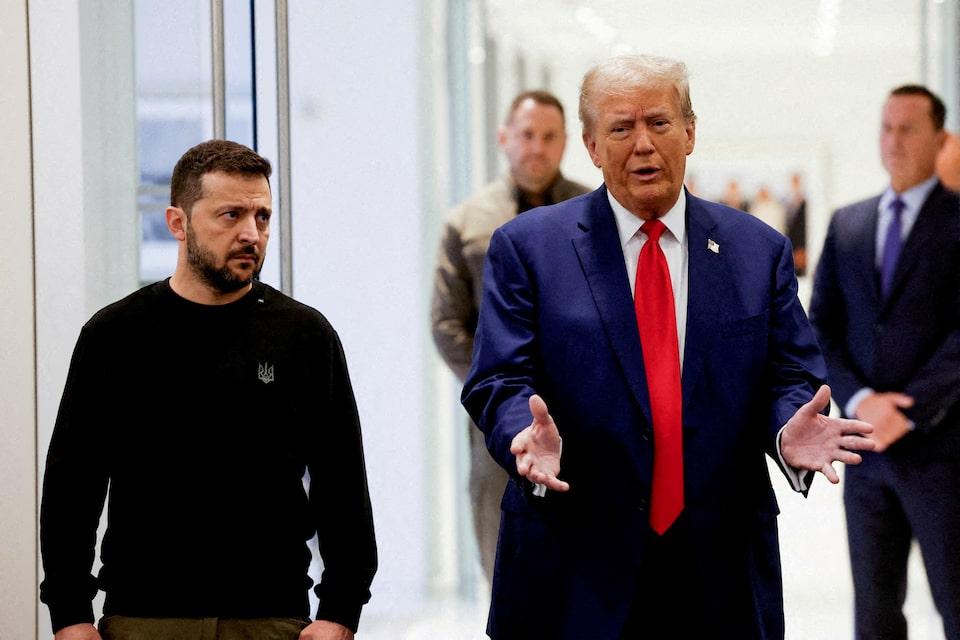
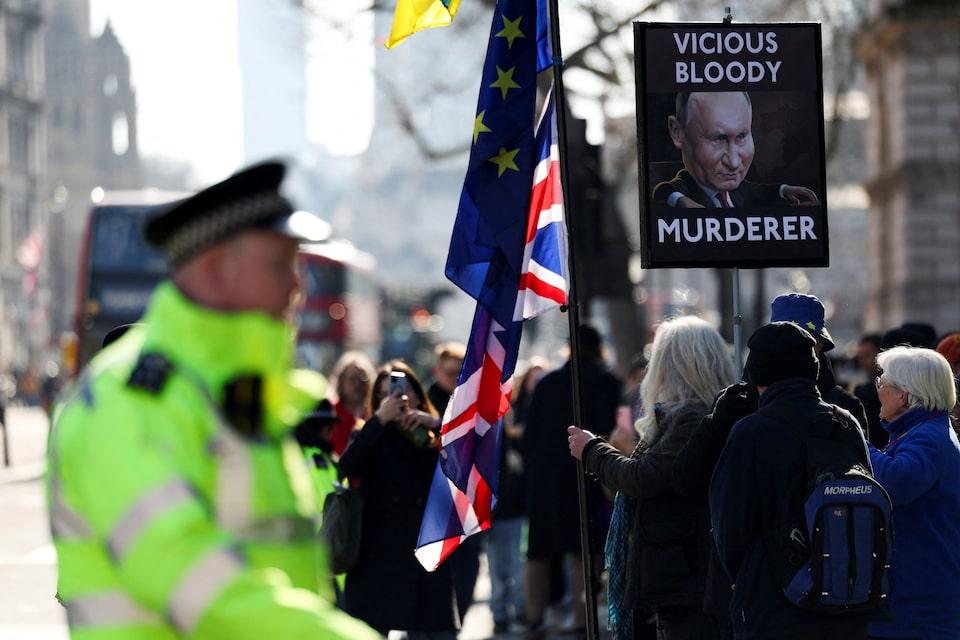
Europe must boost defence spending, says von der Leyen UK, France and Ukraine to present deal to Trump Zelenskiy meets King Charles at his residence Macron says deal would be a ceasefire for air and sea combat LONDON, March 2 (Reuters) - British Prime Minister Keir Starmer said on Sunday European leaders had agreed to draw up a Ukraine peace plan to present to the United States, a vital step for Washington to be able to offer security guarantees that Kyiv says are essential to deter Russia. At a summit in London just two days after Volodymyr Zelenskiy clashed with U.S. President Donald Trump and cut short a visit to Washington, European leaders offered a strong show of support to the Ukrainian president and promised to do more to help his nation. European leaders agreed they must spend more on defence to show Trump the continent can protect itself, and the European Commission chief suggested the bloc could ease rules that limit debt levels. Starmer, who welcomed a visibly shaken Zelenskiy on Saturday with a warm hug, said Britain, Ukraine, France and some other nations would form a "coalition of the willing" and draw up a peace plan to take to Trump. "This is not a moment for more talk. It's time to act. Time to step up and lead and to unite around a new plan for a just and enduring peace," Starmer said. Leaders did not provide details of their plan. Before the summit, French President Emmanuel Macron told newspaper Le Figaro that the plan would involve a one-month ceasefire that would apply to air and sea attacks but not to ground combat. European troops would be deployed if a more substantial peace agreement was reached, he said. It was not clear whether other nations had agreed to the terms. Zelenskiy told reporters that Ukraine would not cede any territory to Russia as part of a peace agreement and said he was still willing to sign a minerals deal with the United States. Zelenskiy said he believed he could salvage his relationship with Trump after Friday's shouting match, but that talks would have to take place behind closed doors. "The format of what happened, I don't think it brought something positive or additional to us as partners," he said. Europe is scrambling to ensure that Kyiv is not squeezed out of any talks after the Oval Office clash raised fears that the U.S. could pull support for Ukraine and impose a peace plan negotiated with Russia. Several European leaders said they must increase defence spending - something that could help bring Trump on side to offer a U.S. security guarantee in the event of peace. "After a long time of underinvestment, it is now of utmost importance to step up the defence investment for a prolonged period of time," Ursula von der Leyen, president of the European Commission, the EU's executive body, told reporters. Europe needs to turn "Ukraine into a steel porcupine that is indigestible for potential invaders," she said. LACKING WEAPONRY, STOCKS Europe, which lacks the weaponry and depth of ammunition stocks of the U.S., hopes to convince Trump that it can defend itself but that Russia will only adhere to a peace deal if it comes with the backing of the United States. Talks with the U.S. have centred on Washington providing a so-called backstop for a European peacekeeping role, possibly in the form of air cover, intelligence and surveillance and a greater but unspecified threat if Russian President Vladimir Putin again sought to take more territory. Crucial to getting any agreement from Trump is for European nations to increase defence spending and signal they would take part in any peacekeeping role - something Starmer acknowledged was difficult to get unanimity on. Starmer increased the UK's defence spending before his visit to Washington last week, and NATO Secretary General Mark Rutte said some European leaders had privately set out new plans on defence spending at the meeting but he declined to give details. 'UNCOMFORTABLE VIEWING' Trump has upended U.S. policy on the three-year-old war since he returned to the White House in January, casting doubt on U.S. military and political support for Ukraine - and Europe - and ending the isolation of Moscow. Trump had blindsided Europe by calling Putin without warning and sending a delegation to Saudi Arabia for talks with Russia without including Ukraine or Europe. Trump has falsely suggested that Kyiv was responsible for starting the war, and on Friday, he criticised Zelenskiy for not being grateful for U.S. aid. Zelenskiy's clash with Trump ended a week when Europe had appeared to be in a better position in its drive to encourage Trump to continue to offer support to Ukraine after cordial visits to Washington by Macron and Starmer. Starmer described watching the spat between Zelenskiy and Trump in the Oval Office as uncomfortable viewing, but he was keen to push the conversation forward by offering himself as a go-between for Europe and the United States. In a further show of support for the Ukrainian leader, Zelenskiy later on Sunday flew to meet King Charles at his private residence in eastern England. The Trump administration on Sunday continued to criticise Zelenskiy. White House national security adviser Mike Waltz told CNN that the U.S. needs a Ukrainian leader who is willing to secure a lasting peace with Russia, but that it is not clear Zelenskiy is prepared to do so. Russian Foreign Minister Sergei Lavrov praised Trump's "common sense" approach and accused European countries of seeking to prolong the conflict by propping up Zelenskiy "with their bayonets in the form of peacekeeping units". Starmer said the leaders on Sunday also agreed to work to ensure Kyiv is at the table of any peace talks and boost the country's own defence capabilities. "Europe must do the heavy lifting, but to support peace in our continent and to succeed, this effort must have strong U.S. backing," Starmer told a news conference. Sign up here. https://www.reuters.com/world/europe/uks-starmer-tries-revive-hope-ukraine-peace-summit-2025-03-01/
2025-03-03 00:11
LAUNCESTON, Australia, March 3 (Reuters) - It's not really a surprise that one of the world's largest liquefied natural gas companies is bullish about the long-term view for the super-chilled fuel, but Shell's outlook also has inherent contradictions. Shell (SHEL.L) , opens new tab released its annual LNG outlook last week and forecast that demand will surge about 60% from current levels by 2040, largely driven by strong economic growth in Asia, the impact of artificial intelligence and the need to cut emissions in heavy industries and transportation. Global LNG demand will rise to between 630 million and 718 million metric tons by 2040, up from 407 million tons in 2024, Shell said. Drilling down into Shell's forecasts reveals a significant potential supply gap, with the London-listed major estimating that LNG supply will rise by 170 million tons from current levels by 2030. Putting together the 407 million tons of demand in 2024 with the additional 170 million of supply, gives a total of 577 million by 2030. This is 141 million tons short of Shell's upper range of 2040 demand, meaning that in the decade between 2030 and 2040 LNG producers would have to bring on a significant volume of supply. The question for the market is whether it's likely that LNG companies have the ability to actually increase supply by that much and, if they do, what kind of price incentives will be necessary to make sure the investments happen. It's here that the contradiction in Shell's outlook becomes more apparent. If demand is going to rise as strongly as Shell expects, it's likely the price of LNG will have to remain competitive against alternatives, especially in Asia, the top-importing continent and a key driver of the bullish demand forecasts. However, if LNG prices are going to remain affordable on a relative basis to coal and renewable energies, then LNG producers will find it harder to secure the massive capital needed to fund the huge expansion needed. In other words, in the coming decades LNG companies likely have a choice between higher volumes or higher prices, but can't have both. This isn't spelled out in the Shell outlook, which doesn't make long-term price forecasts, but it's difficult to construct a scenario where both LNG volumes and prices are strong. This is especially the case in Asia, where the three most populous countries with the highest potential growth in energy demand also happen to be the three biggest producers of coal. China, India and Indonesia produce more than 6 billion tons of coal annually and have strong incentives to keep doing so from a cost and energy security perspective. China is also the world's biggest producer of renewable energy and added 355 gigawatts of wind and solar generation capacity in 2024. China boosted its imports of LNG in 2024, with customs data showing arrivals of 76.65 million tons, the second-highest on record. But looking at the recent monthly data underscores the challenges facing the LNG sector. PRICE IMPACT China's LNG imports for February were just 4.47 million tons, the lowest in five years, according to data compiled by commodity analysts Kpler. Apart from a strong December, China's LNG imports have been trending lower since September, and even December's 7.58 million tons was below the 8.20 million from December 2023. China is the world's biggest LNG buyer, but it also has a track record of being sensitive to prices, pulling back on spot cargoes when the price rises. The recent trend of lower imports has come at a time when spot prices are elevated, given Europe's demand has been high amid cold weather and further reductions in pipeline supply from Russia with the end of shipments through Ukraine at the start of the year. Spot Asian LNG prices reached $16.10 per million British thermal units (mmBtu) in the week to February 14, and while they have since eased to $13.50 last week, they have been above the $13 level since mid-October. The current price is also some 63% higher than the $8.30 per mmBtu that prevailed in the week to February 23 last year. The high prices have dulled Asia's appetite for LNG with Kpler estimating the continent imported 20.93 million tons in February, the lowest monthly total since April 2023. For Shell's bullish 2040 forecast for LNG demand to come to fruition, the link between prices and demand in Asia will have to be weakened. LNG companies will also have to invest massive amounts of capital and at the same time be prepared to accept weaker prices for their new production. The views expressed here are those of the author, a columnist for Reuters. Sign up here. https://www.reuters.com/markets/commodities/shells-lng-optimism-asia-has-volume-vs-price-conundrum-russell-2025-03-03/
2025-03-03 00:07
LONDON, March 3 (Reuters) - Britain must strengthen its safeguards against forced labour in supply chains to avoid the country becoming a dumping ground for products banned in other markets, lawmakers said in an report on Monday. Lawmakers on the cross-party Business and Trade Committee called on ministers to update Britain's modern slavery legislation, penalise companies that fail to publish modern slavery statements, and consider creating a criminal offence around forced labour in supply chains. "The UK is at serious risk of becoming a 'dumping ground' for products made with forced labour if it does not keep up with our global partners on legislative reforms to tackle modern slavery," the report said. The United States has forced labour legislation in place banning products made in China's Xinjiang region, and European Union forced labour regulation will come into effect in December 2027. The U.S. government and non-governmental organisations accuse China of forced labour and human rights abuses targeting Uyghur people in Xinjiang, allegations Beijing denies. Lawmakers interviewed representatives from online fast-fashion retailer Shein, which aims to list in London this year, and online marketplace Temu as part of their inquiry, as both platforms face allegations their products contain cotton from Xinjiang. Shein's general counsel for Europe, the Middle East and Africa, Yinan Zhu, dodged lawmakers' questions in January about the source of cotton in products shipped to the UK, and this refusal to reply was "a source of extreme concern", the report said. In subsequent written replies to the committee's questions, Zhu said Shein does not allow Chinese cotton in products sold in the U.S., and that there is no legal restriction in Britain on the origin of cotton, but in practice there is overlap between the products Shein sells in both countries. Shein, which sells in 150 markets worldwide, says it has a zero-tolerance policy on forced labour. Temu has also said it strictly prohibits forced labour. Sign up here. https://www.reuters.com/world/uk/uk-lawmakers-push-stronger-regulation-forced-labour-supply-chains-2025-03-03/

2025-03-03 00:01
LONDON, Feb 28 (Reuters) - Ukrainian President Volodymyr Zelenskiy is set to meet with U.S. President Donald Trump today to sign a critical minerals deal as a way of securing continued U.S. backing in the war against Russia. It initially started as a rare earths deal before someone realised that Ukraine doesn't actually have too much in the way of these 17 esoteric metals , opens new tab. The draft text on the proposed Reconstruction Investment Fund therefore simply refers to "deposits of minerals, hydrocarbons, oil and gas". Mortgaging Ukrainian security against its mineral wealth comes with a long-dated pay-back. The clue is in the word "deposits". Finding mineral deposits is the easy part. Mining them is more difficult. Processing them is more difficult still. But the deal is a sign that after a century of oil politics we're now entering a new age of metal politics. WHAT LIES BENEATH THE SURFACE? If Ukraine has a lot of rare earths, it's news to the U.S. Geological Survey, which doesn't include the country in its list of either top producers or largest reserves. The handful of rare earth deposits that Ukraine hosts haven't been surveyed since Soviet times. In mining terms, we don't even know the size or composition of the resource, let alone whether it could qualify as a reserve deemed economically viable for extraction. Ukraine does have confirmed reserves of other critical metals such as titanium and lithium but getting them out of the ground is a whole bigger challenge. Mining requires infrastructure and power, both in short supply in Ukraine after three years of war. Even assuming any deposits can be mined profitably, there's the not so little question of how to process raw material into metal. China dominates so many critical mineral supply chains not because it has the largest ore reserves but because it has mastered the mid-stream part of the production cycle. It's also starting to leverage this technical know-how by restricting exports of critical metal processing technology, making it even harder for the West to catch up. In short, it's going to be a good while before Ukraine can deliver on its part of the minerals deal by monetising what is still in the ground. METALS REVOLUTION China's dominance is why the United States and Europe are so desperate to secure their own critical mineral supply chains. But it's a metallic revolution that is driving that hunger. A 20th century landline telephone only needed a length of copper wire to work. An Apple iPhone , opens new tab still contains copper but it also needs aluminium, cobalt, gold, lithium, tin, tungsten and a sprinkling of rare earths for you to be able to make a call. Now consider what goes into a more advanced bit of technology such as an F-35 stealth fighter jet. Metals are no longer just bits of hard stuff to bang into shape but are used in increasingly complex combinations in what is more akin to inorganic chemistry than traditional metal-working. The poster-child for modern metallurgy is the lithium-ion battery, which comes in multiple chemistries each using a slightly different combination of metal inputs. The first commercial battery only appeared in 1991 but the technology has rapidly evolved to become the core driver of the transition to electric vehicles, which is why the West is racing to build out its own battery metals supply chain. And while Trump may not think much of electric vehicles, he knows how important metals are to the U.S. military. Indeed, it was Trump in his first term who declared critical minerals a national emergency , opens new tab. METALLIC POKER Critical metals have become the new bargaining chip on the geopolitical card table. Trump has also set his sights on Greenland, which does have accredited reserves, including of rare earths, but which is behind even Ukraine in having the infrastructure to get them out of the ground. Vladimir Putin has been quick to join the metallic poker game, pointing out that Russia boasts considerably more rare earths than Ukraine if the United States is interested. He'll even throw in two million tonnes of primary aluminium a year since he's heard the United States might be a bit short of the stuff if it goes ahead and puts tariffs on imports from Canada, its largest supplier. Which rather begs the question of whether Trump may not be better looking closer to home if he's really that keen on getting rare earths and other critical metals. Canada has lots of them, is a mining friendly jurisdiction and has extensive metals processing capacity. But Trump seems to have thrown out the previous administration's concept of "friend-shoring". Or maybe it's the list of friends that has changed. Either way, the minerals deal with Ukraine is unlikely to be the last of its kind. As metals become a geopolitical currency, Ukraine is not the only country looking to play the metals card. The Democratic Republic of Congo is trying and failing to fight back the M23 rebel group, which has seized the two largest cities in the east of the country. The country's president Felix Tshisekedi touted a Ukraine-style deal in an interview , opens new tab with the New York Times, offering future supplies of the country's critical minerals, particularly cobalt, for Western assistance. Such is the new age of metals diplomacy. You're going to be hearing a lot more about a bunch of elements in the periodic table that you've never heard of, even though you're using them every day. The opinions expressed here are those of the author, a columnist for Reuters. Sign up here. https://www.reuters.com/markets/commodities/critical-minerals-take-centre-stage-world-politics-andy-home-2025-02-28/