2026-01-09 13:00
Pandora cuts 2025 sales growth forecast to 6% from 7-8% Pandora shares down 10% to lowest level since June 2023 US consumer sentiment lowest in many years, new CEO says Pandora plans new designs, marketing to lure shoppers STOCKHOLM, Jan 9 (Reuters) - Pandora (PNDORA.CO) , opens new tab warned of weaker 2025 sales growth on Friday, sending the Danish jewellery brand's shares down 10%, after U.S. shoppers bought fewer charm bracelets and necklaces than expected in the key holiday season. Pandora, which sells silver charm bracelets for $70 and upwards, as well as lab-grown diamond jewellery made at its own factories in Thailand, is grappling with lower-income shoppers cutting their spending, the impact of U.S. tariffs and a 161% rise in silver prices last year. Sign up here. "The main thing happening in the U.S. is that we had lower traffic than we have had in previous seasons," said Berta de Pablos-Barbier, who took over as Pandora CEO on January 1. "Consumer sentiment in the U.S. is at the lowest in many years," de Pablos-Barbier added. The U.S. is Pandora's biggest market, accounting for around a third of its revenue, and holiday gifting is a key driver of sales. Pandora said in a preliminary reading of 2025 results that it now sees full-year organic sales growth of 6%, below its previous guidance of 7%-8%. Shares in Pandora, which is due to publish full fourth-quarter earnings on February 5, fell 10% to their lowest level since June 2023. 'RE-ENERGISING COLLECTIONS' De Pablos-Barbier, previously Pandora's chief marketing officer, said the company would focus on developing more new product lines to lure cautious consumers back into stores. "We need to be better at re-energising our collections, we need to bring more impactful newness into the market, because this is going to drive excitement," de Pablos-Barbier said. Pandora also said it expects a full-year operating profit of around 7.8 billion Danish crowns ($1.2 billion) and an operating margin, matching previous guidance, of around 24%. Silver's high cost was a "good trigger" for Pandora to start working on new materials and designs, de Pablos-Barbier said. Pandora will present its strategic priorities for 2026 next month, including an update on plans to lower its commodity exposure to protect margins. ($1 = 6.4163 Danish crowns) https://www.reuters.com/business/jewellery-maker-pandora-says-weak-consumer-sentiment-hits-growth-2026-01-09/
2026-01-09 12:58
Olina falsely flew Timor Leste flag, sailed from Venezuela - data Seizure follows pursuit of tankers linked to sanctioned oil US blockade of Venezuelan oil remains globally enforced, says Hegseth WASHINGTON/SINGAPORE, Jan 9 (Reuters) - The U.S. has seized the Olina tanker in the Caribbean, the fifth vessel targeted in recent weeks as Washington steps up efforts to curb Venezuelan oil exports, U.S. officials said on Friday. The Olina, which according to public shipping database Equasis was falsely flying the flag of Timor Leste, previously sailed from Venezuela and had returned to the region, said an industry source with direct knowledge of the matter. Sign up here. In a pre-dawn move, marines and sailors from Joint Task Force Southern Spear, launched from the carrier USS Gerald R. Ford, apprehended the Olina in the Caribbean Sea "without incident", the U.S. Southern Command said on X. "Once again, our joint interagency forces sent a clear message this morning: 'there is no safe haven for criminals,'" it said. The Olina left Venezuela last week fully loaded with oil as part of a flotilla shortly after the U.S. seized Venezuelan President Nicolas Maduro on January 3, and the vessel was returning fully loaded to Venezuela following the U.S. blockade of Venezuelan oil exports, the industry source said. "The vessel’s AIS (location) tracker was last active 52 days ago in the Venezuelan EEZ, northeast of Curacao," British maritime risk management company Vanguard said separately. "The seizure follows a prolonged pursuit of tankers linked to sanctioned Venezuelan oil shipments in the region." The U.S. imposed sanctions on the Olina in January last year, when it was named the Minerva M , opens new tab, for what Washington said was it being part of the so-called shadow fleet of ships that sail with little regulation or known insurance. The M Sophia, another of the tankers that was part of a flotilla of a dozen vessels that left Venezuela earlier this month, was seized by U.S. forces earlier this week. Three vessels - Skylyn, Min Hang and Merope - all fully loaded and part of the same flotilla that left last week, sailed back to Venezuelan waters on Thursday, according to the industry source. Seven additional tankers from that flotilla, also fully loaded, were set to return to Venezuelan waters on Friday and Saturday, the person said. "In the past 24 hours alone, at least seven 'dark fleet' oil vessels have turned around to avoid interdiction - because they know we mean business," Pentagon spokesperson Sean Parnell said Friday on X. All of the oil on board these 10 tankers is owned by Venezuelan state producer PDVSA, the person added. PDVSA did not immediately respond to a request for comment. It was unclear whether Washington would take action on the other tankers sailing towards Venezuela. The U.S. blockade of sanctioned Venezuelan oil remains in full effect "anywhere in the world", Defense Secretary Pete Hegseth said on Wednesday. https://www.reuters.com/business/energy/us-process-seizing-olina-tanker-caribbean-us-official-says-2026-01-09/

2026-01-09 12:49
Storm Goretti batters northern Europe Tens of thousands left without power in Britain, France Rail services disrupted in England, France, Germany Schools shut in England, Scotland particularly hit Flights cancelled in Amsterdam PARIS/LONDON/BERLIN, Jan 9 (Reuters) - Storm Goretti battered northern Europe on Friday, knocking out power to thousands of homes, shutting schools and suspending rail services in France, Britain and Germany as heavy snow and gale-force winds compounded a week of freezing weather. Across northern Europe emergency services were left scrambling to deal with heavy snowfall and severe winds from Goretti, which slammed into Britain on Thursday before moving eastwards. In snowbound Germany, one official said it was one of the most severe weather events in the region in recent years. Sign up here. The powerful storm left around 380,000 households without electricity in France, mainly in Normandy and Brittany, as it rolled into continental Europe. FLIGHTS CANCELLED Some 57,000 homes lost power across Scotland and parts of central England overnight according to the National Grid. In the Netherlands, flights were cancelled as heavy snowfall was set to return after a one-day reprieve. Winds of more than 150 kph (93 mph) were recorded overnight in France’s northwestern Manche region, with a record 213 kph in Barfleur, forcing the SNCF rail operator to suspend services between Paris and Normandy. French state-owned energy company EDF said that Storm Goretti had hit electricity production at the Flamanville nuclear plant, taking reactors 1 and 3 offline following the loss of a high-voltage line. The storm's strength, which tore off roofs and uprooted trees, was "exceptional", Manche prefect Marc Chappuis told BFM TV. In central England, rail operators warned passengers not to travel and suspended some services as the storm moved through. FREEZING WEATHER GROUNDS FLIGHTS The disruption spread into northern Germany, where state-owned Deutsche Bahn halted long-distance train services until further notice, citing one of the most severe winter weather events in the region in many years. "So far, we have been able to avoid situations where passengers are left stranded on the open track for long periods of time," a Deutsche Bahn spokesperson told a press conference at Berlin’s central station, adding that crews were working to clear the tracks quickly and safely. At Hamburg Airport, northern Germany's busiest air terminal, about 40 flights were cancelled. The Netherlands' KLM carrier said it had cancelled 80 flights to and from Amsterdam's Schiphol Airport scheduled for Friday. Schiphol had earlier this week cancelled hundreds of flights because of freezing weather. In Hungary, the military was called out to assist motorists trapped in heavy snow. Western Balkan countries have seen widespread disruption since Sunday. One person was found dead in Albania on Thursday, which has been hit by extensive flooding, while gale-force winds ripped roofs off buildings in northeastern Turkey. (This story has been refiled to remove garbled text in paragraph 3) https://www.reuters.com/business/environment/widespread-power-cuts-travel-disrupted-storm-goretti-hammers-northern-europe-2026-01-09/

2026-01-09 12:42
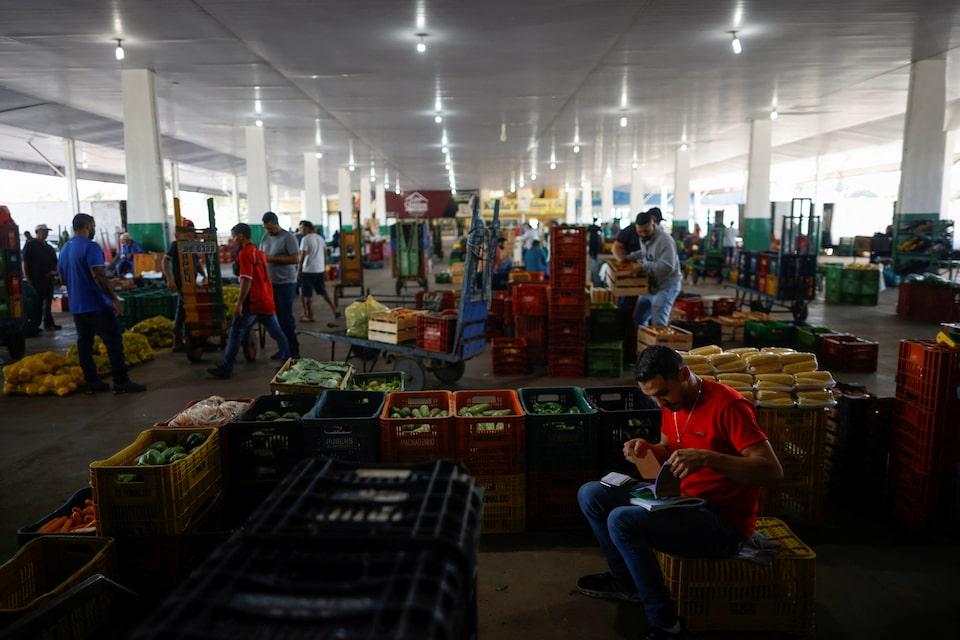
BRASILIA, Jan 9 (Reuters) - Brazil's annual inflation slowed more than the central bank and markets had anticipated, data from statistics agency IBGE showed on Friday, ending 2025 within the official target range at 4.26% and reinforcing expectations for monetary easing ahead. The reading marked a positive surprise for the central bank, which in July had warned that inflation would remain above 4.5% - the upper limit of its target of 3%, plus or minus 1.5 percentage points - until the end of the first quarter of 2026. Sign up here. Instead, consumer prices returned to the target range months earlier, in November. Over the past five years, Latin America's largest economy had met its annual inflation goal only in 2023. Annual inflation cooled further in December, with the annual rate coming in below the 4.3% expected by economists in a Reuters poll and the 4.4% projected by the central bank last month. At the time, policymakers cited a more benign short-term inflation trend, improved expectations, and cheaper fuel driven by a stronger currency and lower oil prices, all under a restrictive interest-rate environment. The central bank halted in July an aggressive tightening cycle that had added 450 basis points to the benchmark Selic rate, taking it to a near two-decade high of 15%. Since then, policymakers have maintained a hawkish tone, stressing the need to keep rates steady to bring inflation to the target's midpoint. The median forecast in a weekly central bank survey of economists points to a first rate cut in March, though some economists still believe an easing cycle could start at the January 27-28 meeting. Kimberley Sperrfechter, emerging markets economist at Capital Economics, said the latest inflation data "leaves the door just about open to an interest rate cut" later this month. "But whether the first cut in the cycle comes this month or in March, rates are likely to come down further than is widely anticipated," she added in a note to clients. In December alone, consumer prices in Brazil rose 0.33%, slightly below the 0.35% expected by economists in the Reuters poll but accelerating from a 0.18% increase in November. https://www.reuters.com/world/americas/brazils-annual-inflation-ends-2025-within-target-range-rate-cuts-seen-ahead-2026-01-09/
2026-01-09 12:25
LONDON, Jan 9 (Reuters) - (This Jan 9 story has been updated to fix the hyperlinks in paragraphs 1 and 3) OPEC's oil output fell in December due to lower supply from Iran and Venezuela, which offset an OPEC+ agreement to raise production for the month, a Reuters survey found on Friday. Sign up here. The Organization of the Petroleum Exporting Countries pumped 28.40 million barrels per day last month, down 100,000 bpd from November's revised total, the survey showed, with Iran posting the largest decline. OPEC+, comprising OPEC and allies including Russia, has slowed the pace of its monthly output increases amid concerns of a supply glut. Many members are running close to capacity limits and some are tasked with extra cuts to compensate for earlier overproduction, limiting the impact of further increases. Under an agreement by eight OPEC+ members covering December output, the five of them that are OPEC members - Algeria, Iraq, Kuwait, Saudi Arabia and the UAE - were to raise output by 85,000 bpd before the effect of compensation cuts totalling 135,000 bpd for Iraq and the UAE. The survey shows that the actual increase by the five was 20,000 bpd. U.S. SANCTIONS DRIVE IRANIAN OUTPUT DOWN Iranian crude supply dropped by 100,000 bpd in December, the survey found. Iran is subject to U.S. sanctions that seek to curb its oil exports over Tehran's nuclear work, with the latest measures announced in December. Exports also vary month on month as ships return from making deliveries, tanker trackers say. Venezuelan crude supply declined by 70,000 bpd in December, the survey found, amid a U.S. blockade to reduce oil shipments, with the impact estimated to increase this month. Consultant Energy Aspects has not seen a meaningful change to Venezuela's production for most of December and forecasts crude and condensate production will slip to 950,000 bpd this month from 1.1 million bpd in December, Livia Gallarati of Energy Aspects said. According to ship monitoring data and PDVSA export records, Venezuela's exports of crude and residual fuel averaged 952,000 bpd in November and 498,000 bpd in December, with the difference held in onshore and floating storage. Output in Iraq and the UAE was little changed. Estimates for these nations vary widely, with many outside sources putting the countries' output higher than the countries themselves. While the Reuters survey and data provided by OPEC's secondary sources show they are pumping close to the quotas, other estimates, such as those of the International Energy Agency, say they are pumping significantly higher volumes. The Reuters survey aims to track supply to the market and is based on flow data from financial group LSEG, information from other companies that track flows, such as Kpler, and information provided by sources at oil companies, OPEC and consultants. https://www.reuters.com/business/energy/opec-oil-output-falls-december-iran-venezuela-reuters-survey-finds-2026-01-09/
2026-01-09 12:10
TotalEnergies committed to exploration in Lebanon - CEO says Lebanon aims to step up exploration, works on fourth licensing round PARIS, Jan 9 (Reuters) - French oil company TotalEnergies (TTEF.PA) , opens new tab has obtained government approval for a new exploration permit offshore Lebanon, it said on Friday. Total, which owns a 35% operating stake in the permit, will begin 3D seismic surveys on Block 8 with partners Eni (ENI.MI) , opens new tab (35%) and QatarEnergy (30%). Sign up here. The French company began looking for natural gas in Lebanon in late 2022, following the government's landmark agreement of a maritime border with Israel in the Mediterranean Sea. An initial exploration campaign on an adjacent block was disappointing. "Although the drilling of the well Qana 31/1 on Block 9 did not give positive results, we remained committed to pursue our exploration activities in Lebanon," TotalEnergies CEO Patrick Pouyanne said in a statement. Initial work on Block 8 will survey exploration potential across 1,200 square kilometers (463 square miles). Lebanese Petroleum Administration President Gaby Daaboul said Lebanon aimed to step up exploration and achieve a commercial discovery to boost the economy and support sustainable development. Energy Minister Joseph Saddi said Lebanon was working on its fourth exploration licensing round and would propose amendments to terms within a month to attract more bidders. Israel and Cyprus have already made major offshore gas discoveries in the eastern Mediterranean, notably the Leviathan and Aphrodite fields, highlighting the region's potential. https://www.reuters.com/business/energy/totalenergies-gets-new-exploration-permit-offshore-lebanon-2026-01-09/