2025-03-01 04:07
Feb 28 (Reuters) - A federal judge dismissed on Friday a lawsuit by U.S. securities regulators accusing an online entrepreneur of raising more than $1 billion through unregistered cryptocurrency offerings and defrauding investors out of $12.1 million to buy luxuries including the world's largest black diamond. U.S. District Judge Carol Bagley Amon in Brooklyn cited a lack of ties between Richard Heart's alleged conduct and the United States in deciding to toss , opens new tab the U.S. Securities and Exchange Commission's 2023 lawsuit against Heart, a U.S. citizen residing in Finland. The SEC had alleged that Heart, also known as Richard Schueler, touted his Hex token, PulseX asset trading platform and PulseChain asset network on YouTube and other websites as pathways to "grandiose wealth." The SEC in its lawsuit said Heart knew his often "tongue-in-cheek" disclaimers that his offerings were not securities were false, including when he said that Hex was capable of 38% annual returns and "built to be the highest appreciating asset that has ever existed in the history of man." He was also accused of spending PulseChain investor funds on McLaren and Ferrari sports cars, four Rolex watches costing $3.02 million, and "The Enigma," a 555-carat black diamond costing 3.16 million British pounds (then $4.28 million) at a Sotheby's auction in February 2022, the SEC said. But Amon said the online statements at issue were directed to a global audience, not a U.S. one specifically, and that the SEC failed to allege he engaged in transactions with U.S.-based investors through his websites. To the extent the complaint alleged Heart misappropriated investor funds through deceptive transactions, those actions occurred entirely abroad, the judge wrote. "The alleged misappropriation occurred through digital wallets and crypto asset platforms, none of which were alleged to have any connection with the United States," Amon wrote. A spokesperson for Heart said in a statement the judge's ruling "in favor of a cryptocurrency founder and his projects over the SEC brings welcome relief and opportunity to all cryptocurrencies." The SEC did not respond to a request for comment. Sign up here. https://www.reuters.com/legal/us-judge-dismisses-sec-fraud-lawsuit-against-hex-crypto-founder-2025-03-01/

2025-02-28 23:11
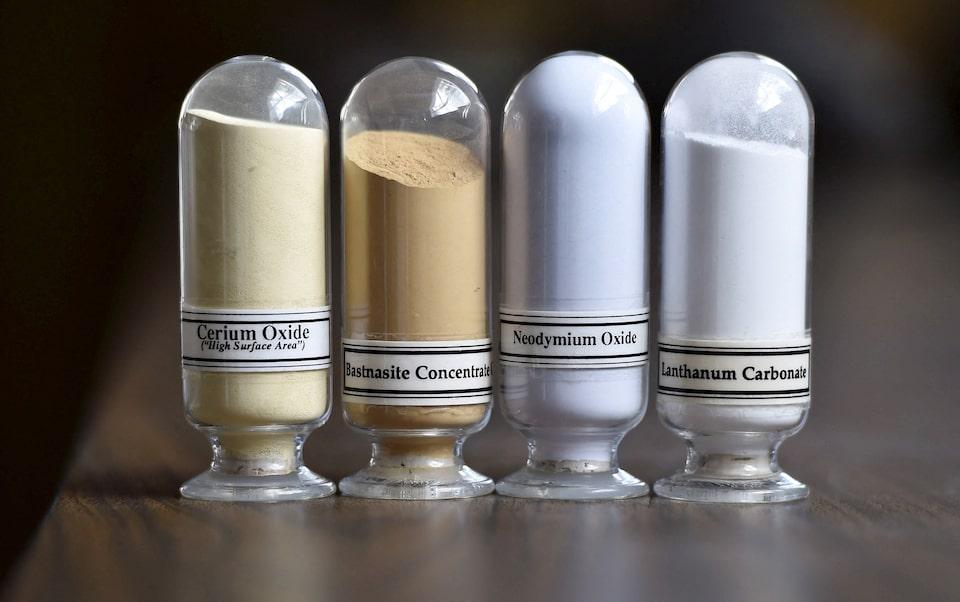
Feb 26 (Reuters) - Rare earth metals are making headlines as demand rises for products from smartphones to wind turbines, and as governments seek secure supply. Here are some basic facts about them: WHAT ARE THEY? Rare earths are a group of 17 elements including 15 silvery-white metals called lanthanides, or lanthanoids, plus scandium and yttrium. WHAT ARE THEY USED FOR? They are used in a wide range of products including consumer electronics, electric vehicles (EVs), aircraft engines, medical equipment, oil refining, and military applications such as missiles and radar systems. WHAT COUNTRY IS THE BIGGEST PRODUCER? China accounts for about 60% of global mine production and 90% of processed and permanent magnet output. Beijing sets quotas on output, smelting, and separation, which are closely monitored as a barometer of global supply. WHAT ARE THEIR NAMES? In their periodic table order, they are: scandium, yttrium, lanthanum, cerium, praseodymium, neodymium, promethium, samarium, europium, gadolinium, terbium, dysprosium, holmium, erbium, thulium, ytterbium, and lutetium. WHICH ONES ARE MOST COMMON? Lanthanum and cerium are among the most common rare earth metals. Lanthanum is used in camera lenses and lighting. Cerium is used in catalytic converters, which reduce combustion engine emissions. Neodymium and praseodymium are in demand for permanent magnets used in EV motors and wind turbines. ARE THEY RARE? They are not rare in the sense that they are uncommon; some are more common than lead, for example. But they tend to be spread thin around the Earth's crust in small quantities and mixed together or with other minerals, so larger deposits are difficult to find and costly to extract. WHAT ENVIRONMENTAL IMPACT DO THEY HAVE? Processing rare earths often involves the use of solvents, which can produce toxic waste that pollutes the soil, water, and atmosphere. More environmentally friendly technologies are being developed, but they are not yet widely used. Certain types of rare earth ores also contain radioactive thorium or uranium, which is often removed using acid. For this reason, development of the sector faces health and environmental regulatory hurdles. Sign up here. https://www.reuters.com/markets/commodities/what-are-rare-earth-metals-why-are-they-demand-2025-02-26/
2025-02-28 21:59
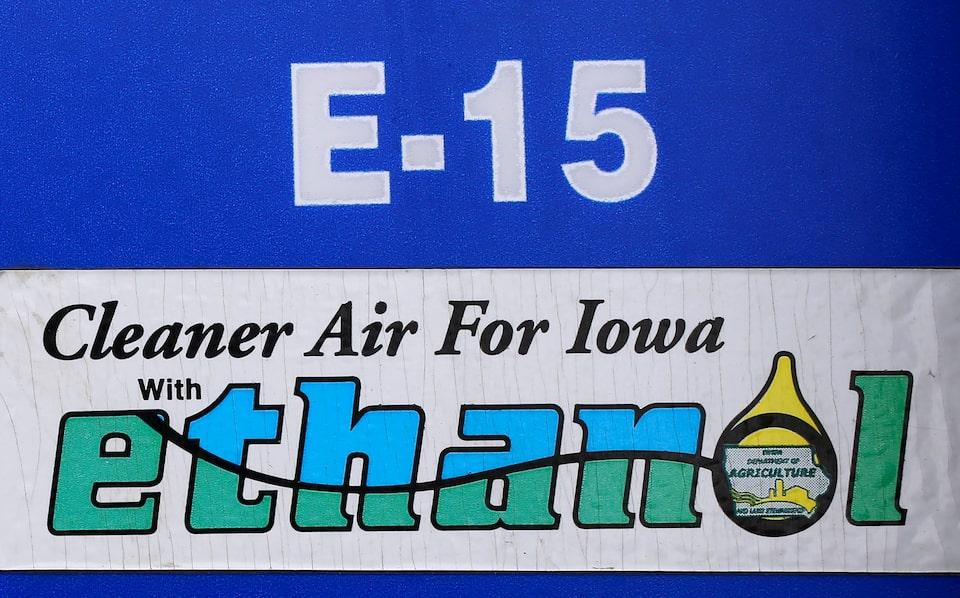
NEW YORK, Feb 28 (Reuters) - The U.S. Environmental Protection Agency said on Friday it would delay an action by one year to expand sales of higher ethanol blends of gasoline in South Dakota and Ohio, two of eight Midwestern states that requested the agency approve increased sales of the product. The EPA's statement on Friday follows its decision last week to uphold an April 28 implementation date for the request from eight Midwest governors to allow year-round sales of gasoline containing 15% ethanol, a blend known as E15. States had until February 26 to seek a one-year delay. The EPA's implementation will now only apply to Illinois, Iowa, Minnesota, Missouri, Nebraska, and Wisconsin - after South Dakota and Ohio opted for the delay. The EPA's expansion is meant to enable both E15 and the more widely available E10 fuel blends to be sold during the summer, where the existing policy often keeps E15 out of the market. While biofuel producers have long wanted expanded sales of the E15 blend, they would prefer a nationwide solution that goes beyond just the Midwest region. The oil trade group the American Petroleum Institute also prefers a nationwide policy, as some industry players worry a fragmented market could lead to localized supply disruptions. Kansas, which was not among the eight states addressed in the final rule, had submitted a similar request to Ohio and South Dakota's petition for a one-year delay, the EPA said on Friday. "Earlier this month, (Kansas Governor Laura Kelly) expressed continued interest in a temporary Gasoline Volatility Waiver for the upcoming summer months as she has in previous years," Kelly's spokesperson Grace Hoge told Reuters. "While Kansas did not request to be included in recent actions taken by other Midwest states, Governor Kelly remains committed to addressing this critical issue and will continue advocating for a federal solution that empowers consumers with the freedom to select their preferred fuel type." Sign up here. https://www.reuters.com/business/energy/us-epa-will-delay-midwest-ethanol-expansion-south-dakota-ohio-2025-02-28/
2025-02-28 21:03
SAO PAULO, Feb 28 (Reuters) - Brazil's government on Friday issued an executive order temporarily relaxing rules for disbursements from workers' severance fund FGTS, a measure that could release as much as 12 billion reais ($2.04 billion) to about 12 million workers. A law passed in 2019 allowed formal workers to withdraw part of their FGTS balance annually, if they wished, in their birthday month. However, those who opted for this scheme could no longer withdraw the remaining balance upon dismissal - as originally permitted under the fund's rules - and could only regain full withdrawal rights after 24 months. Under the change announced by President Luiz Inacio Lula da Silva's administration, workers dismissed from January 2020 to Friday will be able to access their remaining FGTS balance, even if they had previously chosen the annual withdrawal option. The payments will start in March, the government said. ($1 = 5.8960 reais) Sign up here. https://www.reuters.com/world/americas/brazil-eases-rules-workers-severance-fund-disbursements-2025-02-28/
2025-02-28 21:00
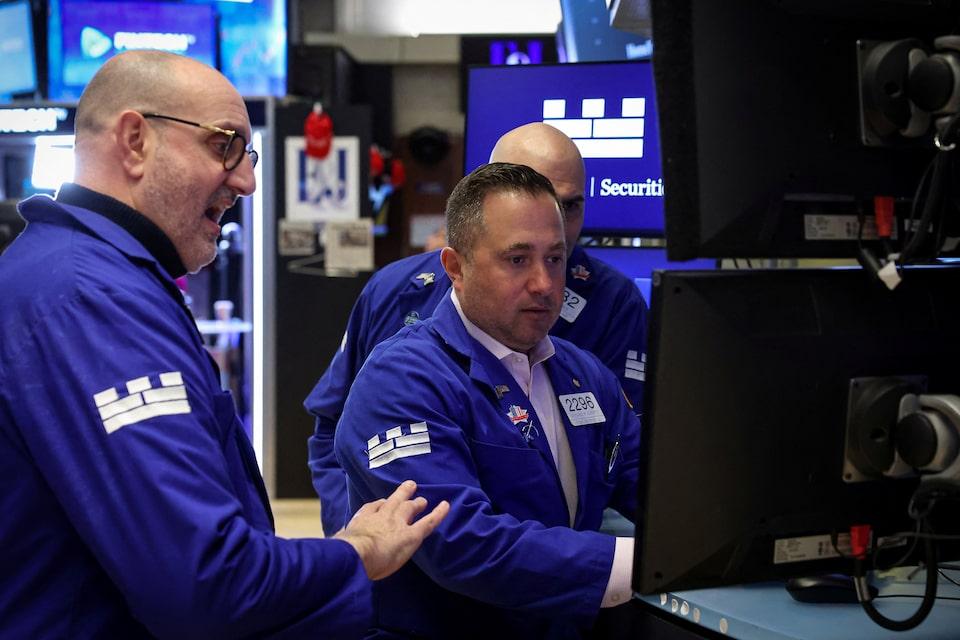
January PCE price index rises 2.5% YoY Dell falls after forecasting drop in FY26 gross margin HP falls on downbeat quarterly profit forecast S&P 500 +1.59%, Nasdaq +1.63%, Dow +1.39% Feb 28 (Reuters) - Wall Street ended higher on Friday after a choppy trading session, with Dell Technologies dipping and other tech stocks climbing after a meeting between the U.S. President Donald Trump and Ukrainian counterpart Volodymyr Zelenskiy ended in disaster. Zelenskiy and Trump traded verbal blows at the White House before the world's media. This created fresh uncertainty over Ukraine's war with Russia for investors already worried about sticky U.S. inflation and a tepid economy. The S&P 500 moved lower immediately after the clash before recovering and ending the day with a gain. Zelenskiy left the White House without signing a much-vaunted deal between Ukraine and the U.S. over the joint development of natural resources. "The news, if you watched it live, it was pretty worrisome. It got heated, and Zelenskiy is considered an ally of the U.S.," said Adam Sarhan, chief executive at 50 Park Investments. "That's why the market sold off, but then cooler heads prevailed. Zelenskiy either is going to make a deal or he's not." Dell (DELL.N) , opens new tab dropped 4.7% after the PC maker forecast a decline in its adjusted gross margin rate for fiscal 2026. Peer HP Inc (HPQ.N) , opens new tab fell 6.8% after its quarterly profit forecasts missed expectations. Nvidia and Tesla (TSLA.O) , opens new tab rose almost 4% each and lifted the S&P 500. The S&P 500 climbed 1.59% to end the session at 5,954.50 points. The Nasdaq gained 1.63% to 18,847.28 points, while the Dow Jones Industrial Average rose 1.39% to 43,840.91 points. Volume on U.S. exchanges was heavy, with 17.5 billion shares traded, compared to an average of 15.4 billion shares over the previous 20 sessions. All 11 S&P 500 sector indexes rose, led by financials (.SPSY) , opens new tab, up 2.1%, followed by a 1.8% gain in consumer discretionary (.SPLRCD) , opens new tab. For the week, the S&P 500 fell about 1%, the Nasdaq lost 3.5% and the Dow climbed almost 1%. The Nasdaq lost about 4% for all of February, its deepest monthly loss since April 2024. The S&P 500 fell 1.45% for the month and the Dow lost 1.6%. Earlier, a Commerce Department report showed inflation rose in January in line with expectations. However, consumer spending, which accounts for more than two-thirds of the economy, dropped 0.2% after an upwardly revised 0.8% increase in December. This could complicate the Federal Reserve's deliberations on monetary policy. "Spending came in lower than we were looking for... most of it I would attribute to a cooling economy, which presents a dilemma for the Fed in the sense that you still have inflation and you have an economy that is moving lower. If you add them together, that equals stagflation," said Peter Cardillo, chief market economist at Spartan Capital Securities. Friday's report is important for investors trying to gauge the next move for the central bank after policymakers reiterated a hawkish stance. Investors worry Trump's policies, especially trade restrictions, could exacerbate U.S. inflation. "Tariff talk certainly is having a negative effect on the stock market, and it probably will keep a lid on stock market advances until there's more clarity around that," said Sam Stovall, chief investment strategist at CFRA Research. Traders see the Fed lowering borrowing costs twice by December, little changed from before the report, according to data compiled by LSEG. Investors will assess comments from Chicago Fed President Austan Goolsbee later in the day. The CBOE Volatility Index (.VIX) , opens new tab, also known as Wall Street's fear gauge, touched a one-month high and was last up at 21.26 points. Advancing issues outnumbered falling ones within the S&P 500 (.AD.SPX) , opens new tab by a 7.1-to-one ratio. The S&P 500 posted 39 new highs and 14 new lows; the Nasdaq recorded 43 new highs and 332 new lows. Sign up here. https://www.reuters.com/markets/us/futures-inch-up-focus-shifts-key-inflation-data-2025-02-28/
2025-02-28 20:47
Agency provides crucial information on weather emergencies Scientists working on data for forecasts among those fired NOAA's work spans climate modeling, radar system maintenance Agency's data used by countries that cannot afford monitoring WASHINGTON, Feb 28 (Reuters) - Scientists and researchers are warning that the Trump administration's firing of hundreds of workers at NOAA, the agency that provides the U.S. government's weather forecasts, will put American lives at risk and stifle crucial climate research. The layoffs at the agency, the National Oceanic and Atmospheric Administration, started to unfold on Thursday afternoon and numbered more than 800, according to congressional sources. The dismissals are part of a broadening assault on the federal bureaucracy engineered by President Donald Trump and his aide, billionaire Elon Musk, who say they are trying to cut wasteful spending. "There will be people who die in extreme weather events and related disasters who would not have otherwise," said Daniel Swain, a climate scientist and professor at the University of California, Los Angeles. In addition to everyday forecasting, NOAA - which houses the National Weather Service, the National Hurricane Center and two tsunami warning centers - provides crucial information to help Americans survive weather emergencies. The cuts come at a time when scientists say climate change is increasing the intensity and frequency of hurricanes, tornadoes, flooding and wildfires. With faster and more accurate weather warnings, authorities have a better chance of saving lives, experts say. Advances in weather forecasting are credited with bringing down death tolls from weather-related disasters across the world, even as populations have increased and weather has become more extreme. "Whether they know it or not, every American in every part of the country relies on NOAA every day," Democratic U.S. Senator Patty Murray said in a statement. "This is dangerous and could be catastrophic for our economy." Musk's so-called Department of Government Efficiency has downsized more than 100,000 of the federal government's 2.3 million workers through a combination of layoffs and buyouts. Trump and Musk say the government is bloated and wasteful. NOAA, which employs 12,000 people, is part of the U.S. Department of Commerce. The agency's various divisions also develop long-term climate models, conduct environmental research, collect atmospheric data, oversee commercial fisheries and maintain radar systems, among other responsibilities. While many of its offices are hardly household names, their activities often touch the lives of everyday Americans in tangible ways, such as assuring the safety and supply of seafood and enabling farmers to maximize crop yields. NOAA data is also used by many countries that cannot afford their own weather monitoring as well as researchers worldwide to advance scientific study. As at other agencies that have seen terminations, the NOAA staffing cuts focused on "probationary" workers who were newer to their current roles and had fewer job protections under the law. The layoffs included marine habitat and satellite specialists in the Washington, D.C., region, marine sanctuary analysts in Maine and information technology and human resources staff in Virginia and Rhode Island, according to posts from fired workers on LinkedIn. Hundreds of scientists working on the models and data that feed weather forecasts were terminated. Asked for comment, a NOAA spokesperson said, "Per our long-standing practice, we don't discuss personnel matters." Project 2025, the conservative blueprint published by the Heritage Foundation think tank that lines up with many Trump administration moves so far, had called for NOAA to be dismantled. Russ Vought, one of the document's architects, is serving as the White House's budget director. 'A BIG LOSS' Although not widely known, most private weather companies in the U.S., including forecasts seen on television or phone apps, are "built directly atop the backbone of taxpayer-funded instrumentation, data, predictive modeling, and forecasts provided by NOAA," UCLA's Swain said. Tom Di Liberto, a public affairs specialist and climate scientist at NOAA, was fired on Thursday afternoon. While he was a probationary employee after becoming a full-time worker last year, he had worked for NOAA as a contractor since 2010. "The private sector can't do what NOAA does, and vice versa," he said. "Clearing out NOAA is like annihilating the first floor of a skyscraper and destroying the building." Democratic Congressman Jared Huffman, who represents California's northern coast, said he met with shellfish and commercial fishermen who were angry about the disruption to NOAA data they rely upon. "They are not woke ideologues of the left," he said. "These are people with thick fingers that work with their hands, that work out on the water. I think most of them are Republicans, to tell you the truth, and they are being betrayed." Nadir Jeevanjee, a NOAA scientist working on models of atmospheric and ocean currents that help predict hurricanes and provide information for the nation's fisheries, said about 10 researchers were abruptly fired from his laboratory at Princeton University. "We need these young scientists," Jeevanjee told Reuters. "They will likely find new jobs, but this is a big loss for the public," he added. "We are on the cutting edge of building computer models of the weather currents that get fed directly into weather predictions. We're sacrificing that." Jane Lubchenco, the former NOAA Administrator under President Barack Obama, said the mass layoffs would not save the government money since NOAA was already a "lean" agency. "The mass firings today at NOAA are a national disaster and a colossal waste of money," she posted on LinkedIn. "Destroying NOAA's ability to provide life-saving information, keep our ocean healthy, and strengthen the economy makes no sense — no sense at all." Sign up here. https://www.reuters.com/world/us/trumps-firings-us-weather-agency-will-put-lives-risk-scientists-say-2025-02-28/