2025-02-28 12:20
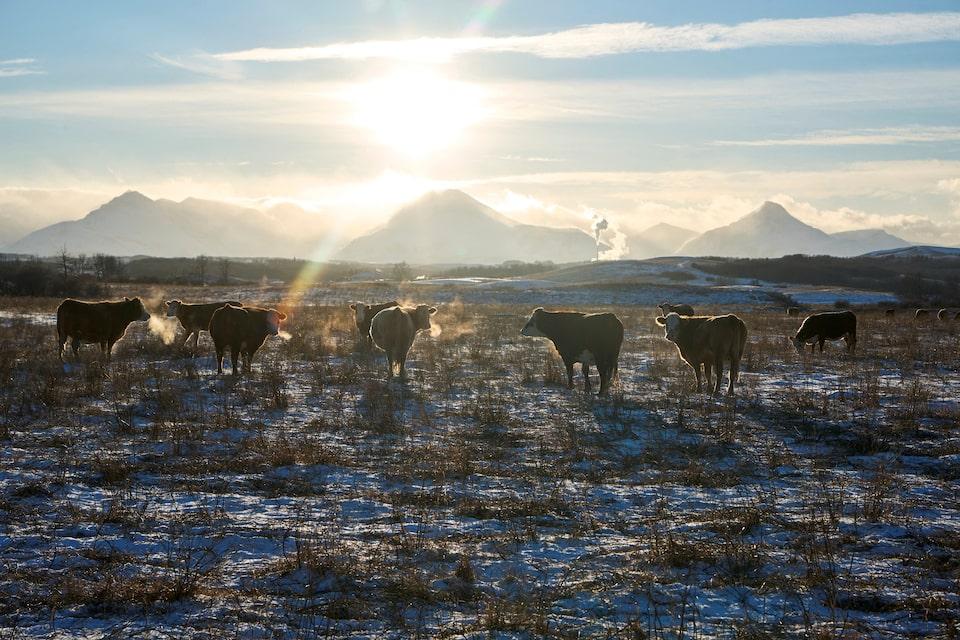
Brent, WTI head for first monthly drop in three months Iraq to announce resumption of oil exports from Kurdistan region HOUSTON, Feb 28 (Reuters) - Oil prices fell on Friday and were headed for their first monthly drop since November, as markets watched an Oval Office argument between the U.S. and Ukrainian presidents while also bracing for Washington's new tariffs and Iraq's decision to resume oil exports from the Kurdistan region. Brent crude futures , which expired on Friday, settled at $73.18 a barrel, down 86 cents, or 1.16%. U.S. West Texas Intermediate crude futures finished at $69.76 a barrel, losing 59 cents, or 0.84%. Both benchmarks are on track to post their first monthly decline in three months. WTI was strengthening late in the session until an on-camera argument in the Oval Office broke out between U.S. President Donald Trump and Ukrainian President Volodymyr Zelenskiy over a possible cease-fire agreement in the Russia-Ukraine war. "This translates to a favorable posture for Russia and the potential for them to get more oil on the market," said John Kilduff, partner with Again Capital LLC. During the shouting match, Trump threatened to withdraw support for Ukraine and Zelenskiy left the White House without signing an agreement for joint development by the two countries of Ukraine's mineral resources. Market participants are also struggling to gauge the impact of all the energy-related policy announcements made by the Trump administration this month, economists at Fitch's BMI research unit. Trump on Thursday said his proposed 25% tariffs on Mexican and Canadian goods will take effect on March 4, along with an extra 10% duty on Chinese imports. Traders are reducing risks amid rising volatility sparked by Trump stepping up the tariffs war, not least against China, significantly raising concerns about global demand, said Ole Hansen, head of commodity strategy at Saxo Bank. A tariff war could slow global growth, spark inflation and, in turn, suppress crude demand. Baghdad is set to announce the resumption of oil exports from the semi-autonomous Kurdistan region through the Iraq-Turkey pipeline, according to an Iraqi oil ministry statement. Iraq will export 185,000 barrels per day through state oil marketer SOMO, and that quantity will gradually increase, the ministry said. Despite the expected announcement, eight international oil firms operating in the Kurdistan region said they would not be resuming exports on Friday as there was no clarity on commercial agreements and guarantees of payment for past and future exports. "The resumption of exports raises questions about how Iraq will comply with its OPEC+ obligations, having already regularly produced above its quota," said Harry Tchilinguirian, head of research at Onyx Capital Group. "If OPEC+ delays a 120,000 bpd return of voluntary cut barrels starting in April, then the increase in Iraq will exceed that restraint," he added. OPEC+ is debating whether to raise oil output in April as planned or freeze it as its members struggle to read the global supply picture, eight OPEC+ sources said. A delay could break prices out of the current range in which they have been trading, said Phil Flynn, senior analyst with Price Futures Group. "Currently, oil prices are fluctuating within a trading range, but a delay will give prices an upside breakout," Flynn wrote in a research note. "Generally, the seasonality of oil, gasoline, and diesel becomes bullish around Easter anyway." Sign up here. https://www.reuters.com/business/energy/oil-heads-first-monthly-drop-since-november-economic-uncertainty-weighs-2025-02-28/
2025-02-28 11:56
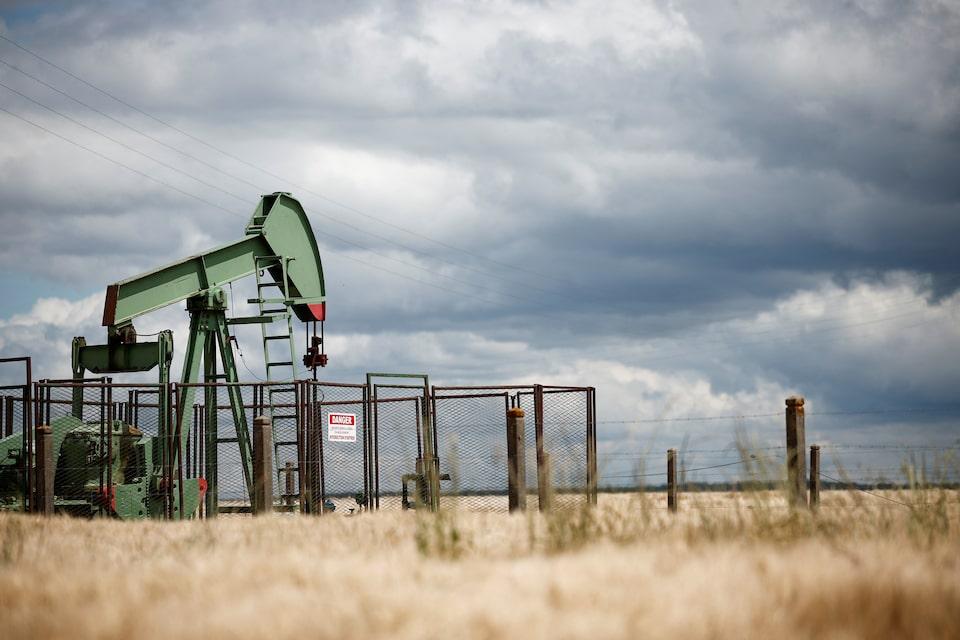
Feb 28 (Reuters) - India's economy grew by 6.2% in October-December, marginally below expectations but faster than in the previous quarter on the back of increased government and consumer spending, data released on Friday showed. The growth in gross domestic product (INGDPQ=ECI) , opens new tab was slightly lower than the 6.3% expansion projected by analysts in a Reuters poll, and the central bank's estimate of 6.8%. The world's fifth-biggest economy grew 5.6% in the previous quarter. COMMENTS GAURA SEN GUPTA, INDIA ECONOMIST, IDFC FIRST BANK, MUMBAI The Q3 GDP growth is "marginally better than our expectations". The pickup in growth moment reflects some improvement in listed companies profit growth with moderation in input cost. Agriculture growth also showed a strong pickup led by robust Kharif crop output. Meanwhile, on the demand side, private consumption growth picked-up reflecting revival in rural demand. "After incorporating Q3 FY25 GDP, we still see FY25 full-year GDP at 6.2% to 6.3%. We continue to expect a shallow rate-cut cycle from the RBI (Reserve Bank of India) with another 25bps to 50bps cut in 2025. Depreciation pressure on INR (rupee) will keep the rate-cut cycle shallow in our view." HARRY CHAMBERS, ASSISTANT ECONOMIST, CAPITAL ECONOMICS, LONDON Stepping back, the big picture is that the economy is still fairly soft by India's recent standards. However, with the RBI shifting its priorities from controlling inflation to supporting growth, economic activity should begin to pick up further. This week's reversal of the tighter bank lending restrictions introduced in late 2023, as well as the further monetary policy loosening from the "central bank that we expect, will boost household consumption and investment in particular". MADHAVI ARORA, CHIEF ECONOMIST, EMKAY GLOBAL FINANCIAL SERVICES, MUMBAI For the RBI, this number makes little difference to their reaction function immediately, especially as revisions have made the GDP prints very dynamic. Currently, the CSO's (Central Statistics Office) number for FY25 has been revised up only by 10bps, thus not necessarily impacting the reaction function of the RBI much, merely on account of this print. However, "we maintain achieving 6.5% growth in FY25 will require Q4 to print as high as 7.7% — a tall ask given the current macro dynamics, and will still keep the RBI on its toes to support growth amid evolving global order." JAHNAVI PRABHAKAR, ECONOMIST, BANK OF BARODA, MUMBAI "GVA (gross value added) growth for Q3 came in line with our expectations and GDP growth surprised positively." However, a strong 6.5% growth for FY25 turns out to be much higher than RBI estimation is a strong positive. A further revival is expected in the fourth quarter, supported by consumption spending and rebound in investment cycle. Rate-cut expectations also bodes well for the growth outlook. UPASNA BHARDWAJ, CHIEF ECONOMIST, KOTAK MAHINDRA BANK, MUMBAI Despite the sharp upward revisions to the last two years' GDP figures, FY25 figures appear to have remained resilient, although led largely due to the upward revisions to the second quarter figures. "We expect the FY25 GDP figure to be lower than the central statistics office's estimate by around 20-30 basis points." Further, "we expect FY26 growth of around 6.4% but the outlook remains heavily clouded with downside risks amid global trade uncertainties." RADHIKA RAO, SENIOR ECONOMIST, DBS BANK, SINGAPORE GDP growth numbers were close to expectations. Data signalled a turnaround, reflecting better demand on the back of rural FMCG sales and festive demand, while urban demand stagnated on modest wage growth. With FY25 trend growth likely to downshift to the 6% handle this year from a revised 9% pace in FY24, food disinflation setting in and successive measures to loosen macroprudential restrictions, policymakers have the room to maintain a dovish tilt. "We expect a rate cut in April, with a likely shift in the stance to accommodative." SAKSHI GUPTA, PRINCIPAL ECONOMIST, HDFC BANK, GURUGRAM GDP growth for Q3 shows that the "cyclical bottom is most likely behind us as growth showed signs of improvement" in the third quarter. This was supported by better performance in agriculture and some improvement in manufacturing. On the demand side, consumption growth rose close to 7%, primarily on the back of rural demand recovery, while investment growth continued to remain soft. "We expect growth at 6.6% in FY26 compared to 6.5% in FY25. While this growth print brings some relief for the central bank, given continued global headwinds, we expect another rate cut in April 2025." DEVENDRA KUMAR PANT, CHIEF ECONOMIST, INDIA RATINGS AND RESEARCH, GURUGRAM The possibility of achieving 6.5% growth in FY25 would depend on growth of individual components, especially consumption expenditure and investment. KUNAL KUNDU, INDIA ECONOMIST, SOCIETE GENERALE, BENGALURU Major upward revision of prior-year data makes objective analysis of the 4Q24 GDP data a difficult proposition. Surprisingly, despite changes, the real GDP growth for Q4 printed in line with consensus estimate of 6.2%, which was based on the unrevised data. Interestingly, major upward revisions of consumption data suggests that the "existing widespread narrative (including ours) of weak domestic demand based on unrevised GDP data and multiple high frequency data was not entirely correct". Apparently, even the RBI got the weak domestic demand narrative wrong as well as did the latest economic survey. "Looking purely at the new data set, we would continue to retain our existing growth forecast for FY25 at 6.3% year-on-year, slower than the official second advance estimate expectation of 6.5%." Sign up here. https://www.reuters.com/world/india/view-indias-economy-grows-62-october-december-2025-02-28/

2025-02-28 11:44
MUMBAI, Feb 27 (Reuters) - India's foreign exchange reserves (INFXR=ECI) , opens new tab rose to a two-month high of $640.48 billion as of February 21, data released by the central bank on Friday showed. The reserves rose by $4.76 billion in the reported week. They had fallen by $2.54 billion in the prior week, the most in a month. Changes in foreign currency assets are caused by the central bank's intervention in the forex market as well as the appreciation or depreciation of foreign assets held in the reserves. The rupee, like its Asian peers, has been volatile amid uncertainty surrounding U.S. trade tariffs but periodic intervention by the central bank has helped cap large-scale losses in the domestic unit. In the week to which the reserves data pertains, the rupee advanced 0.1% week-on-week, broadly benefiting from a weaker dollar. The domestic unit ended at 87.4950 per dollar on Friday. It fell 1% in February, and had slipped to an all-time low of 87.95 during the month. Foreign exchange reserves include India's Reserve Tranche position in the International Monetary Fund. FOREIGN EXCHANGE RESERVES (in million U.S. dollars) --------------------------------------------------------- Feb 21 Feb 14 2025 2025 --------------------------------------------------------- Foreign currency assets 543,843 539,591 Gold 74,576 74,150 SDRs 17,971 17,897 Reserve Tranche Position 4,090 4,083 ---------------------------------------------------------- Total 640,479 635,721 ---------------------------------------------------------- Source text: (https://www.rbi.org.in/scripts/BS_PressReleaseDisplay.aspx , opens new tab) Sign up here. https://www.reuters.com/business/finance/indias-foreign-exchange-reserves-rise-two-month-high-2025-02-28/

2025-02-28 11:43
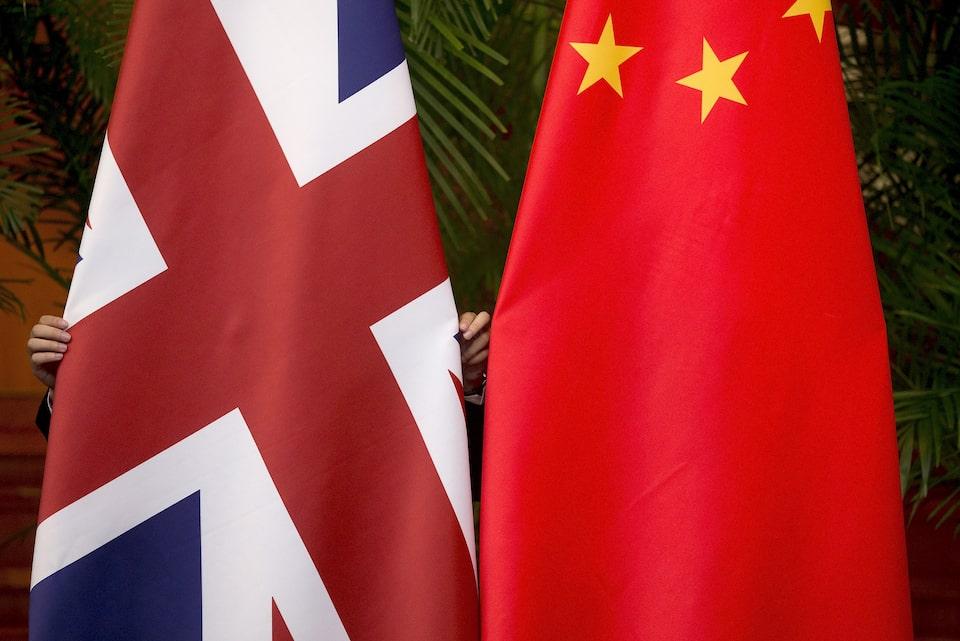
BEIJING, Feb 28 (Reuters) - Britain is trying to discredit China's policy in the northwestern Xinjiang region, a spokesperson at China's embassy in London said. British Foreign Secretary David Lammy on Thursday expressed strong disagreement over the repatriation of 40 Uyghurs to China from Thailand. The remarks are "hype by the UK side". They disregard facts and are "nothing but despicable political manipulation". Sign up here. https://www.reuters.com/world/china/china-accuses-uk-seeking-discredit-its-xinjiang-policy-2025-02-28/
2025-02-28 11:30
FRANKFURT, Feb 28 (Reuters) - Siemens Energy said on Friday it has entered a partnership that is expected to make the German group the exclusive supplier of conventional technology for future small modular nuclear reactors (SMR) to be built by Rolls-Royce SMR (RR.L) , opens new tab. Under the agreement, to be finalised by end-2025, Siemens Energy (ENR1n.DE) , opens new tab would supply steam turbines, generators and "other auxiliary systems" for Rolls-Royce SMR's planned Generation 3+ modular nuclear power plants, it said. "This partnership will unlock UK jobs and a range of manufacturing opportunities and further cements our position as Europe's leading SMR technology," Rolls-Royce SMR CEO Chris Cholerton said. So-called SMRs are being developed by global nuclear energy suppliers to produce power plant technology that is easily replicable, faster and cheaper to deploy than traditional large-scale plants. "We are currently experiencing a global renaissance of nuclear energy," Siemens Energy board member Karim Amin said. "Numerous countries are turning to nuclear technology to produce low-emission electricity, and small modular reactors will play a key role in this." Rolls-Royce SMR - which is majority owned by Rolls-Royce while Qatar, Constellation Energy (CEG.O) , opens new tab and investor BNF Resources hold minority stakes - is one of the companies shortlisted by Britain to develop SMRs. Electricity producer CEZ (CEZP.PR) , opens new tab said in October it would take a minority stake in Rolls-Royce SMR, whose reactors can achieve output of up to 470 megawatts, enough to power around 1.1 million households. Rolls-Royce SMR has been selected to deliver SMR units in the Czech Republic and short-listed for potential projects in Britain and Sweden, it said. Sign up here. https://www.reuters.com/business/energy/siemens-energy-supply-rolls-royce-with-equipment-small-nuclear-reactors-2025-02-28/

2025-02-28 11:28
Average beef price in US cities already up 43% since early 2020 After years of drought, North American cattle herds are thin US herd smallest in 74 years, Canada's smallest in 36 years WINNIPEG, Manitoba, Feb 28 (Reuters) - Canadian farmer Jon Vaags quit buying beef cattle in November after the election of U.S. President Donald Trump made tariffs on Canadian exports seem like a serious risk. Now there are more than 1,000 empty spaces on his feedlot, where cattle are fattened on grain before being slaughtered for beef. "We stopped buying feeder cattle altogether," said Vaags, whose family's feedlot has room for 3,000 cattle and is usually full from November until the summer. After years of drought raised feed costs, North American farmers culled animals and did not rebuild their herds, so the beef cattle population on both sides of the border had been declining even before the threat of U.S. tariffs on Canadian exports. Canada, the world's No. 8 beef exporter and 10th largest cattle producer, exports more than half its beef production, with 75% going to the U.S. The Trump administration has repeatedly listed lower food prices as a major objective. But at U.S. grocery stores, beef prices have already risen due to the smallest U.S. cattle herd in 74 years and the smallest Canadian herd in 36 years. The average price of ground beef in U.S. cities has risen 43% since the beginning of 2020, according to the U.S. Bureau of Labor Statistics. Global beef prices are up 34% according to the International Monetary Fund. Historically, cows, calves, breeding stock, slaughter animals and beef-in-boxes have flowed across the U.S.-Canada border as if it were not there. Canada imports many young cattle from the U.S., fattens them, slaughters them, then sends the meat back to the U.S. Tariffs would upend this process. Trump has threatened 25% tariffs on most imports from Canada and Mexico. The U.S. cannot easily replace Canadian beef. It is already in a beef deficit and importing from as far away as Australia , opens new tab. Canadian beef fills in where there is not enough U.S. beef. Canada's government-backed lender Farm Credit Canada would like farmers to expand their herds to grow the country's beef industry, but says tariffs are discouraging ranchers. Some Canadian cattle ranchers "might sit this one out for 12 months, sit this one out for six months," said Farm Credit Canada's chief economist JP Gervais of Trump's tariff threats. 'KILLING THE BUSINESS' The impact of a declining cattle herd is trickling down to other agricultural businesses in North America, including the sale of grains purchased up to a year ahead of time to fatten cattle. "It's killing the business," said Jim Beusekom, president of Market Place Commodities, a feedgrains trader in Alberta's "feedlot alley." Without looming tariffs, high meat prices may have encouraged some Canadian farmers to replenish their herds. Instead, prices are prompting many to cash out by sending all the animals they can, including aging cows and young female breeding stock, into the meat market. Canada's cow and calf herd at the start of 2025 was 0.7% lower than in January 2024, which was 2.1% lower than in 2023. At 10.9 million head it is the smallest since 1988, according to Statistics Canada. Curtis Vander Heyden, who runs three feed lots with his two brothers in Alberta, estimates one truckload of fattened cattle would face a $28,000 bill due to tariffs. U.S. buyers will balk at the price jump, either refusing to pay more than they would for U.S. cattle, or just not buying Canadian animals at all, he thinks. But Vander Heyden wants to retain his workforce, so he is not reducing his cattle-feeding operations. "I can't stop. We have employees. There are a lot of families depending on us," said Vander Heyden. ($1 = 1.4170 Canadian dollars) Sign up here. https://www.reuters.com/markets/commodities/beef-prices-may-rise-canadian-ranchers-shrink-cattle-herds-fearing-trump-tariffs-2025-02-28/