2025-02-28 11:23
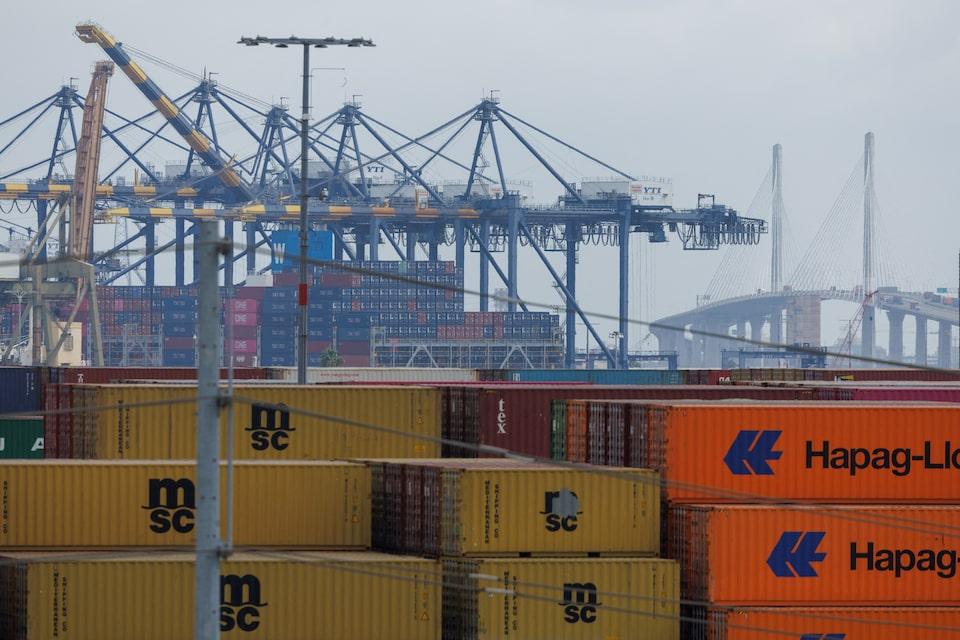
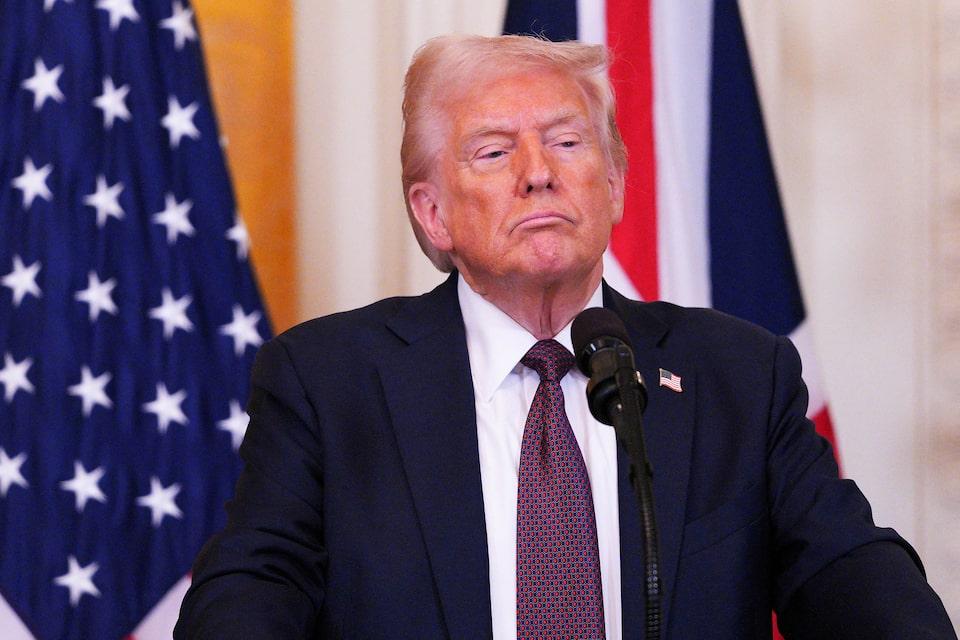
A look at the day ahead in U.S. and global markets from Mike Dolan The S&P500 (.SPX) , opens new tab stock benchmark plunged into the red for the year this week as an Nvidia-led selloff, economic slowdown fears and re-ignited trade war fears jarred while the dollar surged anew. Following Big Tech megacaps and small cap indexes into negative territory for 2025, the S&P500 plunged 1.5% on Thursday as U.S. jobless claims saw their biggest weekly jump in five months and President Donald Trump warned more tariff rises are coming as soon as next week. Artificial intelligence darling Nvidia (NVDA.O) , opens new tab led the slide, tumbling 8.5% and losing $274 billion in stock market value after the chip giant's latest earnings beat failed to impress Wall Street as its margins missed estimates. The retreat pulled the entire Philadelphia chip index (.SOX) , opens new tab down 6% and dragged on the entire market. As February comes to a close on Friday, futures pointed to only a modest rebound ahead of today's bell. Tech aside, the broader economic and trade picture is darkening. On Thursday Trump said his proposed tariffs of 25% on Mexican and Canadian goods would take effect on March 4 along with an extra 10% duty on Chinese imports, defying expectations of those who hoped for a further delay in the levies. And he said wider 'reciprocal' tariffs were coming in April. Stocks around the world (.MIWD0000PUS) , opens new tab tumbled 0.5% on Friday as a result. Beijing accused the United States of exerting "tariff pressure and blackmail" by using fentanyl trafficking as an excuse for a second 10% tariff hike. Chinese stocks and the yuan fell, with Hong Kong stocks (.HSI) , opens new tab losing more than 3%. European countries said they would retaliate proportionately, with European stocks (.STOXX) , opens new tab falling back and the euro hitting two week lows ahead of another expected cut in European Central Bank interest rates next week. Canada's dollar fell to its lowest since February 4 and wider U.S. dollar index (.DXY) , opens new tab hit two week highs. The risk-off moves gathered steam during the trading session, with crypto tokens among the biggest losers for the day as Bitcoin slid more than 5% to a low of $79,125.53 - its weakest level since November 11. The combination of creeping jobless rises, in part due to ongoing government worker cuts as well as weather-related hits, and jangled consumer and business confidence is unnerving investors about what had been seen as a 'Teflon' economy. And with uncertainties mounting about tariffs and government budget cuts, business planning is becoming difficult and potentially putting activity and investment spending on hold. Fears about the wider global economic hit from a trade war are also starting to drag on domestic U.S. firms. Some 41% of S&P500 firms' revenues are sourced overseas and 43% of all U.S. imports coming from Canada, Mexico and China. Friday's data diary focussed back on inflation, with the January personal consumption expenditures (PCE) inflation reading in focus as traders watch the Federal Reserve's favored gauge closely. But with slowdown fears now a significant concern, other readouts may start to take precedence. Despite lingering inflation concerns, the stock market swoon and jobless flag have forced futures to nudge up bets on Fed easing further. They now see a 90% chance of another Fed cut by June and price some 60 basis points of easing by yearend. Ten-year Treasury yields fell to new year lows of 4.22% on Friday, with two-year yields plumbing lows near 4.0% for the first time since before November's election. Elsewhere, ECB rate cut hopes were encouraged by the latest euro zone inflation reports for February, which showed both French and Italian annual inflation coming in below forecast and well below the central bank's 2% target. What's more, euro zone consumers lowered their near-term inflation expectations last month, an ECB survey showed. Japanese stocks (.N225) , opens new tab followed the tech-led selloff, meantime, and lost almost 3% to hit a five-month low and the yen fell back as Tokyo inflation readings came in below forecast too - an important marker ahead of a possible Bank of Japan rate rise next month. Key developments that should provide more direction to U.S. markets later on Friday: * US January personal consumption expenditures (PCE) inflation gauge, personal income and spending, goods trade balance, retail/wholesale inventories, Kansas City Federal Reserve February service sector survey, Chicago Feb business survey; Canada Q4 GDP * Chicago Fed President Austan Goolsbee speaks * Ukraine President Volodymyr Zelenskiy meets US President Donald Trump in Washington * US corporate earnings: AES Corp Sign up here. https://www.reuters.com/markets/us/global-markets-view-usa-2025-02-28/
2025-02-28 11:13
NEW DELHI, Feb 28 (Reuters) - India is expected to experience above-average temperatures in March across most regions of the country following a warmer February, the weather office said on Friday, which could threaten winter-sown crops such as wheat, chickpea and rapeseed. Both maximum and minimum temperatures in most parts of the country would be above-average in March, D.S. Pai, a senior scientist at the state-run India Meteorological Department told a online news conference. Sign up here. https://www.reuters.com/world/india/india-will-see-above-average-temperatures-march-weather-office-says-2025-02-28/

2025-02-28 11:07
WARSAW, Feb 28 (Reuters) - A centre-right candidate in Poland's presidential election on Friday became the second contender in the race to call for lower interest rates, after the central bank had previously pushed back against such comments as an attack on its independence. Szymon Holownia, speaker of the lower house of parliament and the Third Way candidate in the presidential elections scheduled for May, called on the central bank to cut interest rates in a letter shared on social media on Friday. This came after frontrunner Rafal Trzaskowski, the candidate of Prime Minister Donald Tusk's Covic Coalition (KO), called for rate cuts in mid-January, arguing that this would boost growth and provide relief to borrowers. "I deeply believe that the cut in interest rates is an important impulse for the entire Polish economy, as it can create space for investment, new jobs and increased demand," wrote Holownia in a letter to the central bank governor published on X. "I am turning to you... with a request to consider lowering the interest rates of the National Bank of Poland." The National Bank of Poland (NBP) has kept interest rates unchanged since October 2023, with the reference rate at 5.75% and central bank governor Adam Glapinski said on February, there were no grounds for lowering borrowing costs at the moment. Inflation was 5.3% in January, while the central bank's inflation target is 2.5% plus or minus one percentage point. The central bank did not immediately respond to a request for comment, but during a conference in January, Glapinski said that rate decisions are made by the entire Monetary Policy Council (MPC) and that the central bank should not be pulled into the election campaign. High interest rates are one of the factors contributing to the strengthening of the zloty, which on Thursday reached its highest level in 10 years against the euro. Sign up here. https://www.reuters.com/markets/rates-bonds/second-polish-presidential-candidate-calls-lower-rates-2025-02-28/

2025-02-28 09:31
MUMBAI, Feb 28 (Reuters) - The Reserve Bank of India's longer-term dollar/rupee buy-sell swap witnessed robust demand with the auction drawing bids 1.6 times the $10 billion notified amount. The central bank accepted 161 bids at the auction with the premium cut-off set at 6.55 rupees. A total of 244 bids worth $16.2 billion were received. Bankers had expected the swap to witness good demand. The central bank will inject more than 870 billion rupees ($9.96 billion) into the banking system next week under the swap, which is part of a series of steps to inject rupee liquidity. The settlement of the initial leg of the swap will take place on Tuesday, with a reversal three years later. "The swap will serve three purposes – it will allow corporates to borrow funds a bit cheaper, secondly it will help RBI on liquidity injection and thirdly RBI will be able to reduce their forward book," said Vikas Jain, head of India fixed income, currencies and commodities trading at Bank of America. The swap's tenure and size exceeded the central bank's previous $5 billion, six-month swap that was conducted in late January. "The quantum of the swap has surprised the market and we don't expect any other FX swap auction for the remainder of this financial year," Ritesh Bhusari, joint general manager for treasury at South Indian Bank. India's fiscal year runs April through March. ($1 = 87.3900 Indian rupees) Sign up here. https://www.reuters.com/business/finance/india-central-banks-fx-swap-oversubscribed-16-times-2025-02-28/

2025-02-28 09:12
Feb 28 (Reuters) - Some of U.S. President Donald Trump's tariffs are expected to come into effect before key jobs data, China policymakers meet for an annual congress, the ECB is tipped to cut rates and the first phase of the Israel-Hamas ceasefire deal nears its end. Here's a look at the week ahead in markets from Rae Wee in Singapore, Lewis Krauskopf in New York and Yoruk Bahceli, Amanda Cooper and Karin Strohecker in London. 1/ SERIOUSLY AND LITERALLY "Take him seriously...but not literally" seems to be the advice from would-be Trump whisperers to anyone pondering why market reaction to the U.S. president's often-confusing messaging on tariffs has become increasingly muted. A 25% tariff on Mexico and Canada is going ahead on March 4, while China gets an extra 10% on top of the 10% that came into force on February 4. Trump says he'll slap 25% on European imports of "cars and all of the things", which has knocked the euro off one-month highs and dented regional stocks. But uncertainty is rising. The "Trump bump" to growth investors had banked on does not appear to be happening and the reality of widespread tariffs on imports of anything from avocados to building supplies is starting to hit home. 2/ WHAT DID YOU DO LAST WEEK? U.S. jobs data on March 7 comes as worrisome indicators about business activity and consumer confidence raise yellow flags about the economy and a push by the Trump administration to slash the federal workforce. The February payrolls report is expected to show an increase of 133,000 jobs, according to a Reuters poll. Payroll growth slowed to 143,000 jobs in January, below estimates, but the unemployment rate stood at 4.0%, its lowest since May. Meanwhile, President Trump's administration ramped up the groundwork for those large-scale layoffs, as downsizing czar Elon Musk pledged to move quickly to slash spending. Tens of thousands of U.S. government workers have been fired in recent weeks, according to a Reuters tally of announcements tracking Trump's plan to shrink the federal workforce. 3/PLEDGING SUPPORT China's highly anticipated National People's Congress (NPC) meeting kicks off on Wednesday - the stage for policymakers to unveil key economic targets, budget and policy goals for the year ahead. Despite uncertainty over Trump's tariffs and mounting Sino-U.S. tensions, Beijing is expected to stick to its 2025 growth target at around 5%, though a Reuters poll showed economists expect 4.5% this year. Meanwhile, the inflation target is likely to be lowered as deflationary pressures persist in the world's second-largest economy. A show of greater fiscal support is also expected, as authorities seek to boost consumption and bolster growth - though this will likely result in the widening of the budget deficit to 4% of gross domestic product, its highest on record. 4/ LET'S CUT, FOR NOW The European Central Bank is expected to cut rates again on Thursday, but markets have not been this uncertain in a while on what comes next. Investors predict 85 basis points to be shaved off interest rates by year-end - three cuts and a chance of a fourth to put the benchmark rate near 2%. But in a sign of uncertainty, traders expect less than a 70% chance of an April cut. Policymakers look equally divided - a top hawk has even questioned whether ECB policy is still restrictive. U.S. tariff risks, a new German government, a potential Ukraine ceasefire and a surge in expected defence spending could all shape the pace of cuts in the months ahead. 5/ TIME IS TICKING The first phase of the temporary ceasefire between Israel and Hamas comes to an end on Saturday, with no clear path charted as yet on how the two sides can emerge from the war that has shaped the region for nearly 1-1/2 years. Israel negotiators headed to Cairo seek to extend a first ceasefire phase, in the apparent aim of securing the release of more hostages while delaying any final deal on Gaza's future. Hamas says it is prepared for second phase talks and the full withdrawal of Israeli forces. Trump said on Thursday there were "pretty good talks going on" regarding Gaza, but offered little detail. The devastating conflict has reverberated through energy markets, as well as stocks and bonds in the region. Much will hinge on the outcome of the negotiations. Sign up here. https://www.reuters.com/business/take-five/global-markets-themes-graphic-2025-02-28/
2025-02-28 07:43
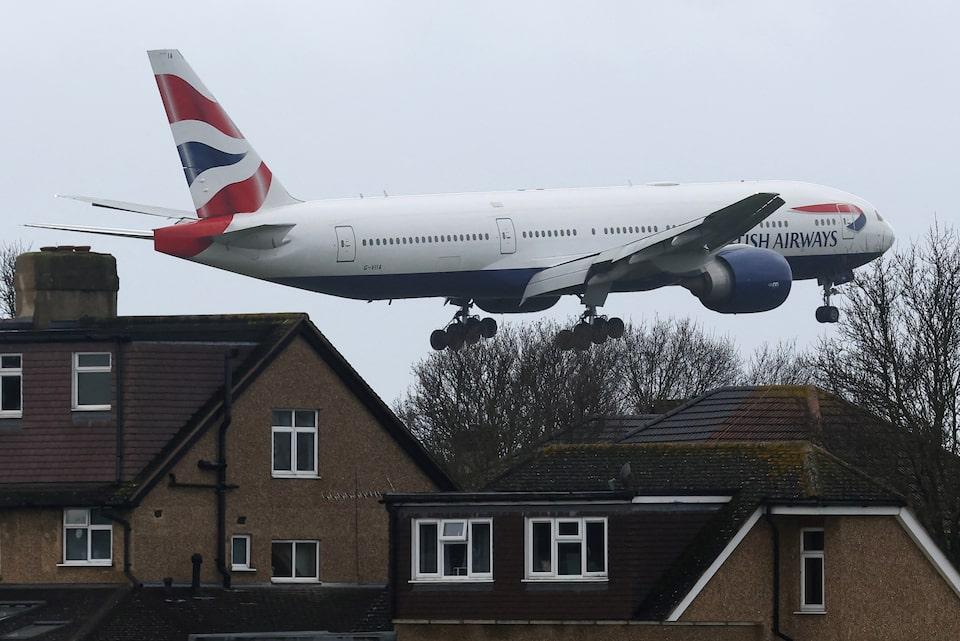
Plans 1-billion-euro share buyback Shares jump 5%, near 5-year high Possible plane delivery delays from Airbus and Boeing could affect IAG Feb 28 (Reuters) - British Airways owner IAG (ICAG.L) , opens new tab reported a 27% jump in annual operating profit on Friday, beating market expectations as it curbed costs and growth in its lucrative transatlantic routes took off. Its shares jumped 5% to hover close to a five-year high of 368 pence it hit in early February, as IAG also said it plans a 1-billion-euro ($1 billion) share buyback. European airlines overall have struggled in the past year with spiralling costs and delivery delays. IAG, which also owns Spanish airlines Iberia and Vueling, said however it was confident about delivering margins and returns as demand for travel remained strong. "The airline operator has been boosted by cheaper fuel prices and resilient demand for travel, as squeezed consumers prioritise travel," Julie Palmer, partner at business consultancy Begbies Traynor said in a note. The group posted adjusted operating profit of 4.44 billion euros, above analysts' expectations from a company-compiled poll for 4.08 billion euros. "These results highlight the... effectiveness of our strategy, underpinned by the successful execution of our transformation programme across the group," CEO Luis Gallego said in a statement. In stark contrast to other European airline stocks, its shares have soared in the past year as the group benefited from limited delivery delays, strong demand and resilience on its core transatlantic routes. Lufthansa (LHAG.DE) , opens new tab is more exposed to the tougher Asian market than IAG, where Chinese carriers are able to fly in Russian airspace, making their flights shorter and cheaper. At Air France, the Paris Olympics caused international tourists to avoid the city and residents in France to postpone their holidays. Lufthansa and Air France-KLM (AIRF.PA) , opens new tab report their full-year results on Thursday. UNCERTAINTY ON DELIVERIES IAG pointed to possible plane delivery delays this year from Airbus (AIR.PA) , opens new tab and Boeing (BA.N) , opens new tab, adding that it was looking to put in an order for another round of widebody planes in the future. "We need to adjust our capacity because of the situation," Gallego said on a media call, adding that the group expected 26 aircraft deliveries in 2025. But supply constraints ultimately could benefit airline results, analysts have said, and could help IAG further bolster its exceptionally strong position compared to its competitors. "While airlines individually wish they had new, modern aircraft with more capacity and higher fuel efficiency, collectively this should keep the industry supply-constrained, yields supported and earnings high," Bernstein analyst Alex Irving said in a note. ($1 = 0.9628 euros) Sign up here. https://www.reuters.com/business/aerospace-defense/british-airways-owner-iags-annual-earnings-beat-expectations-2025-02-28/