2025-02-28 05:54
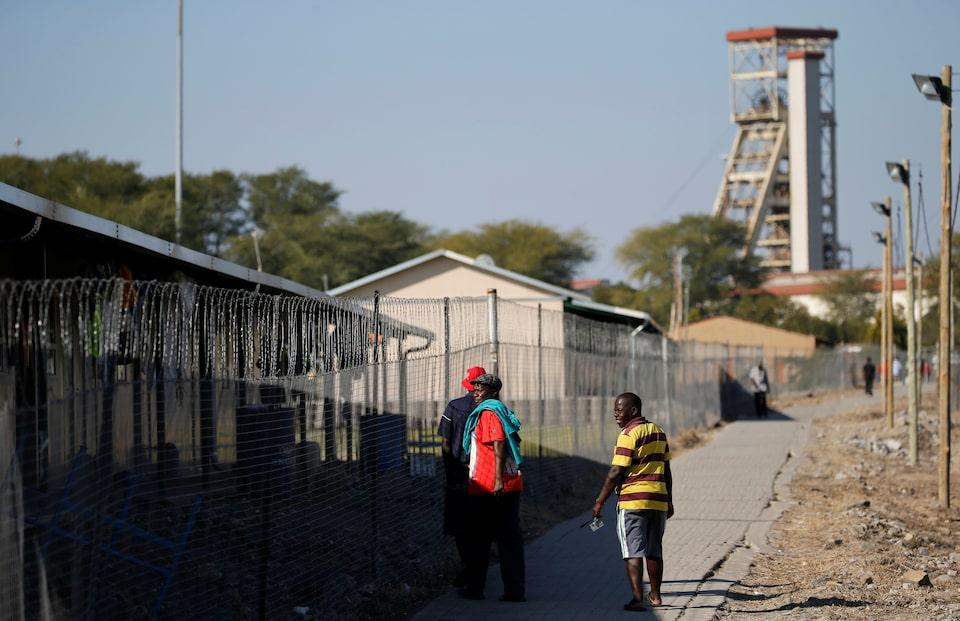
Feb 28 (Reuters) - The platinum market will improve on the back of a growing supply deficit as production declines, Northam Platinum CEO Paul Dunne said on Friday, after the company said its half-year profit halved due to low metal prices. Prices of platinum group metals (PGM), mostly used to curb emissions from vehicles, have fallen sharply over the past two years amid concerns about growth in electric vehicle (EV) sales. Northam Platinum on Friday posted headline earnings of 238.24 million rand ($12.89 million) in the six months to end-December, a 49.7% decline from 473.38 million rand from the year earlier period. Northam's bigger rivals Anglo American Platinum (AMSJ.J) , opens new tab and Impala Platinum (IMPJ.J) , opens new tab have also recently reported drops in profit of 40% and 43%, respectively. Another PGM producer, Sibanye Stillwater (SSWJ.J) , opens new tab, registered a $311 million loss, its second in successive years. "In our considered opinion, the longer this market condition persists, the greater the correction will be," Dunne said during a results presentation. "This market will turn, and we believe that platinum has a growing supply deficit," he added. The white metal, which peaked above $2,000 per ounce in March 2008, is currently trading around $945 per ounce, about 20% off its post-Covid-19 high. Supply from South Africa, which accounts for 70% of global platinum production, will continue to decline due to ageing mines and a lack of new projects as miners restructure their operations to survive a very challenging price environment, Dunne said. South Africa's platinum output has declined to about 3.9 million ounces from a peak of 5.3 million ounces in 2006. "South Africa will require further destocking in 2025, just to reach 3.8 million ounces," Dunne said. Platinum was less exposed to battery electric vehicle (BEV) penetration in China and was benefiting from substituting more expensive palladium in light duty vehicles, Dunne added. ($1 = 18.4883 rand) Sign up here. https://www.reuters.com/markets/commodities/northam-platinum-half-year-profit-halves-slashes-dividend-2025-02-28/
2025-02-28 05:46
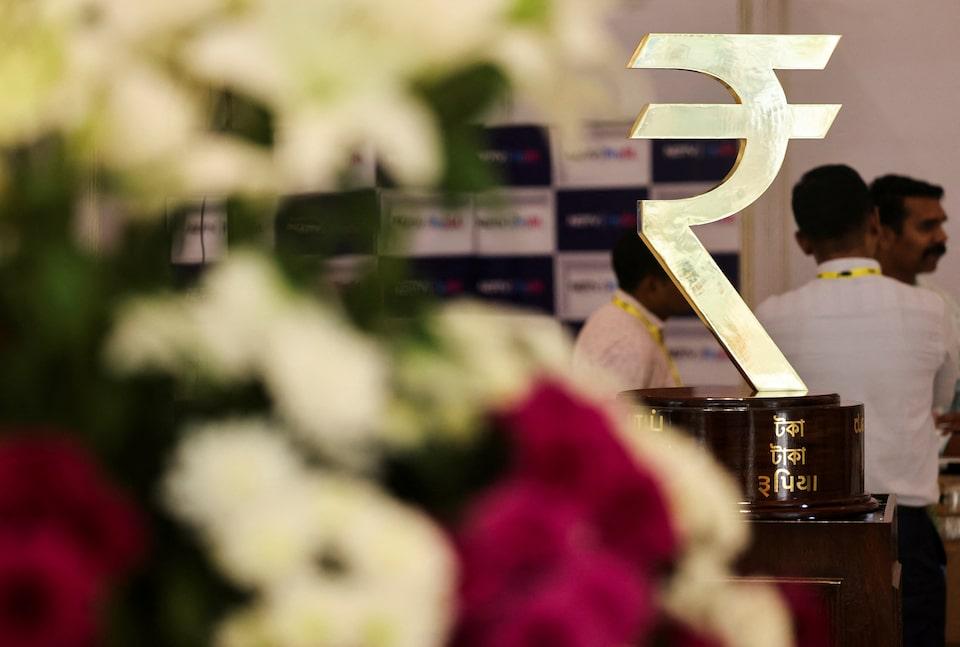
MUMBAI, Feb 28 (Reuters) - The Indian rupee declined on Friday to a level that bankers said was a key support, pressed by the risk-off mood and the weakness in Asian peers on renewed worries over U.S. tariffs. The rupee was quoted at 87.3850 to the U.S. dollar at 10:58 a.m. IST, down from 87.20 in the previous session. The Reserve Bank of India had intervened on Thursday when the currency dropped to 87.40. "You will have people looking at whether the RBI is marking the 87.40-87.50 level for the time being. I think there needs to be heavy actual (dollar) demand if we are to move past 87.50," a currency trader at a bank said. The rupee and other Asian currencies had to contend with the sell-off in equities over concerns of a trade war. U.S. President Donald Trump said the tariffs on Canada and Mexico will come into effect next week and he will levy more tariffs on China. Canada vowed swift retaliation. U.S. equities slumped on Thursday and the dollar index rallied. "Markets continue to live with the uncertainty and whiplash of the multitude of tariff proposals in the pipeline," MUFG Bank said in a note. Meanwhile, the dollar-rupee forward premiums were range-bound, awaiting the results of the RBI's $10 billion swap. Bankers expect the auction to be well-subscribed. Sign up here. https://www.reuters.com/world/india/rupee-dips-near-key-support-level-which-central-bank-intervened-2025-02-28/
2025-02-28 05:38
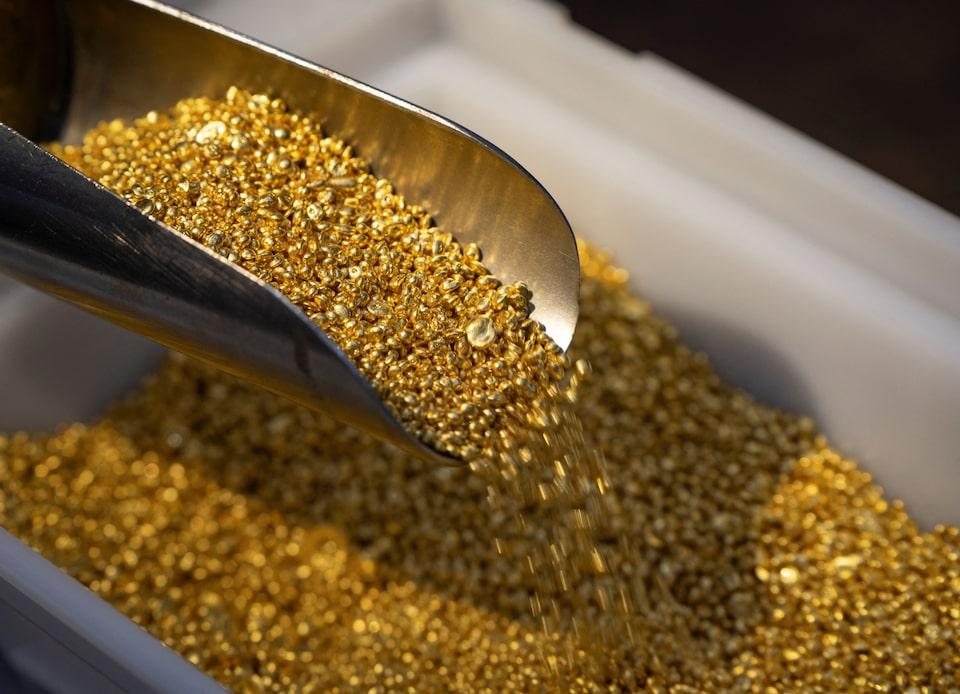
Bullion set for biggest weekly drop since November 2024 Poised for second straight monthly gain US PCE data due at 1330 GMT Silver, platinum, palladium poised for monthly losses Feb 28 (Reuters) - Gold fell on Friday, putting it on course for its first weekly loss in nine as the U.S. dollar strengthened and the market awaited an inflation print later in the day that could provide clarity on the Federal Reserve's policy path. Spot gold fell 0.5% to $2,862.38 an ounce by 1157 GMT. Bullion lost over 2.5% for the week, its steepest weekly fall since November. U.S. gold futures lost 0.7% to $2,875. The dollar index (.DXY) , opens new tab was set for a weekly gain, making dollar-priced gold more expensive for overseas buyers. "Gold's overdue correction gathered some further momentum overnight as volatility spikes across markets force leveraged funds to reduce across-the-board exposure," Ole Hansen, head of commodity strategy at Saxo Bank, said. Technology shares were dragged down by a sell-off in AI darling Nvidia and other "Magnificent Seven" Wall Street mega-cap stocks after the chipmaker's earnings report. Despite a potential weekly loss, safe-haven gold was poised to log a second straight monthly gain in February, propelled by nine record highs this month. U.S. President Donald Trump said on Thursday his proposed 25% tariffs on Mexican and Canadian goods will take effect on March 4, with an extra 10% duty on Chinese imports. Investors await the Personal Consumption Expenditures (PCE) data due at 1330 GMT to further analyse how the central bank might proceed with its rate-easing cycle. "The Fed's preferred measure is expected to show a lower YoY figure, potentially lifting rate cut expectations, not least considering emerging weakness across U.S. economic data," Hansen said. Higher rates dampen the non-yielding asset's appeal. On the physical market, India's gold demand rose in the second half of this week but remained lower than normal, while traders continued to offer discounts in China. Spot silver fell 0.3% to $31.17, platinum lost 0.4% to $945.40 and palladium slipped 0.4% to $915.97. All three metals headed for monthly declines. Sign up here. https://www.reuters.com/markets/commodities/gold-set-biggest-weekly-drop-since-november-focus-us-inflation-data-2025-02-28/
2025-02-28 05:36
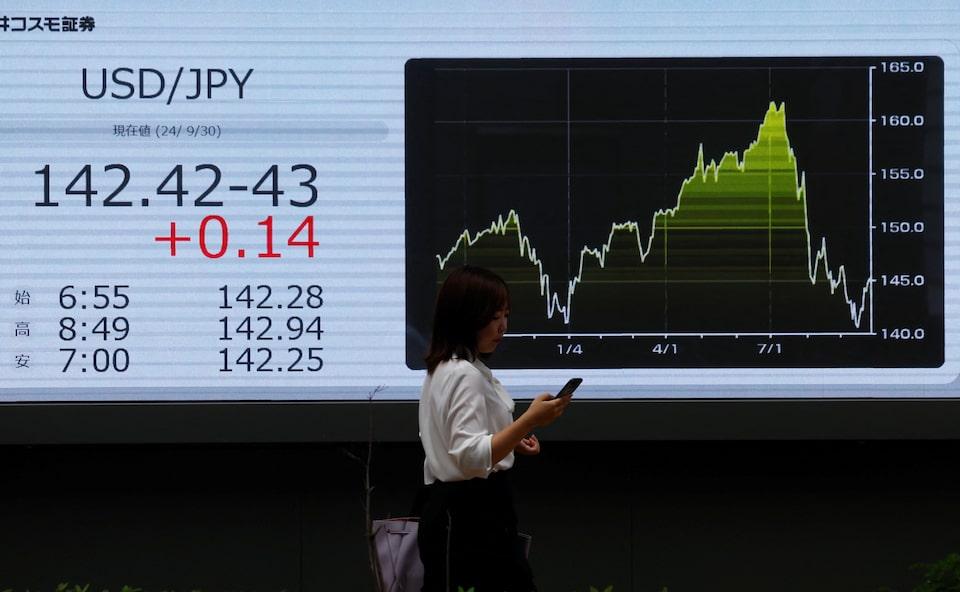
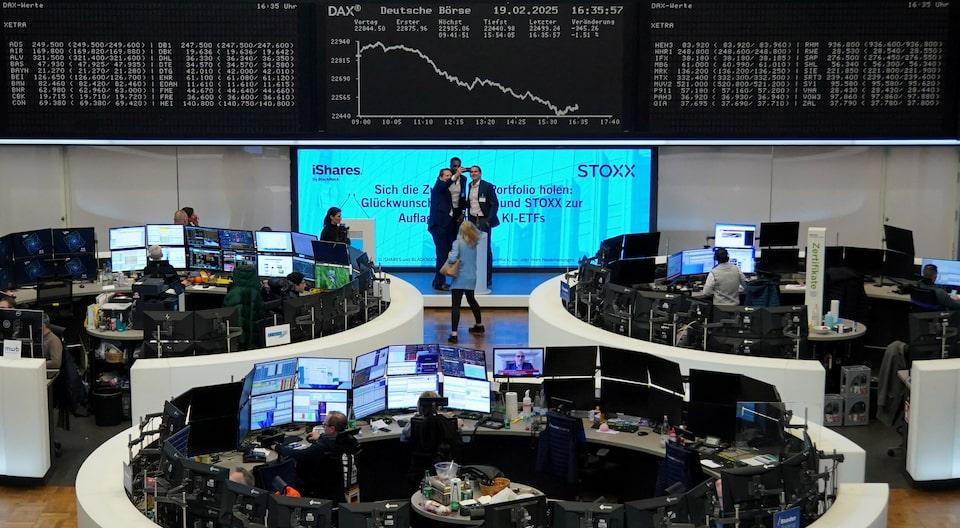
A look at the day ahead in European and global markets from Kevin Buckland It's been building for a long time, but worries about the destabilising and economically destructive potential of Donald Trump's trade policies seem to have come to a head at the end of the month, rippling across all asset classes. Europe is feeling the effect of threatened 25% U.S. levies with stocks sliding yesterday and futures pointing to more losses today, while the euro has slipped to deeper two-week lows against the dollar. Big declines in Canada's currency show little sign of abating as it marked a fresh 3 1/2-week low, with Trump clarifying that 25% duties are still set for next week, after earlier appearing to offer another one-month extension to the deadline. The market reaction in China to threats of an additional 10% tariff has been more complicated, owing partly to the timing. The powerful National People's Congress meets next week, and in a gathering that was initially expected to yield little, analysts now say more stimulus could be imminent. The biggest currency casualties of Trump's China tariff threats have been the Aussie and New Zealand dollars, which often act as more liquid proxies for the yuan. The yuan itself is bouncing off multi-week lows, with the PBOC setting a slightly firmer official rate for the first time this week, showing its intent to support the currency. Hong Kong stocks (.HSI) , opens new tab slid some 1.7% on Friday but mainland blue chips (.CSI300) , opens new tab were off by a relatively paltry 0.5%. Compare those declines to the nearly 3% tumbles in Japan's Nikkei (.N225) , opens new tab and South Korea's Kospi (.KS11) , opens new tab. The Tokyo bourse felt the additional weight from a strong yen - the traditional safe haven was the only currency to be meaningfully up against the dollar on Friday. The dollar-yen pair also tends to track U.S. Treasury yields, which sank to new two-week troughs as traders contemplated the potential damage of a global trade war to America's own economy, which is of late already showing signs of vulnerability. A key report is coming up later today in the form of the PCE deflator, the Fed's preferred inflation gauge. Traders have been steadily ramping up bets for a dovish Fed, with the two quarter-point rate cuts that recently got priced into the market now seen most likely for June and September. Of course it's the ECB that kicks off the next round of global central bank meetings with a policy decision next week, and another quarter-point cut is widely expected. What's less clear is what happens after that, with some signs from policy makers that the pace of easing will slow. There's a fair bit of economic data from Europe today, including import prices, retail sales, jobs data and consumer inflation figures just from Germany alone. With European stock futures pointing firmly lower, tech will bear close watching. Asian bourses are being buffeted by a delayed selloff over Nvidia's (NVDA.O) , opens new tab earnings from earlier in the week, which clearly did little to quell worries that valuations have gotten unsustainably high, especially after the emergence of China's ostensibly lower-cost AI competitor, DeepSeek. Also taking a beating are crypto bulls, with bitcoin plunging below $80,000 briefly, down as much as 27% from the record $109,071.86 reached on January 20. With Trump focusing more on trade and immigration in his first month in office, the biggest waves he's made in the crypto world so far have been $Trump and $Melania meme coins. Easier regulation and even a strategic crypto reserve may still be coming, but clearly not yet. Developments that could influence markets on Friday: -US PCE price index -Germany import prices, retail sales, unemployment rate, CPI -France GDP, CPI -UK Nationwide house prices -Sweden GDP Sign up here. https://www.reuters.com/markets/europe/global-markets-view-europe-2025-02-28/
2025-02-28 04:58
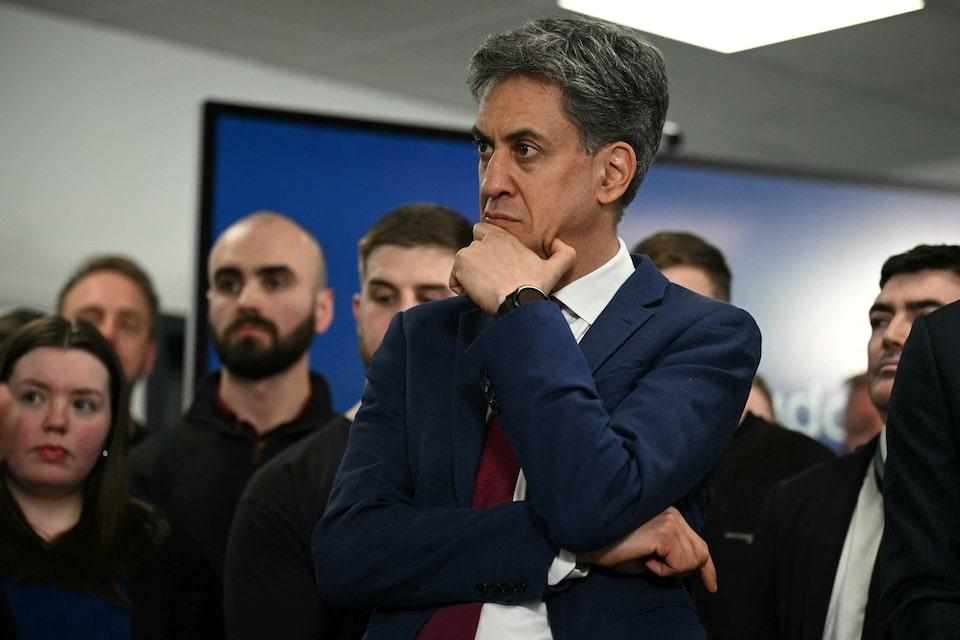
Labour government seeks to improve UK-China relations Miliband to discuss clean energy, not nuclear, with China Miliband to also talk to investors in China about UK opportunities BEIJING, Feb 28 (Reuters) - British Energy Secretary Ed Miliband will visit China in March to restart talks on energy cooperation and meet Chinese investors, three sources with direct knowledge of the plan said, as the Labour government seeks closer China ties amid worsening U.S.- and EU-China relations. The sources, who were not authorised to speak to media, said Miliband will visit Beijing on March 17-19, which Reuters is reporting for the first time. British officials have said they want to recalibrate many of the previous Conservative Party-led government's positions on China, particularly around accepting Chinese job-creating investment and allowing Chinese firms to provide critical infrastructure, such as nuclear power plants. Nuclear power will still be off the table when Miliband is expected to sit down on March 17 with his Chinese counterpart, Wang Hongzhi, to revive the UK-China Energy Dialogue, two of the sources said. Collaboration in other forms of clean and sustainable energy, as well as energy security, will be on the agenda instead. Miliband will also pitch Britain to Chinese private investors at a roundtable meeting, said one of the sources, adding that his schedule was still being finalised. "We do not comment on speculation on the Secretary of State's travel," the Department for Energy Security and Net Zero said in response to a Reuters request for comment. "We will set out any plans in the usual way." The Labour government, in power in Britain since July, has made improving ties with China one of its main foreign policy goals, after a period when relations plunged to their lowest levels in decades under successive Conservative governments. In 2022, then-Prime Minister Rishi Sunak signed off on providing around 700 million pounds ($880 million) to buy out China General Nuclear in a nuclear power project in the south west of England after some British lawmakers expressed concerns about China's involvement in the country's nuclear industry. Britain has refrained from following the U.S. and Europe in slapping import tariffs on Chinese electric vehicles over accusations its automakers benefit from unfair state subsidies and have overcapacity. Chinese automakers BYD (002594.SZ) , opens new tab and Chery (CHERY.UL) both sell into the UK market, while XPeng (9868.HK) , opens new tab plans to launch its cars in Britain later this year. BYD also manufacturers London's iconic red double-decker buses, while a subsidiary of Geely (GEELY.UL) makes the city's famous black taxi cabs. Miliband will be the third Labour minister to visit China since Prime Minister Keir Starmer took office, following Foreign Secretary David Lammy's trip in October and finance minister Rachel Reeves' visit in January. Starmer is also expected to visit China later this year, sources said, in the first trip to the country by a British leader since 2018. China's foreign minister Wang Yi earlier this month made his first official visit to Britain in a decade. Reuters reported last week that Britain has lined up a new Mandarin-speaking diplomat to help rebuild its China ties. China is Britain's fifth-largest trading partner and accounts for 5.2% of UK trade, with the world's second-largest economy taking in 32 billion pounds ($40 billion) worth of UK goods last year. ($1 = 0.7948 pounds) Sign up here. https://www.reuters.com/world/british-energy-secretary-visit-china-march-restart-energy-talks-meet-investors-2025-02-28/
2025-02-28 04:37
Ukraine president leaves White House after contentious meeting US stocks rise; dollar rises in choppy trade Stocks retreat in Europe, Asia; Bitcoin slides below $80,000 Feb 28 (Reuters) - Wall Street indexes advanced in choppy trading on Friday, after briefly dipping following a contentious White House meeting with Ukrainian President Volodymyr Zelenskiy. Oil prices fell on worries stoked by the White House meeting, tariffs and Iraq's decision to resume exports from the Kurdistan region. European shares ended flat but still notched another weekly gain. An on-camera argument in the Oval Office broke out between U.S. President Donald Trump and the Ukrainian President over a possible cease-fire agreement in the Russia-Ukraine war. "The market initially sold off because it was a heated and contentious conversation, which is not usually a good thing between two leaders of the world," said Adam Sarhan, chief executive of 50 Park Investments in New York. "That's why the market sold off, but then cooler heads prevailed." The S&P 500 climbed 1.59% to end the session at 5,954.50 points. The Nasdaq gained 1.63% to 18,847.28 points, while the Dow Jones Industrial Average rose 1.39% to 43,840.91 points. Volume on U.S. exchanges was heavy, with 17.5 billion shares traded, compared with an average of 15.4 billion shares over the previous 20 sessions. European stock futures fell, with the Dax and CAC40 futures down 0.6% and the Eurostoxx 50 futures dropping as much as 1.4%. U.S. Treasury yields fell to new multi-month lows after a report closely tracked by the Federal Reserve showed annual inflation subsided and consumer spending slowed last month. MSCI's gauge of stocks across the globe (.MIWD00000PUS) , opens new tab rose 5.69 points, or 0.66%. Crypto prices tumbled as the Trump-fuelled boom fizzled. Ukraine's dollar bonds were down on Friday but reacted mutedly to the meeting's chaos, holding on to earlier levels. The 2034 maturity fell just over one cent in price, last bid at 59.04 cents on the dollar, and set for monthly gains. The country's international debt rallied strongly last year on hopes that Trump could negotiate an end to the three-year war with Russia, but bonds have wobbled over the past month as investors shift their views on the Trump administration's approach to Russia and how that will ultimately affect Ukraine's economy. Earlier, the pan-European STOXX 600 (.STOXX) , opens new tab index ended flat. The dollar index, which gauges the greenback against six major peers, rose 0.21% to 107.59. The euro fell by as much as 0.37% to a two-week low of $1.036, before paring some of that decline to trade at $1.0366. Emerging market stocks (.MSCIEF) , opens new tab fell 28.01 points, or 2.49%. US DATA, TARIFF RISKS The 12-month change in the U.S. personal consumption expenditures (PCE) price index fell to 2.5% last month from 2.6% in December, U.S. data showed. The core PCE measure, the Fed's preferred measure of inflation, fell to 2.6% from an upwardly revised 2.9%. The central bank targets an inflation rate of 2%. Both measures came in line with economists' expectations. The threat of escalating tariffs has boosted the dollar, but it has also stoked worries about the impact of widespread duties on the U.S. economy. The "report indicates that inflation remains sticky," said Peter Cardillo, chief market economist at Spartan Capital Securities. "That means the pause will continue. And that means that the Fed may have a dilemma on its hands because the recent macro numbers are cooling and it shows signs of the economy cooling." The prospect of higher U.S. tariffs sent jitters through markets and revived concerns about an escalating global trade war. Trump said on Thursday that 25% duties on imports from Canada and Mexico will come into effect on March 4 - not April 2 as he had suggested a day earlier - and said goods from China will be subject to an additional 10% duty. This week he also floated 25% tariffs on shipments from the European Union. Bitcoin fell 0.18% to $84,138.56 The yield on benchmark U.S. 10-year notes fell 6 basis points to 4.227%, from 4.287% late on Thursday. The 2-year note yield, which typically moves in step with interest rate expectations for the Federal Reserve, fell 8.9 basis points to 3.991%, from 4.08% late on Thursday. Spot gold fell 0.68% to $2,856.49 an ounce. U.S. gold futures settled 1.6% lower at $2,848.50. Brent crude futures , which expired on Friday, settled at $73.18 a barrel, down 1.16%. U.S. West Texas Intermediate crude futures finished at $69.76 a barrel, losing 0.84%. MSCI's broadest index of Asia-Pacific shares outside Japan (.MIAPJ0000PUS) , opens new tab closed 2.45% lower at 576.86, while Japan's Nikkei (.N225) , opens new tab fell 1,100.67 points, or 2.88%, to 37,155.50. Sign up here. https://www.reuters.com/markets/global-markets-wrapup-1-2025-02-28/