2025-02-27 22:51
CALGARY, Feb 27 (Reuters) - Canada's oil-producing province of Alberta on Thursday forecast a budget deficit of C$5.2 billion ($3.5 billion) for the 2025/26 fiscal year if U.S. tariffs are implemented and decrease government revenues and slow economic growth. The outlook reflects a dramatic reversal of Alberta's fiscal health, following what is expected to be a C$5.8-billion budget surplus in the current fiscal year, and illustrates the widespread uncertainty Canadian policy-makers are facing as they grapple with the tariffs situation. "How do you plan for a budget when there are so many unknowns, when you have so much unpredictability with the U.S. president and what he may or may not say in the coming days, weeks and months?" Alberta's Finance Minister Nate Horner told reporters. The province estimated its revenue for 2025-26 at C$74 billion, C$6.6 billion lower than its 2024-25 third quarter forecast of C$81 billion, largely due to lower expected oil prices and royalties. It said its Gross Domestic Product growth is forecast to decelerate to 1.8% in 2025 and 1.7% in 2026, after expanding an estimated 3% last year. Alberta said it is also forecasting deficits for the 2026/27 and 2027/28 fiscal years, of C$2.4 billion and C$2.0 billion respectively. In its annual budget document, Alberta said its projections reflect an anticipated "moderate" U.S.-Canada trade conflict of potential tariffs and retaliatory measures. Alberta's budget is based on an analysis that a 25% tariff would be unsustainable for the U.S. economy, and reflects what the province believes is a more likely 15% average tariff for the year on most goods and a 10% tariff on oil, Horner said. He emphasized Alberta has no knowledge of what U.S. President Donald Trump plans to do beyond what he has said publicly, adding that the province is simply making its "best and most reasonable guess" at what it is facing. Trump has proposed implementing a 10% tariff on all U.S. imports of Canadian crude oil, and a 25% tariff on all other Canadian goods on March 4. Canada has said it will apply tariffs on C$155 billion of U.S. goods in response. However, there has been confusion about the timing of the tariffs, as well as how long they could be in place. If a 25% tariff on all non-oil goods was implemented, the province said Thursday, the revenue hit to Alberta would be much larger and the deficit could rise to C$8.7 billion in 2025/26. With no tariffs at all, Alberta's deficit would be C$2.9 billion, the budget document shows. Lower global oil prices, dramatic population growth straining public services, and the cost of a new tax cut are other factors putting stress on the province's finances. Alberta is home to the oil sands, the world's third-largest crude reserves, which means its economy is closely tied to oil prices. The province is projecting the discount on Canadian heavy crude compared to the U.S. benchmark West Texas Intermediate crude will widen due to tariffs, to an average of $17.10 per barrel in 2025/26, up from $13.20 in 2024-25. Alberta, however, said its energy sector is well-positioned to weather this challenge, in part due to a weaker Canadian dollar that will help to cushion the blow of tariffs. Alberta oil is priced in U.S. dollars, so a weaker loonie increases the value of oil revenues for Canadian producers. It said other sectors, like agriculture and manufacturing, will be more severely impacted by tariffs, and consumers are also expected to be more cautious. Alberta said it will double the size of its annual contingency fund from C$2 billion to C$4 billion, in part to provide the province with flexibility to address what it called "increased economic uncertainty." Sign up here. https://www.reuters.com/world/americas/alberta-projects-c52-billion-budget-deficit-if-trump-tariffs-proceed-2025-02-27/

2025-02-27 22:19
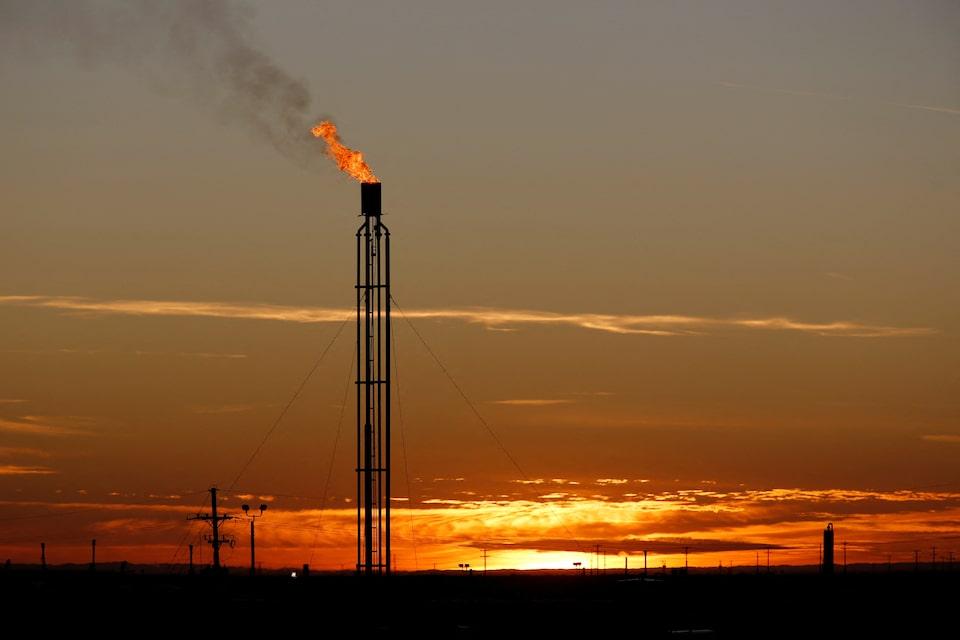
WASHINGTON, Feb 27 (Reuters) - The U.S. Senate on Thursday voted on a resolution that would overturn the Biden administration's proposed fee on methane emissions, one of the previous Environmental Protection Agency's final measures to force big oil and gas producers to slash emissions of the powerful greenhouse gas. The Senate passed the resolution under Congressional Review Act process, which allows Congress to reverse new federal rules with a simple majority, effectively overturning the escalating charge on oil and gas producers set by the agency they have called a tax. It follows passage of a similar resolution by the House on Wednesday. The methane fee was mandated by the 2022 Inflation Reduction Act, which directed the EPA to set a charge on methane emissions for facilities that emit more than 25,000 tons per year of carbon dioxide equivalent. Methane is the most prevalent greenhouse gas after carbon dioxide that tends to leak into the atmosphere undetected from drill sites, gas pipelines and other oil and gas infrastructure. The fee started at $900 per metric ton of methane emitted in 2024, and increased to $1,200 in 2025, and $1,500 for 2026 and beyond. The EPA last year finalized methane emission and reporting standards for the oil and gas sector, which faced less opposition from oil and gas companies. Industry groups applauded the passage of the resolutions in the House and Senate and urged President Donald Trump to quickly sign the legislation. "The Biden administration and Democrats in Congress passed the methane tax to single out and punish the oil and natural gas industry despite its already burdensome EPA regulatory framework," said Independent Petroleum Association of America President Jeff Eshelman. Democratic Senator Sheldon Whitehouse, top Democrat on the Senate environment committee, said the resolution would raise energy prices and weaken environmental quality for consumers. Sign up here. https://www.reuters.com/markets/commodities/congress-kills-biden-era-methane-fee-oil-gas-producers-2025-02-27/
2025-02-27 21:57
Feb 27 (Reuters) - Arcadium Lithium (ALTM.N) , opens new tab posted a loss in the fourth quarter on Thursday, as low prices of lithium, used to power electric vehicle batteries, weighed on the company. Lithium prices have plunged more than 80% from its peak in November 2022 after a supply glut and softening of aggressive EV adoption rates. Arcadium has agreed to sell itself to Rio Tinto (RIO.AX) , opens new tab, which shareholders approved in January and is expected to close by March 6. Rio Tinto plans to create a standalone lithium division after it completes the $6.7 billion acquisition, and the new business would assume control of Rio's $2.5 billion Rincon project in Argentina but not its controversial Jadar lithium project in Serbia. Arcadium Lithium reported a net loss of $14.2 million, or a loss of 1 cent per share, in the reporting quarter, compared with a net income of $37.7 million, or 9 cents per share, in the year-ago quarter. Its revenue for the quarter was $289 million, higher than estimates of $269.06 million. For the whole year, it reported revenue of $1 billion, compared with around $885 million in 2023. Analysts expected full-year revenue of $986.6 million. On overall volume of lithium sold, those of lithium carbonate and hydroxide in 2024 were slightly lower from a year earlier as weaker spodumene sales weighed, due to reduced production at Mt. Cattlin in Western Australia. Arcadium said last year it would put its Mt. Cattlin mine in care and maintenance by the end of the first half of 2025 due to the pricing downturn. The Philadelphia-based company reported adjusted earnings per share of 1 cent, in line with analysts' expectations according to data compiled by LSEG. Sign up here. https://www.reuters.com/markets/commodities/rio-tinto-buyout-target-arcadium-lithium-posts-loss-falling-lithium-prices-2025-02-27/

2025-02-27 21:49
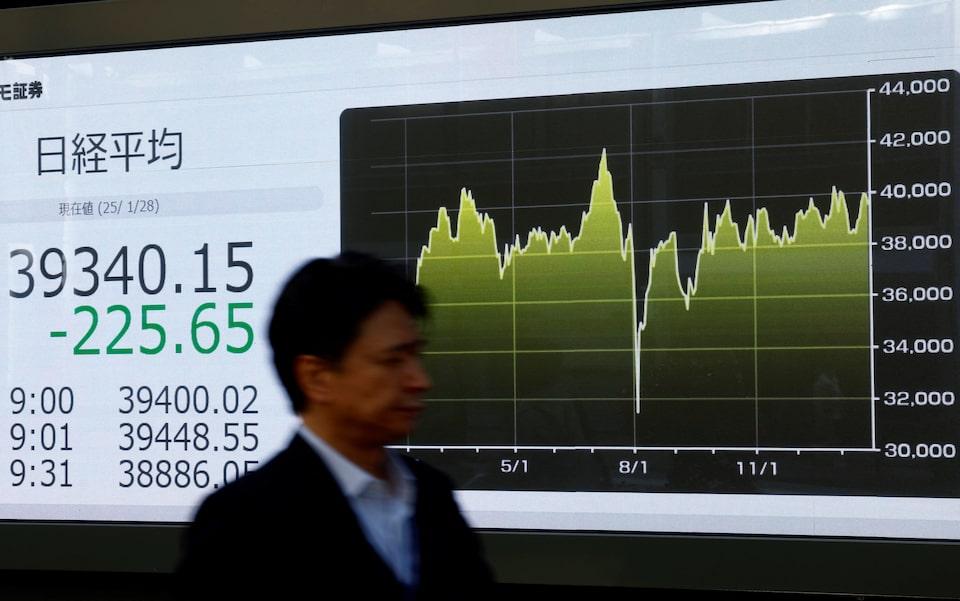
Feb 28 (Reuters) - A look at the day ahead in Asian markets. A mega wave of regional economic data breaks on Asian markets on Friday, with investors already bracing for a nervous end to the month as they weigh up tariff threats from Washington, further signs of U.S. economic slowdown, and fatigue on Wall Street. Top-tier indicators from Asia due on Friday include Tokyo inflation, Japanese retail sales and industrial production, and fourth quarter GDP from India, while keenly-awaited PCE inflation figures from the US will also be released. The mood going into the final trading day of the month is pessimistic, soured by deepening concerns over the impact U.S. President Donald Trump's proposed tariffs will have on growth. In the last 24 hours Trump has said 25% duties will be slapped on imports from the European Union, reiterated that tariffs on imports from Canada and Mexico will come into effect on March 4 - not April 2 as he had previously suggested - and said goods from China , opens new tab will be subject to an additional 10% duty. Bank of Japan Governor Kazuo Ueda echoed these concerns from Cape Town, where the G20 meeting of finance ministers and central bank governors - which officials from many countries, including the U.S., skipped - concluded without consensus or communique. This is another sign of the fraying of the global financial and economic order that has held for decades. The G20 "chair's summary" said participants "reiterated the commitment to resisting protectionism," but the wind from Washington is blowing in the opposite direction. The impact on stocks continues to be most visible in tech. The Nasdaq fell sharply again on Thursday and is now down 5% year to date, significantly underperforming the Dow and S&P 500. Chipmaker Nvidia may have issued reasonably decent results and forecasts on Wednesday but investors slammed the shares down 8.5% on Thursday. The upside for continued growth in revenue, earnings and the share price at the pace seen in recent years is negligible, so it's understandable fatigue is setting in. Tesla shares are also on the slide, extending their losses on Thursday to more than 20% in barely a week. An ETF tracking the 'Magnificent Seven' U.S. tech shares hit a three-month low on Thursday too, and is down almost 10% since Feb. 18. U.S. Big Tech's losses have been Chinese tech's gains, a rotation turbo-charged by the emergence of Chinese low-cost artificial intelligence model DeepSeek. Hong Kong-listed Chinese tech shares hit a fresh three-year high on Thursday before closing lower, and are on track for a monthly gain of 25%. But with U.S. yields and the dollar also up, Asian stocks and currencies are set to open on Friday under pressure. Here are key developments that could provide more direction to Asian markets on Friday: - Japan Tokyo inflation (February) - Japan industrial production, retail sales (January) - India GDP (Q4) Sign up here. https://www.reuters.com/markets/asia/global-markets-view-asia-graphics-2025-02-27/
2025-02-27 21:39
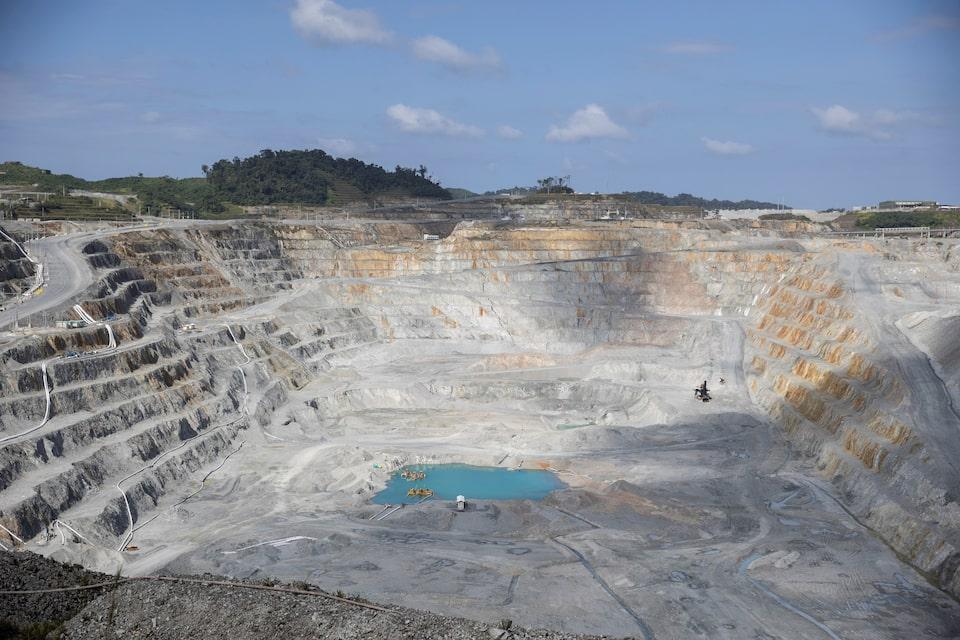
PANAMA CITY, Feb 27 (Reuters) - Panama's President Jose Mulino said on Thursday the Central American nation's economy was reeling from the closure of Canadian miner First Quantum's (FM.TO) , opens new tab Cobre Panama mine, once the world's biggest copper mine. "Largely what we are suffering today in Panama is the absence of that source of job creation, of wealth generation that the mine provided," Mulino said during his weekly address. Cobre Panama, which accounted for 5% of the nation's gross domestic product, has been shut since 2023 after environmental protests and a court ruling pushed the government to order its closure. The government has yet to decide the mine's future even after the company filed arbitration seeking damages of at least $30 billion. First Quantum has said the arbitration is its last option and it would prefer to resolve the dispute and find a way to reopen the mine. Mulino said he would make a decision about the mine's future after he resolves the issue of Panama's social security policy. "Once the social security problem is resolved, I'm going to address the mining issue ... the six or seven arbitrations First Quantum has against Panama have to be suspended so we can be comfortable talking about what we need to talk about in due time," said Mulino. When Mulino took charge in 2024, he said his top agenda would be to pass the social security reform and he would make a decision regarding the mine in the first quarter of 2025. Before a decision on the mine is taken, the government has to approve the preservation and safety management plan that would allow First Quantum to export 120,000 metric tons of copper concentrate that is stuck in the mine. The release of that copper could affect the global price of copper. Sign up here. https://www.reuters.com/world/americas/panama-concerned-about-economic-toll-cobre-panama-mine-closure-2025-02-27/
2025-02-27 21:25
Feb 27 (Reuters) - Russian forces staged mass strikes late on Thursday on energy targets in Kharkiv region in northeastern Ukraine, the regional governor said. Oleh Syniehubov, the governor, writing on the Telegram messaging app, said air defences were heavily engaged in repelling the attacks and emergency services were on site. He gave few details on the targets and urged residents to disclose no information. Syniehubov said one man had been injured in a Russian attack on the town of Balakliya, southeast of Kharkiv. Ukraine's Air Force reported threats of attacks by glide bombs and drones in various parts of the region. Kharkiv, Ukraine's second largest city, resisted capture by Russian forces in the early stages of Russia's February 2022 full-scale invasion of Ukraine. The city and the region surrounding it have since been a frequent target for air strikes by Russian forces. Sign up here. https://www.reuters.com/world/europe/russia-attacks-energy-sites-near-kharkiv-northeaster-ukraine-governor-says-2025-02-27/