2025-02-27 13:50
RIO DE JANEIRO, Feb 27 (Reuters) - Brazilian state-run oil firm Petrobras (PETR4.SA) , opens new tab could bring forward investments in the future if it leads to higher oil production earlier, Chief Executive Magda Chambriard told journalists during a presentation of the 2024 financial results. On Wednesday the firm reported higher-than-expected investments for 2024 in its fourth-quarter results release, surprising analysts and leading to a dip in the share price on Thursday. Petrobras non-voting shares closed over 3% lower in Sao Paulo's B3 exchange, while its voting shares declined more than 5%, according to preliminary data. Brazil equity benchmark Bovespa (.BVSP) , opens new tab settled almost unchanged. Last year, Petrobras spent 15% above its guidance for 2024, because it brought forward investments expected for this year, Chambriard told analysts during a earnings call, adding that she understood their "frustration" over the resulting lower-than-expected dividends. Petrobras' capital expenditures for last year totaled $16.6 billion, around $2.1 billion above the company's guidance, which was revised downwards in August from $18.5 billion. In previous quarters, Petrobras usually spent less than planned, but in the second quarter the company downwardly revised its guidance for the year, saying it better reflected reality. Chambriard has stressed in recent speeches that Petrobras is "stepping on the gas." Under Brazilian President Luiz Inacio Lula da Silva, Petrobras is under pressure to invest more to boost the country's economy and generate local jobs. Analysts had expected higher ordinary dividends than the 9.1 billion reais ($1.57 billion) the firm is set to disburse to shareholders based on the fourth quarter. The higher-than-expected investments stemmed from anticipated expenditures, and Petrobras said it maintained its guidance for 2025, but with a possible variation of 10%. For the first quarter, investors should expect capex to be toward the lower end of the 10% variation, Chambriard said. Petrobras did not update its 2025-2029 spending plan of $111 billion. Sign up here. https://www.reuters.com/business/energy/shares-brazils-petrobras-dip-after-surprise-capital-spending-surge-2025-02-27/
2025-02-27 12:49
Feb 27 (Reuters) - Skippy peanut butter maker Hormel Foods (HRL.N) , opens new tab on Thursday missed first-quarter profit estimates, hurt by higher input costs and the persistent effects of a supply issue at its Planters brand's distribution facility from last year. Hormel Foods, which sells snacking and packaged meat products, has also taken a hit due to lower whole turkey prices and increased advertising expenses. The company has been struggling to boost demand for its turkey products as consumers preferred affordable meat alternatives such as beef and chicken amid high inflation. Meanwhile, demand for certain packaged products suffered as the company kept the prices elevated to protect its margins from inflated input costs. Hormel's Planters nut brand faced a supply disruption at its Suffolk, Virginia-based distribution facility due to an unspecified food safety issue last April, which continued to impact the company's margins in the first quarter. "As anticipated, the first quarter was pressured as we continued to recover from the snack nuts supply disruption and lapped a full year of whole bird turkey market compression," CEO Jim Snee said. The company's selling, general and administrative costs rose about 7% to $475.232 million in the quarter ended January 26 from a year ago. Hormel earned 35 cents per share on an adjusted basis in the first quarter, missing analysts' average estimate of 38 cents, according to data compiled by LSEG. Its first-quarter sales came in at $2.99 billion, compared with estimates of $2.94 billion. The company reaffirmed its full-year adjusted earnings forecast of $1.58 to $1.72 per share. It expects its annual net sales to be between $11.9 billion and $12.2 billion, as previously projected. In contrast, larger peer Tyson Foods (TSN.N) , opens new tab earlier this month raised , opens new tab its annual sales forecast on the back of strong demand for its beef and chicken products. Sign up here. https://www.reuters.com/business/retail-consumer/hormel-foods-misses-quarterly-profit-estimates-higher-input-costs-2025-02-27/

2025-02-27 12:30
HOLIC, Slovakia, Feb 27 (Reuters) - Czech and Slovak farmers parked dozens of tractors and disrupted operations at a border crossing on Thursday to protest against cheaper imports coming from non-EU markets like Ukraine and South America. Waves of protests around Europe have occurred in the past year as farmers say they face unfair disadvantages over standards and bureaucracy and demand changes to European Union policies. Protests on Thursday included farmers from Hungary and Austria, with signs saying 'Stop grain from Ukraine' or 'Green Deal Dead End', the latter referring to the EU's climate strategy. Protests mainly took aim at an agreement between the EU and South America's Mercosur bloc struck in December, along with imports from Ukraine exempt from duties. "What affects me... is that I have to fulfil an incredible amount of obligations, paperwork, registration, and the like," Czech farmer Petr Chaloupka said. "At the same time I am not able to sell the goods at the price at which they are imported here, either from the east or even from South America." Protests occurred at other border areas, CTK news agency reported, including a Polish crossing. Farmers' associations have demanded blocking the Mercosur deal and reaching a new agreement with Ukraine protecting EU agriculture, as well as less bureaucracy from the EU. Sign up here. https://www.reuters.com/world/europe/czech-slovak-farmers-clog-border-crossing-protest-non-eu-imports-2025-02-27/

2025-02-27 12:19
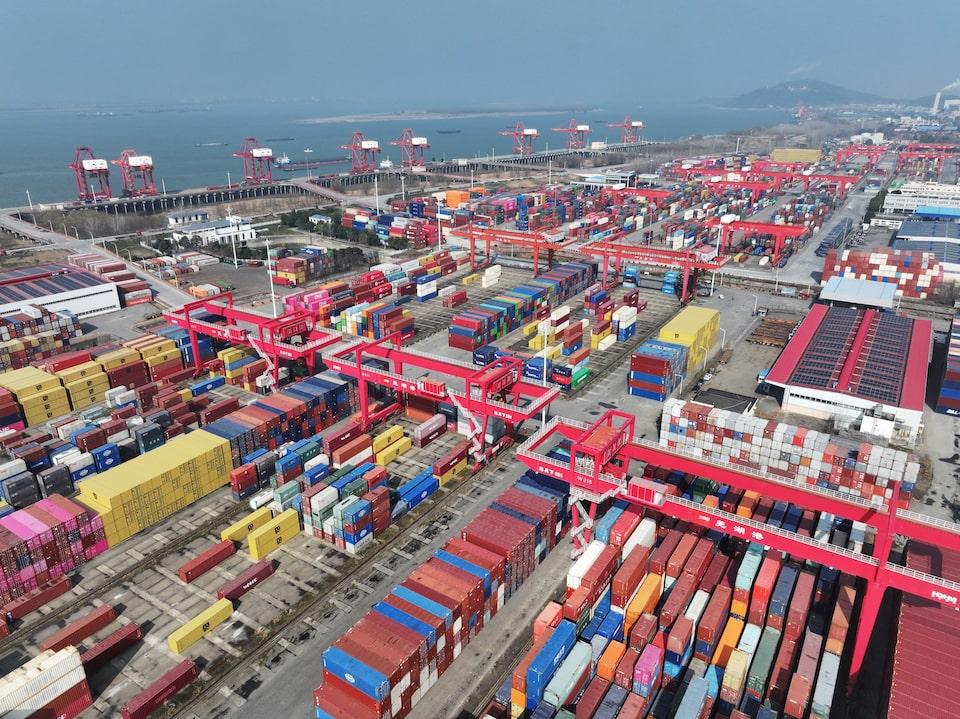
Feb 27 (Reuters) - With China at the forefront of U.S. President Donald Trump's tariff agenda, domestic economists expect a combination of policy measures, supply chain adjustments and strengthened global partnerships to cushion the world's second-largest economy as the trade war intensifies. "We (China) have taken proactive steps to mitigate the impact of the trade war," Zong Liang, chief economist, Research Institute at state-owned Bank of China, told the Reuters Global Markets Forum , opens new tab. "We've made it easier for other countries to do business with us, strengthening trade relationships beyond the U.S.," Zong said. Minutes after Trump's 10% tariff on Chinese imports took effect on Feb. 4, Beijing announced retaliatory tariffs on some U.S. energy products and autos along with a range of measures against Google (GOOGL.O) , opens new tab and other U.S. firms. Trump has also announced a 25% tariff on all steel and aluminum imports into the U.S., which was eventually followed by multiple countries including Vietnam, South Korea and India unveiling their own measures on Chinese steel and steel-related imports. "Despite this, (China's) share of global exports has remained strong," Zong said, adding that he expected China to adopt a more aggressive fiscal policy this year along with additional measures to stabilise domestic demand. Alex Hongcai Xu, deputy director of the Economic Policy Committee at the China Association for Policy Sciences, said Chinese companies are diversifying their export markets and broadening overseas investment cooperation, which will help mitigate trade war costs and risks. In order to further safeguard itself, Xu expects China to provide financial subsidies and tax breaks to the tariff-hit agriculture and manufacturing sectors. Both economists also noted that the U.S.-Sino trade war opens up opportunities for China to deepen relationships with Southeast Asian nations, the European Union and other tariff-hit countries, strengthening partnerships such as the Belt and Road Initiative (BRI). Kishore Mahbubani, veteran Singaporean diplomat and distinguished fellow at the National University of Singapore, said BRI will gain momentum as countries look outside for help after the U.S. has shut down aid. Trump has halted most U.S. government-funded aid globally for 90 days, while moving to dismantle the United States Agency for International Development (USAID), as part of his effort to cut the federal government workforce and curb spending it considers wasteful. "There are very few countries that can be as generous as the U.S. at that scale ... and, that is China," said Mahbubani, who was also the president of the UN Security Council in 2001 and 2002. (Join GMF, a chat room hosted on LSEG Messenger: https://lseg.group/3KFHrhe , opens new tab) Sign up here. https://www.reuters.com/business/trade-war-escalates-economists-bet-china-resilience-2025-02-27/
2025-02-27 12:09
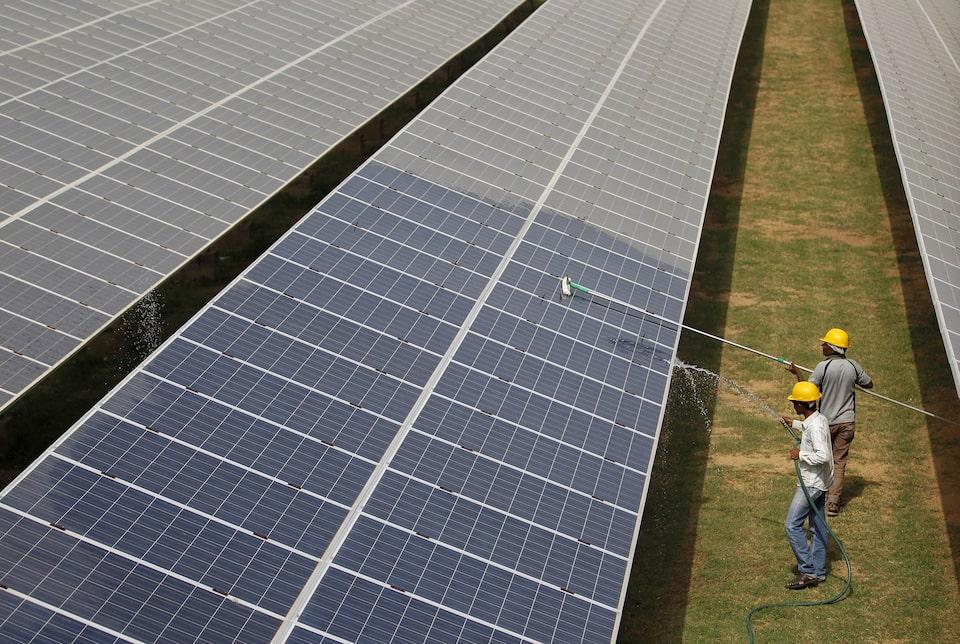
LITTLETON, Colorado, Feb 27 (Reuters) - India has the second-largest clean power capacity development pipeline globally after China, with nearly 56,000 megawatts of new renewables, hydro and nuclear capacity under construction. Clean energy sources account for two-thirds of the all the new power capacity under development in India, according to Global Energy Monitor (GEM) data, and will result in a 35% jump in total clean power supply potential once complete. However, the country is also building 30,000 MW of new coal-fired capacity, which will preserve coal's status as India's primary power source even after the construction boom. The enduring heavy dependence on coal within India's power system underscores the challenge facing fast-growing economies that need to increase energy supplies to households and businesses as cheaply and quickly as possible. The expanded coal capacity will also further lift India's coal power emissions, which hit a new high in 2024 of over 1.2 billion metric tons of carbon dioxide (CO2), according to Ember. GROWTH SPURT The main driver of India's heavy coal reliance is the country's rapid energy demand growth, which has accelerated in line with its overall economy. Since 2021, India's primary energy consumption has grown by an average of 7% a year, according to the Energy Institute. That growth rate exceeded China's 5% pace and was more than twice the global average over the same period - resulting in regular bouts of strained power grids. To fend off further power shortages, India's utilities and government have made massive investments in expanding total power supply capacity, with emphasis on growing clean energy production. Indian power firms are currently constructing nearly 29,000 MW of solar, 6,300 MW of wind, 15,000 MW of hydro and nearly 6,000 MW of nuclear power capacity, GEM data shows. In addition, the country has a further 35,000 MW of solar, 6,000 MW of wind, 45,000 MW of hydro and 26,000 MW of nuclear in so-called pre-construction, which is where project permits are being lined up ahead of groundbreaking. All told, that is nearly 167,000 MW of clean power capacity in advanced planning stages in India, which exceeds the 166,000 MW of clean capacity at the same developmental stage in the United States, according to GEM. What's more, once all current and pre-construction clean energy projects are completed, India's total clean power capacity could rise by more than 100% from current levels, to nearly 330,000 MW. RISING TIDE LIFTS COAL TOO While clean power capacity is set to grow sharply, India's larger fossil fuel power base is also set to expand. In addition to the 30,000 MW of coal capacity under construction, Indian power firms have nearly 55,000 MW of coal capacity in pre-construction. That cumulative development load stands to increase India's total coal-fired capacity to nearly 355,000 MW, which means that coal power will continue to account for over half of India's total power capacity even after planned projects are complete. The larger overall coal footprint will in turn trigger even greater volumes of coal consumption by Indian power firms, which rely on locally-mined coal for around 75% of coal supplies. The remaining coal volume requirements are fulfilled by imports, mainly from Indonesia. Demand for both domestic supplies and imports looks set to swell sharply once current coal power projects are complete. More than 20,000 MW of new coal power capacity is located within inland areas that are serviced mainly by local miners, while over 6,000 MW of new coal capacity is located on India's south and southeast coasts, which can be fed via imports. That means that even though India's power firms can expect a large jump in clean power supplies over the coming years, coal will remain their main source of power generation for the foreseeable future. The opinions expressed here are those of the author, a market analyst for Reuters. Sign up here. https://www.reuters.com/business/energy/king-coal-stay-top-india-despite-big-clean-power-pipeline-maguire-2025-02-27/
2025-02-27 12:04
FRANKFURT, Feb 27 (Reuters) - The European Central Bank has taken down some interfaces of its securities settlement system as it works to resolve an ongoing glitch that disrupted communications within that network, known as Target 2 Securities (T2S). "As a result of the incident resolution activities also the T2S and Common Component Graphical User Interfaces (GUIs) are unavailable at the moment," the ECB said in a status update. Sign up here. https://www.reuters.com/business/finance/ecb-takes-down-securities-settlement-systems-interfaces-after-incident-2025-02-27/