2025-02-27 12:04
Share price underperformed peers Revenues from renewables sector complicated by costs and technical problems Elliott Management stake increased the pressure for strategy change Renewable energy set to grow faster than fossil fuels LONDON, Feb 27 (Reuters) - BP (BP.L) , opens new tab has returned to its oil and gas roots in a spectacular about-turn following its trailblazing attempt five years ago to become a renewables giant. The takeaway for Big Oil is that the energy transition is a marathon, not a sprint. BP CEO Murray Auchincloss on Wednesday unveiled a long-awaited strategy reset, abandoning his predecessor Bernard Looney's eye-catching 2020 plan to "re-invent" the company. The 54-year-old Canadian now aims to increase oil and gas production by up to 2.5 million barrels of oil equivalent per day by 2030, from 2.36 million boed in 2024. He also cut spending on low-carbon energy, ditched a target to sharply grow renewables generation capacity and removed a goal of reducing overall emissions by 2030. That's quite a shift for a company that had been a poster child for Big Oil's efforts to decarbonise rapidly. BP invested billions globally in large offshore wind, solar, hydrogen and low carbon projects. But inflation, technical problems and soaring energy prices undermined the plans. As a result, BP had to book billions of dollars in impairments, debt rose and its stock underperformed. It has spun off its offshore wind business and plans to sell half of its solar business while mothballing hydrogen projects. The British company's share price remained roughly flat over the last five years, while Exxon Mobil’s (XOM.N) , opens new tab and Chevron’s (CVX.N) , opens new tab rose by 102% and 55%, respectively. The growing financial distress and loss of corporate direction have raised speculation that BP will be bought by a rival. Activist shareholder Elliott Management has meanwhile acquired a large stake, adding to the pressure for a radical revision of strategy. FAILURE TO LAUNCH What a difference five years make. BP's energy transition strategy was met with strong investor support in 2020, when the COVID-19 pandemic reinforced the idea that the world was changing and energy prices sank because lockdowns destroyed demand. The environmental agenda had gained prominence in financial markets, leading to a rise in ESG funds as well as net zero commitments from banks, funds and businesses. Governments, particularly in the West, unveiled ambitious plans to decarbonise their economies through support for renewables. The mood changed swiftly as the world emerged from the pandemic into an era of elevated inflation in 2022, exacerbated by Russia's invasion of Ukraine. The war disrupted oil and gas supplies and sent prices soaring, creating record profits for fossil fuel producers. Two sectors in particular - offshore wind and hydrogen - illustrate the predicament Big Oil found itself in. BP and its European peers said their extensive offshore experience would give them a competitive edge in wind versus rivals such as utilities. Companies piled into projects, offering governments lucrative terms to construct multi-billion offshore wind farms, including in Britain, Germany, South Korea, Taiwan and the United States. Instead, technical problems, inflation and supply chain delays made many projects financially unviable. U.S. President Donald Trump's animosity towards offshore wind has compounded the problem. Low or zero-carbon hydrogen – lauded as a panacea that could decarbonise transportation, home heating and industry – was also considered an area of natural growth for fossil fuel producers. But the buzz has today mostly evaporated due to its high production and transportation costs. WHAT’S NEXT? BP is not the only energy company to complete a green volte-face. In recent months, other European oil giants including Shell (SHEL.L) , opens new tab and Norway's Equinor (EQNR.OL) , opens new tab, have sharply slowed their energy transition plans, cutting spending on wind, solar, hydrogen and other low-carbon projects. But this reversal – which means investing billions in new oil and gas projects at a time of high commodity prices and elevated service costs – is not without risks. Oil demand growth appears to be slowing, as gasoline consumption plateaus in China and the United States, the world's biggest oil consumers. And with abundant global supply, the long-term outlook for crude prices is most likely on a downward slope. The outlook for natural gas is better, but likely weaker than Big Oil companies imagine. Gas markets also face abundant global supply as well as competition from coal and improved renewables technologies. A wave of liquefied natural gas production set to hit the market over the next five years could add to downward pressure on prices. Meanwhile, renewables remain the fastest-growing source of energy. The International Energy Agency forecasts renewable energy capacity to nearly triple between 2023 and 2030 to nearly 11 million gigawatts. And some companies have shown that it is possible to forge a more sustainable, moderate transition path. French energy giant TotalEnergies (TTEF.PA) , opens new tab has invested steadily since 2020 in oil, gas and renewables, growing a significant power generation business that is already generating profits. While BP and its rivals may be able to temporarily walk back from their green goals, they will not be able to sidestep the energy transition for long. Investors will expect these companies to offer viable long-term strategies, because while BP is facing an existential crisis, the energy transition is not. Want to receive my column in your inbox every Thursday, along with additional energy insights and trending stories? Sign up for my Power Up newsletter here. ** The opinions expressed here are those of the author, a columnist for Reuters. ** Sign up here. https://www.reuters.com/markets/commodities/bps-green-failure-offers-big-oil-lesson-moderation-2025-02-27/

2025-02-27 11:56
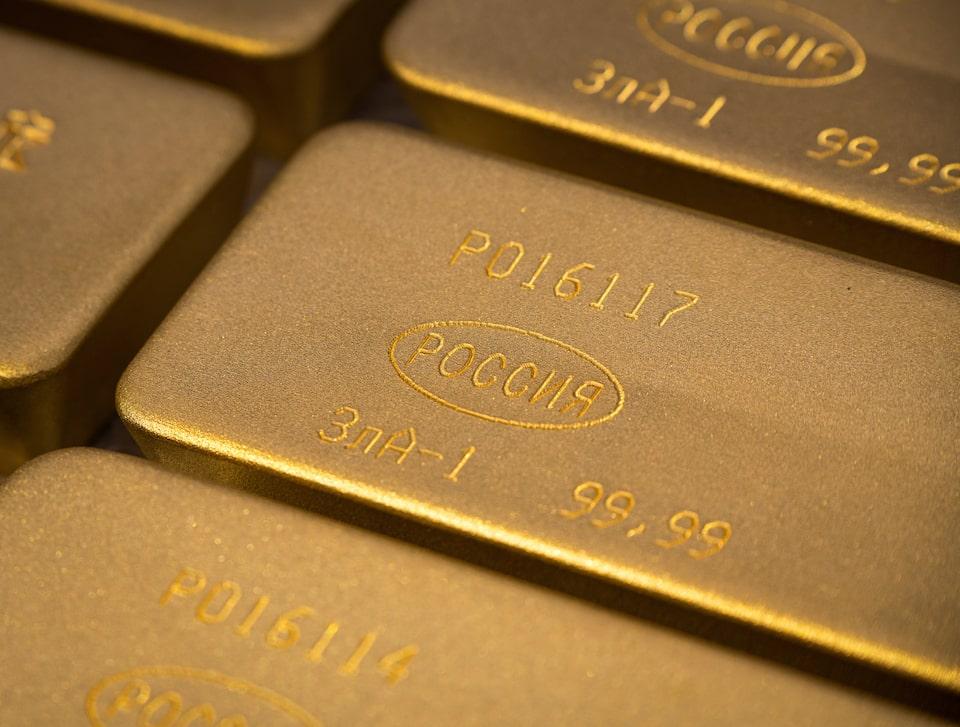
Spot gold hit its lowest level since Feb. 17 Trump sows confusion on tariffs for Canada and Mexico Reuters poll forecasts PCE monthly index of 0.3% for January Feb 27 (Reuters) - Gold prices fell over 1% to their lowest level in more than a week on Thursday, as the U.S. dollar firmed, while investors awaited a key inflation print that could offer clues on the Federal Reserve's monetary policy. Spot gold was down 1% at $2,889.13 an ounce by 1127 GMT, its lowest since February 17. Prices hit a record peak of $2,956.15 on Monday, driven by safe-haven flows. U.S. gold futures lost nearly 1% to $2,901.50. The dollar index (.DXY) , opens new tab rose 0.2% to move further from the recent 11-week lows, making greenback-priced bullion more expensive for other currency holders. U.S. President Donald Trump raised hopes for another month-long pause on steep new tariffs on imports from Mexico and Canada, saying they could take effect on April 2, and floated a 25% "reciprocal" tariff on European cars and other goods. This uncertainty "sent investors rushing towards the dollar's embrace, enforcing fresh pressure on gold, which was already experiencing profit-taking from record highs," said Lukman Otunuga, senior research analyst at FXTM. Investors are also looking for cues on U.S. monetary policy, with several officials due to speak later in the day and the Personal Consumption Expenditures (PCE) index due on Friday. The consensus forecast was for a PCE monthly index of 0.3%, unchanged from December 2024, according to a Reuters poll. Markets expect the Fed to deliver at least two rate cuts this year, with about 55 basis points of easing priced in for 2025. "Any major changes to these (rate) bets could trigger heightened levels of volatility for the zero-yielding metal. A combination of geopolitical risk and Trump's tariff drama could keep gold bulls in the game," Otunuga said. Spot silver retreated 0.1% to $31.81 an ounce, platinum added 0.8% to $973.65 and palladium eased 0.1% to $923.44. Sign up here. https://www.reuters.com/markets/commodities/gold-slips-dollar-strength-rising-treasury-yields-us-inflation-data-focus-2025-02-27/
2025-02-27 11:49
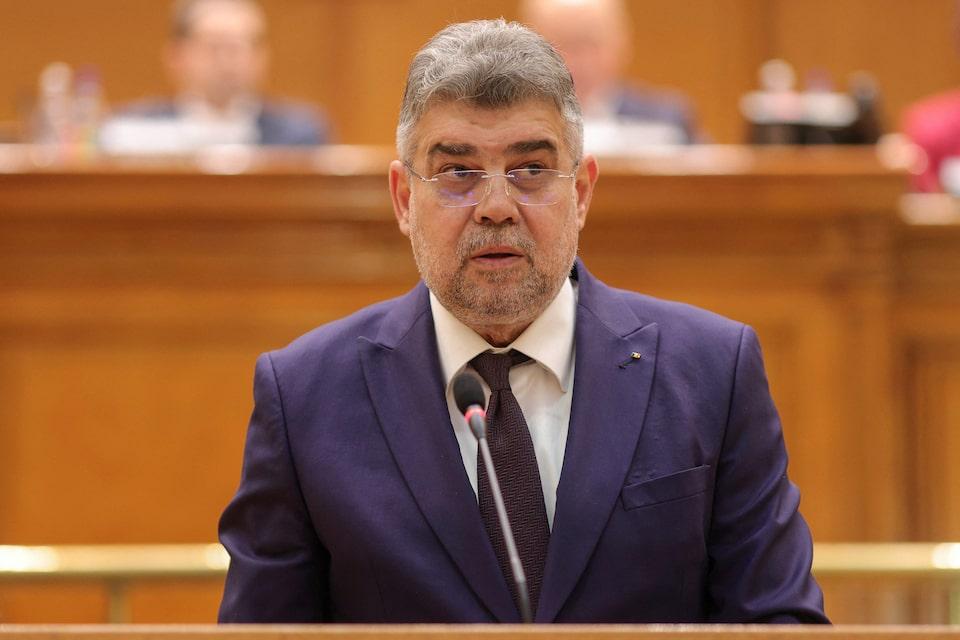
BUCHAREST, Feb 27 (Reuters) - Romania's coalition government will extend a price cap on electricity for households and businesses until June and on gas for a year, Prime Minister Marcel Ciolacu said on Thursday, to shield consumers from a recent surge in energy costs. Romania has been capping gas and power bills for households, small businesses, hospitals, schools and public institutions up to certain monthly consumption levels and compensating suppliers for the difference since November 2021. The scheme has been modified several times and was due to expire at the end of March. Suppliers have repeatedly complained about delayed government payments and observers have warned market distortions will be difficult to redress. "We will approve today continuing the energy price cap," Ciolacu said at the start of a government meeting. "For electricity until end-June and until then we will introduce measures to increase market volumes so that prices remain low. For gas we will keep the cap for another year to rebuild our stored reserves for next winter at manageable prices." Romania uses a mix of gas, coal, hydro, nuclear and renewables for electricity generation and has committed to phasing out lignite, or brown coal, although the energy ministry is currently seeking an extension. The country produces almost all the gas it consumes locally through producers OMV Petrom (ROSNP.BX) , opens new tab, state-owned Romgaz (SNG.BX) , opens new tab and offshore producer Black Sea Oil & Gas (BSOG). Sign up here. https://www.reuters.com/world/europe/romanian-government-extends-energy-price-caps-2025-02-27/
2025-02-27 11:46
Outage affected ECB's main payments settlement platforms ECB scrambled to fix outage Payments malfunction is very rare LONDON/FRANKFURT, Feb 27 (Reuters) - The European Central Bank said late on Thursday it had fixed an unprecedented outage in its payment system which had left transactions likely worth trillions of euros from companies, consumers and investors up in the air for most of the day. The malfunction of the Target 2 system, used to settle more than 3 trillion euros ($3.12 trillion) of daily payments and financial trades, meant transactions between banks could not go through. While the interruption had not been felt by regular bank customers, it had put a question mark on the transactions between lenders that are completed at the end of the day and underpin the very functioning of the euro zone's economy. The event caused disruptions during U.S. trading hours, according to a source at one U.S. lender. There are still expectations that the backlog could be cleared during the extended settlement hours which could make the overall impact muted, the source added. Another U.S. bank said it was processing backlogs without issue after the ECB restarted the system. After a hiatus that lasted roughly seven hours, the ECB said around 1800 GMT that Target 2 (T2) was functioning normally although all the deadlines to settle the day's payment flows had been postponed by several hours. "The previous incident has been resolved and T2 has resumed normal operations," the ECB said in a status update on its website. In a statement to Reuters earlier, the ECB said the unprecedented issue had been caused by a "hardware defect" and there was no "malicious (or) foul play". Banks, which depend on the system to settle their accounts with one another, had been instructed to keep placing their payments in the queue throughout the day as they waited for the outage to be fixed. An emergency channel had remained open for "very critical payments", the ECB said. The pan-European TARGET 2 Securities (T2S) platform, which is used to complete trades in cash and securities across 24 depositories such as Euroclear, was also back online after being affected by a glitch in its communication channels. "T2S is operating normally and the previous incident... was resolved," the ECB said. The cut-off time for Thursday's trade had been pushed back by six hours to 2100 GMT. Trading sources said communications had been disrupted and the status of trades since the outage was reported remained unclear. The problem affected critical communications between central securities depositories (CSDs), the basic plumbing of financial markets. Market participants usually communicate with T2S via their CSD or central bank. Michael Thomas, a partner at Hogan Lovells’ financial services team and market structure expert, said the episode could have a wide variety of consequences. "Where there are chains of transactions, where each leg is dependent on settlement of each other leg, a break in the chain can affect the whole series of transactions," he said. "The longer the delay, the greater the impact on liquidity in the financial system, where cash cannot be realised because securities transactions are not able to settle, meaning that cash is not available for other purposes," he said. According to the ECB's website, any issues with the T2S system in the past couple of years have typically been resolved quickly. Thursday's outage was reported at 0730 GMT and was only resolved at around 1700 GMT. European stock, currency and bond markets appeared to have traded normally, according to LSEG data. (.STOXX) , opens new tab, , Settlement on trades takes two working days, which might mean disruption may not show up until early next week. Central counterparties, or clearing houses, ensure that a stock, bond or derivatives transaction is completed. The final leg of a trade, known as settlement, is conducted by the CSDs. One CSD, Clearstream, said on its website that settlement of euro securities would be delayed. Others including Euroclear did not immediately respond to a request for comment from Reuters. A person familiar with the matter said some Euroclear clients might see delays in the processing of their transactions. ($1 = 0.9607 euros) Sign up here. https://www.reuters.com/business/finance/eurosystem-cites-incident-t2s-system-settlement-unaffected-ecb-says-2025-02-27/

2025-02-27 11:29
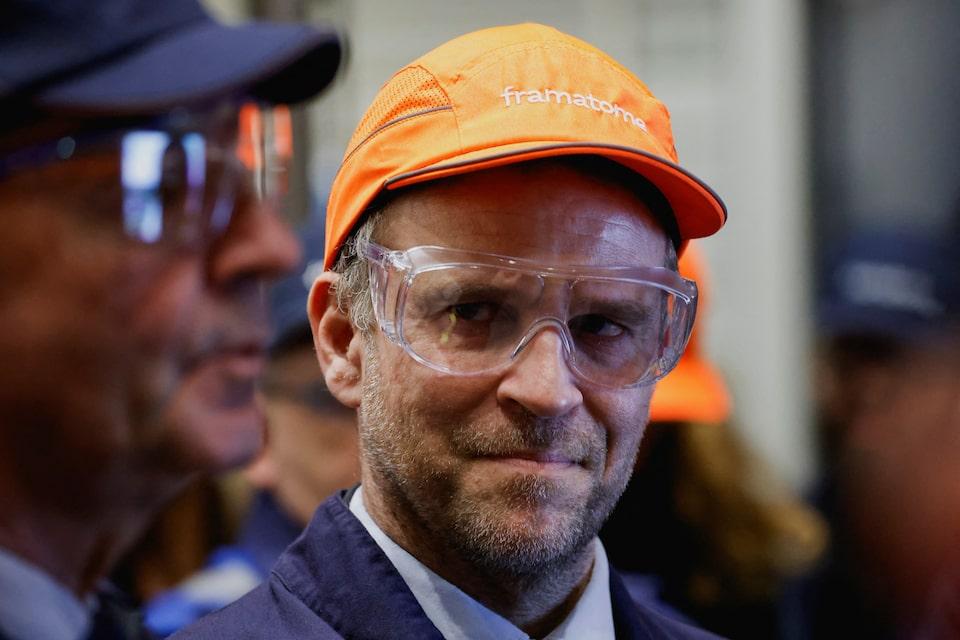
PARIS, Feb 27 (Reuters) - Europe's ailing steel sector needs to be protected and safeguard measures on steel imports must be strengthened as current safeguards are too low and not adapted to the current market, French industry minister Marc Ferracci said on Thursday. "The European industry and the steel sector need protection, which in the short term means beefing up safeguard measures," said Ferracci, at a European steel industry event in Paris. Stressing that the European steel industry was in a "difficult situation" in the face of heavily subsidised imports from China and looming U.S. tariffs, he said: "If we do not take strong measures, plants will close down." The European Commission is investigating whether to tighten its current system of quotas on steel imports to protect EU producers from new tariffs U.S. President Donald Trump plans to impose on incoming steel and aluminium on March 12. Ferracci said EU safeguard measures put in place in 2016 and which are due to end in 2026 were no longer adapted to the reality of the European steel market in terms of volume as well as regarding tariffs levels. Ferracci also said Europe needed to respond firmly but proportionately to Trump's latest tariffs threats, which he described as "worrying but not surprising." Trump said on Wednesday his administration would soon announce a 25% tariff on imports from the EU. Sign up here. https://www.reuters.com/markets/europe/europes-steel-industry-needs-greater-protection-says-french-industry-minister-2025-02-27/
2025-02-27 11:28
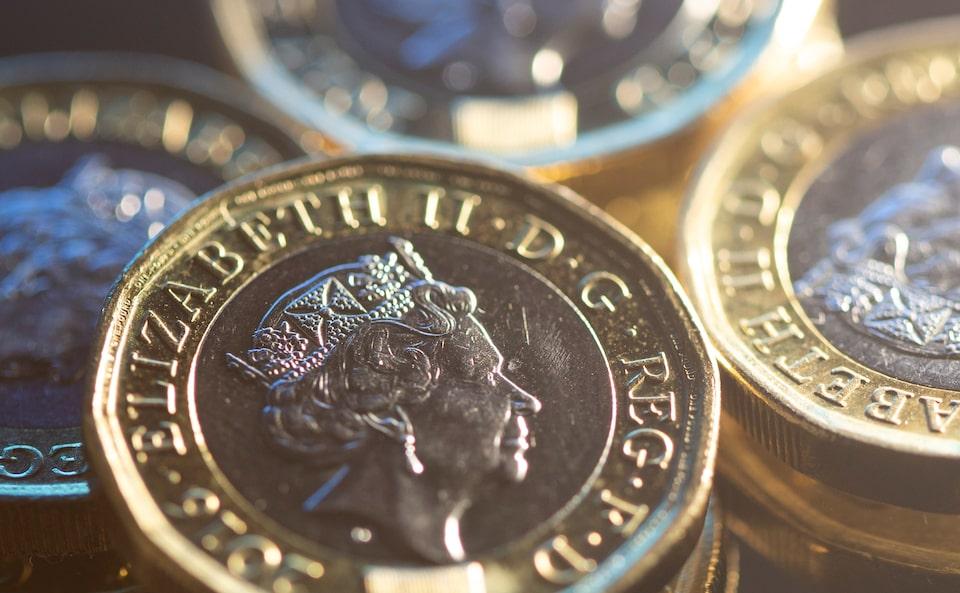
LONDON, Feb 27(Reuters) - The British pound was little changed against the dollar on Thursday, trading just below a more than two-month high hit the previous day, as U.S. President Donald Trump's tariff threats turn towards the European Union. Sterling was last at $1.2674 against the dollar, little changed on the day, having risen to $1.2717 on Wednesday, its highest level since December 18. Late on Wednesday, Trump floated the idea of a 25% tariff rate on goods from the European Union, saying he would be announcing it "very soon". Danske Bank analyst Mohamad Al-Saraf said the pound could be a relative outperformer from U.S. import tariffs because the trade deficit between the U.S. and Britain is relatively small. "If we actually see tariffs being implemented, we expect the pound to outperform in the G10 space," Al-Saraf said. "Looking at the price action in the past few months, the pound is relatively immune to all this tariff talk." The pound has also been supported by expectations for relatively fewer rate cuts from the Bank of England than some other central banks, namely the European Central Bank. The BoE lowered interest rates this month and markets are pricing in two further quarter-point cuts this year. For the ECB, which is expected to lower interest rates next week, markets are fully pricing in three rate cuts and around 30% chance of a fourth. Against the euro, the pound was little changed at 82.7 pence , just above last week's near 1-1/2 month high of 82.635 pence. Eyes were also on British Prime Minister Keir Starmer's trip to Washington where he is set to meet Trump later on Thursday at the White House, with talks on security and a possible ceasefire in Ukraine high on the agenda. Earlier this week, Starmer said Britain's defence spending would reach 2.5% of GDP by 2027, a signal to Trump that the UK is serious about ramping up military expenditure. Sign up here. https://www.reuters.com/markets/currencies/sterling-steady-trump-threatens-eu-with-tariffs-2025-02-27/