2026-01-09 11:08
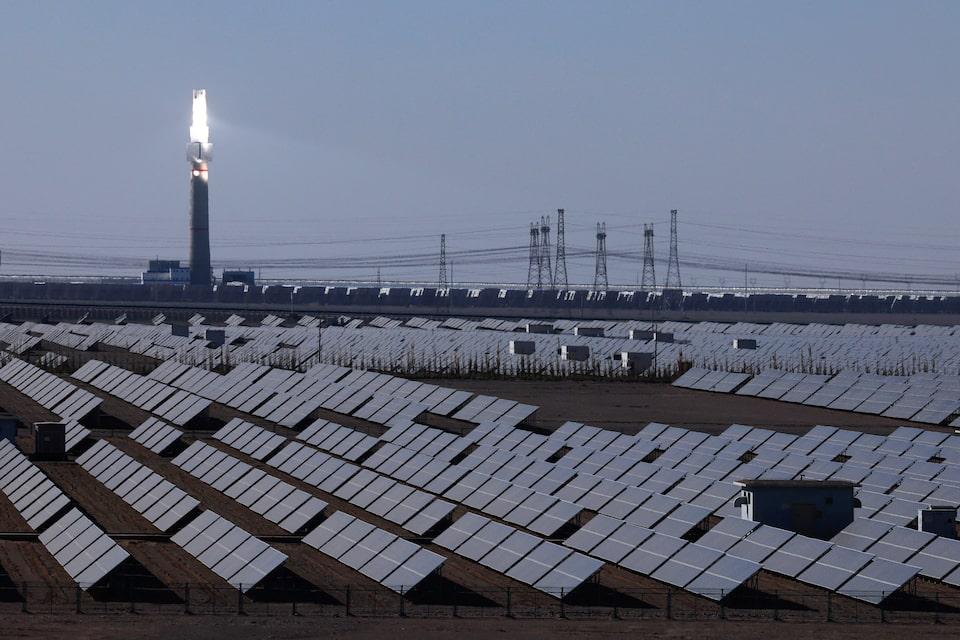
BEIJING, Jan 9 (Reuters) - China is pushing industrial parks to use more of their green power on-site instead of sending it into the grid, according to an official document on Friday, in a new policy roadmap aimed at greening manufacturing while boosting grid flexibility. Industrial parks with newly built wind and solar generation should use at least 60% of that electricity on-site and should send no more than 20% of it into the grid, according to an industry plan for green industrial microgrids for 2026-2030 released by the industry ministry, state planner, and asset, market and energy regulators. Sign up here. The document defined green industrial microgrids as incorporating renewable power generation, waste energy utilisation, green hydrogen, battery storage, and digitalised energy and carbon management. The policy is meant to cut emissions, improve the uptake of renewable power and boost industrial competitiveness, according to the document. Analysts say more parts of China in the coming years will face high rates of curtailment. That refers to grid managers limiting the amount of power coming into the network to maintain a balance with demand, or due to grid infrastructure constraints. Industrial microgrids are required to support demand response, where users cut back their consumption at times of peak demand to ease the load on the grid, the policy document said. It also urged heavy industry, including the refining, ferrous metals and building materials sectors, to recycle waste heat or use it for power generation and told manufacturers to incorporate digitalised energy and carbon management systems. https://www.reuters.com/sustainability/boards-policy-regulation/china-urges-industrial-parks-use-more-on-site-green-power-2026-01-09/
2026-01-09 11:04
Banks kick off Q4 results, JPMorgan on Tuesday CPI data for December could be key for Fed view Stocks off to solid 2026 start despite geopolitical tensions NEW YORK, Jan 9 (Reuters) - U.S. stocks have kicked off 2026 on a strong note, but could face turbulence in the coming days with the start of corporate earnings season, fresh inflation data and rising geopolitical uncertainty. The S&P 500 (.SPX) , opens new tab is up nearly 2% already in January, on the heels of the benchmark index in 2025 closing out its third straight year of double-digit percentage gains. Stocks jumped on Friday after mixed jobs data that saw traders maintain expectations for more interest rate cuts this year. Sign up here. The market's recent strength has defied an increasingly volatile geopolitical landscape. After a U.S. military operation that seized Venezuela's leader, officials in President Donald Trump's administration spoke of acquiring Greenland, including potential use of the military. Investors point to a strong outlook for corporate profits, easing monetary policy and coming fiscal stimulus as supports for a bull market that is in its fourth year. "On balance for this year, the foundation for the market is solid," said Michael Arone, chief investment strategist at State Street Investment Management. "As we're starting January, the market may be underappreciating some of the events on the horizon that could likely produce higher volatility," Arone said. "It just seems a little too quiet." While geopolitical events have boosted the safe-haven appeal of gold , stocks have largely shrugged off the uncertainty, said Matthew Miskin, co-chief investment strategist at Manulife John Hancock Investments. The Cboe Volatility Index (.VIX) , opens new tab on Friday was not far above its low point from 2025. "The market's a bit numb to it," Miskin said. "But this is a time where everything is priced near perfection and it's a time where you can take out some insurance or think about some defensive options just in case another geopolitical event hits the headlines." BANKS BEGIN Q4 RESULTS, CPI ON DECK Major banks kick off fourth-quarter earnings season in the coming week, with strong profit growth this year a crucial source of optimism for stock investors. Analysts expect that overall earnings from S&P 500 companies climbed 13% in 2025, and they estimate a further rise of over 15% in 2026, according to LSEG IBES. JPMorgan Chase (JPM.N) , opens new tab, the largest U.S. lender, reports on Tuesday, with Citigroup (C.N) , opens new tab, Bank of America (BAC.N) , opens new tab and Goldman Sachs (GS.N) , opens new tab among those reporting later in the week. Financial sector earnings are expected to have climbed about 7% in the fourth quarter from the year-earlier period. Jack Janasiewicz, portfolio manager at Natixis Investment Managers, will be looking to bank results for insight into the health of the consumer, such as on credit card payment defaults, with consumer spending accounting for more than two-thirds of economic activity. "The banks are going to be telling you something that is going to be pretty important because they're on the front lines," Janasiewicz said. Investors have been struggling to get a full picture of the economy because the 43-day government shutdown late last year delayed or canceled key reports, with data flow now returning to normal. That could raise the stakes for Tuesday's release of December's Consumer Price Index, closely followed for inflation trends. It will be one of the last key releases before the Federal Reserve's next monetary policy meeting at the end of January. The U.S. central bank lowered interest rates in each of its last three meetings of 2025 in response to a weakening labor market, but investors are unsure when it might cut further. Fed easing is adding "a sense of calm to risk markets," said Nanette Abuhoff Jacobson, global investment strategist at Hartford Funds. "All the inflation numbers are going to be critical to what Fed policy is going to look like," Abuhoff Jacobson said. "If the mosaic is suggesting that inflation is inching higher, then there are going to be questions about whether the Fed is going to ease in 2026 or how much they can ease." https://www.reuters.com/business/wall-st-week-ahead-earnings-start-inflation-data-pose-tests-resilient-us-stocks-2026-01-09/

2026-01-09 08:42
Jan 12 (Reuters) - Markets and the news are certainly up and running again after a brief lull for the holidays, and the pace is now set to pick up even more. Updates are coming on nearly all the big themes of the year, from AI to the U.S. economy, via Germany's fiscal transformation, all while speculating about the next surprise in global politics. Sign up here. Here's all you need to know about the coming week in financial markets by Karin Strohecker, Sophie Kiderlin in London, Rocky Swift in Tokyo, and Lewis Krauskopf and Saeed Azhar in New York. 1/WHO'S NEXT? U.S. President Donald Trump's muscular intervention in Venezuela has set the stage for a year where geopolitical risk will dominate markets and shape economies around the globe. The impact of Washington rewriting the rules in Latin America has so far mostly stirred energy markets. But it has fired up concerns about U.S. intentions towards other parts of the world - with Greenland topping the list. U.S. Secretary of State Marco Rubio will meet with leaders of Denmark in days to come while European leaders and NATO allies are scrambling to push back. Meanwhile, in Iran, escalating unrest poses one of the biggest challenges to clerical rule since the 1979 Islamic Revolution Trump was weighing a response, and was looking at "some very strong options." 2/ PRICE POINTS A crucial view into U.S. inflation trends will help investors gauge prospects for further near-term interest rate cuts, as the U.S. data flow returns to normal following a 43-day government shutdown that delayed or cancelled a number of key reports. The U.S. consumer price index for December is due on Tuesday, January 13. The prior report showed prices rose less than expected in the year to November, but households still faced affordability challenges. Inflation has persistently remained above the Fed's 2% target, presenting a potential barrier to more monetary easing, and some investors are wary of a resurgence. The CPI report is among the last key releases ahead of the Fed's January 27-28 meeting. After cutting rates at each of its last three meetings of 2025, it is expected to hold rates steady, but markets are pricing in at least two more quarter-point cuts by the end of 2026. Politics could complicate that picture though and Trump wants rates cut dramatically. His administration has ramped up pressure on the Fed, threatening to indict Chair Jerome Powell, an action Powell has described as a "pretext" to gain more influence over interest rate policy. 3/ AI BELLWETHER Earnings by Taiwan Semiconductor Manufacturing (TSMC) (2330.TW) , opens new tab on January 15 will be closely watched for signals of whether the artificial intelligence investment boom has further to run. The world's No. 1 producer of advanced chips pushed global equities higher in October when it raised its annual sales forecast and posted a massive beat on third-quarter profit. It's already reported estimate-beating revenue for the fourth quarter, and the supplier to tech heavyweights like Apple and Nvidia is expected to say full-year sales climbed 31% to $120.4 billion, according to the LSEG SmartEstimate. That would come on the heels of Samsung Electronics (005930.KS) , opens new tab projecting a three-fold surge in quarterly operating profit amid tight supply for conventional memory chips. Reuters reported last month that Nvidia approached TSMC about ramping up production to help it meet soaring Chinese demand for its H200 AI chips. 4/ BANKS KICK OFF Q4 There are also important earnings across the Pacific, as major U.S. bank results kick off a fourth-quarter reporting season that is expected to close out a solid year of corporate profit growth. The largest U.S. lender, JPMorgan Chase (JPM.N) , opens new tab, reports on Tuesday, January 13, followed by Citigroup (C.N) , opens new tab, Bank of America (BAC.N) , opens new tab and Wells Fargo (WFC.N) , opens new tab on Wednesday, and Goldman Sachs (GS.N) , opens new tab and Morgan Stanley (MS.N) , opens new tab on Thursday. A surge in investment banking revenue as dealmaking accelerates is expected to bolster the banks' fourth-quarter results, while investors will focus on their commentary related to consumer spending as a crucial read into the broader economy's health. Overall S&P 500 earnings are expected to have climbed about 9% in the fourth quarter from the year-earlier period, according to LSEG IBES, with investors anticipating another year of strong U.S. profit growth in 2026. 5/ SHOW ME THE MONEY Germany stunned markets last March by launching a massive stimulus package, including a huge infrastructure investment fund and historic fiscal reforms. Then newly elected Chancellor Friedrich Merz further boosted hopes by positioning himself as a pro-business, growth-focused leader who would implement changes quickly for Europe’s largest economy. The promise of big spending drew huge flows of capital into European markets last year and Germany’s DAX (.GDAXI) , opens new tab is still hitting record high after record high. Almost a year on, many are asking what has happened in the real economy. German full-year GDP data, out January 15, could shed some light. After contracting for two consecutive years, annual GDP is expected to have inched higher in 2025, by 0.3% according to the OECD. https://www.reuters.com/business/take-five/global-markets-themes-2026-01-09/
2026-01-09 07:38
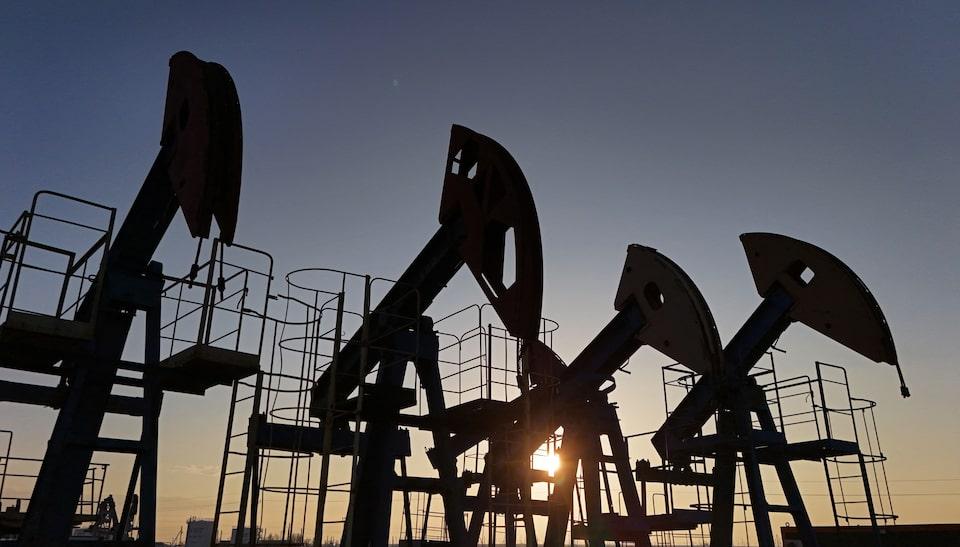
Iran unrest, Russia-Ukraine war raise supply concerns Global inventories rise, oversupply may limit price gains White House to meet oil firms to discuss Venezuela NEW YORK, Jan 9 (Reuters) - Oil prices rose 2% on Friday on growing supply worries linked to intensifying protests in oil-producing Iran and an escalation of attacks in Russia's war in Ukraine. Brent futures settled $1.35, or 2.18%, higher to $63.34 per barrel, while U.S. West Texas Intermediate (WTI) crude was up $1.36, or 2.35%, to $59.12. Sign up here. Both benchmarks climbed more than 3% on Thursday, following two straight days of declines. For the week, Brent rose about 4%, while WTI gained about 3%. "The uprising in Iran is keeping the market on edge," said Phil Flynn, senior analyst with the Price Futures Group. Worries over potential disruption of Iran's oil output grew as the civil unrest in the Middle Eastern country intensified. "Iran protests seem to be gathering momentum, leading the market to worry about disruptions," said Ole Hansen, head of commodity analysis at Saxo Bank. A nationwide internet blackout was reported in Iran on Thursday as protests over economic hardships continued in the capital Tehran, the major cities of Mashhad and Isfahan as well as other areas around the country. The Organization of the Petroleum Exporting Countries pumped 28.40 million barrels per day last month, down 100,000 bpd from November's revised total, a survey showed, with Iran and Venezuela posting the largest declines. Concerns about the spread of the Russia-Ukraine war also added to supply worries. The Russian military said on Friday it had fired its hypersonic Oreshnik missile at targets in Ukraine. The targets included energy infrastructure supporting Ukraine's military-industrial complex, the Russian defense ministry said in a statement. Still, global oil inventories are rising, and oversupply remains the main driver that could cap gains, Haitong Futures said. Unless risks around Iran escalate, the rebound is likely limited and hard to sustain. Meanwhile, the White House was set to meet with oil companies and trading houses Friday afternoon to discuss Venezuelan export deals. U.S. President Donald Trump has demanded that Venezuela give the U.S. full access to its oil sector following Washington's capture of the country's leader Nicolas Maduro on Saturday. Trump administration officials have said the U.S. will control Venezuelan oil sales and revenue indefinitely. Oil major Chevron Corp (CVX.N) , opens new tab, global trading houses Vitol and Trafigura, and other firms are competing for U.S. government deals to market up to 50 million barrels of oil that state-run oil company PDVSA has accumulated in inventories amid a severe oil embargo. "The market will focus on the outcome in the coming days for how the Venezuelan oil in storage will be sold and delivered," said Tina Teng, market strategist at Moomoo ANZ. U.S. oil and gas rig count, an early indicator of future output, fell by two to 544 this week, the lowest since mid-December, energy services firm Baker Hughes (BKR.O) , opens new tab said in its closely followed report on Friday. https://www.reuters.com/business/energy/oil-rises-concerns-about-supply-disruptions-venezuela-iran-increase-2026-01-09/
2026-01-09 07:29
Indian domestic gold prices still near record highs China dealers charge premiums for a second straight week HSBC expects tepid recovery in jewelry demand in 2026, 2027 Jan 9 (Reuters) - Elevated prices further restricted physical gold buying in India this week, while dealers in China hiked premiums over international rates as retail interest renewed after the holiday period. Indian dealers this week charged a premium of up to $6 per ounce over official domestic prices - inclusive of 6% import and 3% sales levies, below last week's premium of up to $15. Sign up here. Domestic gold prices were trading around 138,000 rupees per 10 grams on the day, not far from the record high 140,465 rupees. "Jewellery buying is being badly affected by rising prices. Retail buyers are postponing purchases," said Ashok Jain, proprietor of Mumbai-based gold wholesaler Chenaji Narsinghji. Jewellers were reporting very thin footfall and only marginal demand for coins and bars, said a Mumbai-based bullion dealer with a private bank. In top consumer China, bullion traded at premiums as high as $21 an ounce above the global benchmark spot price this week. That compares with premiums of $3 an ounce charged last week. "Physical gold demand in Asia has shown renewed strength this week, particularly in China and Hong Kong, reflecting tighter supply conditions and a resurgence of retail interest following the holiday period," said Bernard Sin, regional director, Greater China, MKS PAMP. Chinese central bank's "accumulation continues to underpin the market, reinforcing the perception that Chinese demand is not only cyclical but also structural." In Singapore , gold was sold at prices ranging at premiums of $1.20-$2.50 an ounce. In Hong Kong, gold traded at premiums of $2-$3, while in Japan, bullion sold at discounts of $6 to a $1 premium. International benchmark spot gold prices dipped on the day, but were headed for a weekly gain of more than 3%. "We estimate that jewelry demand fell by double-digit levels in 2025 and we suspect there will be a tepid recovery at best in 2026 and 2027," HSBC analyst James Steel said. "With prices above $4,000/oz, demand has eroded further," he added. "Even a marked retracement in prices may not be sufficient to encourage significantly greater demand as the shift towards lighter items or substitution to platinum jewelry is likely to continue." ($1 = 90.1250 Indian rupees) https://www.reuters.com/world/china/asia-gold-elevated-prices-strain-retail-demand-india-china-gold-premiums-widen-2026-01-09/

2026-01-09 06:49
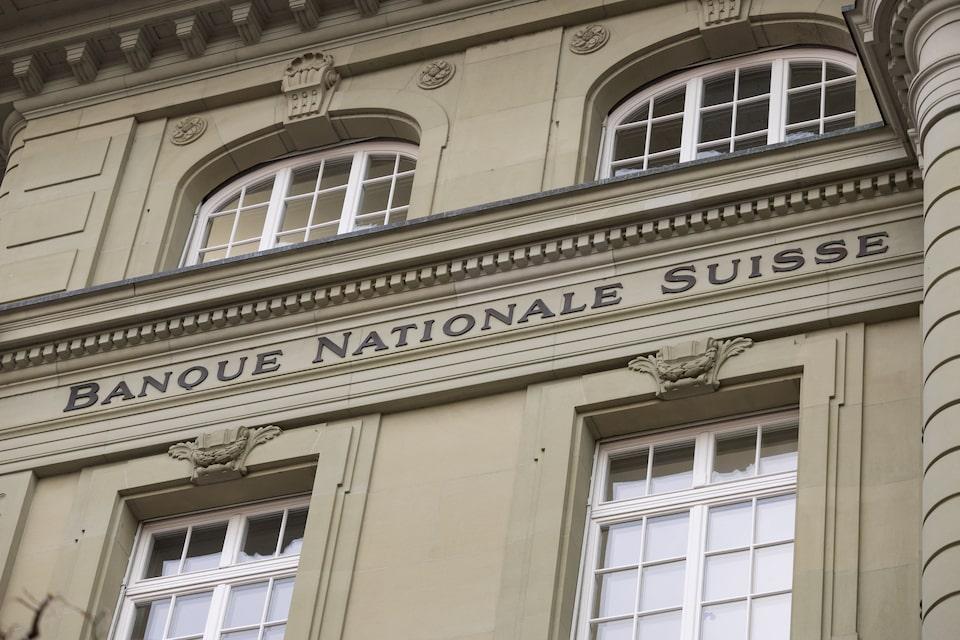
Central bank expects 26 billion franc annual profit Figure boosted by surge in gold prices. SNB posts higher ever annual gold profit ZURICH, Jan 9 (Reuters) - The Swiss National Bank made a profit of around 26 billion Swiss francs ($33 billion) in 2025, the central bank said on Friday, thanks to a sharp increase in gold prices as investors headed for safe-haven assets last year. The provisional figure was down from the record 80.7-billion-franc profit in 2024, but still ranked among the top five in the SNB's 119-year history. Sign up here. The 2025 result was driven by a 36.3-billion-franc valuation gain on its gold holdings, as investors piled into the precious metal to shield against global economic turmoil triggered by U.S. President Donald Trump's tariffs. The SNB's gold profit was its biggest ever, helped by a 64% rise in the metal's price last year, lifting the value of its 1,040 metric tons of reserves. FIRMER FRANC LEADS TO FOREIGN CURRENCY LOSSES The central bank's profits were capped by a 9-billion-franc loss on foreign currency positions as the franc's strength erased valuation gains on equities and dividends. The SNB, which holds 37% of its 764 billion francs in foreign currency investments in U.S. dollar assets, was hit by the dollar's 13% slide against the franc in 2025, analysts said. "The flight to safety had a mixed effect for the SNB in 2025," said UBS economist Alessandro Bee. "On one hand it was helped by a big increase in the price of gold, but on the other hand the Swiss franc – another safe haven - gained in value which turned the gains on foreign equity markets into losses when converted back into francs." Bee estimated that foreign exchange moves ultimately cost the SNB around 55 billion francs last year. The bank also booked a 900-million-franc loss on its Swiss franc positions, mainly due to interest payments to commercial banks with sight deposits. The overall profit was in line with UBS' forecast of 23.5 billion to 28.5 billion francs. ($1 = 0.7996 Swiss francs) https://www.reuters.com/business/finance/gold-price-surge-helps-swiss-national-bank-make-33-billion-profit-2026-01-09/