2025-02-27 00:22
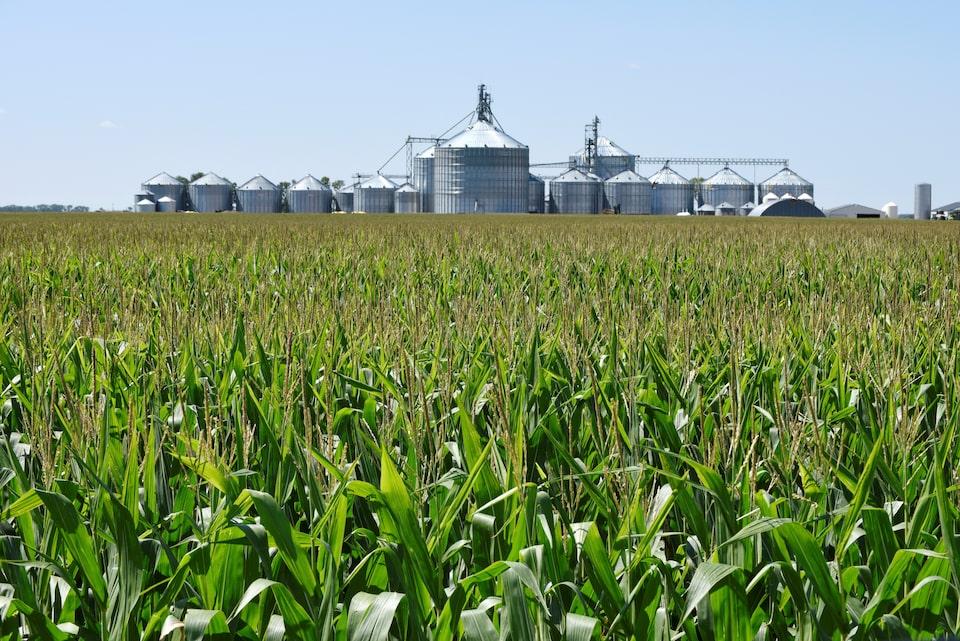
NAPERVILLE, Illinois, Feb 26 (Reuters) - U.S. farmers will undoubtedly plant more corn this year than last, but how much more? Industry analysts are not exactly in consensus. In fact, uncertainty is at a three-year high when it comes to both corn and soybean acreage prospects ahead of the U.S. growing season. The U.S. Department of Agriculture on Thursday will publish unofficial 2025-26 U.S. outlooks ahead of its annual outlook forum. It will be the agency’s second cut at the numbers following its first round last October. The market will more eagerly anticipate the U.S. planting estimates coming on March 31 because those are survey-based, unlike the October and February figures, which are based largely on economic factors. However, USDA’s February numbers provide a stepping stone toward the March planting intentions, and there are some interesting observations to make about past outcomes. SAFER MOVES In a poll collected this week, analysts on average pegged 2025 U.S. corn plantings at 93.6 million acres and soybeans at 84.4 million acres, up 3.3% and down 3% on the year, respectively. Analysts’ corn estimates span 3 million acres with a high of 95 million, and the soybean ones cover 3.4 million acres with a high of 86.5 million. Both ranges are the largest for late February in three years, but considerably smaller than in other recent years like 2019 or 2020. USDA in October tentatively slated 2025 U.S. corn and soybean plantings at 92 million and 85 million acres, respectively. Since then, new-crop Chicago corn prices have gained on new-crop soybeans, with corn’s advantage now at a 14-year high for late February. But USDA tends to be more conservative in its February offering, probably ruling out a 12-year high corn area of 95 million acres for Thursday. On average over the last five Februarys, both the corn and soybean planting estimates have been significantly closer to USDA’s October figure than the eventual March intentions. However, there is a linkage between February and March. Whenever USDA’s February corn estimate represented a significant rise (2% or more) over the previous year’s plantings, the March acres were almost always higher than the February ones. Unfortunately, a similar logic does not work for soybeans, as results have been more mixed. FINDING THE LIMIT USDA’s October and February corn area estimates may not be identical when market dynamics shift during that timeframe. If Thursday’s corn number is above 92 million acres, it will be the second instance in a decade of an October-February corn area increase. The other instance, 2021, is a curious case. The corn acreage rise correctly tipped off the market that U.S. farmers were planning a strong corn area. This was despite a very high soybean-corn price ratio that, opposite of today’s, would have normally been suggestive of relatively lower corn and higher bean plantings. Analysts were burned when the March 2021 planting report revealed shockingly low corn acres, though they were eventually vindicated when final plantings came within 0.3% of their original March guess. USDA had been 1.9% too low with its March 2021 survey, and this rare scenario where analysts had better early instincts than both USDA and U.S. farmers is evidence that strong market leanings at this time of year should not be ignored. But those convictions also must operate within reasonable limits. Total U.S. crop acres have been on the decline in recent years, falling well short of areas seen in the previous decade as farmland is converted to other uses. While no scenario can be completely ruled out, these acreage constraints could make it difficult for corn or any other crop for that matter to reach the loftiest of targets. Karen Braun is a market analyst for Reuters. Views expressed above are her own. Sign up here. https://www.reuters.com/markets/commodities/analysts-gunning-big-us-corn-acreage-could-be-let-down-now-braun-2025-02-27/
2025-02-27 00:10
WELLINGTON, Feb 27 (Reuters) - New Zealand's business confidence rose in February as the economy remains on a path to recovery, an ANZ Bank survey showed on Thursday. The survey's headline measure showed a net 58.4% of respondents expected the economy to improve over the year ahead, versus a 54.4% optimism level in the previous poll in January. A net 45.1% of respondents expected their own businesses to grow in the next 12 months, down from 45.8% last month. "The economy remains on the path to recovery as interest rates fall and our commodity export prices outperform expectations," ANZ chief economist Sharon Zollner said in a note. "It seems clear from a wide range of indicators that the economy returned to positive growth in the last three months of last year." Sign up here. https://www.reuters.com/markets/new-zealand-business-confidence-rises-economy-recovers-anz-2025-02-27/

2025-02-27 00:01
LONDON, Feb 27 (Reuters) - Doctor Copper has been trying to price in the potential for U.S. import tariffs since late January, when President Donald Trump first included the metal on his tariff wish list along with steel and aluminium. The threat looks set to become reality after the launch of a so-called Section 232 investigation, the same national security instrument that paved the way for steel and aluminium tariffs in Trump's first term and their extension in his current term. The tariff trade has so far played out in the arbitrage between the U.S. copper price on the CME and the international price traded on the London Metal Exchange (LME). But that may change as financial arbitrage generates a realignment of flows in the physical market. Indeed, a raid on LME inventory suggests it is already happening. MIND THE WIDENING GAP While the LME copper contract is an international product with delivery locations across all three continents, the CME product is a U.S. customs-cleared contract with only domestic physical delivery points. This makes the arbitrage between the two contracts the perfect forum for trading the potential for U.S. import tariffs. The CME premium over London jumped to more than $1,000 per metric ton when Trump first mentioned copper in the same breath as aluminium and steel as targets for tariffs. With LME copper trading just north of $9,000 per ton, the CME premium implied the market was pricing in a 10% tariff on imports. The transatlantic gap had been steadily narrowing in the absence of any further comments from the Trump administration before Tuesday's bombshell announcement that U.S. import dependency would be the subject of a national security investigation. Unsurprisingly, the U.S. premium has flared wider again in the last 24 hours from around $500 to over $800 per ton for the CME May contract . There is clearly room for a much higher U.S. premium were copper to be subject to the same 25% tariff rate covering both steel and aluminium from next month. LME STOCKS RAID While the CME copper price has shot higher, the LME price is little changed, with three-month metal continuing to track sideways around the $9,500 per ton level. The early-year rally has stalled due to concerns about how Trump's broader tariff policy will impact global trade and growth, particularly in China, the world's largest copper buyer. But there's plenty of turmoil beneath the tranquil surface in the form of time-spread volatility. The benchmark cash-to-three-months spread flipped from a comfortable contango of over $100 per ton to a backwardation of $250 per ton on February 14 and is currently trading close to zero. The Valentine's Day massacre of short position-holders was a one-off liquidity clear-out but the subsequent tighter tone is down to a clear-out of physical stocks held in LME warehouses. Almost 100,000 tons of LME-stored copper have been cancelled over the last four days in preparation for physical load-out. Total on-warrant copper stocks have slumped from over 258,000 tons a week ago to just 161,225 tons. COMPLEX ARBITRAGE It obviously makes a lot of sense to ship as much copper as possible to the United States to reap the rewards of having metal in place before the imposition of tariffs. However, the physical arbitrage is a more complex trade than the financial arbitrage, as the market learned when the CME was squeezed last May. The CME's list of deliverable brands is mostly restricted to domestic, Canadian and South American producers, mirroring the country's refined copper import mix. LME stocks, by contrast, largely comprise either Chinese or Russian brands, which together accounted for 74% of total on-warrant stocks at the end of January. The United States banned the import of Russian metal a year ago, while imports from China are already subject to a blanket 10% duty on Chinese goods. So, rather than LME-stored metal moving directly to the United States, it is more likely that South American shipments will be re-routed and LME metal used to offset the resulting supply chain gaps. It is even possible, as happened last year, that Chinese producers end up delivering metal to LME warehouses in Asia as a high U.S. premium generates a global round-about of metal. COMING HOME U.S. Secretary of Commerce Howard Lutnick has 270 days to prepare the Section 232 report on copper but every indication is that it will be fast-tracked. There also seems little doubt as to what the findings will be, given Lutnick has accused global actors of "attacking our domestic production." "It's time for copper to come home," Lutnick said at Tuesday's press briefing. It's highly unlikely tariffs alone will reverse the tide of copper history, which has seen ever more processing capacity migrate to China. But he's right that there's probably a lot of copper on its way to U.S. home soil. It's just a case of where it comes from and how much market turbulence is caused by getting it there. The opinions expressed here are those of the author, a columnist for Reuters. Sign up here. https://www.reuters.com/markets/commodities/trumps-tariff-threat-presages-turbulent-times-doctor-copper-andy-home-2025-02-26/

2025-02-26 23:53
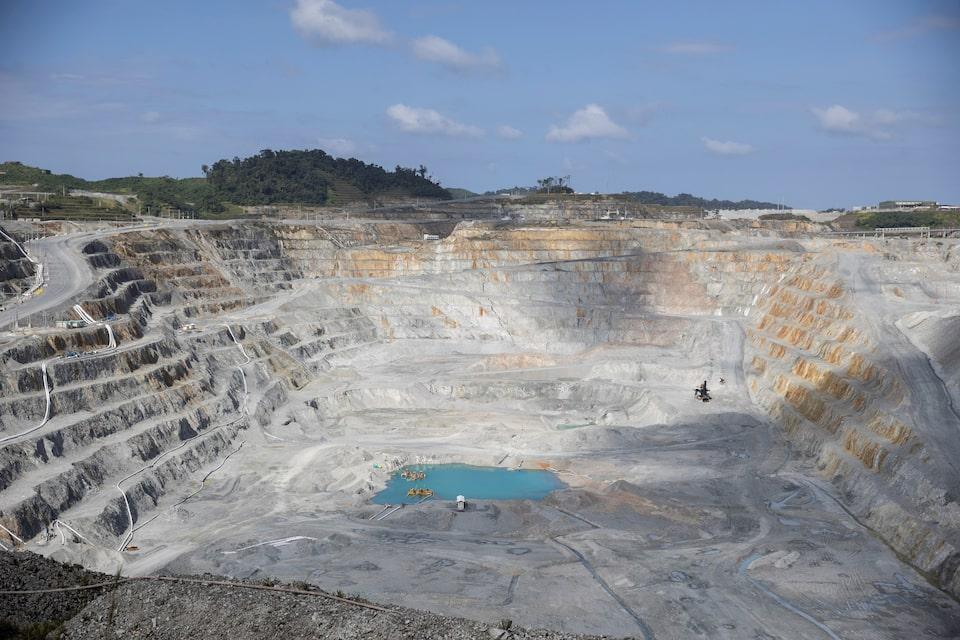
PANAMA CITY, Feb 26 (Reuters) - Panama President Jose Mulino will only take a decision regarding the future of the Cobre Panama mine after he resolves the issue of the country's social security policy, a supplier of the Cobre Panama mine said after a meeting with the Panamanian president. Abel Oliveros was among a group of suppliers who met with Mulino this week to seek a resolution after public protests led to the closure of the mine. The office of the president did not immediately respond to a request for comment. Canadian miner First Quantum's (FM.TO) , opens new tab Cobre Panama mine, once the biggest and newest copper mine in the world, has been closed since 2023 after environmental protests and a court ruling pushed the government to order a closure. The government has yet to decide the future of the mine even after the company filed an arbitration seeking damages of at least $30 billion. First Quantum has said the arbitration is its last option and it would prefer to resolve the dispute and find a way to reopen the mine again. But before a decision on the mine is taken, the government has to approve the preservation and safety management plan that would allow First Quantum to export 120,000 tons of copper concentrate that is stuck in the mine. The release of that copper could have an impact on the global price of copper. When Mulino took charge in 2024, he said his top agenda would be to pass the social security reform , opens new tab and he would make a decision regarding the mine in the first quarter of 2025. The reform needs to go through three rounds of debate in the Panamanian assembly, and so far only one round of debate has taken place. “The Social Security Fund is something he wants to get out of, and after solving that, he will bring up the issue of the mine," Oliver said. "There is still no route to say how they are going to do things, but that's what he told us," On Tuesday, a senior executive of Cobre Panama told Reuters that the company was ready to share the royalties from the sale of copper concentrate with the Panama government. Panama will celebrate a week-long carnival next week where most official work comes to a halt. Sign up here. https://www.reuters.com/markets/commodities/panama-delays-cobre-panama-copper-mine-decision-pending-social-security-reform-2025-02-26/
2025-02-26 23:53
RIO DE JANEIRO, Feb 26 (Reuters) - Brazil's Petrobras (PETR4.SA) , opens new tab posted a net loss of 17 billion reais ($2.8 billion) in its fourth quarter due to non-recurring events, but aims to distribute dividends, the firm said on Wednesday. The company said on a separate filing to the one about its results that it's set to distribute 9.1 billion reais in ordinary dividends. The net loss, which compares with a 31 billion real net profit a year earlier, was mainly affected by exchange rate variation on debts between the state-run oil firm and its subsidiaries abroad, said the firm. According to Petrobras, the financial transactions did not impact its cash flow, and excluding them, the firm would have posted a net profit of 17.7 billion reais in the quarter, still a 53% drop year-on-year. The firm reported a 10% decrease in net revenue at 121.3 billion reais, below estimates from analysts polled by LSEG of 127.8 billion reais. Petrobras' adjusted earnings before interest, depreciation and amortization (EBITDA) stood at 41 billion reais, way below analysts' estimates of 63.6 billion reais, and a 39% decline year-on-year. ($1 = 5.8035 reais) Sign up here. https://www.reuters.com/business/energy/petrobras-posts-fourth-quarter-net-loss-28-billion-due-non-recurring-events-2025-02-26/

2025-02-26 23:38
SAO PAULO, Feb 26 (Reuters) - The world's largest chicken exporter, Brazil's BRF (BRFS3.SA) , opens new tab, posted on Wednesday a fourth-quarter net profit of 868 million reais ($149.33 million), up 15% from the same period a year earlier driven by strong revenue growth in Brazil and abroad. The annual profit was 297.5% higher at 3.7 billion reais, while earnings before interest, tax, depreciation and amortization (EBITDA) rose 155% to 10.5 billion reais for 2024 - both marking historical records. "We ended the year with a record result, with a solid financial position and, above all, the outlook for 2025 is great," CEO Miguel Gularte said. "Our business is at an excellent moment and the company is prepared to take advantage of the opportunities that arise." On Tuesday, a meat lobby said Brazilian chicken export forecasts this year would likely be revised upward as numerous outbreaks of avian influenza reduce supply in competing exporters and importing nations. Brazil never had an avian influenza case on a commercial farm, which could cause animals to be culled and markets to impose bans. However, the country dealt with an outbreak of Newcastle disease, which causes respiratory problems in birds, last year. BRF's EBITDA reached 2.8 billion reais in the fourth quarter, a 47% rise from the prior year, as the firm, which processes chicken and pork, managed to rein in pressure from higher corn prices, management said. In 2024, the company obtained 84 new export authorizations, and has accumulated a total of 175 since 2022. In the international market, BRF recorded record profitability, "driven mainly by its market diversification strategy and increased share of processed products in its portfolio," the company said in a statement. BRF performed well in the Gulf region and in Turkey, where the company maintained leading market shares of 37.5% and 26% respectively. In the domestic market, sales volumes rose significantly on the back of demand for processed foods, BRF said, citing improvements in the local labor market as driving sales. Sign up here. https://www.reuters.com/markets/commodities/brazil-chicken-exporter-brf-posts-higher-q4-profit-record-annual-result-2025-02-26/