2025-02-26 21:45
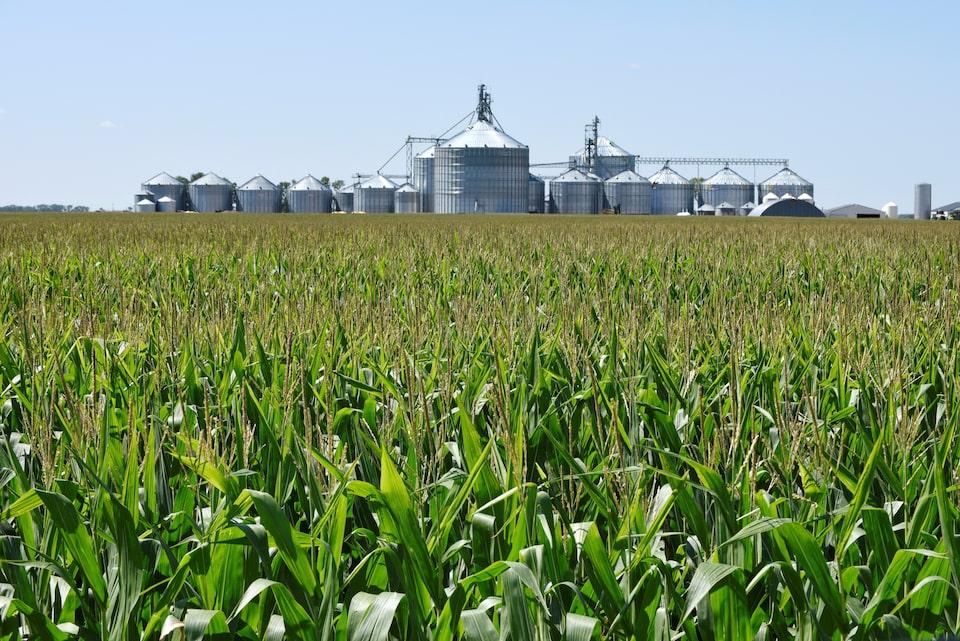
BUENOS AIRES, Feb 26 (Reuters) - Argentina's main oilseed union SOEA is threatening a national strike in soybean processing plants over a salary dispute at exports conglomerate Vicentin, a union leader said on Wednesday. SOEA secretary Martin Morales told Reuters that Vicentin must pay February wages and that the potential work stoppage would also involve other unions. The company, based in Santa Fe province, was once the country's largest marketer of processed soybeans, which for years have been Argentina's most valuable export. Morales added that after a Santa Fe court ruling from last week that found an agreement between Vicentin and its lenders unconstitutional, no new deals have been signed for the rental of its facilities past February. A source close to Vicentin told Reuters that the company warned oilseed workers about a risk of defaulting on payments following the ruling, stating that the processor was working to extend the rental of facilities and reverse the situation. "The company was left in a very delicate situation and the responsibility, among others, lies with the Supreme Court of Santa Fe that made a ridiculous ruling," the source added. According to a SOEA statement on Tuesday, after union leaders met with Vicentin executives, the company said it might not be able to pay worker salaries. While Vicentin has paused its own operations, other firms pay to rent out its facilities. In the past, Vicentin has disclosed that its three plants had a combined daily crushing capacity of 21,000 metric tons along with a storage capacity of more than 1.2 million tons, including source materials and byproducts, according to the company's website data. Since 2020, it has been mired in bankruptcy proceedings after announcing a year earlier a stop to payments worth more than $1 billion. Sign up here. https://www.reuters.com/world/americas/argentine-oilseed-union-threatens-strike-key-soy-processing-plants-2025-02-26/
2025-02-26 21:42
Graphic on Ukraine's mineral deal with the US Ukraine says draft US minerals deal is finalised US President Trump seeks quick end to war Russian-US talks set for Istanbul on Thursday Zelenskiy to visit Washington on Friday KYIV/WASHINGTON, Feb 26 (Reuters) - U.S. President Donald Trump said Volodymyr Zelenskiy would visit Washington on Friday to sign an agreement on rare earth minerals, while the Ukrainian leader said the success of the deal would hinge on those talks and continued U.S. aid. Under the deal, which Ukraine's prime minister has called "preliminary," Kyiv would hand some revenue from its mineral resources to a fund jointly controlled by the U.S. The agreement is central to Ukrainian attempts to win strong support from Trump as he seeks a quick end to Russia's war. U.S.-Russian talks that have so far excluded Kyiv were set to continue on Thursday. Trump said Zelenskiy would sign the agreement on rare earths and other topics during his visit, but suggested Washington would not make far-reaching security guarantees. Kyiv has been seeking U.S. security guarantees as part of the deal, cast by Trump as a payment for U.S. aid to Kyiv during the war. Russia invaded Ukraine in 2022. "I'm not going to make security guarantees beyond - very much. We're going to have Europe do that," Trump said, without elaborating. Zelenskiy, speaking in his nightly video address, said his talks with Trump would stress the importance obtaining security guarantees "to ensure that Russia no longer destroys the lives of other nations" and added that continued U.S. aid was vital. "For me and for all of us in the world, it is important that American aid is not halted. Strength is needed on the path to peace," he said. Last week, the Speaker of the U.S. House of Representatives Mike Johnson said there was "no appetite" for another funding bill for Ukraine. Johnson's comments came a day after Trump called Zelenskiy a "dictator" and warned he must move quickly to secure peace with Russia or risk losing his country. On Wednesday, Zelenskiy said the most important thing was that the current draft agreement did not portray Ukraine as a debtor that would have to pay back hundreds of billions of dollars for past military assistance. "This agreement could be part of future security guarantees... an agreement is an agreement, but we need to understand the broader vision," he said. "This deal could be a great success or it could pass quietly. And the big success depends on our conversation with President Trump." Zelenskiy said it would be a success if the U.S. provides security guarantees for Ukraine, which wants protection from future Russian attacks if a peace deal is reached. Trump has repeatedly claimed the U.S. has sent $350 billion to Ukraine, without explaining the figure. Congress has approved $175 billion in assistance since Russia’s full-scale invasion began three years ago. Fighting has continued during the flurry of diplomacy, with Ukraine frequently coming under attack from Russian missiles and drones in Europe's deadliest conflict since World War Two. QUESTIONS OVER WASHINGTON TRIP Trump said on Tuesday that Zelenskiy wanted to come to Washington on Friday to sign a "very big deal." Trump has been fiercely critical of Zelenskiy as the U.S. president has upended Washington's policy on the war and ended a campaign to isolate Russia. Trump spoke to Russian President Vladimir Putin on February 12 and a Russian-U.S. meeting took place in Saudi Arabia on February 18. Russian Foreign Minister Sergei Lavrov said Russian and U.S. diplomats would meet in Istanbul on Thursday to discuss resolving bilateral disputes that are part of a wider dialogue the sides see as crucial to ending the Ukraine war. Lavrov again ruled out "any options" for European peacekeepers being sent to Ukraine. Trump has said some form of peacekeeping troops are needed in Ukraine if an agreement to end the conflict is struck. "Nobody has asked us about this," Lavrov said during a visit to Qatar. British Prime Minister Keir Starmer is expected to meet Trump on Thursday and on Sunday will host leaders of France, Italy, Germany, Poland and other allies to discuss their response to Trump's moves. European leaders, including Starmer, held an emergency meeting in Paris this month where they were split on the idea of deploying peacekeepers to Ukraine. 'PRELIMINARY' AGREEMENT A copy of a draft agreement, seen by Reuters and dated February 25, said: "The Government of the United States of America supports Ukraine's efforts to obtain security guarantees needed to establish lasting peace." Ukrainian Prime Minister Denys Shmyhal said Washington would commit to supporting Kyiv's efforts to obtain security guarantees under the finalised deal. The Americans offered no security pledges of their own. Shmyhal said Ukraine was giving its approval to the agreed wording so it could be signed and described it as a "preliminary" agreement. "After the Ukrainian president and the U.S. president agree on security guarantees, agree on how we tie this preliminary agreement to security guarantees from the United States for our country, in the presence of (both) presidents, a representative of the Ukrainian government will sign this preliminary agreement," he said. In a comment aimed at calming the fears of worried Ukrainians, Shmyhal said Ukraine would never "sign or consider ... a colonial treaty that did not take into account the interests of the state." Shmyhal, outlining the agreement in televised comments, said Kyiv would contribute 50% of "all proceeds received from the future monetisation of all relevant state-owned natural resource assets and relevant infrastructure." Those proceeds would go into a fund under joint U.S.-Ukrainian control, he said, adding that no decision about the governance of the fund could be taken without Kyiv's agreement. "Already existing deposits, facilities, licenses and rents are not subject to discussion when creating this fund," he added. Sign up here. https://www.reuters.com/world/ukraine-says-it-has-agreed-minerals-deal-with-us-2025-02-26/

2025-02-26 21:36
Feb 26 (Reuters) - U.S. natural gas producer Expand Energy (EXE.O) , opens new tab surpassed fourth-quarter profit estimates on Wednesday following a slight rebound in gas prices and higher production. Natural gas prices rose in the quarter, hitting a two-year peak, helped by an increase in the amount of gas flowing to liquefied natural gas export plants. The prices were further bolstered by forecasts of continuing cold weather in January, which increased heating demand. The Oklahoma City-based company, which acquired Southwestern for $7.4 billion to become the top U.S. independent natural gas producer, reported fourth-quarter production of 6.41 billion cubic feet equivalent per day (bcfepd), almost double from last year. Its average realized gas price rose 1.4% to $2.91 per thousand cubic feet. Expand Energy expects to invest about $2.7 billion for production of about 7.1 bcfepd in the current year, and it plans to operate about 12 rigs. Natural gas producers are expected to benefit from a demand bump for power generation, as artificial intelligence data centers continue to drive up energy demand in the U.S. Expand Energy also said it is increasing its 2025 synergy target by $175 million to about $400 million. Separately, it said it plans to allocate about $500 million to net debt reduction. The natgas producer now expects capital expenditure of about $3 billion in the current year, above Wall Street estimate of $2.7 billion. The company reported adjusted net income of 55 cents per share, for the three months ended December 31, compared with the analysts' average expectation of 48 cents per share, according to data compiled by LSEG. Sign up here. https://www.reuters.com/business/energy/expand-energy-beats-fourth-quarter-profit-estimates-2025-02-26/

2025-02-26 21:34
Feb 26 (Reuters) - U.S. shale producer APA Corp (APA.O) , opens new tab fell short of Wall Street expectations for fourth-quarter profit on Wednesday as weak commodity prices offset a rise in production. The company's shares fell 1.2% to $21.74 after the bell. Brent crude futures fell 3% in 2024 as major consumer China's economy remained weak and the OPEC+ producer group postponed planned supply increases and extended deep output cuts to the end of 2026 in a sign of weak demand. In the fourth quarter, APA produced 488,000 barrels of oil equivalent per day (boepd), higher than the 414,000 boepd a year earlier. The company said that on an average it realized $72.42 for every barrel of oil produced, compared with $81.36 per barrel a year earlier. Meanwhile, average realized prices for natural gas, fell over 24% to $2.20 per thousand cubic feet in the quarter. Houston-based APA said it expects current-year adjusted production to come in at 396,000 boepd, with output in the Permian basin expected to rise slightly from a year earlier. The company, which curtailed production in all quarters of fiscal 2024, said current-year U.S. gas production volumes would benefit from no "price-related curtailments". In January, APA said it curtailed about 23,500 boepd of production in the fourth quarter. In the preceding three quarters, it curtailed production due to persistent weakness in natgas prices in the Permian basin. The company said on Wednesday it would undertake significant cost reduction initiatives aimed at streamlining the business. It is targeting at least $350 million in annual savings by the end of 2027. APA posted an adjusted profit of 79 cents per share for the three months ended December 31, compared with the average analyst estimate of 97 cents, according to data compiled by LSEG. Sign up here. https://www.reuters.com/business/energy/shale-producer-apa-misses-fourth-quarter-profit-estimates-2025-02-26/

2025-02-26 20:56
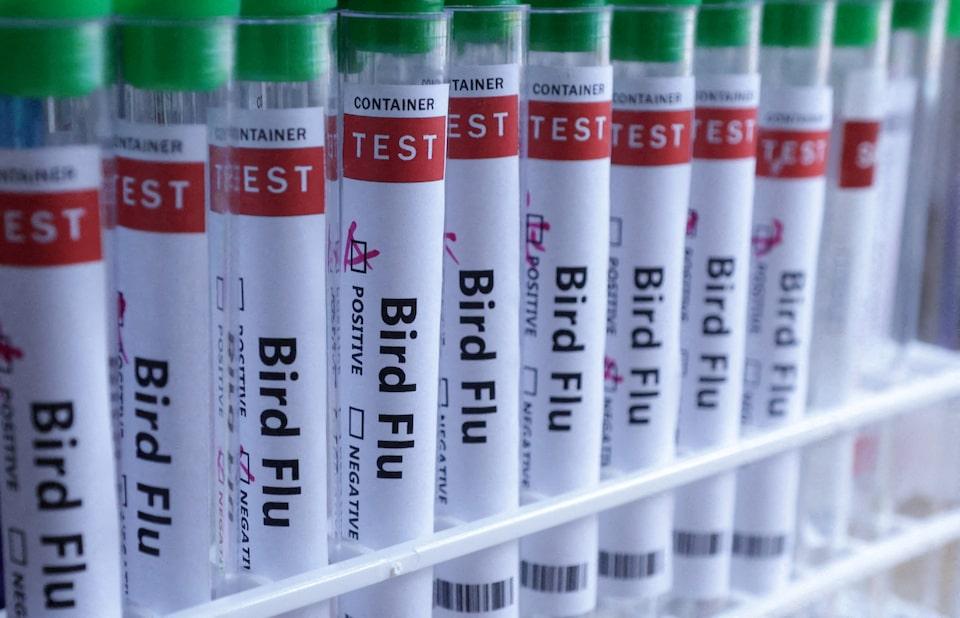
Strike highlights strain on lab technicians and poultry farmers No testing delays expected from strike, UC-Davis reallocates testing Millions of California egg-laying hens wiped out by bird flu Feb 26 (Reuters) - California's only lab that can confirm lethal bird flu in poultry is shifting some testing to facilities out of state due to a workers' strike, but does not expect testing delays, the University of California said on Wednesday. The broader strike of University of California healthcare, research and technical employees is slated to last from Wednesday to Friday as they protest low staffing levels and other concerns, according to the University Professional and Technical Employees union that represents them. Among those striking are workers from the California Animal Health and Food Safety Lab, which detects H5N1 bird flu in poultry and cattle at UC-Davis. Their walkout highlights how the worst-ever U.S. outbreak of bird flu has strained a range of people from lab technicians to poultry farmers and consumers. Millions of egg-laying hens in California have died from bird flu or been culled to contain the virus in recent months, contributing to a national egg shortage that pushed prices to record highs. The most populous state and biggest U.S. milk producer has also been the epicenter of outbreaks in dairy cows. UC-Davis does not expect delays in bird flu testing from the strike, and it had three staff members processing samples in the lab on Wednesday, spokesperson Bill Kisliuk said. The lab is part of a national network of facilities approved by the U.S. Department of Agriculture that are designed to handle surges in testing demand. Some H5N1 testing is being sent to labs in other states that are in the network, including tests for already-infected farms, Kisliuk said. Such tests are considered to be lower priority than new outbreaks in poultry, he added. The university also reallocated testing for additional foreign animal diseases to other labs, Kisliuk said. The lab normally aims to test samples for bird flu within 24 hours, but some sat for a week or more at times last year due to short staffing levels, said Alyssa Laxamana, a lab diagnostician who went on strike. Delayed confirmation of outbreaks could allow the virus to spread to other farms, she said. "It's really stressful, especially because I know how important our work is to California and the food chain," said Laxamana, 25. Since the H5N1 virus was first detected in cattle in California in August, the lab has tested 400 to 2,000 samples per week for bird flu in cows and poultry, according to the university. The university said it added staff to the lab since workers left last year and also uses staff from other labs. USDA said its animal health laboratory network office is in close contact with California's lab and ready to support it if necessary. California's Department of Food and Agriculture does not anticipate the strike will impact operations, spokesperson Steve Lyle said. Sign up here. https://www.reuters.com/world/us/california-lab-sends-some-bird-flu-tests-out-state-during-outbreak-workers-2025-02-26/
2025-02-26 20:50
Corn seen as least-bad option as crop prices languish Soybean prices seen as most vulnerable to Trump tariffs Trade jitters have farmers delaying planting decisions CHICAGO, Feb 26 (Reuters) - Farmers in the U.S. plan to plant more corn and fewer soybeans this spring than they did last year, hoping to eke out a profit and shield themselves from U.S. President Donald Trump’s threatened tariffs, growers and analysts said. "When you look at relative profitability, corn is winning the acreage battle," said Frayne Olson, an agricultural economist with North Dakota State University. Some farmers may be able to earn "a nickel or two" on every bushel of corn, Iowa State University economist Chad Hart said. But for soybeans and other crops, prices have fallen below the cost of production. "Right now, given what cost structures look like," Hart said, "corn has the best pathway to make a little profit in 2025." Planting decisions that are usually finalized in winter help determine the production of corn and soybeans, the top two U.S. cash crops. The grains are primarily used for animal feed, cooking oils and renewable fuels. The U.S. is the world's largest corn exporter and the No. 2 soybean supplier after Brazil. Global corn stockpiles are projected to hit a decade low this year, so a big U.S. crop would help replenish inventories, making more grain available to world buyers. Still, more U.S. corn stays in the country than soybeans, making corn a better hedge against tariffs. A Reuters poll of analysts forecast this week that corn plantings would rise to 93.6 million acres, while soybean plantings would fall to 84.4 million acres. Growers face a third straight year of dwindling crop revenues, making decisions about what and how much to plant much tougher. Farmers are expected to turn a slight profit in 2025, largely because of government disaster relief, even as income from crops is expected to fall for a third straight year, the USDA forecast , opens new tab this month. Prices for corn and soybeans, as well as other major crops such as wheat and cotton, are low enough that American farmers will struggle to turn much of a profit with any of them, economists said. "This year, it's all about what crop is going to lose the least amount of money," said Eric Kroupa, a farmer in central South Dakota who raises corn, soybeans, wheat and cattle. TRADE TENSIONS Trump's tariffs against major buyers of U.S. grain may add to corn's advantage while discouraging soybean plantings. The U.S. exports about 40% of its soybean crop each year but only about 15% of its corn harvest, leaving soybean prices more sensitive to trade disruptions. China is by far the world's top soy buyer, booking more than half of U.S. soybean exports annually, while the customer base for U.S. corn is more varied. Trade tensions with China flared this month after the Trump administration slapped 10% tariffs on all Chinese imports, and Beijing responded , opens new tab by imposing limited tariffs on a smaller set of U.S. goods, excluding agriculture products. Duties against Mexico, another major buyer of U.S. grains, and Canada, a buyer of U.S. grains, meats and food products, are set to take effect on March 4. The skirmishes echoed a trade war with China in 2018, during Trump's first term in office, after which China shifted more of its purchases of soybeans and corn to Brazil. For the current marketing year, the USDA estimates that Brazil will supply 58% of world soybean exports, compared to just 27% for the United States. Farmers often book seed and fertilizer purchases over the winter, well ahead of planting season in April and May. But this year, low prices and uncertainty surrounding trade have prompted at least some growers to delay planting decisions until spring. "A lot of people won't make final decisions right now,” said Nancy Johnson, executive director of the North Dakota Soybean Growers Association. "The tweaking you do on those last acres will be at the last possible moment, based on what’s happening at that moment." CORN PRICE RALLY Corn futures have rallied in recent weeks, signaling profitability for growers. Benchmark Chicago Board of Trade (CBOT) corn futures fell to a four-year low below $4 a bushel in August but climbed back above $5 this month, rising about 9% since January 1. Soybeans , which produce smaller yields, hit a four-year low below $10 a bushel in December, followed by a more modest rebound. David Justison, who grows corn, soybeans and wheat on 9,000 acres in south-central Illinois, scaled back his winter wheat acreage last autumn, freeing up about 300 acres where he will probably plant corn rather than soybeans. "It just looks like it might be a little bit better economics," Justison said. Sign up here. https://www.reuters.com/markets/commodities/american-farmers-plant-more-corn-seeking-best-chance-profits-2025-02-26/