2026-01-09 06:23
SINGAPORE, Jan 9 (Reuters) - The premium for high-sulphur fuel oil in Asia versus the West climbed to its highest in eight months on Friday as traders expect more Venezuelan crude and fuel oil supply to reach the United States in coming months, with less coming to Asia. The front-month East-West 380-cst HSFO swap - a measure of price differences between HSFO in Asia and in the United States and Europe - jumped to more than $27 a barrel, LSEG data showed, a level last hit in May 2025. The value has more than doubled from the start of 2026. Sign up here. A widening of the price spread typically makes it more lucrative for traders to send more fuel oil to Asia. U.S. President Donald Trump seized Venezuelan President Nicolas Maduro last week and said the U.S. will control the South American country's oil sector. Secretary of State Marco Rubio said on Wednesday the U.S. would refine and sell up to 50 million barrels of Venezuelan crude, with the U.S. continuing to seize Venezuelan-linked tankers. BEARISH US OUTLOOK "It will add an additional source of pressure for the U.S. Gulf Coast HSFO market, which has already weakened in the last quarter from higher Canadian heavy crude availability for U.S. sites," said Royston Huan, fuel oil and feedstocks analyst at consultancy Energy Aspects. Traders bid up the East-West spread this week as U.S. markets have turned bearish at the prospect of more high-sulphur Venezuelan crude and fuel oil diverted to U.S. refineries, reducing supply for Asia, said an analyst at a U.S. refiner. VOLATILITY IN ASIA The uncertain outlook for Venezuelan oil supply in Asia has also created volatility in HSFO forward prices. Singapore's balance-January/February spread flipped into backwardation on Wednesday, before swinging back into contango on Thursday. Backwardation refers to a market structure where prompt prices are higher than future ones, indicating tighter immediate supply, while contango is the reverse. The spread flipped into backwardation again in early trade on Friday, according to market sources and LSEG data. For now, fuel oil price gains in Asia are tempered by ample inventories stored in onshore tanks and onboard ships, some traders said. Chinese independent refiners have been a key outlet for Venezuelan crude and fuel oil due to Western sanctions. "The loss of cheap Venezuelan feedstock will weigh on refiners' profitability, forcing them to either scale back on refining run rates or source alternative residual feedstocks," said Emril Jamil, senior oil analyst at LSEG. https://www.reuters.com/business/energy/asia-fuel-oil-premiums-over-west-soar-more-venezuelan-oil-divert-us-2026-01-09/

2026-01-09 06:18
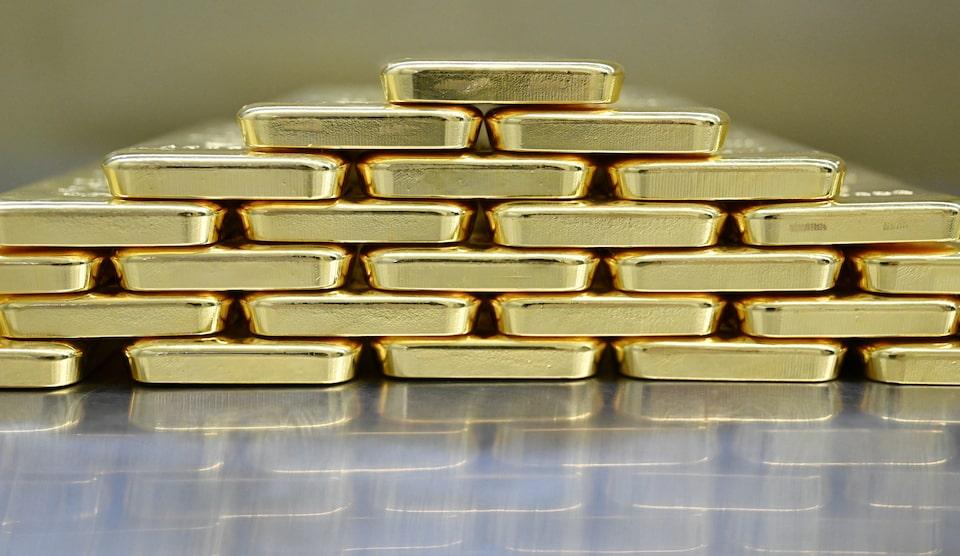
US job growth slows in December, while unemployment rate eases US Supreme Court ruling on tariffs expected on January 14 Metal Focus sees gold hitting new record highs above $5,000/oz BofA raises 2026 average price forecasts for platinum, palladium Jan 9 (Reuters) - Gold prices rose on Friday and were on track for a weekly gain, as investors weighed weaker-than-expected U.S. payrolls data along with broader policy and geopolitical uncertainty. Spot gold was up 0.5% at $4,496.09 per ounce as of 01:31 p.m. ET (1618 GMT), and was set for about 3.9% weekly gain. Bullion hit a record high of $4,549.71 on December 26. Sign up here. U.S. gold futures for February delivery settled 0.9% higher at $4,500.90. U.S. nonfarm payrolls in December rose by 50,000, missing expectations of a 60,000 gain, while the unemployment rate eased to 4.4%, below forecasts of 4.5%. "Payrolls are showing us a poor job creation environment. Potentially more (geopolitical tension), somewhat higher oil prices, which are inflationary, uncertainty and an easing Fed — all a combination for precious metals," said Bart Melek, global head of commodity strategy at TD Securities. Market participants continued to factor in at least two Federal Reserve rate cuts this year, a backdrop historically favorable for gold. Geopolitical tensions remained elevated amid intensifying unrest in Iran, continued fighting in Russia's war in Ukraine, the U.S. capture of Venezuela's President Nicolas Maduro, and Washington's renewed signals over taking control of Greenland. Metals Focus projected gold prices could hit fresh record highs above $5,000 in 2026, citing de-dollarization trends and geopolitical risks. Retail demand for gold in India remained subdued due to elevated prices, while gold premiums in China widened. Meanwhile, uncertainty over tariffs persisted, as the U.S. Supreme Court is not expected to issue a ruling on Friday in a major case testing the legality of President Donald Trump's sweeping global tariffs, with decisions now expected on January 14. Spot silver gained 3.5% to $79.56 per ounce and was on track to log an about 9.7% weekly rise. Spot platinum rose 0.8% to $2,284.50 per ounce. Palladium climbed 1.6% to $1,814.93 per ounce. Both metals were set for weekly gains as well. Bank of America raised its 2026 average platinum and palladium price forecasts, citing dislocations from trade disputes amid physical market tightness, while China's imports add support. https://www.reuters.com/world/india/gold-falls-commodity-index-adjustments-weigh-ahead-us-jobs-data-2026-01-09/
2026-01-09 06:08
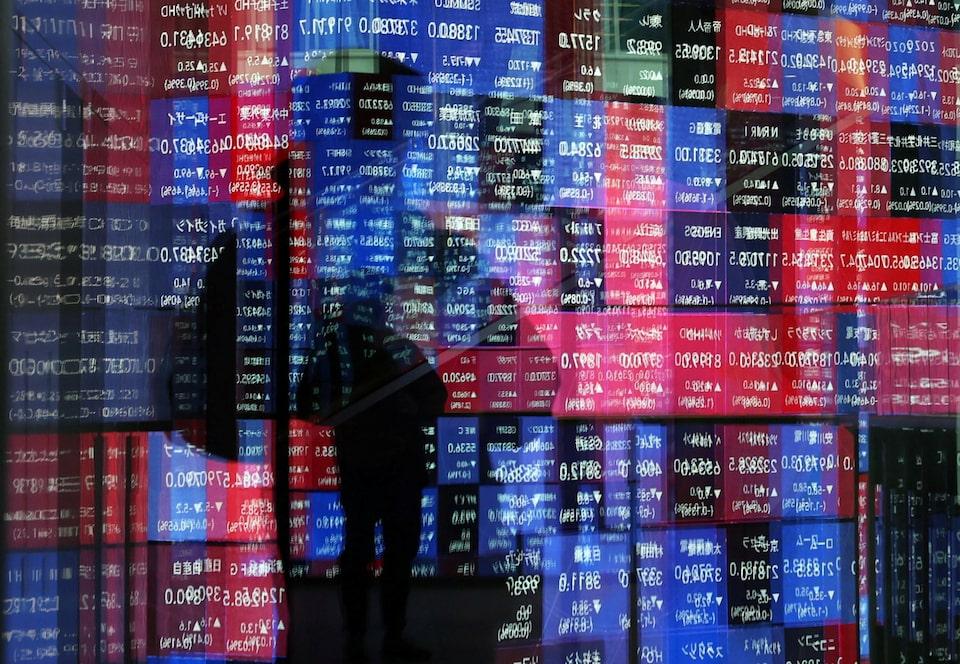
S&P 500 reaches record high close December nonfarm payrolls rise less than forecast Dollar initially pares gains after data European stocks end at record high NEW YORK, Jan 9 (Reuters) - Major stock indexes jumped to record highs and the dollar was also up on Friday after data showed the U.S. economy created fewer jobs than expected in December, which did little to change rate cut expectations from the Federal Reserve this year. The S&P 500, Dow and the STOXX 600 notched record high closes. Chip stocks rose and helped to boost the S&P 500, with Intel (INTC.O) , opens new tab gaining 10.8% after U.S. President Donald Trump said he had a "great meeting" with the chipmaker's Chief Executive Officer, Lip-Bu Tan. Broadcom (AVGO.O) , opens new tab rose 3.8%. Sign up here. The Bureau of Labor Statistics monthly report showed 50,000 workers were added to nonfarm payrolls in December, compared with expectations in a Reuters poll for a rise of 60,000, just above November's downwardly revised increase of 56,000. The unemployment rate eased, as expected, to 4.4%. "Payrolls were a little bit light relative to consensus, but still fairly strong numbers," said Tim Ghriskey, senior portfolio strategist at Ingalls & Snyder in New York. "We are back to normal in terms of economic reporting, so that's a bit of a relief for everyone." Before now, the release of U.S. economic data had been delayed because of the long federal government shutdown. Stock market gains this week came despite increased geopolitical tensions sparked by U.S. forces capturing Venezuelan leader Nicolas Maduro in a raid on its capital January 3. The Dow Jones Industrial Average (.DJI) , opens new tab rose 237.96 points, or 0.48%, to 49,504.07, the S&P 500 (.SPX) , opens new tab rose 44.82 points, or 0.65%, to 6,966.28 and the Nasdaq Composite (.IXIC) , opens new tab rose 191.33 points, or 0.82%, to 23,671.35. All three indexes posted gains in the first full trading week of 2026, driven by increases in materials, industrials and other sectors that have lagged technology stocks in recent years. MSCI's gauge of stocks across the globe (.MIWD00000PUS) , opens new tab was up 5.42 points, or 0.53%, at 1,034.87, and hit a record intraday high. European shares ended at a record high. A jump in Glencore (GLEN.L) , opens new tab helped put the STOXX 600 on its longest weekly winning streak since May. The pan-European STOXX 600 (.STOXX) , opens new tab index rose 0.97%. DOLLAR, TWO-YEAR YIELDS UP After the jobs report the dollar initially gave up almost all the day's gains versus a basket of major currencies , having risen by nearly 0.2% earlier. The dollar index , which measures the greenback against a basket of currencies including the yen and the euro, was last up 0.26% at 99.13. Interest rate sensitive two-year Treasury yields were higher after the data, while 10-year yields were last down slightly. The 2-year note yield, which typically moves in step with interest rate expectations for the Fed, rose 5 basis points to 3.538%, from 3.488% late on Thursday. The yield on benchmark U.S. 10-year notes fell 1.2 basis points to 4.171%. In commodities, crude oil ended sharply higher. Brent futures rose $1.35, or 2.18%, to settle at $63.34 per barrel, while U.S. West Texas Intermediate (WTI) crude gained $1.36, or 2.35%, to $59.12. Investors have become more convinced that production in Venezuela, even under U.S. control, may not rise meaningfully for some time. Copper prices rose, extending recent gains on renewed bets on a future demand boost, while aluminium hit its highest since April 2022. TRUMP'S TARIFFS Investors had been bracing for a possible U.S. Supreme Court ruling on the legality of Trump's tariffs. But the court is expected to issue its next rulings on Jan. 14. The court indicated on its website on Friday that it could release decisions in argued cases when the justices take the bench during a scheduled sitting next Wednesday. https://www.reuters.com/world/china/global-markets-wrapup-1-2026-01-09/
2026-01-09 06:06
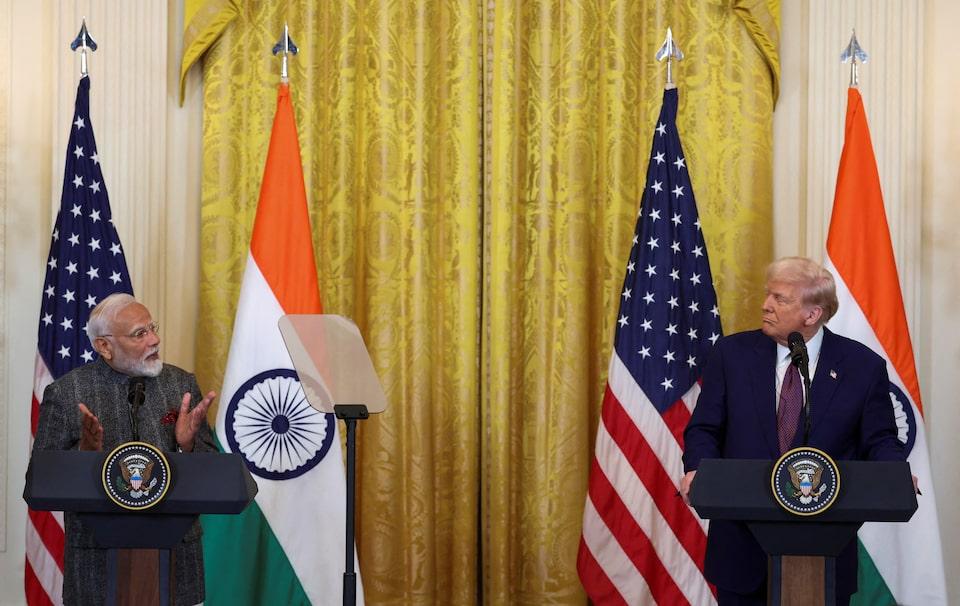
NEW DELHI, Jan 9 (Reuters) - India's trade pact with the United States stalled last year because Prime Minister Narendra Modi did not make a telephone call to President Donald Trump ahead of a deal, Commerce Secretary Howard Lutnick said on Friday, giving an account of events that New Delhi has denied. Trade talks between India and the U.S. fell apart and Trump then doubled tariffs on Indian goods in August to 50%, the world's highest rate, including a levy of 25% in retaliation for India's purchases of Russian oil. Sign up here. "It's all set up and you have got to have Modi call the President. And they were uncomfortable doing it," Lutnick said in an interview on the All-In podcast, a U.S. show by four venture capitalists that focuses on business and technology. "So Modi didn't call." Responding to Lutnick's remarks, India's foreign ministry said the "characterisation of these discussions in the reported remarks is not accurate." The two nations have been close to a deal on several occasions since the agreement to negotiate in February last year, Indian foreign ministry spokesperson Randhir Jaiswal told reporters at a media briefing on Friday. "Incidentally, Prime Minister and President Trump have also spoken on phone on eight occasions during 2025, covering different aspects of our wide-ranging partnership.” Lutnick's comments came after Trump stepped up the pressure for talks with a warning this week that tariffs could rise further unless India curbs its Russian oil imports. The failure to reach a deal has pushed the Indian rupee to a record low and spooked investors waiting for progress in two-way negotiations. India is still seeking a tariff rate between Washington's offers to Britain and Vietnam that had formerly been agreed but the offer has expired, Lutnick added. India's trade ministry did not respond to an e-mailed request for comment on Lutnick's remarks. New Delhi and Washington were very close to a trade deal last year but a communication breakdown led to the collapse of any potential pact, Reuters reported. It cited an Indian government official involved in the talks as saying that Modi could not have called Trump, for fear that a one-sided conversation would put him on the spot. https://www.reuters.com/world/india/india-us-trade-deal-stalled-after-modi-did-not-call-trump-lutnick-says-2026-01-09/
2026-01-09 05:37
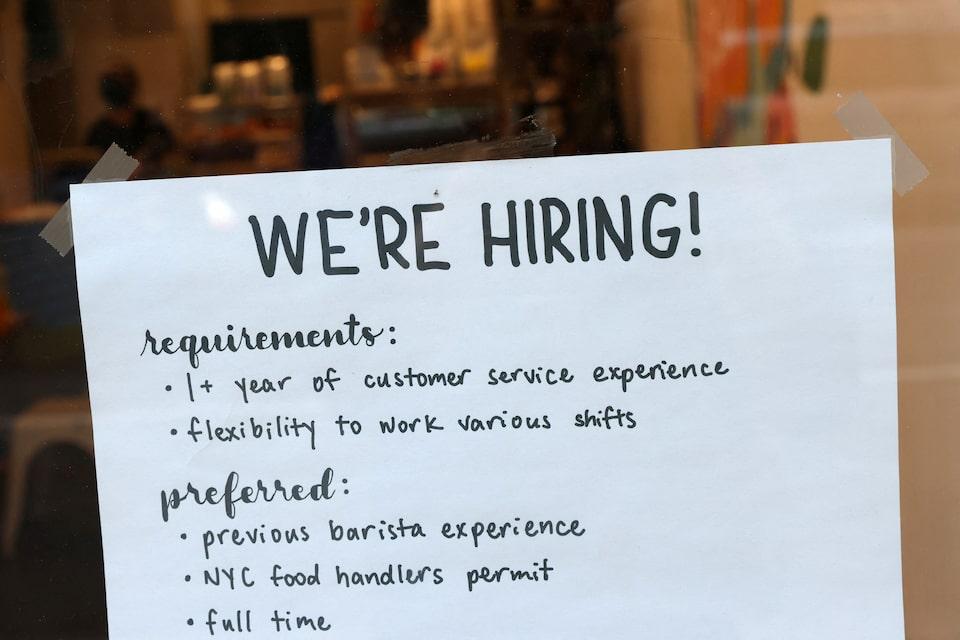
A look at the day ahead in European and global markets from Ankur Banerjee Investors are holding their nerve heading into a U.S. jobs report that will likely show a labour market that is sluggish but not crumbling while markets brace for a Supreme Court ruling on the legality of President Donald Trump's global tariff. Sign up here. The prospect of the ruling, which could come as early as Friday, has left markets in a cautious mood, with the U.S. dollar standing tall and stocks struggling for direction. Geopolitical tensions though are keeping oil prices at their highest in two weeks, while global defence stocks were buoyed by Trump's call for a huge increase in defence spending. The court ruling will likely steal the limelight and risks sparking a severe bout of volatility after the sweeping tariffs jolted global markets last year. All the same, it's notable that it did not take too long for markets to shrug off the initial tariff shock and take risk assets higher. Anticipation that the court will strike down the tariffs rose after the November arguments in the case when conservative and liberal justices alike voiced scepticism about whether the International Emergency Economic Powers Act of 1977 gave Trump the authority to levy the duties. And so, a potential fight over securing perhaps $150 billion in refunds from the U.S. government for duties already paid by importers looms. There is also the question of what happens to the many trade deals agreed with much fanfare last year. But before that markets will get the clearest snapshot of the U.S. labour market from December's employment report, although it may not be enough to allay investor worries about where interest rates are headed this year. Markets are pricing in two cuts for the year while a deeply divided Federal Reserve indicated just one cut. Traders broadly expect the Fed to stand pat on rates later this month. The report is expected to shed light on how the labour market remained stuck in what economists and policymakers have called a "no hire, no fire" mode. On the corporate news front, a mega deal is brewing after Rio Tinto (RIO.L) , opens new tab and Glencore (GLEN.L) , opens new tab said they were in talks for an agreement that could create the world's largest mining company with a combined market value of nearly $207 billion. The companies said the expectation was it would involve an all-share buyout of "some or all" of Glencore by Rio Tinto, although very few details were disclosed. Key developments that could influence markets on Friday: Economic events: German trade data for November, Euro zone retail sales data for November https://www.reuters.com/world/china/global-markets-view-europe-2026-01-09/
2026-01-09 05:07
TOKYO, Jan 9 (Reuters) - Japan's weather bureau said on Friday the La Nina phenomenon was unlikely to occur this Northern Hemisphere winter and there was a 40% chance of the El Nino phenomenon happening during March-July. A La Nina weather event is characterised by unusually cold ocean temperatures in the equatorial Pacific Ocean region and is also linked to floods and drought. Sign up here. https://www.reuters.com/business/environment/japan-weather-bureau-says-la-nina-unlikely-this-winter-2026-01-09/