2025-02-26 06:05
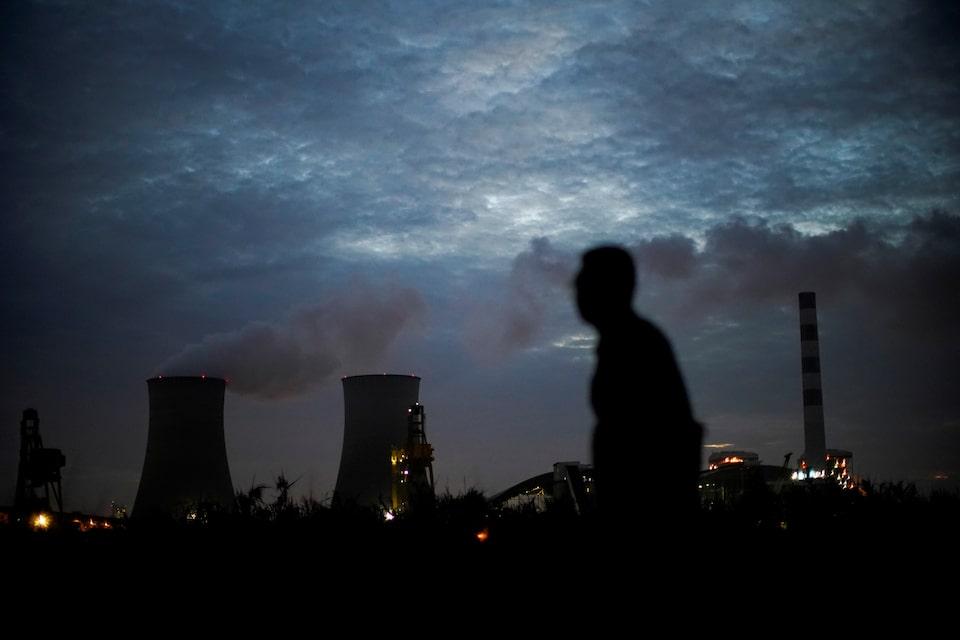
LITTLETON, Colorado, Feb 26 (Reuters) - Natural gas producers, exporters and trading firms are banking on Asia - the world's largest and fastest-growing power market - to drive gas demand growth over the coming decades. But while overall gas consumption in Asia will certainly expand from current levels, gas peddlers may need to temper their optimism in light of growing coal-fired capacity throughout the region. Asia's largest economies have three times more coal-fired power capacity under construction than gas-fired capacity, according to Global Energy Monitor (GEM), and already rely on coal for roughly 45% of regional power generation. Large economies in Asia - including China, India, Japan and Vietnam - are also developing far more solar, wind and hydropower capacity than gas-fired capacity, as part of an ongoing drive to produce clean home-grown energy. This combination of steep growth in coal capacity alongside record clean power output may serve to limit the growth of gas use across the region, especially if global gas prices remain higher and more volatile than alternate power sources. POWER PIPELINE Across 10 of Asia's largest economies - China, India, Japan, South Korea, Indonesia, Vietnam, Thailand, Taiwan, the Philippines and Pakistan - there is just over 1 million megawatts (MW) of new power capacity under construction, according to GEM. Of that total, solar farms account for the largest share (26%, or 270,000 MW) while new coal-fired capacity makes up the second largest share (24%), with just under 250,000 MW. Wind farms and hydropower plants account for a further 20% each, while gas-fired power plants account for a 7% share, at around 70,000 MW. Nuclear plants account for a further 4%, while bioenergy and geothermal facilities each account for less than 1%. COAL COMFORT Coal's outsized share of Asia's thermal power footprint is driven by several factors. Coal-fired plants directly compete with gas in networks that can adjust output of both to manage system requirements. In Europe and North America, coal generation has lost ground to gas due to pollution reduction efforts and as increasingly dense gas distribution networks have enabled the cost-effective adoption of gas power in most areas. In contrast, coal has accounted for over half of all of Asia's utility-scale power production for over two decades, and has generated record amounts of electricity in each of the past four years, data from energy think tank Ember shows. That deep coal penetration has been facilitated by a rapid and dense build-out of coal distribution and storage channels that have ensured power firms have had a steady supply of relatively cheap coal as needed. Gas distribution and storage networks, however, remain sparse in Asia, and are often more expensive to build than the comparable coal system due to the need to keep gas under pressure in specially built tanks and pipelines. That has resulted in most Asian power firms opting to expand coal output over building new gas plants, especially where utilities are under pressure to add output as quickly and cheaply as possible. In China, the world's largest power consumer and coal user, an expansion in gas-fired power generation is underway amid efforts to reduce pollution from coal use. But even there, there is nearly five times more new coal capacity under construction than gas capacity, which will serve to keep coal as the primary power source for several more decades. SLOW UPTAKE Beyond the cost of constructing gas power plants, pipelines and storage systems, there are other issues that have stalled the widespread uptake of gas power in Asia. One major concern for power system operators is the concentration of gas production among just three countries - the United States, Russia and Iran - which account for nearly half of global output, according to the Energy Institute. Russia and Iran have both been subject to international sanctions in recent years that have rendered the purchase or trade of their products difficult for small utilities. Meanwhile, the U.S. - the world's top gas producer - looks set to wield tariffs as part of trade negotiations under President Trump's second term, which raises the risk of reprisals in Asia that could render U.S. goods off limits. That means nearly half of the world's gas supply stems from countries that could be viewed as potentially unreliable trade partners, and could expose gas importers to costly supply chain disruptions. Cross-border gas pipelines are also under regular threat of severance or sabotage during political disputes, while the cost of shipping gas via sea is often multiple times more than a comparably-sized cargo of coal. Finally, around 80% of global coal supplies come from Asia, which means that Asian power producers are usually able to replenish stocks at short notice from numerous suppliers. That proximity to competing vendors helps keep coal prices in check during any localised supply disruptions, and prevents power firms from needing to build up costly inventories. That in turn means coal will likely remain the primary power source across Asia, even as efforts to boost gas exports from other regions steadily climbs over the coming years. (The opinions expressed here are those of the author, a market analyst for Reuters.) Sign up here. https://www.reuters.com/markets/commodities/gas-bulls-should-beware-coals-chokehold-asias-power-sector-maguire-2025-02-26/
2025-02-26 05:46
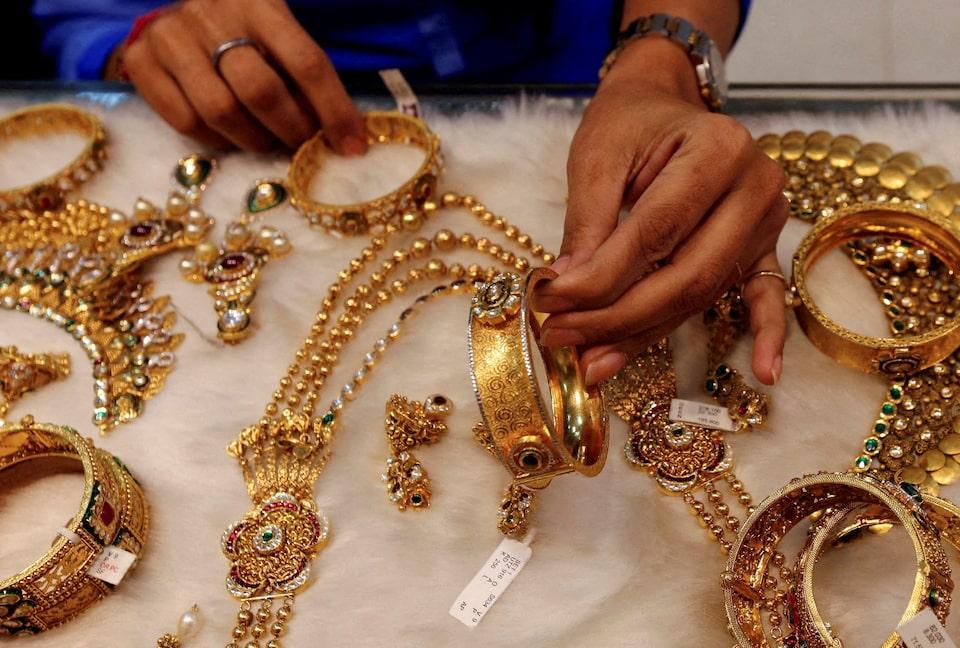
Trump orders new tariff probe into U.S. copper imports U.S. PCE data due on Friday Central bank behaviour will be key to gold's fortunes - analyst Feb 26 (Reuters) - Gold prices held steady on Wednesday following a 2% decline in the previous session, while investors focused on U.S. President Donald Trump's tariff plans, which have raised concerns about a trade war. Spot gold was little changed at $2,912.69 an ounce, by 1120 GMT, after hitting a more than one-week low on Tuesday. Trump's trade policies, seen as inflationary and with potential to spark tiffs with trade partners, saw safe-haven gold hitting a record high of $2,956.15 on Monday. U.S. gold futures rose 0.3% to $2,926.70. "The sharp correction in gold followed equities and bitcoin lower, but the bullion market saw some good bargain-hunting on the lows and unlike other asset classes, recovered its composure," independent analyst Ross Norman said. The dip in prices is "likely to stimulate good physical offtake and provide an entry point for those that may have missed the bull run," he added. Wall Street's main indexes touched a one-month low on Tuesday and bitcoin slumped 5.6%. Trump opened yet another front on Tuesday in his assault on global trade norms, ordering a probe into potential new tariffs on copper imports. Rising price pressures due to tariffs could force the Federal Reserve to keep interest rates higher. Bullion is a preferred hedge against uncertainty and inflation, but higher rates can reduce its appeal as it yields no interest. Focus was also on the U.S. Personal Consumption Expenditures (PCE) report, the Fed's preferred inflation gauge, due on Friday. The recent gains, which took gold within striking distance of $3,000, appeared to run out of steam, suggesting some traders had taken the opportunity to lock in profits, Frank Watson, market analyst at Kinesis Money, said in a note. "Central bank behaviour will be key to gold's fortunes, as they have been an important element for demand in recent years." Spot silver gained 0.1% to $31.77, platinum rose 0.9% to $974.86 and palladium added 1.6% to $942.29. Sign up here. https://www.reuters.com/markets/commodities/gold-inches-higher-tariff-uncertainty-boosts-safe-haven-demand-2025-02-26/
2025-02-26 05:41
A look at the day ahead in European and global markets from Rae Wee Quarterly earnings from AI darling Nvidia (NVDA.O) , opens new tab is Wednesday's marquee event for markets, with much riding on the chipmaker to deliver results that could placate investors who are questioning hefty spending in artificial intelligence. Investors have begun second-guessing U.S. tech giants since Chinese startup DeepSeek rattled the industry with AI technology ostensibly cheaper yet as capable as that of early leaders. Market estimates have Nvidia's fourth-quarter sales at $38.5 billion and first-quarter guidance around $42.5 billion. As usual, options point to a share price move of around 8% in either direction should the results surprise. "This earnings report isn't just about Nvidia... It's about whether the AI revolution can maintain its breakneck pace," said Saxo's global head of investment strategy, Jacob Falkencrone. Alleviating concern of DeepSeek triggering a slide in AI chip demand, sources have told Reuters of Chinese companies increasing orders for Nvidia's H20 chip due to booming demand for low-cost AI models. DeepSeek itself is accelerating the launch of the successor to the R1 model that put the startup on the map last month, three people familiar with the company told Reuters. R2 is likely to worry the U.S. government which regards AI leadership as a national priority. That country's technology war with China is set to intensify with the administration of President Donald Trump planning tougher restrictions on semiconductor exports to China. Trump has already signed a memorandum restricting Chinese investment in the U.S. in strategic areas. Over in China, a government official on Wednesday said Taiwan sought to give the island's semiconductor industry to the U.S. as a "souvenir" for use as leverage when seeking support from Washington. Still, investors seemed to have brushed off escalating tension for now. The share prices of Hong Kong-listed companies (.HSI) , opens new tab jumped 2.5% on Wednesday with technology stocks (.HSTECH) , opens new tab surging 3.7%, having declined in the previous session. Shares in mainland China similarly rose. Elsewhere, U.S. Treasury yields rebounded from their weakest level in months after the Republican-controlled U.S. House of Representatives advanced Trump's $4.5 trillion tax-cut plan, giving his 2025 priorities a major boost. A darkening economic outlook continued to linger in investor minds as they increased bets of more interest rate cuts this year from the Federal Reserve. Fed funds futures point to more than 50 basis points worth of easing priced in by year-end, up from about 40 bps a week ago. That in turn undermined the dollar on Wednesday. Key developments that could influence markets on Wednesday: Sign up here. https://www.reuters.com/markets/europe/global-markets-view-europe-2025-02-26/

2025-02-26 05:29
JAKARTA, Feb 26 (Reuters) - Indonesia's President Prabowo Subianto has decided not to change the state power utility's monopoly on the electricity market despite calls for liberalisation to encourage renewable energy investment, a close adviser said on Wednesday. Hashim Djojohadikusumo, the president's brother and adviser, said Prabowo has decided not to change PLN's monopoly despite requests from some conglomerates. "The government continues to believe that the state must be in control, so the role of PLN must remain ... As long as he (Prabowo) is president, the state remains the controller," Hashim told an economic forum. A proposal to break up the monopoly of state-run Perusahaan Listrik Negara (PLN) was considered during last year's election campaign, to accelerate the adoption of renewables. Some lawmakers also included a proposal for "power wheeling" - allowing renewable producers to wheel electricity onto PLN's grid and to sell directly to customers - in a draft bill on renewable energy that parliament had yet to discuss in depth. PLN is currently the sole seller to most customers, managing power plants and also buying from independent producers. "If we open up the market, not that we're anti foreigners, we welcome foreigners, but power wheeling ... could turn this into the Wild West and our electricity sector will be dominated by non-Indonesians," Hashim said. The decision should not deter foreign investment, Hashim added, citing interest from renewable companies from Qatar and Abu Dhabi. Some companies see renewables investment in Indonesia as unattractive due to competition with cheaper coal power and they have to wait for purchase from PLN as the only buyer, analysts have said. They argued allowing direct sales from independent producers to customers willing to pay more could spur investment. Indonesia has pledged to phase out coal-fired power plants. It wants to increase the share of renewable energy over the next 10 years by adding more solar, hydro and geothermal capacity, according to PLN's power supply plan which is still being finalized. Sign up here. https://www.reuters.com/business/energy/indonesia-will-keep-state-utilitys-monopoly-electricity-presidents-aide-says-2025-02-26/

2025-02-26 05:04
BRUSSELS, Feb 26 (Reuters) - Plans due to be published by the European Commission on Wednesday could shave 45 billion euros ($47.3 billion) off the EU's fossil fuel import bill this year, according to the EU executive's analysis. The Commission is due to propose a raft of measures to support European industries struggling with weak demand, cheap imports and higher energy costs than those in the U.S. and China. A draft of the EU energy measures, previously reported by Reuters, included proposals to speed up permits for renewable energy projects, change how energy tariffs are set, and increase state aid for clean industries and more flexible power generation. Taken together, the Commission's analysis indicated the measures could lower the EU's bill for imported oil and gas by 45 billion euros in 2025, and rise to an annual saving of 130 billion euros by 2030. Most of the savings would come from a faster expansion of renewable energy and increased energy savings, to curb countries' demand for oil and gas. "They (renewable energy projects) also entail a lot of investments, that goes without saying. But we have to remember that it's also expensive not to do anything," EU Energy Commissioner Dan Jorgensen told Reuters in an interview. "So we save money by not buying fuel from outside," he said. The Commission cannot force member states to take up all of the plans - including its recommendation to quickly cut national taxes that inflate energy bills. But Jorgensen said if governments are serious about curbing energy prices, they would need to step up. "That means implementing rules and regulations that have already been made and exploit the possibilities that they actually have for lowering the prices," he said. Europe's energy purchases have fluctuated in recent years. The EU's spending on imported fossil fuels plunged to 163 billion euros in 2020 during COVID-19 lockdowns, then peaked at 604 billion euros in 2022 after Russia cut gas deliveries and prices spiked, according to Commission data. Europe plans to ultimately curb its gas use to meet climate targets. But it also has the challenge of high energy prices and threats from U.S. President Donald Trump, who before taking office in January warned the EU to buy more U.S. oil and gas or face tariffs. ($1 = 0.9510 euros) Sign up here. https://www.reuters.com/business/energy/eu-says-energy-plan-could-cut-45-billion-euros-off-fossil-fuel-import-bill-2025-02-26/

2025-02-26 03:31
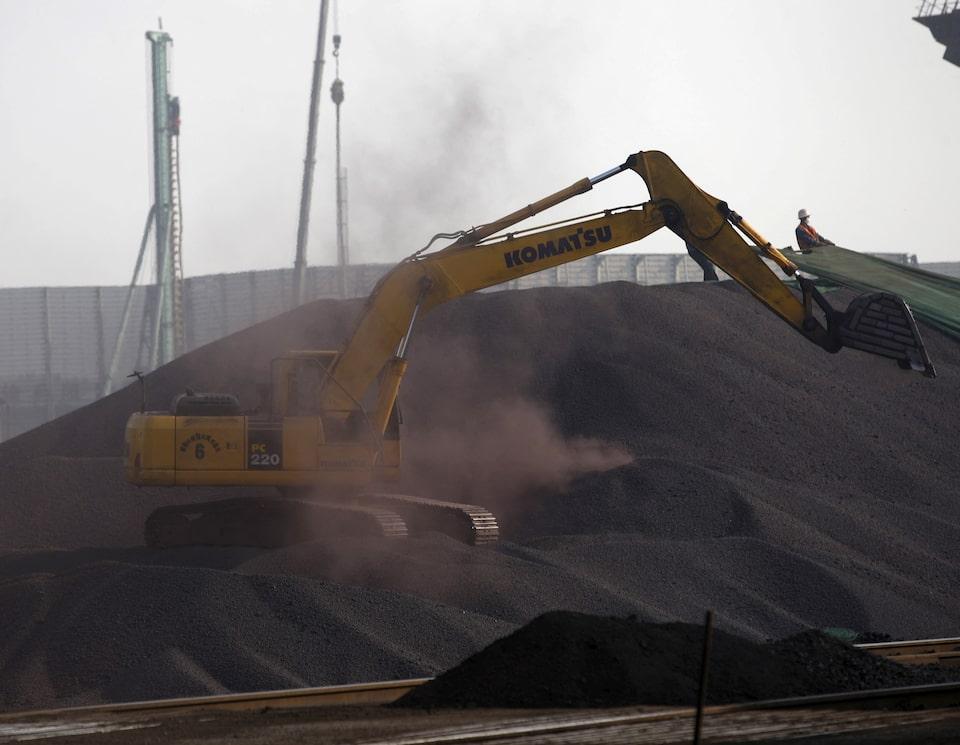
SINGAPORE, Feb 26 (Reuters) - Iron ore futures prices weakened for a third consecutive session on Wednesday, weighed down by dour outlook for Chinese steel exports and heightened trade tensions between the U.S. and top consumer China. The most-traded May iron ore contract on China's Dalian Commodity Exchange (DCE) closed 0.98% lower to finish at 812 yuan ($111.86) a metric ton. Earlier in the session, the contract hit 803 yuan to its lowest level since February 18. The benchmark March iron ore on the Singapore Exchange was 0.22% lower at $105.8 a ton, as of 0708 GMT. U.S. President Donald Trump signed a memorandum last week aiming to step up restrictions on Chinese investment in strategic areas, causing Chinese equities to stumble on Tuesday. Due to additional levies imposed by Vietnam and South Korea, China's direct steel exports will be affected, putting pressure on prices, said Chinese consultancy Hexun Futures in a note. Vietnam announced last week that it will impose a temporary anti-dumping levy on some steel products from China, while South Korea has provisionally imposed tariffs on Chinese steel plate imports. Steel mills have resumed production, increasing demand for raw material replenishment, added Hexun. In China, daily crude steel production of key steel enterprises logged a monthly increase of 0.8% to 2.151 million tons, while daily average steel production grew 4.2% on-month to 2.037 million tons, said Chinese consultancy Lange Steel, citing statistics from the China Iron and Steel Industry Association. Most steel benchmarks on the Shanghai Futures Exchange gained ground. Rebar was up 1.24%, hot-rolled coil rose 1.18%, wire rod ticked up 0.57%, while stainless steel dipped 0.3%. "Expectations of a new round of government mandated capacity reductions are rising in China over the last few months," Citi analysts said in a note earlier this week. Other steelmaking ingredients on the DCE posted marginal losses, with coking coal and coke down 0.55% and 0.95%, respectively. ($1 = 7.2593 Chinese yuan) Sign up here. https://www.reuters.com/markets/currencies/iron-ore-dips-chinese-steel-export-concerns-us-sino-trade-tensions-2025-02-26/