2025-02-25 17:55
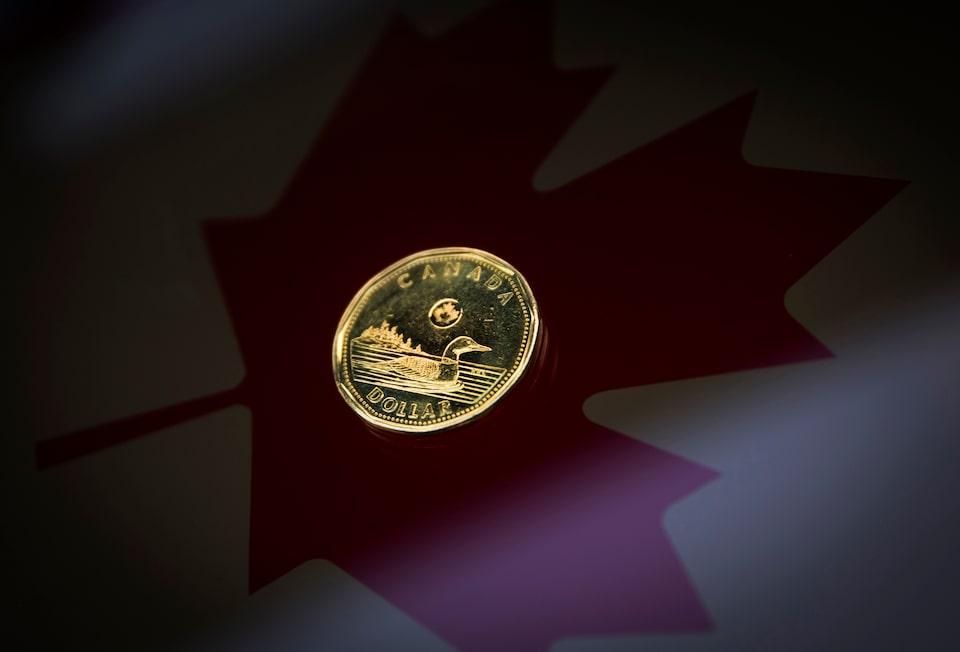
Canadian dollar falls 0.3% against greenback Touches weakest since February 12 at 1.4316 Price of U.S. oil falls 2.8% Bond yields ease across the curve TORONTO, Feb 25 (Reuters) - The Canadian dollar weakened to a near two-week low against its U.S. counterpart on Tuesday as oil prices fell and investors grew more worried that U.S. trade tariffs will be implemented. The loonie was trading 0.3% lower at 1.43 to the U.S. dollar, or 69.93 U.S. cents, after touching its weakest intraday level since February 12 at 1.4316. "While U.S. growth fears are top of mind for markets, and are weighing on the U.S. dollar more broadly, CAD has managed to deliver an even weaker performance in recent days," said Nick Rees, senior FX market analyst at Monex Europe Ltd. "To us, this means that the loonie is finally headed in the right direction, with markets now starting to properly price in tariff risks facing the Canadian economy." On Monday, U.S. President Donald Trump said that tariffs on Canadian and Mexican imports are "on time and on schedule" despite efforts by the countries to beef up border security and halt the flow of fentanyl into the U.S. ahead of a March 4 deadline. "If implemented these tariffs will tip the Canadian economy into a recession ... With this in mind, we see plenty of scope left for the loonie to fall further as the week progresses," Rees said. Canada sends about 75% of its exports to the U.S., including oil, which fell to a two-month low. U.S. crude oil futures were trading 2.8% lower at $68.75 a barrel. Canadian bond yields eased across the curve, tracking moves in U.S. Treasuries as investors sought a refuge in bonds from signs of deceleration in the U.S. economy and persistent geopolitical uncertainty. The 10-year was down 6.8 basis points at 3.005% after earlier touching its lowest since February 7 at 2.979%. Sign up here. https://www.reuters.com/markets/currencies/canadian-dollar-hits-near-2-week-low-tariff-worries-grow-2025-02-25/
2025-02-25 15:46
LONDON, Feb 25 (Reuters) - The global debt-to-GDP ratio rose for the first time since 2020 last year, as the world's debt stock hit a new year-end record of $318 trillion and economic growth slowed, an Institute of International Finance report showed on Tuesday. The $7 trillion rise in global debt was less than half of the 2023 increase, when expectations of Federal Reserve interest rate cuts sparked a borrowing surge. The IIF warned, however, that so-called bond vigilantes could punish governments if rising fiscal deficits persist. "The increasing scrutiny of fiscal balances — particularly in countries with highly polarized political landscapes — has been a defining feature of recent years," the IIF said. Market reactions to fiscal policies in the United Kingdom brought down the short-lived tenure of Prime Minister Liz Truss in 2022, while similar pressures in France ousted Prime Minister Michel Barnier last year. Debt-to-GDP - an indicator on the ability to repay debt - approached 328%, a 1.5 percentage point increase, as government debt levels of $95 trillion clashed with slowing inflation and economic growth. The IIF said it expects debt growth to slow this year, amid unprecedented global economic policy uncertainty and still-elevated borrowing costs. It warned, though, that despite high borrowing costs and economic policy uncertainty, its forecast of a $5 trillion increase in government debt this year could rise due to calls for fiscal stimulus and larger military spending in Europe. "I think we will likely see much more volatility in sovereign debt markets, especially in those countries where we see high political polarization," said Emre Tiftik, the IIF's director of sustainability research. ROLLOVER CHALLENGE Emerging markets, driven by China, India, Saudi Arabia and Turkey, accounted for roughly 65% of global debt growth last year. This borrowing, along with a record $8.2 trillion in debt which emerging markets need to roll over this year - 10% of it in foreign currency - could strain countries' abilities to weather looming political and economic storms. "Heightened trade tensions and the Trump administration's decision to freeze U.S. foreign aid, including cuts to USAID, could trigger significant liquidity challenges and curb the ability to roll over and access to FX debt," the report said. "This underscores the increasing importance of domestic revenue mobilization to build resilience against external shocks." Tiftik added that the high volatility underscored the need to increase multilateral development banks' abilities to mobilize private capital. Several developing economies, such as Kenya and Romania, have struggled to boost domestic revenue due to public anger over tax hikes and coming elections, respectively. Sign up here. https://www.reuters.com/markets/rates-bonds/global-debt-marches-record-high-raising-risk-bond-vigilantes-iif-says-2025-02-25/

2025-02-25 15:08
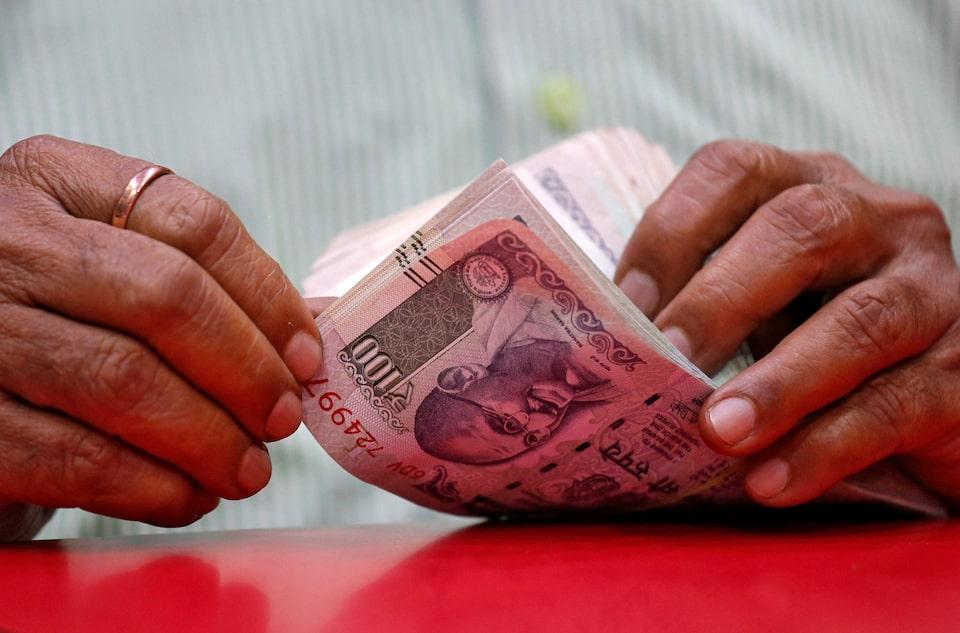
MUMBAI, Feb 25 (Reuters) - The Indian rupee logged its worst day in three weeks on Tuesday, weighed down by weakness in regional peers, importer hedging and dollar demand related to the expiry of non-deliverable forward contracts. The rupee ended at 87.21 to the U.S. dollar, down from 86.6950 in the previous session. The domestic unit slipped 0.6% on the day, its biggest single-day fall since February 5. The rupee pared some losses as the central bank likely intervened to support the currency after it dropped due to demand for the greenback related to derivatives expiry, four traders told Reuters. "You have dollar demand on the back of maturity of NDF positions, importer hedging and weak Asian cues - all factors stacked up against the rupee, providing very little room for appreciation," a forex trader at a private sector bank said. Still, expectations of strong interventions by the Reserve Bank of India have reduced speculative positioning against the rupee, the trader said. The dollar index recovered to 106.79 after falling to a more than two-month low of 106.35 on Monday. Asian currencies were mostly lower and risk appetite soured as worries over U.S. tariffs returned. U.S. President Donald Trump restricted Chinese investments in strategic areas and said Canada and Mexico tariffs will start next week. Investors had largely hoped that negotiations would forestall the threat after Trump had previously agreed to a 30-day pause on the tariffs. "The U.S. tariff uncertainty will linger on the rupee and we see volatility to persist," said Ritesh Bhusari, joint general manager for treasury at South Indian Bank. "We have a depreciating bias on the rupee, given the local unit is still over-valued, and expect it to fall to 89/dollar over time. The pace of depreciation will depend on the RBI's interventions and foreign outflows," Bhusari added. Foreign investors have sold Indian shares worth nearly $3 billion so far in February. Sign up here. https://www.reuters.com/markets/currencies/rupee-logs-worst-day-3-weeks-tariff-fears-expiry-related-dollar-demand-2025-02-25/
2025-02-25 14:43
FRANKFURT, Feb 25 (Reuters) - The European Central Bank interest rate that neither slows nor spurs growth has climbed in the past two years, and it's no longer clear the current 2.75% rate is still holding back the euro zone economy, ECB board member Isabel Schnabel said. The ECB has reduced interest rates five times since last June and, while a cut next week is likely, policymakers are discussing how much further rates must fall when inflation is still a bit too high and the economy is struggling. Schnabel said that the euro zone's economic weakness was not due to overly high borrowing costs but to structural factors, citing an ECB survey of banks and a modest rebound in lending. "It is becoming increasingly unlikely that current financing conditions are materially holding back consumption and investment," Schnabel said in London. "The fact that growth remains subdued cannot and should not be taken as evidence that policy is restrictive." Economists have widely differing estimates of the neutral rate but a recent ECB paper put it in the 1.75%-2.25% range. Schnabel said the rate had increased "appreciably" since 2022 and more than market prices would suggest. She said this might be partly due to an increase in the supply of safe assets available as central banks, including the ECB, stopped hoovering up government bonds while countries continued to issue them to finance their deficits. On the flipside, this so-called quantitative tightening (QT) also caused deposits at the central bank -- another form of safe assets available to banks -- to decline. While these so called central bank reserves remain "ample," Schnabel urged that banks prepare for a future in which that may not be the case and they need to borrow more. Solutions may include a "centrally cleared infrastructure" where banks could borrow and deposit from each other as well as the ECB, she said. "(This) could contribute to making our operations more economical in an environment in which dealer balance sheets are increasingly constrained," Schnabel said. Banks could also be required to test their operational readiness - a sore point in the liquidity crisis that brought down some U.S. banks in March 2023 -- or "pre-position" collateral to ensure they can readily obtain funding, she added. Sign up here. https://www.reuters.com/markets/europe/ecb-rates-no-longer-material-drag-growth-schnabel-says-2025-02-25/

2025-02-25 13:39
Feb 25 (Reuters) - Canadian factory sales most likely rose 2.0% in January from December, largely driven by higher sales in motor vehicle industry group, as well as the primary metal subsectors, Statistics Canada said in a flash estimate on Tuesday. The estimate was calculated based on a weighted response rate of 62.4%. The average weighted response rate for the survey over the previous 12 months has been 93.6%. NOTE: All figures are seasonally adjusted. Keywords: CANADA ECONOMY/MANUFACTURING Sign up here. https://www.reuters.com/markets/canada-january-factory-sales-most-likely-up-20-statscan-flash-estimate-2025-02-25/

2025-02-25 12:34
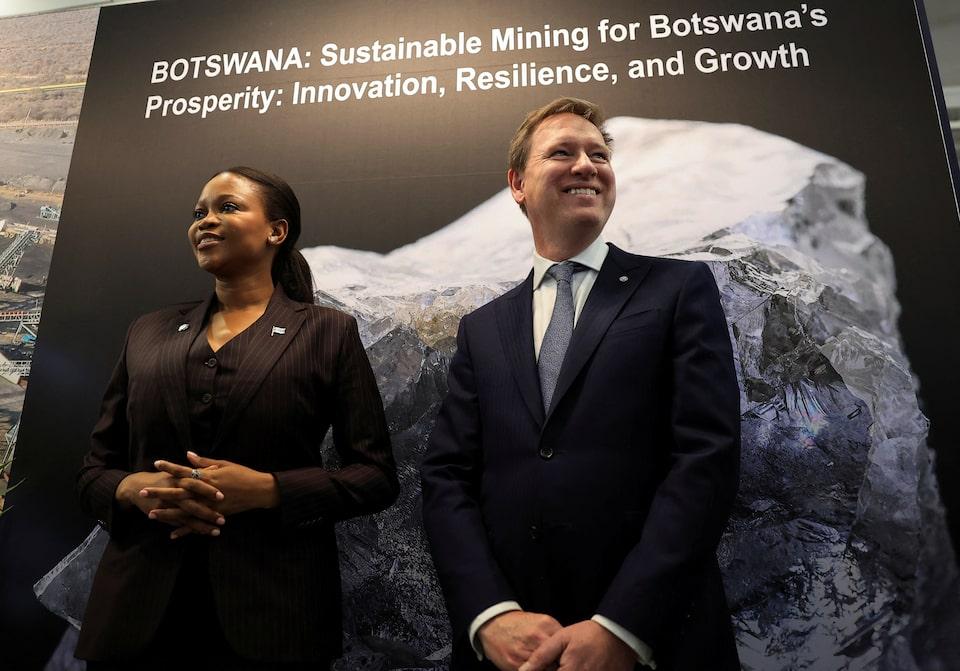
GABORONE, Feb 25 (Reuters) - Botswana's government on Tuesday signed a long-delayed diamonds sales agreement with Anglo American (AAL.L) , opens new tab unit De Beers, saying it hoped it would create jobs at a time when the economy is in a slump. Negotiations over the deal started in 2018. In 2023 the two sides provisionally agreed terms under Botswana's previous president, but they never formally signed an agreement. New President Duma Boko, who swept to power last October, made signing the deal with De Beers a priority. The deal is critical to Botswana's fortunes, as the Southern African country's economy is largely dependent on the export of diamonds. "We have us a good deal and we trust that it will carry us into the future. To the people of Botswana, this agreement is about you, about the jobs it will create," Botswana's President Duma Boko said at a signing ceremony in the capital Gaborone. The terms of the deal are broadly aligned with those agreed in 2023. Botswana will increase the share of rough stones it gets from its Debswana joint venture with De Beers to 50% over the next decade, whereas it has been getting 25%. Debswana's mining licence will be extended for 25 years until 2054. Botswana's economy is believed to have contracted last year because of a prolonged downturn in the global diamond market. As well as declining demand and a supply glut, rough diamond prices have fallen because of the rising popularity of lab-grown diamonds and a shift by younger consumers away from the precious stone. But the government hopes the economy will rebound this year because of an improvement in the global diamond market and a better performance of other sectors. Sign up here. https://www.reuters.com/markets/deals/botswana-signs-long-delayed-diamonds-deal-with-de-beers-2025-02-25/