2025-02-25 06:34
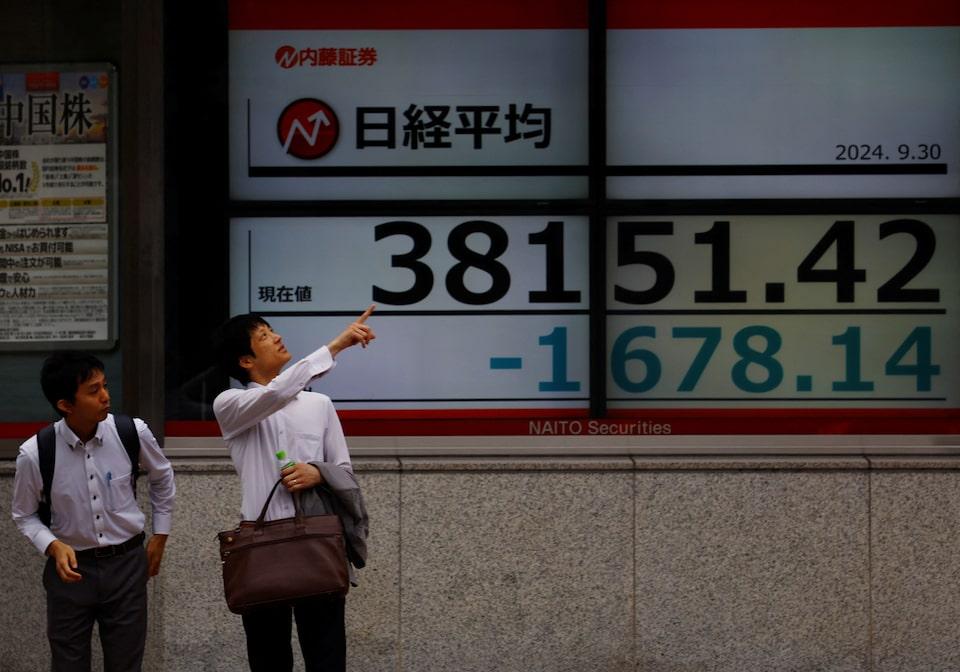
Euro steadies after German election Nvidia earnings this week keep traders jittery Oil prices fall on demand worries NEW YORK/LONDON, Feb 25 (Reuters) - Two major Wall Street indexes saw their fourth straight decline on Tuesday, as Treasury yields and the dollar retreated on signs of softening U.S. growth and uncertainty over Trump administration policies. Germany's election result buoyed the euro, and European shares closed up. Oil prices fell to a two-month low as weak economic news from the U.S. and Germany fed fears of slowing demand. Nervousness about Nvidia's (NVDA.O) , opens new tab fourth-quarter results after the market close on Wednesday hung over the market. Friday's Personal Consumption Expenditures price index release, which the Federal Reserve tracks for its mandate to control inflation, was also in focus. The S&P 500 (.SPX) , opens new tab lost 28.00 points, or 0.47%, to 5,955.25 and the Nasdaq Composite (.IXIC) , opens new tab lost 260.54 points, or 1.35%, to 19,026.39. A weak read on U.S. consumer confidence added to the negative mood. The Dow Jones Industrial Average .DJI rose 159.95 points, or 0.37%, to 43,621.16. The 10-year yield fell 9.5 basis points to 4.298% while the 2-year note yield, which typically moves in step with interest rate expectations for the Fed, fell 7.2 basis points to 4.096%. European shares (.STOXX) , opens new tab closed up 0.2% on Tuesday, after gains in banks and healthcare companies offset declines in technology stocks. The soft U.S. economic data pressured the dollar index , which measures the greenback against a basket of currencies. The euro is one of the worst-performing major currencies against the dollar, given its high exposure to the risk of tariffs. U.S. President Donald Trump's planned duties on U.S. imports risk pushing up domestic inflation, while his mass firings of government employees could impact the labor market, just when the Federal Reserve needs room to cut interest rates. Tension between the U.S. and Europe has also risen over Ukraine and how to broker a ceasefire agreement with Russia, three years after Moscow's full-blown invasion of its neighbour. Sentiment in the markets is fragile but there has been little in the way of volatility, according to Chris Beauchamp, chief strategist at IG. "This is a sharp contrast to the past couple of years where crises seem to come one at a time and then, you could just deal with them when they occurred, and now it seems to be 'everything, everywhere, all at once'," he said. REASONS FOR OPTIMISM? CBOE's VIX volatility index (.VIX) , opens new tab rose to its highest in a month on Tuesday, but so far has fallen short of the peak from late January. Beauchamp said there are reasons to be optimistic. "If you look at earnings season, it's gone really well. But of course, the headlines and the signs of fracture between Europe and the U.S. - it doesn't directly affect ... stocks, but it just makes sentiment all the more febrile." Meanwhile, negative surprises in U.S. economic data have accelerated this month, led by unwelcome pickups in things like consumer inflation expectations and, most recently, by a drop in overall business activity. Treasury Secretary Scott Bessent argued on Tuesday that the U.S. economy is more fragile under the surface than economic metrics suggest, citing interest rate volatility, sticky inflation and job growth focused on the government sector. Since China's low-cost AI model from DeepSeek burst onto the scene in late January, investors have begun to question whether the hefty spending on this technology is justified and a lot will be riding on Nvidia's fourth-quarter earnings. Chinese retail investors have poured into AI-linked stocks on the domestic market this month, sending the Hong Kong equity index (.HSI) , opens new tab to three-year highs. In commodities, brent futures fell $1.76, or 2.4%, to settle at $73.02 a barrel, while U.S. West Texas Intermediate crude fell $1.77, or 2.5%, to settle at $68.93. Spot gold fell 0.01% to $2,914.69 an ounce. U.S. gold futures settled 1.5% lower at $2,918.80. Gold hit its highest level at $2,956.15 on Monday. Bitcoin gained 0.2%, reversing losses after falling below $87,000. Sign up here. https://www.reuters.com/markets/global-markets-wrapup-1-2025-02-25/
2025-02-25 06:19
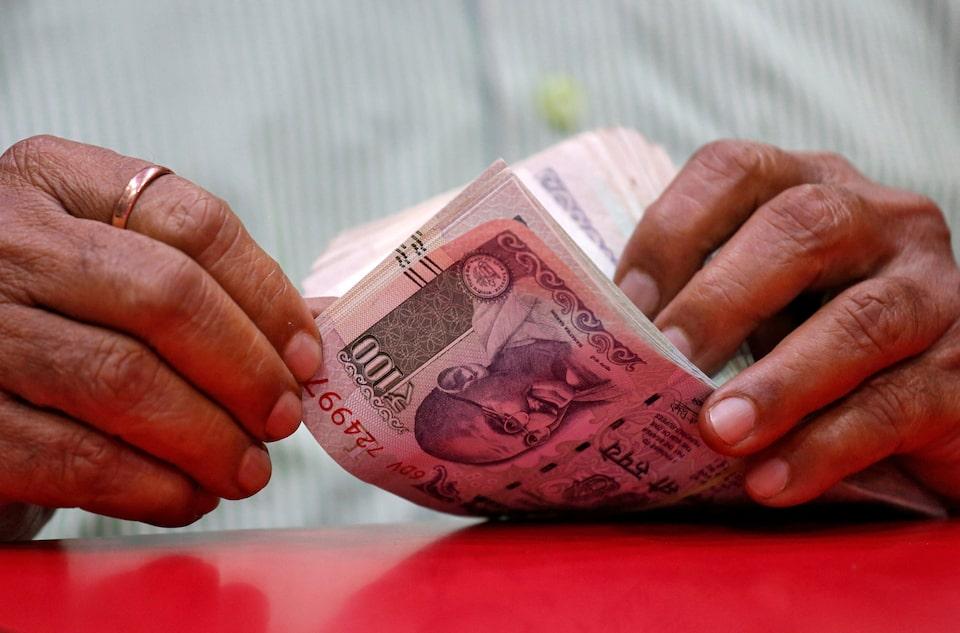
MUMBAI, Feb 25 (Reuters) - The Indian rupee declined on Tuesday, weighed by the dip in Asian peers and increasing interest among importers in hedging their future dollar payments. The rupee was quoted at 86.94 to the U.S. dollar at 11:37 a.m. IST, down from 86.6950 in the previous session. The rupee, on multiple instances, has not succeeded in moving past the 86.50 level. On Monday, on the interbank order matching system, the rupee rose to 86.51 before retreating. "There has been a noticeable pickup in hedging by importers over the last few days, which is understandable," an fx salesperson at a bank said. "There is a realisation that the downside (on dollar/rupee pair) is quite limited from 86.50." Meanwhile, the dollar index , having climbed to a more than two-month low of 106.35 on Monday, recovered to 106.79. Asian currencies dipped and risk appetite soured as worries over U.S. tariffs returned. U.S. President Donald Trump on Monday said tariffs on Canadian and Mexican imports were "going forward on time and on schedule" in reply to a question on whether Canada and Mexico had done enough to avoid the 25% U.S. duties. The U.S. president had previously agreed to a 30-day pause on the tariffs. "The direction of U.S. protectionism will be the main driver beyond the short term, and we should see the discussion on Mexico and Canada tariffs return to centre stage as the deadline for the delayed tariffs is a week away," ING Bank said in a note. Sign up here. https://www.reuters.com/markets/currencies/rupee-declines-weak-asian-cues-pick-up-hedging-2025-02-25/
2025-02-25 06:16
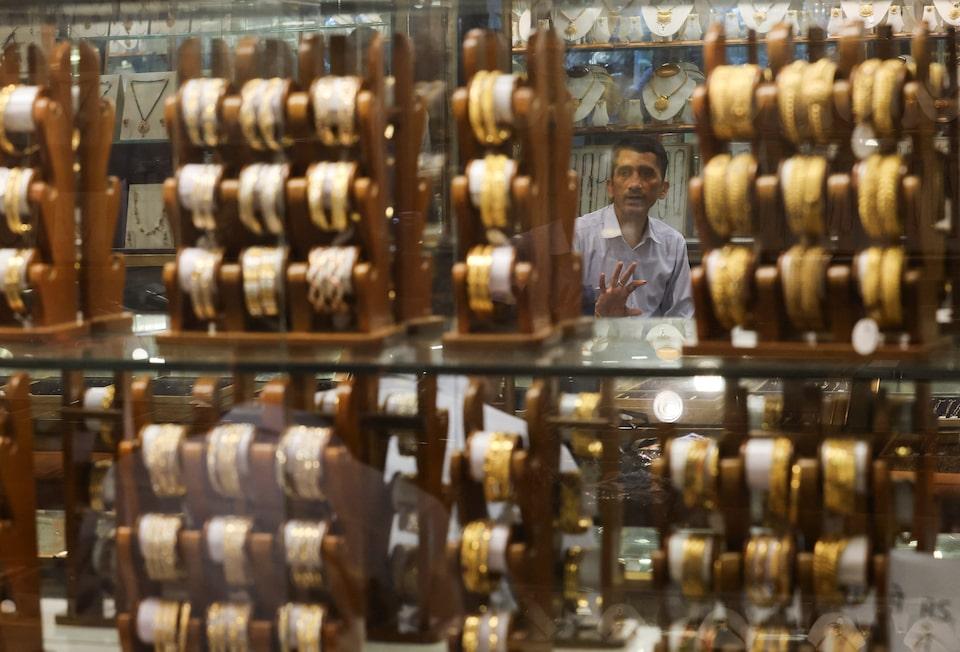
Gold hit record high of $2,956.15 on Monday Trump says Canada, Mexico tariffs on schedule US PCE data due on Friday Feb 25 (Reuters) - Gold prices hovered near an all-time high on Tuesday, as fears of a trade war and instability amid U.S. President Donald Trump's tariff plans drove safe-haven flows. Spot gold fell 0.4% to $2,938.63 an ounce by 1125 GMT, after reaching $2,956.15 on Monday — its eleventh record high this year. U.S. gold futures declined 0.3% to $2,953.30. "I would call it a range trading environment in precious metals, driven by uncertainty of if and what tariffs are enacted by the Trump administration as we approach the end of the month," UBS analyst Giovanni Staunovo said. Trump said on Monday tariffs on Canadian and Mexican imports were "on time and on schedule" despite efforts by the countries to beef up border security and halt the flow of fentanyl into the U.S. ahead of a March 4 deadline. "Mexico and Canada are large mine producers of gold and silver, so if both metals are not exempted it would result in a likely further widening of the spread between U.S. and London prices," Staunovo said. Fears of a looming trade war, ignited by Trump's tariff strategy, have sent safe-haven gold soaring past the historic $2,950/oz threshold. Meanwhile, investors and economists expect the U.S. Federal Reserve to respond "strongly and systematically" to changes in inflation and the labor market, according to research published on Monday by the San Francisco Fed that underscores the current sensitivity of financial markets to U.S. economic data. Higher inflation may force the Fed to keep rates higher, tarnishing non-yielding gold's appeal. Investors now await Friday's release of the U.S. Personal Consumption Expenditures report, the Fed's preferred inflation gauge, for insights into the central bank's rate-easing path and monetary policy. Spot silver shed 0.6% to $32.14 an ounce, platinum dropped 0.3% to $964.05 and palladium lost 0.3% to $937.44. Sign up here. https://www.reuters.com/markets/commodities/gold-hovers-near-record-high-trump-tariff-worries-2025-02-25/
2025-02-25 06:16
LITTLETON, Colorado, Feb 25 (Reuters) - Following rare back-to-back economic contractions in 2023 and 2024, German businesses are hopeful that a new government formed by the conservative CDU/CSU party and the center-left Social Democrats can revive Europe's largest economy in 2025. High energy costs, weak consumer demand, stiff competition from China and a lack of supportive policy reform have all been blamed for the economic woes facing Germany in recent years, and remain major challenges for the incoming government. Sunday's election results indicate that CDU/CSU may be able to form a government with just one other party and avert a repeat of the previous government's three-way coalition that struggled to decisively alter Germany's policy landscape. And incoming Chancellor Friedrich Merz has indicated that coalition talks will begin immediately, with industrial growth and job creation among his main priorities. Below are key data points on Germany's power prices, energy mix, industrial production and foreign trade that can be tracked to gauge the impact of any policy changes under the new government. POWER PRICES German industry has cited high energy costs as a major factor impeding growth in recent years, rendering German products uncompetitive on the world stage. After averaging around 40 euros ($41.84) per megawatt hour (MWh) through 2020, German wholesale power prices jumped to an average of 235 euros/MWh in 2022 as the onset of the Russia-Ukraine war snarled natural gas flows to Europe. That surge in power costs hammered all major energy consumers in Germany in 2022 and for most of the following year, and resulted in a major contraction in gas use by industry. Wholesale power prices retreated to an average of around 80 euros/MWh in 2024, but have climbed back above 120 euros/MWh so far in 2025 due to rising regional natural gas prices, which help set regional power costs. Going forward, power prices will remain a critical gauge of industrial health. German power firms already plan to add more renewable energy generation capacity in 2025, but new policy measures that accelerate clean energy additions could help to boost overall power supplies and potentially cap wholesale prices. Continued high reliance on natural gas for power production, however, means that Germany's influence over power prices will likely remain beyond the reach of policymakers and power producers. GAS FIX The share of natural gas within Germany's power generation mix is another factor determining the outlook for the country. Germany relies on imports for over 95% of its gas supplies, according to the Energy Institute, and used gas to generate around 17% of its electricity in 2024, according to Ember. That gas generation share was the highest since 2020, and indicates that Germany's power system has actually become increasingly gas-reliant despite the cuts to pipeline supplies from Russia since 2022. To replace the reduced Russian supplies, Germany has boosted gas imports from the United States and other suppliers in the form of liquefied natural gas (LNG), which can cost multiple times more than gas supplied via pipeline. If German power producers and industry continue to rely on gas for a substantial share of generation, government policies that help lower the cost of imported gas could help spur greater power consumption and output by industry. But given restrictions on government debt in Germany, the incoming government may struggle to pass measures to reduce the gas cost burden for power firms without facing opposition from parliament members who are against debt increases. OUTPUT AND TRADE Due to a mix of high power costs as well as weak demand for German-made industrial goods, German production of a slew of energy-intensive products including steel, fertilizers and chemicals has slumped in recent years. German output of cars has also been hit by weak local consumer demand as well as record exports of cars from China that have served to undermine demand for Germany's vehicles. The incoming German chancellor campaigned on expanding the country's industrial base, and has vowed to protect and grow jobs in the sector. But policies aimed at spurring demand for German industrial goods require changes to taxes and spending levels, which again may encounter parliamentary opposition from rival parties. Policymakers may also aim to boost Germany's exports, which have flagged since 2022 amid weak global consumer demand and stiff competition from other exporting nations. But given the impending tariffs imposed by U.S. President Donald Trump, as well as ongoing trade disputes between Europe and China, the incoming German government may have only limited scope to influence export flows over the near to medium term. The opinions expressed here are those of the author, a market analyst for Reuters. ($1 = 0.9559 euros) Sign up here. https://www.reuters.com/markets/commodities/key-energy-output-data-track-germany-charts-economic-revival-maguire-2025-02-25/

2025-02-25 06:15
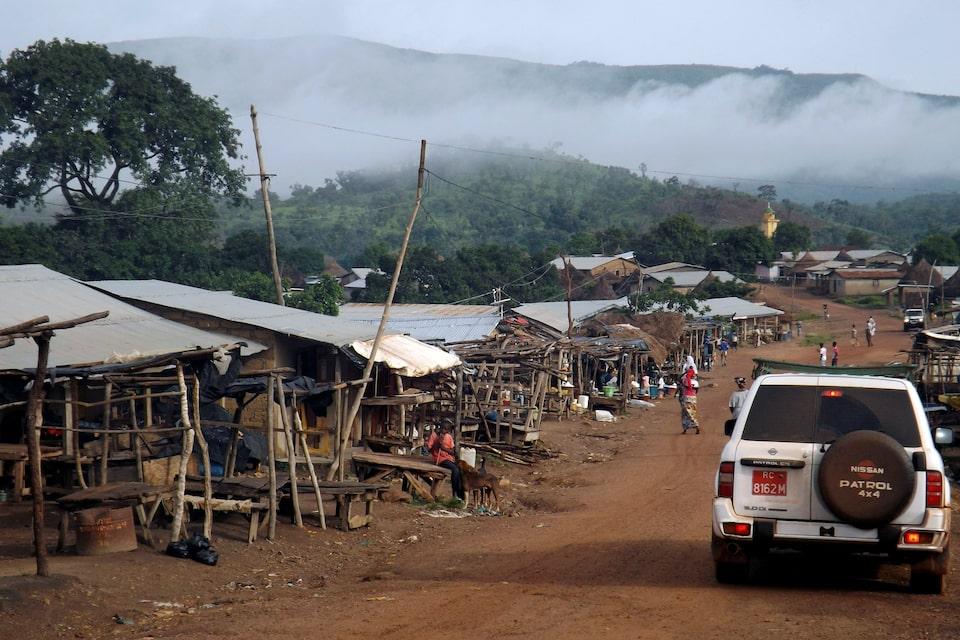
LAUNCESTON, Australia, Feb 25 (Reuters) - The term gamechanger is often over used enough to be rendered meaningless, but the huge Simandou mine in the West African country of Guinea is going to be just that as its start up is set to rock the seaborne iron ore market. The first cargoes from the project may arrive by the end of this year and it's expected that it will ramp up to its full capacity of 120 million metric tons per annum fairly quickly. The four blocks of Simandou are impressive in their scale and infrastructure challenges, boasting a 620 kilometre (384 mile) rail line, a new port with dedicated trans-shipment vessels that will load bulk carriers offshore. But Simandou is more than a technical marvel, as it will meet around 10% of the annual seaborne imports of China, the world's biggest buyer of the key steel raw material, taking about 75% of global seaborne iron ore. Simandou is largely a Chinese venture, with 75% of the production controlled by Chinese companies including Baosteel (600019.SS) , opens new tab, and 25% held by Rio Tinto (RIO.AX) , opens new tab, the world's largest iron ore miner. While in theory Simandou's output could be sold to buyers across the globe, in practice virtually all of it is likely to head to China. The project will also produce high-grade iron ore, around 65.3% iron content, which is better quality than most of what Rio and its competitors mine in Western Australia, the top iron ore producing region. High grade iron ore may be in stronger demand in coming years as Chinese steel mills seek to decarbonise, an imperative given that steel production accounts for about 8% of total worldwide carbon emissions. Simandou's iron ore will be of sufficient quality to be fed directly into electric arc furnaces (EAFs), which produce steel with considerably lower emissions than through the more common process of using basic oxygen furnaces, which require substantial volumes of coal. The question for the iron ore market is who gets pushed out of China when Simandou's ore starts to arrive? This of course assumes that China's steel output remains constant at around the 1 billion ton per annum level it has been at since 2019. There may be some loss of supply from major exporters Australia and Brazil as existing mines reach end of life and aren't replaced, but even allowing for this it's likely that some iron ore will be pushed out of the market. The obvious candidates will be high-cost and lower-grade iron ores, and it's likely that the producers of such iron ore will lower output over time by allowing mines to reach end of life earlier than planned. This spells bad news for some of the miners in Western Australia as a combination of a switch to higher-grade iron ore, stagnant demand from China and increased supply from Guinea will likely put downward pressure on prices. NEW INVESTMENT Australia's miners and governments have enjoyed a strong run with iron ore for much of the past decade, reaping the benefits of building vast, efficient mines and logistic solutions. Even at the current price of around $108 a ton, iron ore remains vastly profitable given the cost of producing a ton and getting it to a port in Western Australia is around $23. With Simandou's new high-grade iron ore coming and the need to decarbonise steel production, it could be argued that Australia's golden age of iron ore is coming to an end. But it could also provide the impetus for Australia to kick-start a new investment spree into adding value to its iron ore bounty. If the assumption is that the world's manufacturers will increasingly turn to green steel, then Australia is perhaps better placed than any other country. To make green steel you need low-cost iron ore and massive volumes of cheap renewable energy. Australia already has the low-cost iron ore and is more than capable of building sufficient renewable energy, chiefly solar backed up by battery storage. The renewable energy is used to make green hydrogen, which in turn is used to turn iron ore into direct reduced iron (DRI) or hot briquetted iron (HBI). DRI can be used to make steel in an EAF, while HBI can be shipped to customers in Asia to made into steel using EAFs. However, it will likely take the support of both the federal and state governments to give momentum to any plans to beneficiate iron ore domestically. A positive signal was the federal government's recent announcement of an A$2.4 billion ($1.5 billion) package to support steel production in Whyalla in South Australia state. Included in the funding is a $1 billion green iron investment fund to support new projects, as well as upgrading the existing steel works in Whyalla. It's a start, but much more will have to be done if Australia's iron ore success story is going to write another chapter. The views expressed here are those of the author, a columnist for Reuters. Sign up here. https://www.reuters.com/markets/commodities/massive-simandou-mine-can-end-australias-golden-iron-ore-age-or-start-new-one-2025-02-25/
2025-02-25 06:13
FRANKFURT, Feb 25 (Reuters) - Heidelberg Materials (HEIG.DE) , opens new tab, the world's second-largest cement maker, expects its operating profit to rise further this year after a record 2024, it said on Tuesday, citing a stabilisation in its core markets. The group's result from current operations is forecast to rise to 3.25 billion euros to 3.55 billion euros ($3.72 billion to $3.40 billion) in 2025, up from 3.2 billion in 2024, which was up 6% year on year. "Thanks to our broad geographic footprint as well as our focus on cost and price management, we managed to more than compensate for declining demand in certain regions," CEO Dominik von Achten said in a statement. The group said that while the construction sector remained volatile in some regions, the company's core markets - which includes North America and Australia among others - continued to stabilise. ($1 = 0.9547 euros) Sign up here. https://www.reuters.com/markets/commodities/heidelberg-materials-forecasts-profit-rise-core-markets-stabilise-2025-02-25/