2025-02-25 06:07
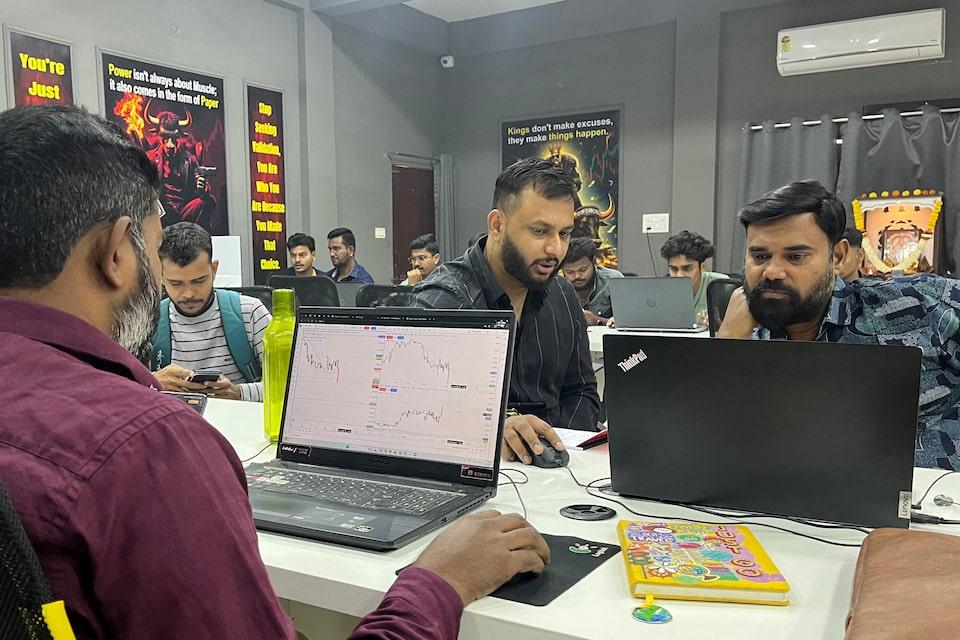
Trading volume on India's four top exchanges doubles, driven by smaller cities Traders shift to crypto from options trading following tighter rules Government is yet to take a view on regulation NAGPUR, India, Feb 25 (Reuters) - Like thousands of his countrymen in far-flung places, flower-shop owner Ashish Nagose has been learning about trading cryptocurrencies by attending classes every weekday for the past two months in his home city of Nagpur in western India. Nagose bought and sold stock options earlier but is now venturing into cryptocurrencies as regulators have made it harder to trade equity derivatives in India. The 28-year-old believes the red-hot crypto asset class can help shield his family-owned flower shop during downturns. "I want to run my family shop, and hope that trading can provide a steady income when business slows down, like in the month after (the Hindu festival of) Diwali," he said, seated at the storefront surrounded by bunches of red roses and orange marigolds. Newfound crypto enthusiasts in India such as Nagose have helped grow cumulative trading volumes of bitcoin, ethereum, dogecoin and other cryptocurrencies on four of its largest exchanges more than two-fold quarter-on-quarter to $1.9 billion in the October-December quarter, according to data from aggregator CoinGecko. Many young Indians are dabbling in crypto trading to supplement their regular income in the world's most populous country where jobs and pay increases have lagged world-beating economic growth. Nearly two-thirds of its 1.4 billion people are below the age of 35, according to a government report. From stocks and derivatives, they are now gravitating towards crypto assets whose prices have soared after U.S. President Donald Trump's election victory in November promised a looser regulatory regime for the asset. "There is a lot of curiosity at the ground level ... especially with Trump becoming the U.S. president and the entire flavour of crypto changing world over," said Edul Patel, co-founder of Mudrex, an Indian crypto exchange. Overall, India's crypto market is expected to grow to more than $15 billion in 2035 from $2.5 billion last year at a compound annual growth rate of 18.5%, said Kush Wadhwa, partner at consulting firm Grant Thornton Bharat. Retail traders have driven the bulk of the interest in the asset, according to exchange executives, even as ETFs and institutions have pushed up crypto prices globally. Out of the top 10 centres that propelled crypto activity in India in 2024, seven were lower-tiered cities, such as Jaipur, Lucknow and Pune, according to CoinSwitch, one of India's largest crypto platforms. "Growth is now being driven by non-metro cities. That's true for the stock world and it's true for crypto," said Balaji Srihari, vice president at CoinSwitch which has 20 million users. The surging interest may challenge Indian authorities who have discouraged trading in cryptocurrencies by levying steep taxes and have warned against their risks and volatility. But that has not stopped 25-year-old Sagar Neware, a Nagpur-based mechanical engineer, from spending his nights trading them. "My father had to shut down his plastic packaging business a few years back so my first dream is to restart it with the money I can earn from trading," said Neware, who earns 25,000 rupees ($288) a month from working at the local transport office. To hone their crypto trading skills, Neware and about two dozen others gather at the Thoughts Magic Trading Academy in Nagpur each weekday. Yash Jaiswal, an equity options trader who runs the classes in a shop room, says he has tutored about 1,500 people over the last two years. "You're just one trade away from your dream life," says a poster on the wall of the classroom. MACROECONOMIC RISK Who has regulatory oversight of cryptocurrencies in India is unclear. While the 30% tax it levies on crypto trading gains is among the most stringent globally, the country, unlike most G-20 nations, has neither introduced new norms to govern crypto, nor folded it under existing securities rules. It has also not imposed an outright ban on it. Reuters reported last year that India's market regulator has signaled it is open to oversight of crypto trade, but the government is still to take a view. The central bank, though, has continued to warn against it. "Widespread usage of crypto assets and stablecoins has consequences for macroeconomic and financial stability," it said in its Financial Stability Report in December 2024. India's federal finance ministry, the central bank and the market regulator did not respond to emails seeking comment. Sign up here. https://www.reuters.com/world/india/crypto-trading-booms-indias-interiors-job-growth-incomes-disappoint-2025-02-25/
2025-02-25 05:47
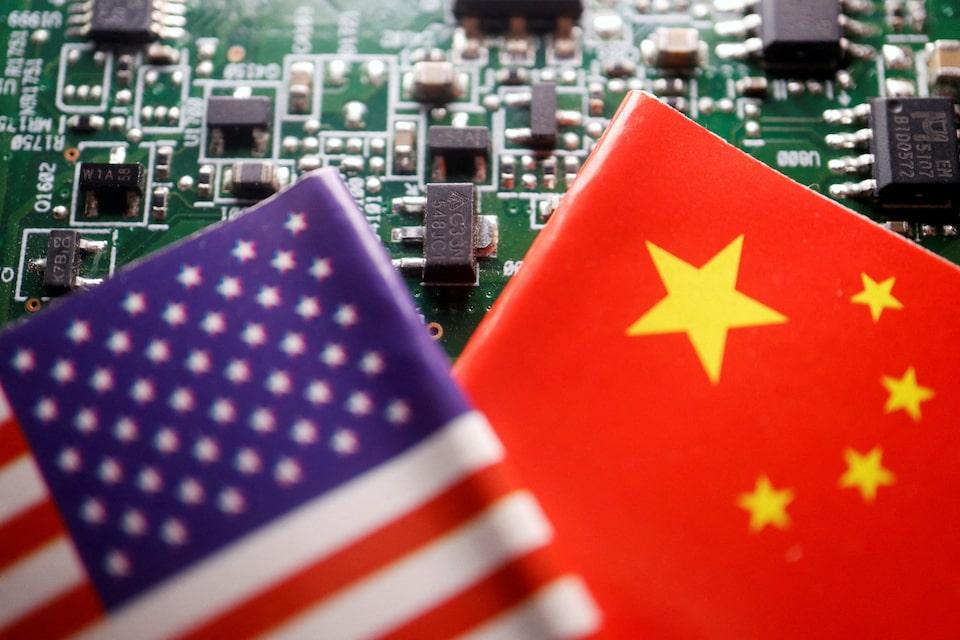
A look at the day ahead in European and global markets from Stella Qiu It is a sea of red in Asia as investors grapple with risk posed by the U.S. intensifying its technology war with China in areas as varied as artificial intelligence, quantum computing and aerospace. The U.S. also is seeking to toughen restrictions on the export of semiconductor technology to China - particularly chips from artificial intelligence leader Nvidia (NVDA.O) , opens new tab - with the help of allies, Bloomberg reported. Hong Kong's Hang Seng index (.HSI) , opens new tab initially fell as much as 2.7%, dragged down by an almost 8% plunge in tech giant Alibaba (9988.HK) , opens new tab following a 10% drop in its American Depository Receipts. The sell-off abated, though, as investors chose to buy the dip given that stock's recent world-beating rally. The Hang Seng was last down 0.6% as Hong Kong-listed tech companies (.HSTECH) , opens new tab recouped early loss with more talk of demand for low-cost AI models from DeepSeek. On Wall Street, investors continue to question whether massive spending on AI is justified, as evident in the cautious mood ahead of Nvidia's earnings on Wednesday where analysts expect a whopping 72% increase in quarterly revenue. Gold is benefiting from the U.S. presidency of Donald Trump who was busy with Russia advocating a quick end to war in the Ukraine while dialling up tariff rhetoric against Canada and Mexico. The old-world asset set a record overnight, drawing tantalisingly close to $3,000 an ounce. Curbing risk appetite is a series of soft U.S. economic data including retail sales, consumer confidence and surveys on the manufacturing and services sectors. They all came in weak and pointed to intensifying price pressure, eroding confidence in the exceptionalism of the U.S. economy. Market participants have now fully priced in the prospect of the Federal Reserve lowering its policy interest rate by 50 basis points this year rather than 40 bps seen just last week. Treasury yields duly touched fresh lows in the Asian trading session. Benchmark Treasury yields hit a two-month low of 4.377% while two-year yields touched 4.156%, the lowest since early December. Next up will be the Conference Board's U.S. Consumer Confidence survey where analysts are wary of a repeat of the slump seen in the University of Michigan's equivalent poll. Dallas Fed President Lorie Logan and Richmond Fed President Thomas Barkin speak later in the day with central bank watchers expecting them to echo the message that the Fed will be cautious in cutting rates. European Central Bank board member Isabel Schnabel is also set to speak in London about the future of the central bank balance sheet. Key developments that could influence markets on Tuesday: Sign up here. https://www.reuters.com/markets/europe/global-markets-view-europe-2025-02-25/
2025-02-25 05:27
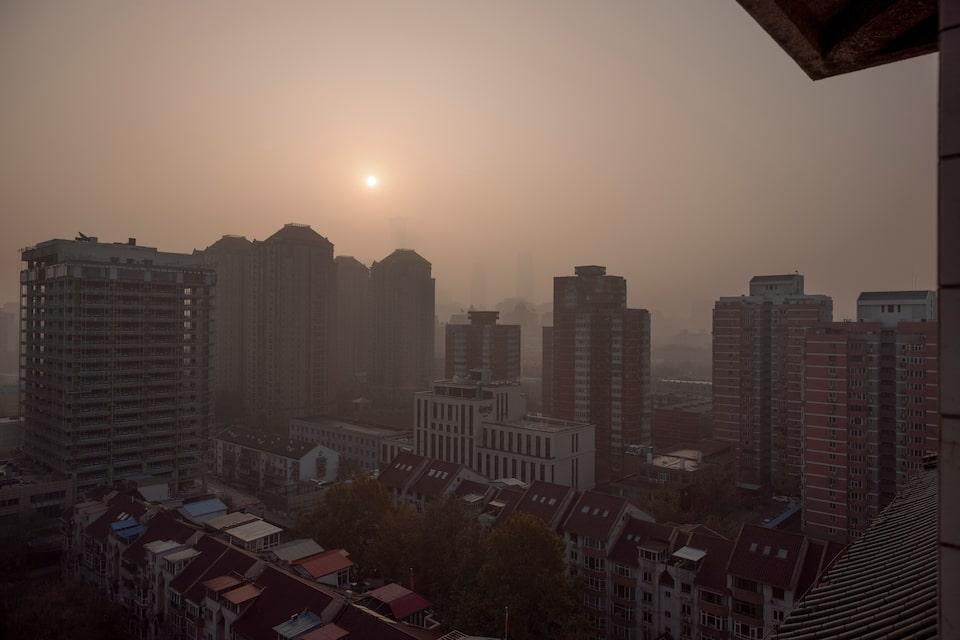
HONG KONG, Feb 25 (Reuters) - China aims to effectively eliminate severe air pollution by the end of 2025, a senior environment official said, as authorities ramp up efforts in pollution control and emissions reduction in the "battle for blue skies." China will improve its air quality forecasting and early warning systems and enhance coordinated management of harmful airborne particles known as PM2.5, as well as ozone pollution, said Li Tianwei, Director of the Department of Atmospheric Environment. "The battle for blue skies remains unchanged," Li said according to a transcript on the Ministry of Ecology and Environment's website on Monday. Though some progress has been made, air pollution remains a major problem in China and affects economies and people's quality of life, said the World Health Organization (WHO). Air pollution is responsible for about 2 million deaths in China annually, the WHO said. Of those deaths, ambient air pollution caused more than 1 million deaths, while household air pollution from cooking with polluting fuels and technologies caused another million deaths, it said on its website. The WHO considers PM2.5 concentrations above 50 micrograms per cubic metre "severe" air pollution. China's air quality improved significantly in 2024, Li said. The average concentration of PM2.5 in cities was 29.3 micrograms per cubic metre, a year-on-year decrease of 2.7%. The proportion of days with good air quality reached 87.2%, up by 1.7 percentage points year-on-year. China must introduce new emission standards that align with global best practises, Li said, adding that the country will boost the share of new energy vehicles and machinery in airports, ports and logistics parks. Authorities also plan to promote the long-distance transportation of bulk goods by rail and water, rather than by roads. President Xi Jinping has said China prioritises environmental protection, promoting green lifestyles and that conservation of nature is an essential part of building a modern socialist country. Sign up here. https://www.reuters.com/business/environment/china-aims-eliminate-severe-air-pollution-this-year-2025-02-25/
2025-02-25 04:49
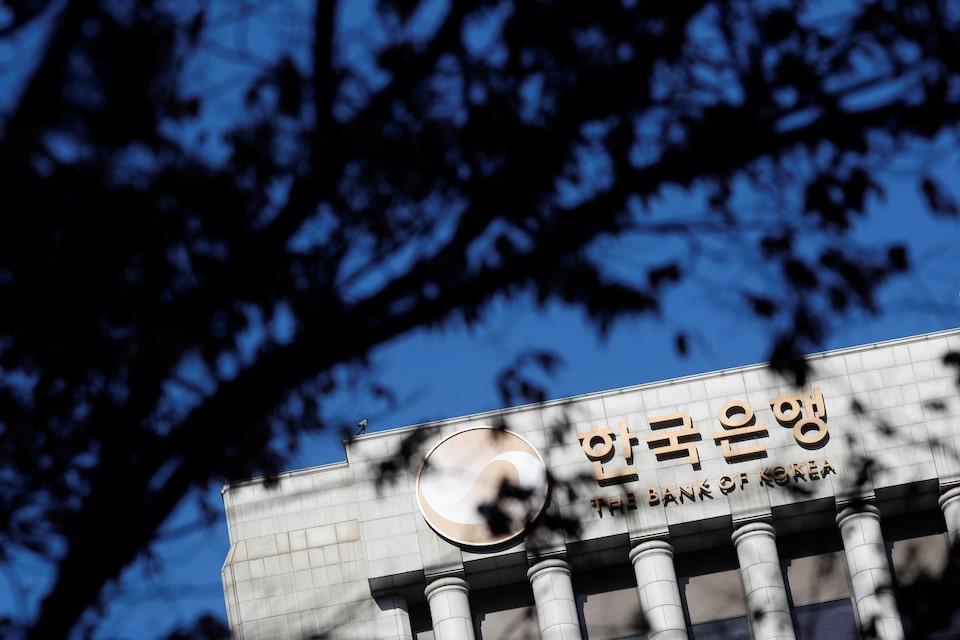
Bank of Korea cuts policy rate to 2.75%, as expected Central bank lowers GDP forecast even more Governor agrees with markets on policy path SEOUL, Feb 25 (Reuters) - The Bank of Korea cut interest rates by 25 basis points and significantly lowered its GDP forecasts on Tuesday, steering Asia's fourth-largest economy from a restrictive monetary policy stance towards a neutral one to support growth. The BOK's seven-member board unanimously voted to reduce its benchmark interest rate (KROCRT=ECI) , opens new tab to 2.75% at its monetary policy review, an outcome expected by 35 out of 36 economists polled by Reuters. The reduction is the third since the BOK started cutting borrowing costs from a 15-year high in October, positioning Korean rates around 150 basis points below the U.S. Federal Reserve's target range of 4.25-4.50%. The central bank also lowered its growth forecasts for this year to 1.5% from 1.9%, below the range of 1.6% and 1.7% flagged last month, while keeping its inflation forecast steady at 1.9% for both this year and next. "The additional cut today is to respond to growth concerns. Consumer sentiment that deteriorated since the year-end is actually leading to weakening of other (economic) indicators, and (U.S.) tariff policies are expected to hurt exports and lead to weaker growth," Governor Rhee Chang-yong said at a press conference after the rate decision. South Korea is grappling with the economic impact of U.S. President Donald Trump's ongoing tariff war, which is likely to undermine corporate profits. Domestic political unrest, following the brief declaration of martial law by impeached President Yoon Suk Yeol in December, continues to dampen consumer sentiment. As of 0408 GMT, the won pared back earlier gains and declined 0.03% to 1,431.0 against the dollar. The currency has strengthened 2.8% this year but lost more than 12% against the dollar in 2024, marking the biggest drop since 2008. The won was the worst performer among emerging Asian currencies on fears over U.S. tariffs, reduced Federal Reserve rate cut bets and expectations of further rate cuts at home. Inflation has generally cooled enough to soothe concerns over price pressures but the won's weakness has raised concerns about further volatility in the currency. In January, South Korea's exports declined for the first time after an impressive 16-month growth streak and at the sharpest pace in a year due to U.S. tariff uncertainty and unfavourable base effects. Governor Rhee had previously suggested a supplementary fiscal budget of 15 trillion won ($10.51 billion) to 20 trillion won to bolster growth, but these discussions have stalled in parliament. Most analysts surveyed anticipate two more rate cuts to 2.25% by the end of the year, despite the consensus that the Federal Reserve will likely implement fewer or no cuts in the coming months. The market consensus of expecting two or three rate cuts this year, including the one on Tuesday, is not that different from the views of the central bank, Rhee said. Analyst Ahn Jae-kyun at Shinhan Securities described the cut as "neither a hawkish cut nor a dovish cut, but a neutral one," maintaining his prediction of another cut in the first half, with the possibility of a third one in the July-September quarter if growth risks increase. Sign up here. https://www.reuters.com/markets/rates-bonds/bank-korea-cuts-rates-275-expected-2025-02-25/
2025-02-25 04:00
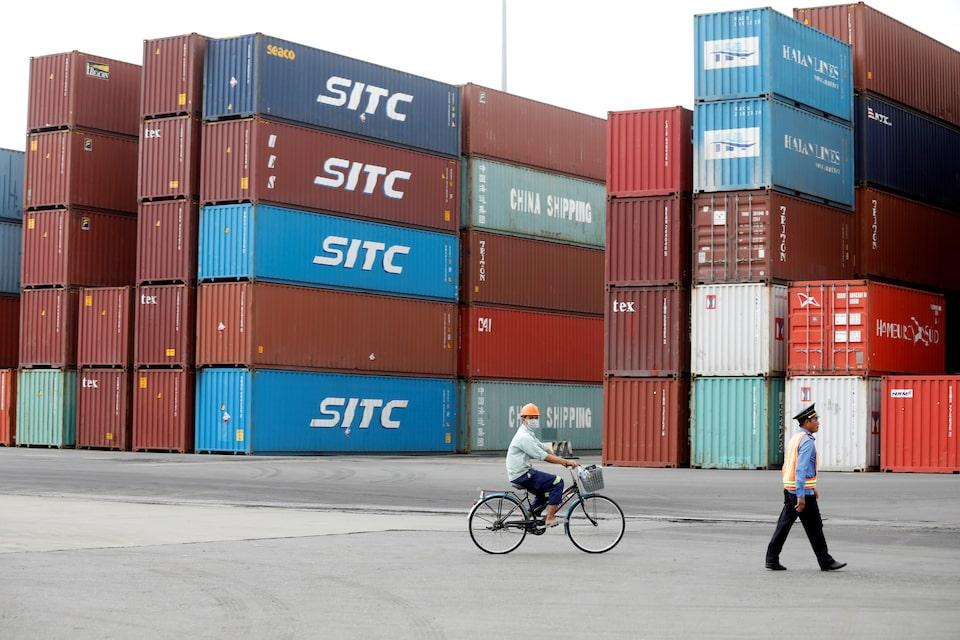
HANOI, March 28 (Reuters) - U.S. President Donald Trump's looming global tariffs could hit virtually all of Vietnam's goods exports to its top market, worth more than $142 billion last year, or about 30% of the Southeast Asian nation's GDP. Vietnam benefited from the trade war Trump launched against China in his first term, but Vietnamese officials and foreign companies are uncertain how the nation will fare under new levies Trump says will take effect on Wednesday. Vietnam has one of the largest surpluses with the U.S., worth $123.5 billion, and meets several criteria for Trump's reciprocal tariffs. Sign up here. Below are some measures Vietnamese officials have flagged, are considering or that might help avoid Trump's tariffs: DUTIES, NON-TARIFF BARRIERS Vietnam imposes higher tariffs than the U.S. on average and charges value-added tax on goods. Still, some economists calculate that Vietnam's effective bilateral tariff rates are lower. It is not clear which rates the Trump administration is considering to determine possible reciprocal tariffs, but average duties have so far been Washington's benchmark. Vietnam said this month it would cut duties on multiple imports, including liquefied natural gas and cars, and has repeatedly said it would reduce non-tariff barriers. The Office of the United States Trade Representative in its latest report in 2024 produced a long list of non-tariff hurdles applied by Vietnam, including import bans, complex registration requirements, and technical and sanitary barriers. DEFENCE, STARLINK Hanoi has been in talks with U.S. defence firms for the possible purchase of security equipment, with negotiations at an advanced stage for Lockheed Martin (LMT.N) , opens new tab C-130 Hercules military transport planes, according to officials with knowledge of the matter. The Vietnamese government issued a decision this month allowing Trump's ally Elon Musk's SpaceX to launch its Starlink satellite internet service on a trial basis in the country while retaining full control of its subsidiary, circumventing strict limits on foreign ownership. PLANES Vietnamese budget carrier VietJet (VJC.HM) , opens new tab agreed to buy 200 Boeing (BA.N) , opens new tab 737 MAX jets in a multi-billion-dollar deal first signed in 2016 and revised afterwards. No planes have been delivered, although the company had said it expected to receive the first jets last year. It has also shown an interest in expanding the deal without detailing how. Flag carrier Vietnam Airlines (HVN.HM) , opens new tab has an agreement for the possible purchase of 50 Boeing 737 Max jets. ENERGY IMPORTS Vietnamese officials have repeatedly discussed with U.S counterparts possible purchases of U.S. liquefied natural gas for Vietnam's fledgling LNG industry, and in March signed non-binding deals for the import of energy equipment and fuel. The country, planning to relaunch its nuclear power programme, is looking for suppliers of nuclear energy technology. AGRICULTURE GOODS Vietnam is open to importing more U.S. farm products, the trade minister has said. A rise in agriculture imports, however, would not significantly reduce the bilateral imbalance as the nation imported just $3.4 billion of U.S. farm products last year. TRANSHIPMENT, STEEL Vietnam has long been suspected of being a transhipment hub for Chinese goods to the U.S., given the huge volumes of intermediate goods it imports from China. For some products such as solar panels, it has already been sanctioned. In February Vietnam decided to impose temporary anti-dumping duties on Chinese steel products. During a visit in March to Washington, the trade minister pledged to combat fraudulent transhipment schemes. DEPORTATIONS Vietnam is issuing travel documents for Vietnamese nationals detained in the U.S. for their repatriation, a U.S.-based lawyer said, noting Hanoi had agreed to handle more requests and more quickly after U.S. threats of tariffs and visa sanctions. It has generally been reluctant to allow deportations from the U.S. MONETARY POLICY Trump ended his first term in the White House with the Treasury Department declaring Vietnam a currency manipulator. The country is now on the U.S. watch list for possible manipulation. In recent months, the central bank has allowed the Vietnamese dong to weaken against the dollar, and the country's bold growth targets may signal the intention to tolerate an even weaker currency, said Adam Samdin at Oxford Economics. The exchange rate has, however, remained within the allowed flexibility and the central bank has said it would monitor and adjust to Trump's policies. GOLF DIPLOMACY The Trump Organization has agreed to develop a $1.5 billion golf club in Vietnam, its local partner said in October. The consortium plans to invest in up to four projects in the country, a spokesman said. https://www.reuters.com/markets/what-vietnam-is-considering-avoid-us-tariffs-2025-02-25/
2025-02-25 03:19
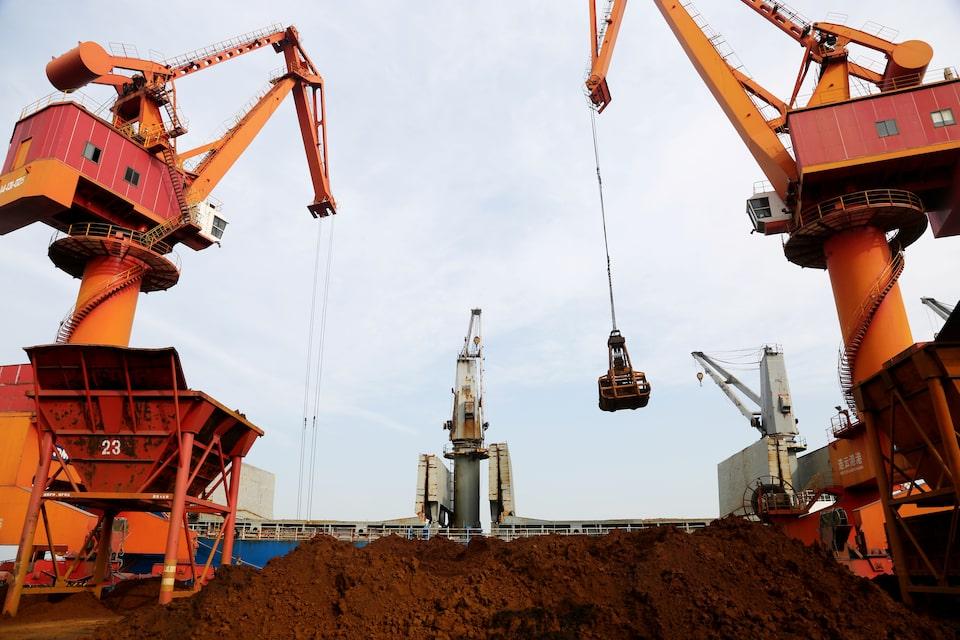
SINGAPORE, Feb 25 (Reuters) - Iron ore futures prices faltered on Tuesday, weighed down by a recovery in iron ore shipments, with increasing levies and legislations on Chinese steel exports putting further pressure on sentiment. The most-traded May iron ore contract on China's Dalian Commodity Exchange (DCE) closed down 2.17% at 813 yuan ($111.97) a metric ton. The benchmark March iron ore on the Singapore Exchange was 2.23% lower at $105.95 a ton as of 0705 GMT. A bipartisan group of U.S. lawmakers is introducing a legislation to address the impact of Chinese-supported companies moving portions of their production to other countries to circumvent American duties. The legislation would also toughen anti-dumping rules. This comes after the U.S. announced 25% tariffs on all steel imports earlier this month, with South Korea provisionally imposing tariffs on Chinese steel imports last week. Meanwhile, Vietnam will impose a temporary anti-dumping levy on some steel products from China, according to a trade ministry document seen by Reuters. "Iron ore prices were also lower, as data showed a pick-up in supply which weakened support for the steelmaking raw material," analysts at ANZ said. The total volume of iron ore dispatched from companies in Australia and Brazil under Mysteel tracking rebounded to 25.8 million tons as of February 23, ending a two-week slump, according to data from Chinese consultancy Mysteel. Meanwhile, the outlook for China's property sector has turned gloomier, a Reuters poll showed. Home prices this year likely to fall at a faster pace than previously estimated despite Beijing's efforts to stabilise its crisis-stricken property sector, which is a major consumer of metals. Other steelmaking ingredients on the DCE lost ground, with coking coal and coke down 2.47% and 2.25%, respectively. Steel benchmarks on the Shanghai Futures Exchange declined. Rebar weakened 1.95%, hot-rolled coil shed 1.55%, wire rod was down 0.9%, while stainless steel dipped nearly 0.8%. ($1 = 7.2608 Chinese yuan) Sign up here. https://www.reuters.com/markets/commodities/iron-ore-declines-recovery-shipments-duties-chinese-steel-2025-02-25/