2026-01-09 00:10
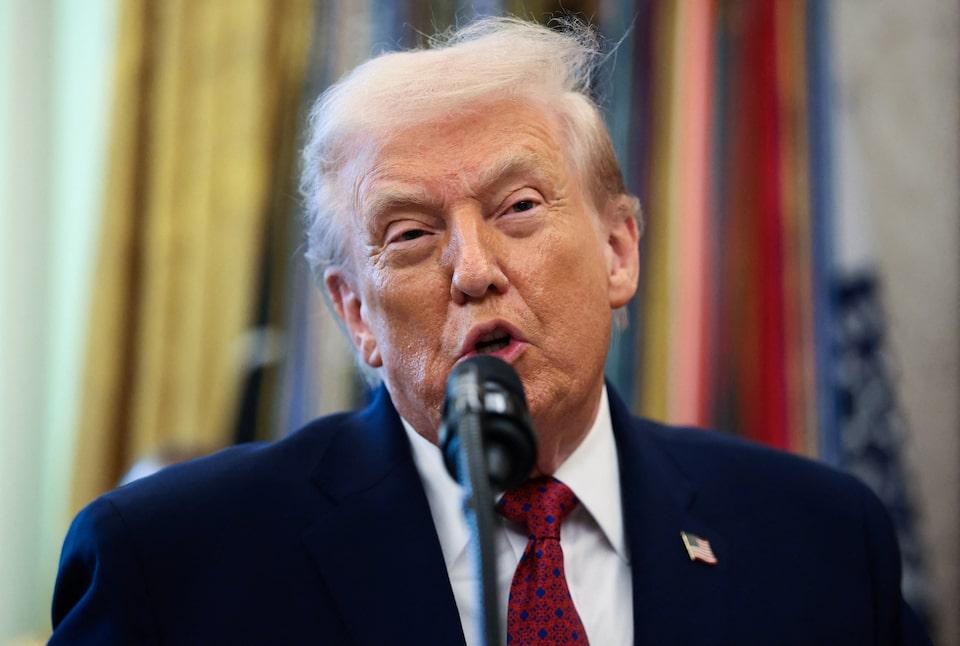
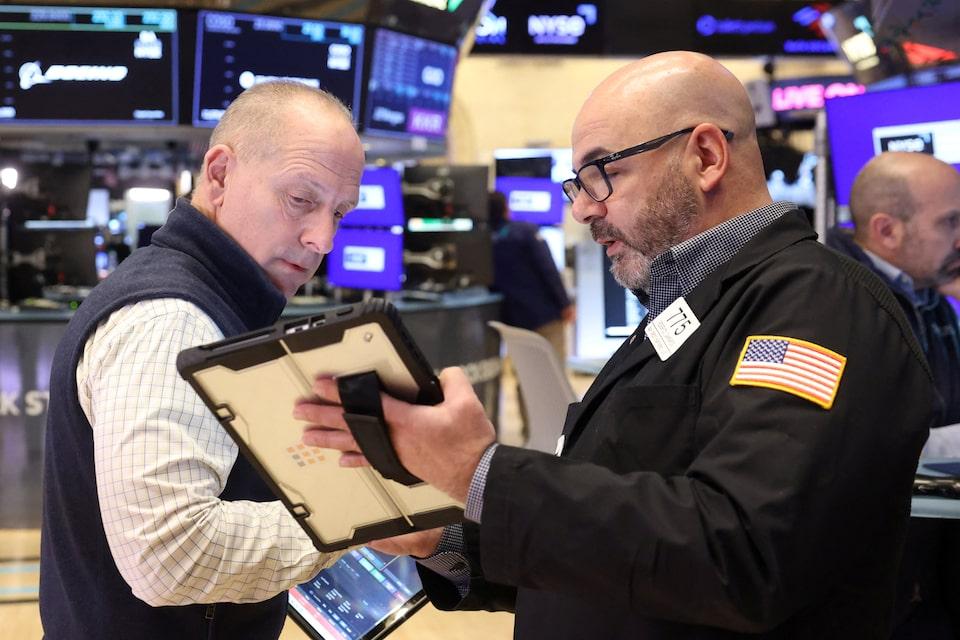
Defense stocks climb as Trump proposes bigger military budget Ford rises after Piper Sandler upgrades rating, raises PT Weekly jobless claims rise less than expected S&P 500 +0.01%, Nasdaq -0.44%, Dow +0.55% Jan 8 (Reuters) - Wall Street ended mixed on Thursday, as Nvidia and other technology stocks dipped, while defense companies advanced after President Donald Trump called for an enlarged $1.5 trillion military budget. Nvidia (NVDA.O) , opens new tab slid 2.2%, Broadcom (AVGO.O) , opens new tab declined 3.2% and Microsoft (MSFT.O) , opens new tab dipped 1.1%. The S&P 500 technology index (.SPLRCT) , opens new tab lost 1.5%, leaving it down about 1% so far in 2026, as investors grew more finicky about AI-related stocks whose valuations have been inflated by outsized gains in recent years. Sign up here. Alphabet (GOOGL.O) , opens new tab gained 1.1% the day after the Google parent surpassed Apple (AAPL.O) , opens new tab in market capitalization for the first time since 2019, becoming the second-most valuable U.S. company. The iPhone maker was down 0.5%. "While AI is still hot, there are going to be winners and losers," said Art Hogan, chief market strategist at B. Riley Wealth. "It's become a 'show me' sector. Show me how you monetize this. Show me if there's going to be a return on the capex you're putting into your development." Defense stocks gained after Trump said the 2027 U.S. military budget should be $1.5 trillion, much higher than the $901 billion approved by Congress for 2026. Lockheed Martin (LMT.N) , opens new tab rose 4.3%, Northrop Grumman (NOC.N) , opens new tab added 2.4% and Kratos Defense (KTOS.O) , opens new tab jumped 13.8%. Some defense stocks fell in the prior session, after Trump threatened to block defense contractors from paying dividends or buying back shares until they speed up weapons production. The S&P 500 and Dow Jones Industrial Average briefly hit intra-day record highs on Wednesday, and valuations remained relatively high ahead of fourth-quarter earnings season. The S&P 500 is trading at about 22 times expected earnings, down from 23 in November, but above its five-year average of 19, according to LSEG data. The S&P 500 climbed 0.01% to end the session at 6,921.45 points. The Nasdaq declined 0.44% to 23,480.02 points, while the Dow Jones Industrial Average rose 0.55% to 49,266.11 points. The number of Americans filing new applications for unemployment benefits rose moderately last week, though demand for labor remained sluggish, supporting Wednesday's ADP employment and JOLTS figures. Traders were focused on Friday's crucial nonfarm payrolls report for December, which would be among the first reliable datasets after the longest U.S. government shutdown in history. Fitch raised its U.S. growth outlook, estimating GDP expanded 2.1% in 2025 and forecasting 2.0% growth in 2026 after incorporating economic data delayed by last year's government shutdown. AI-related memory chipmakers lost ground after a stellar rally. SanDisk (SNDK.O) , opens new tab lost 5.4%, Western Digital (WDC.O) , opens new tab declined 6.1% and Seagate (STX.O) , opens new tab fell 7.7%. Ford (F.N) , opens new tab jumped 4.7% after Piper Sandler upgraded the automaker to "overweight" from "neutral". Advancing issues outnumbered falling ones within the S&P 500 (.AD.SPX) , opens new tab by a 2.4-to-one ratio. The S&P 500 posted 43 new highs and 13 new lows; the Nasdaq recorded 133 new highs and 51 new lows. Volume on U.S. exchanges was relatively heavy, with 16.9 billion shares traded, compared to an average of 16.3 billion shares over the previous 20 sessions. https://www.reuters.com/business/us-stock-futures-dip-defense-firms-climb-up-trump-budget-plans-2026-01-08/
2026-01-08 23:54
NEW YORK, Jan 8 (Reuters) - Marathon (MPC.N) , opens new tab is interested in bidding for Venezuelan crude oil,, the company told Reuters on Thursday, as the U.S. administration prepares to start raising imports of oil from the South American country after the ouster of its president Nicholas Maduro on January 3. The company declined to say whether there will be an auction. Sign up here. Caracas and Washington reached a deal this week to export up to $2 billion worth of Venezuelan crude, some 30 million to 50 million barrels, to the United States. Venezuela-owned refiner Citgo Petroleum also is seeking to participate in any auction of Venezuelan crude oil, its board decided on Thursday, according to two company sources. The company has not been allowed to import Venezuelan crude for years after it severed ties with its parent, Caracas-headquartered oil firm PDVSA, in 2019. Citgo did not immediately reply to a request for comment. U.S. Gulf Coast refiners, some of which are geared to process more of the type of oil that Venezuela produces instead of what the U.S. produces, are expected to be the biggest beneficiaries from an easing of sanctions against Venezuela. https://www.reuters.com/business/energy/us-refiner-marathon-petroleum-says-it-will-be-bidding-venezuelan-crude-oil-2026-01-08/

2026-01-08 23:22
Emergency teams evacuate dozens from flooded houses in Albania Western Balkans face road closures, power cuts due to bad weather Cold spell expected in Croatia with temperatures dropping further FIER, Albania, Jan 8 (Reuters) - A man was found drowned on Thursday in the Albanian city of Durres and emergency teams worked around the clock to evacuate dozens of people from flooded houses hit by heavy rainfall. The Western Balkan countries have seen disruption from snow and other winter weather since Sunday, with the closure of roads and railway lines, power cuts and drinking water affected. Sign up here. Emergency teams were using boats to evacuate villagers trapped in flooded houses in the area around other southwestern Albanian towns of Fier and Vlora, after the Viosa River rose to over 9 metres, the defence ministry said. A 55-year-old municipal worker who went missing on Tuesday was found dead in a drainage canal in Durres, probably swept away by the current, according to the interior ministry. The emergency services said they were working to remove water from around 800 homes and buildings, after sheltering around 300 people in the army and police facilities. In neighbouring Kosovo, where vast areas of land have been flooded in the past days, the rain was replaced by snow on Thursday. Bosnia has also been hit by snow. "It is very difficult to function like this, the streets are not cleared, especially for pedestrians," said Armin Hasanovic, a resident of the Bosnian capital of Sarajevo. The temperature of -14 degrees Celsius (7 degrees Fahrenheit) was recorded on Thursday morning in the Croatian capital of Zagreb, with meteorologists forecasting a new cold spell on Sunday with even lower temperatures. https://www.reuters.com/business/environment/one-dead-floods-albania-rain-snow-grip-balkans-2026-01-08/

2026-01-08 22:17
PANAMA CITY, Jan 8 (Reuters) - Panama's maritime authority on Thursday said it had canceled in January of last year the flag of the M Sophia, a Venezuela-linked oil tanker seized by the U.S. military this week. The U.S. military's Southern Command on Wednesday said it had intercepted the M Sophia before dawn, and described it as a "stateless, sanctioned dark fleet motor tanker." Panamanian authorities canceled the supertanker's flag on January 23, 2025, the AMP authority said in a statement. Sign up here. The maritime authority also said the Bella-1, a Russian-flagged tanker the U.S. seized the same day near Iceland after a two-week pursuit, was once listed on the country's registry but this stopped being the case as of October 7, 2024. A ship's flag determines who has authority over it. The U.S. says that when a flag is canceled it can become stateless, meaning it lacks protections under international law and may be boarded or even seized. Panama's maritime authority did not immediately respond to a request for more information on why the ships were no longer flagged as Panamanian. The Bella-1 appeared to be the first time in recent memory that the U.S. military has seized a Russian-flagged vessel. Wednesday's tanker seizures were third and fourth after the United States intercepted two vessels in December and then captured Venezuelan President Nicolas Maduro in a pre-dawn raid on the capital Caracas, and demanded authorities there open oil to U.S. companies or risk more military intervention. Top Venezuelan officials have accused the U.S. of trying to steal the country's vast oil reserves, estimated to be the largest in the world, but Trump said earlier this week he had reached a deal with Maduro's successor on crude exports. https://www.reuters.com/business/energy/panama-says-it-canceled-flag-us-seized-oil-tanker-year-ago-2026-01-08/

2026-01-08 22:02
ORLANDO, Florida, Jan 8 (Reuters) - Global stocks mostly fell, while oil and Treasury yields rose on Thursday, as investors reacted nervously to U.S. President Donald Trump's call for a huge increase in defense spending and awaited key U.S. employment figures on Friday. More on that below. In my column today I look at why the December nonfarm payrolls report is unlikely to do much to bridge divisions among policymakers at the Fed, which, by some measures, are the deepest in decades. Sign up here. If you have more time to read, here are a few articles I recommend to help you make sense of what happened in markets today. Today's Key Market Moves Today's Talking Points * War footing U.S. President Donald Trump said on Wednesday that the U.S. defense budget should increase 50% to $1.5 trillion next year, and advocated measures to block dividends and buybacks for U.S. defense firms until weapons production accelerates. Add to this the intervention in Venezuela, Trump warning the U.S. could flex its muscle elsewhere in the region, Washington's sights on Greenland, and how this will all be viewed in Beijing and Moscow; little wonder defense stocks are surging. * China extends gold run China added gold to its FX reserves for a 14th month in December. China's gold stash is now just under $320 billion, nearly half its official holdings of U.S. Treasuries worth $668 billion, which is the lowest since 2008. The direction of travel is clear, and China's affinity for gold has been a driving force behind its rise to a record $4,550/oz. Gold is central banks' second-largest asset holding, eclipsing the euro and now only behind the U.S. dollar. Global tensions this year might narrow that gap further. * U.S. GDP head-scratcher The U.S. trade deficit in October was much smaller than expected, the narrowest since 2009, and likely to boost Q4 GDP. Indeed, upward revisions started to flow on Thursday, most notably the Atlanta Fed's GDPNow model - to 5.4% from 2.7%. But the boost from net trade masks anomalies related to pharmaceutical imports and precious metals exports, and these one-off factors are unlikely to be repeated. TD Securities economists reckon any upward revisions of more than 1 percentage point would be "extreme". So, good news, but not a game-changer. Murky U.S. jobs data risk deepening historic Fed divisions The clearest snapshot of the U.S. labor market will be released on Friday, but December's employment report likely won't provide enough clarity to bridge the deep divisions among Federal Reserve officials over the future path for interest rates. By some measures, the divergence of opinion on the Fed's rate-setting committee – long a consensus-driven body - is the widest in decades. Jobs data is currently the Fed's guiding light, but the signals are pretty murky. Sure, there is broad-based agreement that the labor market is weak. But weak enough to warrant further rate cuts on top of the 175 basis points already delivered, when inflation is near 3% and about to enter a sixth year above the Fed's 2% target? Second-tier jobs figures on Wednesday didn't offer much clarity. Private sector job growth rebounded less than expected in December, yet the ISM services sector employment index was the highest in nearly a year. Meanwhile, the Job Openings and Labor Turnover Survey, or JOLTS report showed that job openings in November were well below forecasts, but it also noted that layoffs fell sharply. Ultimately though, the JOLTS, ADP, ISM employment index and Thursday's weekly jobless claims are all just the opening act for the main show on Friday, when the Bureau of Labor Statistics releases December's non-farm payrolls job growth and unemployment rate. Economists expect modest job growth of 60,000 and a slight drop in the unemployment rate to 4.5% from 4.6%. Given the decidedly murky labor market picture, the Fed could be on hold for some time, absent further evidence of labor market weakness. Interest rate futures markets aren't fully pricing in the next quarter percentage point cut until June. MIND THE GAP Predicting how the Fed will move could become a lot more challenging this year, however, because the rate-setting Federal Open Market Committee is divided like rarely before. Here's a quick recap of what emerged from the Fed's policy meeting last month when it lowered the Fed funds target range by 25 basis points to 3.50-3.75% and published its latest staff economic projections: *December marked the strongest hawkish pushback against a rate cut since 2019 *This was the first meeting with three dissents since 2019 *The "dot plot" showed seven out of 19 officials expect rates to hold at or above current levels Indeed, dissenting votes by Fed Governors last year surged to their highest level since 1993, following three decades that saw just five dissents in total. Until December, the FOMC had not recorded three or more dissents at a single meeting since 2019, a level of disagreement seen just nine times since 1990. This divergence appears to be widening. Directors at two-thirds of the Fed's regional banks voted not to change the interest rate charged to commercial banks for emergency loans. This recommendation was ultimately overruled by the FOMC's 9-3 vote to lower the policy rate, but it highlights just how contested that easing decision was. FED BANK PRESIDENTS VS GOVERNORS For all the talk of a more dovish Fed this year under the guidance of a new chair appointed by President Donald Trump, the reality may be quite different. Trump is expected to nominate current Chair Jerome Powell's successor later this month. Powell, who steps down in May, is considered a natural policy "dove". He is known for his consensus-building skills but also his fierce defense of the central bank's independence. His successor will lean dovish too, but may find it more difficult to sway the committee. That's in part because of the growing divide between Fed governors, who have been pushing for rate cuts, and regional Fed bank presidents, who have been less willing to look through sticky inflation. And, importantly, the Fed's Board of Governors last month unanimously reappointed 11 of the Fed's 12 regional bank presidents to their positions, the exception being Atlanta Fed chief Raphael Bostic, who is retiring. Ultimately, the FOMC's rate decisions this year should hinge on whether officials believe inflation is a bigger risk to the economy than unemployment. Powell successfully made the case for the latter last year, but the dissenting voices are getting louder, and the politics are getting more complicated. Investors assuming rate cuts are in the bag may want to think again. What could move markets tomorrow? Want to receive Trading Day in your inbox every weekday morning? Sign up for my newsletter here. Opinions expressed are those of the author. They do not reflect the views of Reuters News, which, under the Trust Principles , opens new tab, is committed to integrity, independence, and freedom from bias. https://www.reuters.com/world/china/global-markets-trading-day-graphic-2026-01-08/

2026-01-08 22:01
NEW YORK, Jan 8 (Reuters) - U.S. President Donald Trump's proposed increase in defense spending for 2027 is unlikely to be offset by savings or revenues and would have a negative impact on already large U.S. fiscal deficits, said an analyst at Moody's Ratings. Trump said on Wednesday the 2027 U.S. military budget should be $1.5 trillion, significantly higher than the $901 billion approved by Congress for 2026. Any such increase in the military budget would require congressional authorization. The Committee for a Responsible Federal Budget, a nonpartisan think tank, estimated the proposal would cost $5 trillion through 2035, while adding $5.8 trillion to the U.S. debt with interest. Sign up here. "A substantial increase in defense spending, of a similar order of magnitude as the 50% rise proposed by the President, would be highly unlikely to be offset elsewhere given the political and policy difficulties in finding commensurate savings or revenue sources," said David Rogovic, senior vice president of sovereign risk group at Moody’s Ratings, in a statement. He added that a large and sustained debt-financed increase in spending would widen already sizeable U.S. fiscal deficits, increase the interest burden over time, and further limit fiscal flexibility. "While higher defense spending would also lift GDP growth, the related additional government revenue would not offset the spending increase,” said Rogovic. https://www.reuters.com/world/us/moodys-analyst-says-15-trillion-trump-defense-budget-plan-could-widen-deficits-2026-01-08/