2025-02-24 11:28
LONDON, Feb 24 (Reuters) - The dated Brent oil market has worked well since U.S. WTI crude was added to the benchmark and further changes are not planned, commodities pricing reporting agency S&P Global Commodity Insights, known as Platts, said on Monday. Last year was the first full calendar year of WTI Midland in the dated Brent benchmark after it became the first crude oil grade from outside the North Sea to be added to the basket in May 2023 because of falling North Sea output. Platts said on Monday that 2024 was smooth sailing for its dated Brent oil benchmark after record trading volumes in the final month of the year. Platts made no announcement to make any further changes to the benchmark at the event. "This year, we don't have a major initiative to share around dated Brent. The past year has really been one of remarkably smooth operations," said Richard Swann, Platts' head of established benchmarks, at the company's event as part of International Energy Week in London. "This is a market functioning well, we believe, with the different component parts seeing a lot of liquidity, and they're all contributing to the overall ecosystem around Brent." Platts said that a record volume of 39.7 million barrels of trade was achieved in December across its North Sea physical crude cargoes, contract for differences and cash BFOE partials. Thomson Reuters competes with Platts in the provision of commodities markets news and data. Sign up here. https://www.reuters.com/business/energy/dated-brent-oil-benchmark-working-well-with-no-changes-planned-says-platts-2025-02-24/

2025-02-24 11:23
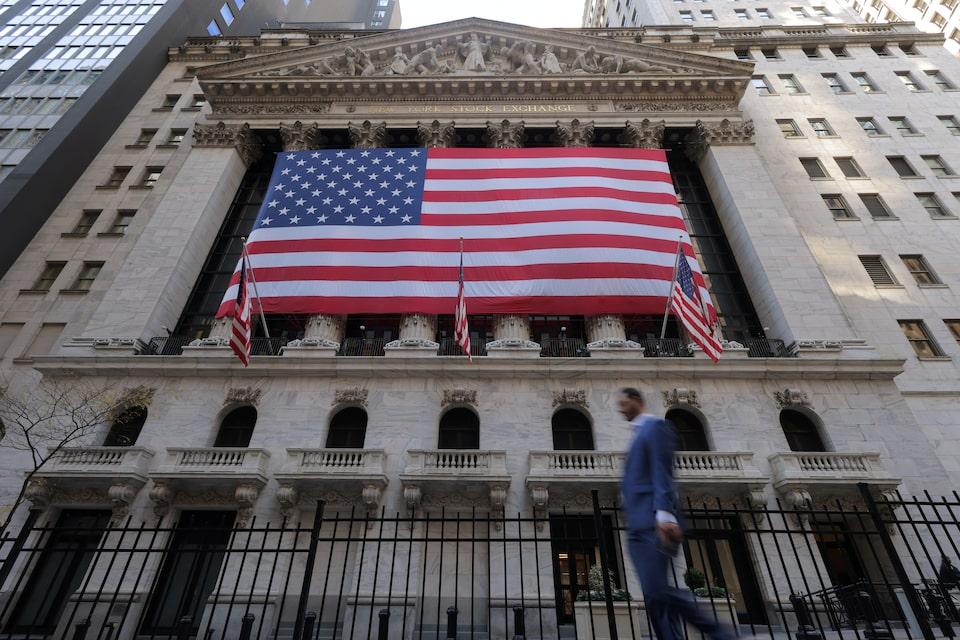
A look at the day ahead in U.S. and global markets from Mike Dolan Global investors got a reminder last week that the U.S. economic expansion is not etched in stone, even Wall Street is priced as if it was, and German stocks got another shot in the arm on Monday from weekend election results. A string of soft readings from the U.S. retail and service sectors unnerved U.S. stock traders on Friday, with growing fears the disruption and uncertainty sown by Donald Trump's new administration are forcing consumers and businesses to draw in their horns. The S&P500 (.SPX) , opens new tab, Nasdaq (.IXIC) , opens new tab and small-cap Russell 2000 (.RUT) , opens new tab plunged 1.7%, 2.2% and 3% respectively - with the Russell now turning negative for the year. Friday's losses in the S&P500 and Russell were the biggest one-day hits in 2025, with the blue chip Dow Jones index (.DJI) , opens new tab recording its steepest weekly decline since October. With Federal job cuts mounting and government spending being slashed, along with considerable anxiety about the effect of planned import tariffs and the impact on available workers from deportations of migrants, the economic mood seems to have turned. After a disappointing Walmart earnings forecast week compounded a sizeable January retail sales miss and weak February business updates ever since, S&P Global's flash polls for this month showed activity in the dominant U.S. services sector contracted for the first time in two years. Adding insult to injury, the University of Michigan's consumer sentiment index fell to a 15-month low this month even as inflation expectations ticked higher, and homebuilder sentiment also hit a five-month low in February. The return of long-absent slowdown fears sent a frisson of concern across both stock and bond markets - pulling 10-year Treasury yields down to near three-week lows at 4.40%. Stock futures (.ESc1) , opens new tab tried to claw back ground before Monday's bell, edging back up about 0.5%. Exaggerated by the initially positive euro reaction to the expected win for German centrist conservatives in the weekend election and a likely chancellorship for CDU leader Friedrich Merz, the dollar continued its recent decline first thing today too and its main (.DXY) , opens new tab index briefly hit a new low for 2025. As markets took fright on Friday, they were jumpy about pretty much anything that smelt of slowdown or recession, with high-yield credit markets also wobbling. With chip giant Nvidia (.NVDA.O) , opens new tab preparing to release earnings on Wednesday, there was attention paid to a TD Cowen research report saying Microsoft (MSFT.O) , opens new tab was cancelling leases for AI data centers - a trend that has been such a part of the economic resilience of the past two years. Anxiety was increased further by reports that Chinese researchers had discovered a bat coronavirus with similar features to the one that caused COVID-19 and raised the possibility that it could spread to humans. Shares in Moderna (MRNA.O) , opens new tab climbed 5.3% on the news. On top of all that, Berkshire Hathaway (BRKa.N) , opens new tab on Saturday reported record annual profits and boosted its cash stake to $334.2 billion, as Warren Buffett used his annual shareholder letter to caution Washington to spend money wisely and take care of those who get the "short straws in life." In Europe, all the attention was on the German election fallout and tentative hopes the new parliament will have enough support to loosen Germany's restrictive "debt brake" and lift defense spending. Germany's blue-chip index (.GDAXI) , opens new tab jumped 0.8%, boosted by arms makers, while the mid-cap index (.MDAXI) , opens new tab surged 2.3% and small caps (.SDAXI) , opens new tab advanced 1.1%. Defence stocks Rheinmetall (RHMG.DE) , opens new tab, Hensoldt (HAGG.DE) , opens new tab and Renk (R3NK.DE) , opens new tab advanced between 3.3% and 4.3% on prospects of higher military spending by the incoming administration in Berlin. The European aerospace and defence index (.SXPARO) , opens new tab rose 0.9%. Germany's 10-year bond yield , which serves as the benchmark for the wider euro zone, was last up just 1 basis point at 2.465%. Merz vowed on Monday to quickly form a government after winning a national election but faces tricky coalition talks, difficult parliamentary maths and the prospect of an obstructive Bundestag after far-right and far-left parties gained ground. But Merz also made clear he felt Europe could no longer rely on the United States for economic or security support. "I would never have thought that I would have to say something like this in a TV show but, after Donald Trump's remarks last week...it is clear that this government does not care much about the fate of Europe," Merz told German public broadcaster ARD. Key developments that should provide more direction to U.S. markets later on Monday: * Chicago Federal Reserve January activity index, Dallas Fed February manufacturing survey * Federal Reserve * US corporate earnings: Diamondback Energy, Domino's Pezza * US Treasury sells $69 billion of 2-year notes Sign up here. https://www.reuters.com/markets/us/global-markets-view-usa-2025-02-24/
2025-02-24 11:17
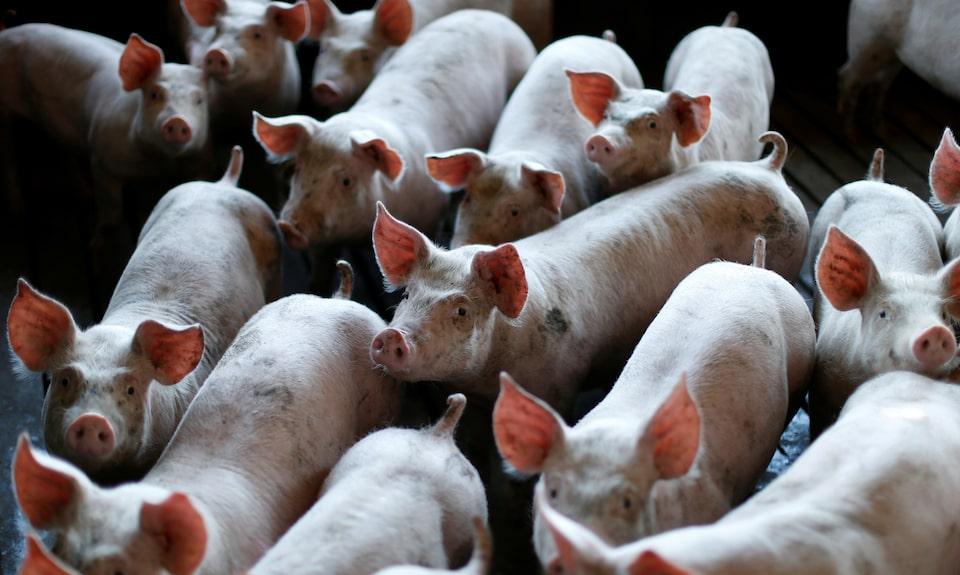
BEIJING, Feb 24 (Reuters) - There is no more room for growth in Chinese pork consumption in the near future, Zhu Zengyong, a researcher with the state-backed Chinese Academy of Agricultural Sciences said on Monday. A rise in demand from the world's biggest pork consumer had propelled the expansion and modernisation of hog farms but consumption took a downturn in recent years due to a weakening economy, leading to a surplus that has hammered prices. Current demand in China is stable and unlikely to rise further, Zhu said in a seminar. He said it is not advisable for companies to expand breeding sow capacity this year and should instead focus on cost reduction and improving the efficiency of breeding sows. Beijing in 2024 lowered the national target for normal retention of breeding sows to 39 million from 41 million and issued regulations to control the nation's pig production capacity. In an annual rural work policy blueprint released on Sunday, known as the No. 1 document, the State Council said it will strictly enforce and supervise pig slaughter and regulate pork production capacity. A rise in the number of breeding sows this year could continue to pressure hog prices throughout the year, Zhu said. Zhu forecasts pork imports to further decline in 2025 from last year's 1.07 million metric tons while demand for offal will remain unchanged. China's imports of pork meat and offal had already shrunk 15.7% last year, a fourth consecutive annual decline, as the industry grappled with an oversupplied market. Zhu expects the number of pigs slaughtered in 2025 to increase from 2024, while the average price of pigs will decrease by 10% to 20%. Sign up here. https://www.reuters.com/markets/asia/chinas-demand-pork-has-no-more-room-grow-says-researcher-2025-02-24/
2025-02-24 11:15
Feb 24 (Reuters) - The pound traded lower against the euro on Monday after Germany's conservatives won a national election as expected. The euro initially rose to its highest in more than two weeks against the pound, but pared some of those gains and was last up 0.1% with one euro at 82.91 pence. Friedrich Merz was set to become Germany's next chancellor after his party emerged victorious in Sunday's election, though he faces complex and lengthy coalition negotiations after the far-right Alternative for Germany (AfD) surged to a historic second place in a fractured vote. "The more positive psychological effect of the change of political leadership could be quickly offset and dampened by complicated coalition negotiations," said Carsten Brzeski, global head of macro at ING. Markets are hoping for reforms to help revive a stagnant German economy, but analysts said on Monday the road to reforms did not look straightforward. Monday's euro move helped mitigate some of the single currency's loss so far this month against the pound, with the euro now tracking a 0.8% fall in February. Interest rate expectations still diverge between Britain and the euro zone. Traders expect the Bank of England to cut rates by a further 54 basis points (bps) this year, but they believe the central bank can only make gradual cuts as UK inflation remains sticky. Markets however expect the European Central Bank will further ease rates by around 80 bps. Sterling was broadly unchanged against the dollar at $1.2633, after touching a two-month high of $1.2690 earlier in the session. Investors this week will monitor remarks from a range of Bank of England speakers. "This week, the UK data calendar is empty, so all the domestic focus will be on BoE speakers," said Francesco Pesole, currency strategist at ING. "We'll hear from two doves today – Swati Dhingra and Dave Ramsden – as well as from hawkish-leaning Clare Lombardelli. Tomorrow, we'll hear from Chief Economist Huw Pill." Sign up here. https://www.reuters.com/markets/currencies/sterling-edges-down-against-euro-after-german-election-2025-02-24/

2025-02-24 11:12
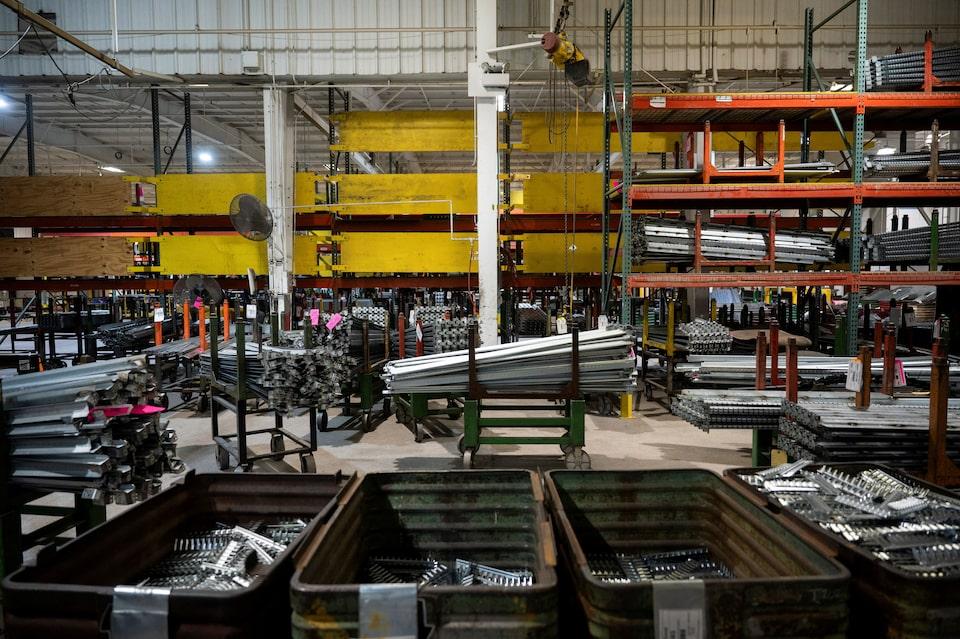
Business activity index fell to 17-month low in February Manufacturers that rely on steel revise financial forecasts due to tariffs White House says tariffs give US metal producers breathing room, higher prices a 'natural result' Feb 24 (Reuters) - The price of the steel Glen Calder buys for his small machinery factory in South Carolina has spiked over 15% in the last two weeks, while Brian Nelson’s factory halfway across the country in Illinois can’t get its suppliers to quote him current prices at all. "They’re waiting for the tariffs," said Nelson. While President Donald Trump’s 25% tariffs on steel and aluminum are only slated to start on March 12, the action is already reverberating through the network of producers and builders that rely on the metals to make their goods. And not in a good way. Trump campaigned on a promise to use tariffs to boost domestic manufacturers and also eyes the added revenue as a way to offset lost inflows to federal coffers from his planned tax cuts. But levies on imported steel and aluminum, while aiding U.S. mills by allowing them to raise their own prices, quickly translate into higher prices for the layers of producers who buy and process those metals into refrigerators, cars and combines. Steel prices in the U.S. have surged in recent days, adding to gains since Trump became president. Hot rolled coil prices in the Midwest have jumped 12% to $839 per short ton during the two weeks to Thursday and climbed 20% since Trump took office on January 20, according to data provider Fastmarkets. By contrast, the price of that type of steel has risen only 6% in northern Europe and was barely changed in eastern China since January 20. A new survey by Bain & Co. found 40% of chief operating officers and other top executives are anticipating double-digit increases in their input costs due to tariffs, while about 80% are either revising or considering revising financial forecasts to account for the added costs. Forty-five percent of respondents to the survey were in the U.S. Leon Topalian, CEO of top U.S. steelmaker Nucor, early this month praised Trump’s tariff plans, calling it the first steps in "his America First Trade Agenda." Nucor last week raised hot rolled coil prices for the fourth time since the start of the year. 'MIDDLE GUY IN THE SANDWICH' Buyers typically acquire metals either straight from mills or through so-called service centers, smaller businesses that buy in bulk from mills and process metal into forms needed by buyers, such as cut to specific lengths. Nelson, the CEO of HCC in Mendota, Illinois, buys both ways. But at the moment, he hasn’t been able to get price quotes from his usual sources. His senior buyer told him the mills have canceled orders, put orders on hold, and increased lead times due to tariff uncertainty. "Lead times are getting pushed out," he said, "because now customers are going crazy, panic buying." He likens his business to being the "middle guy in the sandwich" - squeezed from above and below. HCC produces harvesting reels for combines, some over 30 feet long, and other parts for the big reapers. HCC is caught between steel producers and its customers: large farm equipment producers like Deere and AGCO. Nelson said he just spoke to one of those big manufacturers, who asked him how much of the anticipated tariff-related price increase on steel he intended to absorb. "I said, 'We’ll pass it all on to you - and it’s up to you if you want to pass it on to your end customers.'" Factory input prices are already on the rise. A survey released Friday by S&P Global showed a gauge of the prices paid by businesses for inputs increased to 58.5 this month from 57.4 in January. It was boosted by the manufacturing gauge, which jumped to 63.5 from 57.4 last month, "overwhelmingly blamed by purchasing managers on tariffs and related supplier-driven price hikes." A White House spokesman said tariffs are just one part of the administration’s economic agenda, which includes cuts to regulations, getting energy costs down, as well as reining in inflation and spending cuts that will lower interest rates and eventually make U.S. steel and aluminum producers more competitive. "The intent of these tariffs is to give breathing room to domestic producers of steel and aluminum—and to get them back up to their fuller capacity," the White House spokesman said. "The price of steel and aluminum going up is a natural result of that." Glen Calder says he's resigned to absorbing the costs. Calder Brothers, in Taylors, S.C., produces $200,000 paving machines that are sold to asphalt contractors and municipalities for tasks such as paving parking lots and subdivision streets. His steel prices already jumped in recent weeks, and he’s been warned to expect more soon. "As of this morning, my steel prices are up 15.2%" since the beginning of the month, he said, in an interview with Reuters on February 17. "My machine pricing isn’t up 15.2%, I can tell you that." Calder’s 100-employee factory competes with four larger domestic firms, and he said business is soft, something he attributes to customers hesitant to invest in new machines amid still-elevated interest rates. "This is not a good time to even think about raising my prices," said Calder. MORE THAN METAL Steel isn’t his only tariff headache. He buys heavy-duty engines from Cummins, the large U.S. producer, and the model designed into his machines is produced by that Indiana-based company in China. The Trump administration raised tariffs on China by 10% at the beginning of this month. Many manufacturers rely on memory of the last time the U.S. levied new tariffs on basic metals - in 2018, during the first Trump administration - as they gear up for what’s coming. "Absolutely it will raise prices," said A.H. "Chip" McElroy II, chief executive of McElroy Manufacturing in Tulsa. He noted that in the past the domestic suppliers didn’t exactly match the higher import prices. "They raise it to just below," he said. McElroy’s company makes machines that weld plastic pipe. Raw steel is a relatively small part of their overall cost, he said, but many of his suppliers use the metal as well as aluminum in the components they provide to him. To get a better picture of their exposure, the company spent the past week surveying its top 15 suppliers of raw materials. They received a range of responses to the poll, from "zero impact anticipated" from tariffs to "full certainty that our costs will increase as domestic demand increases and producers raise their prices." Sign up here. https://www.reuters.com/markets/commodities/us-manufacturers-see-higher-metal-prices-tariffs-near-2025-02-24/
2025-02-24 11:10
FRANKFURT, Feb 24 (Reuters) - Germany's central bank on Monday backed raising a cap on the government's deficit at a time when public debt is low and there is a need for investment in infrastructure and defence. This so called debt brake, which limits public deficits to 0.35% of gross domestic product, was the key economic topic of Germany's election campaign and the country's likely next chancellor, Friedrich Merz, has talked about reforming it. The Bundesbank, traditionally a bastion of conservative economic thinking, also saw scope for adapting the debt brake "to changing conditions", it said in its monthly report. "Binding fiscal rules such as the debt brake make a very important contribution to ensuring solid state finances," it said. "In principle, however, it is entirely justifiable to adapt the debt brake's borrowing limit to changing conditions when the public debt ratio is low." The Frankfurt-based central bank, which does not have a say in fiscal matters but is deeply respected within the country, cautioned that "higher (deficit) ceilings" must be binding and "in line with solid state finances". "And even then, it remains essential to review priorities and use financial resources more effectively in order to better align fiscal policy with the challenges," it added. It said there was a need for "action" in public infrastructure and defence spending but the tax burden and spending ratios were already relatively high. Europe's largest economy has shrunk for two straight years and appears increasingly in need of an overhaul if it is to compete with China and the United States. The Bundesbank said the German economy may eke out some modest growth in the three months to March but it remains mired in stagnation as threats of U.S. tariffs dampen global economic activity. Sign up here. https://www.reuters.com/markets/europe/germanys-bundesbank-backs-raising-deficit-cap-when-debt-is-low-2025-02-24/